
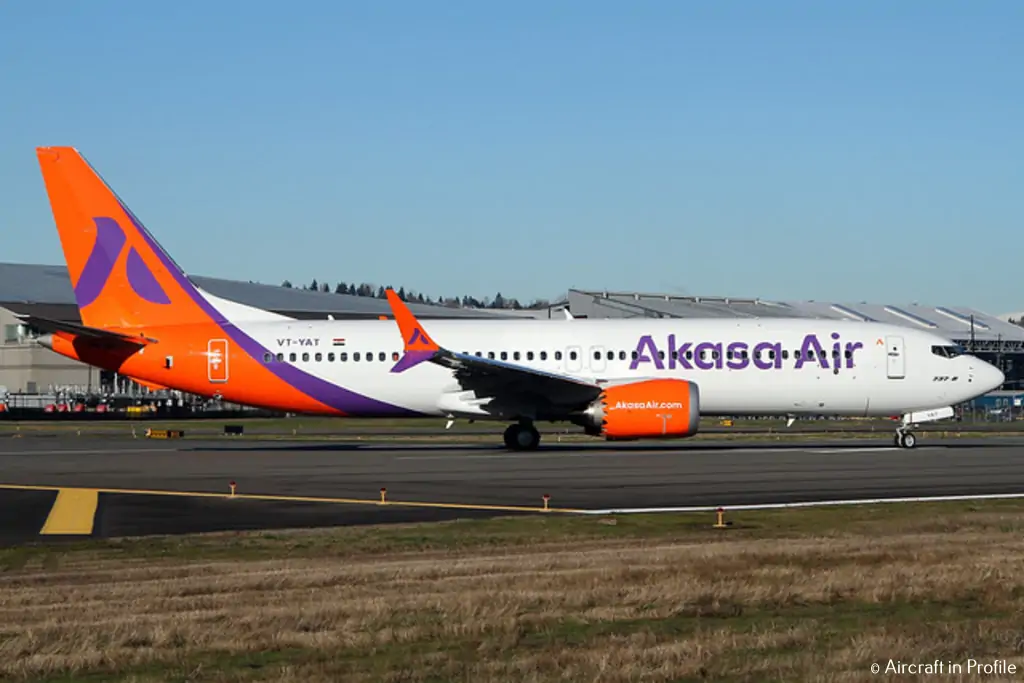
In an industry where most carriers scramble to maximize capacity during high-demand periods, one airline is taking a deliberately contrarian approach that challenges conventional aviation wisdom.
The Disciplined Approach to Growth
Speaking at the ET Now Global Business Summit 2026 on Saturday, Akasa Air CEO Vinay Dube outlined a business philosophy that sets his carrier apart from competitors in India's crowded aviation market. The airline, which launched operations in August 2022, has deliberately chosen to forego what Dube characterizes as opportunistic strategies that many rivals employ to boost short-term revenues.
Dube explained that Akasa Air refuses to pad its fleet with temporary dry lease or wet lease aircraft during peak travel months, despite the potential for substantial additional income. Similarly, the airline does not park aircraft during slower periods to cut costs. This consistent approach to fleet management represents a fundamental departure from industry norms, where airlines frequently adjust capacity based on seasonal demand fluctuations.
Building Resilience Through Redundancy
The airline's strategy centers on what Dube described as building redundancies across multiple dimensions of the business. Currently operating thirty-three aircraft with another joining the fleet imminently, Akasa Air has deliberately created buffers in both capital reserves and human resources. This approach may appear inefficient on the surface, but Dube argues it provides crucial operational stability.
The CEO pointed to a recent real-world test of this philosophy when revised Flight Duty Time Limitations regulations came into force in November last year. These new FDTL norms, which govern how long pilots can work, created significant operational challenges across the Indian aviation sector. While competitor IndiGo faced implementation difficulties resulting in flight disruptions during early December 2025, Akasa Air's redundancy planning allowed the carrier to navigate the transition smoothly.
Discipline Over Opportunism
Central to Akasa Air's operational ethos is what Dube termed planning and fiscal discipline. Rather than chasing immediate revenue opportunities that might compromise longer-term stability, the airline has committed to a measured expansion strategy. This disciplined fleet management approach ensures consistent service delivery across all seasons, building customer trust through reliability rather than aggressive capacity expansion.
The airline's response to the new pilot duty regulations demonstrated the practical benefits of this philosophy. By maintaining excess capacity in its pilot workforce, Akasa Air delivered what Dube described as a network completely free of cancellations throughout the winter season, precisely when competitors struggled with the regulatory transition.
This strategic patience represents a calculated bet that operational consistency and fiscal prudence will ultimately prove more valuable than maximizing short-term utilization rates in India's competitive aviation landscape.

Read next
AirAsia's Bold Gamble: Why Asia's Budget Carrier Is Betting Big on Small Jets After Near-Collapse
Abhishek Nayar
12 Feb 2026
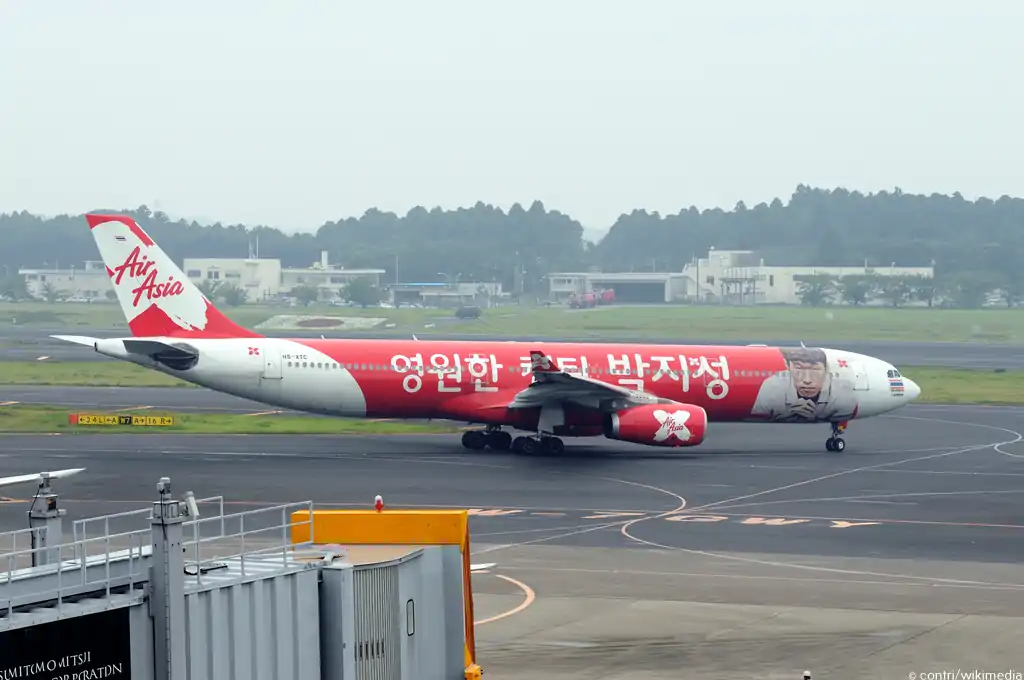
AirAsia X is charting an audacious recovery path that few would have predicted just months ago, announcing plans for a massive order of smaller regional aircraft while simultaneously abandoning its commitment to fifteen larger Airbus A330neo planes. This strategic pivot, revealed by co-founder Tony Fernandes on Wednesday, signals a fundamental reshaping of how the Malaysian budget carrier plans to capture Asia's rapidly expanding market of first-time travelers.
The airline CEO, speaking in an exclusive interview with Reuters, confirmed that a decision between competing Airbus and Embraer regional models would be unveiled within the next month. Industry insiders familiar with the negotiations suggest the order's scope has grown substantially beyond initial expectations, with what was originally planned as a hundred-aircraft deal potentially expanding to include a hundred and fifty firm orders for Airbus's smallest offering, the A220 jet, along with options for fifty additional planes.
From Crisis to Confidence
The announcement comes as AirAsia's parent company Capital A completes a comprehensive restructuring of its aviation operations. Fernandes acknowledged that the order, initially scheduled for announcement in late January, faced delays while the budget carrier finalized crucial discussions regarding financing arrangements and potential outside investment partnerships. Those conversations, he indicated, are now nearing completion.
The strategic transformation extends beyond the regional jet order. AirAsia is simultaneously working to confirm a separate purchase of fifty Airbus A321XLR aircraft, a long-distance narrow-body model that would enable the carrier to serve routes previously requiring larger wide-body planes. This dual approach reflects Fernandes's conviction that narrow-body efficiency, rather than wide-body capacity, represents the future of budget aviation in the Asia-Pacific region.
A Different Growth Strategy
What makes AirAsia's expansion plans particularly remarkable is the timing and financing philosophy behind them. Unlike many competitors that received government support during the pandemic crisis, AirAsia navigated the industry's worst period without state lifelines. Now, as the carrier returns to growth mode, Fernandes emphasized that expansion would proceed carefully, with profitability taking precedence over market share gains.
The financing strategy reveals an unconventional approach for a budget carrier emerging from financial difficulty. Rather than relying heavily on sale-and-leaseback arrangements that provide immediate cash injections in exchange for higher long-term rental costs, Fernandes stated the airline would increasingly pursue outright aircraft ownership. This strategy prioritizes long-term equity value over short-term financial maneuvering, distinguishing AirAsia from peers who aggressively trade aircraft for quick profits.
The carrier's order book transformation has been dramatic. Airbus itself canceled sixty-three A330neo orders in 2022 to relieve financial pressure on one of its largest customers. Fernandes's latest decision to drop the remaining fifteen A330neos cements AirAsia's commitment to narrow-body operations, though he left open the possibility of eventually considering newer wide-body options like the Airbus A350 or Boeing 787.
Speaking candidly about relationships strained during the pandemic, Fernandes acknowledged that AirAsia's financial struggles left marks within Dublin's aircraft leasing community. However, he expressed confidence that demonstrated profitability would quickly restore confidence among potential financing partners, noting that both the airline and its lessors had endured difficult periods that would ultimately be forgiven as the company returns to solid financial footing.
With Inputs from Reuters
Read next
India's aviation sector finds itself at a crossroads as the country's major carriers challenge proposed regulations they claim could severely limit their operational capabilities. The dispute centers on new rest norms for cabin crew that airlines argue are disconnected from both global practices and the realities of running a modern airline.
The Regulatory Proposal That Sparked Controversy
In October 2025, the Directorate General of Civil Aviation introduced draft Civil Aviation Requirements that would establish new Flight Duty Time Limitations for cabin crew members. The DGCA, which serves as India's aviation watchdog, designed these norms to address fatigue management among flight attendants. However, the proposal has triggered strong opposition from the Federation of Indian Airlines, an industry body representing IndiGo, Air India, and SpiceJet.
The airlines have characterized the framework as overly restrictive, arguing that it fails to align with international standards while simultaneously offering insufficient operational flexibility. In their view, the proposed regulations miss the nuanced approach needed to manage the diverse types of flight operations that characterize modern aviation.
The Core Disagreement Over Metrics
At the heart of this dispute lies a fundamental question about how to measure and manage crew fatigue. The airlines argue that flight duty period, rather than actual flight time, should serve as the primary metric for day-to-day fatigue management. This distinction matters considerably in practice. While flight time simply measures the duration a plane spends in the air, flight duty period encompasses the entire span from when a crew member reports for duty until they are released from all responsibilities.
In a letter dated January 12, the Federation emphasized that duty and rest limits should concentrate on flight duty periods and minimum rest intervals. The airlines want to avoid rigid cumulative caps or direct connections to the number of landings, which they consider impractical operational constraints.
Global Standards and Rest Quality
The airlines have also raised concerns about proposed accommodation standards for cabin crew. They advocate for twin-sharing arrangements under operator-defined guidelines, focusing on rest quality rather than strictly mandated individual rooms. The carriers point to international frameworks that recognize effective fatigue recovery depends more on adequate rest opportunity and alignment with circadian rhythms during local nighttime hours than on where the rest occurs.
The Broader Context of Implementation Challenges
This controversy arrives against a backdrop of ongoing struggles with similar regulations. Revised Flight Duty Time Limitations for pilots remain incompletely implemented despite legal battles surrounding them. These implementation difficulties carry real consequences, as evidenced by massive operational disruptions at IndiGo in early December 2025. Non-compliance with changed pilot duty provisions was identified as one contributing factor to those disruptions.
The airlines are now urging the DGCA to adopt globally-harmonized, evidence-based provisions that reflect operational realities. As India's aviation sector continues its rapid growth, finding the balance between crew welfare and operational flexibility remains a critical challenge for regulators and airlines alike.
Read next
Aviation's Perfect Storm: How Soaring Demand and Crippled Supply Chains Are Grounding Industry Recovery
Abhishek Nayar
10 Feb 2026

The global aviation sector finds itself trapped in an unprecedented predicament where success has become its own obstacle, as industry leaders gathered at Singapore's premier airshow revealed this week.
What was initially dismissed as temporary disruption has morphed into what industry insiders now grimly refer to as the "new norm," leaving airlines hemorrhaging money and passengers facing potential service disruptions.
The Perfect Storm Hitting Airlines
Jeffrey Lam, who serves as chief operating officer and president of commercial aerospace at ST Engineering, the world's largest airframe maintenance provider, expressed deep frustration at this week's Singapore Airshow. The company's position gives it a front-row seat to the crisis unfolding across the industry, and Lam's assessment was blunt: the prolonged delays and bottlenecks have become standard operating procedure, a situation he described as completely unacceptable.
The core problem stems from a complex web of competing demands. Engine manufacturers and component suppliers are simultaneously trying to support new aircraft assembly lines at Boeing and Airbus while also maintaining the existing global fleet. This double burden has created severe shortages that ripple throughout the entire aviation ecosystem.
Airlines Forced Into Expensive Workarounds

The consequences for carriers have been severe and costly. Leslie Thng, CEO of Singapore Airlines' budget subsidiary Scoot, revealed during a panel discussion that his airline has resorted to purchasing additional spare engines at its own expense simply to buffer against potential disruptions. This represents an extraordinary expense that airlines in normal times would never consider necessary.
The numbers tell a sobering story. Global air passenger traffic reached record levels in 2025, climbing roughly nine percent above pre-pandemic figures from 2019, according to the International Air Transport Association. Growth is projected to continue with another five percent increase expected this year. However, meeting this demand has required airlines to keep aging aircraft operational for two additional years beyond their typical retirement timeline.
The Eleven Billion Dollar Problem
This extended use of older, less fuel-efficient planes has triggered a cascade of additional costs. The International Air Transport Association estimates that airlines faced approximately eleven billion dollars in extra expenses during 2025 alone, covering increased fuel consumption, maintenance work, engine leasing arrangements, and inventory management. Willie Walsh, the association's director general, didn't mince words about supplier performance, calling the situation incredibly frustrating and demanding that key suppliers finally address these persistent problems.
Understanding the Root Causes

Gael Meheust, who leads engine manufacturer CFM International, offered perspective from the supplier side during panel discussions. The joint venture between GE Aerospace and Safran has actually succeeded in ramping up production, increasing output by twenty-five percent in 2025 with plans for at least ten percent annual growth going forward. However, Meheust pointed to an unexpected challenge: demand has reached levels the industry never anticipated.
The component supply situation reveals even deeper structural issues. ST Engineering reported that while producing an engine nacelle takes approximately six weeks, the total lead time for securing necessary components and materials now stretches to a full year, compared to nine months before post-pandemic disruptions began. Even more troubling, some components face worldwide shortages that make early ordering strategies ineffective.
Geopolitical Complications
Material shortages have been significantly worsened by Russia's war in Ukraine, which severed access to Russian titanium exports that previously supplied roughly half the global market. Paul Wingfield, an account manager at Future Metals, explained that current lead times for critical titanium and nickel tubing stand at fifty to sixty weeks, an improvement from the sixty to seventy weeks seen a year earlier but still dramatically longer than the pre-pandemic standard of twenty weeks. The fundamental problem, Wingfield noted, is that mills stopped production for four years and are now struggling to catch up with surging demand.
Unexpected Winners
While established suppliers struggle, some companies have found opportunity in the chaos. Chinese carbon brake disc manufacturer Shandong Stopart Brake Material has doubled its international sales as customers unable to source parts from Western original equipment manufacturers turn to alternatives. With pricing at roughly half that of competitors, the company has attracted customers who previously never considered their products but now have limited options.
With Inputs from Reuters
Read next
Why Did Indian Airlines Lose Over Rs 5,000 Crore Despite IndiGo's Record Profits?
Abhishek Nayar
10 Feb 2026
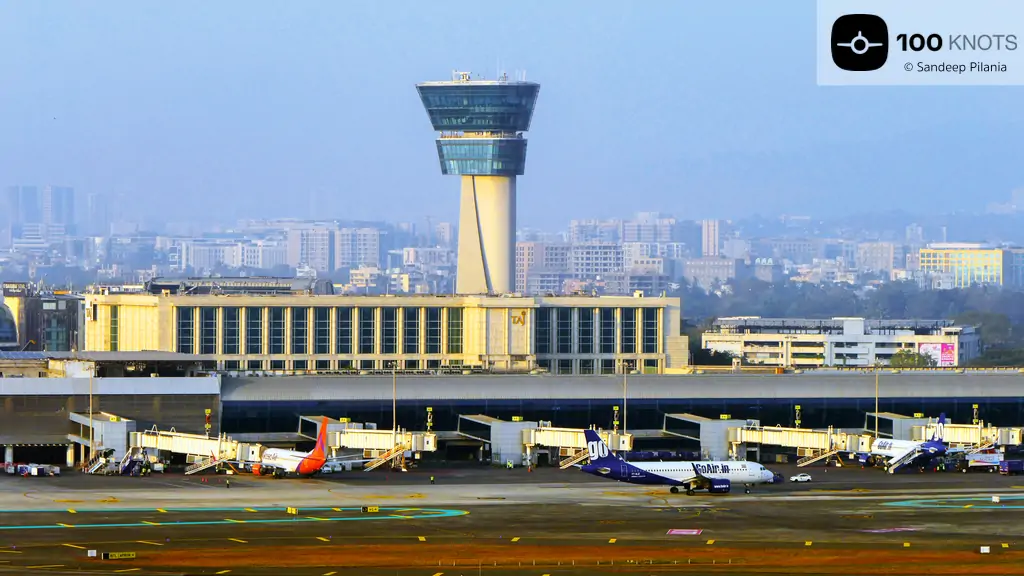
The Indian aviation sector presents a striking paradox of financial performance, with the industry recording cumulative losses of Rs 5,289.73 crore in the last financial year even as the country's largest carrier posted bumper profits. The figures, revealed by Minister of State for Civil Aviation Murlidhar Mohol in a written reply to the Rajya Sabha on Monday, paint a complex picture of an industry divided between thriving low-cost operators and struggling legacy carriers.
The Air India Group's Heavy Burden
The most significant contributor to the industry's red ink was the Air India Group, which alone accounted for losses exceeding Rs 9,808.12 crore during the 2024-25 financial year. This staggering figure actually surpassed the industry's net loss, indicating that without Air India's struggles, the sector would have posted an overall profit. Breaking down the group's performance, Air India recorded losses of Rs 3,975.75 crore while its subsidiary Air India Express fared even worse with losses of Rs 5,832.37 crore.
The newly launched Akasa Air also faced significant headwinds, reporting losses of Rs 1,986.25 crore as it invested heavily in fleet expansion and route development. State-owned Alliance Air continued its financial struggles with a loss of Rs 691.12 crore, while the beleaguered SpiceJet managed to limit its damage to Rs 55.67 crore. Smaller operators Fly91 and Quikjet Cargo posted losses of Rs 67.65 crore and Rs 1.34 crore respectively.
The Success Stories Stand Apart
Against this backdrop of losses, four airlines managed to turn profits during the financial year. IndiGo dominated the winners' circle with an impressive profit of Rs 7,253.30 crore, cementing its position as India's most successful airline. The budget carrier's lean operational model and extensive domestic network proved resilient despite challenging market conditions.
Regional carrier Star Air emerged as another profitable player, recording gains of Rs 68.75 crore, while cargo specialist Blue Dart earned Rs 0.71 crore and newcomer IndiaOne Air posted modest profits of Rs 0.33 crore. These figures, compiled after accounting for extraordinary items, were provided in response to questions raised by CPI-M member John Brittas.
Market Forces Determine the Future
The minister's reply also addressed the contentious issue of airfare regulation, clarifying that in India's deregulated aviation market, ticket prices are neither fixed nor controlled by the government. Airlines determine fares based on demand-supply dynamics and various commercial considerations, allowing market forces to shape pricing strategies. This regulatory framework, while promoting competition, has created an environment where operational efficiency and scale increasingly determine success or failure in the highly competitive Indian skies.
Read next
From Market to Maker: India's Aviation Sector Takes Flight at Wings India 2026
Abhishek Nayar
07 Feb 2026

Wings India 2026 concluded at Begumpet Airport on Friday after four days that showcased India's dramatic evolution in the aviation sector. The biennial civil aviation show, jointly organized by the Ministry of Civil Aviation, Airports Authority of India and FICCI, drew over 75,000 business visitors and one lakh general visitors, including 2,000 delegates with more than 200 international participants.
A Show of Scale and Spectacle

More than 150 exhibitors spanning airlines, aircraft manufacturers, helicopter makers, airport operators, technology firms and training institutions participated in the event. The business days saw over 500 structured meetings between businesses and government representatives, while the final two public days attracted more than 70,000 visitors who came for aircraft viewing and aerial performances. The Surya Kiran Aerobatic Team and international aerobatic pilot Mark Jefferies captivated audiences, with families clustering around the Surya Kiran stall where merchandise proved particularly popular. One memorable scene featured a child in a "Future Pilot" T-shirt playfully saluting in an Air Force pose as parents looked on.

Major Deals Reshape India's Aviation Landscape

Beyond the public spectacle, Wings India 2026 became the stage for announcements that signal India's shift from merely being an aircraft market to becoming a global manufacturing and services hub. Air India led the charge by expanding its order book with 30 fuel-efficient Boeing narrowbody aircraft, bringing its total commitment to 600 planes. The airline also signed a multi-year agreement with Boeing Global Services for a Component Services Program covering its entire fleet of Boeing 787 Dreamliners, including those yet to be delivered.
The partnership between Air India and Airbus saw transformation as well, with 15 A321neo orders converted into the longer-range A321XLR variant. The "Make in India" initiative received significant momentum when Sakthi Group and Omnipol signed a Memorandum of Understanding to introduce the L410 NG 19-seater aircraft domestically, with both companies currently assessing the feasibility of establishing a Final Assembly Line in India.

Indigenous Capabilities Take Center Stage
India's homegrown aerospace sector demonstrated its growing strength as Hindustan Aeronautics Limited secured a contract worth over Rs. 1,800 crores from Pawan Hans Limited for 10 Dhruv Next Generation helicopters. This agreement marks a pivotal transition to indigenously developed platforms for domestic utility and offshore operations. To support the sector's rapid expansion, the Airports Authority of India partnered with Airports Council International to launch a professional accreditation program that will train over 115 Indian aviation professionals to global leadership standards over the next five years.
Union Minister of Civil Aviation Rammohan Naidu captured the moment's significance during the Wings India Excellence Awards, stating that India is no longer just flying aircraft but designing, building and leading global aviation. Mallu Bhatti Vikramarka, Deputy Chief Minister of Telangana, shared the state's vision to become a premier aero-engine and MRO hub by 2047, noting that Hyderabad airport already operates on 100 percent renewable energy. The KPMG-FICCI report on India's aviation growth outlook was also released during the event. Organizers announced that Wings India will return in 2028, with dates and venue to be confirmed.
With Inputs from Deccan Chronicle
Comment