

India’s aviation regulator, the DGCA, has imposed a total penalty of Rs.40 lakh on IndiGo after finding that pilot training for around 1,700 pilots was conducted on Full Flight Simulators (FFS) that were not qualified for operations at Category-C (critical) airports such as Calicut, Leh and Kathmandu.
Two post-holders — the airline’s Director of Training and Director of Flight Operations — were each hit with Rs.20 lakh fines; the DGCA issued show-cause notices in August and found IndiGo’s response unsatisfactory.
What exactly happened?
- The DGCA reviewed IndiGo’s training records and email replies (late July 2025) and concluded that simulator sessions required for Category-C aerodromes had been run on devices that were not certified/qualified for those airports. The regulator’s probe listed 20 simulators across facilities in Chennai, Delhi, Bengaluru, Greater Noida, Gurugram and Hyderabad that were used for the training in question.
- Because Category-C airports present special terrain, weather and approach challenges, the CARs (Civil Aviation Requirements) require training on simulators specifically qualified for those airports. The DGCA said that requirement wasn’t met in this case.
Who got fined — and why it’s not just “a corporate slap on the wrist”
The DGCA levied separate penalties of Rs.20 lakh each on:
- IndiGo’s Director of Training, and
- IndiGo’s Director of Flight Operations
Those penalties were imposed under the Aircraft Rules (Rule 162 and Schedule VI-B — Severity Level 5) after the regulator found the two post-holders responsible for ensuring compliance with CARs. Demand notices ordered deposit to the government (Bharatkosh) and also explained IndiGo’s ability to appeal within 30 days (with a statutory fee).
Yes, the total is Rs.40 lakh. No, it won’t bankrupt anyone — but the point is regulatory compliance, not headline amounts.
How many pilots were affected? (Spoiler: a lot)
The DGCA’s probe flagged training for about 1,700 pilots — Captains and First Officers — who had simulator sessions logged on devices the regulator said were not qualified for Category-C aerodromes. That’s the scale that turns this from a paperwork glitch into a regulator’s red flag.
Why Category-C airports matter
Think of airports like levels in a video game:
- Most runways = “vanilla” level.
- Category-C (Calicut, Leh, Kathmandu, etc.) = boss level with tricky terrain, steep approaches, or tricky weather.
- Regulators require simulators that faithfully reproduce those boss-level quirks so pilots can practice the exact failures and surprises they might face.
Using a simulator that hasn’t been qualified for those quirks is like practicing the boss with fogged glasses — you can play, but you might not be prepared for the real thing. That’s why the DGCA takes it seriously.
IndiGo’s response and what comes next

IndiGo has contested aspects of the finding and is reported to be evaluating its options, including appeal. The airline has said the penalty does not materially affect its financial performance and that it will respond through the regulatory process. The DGCA, meanwhile, required payment or an appeal within the statutory window.
Why passengers (and pilots) should care — beyond headlines and memes
- Safety culture: This is about whether procedures and paperwork match reality. Aviation safety is a system; lapses in training qualification weaken that system.
- Scale matters: 1,700 pilots being affected is not a small administrative blip — it’s a cohort size large enough to require process fixes and careful auditing.
- Reputation & regulation: For IndiGo, the reputational hit and closer regulatory scrutiny may be more consequential than the fine itself.
A little levity, because aviation needs a human touch
If you’ve ever watched someone on a flight-sim rig and thought, “That looks like a very convincing paper aeroplane,” well — regulators have a less forgiving sense of humor. Calling a simulator “qualified for Leh” when it hasn’t been vetted is the bureaucracy’s version of turning in last week’s homework and hoping the teacher enjoys interpretive dance as an explanation.
(Serious bit: joking aside, training fidelity really matters when the mountains and weather don’t negotiate.)
What to watch next
- Will IndiGo appeal the order? If yes, expect formal submissions and possibly an out-of-court remedial plan or commitments to stricter simulator controls.
- Will the DGCA tighten oversight of third-party simulators and training organizations? The order already named simulators operated by CSTPL, FSTC, ACAT and Airbus among others — expect more audits.
- Will other carriers or training organizations get a closer look? Regulatory ripple effects often follow once a major operator is found non-compliant.
Bottom line (and a friendly nudge to regulators and airlines)
Rules about simulator qualification exist for a reason: mountainous approaches and short-field operations don’t forgive imagination. The Rs.40 lakh fine tells us regulators are watching and that airlines — even large ones — need iron-clad training compliance, not optimistic check boxing.
TL; DR
- DGCA fined IndiGo a total of Rs.40 lakh (two fines of Rs.20 lakh each).
- Finding: ~1,700 pilots trained on Full Flight Simulators that were not qualified for Category-C airports (e.g., Calicut, Leh, Kathmandu).
- DGCA identified 20 simulators across training centers in Chennai, Delhi, Bengaluru, Greater Noida, Gurugram and Hyderabad as involved.
- Show-cause notices were issued in August; IndiGo’s responses were judged unsatisfactory, prompting penalties and the option to appeal.
- IndiGo says it will contest/appeal; regulator action highlights focus on simulator qualification and training fidelity.

Read next

If you handed an airline a full deck of cards and said “no new draws,” what do you do? Etihad Airways chose to reshuffle the deck — add velvet, privacy doors and preclearance — and bet the house on premium customers, clever partnerships and operational wizardry.
The ceiling: 50,000 seats, 11 cities, 185 flights — and no wiggle room
Etihad is flying every seat the India–UAE bilateral allows it to — which currently caps Abu Dhabi-based carriers at 50,000 seats per week. Etihad operates roughly 185 weekly flights across 11 Indian cities, and that seat cap is shared with Air Arabia Abu Dhabi — so adding more frequencies or destinations isn’t an option until governments renegotiate.
Translation: you can’t just add flights to grow. You must squeeze more value from the flights you already have.
Product-first: make each seat worth more (and sexier)
Rather than lobby for more slots (which takes time, diplomacy and patience), Etihad is upgrading the product it flies into India — starting with the A321LR narrow-body that behaves like a mini widebody in comfort and margin. Kolkata became the first Indian city to receive the reimagined A321LR: a slimmed-down 160-seat layout featuring two first-class suites with doors, 14 business seats and 144 economy seats — well below the A321’s typical 240-seat layout — intentionally built to boost premium yield. It’s a strategic nudge: fewer seats, but pricier ones.
If you’re thinking “first class on a single-aisle?”, yes — Etihad did that. It’s like putting caviar in a snack tray and calling it progress.
Partnerships: when you can’t grow routes, grow friends
Etihad is leaning on partnerships to stretch its reach into India without using extra bilateral capacity. The carrier has tied up with Akasa Air so Akasa can connect several Indian cities to Abu Dhabi, effectively opening more feeder flows into Etihad’s long-haul network. Think of it as Etihad outsourcing the ladder to the deck so more passengers can climb aboard the premium experience in Abu Dhabi.
Abu Dhabi: the secret sauce (preclearance + new terminal)
Etihad is also pushing the Abu Dhabi hub as a reason to choose its service. Zayed International’s new terminal and a dedicated U.S. CBP pre-clearance facility make transits to the United States dramatically faster: clear U.S. immigration in Abu Dhabi, arrive in the U.S. like a domestic passenger, and skip long arrival queues. Etihad even opened a U.S. Preclearance Lounge and rolled features that make the connection pleasant and efficient — a real differentiator for long-haul travelers.
Pro tip: if you hate immigration lines, Etihad’s Abu Dhabi connection now reads like a VIP fast-pass — redeemable with a boarding pass and good timing.

Yield optimization and operational efficiency: the algebra of airline profit
With frequencies capped, revenue growth becomes a math problem: increase yield per seat, capture more high-value customers, reduce unit costs, and monetize ancillaries (lounges, premium seats, ancillary fees). Etihad’s narrower, premium-focused A321LR product, combined with targeted loyalty and lounge offerings — including preclearance lounge access — is a practical attempt to move the average revenue per passenger upward even if total seats don’t budge. Multiple outlets and industry insiders say this approach is already paying off for the carrier.
What it means for Indian travelers (and why you should care)
- Frequent flyers: better lounge access, faster transits and the unusual luxury of first suites on a short/medium haul — yes, on a narrow-body.
- Premium-seeking families and business travelers: more seat types that justify premium fares rather than hunting for expensive widebody tickets.
- Price-sensitive passengers: economy still exists and will be available, but expect fewer ultra-cheap seats on routes where Etihad prioritizes premium yield.
Risks and the spicy bits (the fine print)
- Dependence on diplomacy: until India and the UAE revisit the bilateral, seat growth is government business, not airline business. That means any big expansion hinges on high-level talks.
- Premium saturation risk: crowding the market with premium inventory risks empty seats if demand softens; niche luxury on narrowbodies is novel, but novelty must meet repeatable demand to be profitable.

Verdict: creative, sensible — and mildly audacious
Etihad’s response to a regulatory ceiling is smart: if you can’t add seats, make every seat count more. That’s classic business-playbook thinking — with leather upholstery. Between product reinvention (A321LR cabins), hub advantages (CBP preclearance) and partnerships (Akasa), Etihad is building a multi-pronged strategy that converts fixed capacity into higher revenue per passenger and better competitive positioning. It’s not a guaranteed touchdown, but it’s the kind of play that wins overtime.
Also: hats off to the plane designers. Turning a narrow-body into a quasi-widebody living room takes design chops and a flair for the dramatic.
TL; DR
- Etihad uses all 50,000 weekly seats allowed under India–UAE rules and operates ~185 weekly flights to 11 Indian cities.
- Unable to add frequencies, Etihad prioritizes premium product upgrades (A321LR with first-class suites) to lift yield per seat.
- Partnerships (eg. with Akasa Air) extend reach without using more bilateral capacity.
- Abu Dhabi’s Zayed International terminal + U.S. CBP preclearance is a major customer experience advantage for long-haul travelers.
- Bottom line: clever product & partnership moves let Etihad grow revenue even when seat numbers can’t. Keep an eye on how quickly passengers buy the upgraded experience.
Read next
Small Jets, Big Ambitions: How India’s Narrow-Bodies Are Rewriting the Map of International Travel
Abhishek Nayar
14 Oct 2025
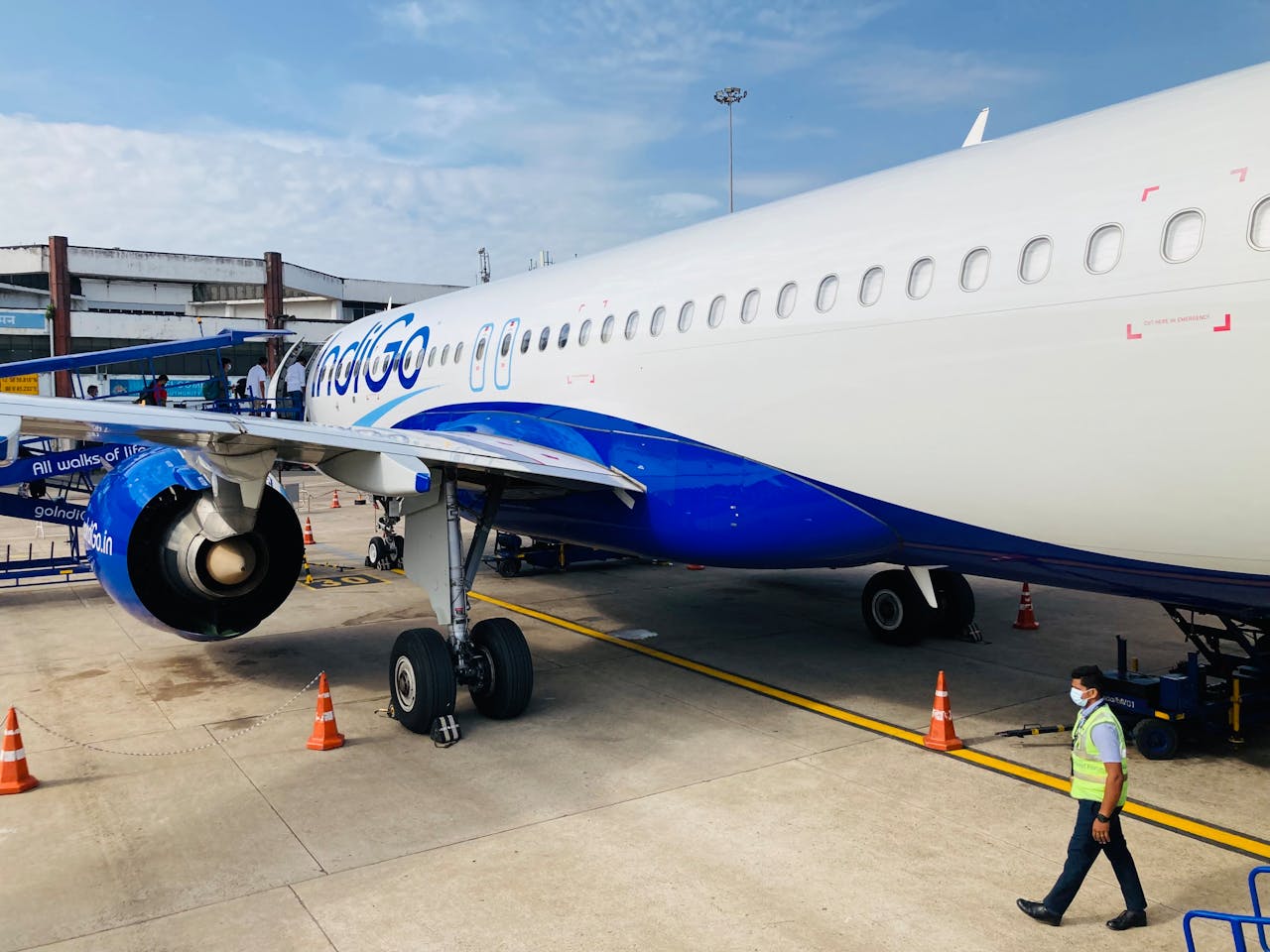
Airlines used to think in hub-and-spoke: big cities, big jets, big drama. Now a new chorus of long-range single-aisle aircraft — think Airbus A321neo/LR/XLR and the Boeing 737 MAX family — is quietly rewriting that playbook. Indian carriers are using these fighters-in-disguise to stitch secondary cities directly to places that once required a wide-body or an inconvenient connection. The result is more direct travel, leaner economics, and a clever way to grow without over-exposing airlines to the wild swings of costs.
Why the tiny-but-mighty jets make sense
Long-range narrow-bodies hit a sweet spot: they burn less fuel per trip than big twin-aisles, need smaller crews, and fit the “long-thin” market — routes with steady but not massive demand. That means airlines can run nonstop flights between, say, Hyderabad and Singapore or Kozhikode and Dammam without hoping a wide-body is suddenly full. For cost-conscious carriers in a volatile macro environment (fuel, forex, you name it), that trade-off—reach for less money—is irresistible.
Who’s flying what where (the fun, useful part)
- IndiGo is aggressively using A321neos and now planning for A321XLRs to open up longer city pairs — examples reported include Mumbai–Istanbul, Mumbai–Nairobi, Delhi–Jakarta, and recent additions such as Hyderabad–Singapore and Bengaluru–Bali. IndiGo also continues to expand long-haul routes using larger types when demand calls (e.g., 787 Dreamliners on some UK services).
- Air India (including Vistara fleet integrations) has placed LR/neo-family jets on medium-range international sectors — for instance Delhi–Hong Kong and services involving Denpasar — enabling flexible capacity matching across markets. The group is blending types so aircraft can be matched more tightly to route economics.
- Akasa Air has rapidly built a Gulf and regional footprint using MAX variants and smaller jets — flying to Doha, Jeddah, Kuwait and nearby leisure hubs while navigating delivery timing and growth headaches. (Yes, growth sometimes feels like a small comedy of errors when new aircraft arrive late; still, the strategy is clear.)
- Air India Express and other LCC arms are leveraging 737-8 MAX jets to plug gaps in Gulf connectivity from secondary Indian cities — an important market for migrant and VFR traffic.
The network effect: more direct city pairs, fewer painful connections
The practical outcome is that more Indian second-tier cities can get direct links to places in East Africa, Southeast Asia, the Gulf and even pockets of Europe and North Africa — bypassing the traditional transfer points. This “directness” attracts leisure travelers, the diaspora market, and business travelers who value time over a marginal fare saving. Data suggests narrow-bodies already operate a large share of India’s international flights under seven hours — evidence that the strategy is not theoretical, it’s happening.

The caveats (because every shiny thing has fine print)
- Passenger comfort & perception: Single-aisle long-haul flights can feel snug compared with wide-bodies. Airlines know this — some retrofit interiors with better IFE, premium seats or slightly different cabin layouts — but there’s a risk that brand perception could suffer if the experience doesn’t meet expectations on 5–7 hour trips.
- Cargo limits: Narrow-bodies carry less belly cargo than wide-bodies, which matters for revenue diversification. Markets that depend on cargo-heavy revenue will still require wide-bodies.
- Airport operations & ETOPS: Extended-range operations need strict ETOPS compliance and smooth airport turnaround systems to make these tight schedules work. Operational discipline becomes the unsung hero here.
Experts’ take — the hybrid thesis
Consultants and ratings analysts are nearly unanimous: the coming decade likely favors a hybrid fleet strategy. Narrow-bodies will drive reach — giving airlines the flexibility to test and grow new city pairs — while wide-bodies will anchor scale, premium product and cargo capacity on high-demand routes. In short: don’t expect a one-size-fits-all swap; expect plurality.
Tech & timing: why 2025 matters
The Airbus A321XLR — with its extra fuel payload and reach compared to earlier neo variants — is the disruptor on the block. Deliveries expected around 2025 (and airlines like IndiGo signaling initial XLR deployments) are a turning point: suddenly single-aisle jets reliably reach farther into Europe, North Africa and East Asia without stepping up to a wide-body. That changes route economics and destination lists in a tangible way.

What travelers should expect (and what’s actually fun about it)
- More direct flights from non-metro Indian cities to international leisure and business destinations. Less airport-hopping. More time sipping chai/coffee in a lounge — or, more realistically, trying to board before a family of five with three suitcases and two carry-ons.
- A wider variety of price-led options: airlines can sustainably operate thinner routes, so you may see more competitive fares on previously niche city pairs.
- A mixed cabin experience: some narrow-body long-haul flights will have nicer interiors and onboard amenities; others will be lean, efficient and no-frills. Read the product description like it’s a menu.
Bottom line: smarter growth, not just bigger wings
India’s carriers are playing chess, not checkers. By using long-range narrow-bodies alongside traditional wide-bodies, they can test new markets, capture direct traffic from secondary cities, and lower unit costs — all while preserving capacity where it truly matters (premium cabins and cargo). If executed well, the hybrid model could make India not just a busy aviation market but a creatively connected one. And for passengers? More doors open from more places — which is good news unless you enjoy layovers for the thrill of collecting passport stamps.
TL; DR
- Long-range single-aisle jets (A321neo/LR/XLR, 737 MAX) let Indian carriers fly medium-demand international routes nonstop.
- IndiGo, Air India (group) and Akasa are leading this push — opening routes from secondary cities to Africa, East Asia, the Gulf and beyond.
- Narrow-bodies reduce unit costs and increase utilization, but passenger comfort and cargo limits remain concerns.
- A hybrid fleet (narrow + wide) is the winning bet for flexibility, scale and premium reach — especially as A321XLR deliveries ramp up around 2025.
- Expect more direct flights out of non-metro India and smarter route experiments — fewer layovers, more choices, and a bit more aviation creativity.
Read next

If you thought Mumbai couldn’t get any busier — think again. On October 8, 2025, Prime Minister Narendra Modi cut the ribbon on the long-awaited Navi Mumbai International Airport (NMIA), turning Mumbai into one of the world’s celebrated twin-airport cities and giving the region a gleaming new gateway for passengers and cargo alike.
A grand opening (with travel-themed confetti)
The ceremony wasn’t just ceremonial selfie fodder: NMIA’s Phase-1 will operate with a single 3,700-metre runway and a terminal designed to handle roughly 20 million passengers a year to start with, with commercial flight operations slated to begin in December 2025 after initial commissioning. The announcement came alongside promises that future phases would expand capacity dramatically.
Jaideep Mirchandani of Sky One called it a facility that will “propel Indian aviation to unprecedented heights,” and he isn’t alone — industry and government leaders framed the airport as both a passenger reliever for crowded Mumbai and an economic engine for the wider region. (That said: bring a book for your old airport delays — there’s now a new place for them.)
Lotus architecture, Zaha-like drama
The terminal’s sculptural, petal-like roof and sweeping interior lines are the work of Zaha Hadid Architects — the lotus motif was chosen to fuse Indian cultural symbolism with contemporary engineering. Expect dramatic columns, daylight-optimized volumes and sweeping public spaces that were designed to make your layover feel slightly less like exile
The numbers you actually care about (and a couple you’ll brag about)
- Initial passenger capacity: ~20 million per year (Phase-1).
- Planned full capacity: scales up to about 90 million passengers (future phases).
- Cargo: starts at 0.5 million tonnes annually with planned expansion to ~3.2 million tonnes as the cargo complex matures — a big win for exporters and pharma logistics.
- Price tag: built at roughly Rs.19,650 crore. (Yes, that many zeros.)
- Jobs: projected to create around 200,000 direct and indirect jobs across aviation, logistics, IT, hospitality and real estate.
Numbers like these explain why real estate agents and cargo brokers were already high-fiving in advance.
Digital, automated and a little bit sci-fi
NMIA is being billed as India’s first fully digital airport, with automated baggage handling, AI monitoring in cargo, paperless processes and facilities for pre-booked parking and contactless immigration. The cargo terminal promises automation that the builders say will shave turnaround times and boost reliability for time-sensitive freight (pharma, perishables, electronics).
And in a neat civic tie-in, the government launched a "Mumbai One" mobility app at the event — meant to stitch together local trains, metros, buses and other operators so the “last mile” doesn’t become the last straw. Multimodal connectivity (expressways, suburban rail, metro and even planned water taxi services) is core to the airport’s promise.
Why businesses and travellers should care
- Relief for CSMIA: Mumbai’s existing airport has been running close to capacity for years. NMIA will ease congestion and add runway/time capacity for new routes.
- Cargo hub potential: Proximity to JNPT and Maharashtra’s industrial belt makes NMIA a logical node for exports — especially pharmaceuticals and perishables on fast lanes.
- Jobs & growth: from hotels to IT back-offices to logistics parks, the economic ripple effects are expected to be large.
The fine print (because reality loves footnotes)
The airport opens ceremonially on October 8, 2025, but regular flight operations will ramp up over weeks/months — authorities mentioned mid-December as the likely operational window for scheduled commercial flights. Patience (and a friendly airport café) will be your allies.
Projections (90 million passengers, 3.2 million tonnes cargo, 200k jobs) are future targets tied to later phases; Phase-1 is intentionally conservative to ensure systems work before the big scale-up.
A parting flight of fancy (and a little humour)
Think of NMIA as Mumbai’s new “backstage” — a place where cargo gets its choreography and layovers get unexpectedly photogenic. Zaha-inspired petals on the roof, robots in the cargo shed and officials promising jobs — it’s equal parts Bauhaus and Bollywood. Jaideep Mirchandani’s hope that the airport will “propel Indian aviation to unprecedented heights” is bold — but with runways, robots and a lotus on the roof, it’s hard not to root for it. (Also, if this airport has the audacity to make delays pleasant, that’ll be a miracle.)
TL; DR
- NMIA was inaugurated on 8 Oct 2025; commercial ops expected to start by December 2025.
- Phase-1: 1 runway, terminal handling ~20 million passengers; future phases to scale to ~90 million.
- Cargo: 0.5 Mtpa initially; expandable to ~3.2 Mtpa — automated, AI-monitored cargo handling promised.
- Cost: approx. Rs.19,650 crore.
- Jobs: projected ~200,000 direct/indirect jobs across sectors.
Read next
Could Turkish Airlines Really Ghost Boeing — and Swipe an Airbus Instead?
Abhishek Nayar
10 Oct 2025
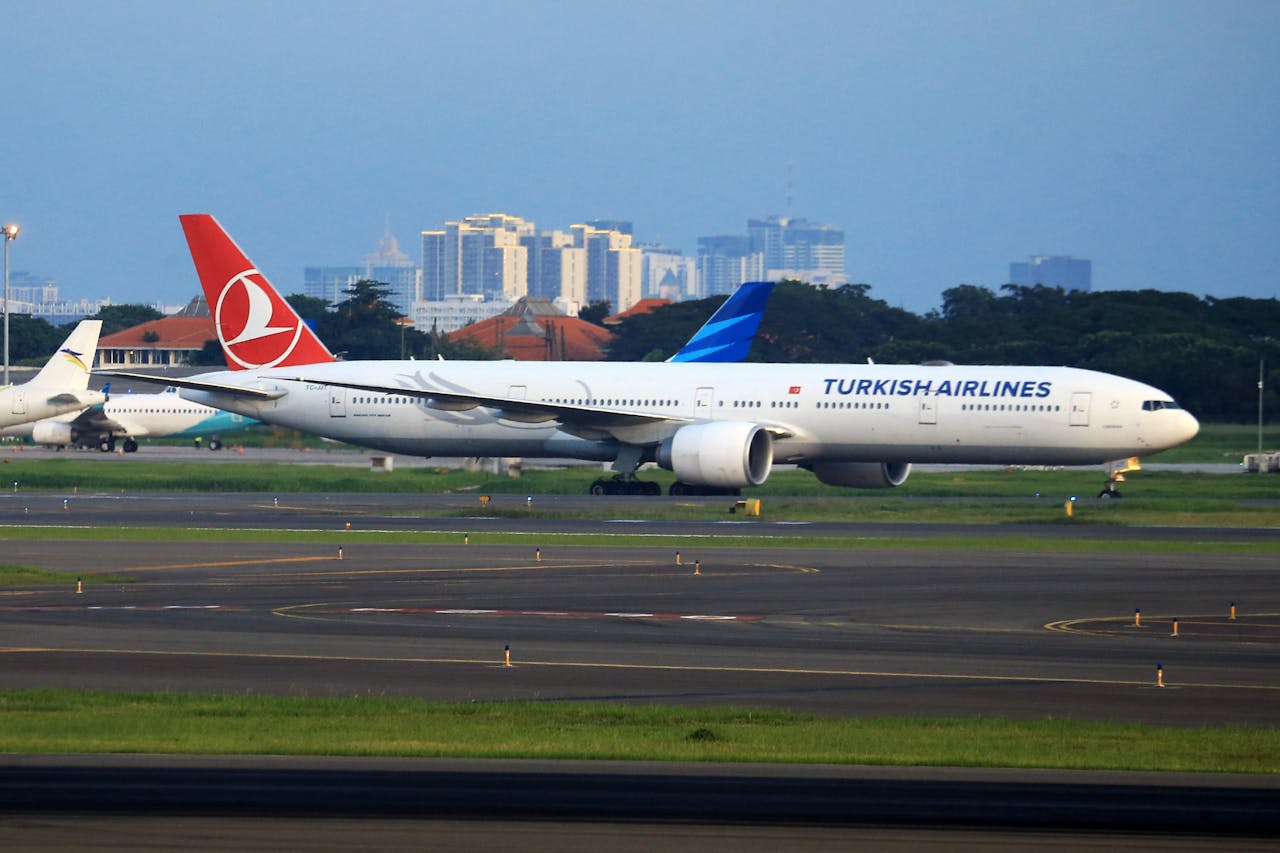
Turkish Airlines’ chair Ahmet Bolat dropped a line in Stockholm that sounds like the opening move of a very expensive chess game: the carrier’s tentative order for up to 150 Boeing 737 MAX jets is conditional — and if engine talks with CFM International don’t land on acceptable economic terms, the airline could pivot and buy Airbus aircraft instead.
The set-up: a presidential handshake… and an asterisk
The Boeing deal — reported as part of a larger package announced around President Erdogan’s meeting with U.S. President Donald Trump in late September — was widely publicized but always carried an important caveat: the 737 MAX purchase depends on a separate engine agreement with CFM. In short: aircraft are one thing; engines are the other — and both have to agree to dance.
Engines: the awkward, expensive heart of the matter
CFM International (a GE–Safran joint venture) is the sole engine supplier for the 737 MAX. Airbus’ A320neo family, by contrast, can be fitted with engines from Pratt & Whitney or CFM — which gives airlines more bargaining chips. Bolat explicitly reminded the industry that, with Airbus, “I have choices.” Translation: competition = leverage.
Why the fight is so bitter (and why it matters)
Airlines and engine makers historically play a long game: engines are often sold close to cost, and the profits come from decades of maintenance and service contracts. But a recent spike in wear-and-tear, parts shortages and maintenance delays has made hourly- or life-cycle pricing riskier — and airlines understandably want protection from sudden cost blowouts. Turkish Airlines is pushing for long-term repair/maintenance terms that shift less risk onto the carrier; CFM has been cautious about offering that — hence the standoff.
The dominoes: what this could do to the Boeing–Airbus scoreboard
If Turkish Airlines flips its order to Airbus, it’s not just a commercial embarrassment for Boeing — it would be a public demonstration that engine-supplier economics can trump manufacturer brand loyalty. For Airbus, it’s a marketing wet dream: “Want options? Buy Airbus.” For Boeing, it’s a reminder that singular supply chains (i.e., one engine choice) can become bargaining liabilities when relationships sour.
The 777X sidebar: love for Boeing, but not “in a rush”

Bolat also signaled that THY hasn’t given up on larger Boeing types such as the 777X — the airline is monitoring the program and said it would order when the timing is right. The 777X program has slipped repeatedly and is now widely expected to enter service around 2027; Turkish Airlines is cautious but interested. So—no full breakup; maybe a very polite break-up text with Boeing, followed by occasional DMing.
Short-term pain, long-term chess: operational consequences
Turkish Airlines already faces engine-related operational stress: Pratt & Whitney delays have grounded dozens of aircraft and created maintenance backlogs that stretch into months. These service bottlenecks have raised fares, increased spare-part prices and forced airlines — including THY — into tough negotiations over who pays for what when engines need major work. That context makes Bolat’s tough stance easier to read: when your network depends on aircraft being available, you can’t afford open-ended maintenance risks.
Why this story is delicious for the industry — and a bit scary for travelers
- It’s a reminder that airplane shopping isn’t just about paint schemes and seat maps — engines and long-term MRO (maintenance, repair, overhaul) economics can decide fleet strategies.
- It shows how geopolitics and presidential-level optics can announce big deals, while the real work — contract minutiae with component suppliers — happens in quiet conference rooms.
- For passengers: if engine shortages and repair backlogs persist across the industry, that can mean fewer available seats and more flight disruptions. Translation: book that holiday, but maybe don’t plan a connecting tightrope walk.

What happens next (a quick playbook)
- CFM and Turkish Airlines continue negotiating. If CFM softens on hourly/long-term repair terms (or offers a price that balances their risk), Boeing stays in the picture.
- If negotiations stall, THY can credibly shift to Airbus — and leverage Airbus’ dual-supplier engine strategy to extract better deals.
- Industry watchers will watch supply chains (engines and parts), political optics, and which side budges first — the one who blinks may still get a better invoice.
Verdict (with a wink)
This isn’t a rom-com breakup; it’s corporate negotiation theatre where the actors are jetliners, and the props are billions of dollars. Turkish Airlines’ threat to “change to Airbus” is both strategic noise and a genuine card to play: the airline has the scale to make vendors sweat. For Boeing, it’s a reminder that even a presidential backdrop doesn’t close every commercial problem — the fine print does.
TL; DR
- Turkish Airlines may switch a tentative 150-aircraft Boeing 737 MAX order to Airbus if engine talks with CFM fail.
- The Boeing deal was announced around a late-September presidential meeting but depends on a separate engine agreement.
- CFM is the sole 737 MAX engine supplier; Airbus offers multiple engine options — greater bargaining power for airlines.
- Engine supply and maintenance delays (Pratt & Whitney issues among them) have grounded planes and strained airline operations, pushing carriers to demand better long-term repair terms.
- THY still likes Boeing’s 777X but says it will order only “when the time is right”; the 777X remains delayed into around 2027.
With Inputs from Reuters
Comment