
Which Indian Airline Is Flying With the Fewest Pilots Per Plane — And Should Passengers Be Worried?

Abhishek Nayar
13 Mar 2026
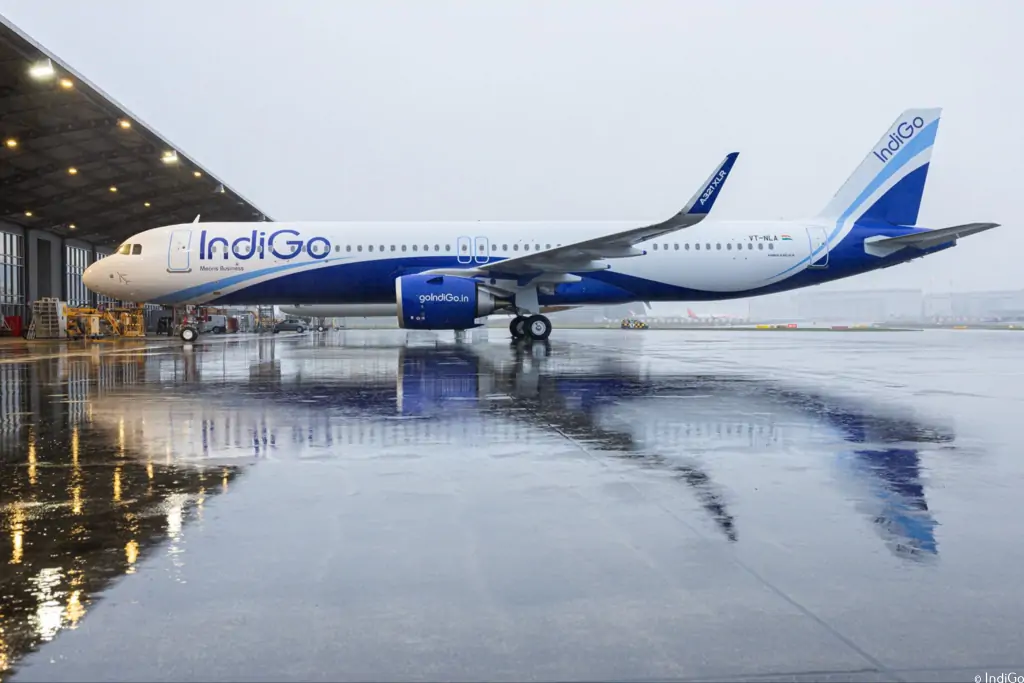
India's Civil Aviation Ministry took center stage in Parliament on Thursday, unveiling a detailed breakdown of pilot strength and staffing ratios across the country's major domestic airlines. The data, presented by Minister of State for Civil Aviation Murlidhar Mohol in response to questions raised in the Lok Sabha, revealed striking differences in how airlines manage their pilot workforce.
IndiGo Sits at the Bottom of the Pilot Ratio Rankings

The most headline-grabbing figure from the minister's statement was IndiGo's pilots-to-aircraft ratio of just 7.6 — the lowest among all domestic carriers surveyed. For context, this ratio measures how many pilots an airline maintains for every aircraft in its fleet, and a lower number can indicate tighter staffing buffers.

At the opposite end of the spectrum, SpiceJet leads with the highest ratio of 9.4 pilots per aircraft, closely followed by Akasa Air at 9.33. Air India stands at 9.1 pilots per aircraft, while its subsidiary Air India Express registers 8.8 — both comfortably above IndiGo's figure.
Breaking Down the Numbers: Who Has the Most Pilots?
Despite its lower ratio, IndiGo commands the largest absolute pilot workforce among Indian carriers, with a total of 5,200 pilots — a reflection of the airline's sheer scale as the country's dominant low-cost carrier. Notably, 970 of those pilots are women, underscoring IndiGo's relatively strong representation of female aviators.

Air India follows with 3,123 total pilots, including 508 women. Air India Express, the budget arm of the Air India group, reports 1,820 pilots on its rolls, with 234 female pilots among them.

Newer Airlines Show Their Growing Pains

Akasa Air, the youngest carrier in the mix, currently employs 761 pilots, including 76 women. SpiceJet, which has faced well-documented financial turbulence in recent years, has 375 pilots in total, with 58 being women — the smallest absolute workforce in the data presented.
The Foreign Pilot Question: Who Is Relying on Expat Talent?
The minister also addressed a separate parliamentary question regarding the employment of expatriate pilots. Air India Express leads this category with 48 foreign pilots on its payroll, while IndiGo has hired 29 expat pilots. The reliance on foreign talent often points to gaps in the domestic supply of trained pilots — a long-standing structural challenge in India's rapidly expanding aviation sector.
What the Data Really Tells Us
The figures collectively paint a nuanced picture of India's aviation workforce. While IndiGo's low pilot ratio raises natural questions about operational pressure on its crews, the airline's massive fleet size and total pilot count suggest a complex operational equation rather than a simple shortfall. The data signals that as Indian aviation continues its aggressive growth trajectory, pilot recruitment, training pipelines, and workforce diversity will remain critical conversations — both inside Parliament and beyond.
Read next
From Bankruptcy to Boarding Calls: Spirit Airlines Is Hiring Pilots Again — But the Turbulence Isn't Over
Abhishek Nayar
11 Mar 2026
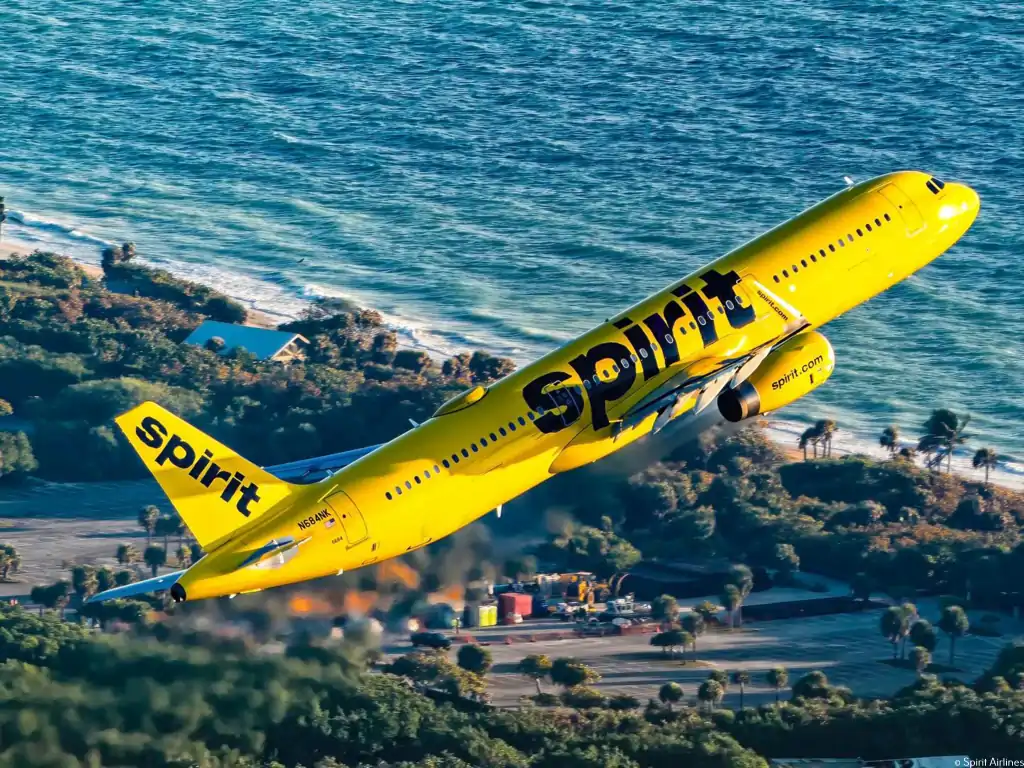
Spirit Airlines, the budget carrier synonymous with bright yellow jets and no-frills fares, has taken a striking step toward resurrection. On Tuesday, the airline announced it has recalled nearly 500 pilots who were furloughed last year, signaling cautious optimism as it prepares to emerge from its second bankruptcy filing.
The recalled pilots received formal notices on March 9, 2026. Those who accept the offer will return to duty within the timeline specified in the Collective Bargaining Agreement, the airline confirmed.
Why the Sudden Recall?
The move was not entirely planned. According to a company memo cited by CNBC, the recall was driven by higher-than-expected pilot attrition — meaning more pilots than anticipated had permanently left the airline during its period of financial distress. Spirit declined to comment on the memo or offer further details about the scope of those departures.
The Road Into Bankruptcy — Twice
To understand why this recall matters, one has to look back at the turbulence Spirit has endured. Spirit Aviation Holdings, the carrier's parent company, filed for bankruptcy for the second time in August 2025, weighed down by dwindling cash reserves and mounting losses that had accumulated over years of failed recovery attempts.
The airline had rolled out several measures to curb cash burn and attract fresh funding, but none proved sufficient. The core problem was structural: Spirit's ultra-low-cost model, built on stripped-down fares for travelers willing to pay separately for basics like checked bags and seat assignments, had lost its appeal.
When the Pandemic Changed Everything
That model thrived before the pandemic, when price-sensitive travelers formed a reliable and growing market. But after the pandemic, passenger preferences shifted sharply. Travelers began gravitating toward comfort, experience, and premium offerings — a trend that left ultra-low-cost carriers like Spirit stranded on the wrong side of consumer sentiment. Demand for bare-bones air travel tapered off quickly, and Spirit struggled to adapt.
A Slimmer, Smarter Strategy Ahead
Last month, Spirit reached a restructuring agreement with its lenders that is expected to allow the airline to exit bankruptcy by late spring or early summer of 2026. The post-bankruptcy Spirit will be a leaner operation — one that intends to focus on select routes and peak travel periods where demand remains strongest, rather than attempting to serve every market it once did.
What This Means Going Forward
The recall of nearly 500 pilots is, in many ways, the most tangible proof yet that Spirit believes it has a future worth staffing. Whether that future is sustainable depends on how well the airline can reposition itself in a market that has fundamentally changed around it. For now, those yellow planes are preparing to fly again — just fewer of them, and far more carefully.
With Inputs from Reuters
Read next
Did IndiGo Just Hit a Turbulence at the Top — Or Is This a Calculated Reset?
Abhishek Nayar
11 Mar 2026

On March 10, 2026, InterGlobe Aviation Limited — the parent company of India's largest airline, IndiGo — announced one of the most significant leadership transitions in its twenty-two-year history. With immediate effect, Pieter Elbers stepped down as Chief Executive Officer of the airline. The Board of Directors formally acknowledged his contributions and service to the organization, wishing him well in the endeavors that lie ahead.
From Amsterdam to Delhi — and Now, a Departure
Elbers, who had led the airline through a period of considerable expansion and operational complexity, exits at a moment when IndiGo stands as a dominant force in Indian aviation. His tenure was marked by ambitious growth targets and a sharpening of the airline's international ambitions. Yet, the Board's terse but gracious announcement made clear that the chapter had come to a close.
The Founder Steps Back In
Filling the leadership vacuum, at least temporarily, is none other than Rahul Bhatia — the co-founder and Managing Director of IndiGo. Bhatia will assume management of the airline's affairs in the interim, until a permanent successor is named, which the Board indicated would happen "in short order."
Chairman Vikram Singh Mehta framed Bhatia's return as a deliberate and purposeful move. According to Mehta, Bhatia returns specifically to strengthen the company's culture, reinforce operational excellence, and deepen IndiGo's commitment to delivering exceptional service defined by care, reliability, and professionalism.
A Founder's Sense of Duty
Bhatia himself spoke with unmistakable conviction about why he is stepping back into the role. Having built and nurtured IndiGo across twenty-two years, he described feeling a deep personal sense of commitment and responsibility — toward the nation, toward customers, employees, shareholders, and all other stakeholders of the airline.
His vision for the interim period is anchored in three clear pillars: Culture, Service Excellence, and Stakeholder Trust. Alongside these, Bhatia signaled that IndiGo would continue sharpening its strategic focus on serving India and her people through an airline that is professionally managed, operationally reliable, and globally respected.
What This Means Going Forward
The transition raises natural questions about the airline's strategic direction and who its next permanent leader will be. What is clear, however, is that the Board is treating this moment not as a crisis, but as a course correction — one guided by the steady hand of the man who gave the airline its identity in the first place.
With Inputs from IndiGo
Read next
The Jet Deal That Could Rewrite U.S.-China Relations — 600 Planes, One Presidential Visit
Abhishek Nayar
09 Mar 2026

For nearly a decade, Boeing watched China's booming skies from the sidelines. Now, in what could be the most consequential aviation deal in years, the American planemaker is reportedly on the verge of breaking back in — and in dramatic fashion. Bloomberg News reported on Friday that Boeing is negotiating an order for up to 500 737 MAX jets from Chinese airlines, a deal timed to coincide with President Donald Trump's first state visit to Beijing since 2017, scheduled for March 31 to April 2.
The Numbers Behind the Headline
The sheer scale of what is being discussed is staggering. Beyond the 737 MAX agreement, the two sides are also in talks over a widebody package of roughly 100 Boeing 787 and 777X jets, bringing the potential total to around 600 aircraft. China is simultaneously negotiating a separate 500-jet order with Airbus — talks that have been on and off since at least 2024 — signaling that Beijing is looking to make sweeping aviation commitments across the board.
From 25% to 2% — Boeing's Painful Decline in China
China was once the backbone of Boeing's ambitions. At its peak, Chinese carriers accounted for roughly 25% of Boeing's order book. Today, that figure has collapsed to just 133 confirmed orders — approximately 2% of its backlog. However, an additional 13.6% of Boeing's orders come from unidentified customers, which analysts believe could include Chinese carriers operating behind the scenes.
The freeze in orders stemmed from a combination of geopolitical tensions and trade disputes. During clashes with the Trump administration over tariffs, Beijing ordered Chinese airlines to temporarily halt deliveries of new Boeing jets in April — a halt that was only reversed later that spring. Trump himself had previously threatened to impose export controls on Boeing aircraft components as part of Washington's response to Chinese restrictions on rare earth minerals.
Pent-Up Demand Creates Enormous Pressure
China remains one of the world's largest commercial aviation markets, yet deliveries have dropped sharply in recent years, with India now recognized as the fastest-growing international market for both Boeing and Airbus. Aviation analysts estimate China needs at minimum 1,000 imported aircraft to sustain its airline growth and replace aging fleets — a massive gap that creates powerful commercial incentives for a deal.
Politics and Planes: An Inseparable Pairing
The timing of any major order is not purely commercial — it is deeply political. A reported mega-deal between Beijing and Airbus in 2024 ultimately failed to materialize, a cautionary reminder that these negotiations can collapse under political pressure. Boeing has, however, secured several large international sales in the wake of Trump's foreign visits, suggesting the presidential travel calendar continues to drive aviation diplomacy. Xi Jinping is also expected to visit Washington later in the year, potentially opening another window for further announcements.
With Inputs from Reuters
Read next
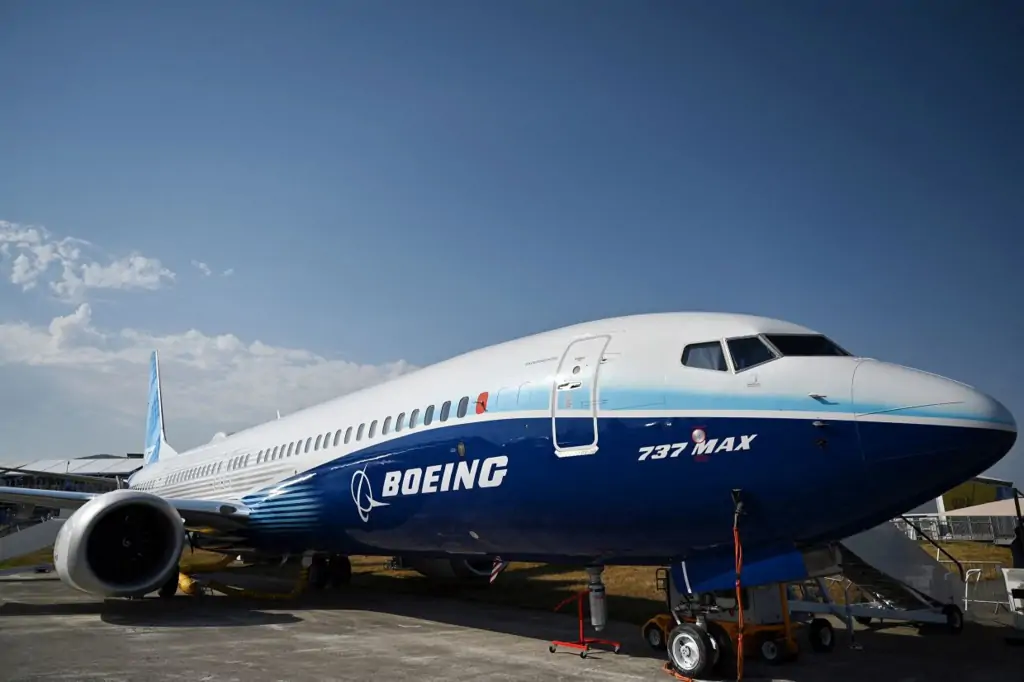
Boeing's senior vice-president Brendan Nelson sounded a clear alarm: prolonged geopolitical conflict poses the single greatest risk to the aerospace giant's future. Speaking to ET, Nelson — a former Australian defense minister during the previous Gulf War — said that while demand for Boeing's commercial and defense products remains "very, very strong" today, any long-term conflict could ultimately result in a lag in demand.
Aviation No Longer Above the Fray
For decades, the global aviation industry operated under the assumption that it existed beyond the reach of geopolitical turbulence. That assumption, Nelson said, is now being shattered. Airspace closures over Pakistan and West Asia have forced Indian carriers to reroute flights, inflating costs and suppressing demand on some of their fastest-growing routes. US-led tariff politics have added another layer of unpredictability. Nelson put it plainly — aviation is getting "more and more embroiled" in global conflict, and Boeing is not immune.
India: Boeing's Strategic Bet
Despite the geopolitical headwinds, Boeing has doubled down on India. Nelson confirmed that the company made a deliberate strategic decision early in his tenure to deepen its Indian footprint. Boeing currently sources materials worth ?12,000 crore annually from over 375 Indian suppliers. Its engineering and technology centre in Bengaluru remains its largest facility outside the United States, and its Tata joint venture in Hyderabad employs 7,000 people.
A $500 Billion Opportunity
Boeing stands to benefit significantly from the recently announced India-US tariff deal. Commerce minister Piyush Goyal indicated that aircraft orders from Indian carriers would form part of India's commitment to procure up to $500 billion worth of American products over the next five years — a pipeline that places Boeing in a highly advantageous position.
Manufacturing in India? Not Yet.
However, Nelson drew a firm line on one question: Boeing will not be setting up a full manufacturing line in India in the near term. Instead, the company is prioritizing building an aviation ecosystem through maintenance, repair and overhaul facilities, training centers, and deeper supply-chain integration — steps that could eventually support more ambitious manufacturing goals.
This contrasts sharply with Boeing's rivals. Airbus has already established manufacturing lines for military aircraft and helicopters in India, while Brazil's Embraer is in discussions with the Adani Group to set up its own production facility.
The Road Ahead
Boeing's story in India is one of careful, long-term positioning — even as geopolitical storms test the global aviation order. Whether the industry can navigate these turbulent skies will depend, in no small part, on how long the world's conflicts endure.
With Inputs from Economic Times
Read next
Is the Middle East Conflict Quietly Grounding Europe's Budget Aviation Dreams?
Abhishek Nayar
05 Mar 2026

Budapest-based low-cost carrier Wizz Air warned on Wednesday that the ongoing conflict in the Middle East is expected to slash its net profit for fiscal year 2026 by approximately 50 million euros ($58.19 million), effectively dragging the figure below the airline's own previously issued guidance.
A Forecast Already on Thin Ice — Now Cracked Further
The warning comes just weeks after Wizz Air, on January 29, had projected an FY26 outcome ranging anywhere from a net loss of 25 million euros to a net profit of 25 million euros — a forecast already signaling fragility. The fresh 50-million-euro hit now pushes results firmly below even the lower end of that range, a sobering development for investors watching the carrier's post-pandemic recovery closely.
Where the Pain Is Coming From
Wizz Air broke down the financial damage into two distinct sources. Roughly one-third of the impact is attributed directly to the suspension of several scheduled routes across the Middle East region. The remaining two-thirds reflects broader weakness in macroeconomic conditions triggered by the escalating Iran conflict — a ripple effect extending well beyond the airline's own operational decisions.
Flights Grounded Across Key Destinations
The carrier confirmed it has halted all flights to and from Israel, Saudi Arabia, Dubai, Abu Dhabi, and Amman through at least March 7. The suspensions followed U.S. and Israeli strikes on Iran, which prompted retaliatory missile attacks across the wider region, making flight operations both unsafe and commercially unviable. This development carries particular irony given that Wizz Air had been planning to soon open a brand-new base in Israel — an expansion ambition now placed firmly on hold.
An Industry-Wide Reckoning
Wizz Air is far from alone in absorbing these shocks. The wider aviation and tourism industry has been scrambling to manage the fallout as more than 20,000 flights were cancelled across the Middle East in recent days. Airlines and tour operators rushed to reroute travelers, while governments around the world mobilized efforts to repatriate citizens stranded in affected destinations.
What Comes Next
Wizz Air is scheduled to present its full FY26 results on June 11, which will provide markets with a clearer picture of the total financial damage. Until then, Wednesday's warning serves as a stark reminder of how swiftly geopolitical events can unravel carefully constructed financial forecasts — and how deeply interconnected the fates of budget airlines and global stability truly are.
With Inputs from Reuters
Comment