
We want to run an airline where employees are happy, customers are happy, and we grow profitably—not just for profit’s sake, but in a way that sustains: Praveen Iyer, Co-Founder & CCO, Akasa Air

Sakshi Jain
11 Nov 2025

DELHI, NOVEMBER 10- Akasa Air is gearing up for another phase of growth, with its Co-Founder and Chief Commercial Officer, Praveen Iyer, expressing optimism about India’s aviation potential, capacity expansion, and the airline’s own trajectory in both domestic and international markets. Speaking at a media roundtable held in Delhi on Monday, November 10, he shared updates on fleet additions, network growth, cargo operations, and evolving market trends.
Akasa Air Scaling Up
He began by highlighting Akasa’s rapid scale-up since inception. “We have increased the number of aircraft to 30 over the last 3 years. We’ve flown over 22 million passengers across 27 billion ASKs and carried more than 145,000 tons of cargo,” he said. The airline has operated nearly 30,000 flights since launch and is now approaching the 10,000 departures milestone annually. Calling it a “significant base of expansion,” he emphasized that Akasa’s growth is backed by strong fundamentals. “The latent demand in this market is way up. India’s aviation growth is not just induced capacity—it’s sustained by real passenger demand,” he noted.
He pointed out that between 2015 and 2024, capacity in key metros like Mumbai and Delhi barely doubled, while demand surged. “That shows how much unmet demand exists. Airports such as Navi Mumbai, Jewar, and other new terminals are all signs of growth and infrastructure readiness,” he said, adding that these developments will further unlock opportunities for expansion. On international routes, Akasa Air’s presence has grown steadily, particularly in the Gulf region. “Our international operations are performing well, with load factors being 70%-80%. The Gulf markets, especially Jeddah, Dammam, and Kuwait, remain some of our strongest segments,” he said. The airline plans to soon announce new services to Sharjah.
“We are currently evaluating two or three markets for Sharjah,” he said, adding that destinations such as Tashkent, Thailand, Singapore, Indonesia, and Vietnam are also being explored keeping in view the growth opportunities.
However, the airline does not yet have rights to Dubai. “We don’t have rights to Dubai as of now. The ministry allocates bilateral rights, and we expect more opportunities as India’s international capacity grows,” he explained.
Discussing demand patterns, he said the notion of seasonality in India’s aviation market is now disappearing. “Post-COVID, there’s no real low season anymore. Capacity is growing only 3-4%, while demand is expanding much faster. Load factors and fares have both remained steady across quarters,” he said.

Aircraft Orders & Hiring
The CCO confirmed that the airline currently has 30 aircraft and 196 on order, all Boeing 737 MAX 8 variants. “We’ve moved away from giving detailed quarterly guidance, but we expect deliveries to pick up speed as Boeing resolves its production issues. The good news is that capacity will arrive at a time when markets like Noida (DXN) and Navi Mumbai (NMI) will open up,” he said.
On hiring plans, he clarified that recruitment for new flight crew would begin around mid-2026. “Even if aircraft deliveries shift by a quarter, we plan for crew requirements well in advance. It’s okay to be in excess—it’s a crime to be short,” he remarked.
Pet Friendly Akasa
He also spoke about Akasa’s pet-friendly initiative, which allows passengers to travel with small pets. “We understand that some people may not be comfortable around pets, so we cage them securely and limit the number to two per aircraft. Many families love the policy, and we’ve seen very positive responses,” he said.

Bottom Line
Looking ahead, the CCO said Akasa Air’s focus remains on sustainable profitability and operational excellence rather than aggressive expansion. “We want to run an airline where employees are happy, customers are happy, and we grow profitably—not just for profit’s sake, but in a way that sustains,” he said. He added that India’s growth story continues to inspire confidence. “Demand in this market is real and sustainable. There is enough room for all airlines to grow. We see ourselves contributing meaningfully to India’s aviation future,” he concluded.
Read next
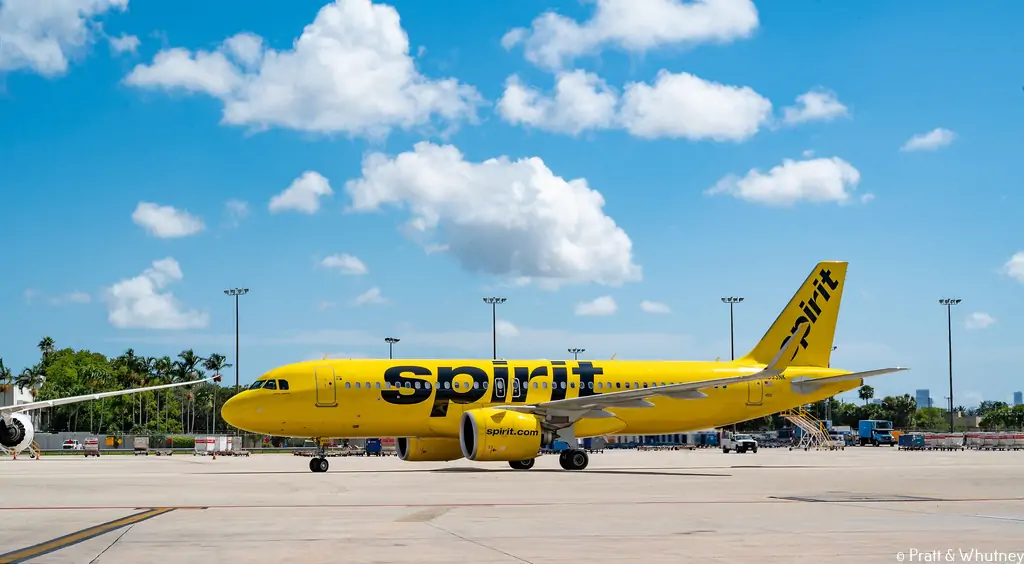
Spirit announced on Friday that it has secured preliminary agreements with both its pilots' and flight attendants' unions that include contract concessions, marking a significant step in the ultra-low-cost carrier's efforts to reduce expenses during its Chapter 11 bankruptcy proceedings.
Leadership Takes Corresponding Salary Reductions
The airline revealed that its senior management team has committed to accepting salary reductions proportional to those agreed upon by the pilot group once union members ratify the tentative agreement. This parallel commitment demonstrates leadership's willingness to share the financial burden during the restructuring process.
Second Bankruptcy Filing Prompts Aggressive Cost-Cutting
Spirit filed for Chapter 11 bankruptcy protection earlier this year for the second time after the carrier struggled with rapidly depleting cash reserves and escalating losses. The airline has since launched a comprehensive cost-reduction strategy that extends across multiple operational areas.
The company has implemented workforce reductions, eliminated unprofitable routes, and scaled back its overall operations to achieve financial stability and successfully exit bankruptcy protection. These measures represent the airline's most aggressive restructuring effort to date.
Recent Job Cuts and Route Eliminations
Spirit disclosed on Wednesday that it had eliminated approximately 150 salaried positions from its workforce. The airline simultaneously announced it would terminate services at five airports, including major markets like Milwaukee and Phoenix, as part of its network rationalization strategy.
Unions Confirm Negotiated Modifications
The Air Line Pilots Association confirmed on Friday that Spirit pilots reached an Agreement-in-Principle with the airline regarding modifications to their collective bargaining agreement. The union statement followed extensive negotiations triggered by the company's request for pilot cost savings.
Both the pilots' and flight attendants' agreements now await ratification votes from their respective union memberships. Following ratification, the agreements must also receive approval from the bankruptcy court overseeing Spirit's restructuring process.
Financial Targets Tied to Emergency Financing
Spirit emphasized that the preliminary agreements are projected to generate sufficient annual savings to satisfy the financial requirements necessary for its next withdrawal under debtor-in-possession financing. This emergency funding mechanism provides companies in bankruptcy with the capital needed to continue operations while reorganizing their business structure.
The airline's ability to access these funds depends on meeting specific cost-reduction benchmarks, making the union concessions critical to Spirit's near-term liquidity and operational continuity. The agreements represent a collaborative effort between management and labor to preserve the airline's viability during this challenging restructuring period.
With Inputs from Reuters
Read next

IndiGo, the country's dominant carrier, has revealed ambitious plans to revolutionize how it trains its growing pilot workforce through evidence-based methodologies that leverage cutting-edge data analytics and artificial intelligence. This strategic shift comes as the airline manages one of the world's largest daily flight operations and prepares for unprecedented expansion over the coming years.
From Competency-Based to Evidence-Based Training
The airline currently employs Competency-Based Training and Assessment, known as CBTA, across its pilot training programs. A senior airline official explained to PTI that this framework serves as the foundation for what comes next. The official revealed that IndiGo views CBTA compliance as a natural stepping stone toward implementing Evidence-Based Training, or EBT, which represents a more sophisticated approach to pilot development.
The airline is currently establishing baseline measurements for its CBTA programs while simultaneously preparing the infrastructure needed for EBT implementation. IndiGo plans to collaborate with global consultants and study international best practices to guide this transition effectively.
The Data Revolution in Pilot Training
IndiGo's approach centers on harnessing vast amounts of operational data that the airline accumulates daily. The airline operates more than 2,300 flights each day with a fleet exceeding 400 aircraft, generating substantial information about flight operations, pilot performance, and operational challenges. This data treasure trove will form the backbone of the new training system.
The official emphasized that the airline will first collect comprehensive data from its operations, then validate this information rigorously before designing training programs based on actual evidence rather than theoretical scenarios. Artificial intelligence and advanced data analytics will play crucial roles in identifying patterns, predicting training needs, and personalizing development programs for individual pilots.
Skills That Matter Most
The enhanced training framework will focus on multiple critical competencies that modern aviation demands. These include sharpened situational awareness, improved decision-making capabilities, and strengthened corporate resource management skills. Each element addresses specific challenges pilots face during complex operational scenarios.
Scaling for Unprecedented Growth
The timing of this training evolution aligns with IndiGo's explosive growth trajectory. The airline currently employs more than 5,300 pilots, but this number will likely double by 2030 as IndiGo absorbs over 900 aircraft currently on order. The carrier is also diversifying its operations by adding wide-body planes to its traditionally narrow-body fleet.
The senior official acknowledged that implementing EBT will require significant time investment, estimating between twelve to eighteen months for full deployment. However, the airline recognizes that earlier implementation yields better long-term results, making the investment worthwhile despite the substantial effort required. This data-driven transformation represents IndiGo's commitment to maintaining safety standards while managing rapid expansion in an increasingly complex aviation environment.
Read next
Turkish Airlines Outbids European Giants to Capture Quarter Stake in Spain's Air Europa

Abhishek Nayar
07 Nov 2025

Turkish Airlines has executed a strategic investment that reshapes European aviation dynamics. The carrier finalized an agreement to acquire approximately one-quarter ownership of Air Europa, marking one of the rare instances where a non-European airline has secured equity in a continental carrier.
The Financial Architecture Behind the Acquisition
The Istanbul-based carrier committed 300 million euros ($355 million) through convertible debt instruments. This financial structure will transform into an equity position representing between 25% and 27% of Air Europa once the conversion completes. The transaction framework, which both airlines originally negotiated in August, establishes Air Europa's total valuation at approximately 1.2 billion euros ($1.4 billion).
Complex Ownership Structure Emerges
The deal creates an intricate ownership landscape for the Madrid-based airline. Spain's Hidalgo family maintains majority control through their holding company Globalia, even as they orchestrate this partial divestment. International Airlines Group, the parent organization of British Airways, preserves its existing 20% stake by purchasing shares directly from Globalia rather than participating in the new capital injection. Turkish Airlines executives have explicitly stated they harbor no intentions to expand their ownership percentage beyond this initial acquisition.
Turkish Carrier Outmaneuvers European Competitors

Turkish Airlines emerged victorious in a competitive bidding process that attracted significant European aviation giants. The carrier successfully outbid both Lufthansa and Air France-KLM to secure the partnership with the Hidalgo family. This victory demonstrates Turkish Airlines' aggressive expansion strategy and its determination to establish deeper connections within European aviation markets.
Regulatory Timeline and Market Consolidation Context
The transaction awaits regulatory clearance from relevant aviation authorities, a process both airlines anticipate will require six to twelve months before completion. This investment reflects broader industry trends as European aviation undergoes consolidation. Airlines across the continent actively pursue acquisitions of smaller, financially challenged operators to strengthen their market positions in Europe's historically fragmented aviation landscape.
Air Europa Achieves Financial Milestone
Air Europa announced significant financial progress coinciding with the partnership revelation. The carrier repaid nearly 500 million euros borrowed from SEPI, Spain's state-owned industrial holding company, completing this obligation one full year ahead of the contractually mandated schedule. This early repayment demonstrates improved financial health and positions the airline favorably as it enters this new ownership arrangement.
The partnership between Turkish Airlines and Air Europa represents a pivotal moment in cross-continental aviation collaboration, potentially establishing precedents for future non-European investments in European carriers as the industry continues restructuring to address operational challenges and market fragmentation.
With Inputs from Reuters
Read next

Pilots flying over India's capital have confronted an alarming phenomenon this past week. Aircraft navigating Delhi's airspace have encountered severe GPS spoofing that floods their cockpit systems with fabricated navigation data, creating phantom obstacles and distorting their actual positions in the sky.
The Crisis Unfolds Over Delhi
The disruption has manifested within a sixty-nautical-mile radius surrounding Delhi throughout the previous week, air traffic controllers have confirmed. One pilot from a major airline revealed he faced GPS interference on every single flight he operated across six consecutive days last week. During his approach to Delhi airport, his navigation systems suddenly screamed warnings about terrain obstacles directly ahead, though the sky remained completely clear. Other crews received identical false alerts while departing the airport, causing delays at one of Asia's busiest aviation hubs.
Government Scrambles to Address the Threat
The Directorate General of Civil Aviation has seized control of investigating these incidents. Ministry of Civil Aviation Secretary S K Sinha convened an urgent meeting with DGCA Director General Faiz Kidwai on Thursday evening to address the crisis. A senior government official acknowledged authorities were actively probing the matter, though the source of the interference remains undetermined.
Air traffic controllers have resorted to manual interventions, directly guiding pilots through voice communication when their automated systems fail. Sources within air traffic control emphasized that while GPS spoofing commonly plagues India's border regions with Pakistan, such aggressive interference over Delhi represents an unprecedented development. No military exercises had been announced in the vicinity that would explain the disruptions, leaving authorities puzzled about the origin.
Understanding the Invisible Attack
Spoofing operates as a cyberattack that broadcasts counterfeit GPS signals designed to deceive navigation systems. Both the International Air Transport Association and the International Civil Aviation Organization have issued stark warnings that these disruptions represent a mounting threat to global aviation safety. Between 2021 and 2024, reported GPS signal loss incidents surged by 220 percent worldwide, with hotspots concentrated in western Russia, northern Iraq, and along India's borders with Pakistan and Myanmar.
The Indian government disclosed to Parliament in March 2025 that 465 GPS interference and spoofing incidents had struck border regions between November 2023 and February 2025, averaging one event daily. Most concentrated around Amritsar and Jammu areas.
Safety Systems Provide Protection
Despite the concerning nature of these attacks, aircraft remain protected through multiple backup systems. The Inertial Reference System continues functioning for up to five hours even when primary navigation fails, providing redundant safety layers. Pilots receive immediate alerts about GPS compromises through dedicated cockpit warnings, degraded performance indicators, and coordination with air traffic control.
The DGCA issued an advisory in November 2023 requiring airlines to establish standard operating procedures and submit bimonthly reports tracking spoofing incidents. In June, IATA and the European Union Aviation Safety Agency jointly published recommendations calling for enhanced reporting protocols, stricter controls on jamming devices, rapid GPS recovery systems, improved contingency procedures, and strengthened civil-military coordination to combat this growing aviation challenge.
With Inputs from The Hindu
Comment