
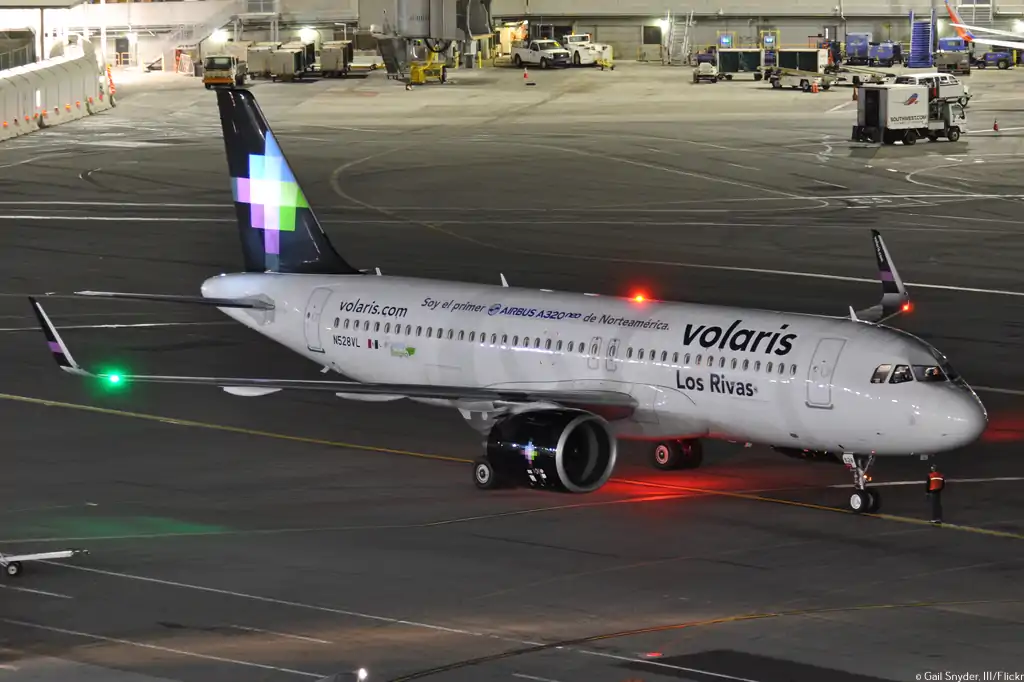
Mexican low-cost carrier Volaris has revised its capacity and financial outlook for the remainder of 2023 due to the repercussions of the recent groundings of its A320neo Family aircraft, powered by Pratt & Whitney PW1000G engines. The airline's decision reflects the challenges posed by these engine issues and the impact of surging fuel costs.
Capacity Adjustment
Volaris had initially set ambitious targets for 2023, aiming to increase its capacity, measured in available seat miles, by 13% compared to 2022. However, due to ongoing Pratt & Whitney engine problems, the airline has trimmed its growth projections, now setting a more modest goal of 10%. This adjustment is a prudent move in response to the ongoing challenges in the aviation industry.
EBITDAR Margin Reduction
One of the key financial metrics affected by these setbacks is Volaris' EBITDAR margin. Previously expected to reach a range of 29-31%, the airline has now scaled back its projections to a margin of 26%. This reduction is primarily a result of the decreased capacity and the related operational challenges that stem from the engine inspections and maintenance.
Revenue Outlook
Volaris now anticipates its total operating revenues in 2023 to be around USD3.2 billion, aligning with the lower end of the earlier USD3.2-3.4 billion range. The revenue outlook provides a more realistic perspective of the financial impact that the airline is facing in light of the A320neo groundings and rising fuel prices.

Root Causes: Pratt & Whitney Engines and Fuel Costs
The heart of Volaris' troubles lies in the ongoing issues with the Pratt & Whitney PW1000G engines. As of now, fifteen A320neo and two A321neo aircraft from the Volaris fleet are grounded for maintenance related to these engine problems. The company's decision to adjust its guidance is indicative of the significant disruptions and costs these issues have caused.
Furthermore, the surging fuel costs have added another layer of complexity to Volaris' financial challenges. The global increase in fuel prices has forced the airline to reassess its cost structure, which directly impacts its profit margins.
Mitigation Efforts
Volaris is taking proactive measures to mitigate the impact of the engine issues. These efforts include optimizing the airline's route network. By modifying routes and schedules, Volaris aims to continue delivering service to its customers while working through the necessary engine shop visits and maintenance.
Future Outlook
Volaris, backed by Indigo Partners, holds orders for an additional 142 A320neo Family aircraft from Airbus. As the airline navigates the current challenges, it will be crucial to monitor how the Pratt & Whitney engine problems evolve and how the company manages its fleet. These developments will play a vital role in shaping Volaris' growth trajectory and financial performance in the coming years.
Conclusion
Volaris' decision to revise its 2023 capacity and financial guidance reflects the real-world challenges airlines face in maintaining operations, particularly when dealing with unexpected issues like engine problems and rising fuel costs. As the airline industry continues to adapt to these challenges, Volaris remains determined to optimize its operations, ensuring a sustainable and resilient future.
With Inputs from ch-aviation

Read next

GE Aerospace announced a significant order from Air Canada, reaffirming the airline's trust in GE's GEnx-1B engines to power their expanding Boeing 787-10 Dreamliner fleet. Air Canada has ordered 36 GEnx-1B engines, along with four spares, and included options for an additional 24 engines. This decision marks another milestone in the longstanding partnership between Air Canada and GE Aerospace.
Air Canada's Ongoing Commitment to GE Engines
Air Canada, headquartered in Montreal, took delivery of its first Boeing 787 Dreamliner back in 2014. The airline currently operates a fleet of 38 Dreamliners, comprising both 787-8 and 787-9 variants, all powered by GE's GEnx engines. The decision to continue with GE engines underscores Air Canada's confidence in the reliability and performance of the GEnx series.
Joshua Vanderveen, Vice President of Maintenance at Air Canada, expressed the airline's enthusiasm for the collaboration, stating, "Air Canada is a longstanding GE Aerospace customer, and we are delighted to support our fleet renewal with these highly efficient GEnx engines to provide commonality and synergies across our Dreamliner fleet."
The GEnx Engine's Storied Success

The GEnx engine family has a remarkable track record since its entry into service in 2011, accumulating more than 50 million flight hours. It holds the distinction of being the fastest-selling high-thrust engine in GE's history, with nearly 3,000 engines already in service and on backlog, including spares. Moreover, the GEnx-1B engine is the powerplant of choice for two out of every three Boeing 787 aircraft currently in service, making it a dominant force in the aviation industry.
Kathy MacKenzie, Vice President of GE Commercial Programs for GE Aerospace, expressed her satisfaction with Air Canada's continued trust in GE's technology, saying, "GE Aerospace is honored Air Canada continues to put its trust in our GEnx engine, and we look forward to working together to introduce the engines into Air Canada’s fleet."
One of the standout features of the GEnx-1B engine is its remarkable fuel efficiency. It offers a 1.4% reduction in fuel burn for the typical 787 mission when compared to its competition. This translates to a significant cost savings of approximately $300,000 per airplane per year in fuel expenses. This efficiency not only reduces operational costs for airlines like Air Canada but also contributes to environmental sustainability by lowering carbon emissions.
Future Prospects and Collaboration
Air Canada's decision to incorporate GEnx-1B engines into its new Boeing 787-10 aircraft signals a bright future for the partnership between the airline and GE Aerospace. The options for an additional 24 engines underline the potential for further expansion and modernization of the Air Canada fleet in the coming years. This collaboration will likely continue to drive innovation and advancements in aviation technology.
Conclusion
In summary, Air Canada's latest order for GEnx-1B engines reflects their confidence in GE Aerospace's ability to provide cutting-edge, fuel-efficient engines that will power their next generation of Boeing 787-10 Dreamliners.
This decision not only strengthens the ongoing partnership between Air Canada and GE but also highlights the GEnx-1B's position as a top choice in the aviation industry due to its efficiency and reliability. As the airline industry continues to evolve and seek sustainability, such collaborations are instrumental in shaping the future of air travel.
With Inputs from ARGS
Read next

The Philippines' largest budget carrier, Cebu Pacific, is set to make a groundbreaking move in the aviation industry with its ambitious plan to order 100-150 narrow-body aircraft, valued at up to $12 billion. This order is poised to be the Philippines' most significant jet purchase, with Boeing and Airbus competing for the deal. The airline aims to harness the long-term travel potential across Southeast Asia post-pandemic.
Setting the Stage: Cebu Pacific's Bold Plan
In a remarkable announcement on October 17, 2023, Cebu Pacific unveiled its intentions to acquire a substantial fleet expansion. The airline plans to acquire 100-150 narrow-body aircraft from either Boeing or Airbus, signaling a strategic move to double its current fleet by 2035. With a vision to quadruple the size of Philippine carriers over the next two decades, Cebu Pacific is gearing up for a transformative phase in the aviation industry.
A Potential Game-Changer for the Philippines
Cebu Pacific's plans are underpinned by several factors contributing to the Philippines' promising aviation landscape. High economic growth, a burgeoning young population, and geographical proximity to regional hubs have combined to create an environment ripe for the aviation sector's growth. The Philippines' strategic location makes it a potential gateway to Southeast Asia, a region expected to experience a sustained travel boom.
$12 Billion at Stake, But Discounts Expected
While the aircraft order carries a colossal price tag of $12 billion based on list prices, experts suggest that the final negotiated deal is likely to be significantly lower. Airlines often receive substantial discounts on massive orders, sometimes amounting to half of the list price. This competitive negotiation process is typical in the aviation industry, enabling carriers like Cebu Pacific to secure cost-effective deals.

Winner-Takes-All Approach
As reported by The Inquirer, Cebu Pacific is adopting a "winner-takes-all" approach. This means that the airline will carefully assess the proposals from both Boeing and Airbus and select the one that offers the most favorable terms. This approach emphasizes Cebu Pacific's commitment to securing a deal that not only suits its long-term strategy but also maximizes the value of its investment.
Cebu Pacific's Current Standing
Cebu Pacific currently operates a fleet of 73 Airbus and ATR aircraft, and it has plans to expand this to 91 by the end of 2024. The airline serves 35 domestic destinations and 25 international locations, connecting the Philippines with the rest of the world.
Financial Rebound and Growth
Cebu Pacific's decision to expand its fleet comes on the heels of a financial turnaround. In the first half of 2023, the airline reported a net profit of 3.75 billion pesos ($66.1 million), marking a significant reversal from the 9.5 billion net loss experienced the previous year. These financial rebound positions the carrier on a solid footing to pursue its growth plans.
Conclusion
Cebu Pacific's ambitious order of 100-150 narrow-body aircraft, valued at up to $12 billion, sets a new benchmark in the Philippine aviation industry. With the prospect of securing cost-effective deals from Boeing or Airbus and capitalizing on the growing Southeast Asian travel market, the airline is poised to play a pivotal role in shaping the future of air travel in the region. As the year-end deadline for proposal submissions approaches, the aviation world eagerly awaits the outcome of this landmark decision, which could significantly impact the dynamics of the industry.
With Inputs from Reuters
Read next
Boeing Business Jets unveils New Cabin Interior for its BBJ 737-7 aircraft

Radhika Bansal
17 Oct 2023
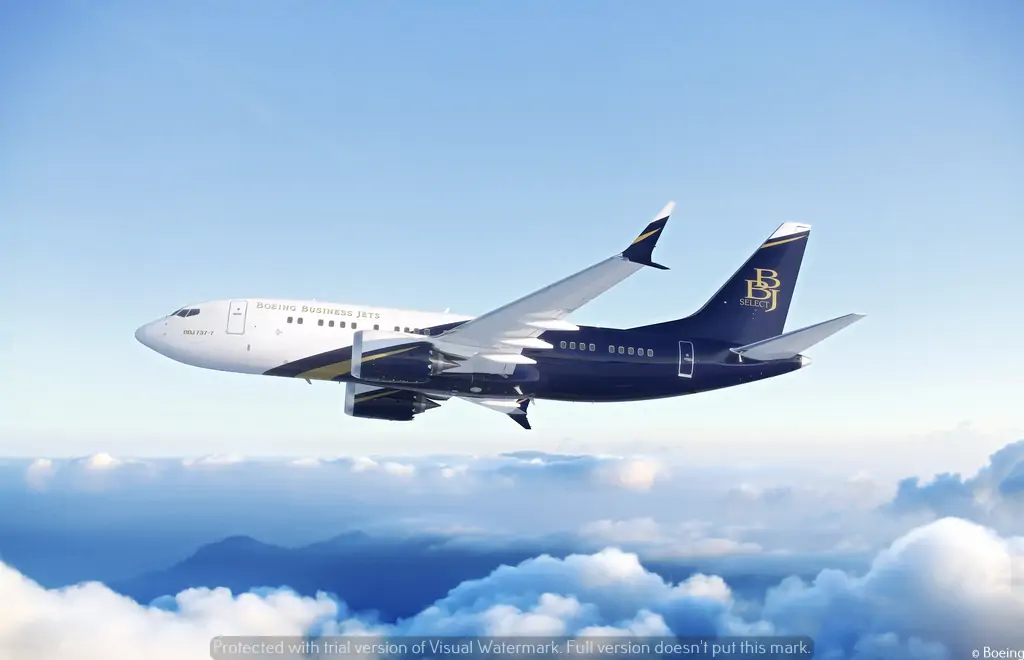
Boeing Business Jets (BBJ) has unveiled a new customizable cabin interior offering ‘BBJ Select’ for its BBJ 737-7 aircraft. The airframer offers a wide range of pre-designed cabin layouts and configurations, with BBJ Select with expedited installation, and the added benefit of a lower total purchase price of the airplane.
BBJ President Joe Benson said BBJ Select was a new, streamlined approach to designing a unique, comfortable and functional interior for its BBJ 737-7 jets. He added that for “customers who may not have the time or desire to create a fully bespoke interior, BBJ Select offers pre-designed options to outfit their cabin, which allows us to offer the jet at a very attractive, fixed price.”
By opting for BBJ Select layouts, customers can eliminate costs for one-time engineering and related work for the installation of a clean sheet cabin design. Customers sign one contract with Boeing, which then oversees the design, build and delivery of a fully outfitted VIP aircraft, further simplifying the purchase experience.

In total, BBJ Select offers 144 unique modular cabin combinations, seating between 13 and 25 passengers depending on the design in three different colour palettes, covering the spectrum of personal, business and head-of-state airplane requirements. This includes guest rooms and private offices to family rooms and VIP passenger seating configurations and customers can select modules for each section of the airplane. The new cabin offering has been designed in collaboration with award-winning business jet completion centers Aloft AeroArchitects and Greenpoint Technologies.
The BBJ 737-7 is the newest member of the BBJ 737 MAX family and can fly passengers over 15 hours non-stop. Built for daily flights, BBJs provide far higher reliability and retain more residual value compared to competitors.
The new BBJ Select premium interiors were unveiled by Boeing at the National Business Aviation Association Business Aviation Convention & Exhibition (NBAA-BACE) in Las Vegas, USA. While no firm orders have been announced, BBJ reports that the first Select jets could be ready to enter service in 2026.
BBJ Select Certification
The availability of the BBJ Select comes as Boeing nears the long-awaited certification of the 737-7. Boeing originally hoped to clinch 737-7 certification by the end of 2022, but under an updated timeline announced earlier this year now hopes to win FAA approval sometime in the next two months. The company is now thought to have completed FAA sign-off on several outstanding issues including system safety assessments containing pilot human factors assumptions. Boeing says the earlier availability of the 737-8 based BBJ has generated more sales than expected of this larger variant, however, it still expects the 737-7 variant to do well once certification is confirmed. The 737-7 is designed as the principal successor to the 737-700 which, together with the wings and other features of the heavier 737-800, formed the basis for the original BBJ1.
The company has partnered exclusively with completion centers Aloft AeroArchitects and Greenpoint Technologies for the program, with Boeing overseeing the design, build, and delivery of the aircraft. The setup allows customers to sign a single contract with Boeing rather than multiple ones for the aircraft and completion work.
With more than 260 jets sold since its founding in 1996, Boeing Business Jets is the industry-leading VIP jet division that brings the best of commercial aviation into the realm of personal air travel. With a wide range of high-performance aircraft, the jets can be uniquely customized for private, business or governmental use.
Read next

Rolls-Royce Holdings Plc is poised to announce the deepest job cuts under Chief Executive Officer Tufan Erginbilgic as he streamlines the UK manufacturer to prepare for an upswing in demand for large aircraft engines.
The reductions are set to total 2,000 to 2,500 employees, or about 6% of the global staff, according to people familiar with the matter, who asked not to be identified discussing plans that haven’t been announced. The cuts target the global white-collar workforce, including senior management, one of the people said. Sky News reported on the plan earlier, citing people familiar with the matter.
Rolls-Royce has 42,000 employees, with about half of them in the UK. British jobs are likely to be affected, although the company is not expected to reveal precise numbers this week. About half of Rolls-Royce employees are in the UK, 11,000 work in Germany and about 5,500 are located in the US.
Erginbilgic is driving his turnaround effort deeper into the company after already switching some key management positions, including the head of the civil engine subsidiary. The CEO, who liked the company to a “burning platform” shortly after taking over at the start of the year, has presided over a more than doubling of the stock price, as long-distance travel rebounds from pandemic lows, reigniting demand for large aircraft like the Airbus A350, for which Rolls-Royce is the sole supplier.
The CEO, who joined Rolls-Royce from BP Plc, brought in consultants to advise on streamlining the organization. Rolls-Royce makes engines for the largest commercial aircraft and earns money based on their hours of use as well as with lucrative service contracts. The last time the company cut a large number of positions was in the early days of the Covid-19 pandemic when aircraft around the globe were largely grounded.
The company’s civil aviation revenues are heavily dependent on selling maintenance services for the engines it makes, meaning it was hit particularly hard during the pandemic. It cut 9,000 jobs then to reduce costs in what was described by its leaders as an existential threat to the business.
Financials of Rolls Royce
Cash flow at Rolls Royce has risen rapidly this year, lightening the burden of interest payments just as rate increases make borrowing more expensive. Accelerating its debt-reduction plans could lead to credit-rating upgrades for Rolls, Bloomberg Intelligence said in a report.
Rolls-Royce’s financial performance has improved markedly in the past year, mainly thanks to the recovery in global air travel after the coronavirus pandemic. Although its focus on long-haul travel has meant it has lagged behind rivals who make engines for short-haul planes, its share price has more than doubled since the start of 2023 – albeit remaining short of its pre-pandemic level in 2019.
Erginbilgiç is planning to update investors next month on his plans for Rolls-Royce over the next few years. Some analysts have suggested the power systems division could be a candidate for a sale, but an effort to more closely integrate it into the rest of the business would make that less likely. The company is also due to give medium-term targets on how fast it expects to grow sales and profits, which it has refrained from doing while Erginbilgiç has been reviewing company strategy.
The recent aircraft engine order from Air India
Rolls-Royce has received an order from Air India for 68 Trent XWB-97 engines, in addition to an option for 20 more. The large A350 aircraft of Airbus are powered by Rolls-Royce XWB engines. Air India in February sealed an order for procuring 250 Airbus passenger jets. The order comprises 40 Airbus A350s and 210 Airbus A320/321 aircraft. Separately, Air India ordered 220 planes from Boeing.
"This is the biggest ever order for the Trent XWB-97, which exclusively powers the Airbus A350-1000. Air India has also ordered 12 Trent XWB-84, engines, the sole engine option for the Airbus A350-900," the company said in a statement.
It said this is the first time that an Indian airline has ordered the Trent XWB and the deal will make Air India the largest operator of the Trent XWB-97 in the world. Rolls-Royce Tufan Erginbilgic said that the announcement marks an "exciting and truly remarkable" occasion for Tata Group and Air India.
"The size and magnitude of this order reflect the level of their ambition for the future. I congratulate them on taking this bold step towards becoming one of the world's greatest airlines," he said. "Air India is the first Indian airline to order the Trent XWB and the size of the commitment, including options, will make them the biggest operator of the Trent XWB-97 in the world," Erginbilgic said.
Read next
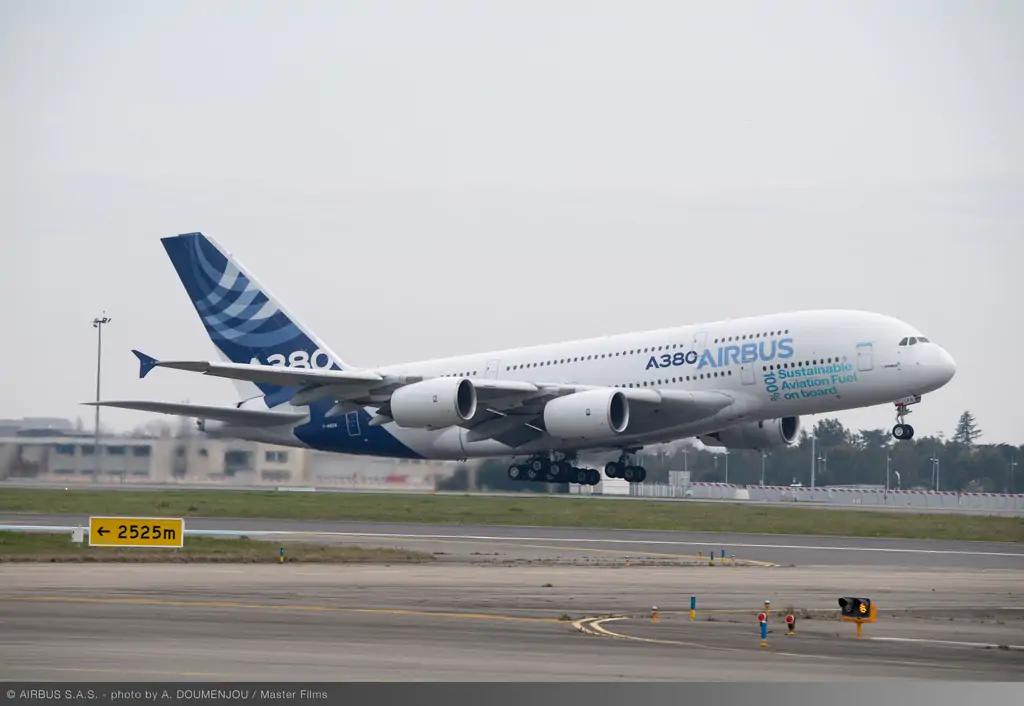
The Airbus A380, the largest passenger jet ever built, has been making waves in the world of commercial aviation. This colossal aircraft has not only redefined the aviation landscape but also posed several logistical and operational challenges for the industry.
Aircraft Specifications

The Airbus A380 boasts impressive specifications. With a wingspan of 261.8 feet, a length of 239.5 feet, and a maximum take-off weight exceeding 1.2 million pounds, it's a true giant of the skies. The A380's four engines and wingtips create significant wake turbulence, requiring other planes to wait for up to three minutes before takeoff.
Capacity and Configuration

The A380 can carry more passengers and cargo than any other commercial airliner. It features two passenger decks and a cargo deck below, offering the potential for a single-class configuration accommodating up to 840 passengers. However, Airbus typically designs it for a three-class configuration, serving 555 passengers. This configuration still represents a substantial increase in capacity compared to the Boeing 747-400, the previous leader in passenger capacity.
Cost and Development
Airbus invested an estimated $15 billion in the development of the A380. The list price for a single plane stands at $300 million, but airlines often negotiate lower prices for bulk orders. The challenge for Airbus is determining how many planes must be sold to recoup the development costs.
Interior Comfort and Luxury
Airbus has designed the A380 with passenger comfort in mind. The twin-aisle, twin-deck cabin offers more space, wider seats, and aisles. Economy class seats are about 1 inch wider, while first-class seats can convert into beds. Some envision the A380 as a luxurious flying experience, complete with amenities like casinos, shops, hot tubs, and double beds. Nonetheless, most airlines prioritize efficiency over luxury, thanks to the A380's impressive range of 8,000 nautical miles and fuel-efficient technologies.
Logistics of the A380
Distributed Manufacturing:
- Airbus faced challenges in creating a manufacturing facility large enough to build the entire A380 in one place.
- Various parts of the A380 are built across Europe, with specific components produced in different countries.
Major Component Locations:
- Wings in Broughton, Wales.
- Fuselage parts in Hamburg, Germany.
- Tailfin in Stade, Germany.
- Rudder in Puerto Real, Spain.
- Nose in Saint Nazaire, France.
- Fuselage and cockpit sub-assemblies in Meaulte, France.
- Horizontal tailplane in Getafe, Spain.
- Final assembly in Toulouse, France.
- Cabin installation and painting in Hamburg, Germany.
- Some parts are produced globally, including in the United States.
Transportation:
- Most large parts are transported by barge.
- Tail assemblies can be transported by air using the Airbus Beluga.
- Infrastructure like specialized river and seagoing vessels, port facilities, and widened roads was created to transport these components.
Pilot Training:
- Airbus was concerned about the need for extensive pilot training for the A380, which could increase airline costs.
- To mitigate this, Airbus refined fly-by-wire technology to reduce pilot workload.
- The cockpit was positioned between the two passenger decks for high visibility and familiarity to pilots.
- A belly-mounted camera allows pilots to monitor the landing gear.
- Control systems were designed to be similar to other Airbus models, minimizing additional pilot training requirements for the A380.

Challenges
Despite its record-breaking size and capacity, the A380 raises several serious concerns. Where can it land? What airport can manage 800 individuals boarding and disembarking from a single plane? Can airlines actually sell enough tickets to fill an aircraft to capacity?
Runway Compatibility:
- The A380's weight doesn't significantly stress runways due to its multiple landing wheels.
- Most major runways are long enough for A380 takeoff and landing procedures.
- Some runways are not wide enough for the A380's engines, which would hang over the edges slightly.
Terminal Space Limitation:
- Parking and terminal space is a significant challenge for the A380 at most airports.
- A380 has two entryways, requiring two gangways from the same terminal, but few airports have this setup.
- Ticketing, luggage check, and security for a large number of passengers pose logistical challenges.
- Customs and immigration lines can be very long for international A380 flights.
Processing Time:
- If multiple A380s arrive simultaneously, it could take a day to process and handle all passengers and luggage.
Airbus' Focus:
- Airbus primarily focuses on linking major international hubs, not serving every major airport.
- The A380 may find use on shorter routes in densely populated areas like Japan.
Cost-Effectiveness Concerns:
- Some, including Boeing and environmental groups, question the A380's claimed cost-effectiveness.
- Airbus' efficiency depends on full passenger loads; empty seats can reduce profitability and emissions per passenger.
Airlines and Their Perspective

Airlines worldwide have varying perspectives on the A380. Emirates Airlines stands out as one of the biggest enthusiasts, with 121 A380s in their fleet. The aircraft's ability to increase passenger volume with fewer aircraft and flights has been a game-changer for Emirates. Singapore Airlines was the first to include the A380 in their fleet in 2007, marking a significant moment in aviation history.
Conclusion
The Airbus A380 has undoubtedly left an indelible mark on commercial aviation. Its impressive capacity, long-range capabilities, and passenger comfort innovations have pushed the boundaries of what's possible in the industry. However, it has also presented airports and airlines with unique challenges that continue to shape the future of air travel. As the aviation industry evolves, the A380 will remain a symbol of innovation and ambition.
With Inputs from How Stuff Works, Flystein
Comment