
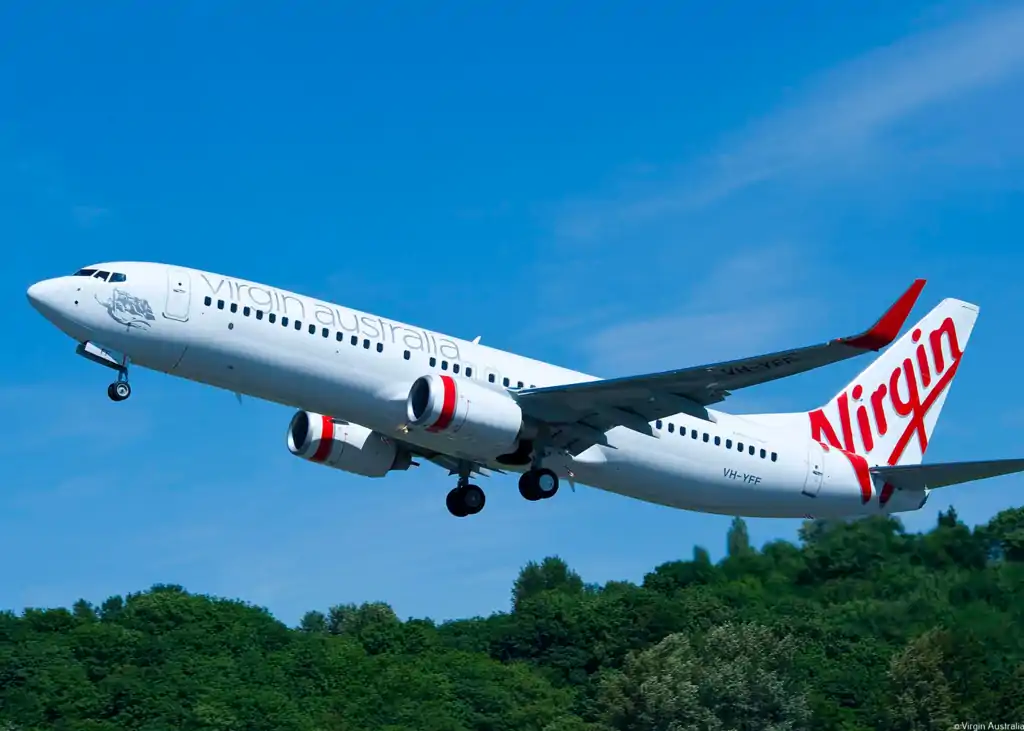
In a remarkable turn of events, Virgin Australia, under the ownership of Bain Capital, has announced its triumphant return to profitability for the first time in 11 years during fiscal year 2023.
This resurgence comes on the back of a robust rebound in travel demand following the crippling effects of the COVID-19 pandemic. Despite facing increased fuel costs, the airline declared a statutory net profit after tax of A$129 million ($82.93 million) for FY 2023, signifying a remarkable shift in its financial trajectory.
A Profitable Turnaround
Virgin Australia's resurgence in profitability can be attributed to several key factors. The resurgence in travel demands post-pandemic played a pivotal role in this success story. As restrictions eased and vaccination rates increased, passengers flocked back to the skies, driving up revenue for the airline. CFO Race Strauss commented that Virgin Australia now boasts a significantly healthier financial sheet, thanks to ongoing improvements in its cost base.
Robust Financial Performance
One of the standout achievements for Virgin Australia in FY 2023 was its impressive group sales figure. The airline recorded A$5 billion in group sales, marking a staggering 124% rise over the previous year. This growth underscores the airline's ability to adapt and thrive in a rapidly changing market environment.
Global Industry Resurgence
Virgin Australia is not alone in its return to profitability. Airlines worldwide have reported robust profits in recent months as flights have resumed to capacity. The industry, which ground to a near halt in early 2020 as the COVID-19 pandemic spread, is now experiencing a resurgence in demand. This resurgence has been a lifeline for airlines that were on the brink of collapse just a short while ago.
Challenges Ahead
While the return to profitability is undoubtedly a cause for celebration, Virgin Australia still faces challenges on the horizon. Rising fuel costs remain a concern, and the airline must navigate the delicate balance of pricing and capacity to sustain its newfound profitability. Additionally, competition in the airline industry remains fierce, and Virgin Australia will need to continue its efforts to differentiate itself and attract passengers.
Conclusion
Virgin Australia's return to profitability in fiscal year 2023 is a testament to the resilience and adaptability of the airline industry. As the world emerges from the shadow of the COVID-19 pandemic, the airline has capitalized on the surge in travel demand and achieved a significant financial turnaround.
While challenges persist, the future looks promising for Virgin Australia, and its success story serves as an inspiring example for the entire aviation sector. As the industry continues to recover, the skies ahead seem clearer than ever before for Virgin Australia.
With Inputs from Reuters

Read next
Several Airlines Including Air India Cancels Flights to Israel Amid Militant Attacks

Radhika Bansal
09 Oct 2023
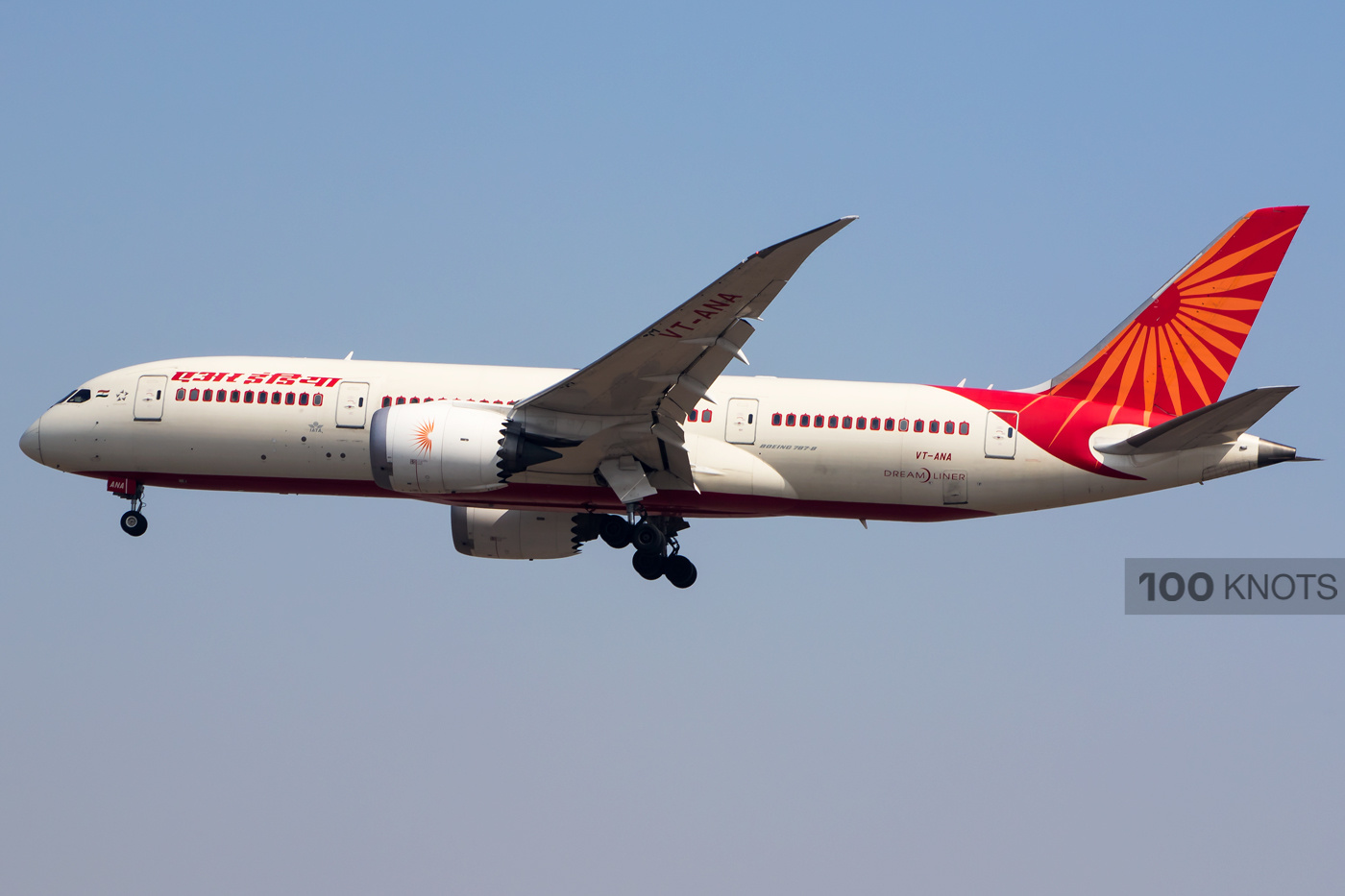
Air India has cancelled its flights to and from Tel Aviv till October 14. Israel came under attack by Hamas militants on Saturday, October 7 and since then, both sides have engaged in fighting in which scores of people have died. Air India operates five weekly flights to Tel Aviv, Israel’s capital.
"An Air India Flight from Delhi to Tel Aviv on 07 October 2023 and the return flight AI140 from Tel Aviv to Delhi has been cancelled in the interests and safety of our guests and crew. Passengers are being extended all support, as per their requirements," an Air India spokesperson said. "Our flights to and from Tel Aviv will remain suspended till 14th October 2023, for the safety of our passengers and crew,” an airline spokesperson said in a statement.
The airline will extend all possible support to passengers who have confirmed bookings on any flight during this period, the spokesperson added. The full-service carrier operates five weekly flights to Tel Aviv from the national capital. The service is on Monday, Tuesday, Thursday, Saturday and Sunday. On Saturday also, the carrier cancelled its flights to and from Tel Aviv.
Prime Minister Narendra Modi, on Saturday, expressed solidarity with Israel after Hamas militants launched an attack on the country. Modi condemned it as ”terrorist attacks” in Israel as its leader Benjamin Netanyahu said the country is at war. Modi condemned it as ”terrorist attacks” in Israel as its leader Benjamin Netanyahu said the country is at war.
Meanwhile, the Indian Embassy in Israel has issued an advisory asking citizens to remain vigilant and observe safety protocols.
Flight Cancellations from All Around the World
German carrier Lufthansa will cut down its flight services. “Given the current security situation in Tel Aviv”, Lufthansa will maintain a single flight to Frankfurt but “all other Lufthansa flights to and from Tel Aviv have been cancelled for this Saturday,” a spokesperson was quoted in an AFP report.
Data from aviation tracking website Flightradar24 showed that Tel Aviv airport continued to operate on Saturday, and only 14% of flights were cancelled. Some flights such as Wizz Air and Ryanair diverted to alternate destinations. Flight cancellations have also been announced by other international carriers including Lufthansa, Swiss Air, and Turkish Airlines.
Additionally, US-based air carriers United Airlines, Delta Air Lines, and American Airlines announced the suspension of their direct flights to Tel Aviv, as did Air France. These airlines typically operate direct services from major US cities, including New York, Chicago, Washington, DC, and Miami.
United Airlines, in a statement, explained that it had conducted two scheduled flights from Israel to the United States late on Saturday and early on Sunday. However, services have been suspended "until conditions allow them to resume." Delta Air Lines indicated that flights "have been cancelled into this week" while they closely monitor the situation and make necessary scheduling adjustments.
Hainan Airlines, the sole Chinese airline providing flights between China and Israel, cancelled its Tel Aviv-Shanghai routes on Monday, citing security concerns in Israel. The airline also offers services between Beijing and Tel Aviv, as well as between Shenzhen and Tel Aviv, and has stated that future flight plans will be adjusted according to the evolving situation. Cathay Pacific also cancelled its flight between Hong Kong and Tel Aviv on Tuesday. The airline intends to provide further updates regarding its next scheduled flight, which is currently planned for Thursday. Korean Air cancelled its Monday flight between the port city of Incheon and Tel Aviv and anticipates that future flights will experience irregular schedules due to the current situation.
What is Happening in Israel?
Since Saturday (October 7), both sides have engaged in fighting in which scores of people have died. The latest violence began after several Hamas militants invaded Southern Israel, killing and abducting several of its residents. The Israeli military is fighting Hamas terrorists in different locations in Southern Israel near the border with the Gaza Strip, including the towns of Kfar Aza, Sderot, Sufa, Nahal Oz, Magen, Be'eri and the Re'im military base
The unprecedented attack by political-cum-militant outfit has left at least 300 Israelis dead, with hundreds left injured and missing. Hamas has been ruling the Gaza Strip since 2007. It ousted the local government to capture power, which had been handling affairs of the Gaza Strip since Israel's withdrawal in 2005. Amid the prevailing emergency in the South and Central parts of the country, the Israeli soldiers also exchanged strikes with Lebanon's Hezbollah militant group in the north. The prospect of Hezbollah joining the fighting after an unprecedented surprise attack from Gaza raised the chances of a broader conflict.
Read next


Air transport connects the world, bringing people and goods together. But the benefits of aviation also have an environmental downside. Emissions, noise, industrial processes, and waste must be managed by the industry, reduced, and where possible eliminated. Reducing climate change is a serious global challenge. Commercial aviation is responsible for about 2% of global carbon emissions. In 2009 the aviation industry put in place an ambitious and robust carbon emissions strategy, with targets and a four-pillar action plan.
The aviation industry recognizes the need to address the global challenge of climate change and adopted a set of ambitious targets to mitigate CO2 emissions from air transport:
- An average improvement in fuel efficiency of 1.5% per year from 2009 to 2020 was achieved with improvements in technology.
- A cap on net aviation CO2 emissions from 2020 (carbon-neutral growth)
- A reduction in net aviation CO2 emissions of 50% by 2050, relative to 2005 levels
To be part of the solution and in order to achieve the above targets, a strong commitment is required from all stakeholders working together through the four pillars of the aviation industry strategy:
- Improved technology, including the deployment of sustainable low-carbon fuels
- More efficient aircraft operations
- Infrastructure improvements, including modernized air traffic management systems
- A single global market-based measure, to fill the remaining emissions gap
Global Measure for Aviation
In 2016, the 39th ICAO Assembly concluded with the adoption of a global offsetting scheme to address CO2 emissions from international aviation. The agreement at ICAO demonstrated that aviation is determined to live up to its commitments and play its part in meeting international goals for emissions reduction. The scheme established by ICAO is a global offsetting mechanism, called CORSIA (Carbon Offsetting and Reduction Scheme for International Aviation). CORSIA aims to help address any annual increase in total CO2 emissions from international civil aviation above 2020 levels. CORSIA’s obligations have already started. As of 1 January 2019, all carriers are required to report their CO2 emissions on an annual basis. The aviation industry is committed to technology, operational, and infrastructure advances to continue to reduce the sector's carbon emissions.
Airlines have voluntarily adopted numerous programs to reduce their environmental impacts including tree-planting programs, new electric-powered tugs to reduce fuel consumption by aircraft and ground vehicles while taxiing, aircraft operating procedures which reduce fuel consumption, and many more. According to the International Air Transport Association (IATA), the industry has achieved a 50% reduction in carbon emissions per passenger since 1990, and fuel efficiency has increased by 2.3% each year since 2009.
How carbon offsetting works – When projects that reduce CO? emissions are developed, every ton of emissions reduced results in the creation of one carbon offset or carbon credit. A carbon credit is a tradeable certificate that represents the avoidance or removal of one ton of carbon dioxide emissions. Buying carbon credits means investing in emission reduction projects that require carbon offsets financing in order to take place.

Some carbon offsets projects are:
- Landfill Gas Capture (LFG): Landfill gas is a natural by-product of the decomposition of organic material in landfills. Instead of escaping into the air, LFG can be captured, converted, and used as a renewable energy resource. LFG energy projects generate revenue and create jobs in the local community and beyond.
- Solar/Wind: These projects develop expansive solar and wind farms, generating power that otherwise would have been supplied by fossil fuels like coal, diesel and furnace oil. These projects also create jobs and revenues for local communities.
- Forestry: Forest conservation projects prevent deforestation by helping voluntarily forego plans that would have converted forests for other purposes while having additional co-benefits for communities and local wildlife.
- Sustainable Aviation Fuel: Alternative fuels have a significant advantage as they can reduce CO2 emissions and do not require many supply chain adjustments and operation adjustments. It is recognized that huge investments are needed to increase the volume from 0.2%, currently used in international aviation.
Is there more work to be done to reduce aircraft emissions? Of course. The aviation industry acknowledges this and is working with governments and other stakeholders to map out future strategies and alternative solutions for further GHG emissions reduction. Let's see what the airlines are doing the world over.
JetBlue Airlines
On July 1, 2020, the airline began offsetting its carbon dioxide emissions (CO2) from jet fuel for all domestic JetBlue-operated flights. JetBlue views carbon offsetting as a bring industry-wide environmental improvements like fuel with lower emissions. Therefore, JetBlue is also investing in sustainable aviation fuel (SAF) and to start, the airline is fuelling flights from San Francisco International Airport (SFO) with SAF. JetBlue had already offset more than 2.6 billion pounds of CO2 emissions in partnership with CarbonFund.org Foundation—a leading U.S.-based non-profit carbon reduction and climate solutions organization. JetBlue will offset all emissions from jet fuel for domestic routes and expects to ramp up to offset 15-17 billion pounds (7 to 8 million metric tons) of CO2 emissions each year – the annual equivalent of removing more than 1.5 million passenger vehicles from the road.
JetBlue has started purchasing and flying on sustainable aviation fuel (SAF) from Neste, the world’s third most sustainable company and the largest producer of renewable diesel and SAF made from waste and residue materials, starting in July 2020 for flights from San Francisco International Airport (SFO). Neste’s SAF will contribute to JetBlue’s efforts to reach its climate goals, immediately reducing greenhouse gas emissions from any aircraft using the fuel.
Delta Airlines
Delta Airlines released a corporate responsibility report on 31 Jul 2020 and remains committed to carbon neutrality during the next decade despite limiting investments today due to the current pandemic. Delta has committed to investing $1 billion toward carbon neutrality on its journey to become the first carbon-neutral airline in the world. The company will achieve this by investing in clean air travel technologies, accelerating the reduction of carbon emissions and waste, and establishing new projects to mitigate the balance of emissions.

Air France-KLM
The airline stated that its environmental strategy remains unchanged despite the crisis, including sustainability commitments, fleet modernization, and optimization of fuel use to reduce its CO2 emissions per passenger by 50% by 2030 compared to 2005.
Indian Aviation
The first flight using blended aviation fuel took place in 2008. Since then, more than 150,000 flights have used biofuels. Only five airports have regular biofuel distribution today (Bergen, Brisbane, Los Angeles, Oslo, and Stockholm), with others offering occasional supply.
In India, the first biofuel flight was operated by SpiceJet airlines on 27 Aug 2018 on Bombardier Q400 on the Dehradun-Delhi route, which carried a blend of air turbine fuel (75%) and biofuel (25%). Biofuel was made from the Jatropha crop and developed locally by the Council for Scientific and Industrial Research, Indian Institute of Petroleum.
India imports 82% of its crude oil requirement with a net foreign exchange outgo of $ 63 billion. India is the fastest-growing aviation market in the world today and it is our responsibility to grow using clean and sustainable technologies. All stakeholders are responsible for increasing investment in advanced technology, alternative fuels, and enhanced operational procedures to reduce GHG emissions. The net result would be a safer, more efficient, and more environmentally sustainable industry.
A lot needs to be done, and I humbly request airlines to show the way forward. It is time to go Green.

A journey of thousand miles begins with a single step
Read next


Aircrew operating irregular work hours and flying to international destinations frequently experience fatigue from their job. Often this results from the irregular work and sleep pattern required to maintain round-the-clock flight schedules. These long-haul operations and related fatigue & sleep loss problems have been well studied and documented. However, domestic, short-haul, operations have been largely ignored by all studies and agencies. Fatigue has been cited as a cause in many aviation accidents and is not affected by motivation, professionalism, training, or status.
There has been continuous advancement in aviation technology and operational requirements; however, the human element has been the weakest link in the complete interphase. Fatigue degrades most aspects of performance, including judgment, decision-making, memory, reaction time, concentration, selective attention, ?xation, and mood. Low arousal produced by sleep loss is accompanied by a more significant performance decrement on simple rather than on complex tasks. Studies suggest most pilots require between 8 and 9 h sleep per night. Sleep duration is influenced by sleep timing. Hence, pilots crossing time zones can develop cumulative sleep deprivation. This fact is known and well-studied with long-haul pilots. Some studies for domestic flying have been conducted and they clearly show the reasons for fatigue may defer from those in long haul pilots. The main reason could be the FTDL rules which are not realistic to the ever-changing operational environment of the short-haul pilots.
Fatigue and the Reasons
Fatigue is an important influence on pilot performance in commercial airline operations. The work pattern of pilots flying in domestic sectors often has several factors associated with increased reports of fatigue. Pilots flying short-haul operations are often rostered for an irregular pattern of early starts and late finishes, which can disrupt normal sleep routines and increase fatigue. In contrast to long-haul flying, the work pattern may involve multiple take-offs and landings, resulting in a more demanding workload across the workday. Furthermore, domestic flying is carried out by two-pilot crews so there are no in-flight rest opportunities and this has been shown to result in higher fatigue levels than three-pilot crews. The most important influences on fatigue are the number of sectors and duty length, which is an important cause of fatigue. Duty length and the number of sectors are known to increase fatigue linearly. Another fact is that fatigue cannot be represented as a simple summation of individual factors. This reflects the complex interaction between, on the one hand, the timing of duty related to the circadian rhythm of fatigue and, on the other hand, the duration of duty and its impact on the timing of sleep.
One study has demonstrated that 87% of the pilots studied were operating despite feeling severely fatigued. Surveys have suggested fatigue is a common problem in short-haul commercial pilots, with pilots identifying extended duty periods and successive early starts as the most important causes. The domestic rosters cause pilots to sleep less, wake earlier, and have less restful sleep over the work period. The potential for more accidents with pilots operating when fatigued is high. The issue of managing fatigue in aviation operations must move beyond current regulatory schemes based on long-haul ?ying while ignoring the increasing demands of commercial domestic ?ying. A range of approaches could be considered incorporating research, scienti?c data, and the experience of those ?ying.
What do we do?
Scheduling of adequate crew rest needs to consider several essential factors. These include time since awake, time on task, type of tasks, extensions of normal duty periods, and cumulative duty times.
The “time since awake” is the starting point for fatigue to build. This can be prolonged before flying due to the effects of jet lag, early awakening due to disturbances in the sleep environment, the extra time needed to get up check out of a hotel and travel to the airport for flight check-in, and delays in getting started pre-flight procedures including for mechanical problems or weather delays. “Time on task” is the time required to pre-flight and fly. This is the time from check-in to block-in plus fifteen minutes on the day's last flight. The “type of tasks” depends on the crew position, the type of aircraft, and the nature of the flights. Extensions of normal duty periods can occur from events, which prolong the flight longer than scheduled. Such events include delays for en-route weather, rerouting due to traffic, or, more rarely, diversions. Research on duty period duration suggests that duty periods greater than twelve hours are associated with a higher risk of errors. In determining maximum limits for extended duty periods, consideration needs to be given to all factors which contribute to fatigue including the number of legs in the day’s flight plan. “Cumulative duty times” are most fatiguing when there are consecutive flying days with minimal or near minimal crew rest periods. This can result in sleep debt, which requires additional time to overcome.
There is considerable variability in individual sleep needs. Some individuals do well with 6 hours sleep per night, yet others need 9 or 10 hours sleep. However, most adults require 8 hours of restful sleep to stay out of sleep debt. With aging, there is usually a significant decline in habitual daily sleep due to increased nighttime awakenings. Therefore, in older pilots decreased quality of nighttime sleep can result in increased daytime fatigue, sleepiness, dozing, and napping. Napping seems to compensate for the loss of quality sleep during nighttime hours, but the need for a mid-day nap may not be compatible with flight duty demands on short-haul flights. Research has demonstrated that pre-planned cockpit rest has improved in-flight sustained attention and psychomotor response speed. In one of the studies, 53% of the pilots suggested controlled Micro Naps as essential in short-haul flying. Presently there are no regulations with DGCA to this effect.
What are the Solutions
The issue of managing fatigue in aviation operations must move beyond current regulatory schemes that are based upon long-haul ?ying while ignoring the increasing demands of commercial short-haul ?ying. A range of approaches could be considered incorporating research, scienti?c data, and the experience of those ?ying. Some important prevention strategies are required to be incorporated in the regulations. The most important physiological strategy involves making the sleep environment conducive to sleep. Operational countermeasures like involving in stretching exercises and social interaction in the cockpit remain the most essential elements to counteract fatigue.
Some of the important measures are:
- A sudden change of flight schedule should be done in exceptional circumstances. This prevents sleep deprivation.
- A brisk walk around the aircraft at intermediate halts to avoid boredom & fatigue.
- Drink adequate water and take a frequent but small helping of fruits & snacks.
- Aircrew rest cabins at all airports where crew can rest between flights. A simple solution to give an effective cure.
- FDTL rule needs to be changed as shorter haul operations happen in a circadian low period window.
- Yoga & pranayam helps in keeping fit & improving concentration.
- Preflight and post-flight travel factors to be kept in consideration as duty time.
- Importance for pilots to report fatigue.
- Officially permit micro–naps.
Conclusion
Pilot fatigue is a hazard in commercial flight operations. Many factors contribute to fatigue in the domestic commercial aviation environment. Reviews of various research activities and airline company scheduling policies are needed to correct existing problems. Enhanced pilot training is also needed to prevent fatigue, and to recognize it when it occurs so that effective countermeasures can be employed. Doing so will help ensure that pilots fly adequately rested and alert thereby improving flying safety.
Read next


Japan Airlines recently announced that it intends to lease or purchase up to 50 electrical Vertical Take-off and Landing (eVTOL) air taxis to introduce eVTOL ride-sharing service in Japan, which will usher in a new era of aviation - Advanced Air Mobility (AAM). These can carry seven people including the pilot and fly at speeds exceeding 320 kilometers per hour and have a range of 160 kilometers, a perfect fit for Indian conditions. It is also interesting that in the backdrop is another order by another Japanese conglomerate, Marubeni Corporation, which announced a pre-order option of up to 200 such aircraft in September.
World over, a number of carriers have indicated their intentions to enter the AAM segment, including Virgin Atlantic, Brazilian airline GOL, JetBlue, United Airlines, and American Airlines.
One should appreciate the foresight of these carriers as the eVTOL aircraft themselves are yet to receive type certification from the regulatory authorities, and this process will not be completed before 2022. But it is this very foresight that will enable them to launch services by 2023-24. Aircraft manufacturer, Airbus has created a separate entity to lead the development of its CityAirbus NextGen electric vertical take-off and landing vehicle.
For a country like India with its overcrowded roads and the resultant traffic congestion, eVTOL aircraft offers the perfect solution. Since these aircraft can take off and land vertically, they do not need a runway. Polluted cities will obtain immense relief when these aerial vehicles replace the fuel-guzzling automobiles as they produce no emission and a low noise footprint. Apart from these tangible benefits, there are other benefits like the time one would save when using an eVTOL air taxi. Some of our new airports, like Hyderabad and Bengaluru, are located far away from the city. Almost all the proposed new airports will also be inevitably located away from city centers. An electric air taxi which can accommodate 4 passengers, and which has a range of 100-150 kilometers is an ideal solution to all our problems associated with getting to and from the airport avoiding urban traffic jams. Uber USA has ambitious plans to launch an urban air taxi service in select markets and has already signed a contract with a manufacturer for the same. Volvocopter, the German-based company announced this week that it is partnering with Saudi Arabia to develop electric vertical takeoff and landing flight operations for a planned industrial, residential, and tourist zone called Neom, and functions are slated to start in early 2022.
If India were not to miss the boat, the government should immediately set up a task force to draw up a well-defined plan to tap the potential of this new segment. The present Minister of Civil Aviation is taking a keen interest in Unmanned Aerial Systems, and eVTOL is nothing but an extension of that. The task force should be entrusted with the task of identifying the unique challenges of incorporating this new mode of aerial transportation into our existing air transport infrastructure. The main challenges will be fourfold:
- Pilot Training
- Charging & Parking Infrastructure for eVTOLs
- Air Navigation
- Regulatory Framework & Clearances

Pilot Training
With a sizeable eVTOL pilot workforce needed, we need to shift the training paradigm for meeting the unique challenges and make strategic investments to position ourselves for the change. Since these aircraft are operated by a single pilot, eVTOL pilots should have a high degree of proficiency, even higher than that of a co-pilot of a scheduled air carrier, as he/she will not only be burdened with aviating and navigating the craft through a busy airspace but will also have to make ‘Command Decisions” in a challenging environment single-handedly. This can only be achieved by the highest level of training. Several aspects of AAM operations will be different from conventional air operations and these must be addressed in pilot training. Off-airport takeoffs and landings in confined spaces are very challenging, and pilots must be trained to a high level of proficiency. As more automation is incorporated, the demand for the pilot might reduce to a great extent but the industry is still at its nascent stage, and no compromise should be made in this aspect. There will be unique challenges in preparing pilots to fly this new aircraft platform. In the US, the manufacturers themselves have entered into agreements with training providers to train a vast workforce as they foresee a huge demand for eVTOL pilots. California-based Joby Aviation which is emerging as a leader in the field of eVTOL and the Germany-based Lilium are creating their own pilot academies to train pilots to fly their aircraft. The government can think of establishing training centers exclusively for pilots of eVTOL aircraft or even think of private-public partnerships in this sphere. Future service providers like Uber and Ola can think of investing in training eVTOL pilots. Companies like CAE, a global simulation provider, and some other training organizations have made strategic investments to be in a leading position for this new segment. Though Covid 19 triggered a depressed demand for pilots, with the industry showing signs of a recovery, AAM will create a demand for a new kind of pilot workforce.
Charging & Parking Infrastructure
The biggest challenge will be recharging infrastructure. As eVTOL aircraft solely depend on the charge of their batteries, it is imperative that an infrastructure be put in place for recharging the batteries. Though it is easily possible to have charging ports at significant locations like airports etc. it will need to be set at other areas as well. Currently, only our airports have enough open space to handle the arrival and departure movements of these aircraft. Each state government will have to identify and prepare suitable real estate to facilitate the landing and departure of these aircraft. The service providers can use these spots at a nominal fee. To further minimize the environmental impact, the electricity to charge the plane should be renewable.
Air Navigation
The existing Air Traffic System should be modified to absorb the heavy volume of air traffic that this segment will generate. This would mean investing more on the automation of the Air Traffic System and hiring professionals with specialized skill sets to manage the automation. Operations of these aircraft will have to be confined to certain ‘Classes’ of airspace initially, and as the system evolves, further changes can be made to allow more flexibility.

Regulatory Process
Currently, there are no regulatory requirements for AAM operations including pilot training and licensing. Initially, the existing regulations may be modified with added special needs. The manufacturers of eVTOL aircraft should be invited to frame the required rules to suit our needs and also design the training program.
None of these challenges are insurmountable. If it is accessible and affordable, it will democratize intra-city travel. Though initial passenger fares may be high, in a short time, the manufacturers will be able to bring the cost of the eVTOL aircraft down, and we will soon be able to witness fares falling to that of a regular cab ride. The viability of an Advanced Air Mobility system is a challenge, but with the exemplary leadership and a good team in place, we can overcome the myriad challenges and have an efficient and safe transportation system in place.
Read next


Safety is a number one priority in aviation, with effective communication being an essential contributing factor. Slight misunderstandings in language between pilots and air traffic controllers (ATCs) could affect the meaning of a message and become an obstacle that could lead to severe consequences. Introducing language proficiency requirements to demonstrate adequate knowledge of English is an extra layer of safety since there is less room for error or misinterpretation. Pilots and ATCs require intensive training throughout their careers, and demonstrating language proficiency is one of them. Effective communication is key to a successful relationship, which couldn’t be more applicable in this field.
A universal aviation language had to be established for pilots and ATCs to communicate clearly and efficiently worldwide. Both parties work closely together to exchange crucial information about the aircraft, flight, crew members, and passengers, as well as other external factors and situational awareness that help ensure safe and efficient operations.

Since miscommunication and language barriers are human errors that could gravely impact flight safety and put those on board at risk, the International Civil Aviation Organization (ICAO) established English Language Proficiency (ELP) requirements for pilots and ATCs. As English was chosen as the language of the skies at the Chicago Convention in 1944, ICAO first began addressing language proficiency for pilots and ATCs in September 1998. In 2008, an ELP test was established as part of the requirements for pilots and ATCs to be fully qualified.
Aviation English is known globally for the phonetic alphabet. The phonetic alphabet is called the International Radio Telephony Spelling Alphabet, the International Civil Aviation Organization (ICAO) phonetic alphabet, and the North Atlantic Treaty Organization (NATO) phonetic alphabet. The phonetic alphabet consists of distinct words assigned to each letter of the English alphabet.
While alphabet spelling was used in several ways throughout the history of aviation, naval communication and radio communication, the International Radio Telephony Spelling Alphabet was introduced in 1951.
An advantage of having a standard language for pilots and ATCs to communicate is that pilots flying in the same airspace can monitor air traffic transmissions and increase their situational awareness.
The ELP rating scale established by the ICAO encompasses six levels, from Level (1) “pre-elementary” to Level (6) “expert.”
Pilots and ATCs must demonstrate at least Level (4) “operational” proficiency, which calls for vocabulary that is “usually sufficient” to communicate on work-related topics and comprehend discussion of those topics and to engage in exchanges “even when dealing with an unexpected turn of events.” It includes pronunciation and basic grammatical structure requirements, and stresses that the person must “[deal] adequately with apparent misunderstandings by checking, confirming, or clarifying.”
Regardless of the proficiency level, testing assesses Pronunciation, Structure, Vocabulary, Fluency, Comprehension, and Interaction https://www.catc.or.th/Test/ICAOLanguageProficiencyRatingScale.pdf
The validity of the test depends on the proficiency level acquired. Those who dominate the language at the expert level (6) need not be re-evaluated. Those at level (4) must test every three years, while those at level (5) every five years.
Communication Errors
Communication Errors are one of the biggest causal factors in both level busts and runway incursions in aviation.
The information and instructions transmitted are of vital importance in the safe and expeditious operation of aircraft. Incidents and accidents have occurred in which a contributing factor has been the use of non-standard procedures and phraseology.
Phraseology has evolved over time and has been carefully developed to provide maximum clarity and brevity in communications while ensuring that phrases are unambiguous. Below are a few tips through which errors can be mitigated:
- Adhere to standard communication procedures and radio phraseology including readback unless - callsign abbreviation has been introduced by ATC, specifically adapting the callsign to mitigate the risk of callsign confusion.
- Not clip or cut off transmissions.
- Report to ATC immediately all deviations from a previously received clearance, as soon as they are identified.
- Always use headsets during times of high workload.
- At critical stages of flight, actively monitor ATC instructions and compliance with them.
- Request clarification should any ATC communication be unclear, or whenever any flight crew member is in doubt regarding a clearance, or an instruction received.
- Always question unexpected instructions for any phase of flight.
Each ATC clearance should be readback by the Pilot Monitoring and confirmed by the Pilot Flying prior to acting on the clearance. Where a single pilot is acting as both the Pilot Flying and Pilot Monitoring an additional confirmation readback should be given to the ATC prior to executing a clearance.
For Example:
ATC - “Super 123, descend FL100”.
Pilot – “Descend FL100, Super 123” (Confirmation 1) Pilot – “Super 123, leaving FL400 descending FL100” (Confirmation 2).
The introduction of Controller Pilot Data Link Communications (CPDLC) is a step in the right direction for safer and more efficient skies
Controller Pilot Data Link Communications (CPDLC) is a means of communication between ATCs and pilots, using data links for ATC communications. (ICAO Doc 4444: PANS-ATM). Typically, communication between ATCs and pilots is done through radio calls either over VHF for short-range communications (e.g., operating over the U.S. or Europe) or HF for long-range communications (e.g., over oceanic areas). Radio communication suffers from several serious drawbacks:
It is limited to one radio call at a time, and if two stations call simultaneously, often neither is decipherable – you will often hear pilots call “blocked” on the frequency, and the calls must be repeated.
Voice calls take a certain amount of time – for example, a clearance that ATC issues must be “readback” by the pilot, and that readback in turn, must be confirmed to be correct by the ATC.
In some areas, poor reception and signal distortion is particularly relevant for long-range HF radio calls.
The advantages of CPDLC
- Increased ATCs efficiency by reducing required communications and reducing ATCs workload.
- A reduction in possible voice communication errors by both pilots and ATCs due to language barriers.
- Reducing the chance of VHF frequencies being “blocked” by simultaneous transmissions increases airspace utilization.
- Allowing different communications at the same time, thereby increasing the speed of communication.
To conclude Aviation English proficiency mustn't be limited just for the pilots and ATCs but also other departments within the aviation industry, e.g., Airline Dispatch, Engineering, Cabin Crew, Ground Services, Medical Services, Emergency Services, to name a few. This will ensure an equitable standard within the industry in maintaining a safe environment.
This article was first published in the April 2022 edition of 100 Knots Magazine.
Comment