

In a review conducted by Cirium, an organisation that specialises in offering aviation data to travel, finance, aerospace, and aviation industries, 3 Indian airports have made it to the Top 5 Most On-Time Global Airports in August 2023. Airport on-time performance is measured by on-time departing flights. Cirium’s on-time performance reporting for airlines is the longest-standing analysis in the industry, going back over 14 years.
Cirium Diio is the leading airline analytics platform for the aviation industry. The Cirium Diio suite helps stakeholders forecast air travel trends with reliable supply, demand, traffic and fare data. Cirium serves airlines, airports, travel providers, tourism and other aviation sectors.
To produce the report Cirium reviews the total number of flights in a month, which is around 3 million, for every airport globally, and categorizes those airports into four types. The four types are based mainly on seat numbers and are listed as a Global Airport (25-40m seats and serve at least three regions), Large (25-40m seats), Medium (15-25m) and Small (5-15m).
Global Airports or Large Airports
- 25-40m seats
- Actual gate departure coverage 80% or better
- Must serve at least three (3) regions (inclusive of its own)

1. Kempegowda International Airport (BLR) - Kempegowda International Airport, operated by Bangalore International Airport Limited, topped the On-Time Performance chart in the Global Airports or Large Airports Category in August. With an OTP of 89.66%, it served a total of 18,898 flights in August. It is based in Bengaluru, India.
2. Rajiv Gandhi International Airport (HYD) - Rajiv Gandhi International Airport, operated by the GMR Group stood at the second position with an OPT of 88.51% in August. It served a total of 14,059 flights. It is based in Hyderabad, India.
3. Salt Lake City International Airport (SLC) - Salt Lake City International Airport, operated and managed by the Salt Lake City Department of Airports, a department of Salt Lake City Corporation is at the third position in the list with an OTP of 83.39%. It served a total of 19,966 flights. It is based in Utah, United States of America.
4. Indira Gandhi International Airport (DEL) - Indira Gandhi International Airport, operated by Delhi International Airport Limited and owned by the GMR Group came to a close fourth position with an OTP of 83.12%. It served a total of 36,012 flights. It is based in New Delhi, India.
5. El Dorado International Airport (BOG) - El Dorado International Airport, operated by Operadora Aeroportuaria Internacional (OPAIN), a consortium composed of Colombian construction and engineering firms, and the Swiss company Flughafen Zürich AG, the company that operates Zurich Airport stood at the fifth position with an OTP of 82.91%. It served a total of 24,322 flights. It is based in Bogota, Columbia.
Medium Airports
- 15-25m seats
- Actual gate departure coverage 80% or better

1. Tocumen International Airport (PTY) - Tocumen International Airport, operated by Tocumen S.A., topped the On Time Performance chart in the Medium Airport Category in August. With an OPT of 91.11%, it served a total of 10,831 flights. It is based in Panama City, Panama.
2. Jorge Chavez International Airport (LIM) - Jorge Chavez International Airport, operated by Lima Airport Partners and owned by Fraport stood at the second position with an OTP of 87.51%. It served a total of 14,003 flights. It is based in Callao, Peru.
3. Netaji Subhash Chandra Airport (CCU) - Netaji Subhash Chandra Airport, operated by the Airports Authority of India stood at the third position with an OTP of 87.19%. It served a total of 11,432 flights. It is based in Kolkata, India.
4. Jose Maria Cordova International Airport (MDE) - Jose Maria Cordova International Airport, operated by Airplan stood at the close fourth position with an OPT of 87.17%. It served a total of 6,808 flights. It is based in Medellin, Columbia.
5. Viracopos Airport (VCS) - Viracopos Airport, operated by Infraero and the Aeroportos Brasil consortium stood at the fifth position with an OTP of 86.12%. It served a total of 9.599 flights. It is based in Campinas, SP, Brazil.
Small Airports
- 5-15m seats
- Actual gate departure coverage 80% or better

1. Mariscal Sucre International Airport (UIO) - Mariscal Sucre International Airport operated by Quiport, CORPAQ topped the On Time Performance chart in the Small Airport Category in August. With an OTP of 90%, it served a total of 3,807 flights. It is based in Quito, Ecuador.
2. Jaipur Airport (JAI) - Jaipur Airport, operated by Jaipur International Airport Limited and owned by the Airports Authority of India stood at the second position with an OTP of 89.44%. It served a total of 3,366 flights. It is based in Jaipur, India.
3. Pune Airport (PNQ) - Pune Airport, operated by the Airports Authority of India and owned by the Indian Air Force stood at the Third position with an OTP of 88.36%. It served a total of 5,551 flights. It is based in Pune, India.
4. Srinagar International Airport (SXR) - Srinagar International Airport, operated by the Airports Authority of India and owned by the Indian Air Force stood at the fourth position with an OTP of 87.28%. It served a total of 2,311 flights. It is based in Srinagar, India.
5. Kona International Airport at Keahole (KOA) - Kona International Airport at Keahole, operated by the Hawaii Department of Transportation stood at the fifth position with an OTP of 87%. It served a total of 3,422 flights. It is based in Kalaoa, Hawaii.
Supremacy of the Indian Airports
Indian Airports’ supremacy can be seen in the On-Time Performance in August. In the Top 10 list of Global/Large Airports, Medium Airports and Small Airports, a total of 9 Indian airports are there. The Indian Aviation Industry is on the right track. Indian airports make sure to provide a proper passenger experience and make air travel easy.
(With Inputs from Cirium)

Read next


In the world of aviation, smooth operations and reliability are essential. Airlines depend on their fleets of aircraft to keep passengers moving efficiently and safely from one destination to another. However, recent revelations by Pratt & Whitney have thrown a wrench into the works.
The aerospace manufacturer has announced plans to remove 350 aircraft per year from service for engine inspections between now and 2026, totaling a staggering 3,000 engines. This unexpected development is causing disarray in airline fleet plans worldwide.
The Heart of the Problem: PW1100G Geared Turbofan Engine

At the core of this aviation predicament lies the PW1100G Geared Turbofan (GTF) engine. This advanced piece of engineering marvel found its place on the wings of Airbus A320neo and A321neo aircraft. The engine has been lauded for its fuel efficiency, reduced emissions, and quieter operation. However, the need for extensive inspections and potential maintenance work has raised concerns.

Lufthansa's Challenge: Managing Aircraft Downtime
Lufthansa, one of Europe's major airlines, is grappling with the consequences of Pratt & Whitney's decision. The airline anticipates that up to 20 of its A320neo family jets will be out of service at any given time over the next few years. This projection is based on an estimated service period of 300 days per aircraft. Such a prolonged downtime can disrupt flight schedules and create operational challenges.
Innovative Solutions: Leasing Dozens of Aircraft
To mitigate the loss of its newer aircraft and extend the service life of its ageing A320ceos, Lufthansa has devised an innovative solution. The airline plans to lease "dozens of aircraft" to compensate for the grounded planes. This strategy aims to minimize the impact of flight curtailment and maintain its service quality. Other mitigating measures include engine swapping on A320neo jets to avoid aircraft groundings during the inspection process, as well as some "potential network trims."
The German Conglomerate's Approach

Currently, Lufthansa operates a fleet of 110 A320 and A321ceo aircraft, along with 35 smaller A319s. In the wake of Pratt & Whitney's announcement, the airline is expected to seek additional Airbus narrowbodies. These aircraft will play a crucial role in ensuring the continuity of Lufthansa's operations over the next three years.
The Worst Has Yet to Come
Lufthansa CEO Carsten Spohr remarked that this issue has been a substantial engine interruption witnessed in the industry in previous years and that the crisis might be the greatest in 2024. Given this, the carrier is bracing itself for years of disruption.
Conclusion
The aviation industry is no stranger to challenges, but the engine inspection dilemma poses a unique set of problems for airlines worldwide. As Pratt & Whitney carries out its extensive inspections, airlines like Lufthansa are adapting and innovating to maintain their high standards of service.
In the coming years, passengers can expect to see a mix of aircraft in the skies, as airlines lease and adapt their fleets to navigate this challenging period. While the situation may cause some disruptions, the commitment of airlines to passenger safety and satisfaction remains unwavering.
With Inputs from Bloomberg
Read next
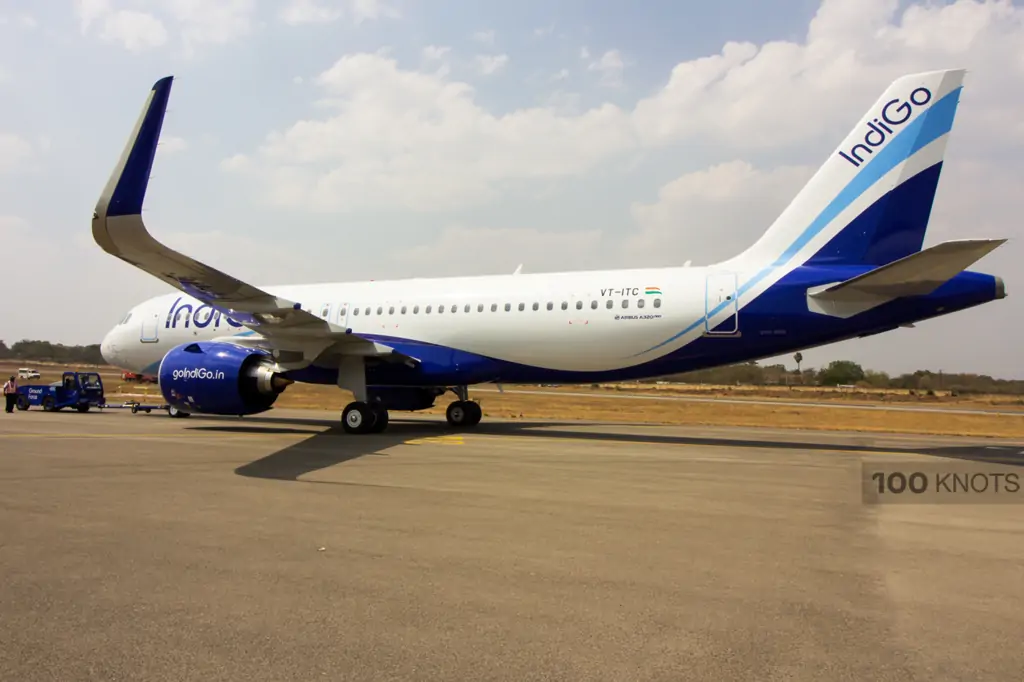
In the fast-paced world of aviation, the safety and well-being of passengers and crew members remain paramount. IndiGo Airlines (6E), one of India's leading airlines, has taken a bold step forward in ensuring the alertness and efficiency of its pilots.
They are set to adopt a revolutionary wrist device and ground-based tool for fatigue detection, which will assess their pre- and post-flight alertness levels. This groundbreaking initiative comes as a result of IndiGo Airlines collaborating with the esteemed French aerospace conglomerate, Thales Group.
The primary objective is to collect and utilize data that will aid in the development of flight schedules and rosters designed to minimize pilot fatigue, thereby enhancing passenger safety.
A Stride into the Future: IndiGo's Innovative Approach
Addressing the Need for Enhanced Fatigue Management
In an industry where every minute counts and precision is key, fatigue management is of paramount importance. IndiGo Airlines recognizes this and aims to stay at the forefront of innovation.
The adoption of a wrist device and a ground-based tool is a significant step towards achieving this goal. By monitoring the alertness levels of their pilots before and after flights, IndiGo aims to enhance safety, punctuality, and overall operational efficiency.
Collaborating with Thales Group
The collaboration between IndiGo Airlines and Thales Group signifies a remarkable partnership between aviation and technology. Thales Group, with its extensive experience in aerospace technology, is uniquely positioned to provide cutting-edge solutions for fatigue detection and management. This collaboration promises to revolutionize how airlines approach pilot well-being.
Leveraging Data for Enhanced Scheduling
To ensure that pilots are well-rested and alert, IndiGo Airlines plans to leverage the data collected through these devices to optimize various aspects of their operations. This includes refining flight routes, optimizing crew pairings, and creating detailed crew profiles. By surpassing the capabilities of traditional scheduling algorithms, the airline aims to set new standards for fatigue management in the aviation industry.

A Glimpse into the Future of Aviation Safety
The Role of Sleep Researchers
IndiGo Airlines is leaving no stone unturned in its quest to ensure pilot well-being. According to an internal memo obtained by ET, the airline intends to collaborate with sleep researchers. They successfully developed a fatigue detection model that provides extensive insights into demographic data after six years of meticulous research.
This partnership aims to bring scientific expertise into the equation, further improving the airline's fatigue management system. By incorporating insights from sleep research, IndiGo can make informed decisions that benefit both pilots and passengers.
Precision in Flight Scheduling
One of the critical elements of fatigue management is precise flight scheduling. With the data collected from the wrist devices and ground-based tools, IndiGo Airlines can create schedules that consider the physiological well-being of their pilots. This means not only optimizing flight timings but also factoring in the need for rest and recovery.
An Industry-leading Approach
IndiGo Airlines' commitment to pilot well-being is evident in its forward-thinking approach. By embracing technology and scientific expertise, the airline is poised to set industry-leading standards for fatigue management. This not only enhances the safety of its operations but also ensures a better experience for passengers.
Ashim Mitra, Senior Vice President of Flight Operations, briefed pilots that IndiGo intends to initiate a proof-of-concept trial of their technology-driven interface geared at assessing pilot alertness levels in the coming months.
They will evaluate the efficacy and accuracy of the acquired data when the study is completed. It's worth noting, though, that IndiGo intends to maintain the current system in place, enabling pilots to request relief from duty if they are fatigued. Initially, ground devices will be installed in IndiGo hubs such as Delhi, Mumbai, Bengaluru, and Chennai, where pilots will undertake a five-minute test.
"With this initiative, we are putting ourselves at the forefront of airline safety and innovation, setting an industry standard." It also demonstrates our dedication to our pilots' well-being, ensuring their health, mental well-being, and job satisfaction, ultimately enhancing passenger safety," Mitra added.
Conclusion
In the dynamic world of aviation, IndiGo Airlines (6E) stands as a beacon of innovation and safety. Their collaboration with Thales Group and the adoption of fatigue detection technology demonstrates a commitment to excellence in pilot well-being and passenger safety. By harnessing the power of data and scientific expertise, IndiGo is shaping the future of aviation, where safety and efficiency go hand in hand.
With Inputs from Aviation A2Z, Economic Times
Read next
Air India MRO Depot at Mihan-SEZ Expected to Get its First-Ever Foreign Flight
Radhika Bansal
13 Sep 2023
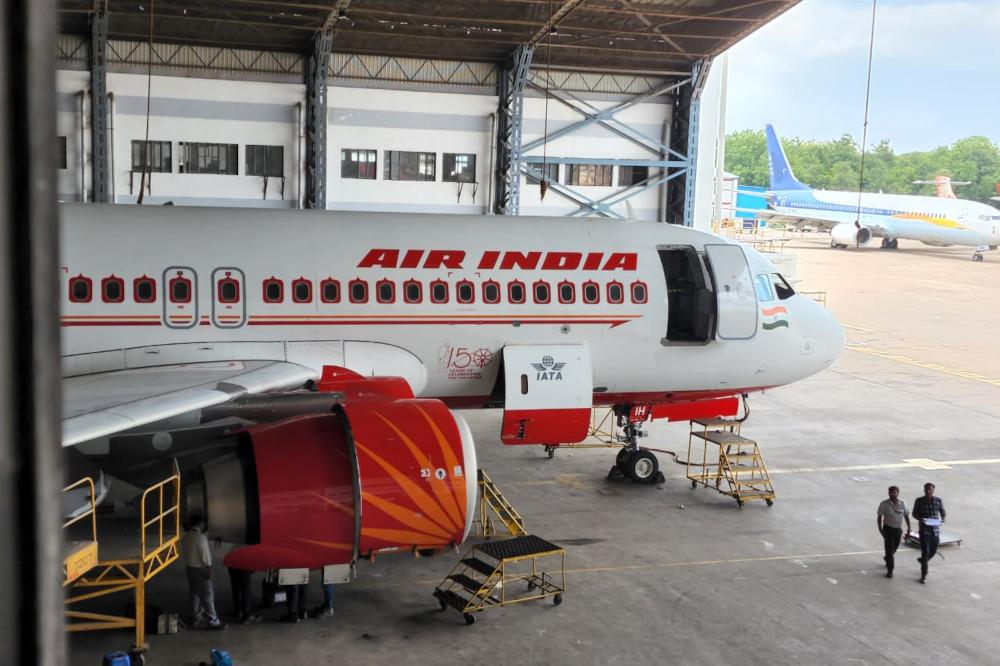
The Air India Maintenance Repair and Overhaul (MRO) depot at Mihan-SEZ is expected to get its first-ever foreign flight nearly a decade after it began operations in the Mihan-SEZ. The MRO became operational in 2015. Originally to be run by US aircraft maker Boeing, it was among the first major investments in the SEZ at Nagpur, according to a report by The Times of India.
The report further mentioned that the MRO was part of the offset deal arising out of 111 aircraft purchased for Air India and then Indian Airlines. At that time Praful Patel was the civil aviation minister. Now, a Boeing 777 from Kuwait is expected to land at the MRO for a C check in the next 4 to 5 days. This is an advanced-level maintenance job. For the first time, the MRO would be catering to a foreign player directly, though exports of goods or services are the basic mandate of a unit in the SEZ.
In turn, the units in a SEZ get tax relief. The SEZ also has another MRO of AAR Indamer Technics Private Limited which mainly caters to Indigo Airlines. Every unit in a SEZ has to generate net foreign exchange earnings (NFE) which happens through exports. As an MRO, the depot was expected to export aircraft maintenance services to foreign airlines.
Boeing pulled out of the project at a later stage and handed it over to Air India Engineering Services Limited (AIESL), a subsidiary of erstwhile Air India. AISEL in turn continued to carry out the maintenance only of the aircraft belonging to Air India which was its parent company. This means it practically remained as a house service provider to Air India. However, since the MRO is in a SEZ, it had to generate foreign exchange through exports as well.
To meet the mandate of generating foreign exchange, AISEL charged Air India in dollars even as its domestic fleet was serviced. This has continued even after Tatas took over Air India. After Tatas took over Air India, AIESL remained to be an independent entity.
With the Kuwait aircraft coming this would be the first time when the AISEL would be providing services to foreign airlines making it an export in the true sense, said sources. The coming up of the Boeing MRO was announced in 2005. At that time it was expected that the airlines from across the globe would land at Nagpur for maintenance. Nagpur was projected as a convenient destination owing to its geographical location.
Air India operationalise engineering warehouse in Delhi
Air India operationalised an engineering warehouse near Delhi airport which will help resolve aircraft defects at a faster pace, and also indicated that pilots from Go First are looking to join the airline. Under the ownership of Tata Group, loss-making Air India is working on reviving the airline and among others, is aggressively hiring pilots and cabin crew as well as making various technological upgrades.
In a message to employees, Air India CEO and MD Campbell Wilson said the airline has finalised an agreement for setting up a 57,000 square feet engineering warehouse near the airport in the national capital. "An agreement for a new 57,000 sq ft engineering warehouse near Delhi Airport was reached. It aims to be operational next month, giving us more proximate access to and better control over our aircraft spares so we can resolve defects faster," he said.
(With Inputs from The Times of India)
Read next

Hong Kong-based international airline Cathay Pacific will resume operating non-stop weekly flights between Chennai and Hong Kong from February 2024. The airline in a statement said that after a hiatus of four years, it is returning with its Boeing 777 aircraft, ensuring a comfortable and premium travel experience for passengers between the two cities. As Chennai serves as an aviation hub that connects southern India to the rest of the world, Cathay Pacific is gearing up to embark on a new chapter of connectivity, convenience, and customer satisfaction, the statement said.
The flight from Chennai will leave at 0220 hours on Wednesday, Friday and Sunday to arrive in Hong Kong at 0955 hours. In the return direction, the flight will leave Hong Kong on Tuesday, Thursday and Saturday at 2150 hours to reach Chennai at 0100 hours, according to a release.
The flights to Hong Kong would be operated from Chennai on Wednesdays, Fridays, and Sundays while on the return direction, it would fly from Hong Kong to Chennai on Tuesdays, Thursdays, and Saturdays. It will return with its Boeing 777 aircraft, which will be configured in a three-cabin-class layout with 368 seats The configuration of seats comprises 40 business class, 32 premium economy, and 296 economy class seating. For both business and leisure travellers, the flights would serve as a gateway offering exceptional connectivity via Hong Kong to other cities including the Greater Bay Area, the Chinese Mainland, North America, Northeast Asia, and the Southwest Pacific.
"We are delighted to once again serve the residents of Chennai. As a group, we have had a long-standing history with the city and now we will be taking to the skies thrice a week to and from Chennai International Airport on February 2, 2024," said Anand Yedery, the Regional Head of Customer Travel and Lifestyle, South Asia, Middle East and Africa, Cathay Pacific. "A Boeing 777 aircraft on this route will not only cater to the travel needs of corporate and leisure travellers but will also provide each segment with a cabin and allow them to travel with enhanced comfort to Hong Kong and beyond," he added.
Cathay Pacific's Expansion Plans
Cathay Pacific currently dominates the Hong Kong-India sector, flying to Bengaluru, Delhi, and Mumbai with a total of 216 monthly return flights, according to data provided by Cirium. Air India is the only other carrier that flies to Hong Kong from India, with 26 monthly return flights from New Delhi, bringing the total number of monthly flights to 242, offering more than 76,000 seats.
In July, Cathay Pacific carried 1,744,374 passengers; compared to last year, it was almost a 700% increase. The airline also reported that 2023 bookings are up 1,622% compared to last year, against an 818.9% increase in overall flight capacity. Cathay Pacific is operating at around 60% of its pre-pandemic capacity and expects to achieve 100% of 2019 levels by 2024.
Buoyed by its financial success, Cathay Pacific is setting its sights on expansion. The airline's plans include acquiring new aircraft to modernize its fleet and enhance the customer experience. This strategic move not only aligns with industry trends but also positions Cathay Pacific as a frontrunner in providing top-notch services to travellers.
Cathay announced plans to exercise purchase rights for 32 Airbus A320neo family aircraft, hoping to expand its fleet as demand improves. It is anticipated that the aircraft will be delivered by 2029, increasing the total number of new deliveries to more than 70. As part of the revamp of its long-haul Boeing 777-300ER cabins, it will also provide an "all-new business class experience" in the second quarter of 2024, as well as a new first-class cabin on the 777-9 aircraft in 2025.
Read next

In a significant development, Turkish aviation services firm Celebi India announced on Monday, September 11, 2023, that it has commenced providing ground handling services at Chennai International Airport. This strategic move marks the expansion of Celebi India's operations to nine airports across the country, solidifying its position as a leader in the aviation services sector.
Enhancing Aviation Infrastructure
The aviation industry in India has witnessed substantial growth in recent years, with an increasing number of passengers and airlines operating both domestically and internationally. In response to this growing demand, Celebi India has extended its comprehensive ground handling services to Chennai International Airport.
Comprehensive Ground Handling Services
Celebi India's services at Chennai International Airport encompass a wide range of ground handling activities, catering to both scheduled and non-scheduled air operators. This includes services for both domestic and international flights, ensuring the smooth and efficient operation of the facility.
The company's commitment to excellence in ground handling is evident through its recent partnerships with airlines. Notably, US-Bangla Airlines and YTO Cargo have already entered into agreements with Celebi India for the provision of ground handling services, demonstrating trust and confidence in Celebi India's capabilities.
Supporting Chennai Airport's Growth
Chennai International Airport serves as a vital gateway for travelers, connecting them to various destinations within India and abroad. Celebi India's CEO of Ground Handling, Tauseef Khan, expressed his enthusiasm about contributing to the airport's growth and efficiency. He stated, "Chennai Airport is a key player in the aviation landscape, and Celebi India is delighted to play a role in enhancing its operations."
A Milestone for Celebi India
The initiation of ground handling services at Chennai International Airport signifies a significant milestone for Celebi India. It underscores the company's commitment to delivering world-class ground handling services within the aviation sector. Celebi India's expansion aligns with the increasing demands of the Indian aviation market, and the company aims to set new standards in ground handling excellence.
Nationwide Presence
Aside from Chennai International Airport, Celebi India is actively involved in ground handling activities at several other prominent airports across India. These include Mumbai, Delhi, Bengaluru, Hyderabad, Cochin, Ahmedabad, Goa (Manohar International Airport, Mopa), and Kannur. This widespread presence ensures that Celebi India can effectively support airlines and passengers across the country.
Conclusion
Celebi India's foray into providing ground handling services at Chennai International Airport represents a significant step forward in the company's growth strategy. With a focus on excellence, the company is poised to enhance the aviation infrastructure and contribute to the efficiency and convenience of air travel in India.
Comment