
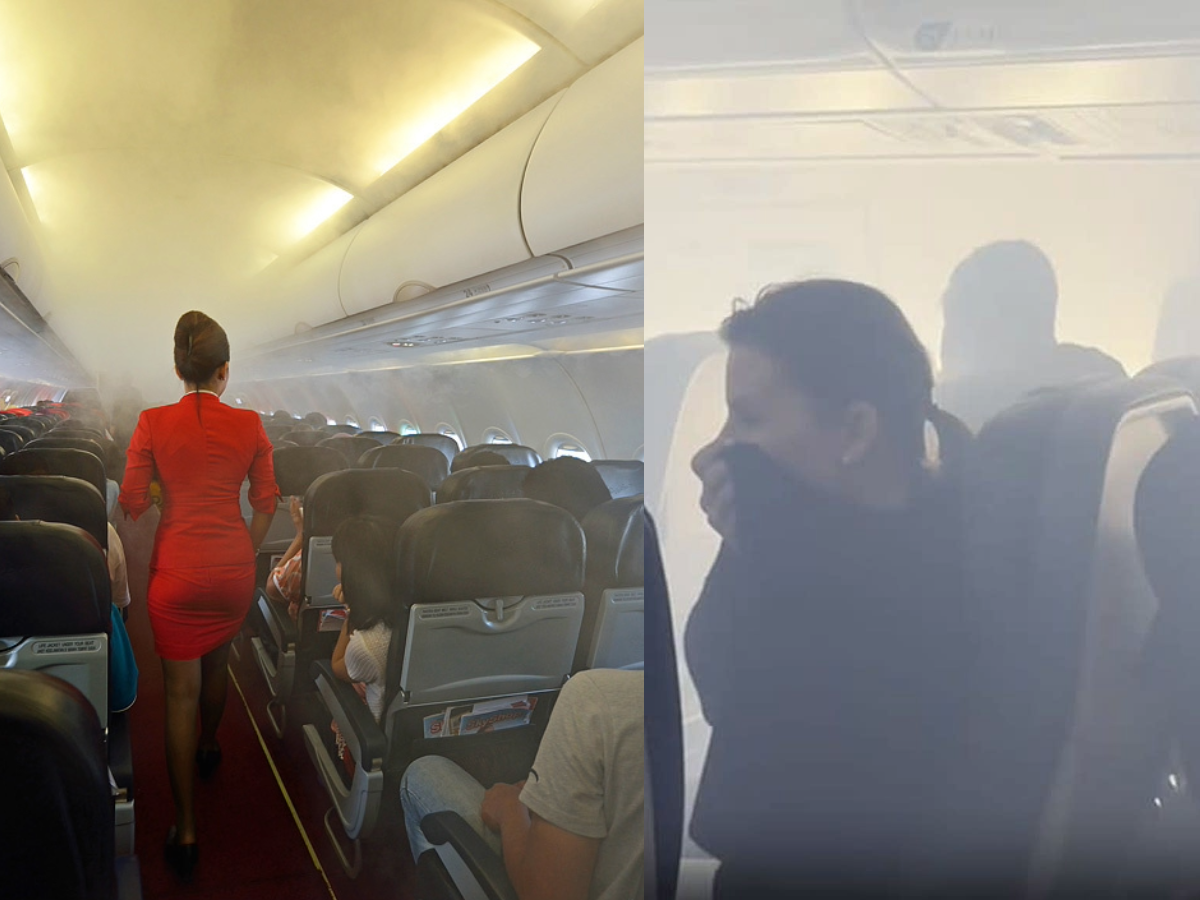
The last thing passengers expect when boarding a flight is to be exposed to toxic fumes that could potentially cause lasting neurological damage. Yet thousands of "fume events" have been plaguing commercial aviation for over a decade, with incidents surging dramatically in recent years.
A recent Wall Street Journal investigation has shed new light on this aviation safety crisis that airlines and regulators have been slow to address.
Understanding Toxic Fume Events
A fume event occurs when bleed air—the system used to pressurise aircraft cabins—becomes contaminated with hazardous fluids, including engine oil, hydraulic fluid, anti-icing compounds, and other toxic chemicals.
Most commercial aircraft rely on this "bleed air" system, which draws outside air through the jet engines where it's heated and pressurised before being pumped into the passenger cabin.
The problem arises when faulty engine seals leak, allowing toxic aviation oil containing neurotoxic chemicals, such as tricresyl phosphate, to contaminate the cabin air supply. The Airbus A320 family has emerged as the aircraft most affected by these incidents, largely due to specificities in its engine design.
FAA data shows these events occur at a rate that jumped from about 12 per million departures in 2014 to nearly 108 by 2024—a staggering 900% increase.
Notably, the Boeing 787 Dreamliner stands out as the only commercial aircraft immune to this problem, as it utilises electrical compressors rather than engine-derived bleed air for cabin pressurisation, thereby eliminating the contamination pathway entirely.

A Decade of Documented Incidents
Thousands of fume events have been reported to the FAA since 2010, but the human stories behind these statistics reveal the true scope of this crisis. Passengers and crew members consistently describe a distinctive "dirty socks" or "gym locker" odour that signals contamination.
In April 2025, a pilot experienced immediate symptoms after detecting "a dirty, musty gym sock odour followed by a burning rubber smell," becoming "momentarily lightheaded with moderate throat irritation" and requiring priority handling from air traffic control. A flight attendant in May 2024 reported "very strong and distinct bandage smell" that caused "watery eyes, congestion, and chest tightness," necessitating medical attention after the flight.
A NASA analysis of safety reports from 2018-2019 identified 362 voluntarily-reported fume events affecting nearly 400 pilots, flight attendants, and passengers who required medical attention. In 73 of these incidents, pilots were forced to use emergency oxygen, while four dozen pilots became so impaired they couldn't perform their duties.
The symptoms range from immediate effects like headaches, nausea, dizziness, and breathing difficulties to more severe long-term consequences. Neurologist Robert Kaniecki, who has treated over 100 flight attendants and a dozen pilots for fume-related brain injuries, warns that the toxic exposure can cause permanent damage to the peripheral nervous system, with effects resembling those seen in concussion victims.

Flight Attendants' Union Legislative Battles
The aviation industry's response to this crisis has been marked by resistance and delay. In 2017, the Association of Flight Attendants-CWA, representing 50,000 flight attendants across 20 airlines, took decisive action by advocating for comprehensive legislation to address fume events.
Their efforts led to provisions in the 2018 FAA Reauthorization Act requiring the agency to assess prevention tactics, including crew training and the installation of fume sensors on commercial aircraft. However, progress on these measures has been frustratingly slow. Airlines have refused to allow flight attendants to carry air samplers after Congress mandated chemical measurements, while Boeing has declined requests for air quality sensors due to litigation fears.
"We have known for decades that current bleed air systems can dump toxic chemicals and fuels into the aircraft cabin, poisoning the air for everyone on board," stated Sara Nelson, international president of the Association of Flight Attendants. “Instead of making simple changes to protect us, manufacturers and airlines have prioritised corporate profits.”
New Legislative Hope: The Safe Air on Airplanes Act of 2024
After years of industry stonewalling, renewed legislative momentum emerged in 2024 with the introduction of the bipartisan Safe Air on Airplanes Act. Spearheaded by Congressman Maxwell Frost (D-FL) and later endorsed by Congressman John Garamendi (D-CA), this comprehensive legislation takes a more aggressive approach than previous efforts.
The bill would require filters on all existing bleed air systems within seven years to prevent oil particulates from entering aircraft interiors. More significantly, it would ban bleed air systems entirely on newly manufactured aircraft and eventually phase out these systems on existing fleets.
This legislation represents the most ambitious attempt yet to address the root cause of fume events rather than merely studying the problem. The bill is currently moving through the House Transportation and Infrastructure Committee, building momentum among lawmakers who recognise that incremental measures have failed to protect public health.

Industry Response
While comprehensive solutions remain elusive, some airlines have begun taking proactive steps. The FAA has implemented stricter reporting protocols, contributing to the documented increase in reported incidents, though critics argue this reveals the problem's true scope rather than creating new issues.
Several airlines have developed monitoring programs.
United Airlines CEO Scott Kirby has personally focused on the issue for over a decade, implementing a "proactive maintenance program" that monitors engine oil consumption and pressure while replacing APU seals in advance to prevent leaks.
However, the industry's overall response has been characterised by resistance to meaningful change. Boeing has refused requests from airlines like Lufthansa to install air quality sensors, citing litigation concerns over crew and passengers sickened by detectable fume events.
Delta's Bold Move: APU Replacement Initiative
In a significant development, Delta Air Lines has emerged as an industry leader by taking concrete action to address fume events. The Atlanta-based carrier began replacing auxiliary power units (APUs) on more than 300 Airbus A320 family aircraft in 2022, with 90% of the fleet already completed.
This initiative, whose costs Delta has not disclosed, directly addresses one of the primary sources of cabin air contamination. APUs, small jet engines located in aircraft tailcones, can leak oil fumes into cabins through the bleed air system. By proactively replacing these units rather than waiting for failures, Delta is demonstrating that practical solutions exist when airlines commit to prioritising passenger and crew safety.
The replacement program covers Delta's entire A320 family fleet, including 127 A321-200s, 83 A321neos, 57 A319s, and 54 A320-200s. This comprehensive approach suggests that Delta recognises the systemic nature of the problem rather than treating it as isolated mechanical failures.

Looking Forward
The aviation industry stands at a crossroads regarding cabin air quality. JetBlue Airways and Spirit Airlines, which primarily operate Airbus aircraft, have experienced a 660% surge in fume incidents between 2016 and 2024, highlighting the urgency of comprehensive solutions.
The technical pathway forward is clear.
Implementation requires overcoming industry resistance rooted in cost concerns and litigation fears. As teaching assistant professor Jungho Suh of George Washington University notes, “Long-term trust in air travel relies not just on efficiency but on creating cleaner, safer environments where technology and humanity progress hand in hand.”
The skies may be friendly, but until comprehensive action addresses this hidden crisis, the air passengers breathe at cruising altitude remain a gamble with their long-term health.

Read next
Is Lufthansa about to trade office chairs for chatbots — and still expect better margins?

Abhishek Nayar
30 Sep 2025

Lufthansa’s board just dropped a strategic mixtape of cost-cutting, automation and fleet expansion that sounds like: “We’ll hire fewer people here, more planes there, and trust the algorithms.” The result? About 4,000 administrative roles are slated to disappear by 2030 — mostly in Germany — as the group chases fatter margins and cleaner spreadsheets.
What happened (the short version)
At its company-wide Capital Markets Day, Lufthansa confirmed a headline plan to cut around 4,000 non-operational/administrative jobs by 2030, push deeper into digitalization and automation, and set tougher mid-term financial targets: an adjusted operating margin of 8–10% (from 2028) and adjusted free cash flow of more than €2.5 billion annually later in the decade. The move is part of the turnaround programme the group unveiled last year.
The boardroom playbook: automate, integrate, repeat
Lufthansa’s plan is three-pronged:
- Digitize and automate repetitive administrative tasks so fewer humans are needed for paperwork and process duplication.
- Deepen integration between group airlines (Lufthansa, Austrian, Swiss, Brussels, ITA Airways, Eurowings, City Airlines etc.) so the whole group behaves more like one engine and less like several small, fuel-hungry ones.
- Invest in growth where returns are strongest — including adding over 230 aircraft by 2030 (about 100 long-haul jets among them) while shifting resources away from cost-heavy parts of the group.
Think of it as moving from a messy desk drawer of sticky notes to a minimalist file server that never loses your boarding pass. Romantic? Not always. Efficient? That’s the hope.
Where the cuts will bite — and the “but we’ll hire elsewhere” clause
Executives say most reductions will be in Germany, where labor and legacy structures make cost control harder. The CFO also signaled intent to hire roughly 1,500 administrative staff in other international locations to offset some work and cost footprint — i.e., some roles shift, others vanish. Earlier report plans to cut about 20% of non-operational staff in the group — which helps explain the 4,000 figure.
The unions and the political noise
Unions are not throwing confetti. Verdi — the union covering many Lufthansa employees — slammed the cuts, pointing out that heavier tax burdens and regulatory costs make firms look to staff reductions to protect margins. Meanwhile, Lufthansa’s pilots were voting on pension changes around the same time, a process that could spill into strike risk depending on the outcome. In short: boardroom strategy + shop-floor sensitivity = a headline-ready tug-of-war.
For investors: the carrot (margins) and the stick (credibility)
Lufthansa is explicit: they’ve lagged competitors on financial performance, and the Capital Markets Day was as much about reassuring investors as it was about internal housekeeping. The 8–10% adjusted margin target and the cash-flow goal are concrete numbers to hang investor optimism on — but they’ve been moved later in the decade after a rocky run of profit warnings and cost pressure.
If the group can genuinely get more productivity from fewer people and capitalize on a modernized fleet, shareholders win. If not, this becomes a textbook “promise now, deliver later” story.

For employees: it’s painful, but not blind
Management says operational roles (pilots, cabin crew, mechanics) aren’t the main target — this is administrative and duplicated function work — and they’ll consult social partners in Germany about how to implement changes. Still, moving work to cheaper group subsidiaries or international hubs is explicitly on the table — which makes the human angle unavoidable and headlines inevitable.
Can this actually work — a quick risk/benefit read
Benefits
- Lower structural costs and fewer duplicated admin processes — better margins.
- A modern fleet and integrated network could lift returns per aircraft.
Risks
- Industrial action from unions (or unhappy staff) could disrupt operations and erode short-term savings.
- Relocating admin tasks might attract regulatory and political pushback in Germany.
- Automation projects can be expensive and slow to implement; savings are rarely instant.
So yes, the plan can work — but it’s less of a sprint and more of a long haul: think marshalling a new fleet while repaving the runway at the same time.
A (good-natured) joke
If a spreadsheet and an AI walked into a bar, the spreadsheet would order “less paperwork, please,” and the AI would reply, “I’ll take your tab.” Everyone else at the bar would be whispering, “But who’s brewing the coffee?”
TL; DR
- 4,000 administrative jobs to be cut by 2030, mostly in Germany.
- Lufthansa now targets an adjusted operating margin of 8–10% from 2028 and >€2.5bn adjusted free cash flow later in the decade.
- The group plans to add 230+ aircraft by 2030 (including around 100 long-haul jets) as part of fleet modernization.
- Management may shift some admin work abroad and hire ~1,500 admin staff internationally to rebalance costs.
- Unions (Verdi) are critical; pilots’ pension vote adds strike risk — social and political pushback could complicate implementation.
With Inputs from Reuters
Read next
Boeing’s Next Act: Is the 737 MAX Getting a Midlife Crisis (and a Brand-New Body)?
Abhishek Nayar
30 Sep 2025
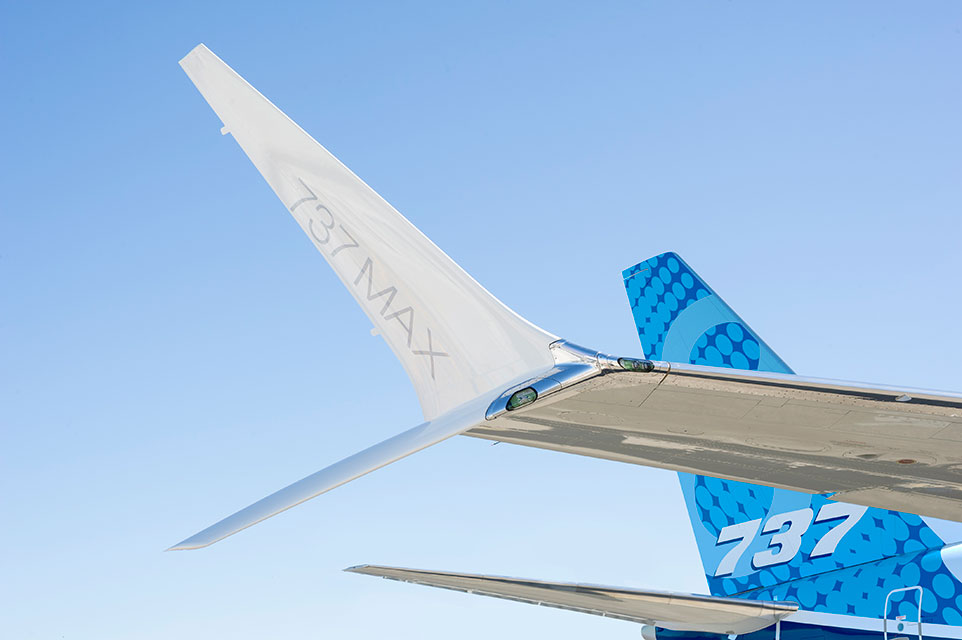
Boeing has quietly kicked off early work on a clean-sheet, single-aisle aircraft that could eventually succeed the 737 MAX — a long-term play to challenge Airbus and reset its single-aisle roadmap. The Wall Street Journal first reported the planning effort, and Reuters confirmed Boeing is in the “very early” stages of exploring designs, engines and cockpit concepts.
Why start now? Because airplanes take forever (and Boeing missed a few steps)
Designing a next-generation narrow-body is a decade-plus project. Boeing is juggling short-term priorities — delivering roughly 6,000 backlogged planes and certifying existing models — while quietly sketching a future jet to remain competitive in the 2030s market. Planning early gives time for new engines, better aerodynamics, and (ideally) fewer regulatory headaches than the last go-round.
Rolls-Royce in the lobby: new engines, new partners?
According to reporting, Boeing CEO Kelly Ortberg met with Rolls-Royce officials in the U.K. to explore engine options — a sign Boeing is at least entertaining suppliers beyond its traditional CFM partners for future propulsion tech. New engines could mean better fuel burn (read: airlines smile) and different maintenance ecosystems (read: supply chains reshuffle). Remember: meetings (not equal) contracts, but they are an excellent hint that Boeing is exploring options.
What Boeing is reportedly working on (so far)
- Flight-deck concepts: modernized cockpit designs and avionics, presumably with lessons learned from MAX-era challenges.
- Engine options: exploratory talks with Rolls-Royce for fuel-efficient engines that could be available in the mid-to-late 2030s.
- Internal planning: the effort is in early planning — lots of whiteboards, some CAD, and a few people nervously checking spreadsheets.
Regulatory context — not exactly smooth sailing
Boeing’s future plans arrive while the company is still under intense regulatory and public scrutiny. The FAA recently signaled it would allow Boeing to issue airworthiness certificates again for some 737 MAX and 787 jets under a new arrangement — a step toward normalizing deliveries after years of FAA oversight. But the FAA has not (yet) lifted the production cap on the 737 MAX that was imposed in early 2024 after a mid-air cabin panel blowout on an Alaska Airlines plane. That incident — where missing bolts were implicated — triggered fresh FAA audits and a U.S. Justice Department criminal inquiry and has left a bruised trust ledger.
So — a new airplane soon? Probably not. Here’s the realistic timeline
Expect conceptual studies now, follow-on detailed design in the next few years, engine selection sometime later, and certification + entry into service likely well into the 2030s if Boeing proceeds. Remember: big aircraft programs need safe, patient engineering — and buy-in from airlines, suppliers, and regulators.
What this means for airlines, passengers and the planet (short version)
- Airlines: potential for more fuel-efficient fleets and better trip costs decades from now.
- Passengers: marginally nicer cabins and lower emissions (slow-burn win).
- Planet: newer engines and airframes could help emissions targets — but only if airlines actually buy them.
All of which assumes Boeing gets its house in order on quality and regulatory compliance. (Hint: that’s the part the FAA and DOJ are watching closely.)

The corporate subplot — reputations, lawyers, and supply chains
Between lawsuits, regulatory probes, and production snags, Boeing is both trying to fix immediate operational problems and plan a strategic comeback. Launching a new airplane while under the microscope is bold — maybe courageous; maybe audacious — but done right, it’s how industry leaders stay relevant. Done wrong, and history reminds us it can be costly in cash and confidence.
A little aviation humor (because a new plane deserves a lighter aisle)
Imagine a focus-grouped flight attendant script for the new jet: “Welcome aboard the Boeing Future — please keep your seatbacks and tray tables in the upright position, and any spare bolts that may have wandered off should be returned to their rightful home under the wing.”
Bottom line — cautious optimism with a hard hat on
Boeing is laying early groundwork for a next-generation single-aisle aircraft that could eventually replace the 737 MAX family. It’s a strategic, long-range move that signals ambition — but the company still has to prove it can ship quality today, not just dream big for 2035. The world (and regulators) will be watching every rivet.
TL; DR
- Boeing is in early planning for a new single-aisle jet to eventually succeed the 737 MAX.
- CEO Kelly Ortberg has met Rolls-Royce officials to discuss possible engines; nothing final yet.
- FAA is easing certain certificate processes back to Boeing for some jets, but the production cap and enhanced oversight remain in place after safety issues.
- The Alaska Airlines cabin panel incident (missing bolts) spurred audits and DOJ/FAA scrutiny — Boeing still has work to rebuild regulatory trust.
- Timeline: concepts now — engines & design decisions over years — entry into service likely in the 2030s if the program proceeds.
With Inputs from Reuters
Read next
Did Chapter 11 Ghost the Romance Between Gol and Azul — or Was It Just Bad Timing?
Abhishek Nayar
29 Sep 2025

Abra Group — the big shareholder that controls Gol and also backs Avianca — has officially called off talks to merge Gol with rival Azul. The deal that once promised to remake Brazil’s skies and capture roughly 60% of the domestic market is shelved for now, with Abra saying the talks stalled because Azul is tied up in Chapter 11 bankruptcy proceedings.
Why this felt like a telenovela (but with more spreadsheets)
Back in January the two carriers signed a non-binding memorandum of understanding that set off alarm bells and champagne corks in equal measure: combine networks, twin loyalty programs, and — suddenly — a single airline that could command roughly 60% of Brazil’s domestic passengers. For fans of dramatic stats: that would have dwarfed LATAM’s local unit and fundamentally reshaped competition.
But romance doesn’t survive long under Chapter 11. Azul filed for Chapter 11 in late May to reorganize pandemic-era debt and secure debtor-in-possession financing; its focus on restructuring made meaningful deal progress unlikely. Abra told Azul in a letter that discussions hadn’t “meaningfully progressed” for months, and so Abra pulled the plug.
The legal and political stage — regulators, rivals, and ministerial X posts
The possible combination wasn’t just a corporate matchmaking exercise — it was a regulatory headache. Brazil’s antitrust watchdog CADE had been poring over the airlines’ cooperation and raised questions about potential market concentration and remedies. LATAM Brazil was vocal in saying any merger would need tough mitigation measures and that approval without them was implausible. In short: this was going to be a long, thorny process even if Azul’s finances were simpler.
Brazil’s Ports and Airports Minister welcomed the end of talks, framing the outcome as a sign of strengthened airlines and a growing aviation market — a diplomatic way of saying: “Phew, crisis averted… for now.”
The codeshare — a short marriage that also ended

As a practical (and symbolic) move, Gol and Azul have terminated the commercial cooperation/codeshare arrangement they had announced in 2024. That deal — meant to let each sell seats on the other’s flights and integrate loyalty benefits — had already drawn regulatory scrutiny and now it’s been wound down as the merger talks collapsed. Both carriers say they will honor tickets already sold under the agreement.
What each party says (aka official dating profiles)
- Abra / Gol: Still believes the combination was a good strategic idea and left the door open to future talks, but said progress stalled while Azul sorted its bankruptcy matters.
- Azul: Confirmed the talks have ended and reiterated that it’s focusing on reshaping its balance sheet and exiting Chapter 11 — the company expects to emerge from bankruptcy in early 2026 as it secures DIP and exit financing.
- LATAM Brazil (CEO Jerome Cadier): Said regulators would never approve such a merger without mitigation; the development doesn’t alter LATAM’s expectations for the domestic market.
What this means for flyers, competitors and investors
- Passengers: For now, competition remains more diffuse: fewer fears of a near-monopoly, but also fewer immediate chances of route consolidation that might lower fares on some thin routes. Expect networks to stay competitive, with the usual promo chaos during peak season. (Translation: keep your frequent-flyer points close.)
- Competitors: LATAM looks relieved (and probably quietly pleased). Regional and low-cost players will keep jockeying for market share rather than facing a dominant combined behemoth.
- Investors / lenders: The shock went into bond and equity prices when Azul filed for Chapter 11; the scrapped talks reduce near-term uncertainty around a major structural change but keep focus on balance-sheet fixes and liquidity events. Abra’s statement that the idea isn’t dead keeps a distant option alive for future consolidation.
Could the merger ever come back? (Spoiler: maybe, but not soon)
Abra’s letter left the door ajar — “ready, willing and available to engage” — but a successful resurrection would need Azul to exit Chapter 11, clear major antitrust hurdles (CADE will want fixes), and find terms both sets of creditors, managers and governments can stomach. That’s a multi-year negotiation, not a weekend rekindle.
A lighter way to look at it
Think of this like a slow-burn romcom where the two leads get very close at the airport gate, then realistic budgeting, family creditors, and an overprotective regulator put them on different flights. The producers (Abra) still hope for a sequel, but in the meantime everyone’s working on their solo careers — with better loyalty benefits for some, more route tinkering for others, and a few dramatic courtroom scenes in New York.
TL; DR
- Abra Group has terminated talks for a Gol-Azul merger after months of little progress.
- The main reason: Azul’s Chapter 11 bankruptcy and its focus on restructuring made a timely combination impractical. Azul aims to exit Chapter 11 in early 2026.
- The planned 2024 codeshare/commercial cooperation agreement between the airlines has been terminated; tickets already sold will be honored.
- The proposed tie-up would have controlled roughly 60% of Brazil’s domestic market — a fact that attracted strong antitrust scrutiny and criticism from rivals like LATAM.
- Abra says it still sees merit in a combination and is open to future discussions, but any comeback would require debt restructurings, regulatory remedies, and a lot of patience.
With Inputs from Reuters
Read next
Flight Paths & Curry Stops: How India’s Airport Boom Is Rewiring Global Tourism

Jaideep Mirchandani
29 Sep 2025

“India’s aviation boom is opening new tourism corridors that will redefine global travel,” says Jaideep Mirchandani, Group Chairman of Sky One.
And he’s not exaggerating. On World Tourism Day (September 27), the numbers tell the tale:
- 99.5 lakh foreign tourists arrived in India in 2024—just shy of the pre-pandemic peak of 1.09 crore in 2019.
- Nearly 90% came by air. Translation? For most visitors, the airport is India’s handshake. Clear signage, breezy terminals, and smooth transfers aren’t just conveniences—they’re the mood-setters for the entire trip. (Nobody wants their “Incredible India” moment to start with “Where’s the baggage claim?”)
India as a Global Travel Hub
The Ministry of Tourism recently dropped some jaw-dropping stats in Parliament:
- By 2032, India’s outbound tourism is projected to hit US$44.7 billion. Yes, billion with a B.
- Airlines are already circling like hawks spotting opportunity. Malaysia Airlines, for example, joined hands with Kerala Tourism for the Look East campaign, luring Indians toward East Asia while wooing travelers from China, Japan, Australia, and beyond.
Meanwhile, international carriers like British Airways, Emirates, and Singapore Airlines are beefing up their Indian networks. Malaysia Airlines is bumping up flights to 80 per day by December 2025, because apparently, three extra flights make all the difference when you’re trying to keep up with Indian wanderlust.
Airports, Airports Everywhere
The government’s aviation playbook is ambitious enough to give even seasoned CEOs whiplash:
- 50 new airports under the UDAN scheme in the next five years.
- 120 new destinations to be connected in the next decade.
- Fresh terminals rising in Varanasi, Agra, Darbhanga, and Bagdogra—not coincidentally, all hot on the tourist trail.
And let’s not forget the shiny new Jewar (Noida) and Navi Mumbai International Airports, both expected to welcome their first passengers by the end of this year. (Think of them as India’s newest “super malls,” except instead of buying clothes, you’re buying jet lag.)
Greenfield Dreams and “Incredible India” 2.0
In the last decade, 12 Greenfield airports have gone live—including Shirdi, Kushinagar, Rajkot, and Mopa. All conveniently located in places where tourists are already itching to go. Coincidence? Hardly.
Add to this the Tourism Ministry’s Incredible India campaign, which went from being a glossy brochure to an actual global brand. Now, India’s international roadshows and travel expos are essentially the world’s sneak peek at India’s new and improved aviation backbone.
The Hidden Turbulence
But before we break into celebratory bhangra at the terminal, there’s a reality check. Mr. Mirchandani points out some headwinds:
- Shortage of skilled pilots, engineers, and MRO (Maintenance, Repair, Overhaul) capacity.
- Right now, 90% of MRO work is outsourced abroad. Imagine buying a car in Delhi and sending it to Dubai for servicing. Exactly.
If India wants its aviation-tourism synergy to soar, the back end needs as much attention as the runways.
Why This Matters for You (Yes, You)
- For foreign tourists: shorter queues, better connections, and Instagram-ready airports.
- For Indian travelers: more routes, competitive fares, and the occasional cheeky detour via East Asia.
- For local economies: a whole lot of jobs, hotel bookings, and “best biryani in town” signs popping up faster than boarding announcements.
TL; DR
- India welcomed 99.5 lakh tourists in 2024—almost back to pre-pandemic highs.
- Airports matter—90% of foreign arrivals land by air.
- Outbound tourism is booming—projected to hit $44.7B by 2032.
- 50 new airports + 120 new destinations planned under UDAN.
- Jewar and Navi Mumbai airports are opening by year-end.
- 12 Greenfield airports operationalized in the last decade.
- Aviation and tourism are joined at the hip—but skilled workforce and MRO remain weak links.
- Bottom line: India’s aviation surge is less about “flying high” and more about “flying smart.”
Comment