
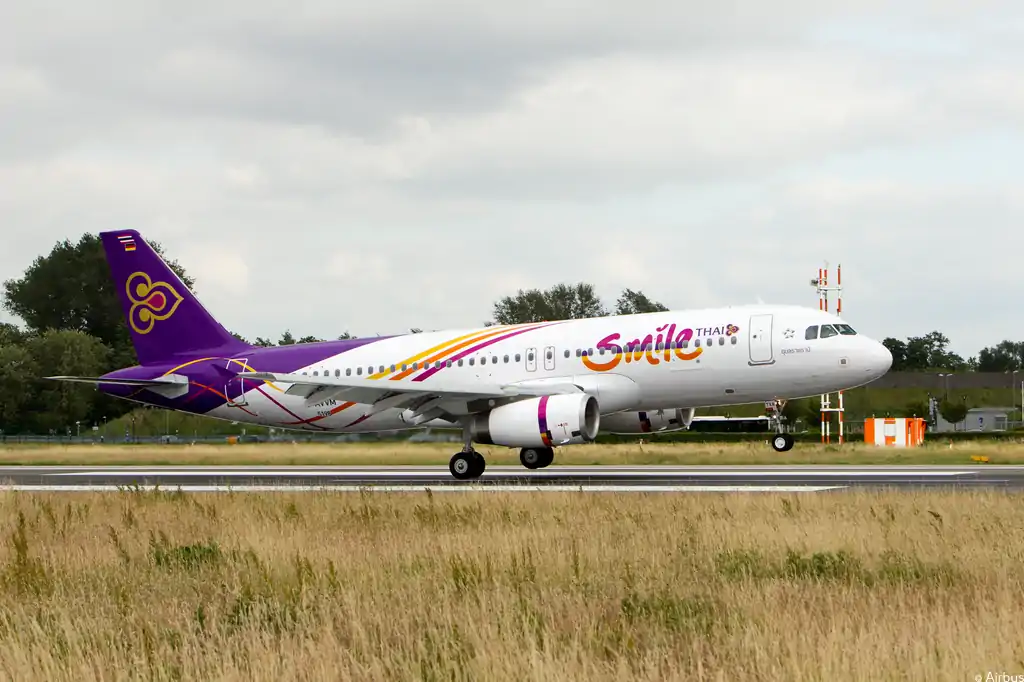
In a significant development in the Thai aviation sector, Thai Smile, the subsidiary of Thai Airways International, is set to shut down by December 31, 2023. Thai Airways CEO Chai Eamsiri confirmed the news, citing a strategic move to streamline operations and enhance service efficiency within the industry.
Background
Thai Smile, which operated for eleven years, will see its 'WE' coded flights and brand come to an end. The parent company, Thai Airways International, is set to take over the remaining routes not already absorbed, with the entire transition process expected to conclude by January 31, 2024.
Transition Timeline
The transition process involves the transfer of assets and aircraft from Thai Smile to Thai Airways. The original fleet of twenty A320-200s, all leased or sub-leased from Thai Airways, has been progressively integrated back into the parent company's fleet. As of now, the fleet has shrunk to less than ten aircraft.
Reservation and Service Transfer
Existing reservations with Thai Smile will be seamlessly transferred to Thai Airways, starting on December 16, 2023. The Thai Smile website will remain active until December 15, and the call center will continue to operate until December 31, after which callers will be directed to the Thai Airways desk.
Route Integration
Thai Smile has been gradually transferring its routes to Thai Airways. Notable routes, including Bangkok Suvarnabhumi - Phuket, Bangkok Suvarnabhumi - Chiang Mai, Bangkok Suvarnabhumi - Gaya, and others, were integrated on December 1. Further routes, such as Bangkok Suvarnabhumi - Krabi and Bangkok Suvarnabhumi - Siem Reap, along with all remaining Thai Smile services, will be fully operated by Thai Airways starting January 1, 2024.
Strategic Move for Operational Efficiency
CEO Chai Eamsiri emphasized that the cessation of Thai Smile's operations is a strategic move aimed at streamlining operations and enhancing service efficiency within the Thai aviation sector. This decision comes as Thai Airways, having navigated through the challenges posed by the pandemic and undergoing a court-supervised rehabilitation and restructuring process, looks to exit the process on solid financial footing. The company aims to relist on the Thai Stock Exchange in the following year.
Conclusion
The discontinuation of Thai Smile marks the end of an era for the low-cost carrier. As Thai Airways takes over its remaining operations and assets, the move is expected to contribute to a more streamlined and efficient aviation sector in Thailand. Thai Airways, anticipating a successful exit from its rehabilitation process, looks forward to a renewed financial standing and a return to the stock exchange in the coming years.
With Inputs from ch-aviation

Read next
Air India Partners with Hirsch Bedner Associates for Lounge Refurbishment
Abhishek Nayar
05 Dec 2023

Air India, on Monday, December 4, 2023, announced a strategic collaboration with Hirsch Bedner Associates (HBA), a renowned hospitality interior design firm, to revamp its lounges at Terminal 3, Indira Gandhi International Airport in New Delhi, and Terminal 4 of JFK Airport in New York.
Elevating the Customer Experience
In a statement released on the same day, Air India highlighted this move as a significant milestone in the airline's ongoing transformation plan, aimed at enhancing the customer experience at every touchpoint of their journey. The refurbishment project, set to commence shortly, promises to deliver an elevated and more luxurious lounge experience for Air India passengers.
The Chosen Partner - Hirsch Bedner Associates
HBA, the chosen design firm for this project, boasts an impressive portfolio, having undertaken projects for global institutions such as the Taj group, Marriott, InterContinental, Hilton, and Singapore Airlines. Their expertise in crafting sophisticated and immersive interiors aligns seamlessly with Air India's vision for providing a world-class experience to its passengers.
A Commitment to Excellence
Rajesh Dogra, Chief Customer Experience Officer at Air India, expressed the airline's commitment to offering the highest standards of service to its guests as part of its transformation journey. He emphasized that the association with HBA is a crucial step towards extending a warm and welcoming lounge experience that embodies the essence of Air India's commitment to excellence.
Strengthening Customer Proposition
Dogra pointed out that, over the past year, Air India has taken several initiatives to enhance customer experience across various touchpoints, including digital channels, airport services, inflight experiences, and contact centers. The redesigned lounges, according to Dogra, will further strengthen Air India's customer proposition.
Future Expansion Plans
While the refurbishment project is starting with the lounges at Terminal 3 in New Delhi and Terminal 4 in New York, Air India is concurrently working on expanding its lounge network to other major airports in India and abroad. This expansion aligns with the airline's broader strategy to provide an enhanced and consistent experience to passengers across its network.
Conclusion
In summary, Air India's partnership with Hirsch Bedner Associates signifies a commitment to delivering a premium and refined experience to its passengers. The forthcoming lounge refurbishments are poised to set a new standard for luxury and comfort, reflecting Air India's dedication to staying at the forefront of the aviation industry's customer-centric transformation.
Read next
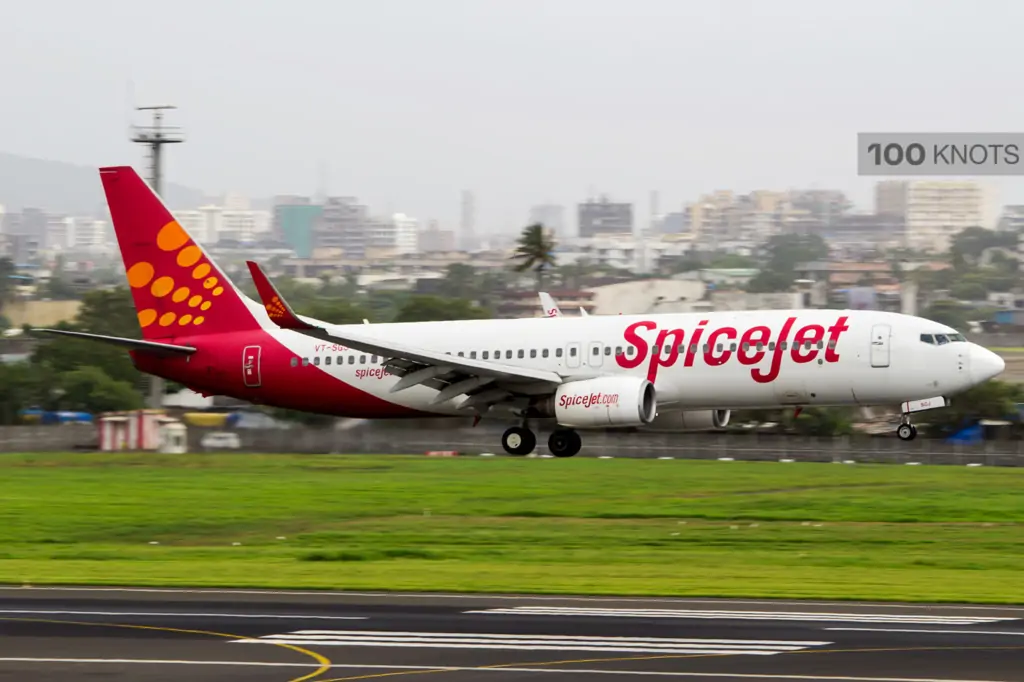
The National Company Law Tribunal (NCLT) recently made a significant decision in the case of budget airline SpiceJet, dismissing the insolvency petition filed by Willis Lease Finance Corporation (WLFC). This move comes after WLFC initiated proceedings against SpiceJet under Section 9 of the Insolvency and Bankruptcy Code, 2016, citing a default of $6.58 million, or Rs 53.96 crore, for 107 invoices related to 11 engines leased by four separate entities in April.
Background
In a legal battle that unfolded on December 4, 2023, SpiceJet countered WLFC's petition by asserting that it was neither the operational creditor nor an assignee of the debt from the four-engine lessors. The airline's senior counsel argued against the permissibility of combining claims by four operational creditors into a single insolvency petition. Additionally, SpiceJet highlighted procedural discrepancies, emphasizing the necessity of a fresh demand notice for a new application.
WLFC's Arguments
WLFC, in defense of its position, relied on the service agreement, lease agreements, and email correspondences with SpiceJet as evidence supporting its claim. The service agreement explicitly granted WLFC the authority to collect lease rent and charges on behalf of the four lessors. Moreover, WLFC's senior counsel underscored the agreement's provision allowing the servicer to enforce rights and remedies of the lessors in the event of payment default by the specified due date.
Withdrawal and Section 10A Immunity
Notably, WLFC had withdrawn a previous application citing Section 10A of the IBC, 2016, which provides immunity to corporate debtors for defaults occurring during the Covid period. This withdrawal indicated a strategic move by WLFC due to specific challenges posed by the pandemic.
Broader Context
SpiceJet is concurrently grappling with insolvency proceedings from three other aircraft lessors—Celestial Aviation Services Ltd., Aircastle (Ireland) Ltd., and Wilmington Trust SP Services (Dublin) Ltd. Additionally, a vendor, Raymach Technologies, has initiated insolvency proceedings against the budget airline.
Settlement with Carlyle Aviation Partners
In a positive turn for SpiceJet, the airline managed to settle with one lessor, Carlyle Aviation Partners. As part of the settlement, SpiceJet issued 48.1 million shares on a preferential basis to nine associated entities, effectively clearing dues amounting to Rs 231 crore.
Conclusion
The NCLT's decision to dismiss WLFC's insolvency petition marks a pivotal moment in the legal saga surrounding SpiceJet. The arguments presented by both parties shed light on the complexities of insolvency proceedings, emphasizing the importance of legal nuances and adherence to procedural requirements. As SpiceJet navigates multiple challenges on various fronts, the aviation industry and stakeholders closely watch the unfolding developments, anticipating their broader implications.
With Inputs from Economic Times
Read next
Delhi Airport Planning to Hike Aircraft Parking Charges for Grounded Aircraft

Radhika Bansal
04 Dec 2023
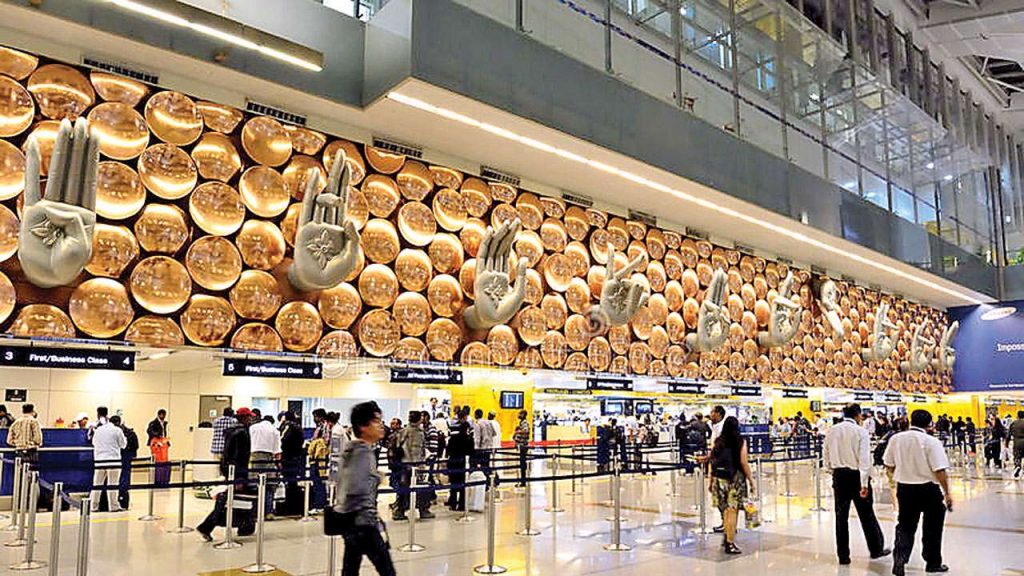
Delhi Airport operator DIAL plans to levy higher charges from airlines for grounded aircraft as they occupy available parking space and impact overall operational efficiency, amid rising instances of grounding of planes due to technical and other issues.
"We are planning that in the next traffic calculation, we are going to request that for people who are grounding (aircraft) here for more than a certain period, there should be some sort of higher charges because otherwise, it disturbs the operations of other airlines," Delhi International Airport Ltd (DIAL) CEO Videh Kumar Jaipuriar said.
Jaipuriar, who is in charge of the country's largest airport, was responding to a query on whether the operator will look at levying higher charges from airlines for aircraft that are grounded at the airport. The next traffic review of the airport is to happen early next year.
As many as 64 planes of various airlines, including IndiGo, SpiceJet and Air India, were grounded at the airport as of November 17, according to an airport spokesperson. A total of 24 aircraft of IndiGo, 6 of SpiceJet, 2 of Air India and 1 of Alliance Air were on the ground, the spokesperson said. Further, 23 planes of Go First, 5 of Zoom Air and 3 of Jet Airways remained grounded at the airport. All of them are currently non-operational airlines.
An official said the grounding of the aircraft was due to various reasons, including technical issues and some airlines going into insolvency proceedings. Currently, the Indira Gandhi International Airport (IGIA), operated by DIAL, has 295 parking stands for aircraft.
Major Issue of Grounded Aircraft
In a recent report, aviation consultancy CAPA India said, 161-166 planes of IndiGo, Air India, Go First and SpiceJet are grounded in the country and that the total number is projected to rise to 196-201 aircraft by the end of March 31, 2024.
"We have the maximum number of parking stands for aircraft. Unfortunately, a lot of that is being used by grounded aircraft... Once these aircraft are off the ground, then we can be comparable to any of the biggest airports in the world in terms of the number of parking stands," Jaipuriar said.
Indian carriers have nearly 1,500 planes on order. Currently, the Delhi Airport, which is also the country's largest airport, has three terminals -- T1, T2 and T3. Depending on traffic trends, the operator will decide on having T4.
At present, only T3 has international operations. The airport handles around 1,300 to 1,500 flight movements daily. The expansion of T1 is likely to be completed by February-end next year and the operator has plans to convert T2 into an international terminal for a short term. At present, T2 is for domestic flights. The airport expects to have more than 70 million passenger traffic in the current fiscal ending March 2024. DIAL is a consortium led by the GMR Group.
Read next
Air India Pilot Unions Raises Concerns to DGCA Over Flight Duty & Rest Period Schemes
Radhika Bansal
04 Dec 2023
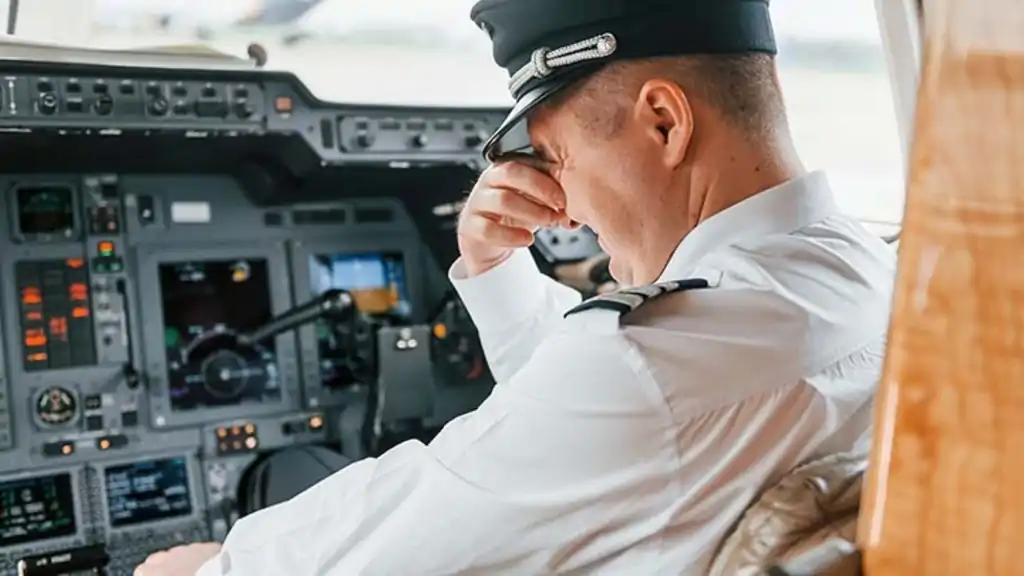
Air India pilot unions IPG and ICPA on Saturday, December 2 expressed "deep concern" over the flight duty and rest period scheme adopted by the Tata Group airline, accusing the carrier of deviating from the DGCA-approved norms.
The two unions -- Indian Pilots' Guild (IPG) and Indian Commercial Pilots' Association (ICPA) -- in a joint communication to the Directorate General of Civil Aviation also alleged that the introduction of a side policy, along with the flight duty time limitation (FDTL) scheme, by Air India seems to "undermine the authority and purpose" of the DGCA approval.
The pilot unions have also sought a review and assessment of the issue by the DGCA, requesting it to take appropriate measures to address the matter. Pilots and cabin crew's flight duty time limitations are governed by the aviation safety regulator DGCA, which proposed more rest hours for the pilots last month.
In recent months, the issue of fatigue has been in focus, especially after the death of an IndiGo pilot, who had collapsed at the boarding gate of Nagpur airport in September. And last month, an Air India pilot during a training session showed signs of discomfort and later died at the Delhi airport.
However, Air India said the pilot was not on active flying duty and was undergoing conversion training to operate wide-body aircraft.
What do the Pilot Unions Have to Say?
"We are writing to express our deep concern and disappointment regarding recent developments concerning the Flight and Duty Time Limitations (FDTL) scheme at Air India," the two Air India pilot unions said in the communication addressed to the DGCA.
Alleging that there has been a "deviation" from the DGCA-approved Air India FDTL scheme, and an "Air India Rostering practices Policy" has been suddenly framed and implemented by the management from December 1, the letter stated that the "policy is in violation of DGCA CAR FDTL and that it is not part of the DGCA-approved Air India FDTL Scheme.
"The said policy is not approved by the DGCA. The DGCA plays a pivotal role in ensuring the safety and reliability of civil aviation operations in our country. The approval of the FDTL scheme is a testament to the thorough evaluation and consideration of safety measures to protect both airline crew members and passengers," it added.
"The policy seems to undermine the authority and purpose of DGCA approval. We kindly urge the DGCA to review and assess the implications of Air India's side policy on the FDTL CAR. It is crucial to ensure that any changes made by airlines align with the approved regulations and do not compromise the safety and well-being of crew and passengers," the letter noted.
The pilot unions are urging the DGCA to conduct a thorough review and assessment of Air India's new policy, emphasizing the importance of ensuring that airline practices are in line with DGCA regulations. The letter highlights the need for compliance with safety norms to protect both crew members and passengers, stressing that any deviation from approved regulations could jeopardize overall safety and well-being in the aviation sector. The situation reflects a broader concern about the balance between operational efficiency and safety in the rapidly evolving Indian aviation industry.
Not the First Time
Back in August, the Indian Pilots Guild (IPG), representing Air India pilots, voiced serious concerns over the impact of a new rostering tool on the fatigue levels of flight crews. This tool, designed to optimize scheduling, has inadvertently led to prolonged waiting periods between duty hours, raising alarm bells about crew alertness and overall performance.
However, as the IPG has pointed out, the implementation of such tools has not been without unintended consequences. One of the most significant concerns raised by the union is the extended waiting periods that pilots and cabin crew now face between their duty hours. While these gaps are not technically considered "rest" periods, they are extended enough to raise concerns about crew alertness and readiness.
IPG stated in a letter to Air India Head of Safety Henry Donohoe last week that the constant pursuit of operational efficiency and economic advantages has resulted in an unintentional overshadowing of the principal goal of Flight Duty Time Limitation (FDTL) regulations.
The Directorate General of Civil Aviation establishes Flight Duty Time Limitation (FDTL) to ensure adequate recuperation periods for pilots and cabin crew personnel. Following the unfortunate passing of an IndiGo pilot, the issue of pilot fatigue has been brought to the forefront. Last week, the pilot collapsed and died at the boarding gate at Nagpur airport while preparing to operate a flight from Nagpur to Pune.
The IPG argued that these extended waiting periods can contribute to the accumulation of fatigue over time. Fatigue is a serious concern in aviation, as it can impair cognitive functions, reaction times, and decision-making abilities. The safety of both the crew and passengers depends on the crew's ability to perform at their best, especially during critical phases of flight.
Read next
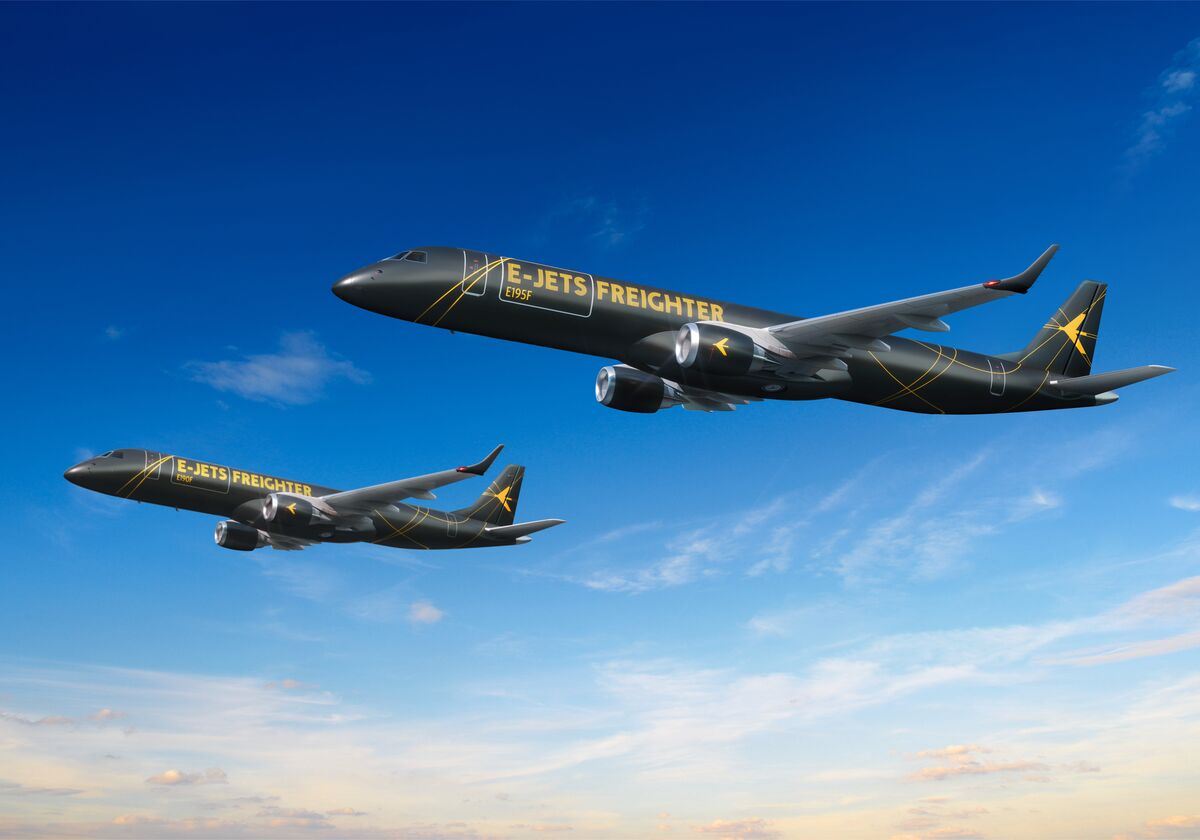
Embraer is advancing its passenger-to-freighter (P2F) conversion programme on schedule, with delivery of the first E190 Freighter set for the second quarter of 2024.
The company unveiled the livery for the first E190F during a 30 November ceremony for employees in San Jose dos Campos. Embraer has begun ground testing the E-Jet Freighter in Brazil, with a flight testing programme to follow.
”Recent achievements of the programme include changes to the jet interior, removing the seat and liners, reinforcing the floor, installing metal plugs on the windows and installing the rigid cargo barrier,” Embraer says. ”The cargo loading system was also installed and tried out with both pallets and containers.”
Changes have also been made to the aircraft’s exterior, including a new door frame and matching door, both designed and produced by Embraer.
The airframer secured a deal with Lanzhou Aviation Industry Development Group for 20 E-Jet P2F conversions at the Paris Air Show in June. It had previously secured an order for 10 units from Irish lessor Nordic Aviation Capital, with Kenyan cargo carrier Astral Aviation to be the launch operator.
About New Freighter Aircraft
Embraer’s P2F programme launched last year, covering E190s and E195 conversions, seeking to capitalise on e-commerce-driven demand for fast deliveries and extend the lives of its ageing passenger jets.
The E190F will have a payload of 10,700kg (23,600lb), while the E195F’s will be 12,300kg. The aircraft will have a volume of 3,632 cubic feet, while the larger E195F will have a 4,171 cubic feet interior. The E190F and E195F can deliver similar payloads to freighters like the Boeing 737-300F but at up to 25% lower cost because they have a longer range than turboprop freighters.
As part of the conversion, the E190 received a reinforced floor, a 9G rigid cargo barrier, a cargo loading system, and a new door for the loading of cargo into the body of the plane.
The company has described the jet as filling a gap in the market between turboprops and larger narrow bodies, saying it will be well placed to take over the operations of larger aircraft that are not being fully utilised.
Upcoming Orders
While this is the first E190 to undergo conversion for freight operations, the jet has already achieved success in the passenger aviation industry, with companies such as Singapore’s Scoot and Jordan’s Royal Jordanian Airlines utilising the jet.
Notably, while Azul was the first to launch an E195 converted freighter back in February 2022 in collaboration with the Brazilian aerospace engineering company LHColus Technologia, this will be the first time that Embraer will perform conversion work on its E195 aircraft.
In May 2022 Ireland-based Nordic Aviation Capital (NAC) became the launch lessor for the Embraer E-Jet Passenger-to-Freighter (P2F) programme, launched in March 2022. Embraer announced that NAC will convert up to 10 of its fleet of E190s and E195s to freighter aircraft. Embraer has also secured a significant deal with an undisclosed client for the conversion of up to ten Embraer E-jets from passenger to freighter (P2F), with deliveries expected to commence in early 2024. Over the next 20 years, Embraer anticipates up to 700 first-generation E-Jet P2F conversions will be required. Having delivered more than 1,600 E-Jets overall, Embraer anticipates that the growing demand for P2F services across the globe will also influence both the E190 and E195.
The company has previously stated that it expects to hand its first freighter over for certification with Brazilian authorities by the end of this year, with those in China and the USA to follow.
Comment