

Thai Airways International, the flagship carrier of Thailand, is set to receive a boost with the expected delivery of 23 leased aircraft by the end of 2025, as outlined by Piyasvasti Amranand, the chairman of the airline's debt rehabilitation administrator. The announcement comes on the heels of the airline's fourth consecutive quarterly profit, signaling a positive trajectory in its recovery from the impacts of the COVID-19 pandemic.
Lease Agreements and Delivery Schedule
Thai Airways has existing lease agreements for a diverse fleet, including eleven A350-900s, two A330-300s, one B787-9, and twelve unspecified A321-types. Notably, three A350-900s have already been delivered, HS-THQ (MSN 266), HS-THR (MSN 245) sourced from Avolon, and HS-THV (MSN 187) sourced from AerCap, with two more expected before the year's end. The remaining 23 aircraft are scheduled for delivery by the end of 2025. Eight of these are anticipated to arrive in Bangkok by mid-2024, with an additional six A350-900s expected to join the fleet by the middle of the same year.
Financial Performance and Quarterly Profits
Despite uncertainties in the global economic landscape, including concerns about the Chinese economy and geopolitical tensions, Thai Airways has shown resilience. As of September 30, 2023, the airline and its soon-to-be-merged subsidiary, Thai Smile, boasted a fleet of 68 active aircraft, with seven in long-term parking and 26 decommissioned aircraft either sold or in the process of being sold.
Thai Airways reported a net profit of THB1.54-billion-baht (USD43.4 million) in the third quarter of 2024, marking a significant turnaround from the THB4.79 billion (USD134.9 million) loss reported during the same period in 2022. The airline's passenger loads have averaged 77.3%, surpassing last year's average of 77.0%. The total number of passengers carried reached 3.27 million, reflecting a commendable 22% increase from the comparable 2022 quarter.
Successful Restructuring and Rehabilitation
Amranand, the debt rehabilitation administrator, confirmed that Thai Airways is on track to exit the court-supervised restructuring and rehabilitation plan by the end of 2024. Thailand's insolvency legislation typically allows firms five years for the rehabilitation process, and Thai Airways is poised to comfortably beat that deadline. The comprehensive restructuring efforts have involved fleet reorganization, cost-cutting measures, debt restructuring, and the recapitalization of the airline.
Outlook and Future Prospects
As Thai Airways progresses through its recovery, the positive financial results and the upcoming fleet expansion signify a promising future for the airline. With a strengthened fleet and a more resilient financial position, Thai Airways is well-positioned to navigate challenges in the aviation industry and capitalize on the anticipated rebound in global travel demand.
Conclusion
Thai Airways International's strategic initiatives and solid financial performance underscore its commitment to recovery and growth. The imminent delivery of 23 leased aircraft aligns with the airline's vision for a more robust and competitive future in the dynamic aviation sector.
With Inputs from ch-aviation

Read next
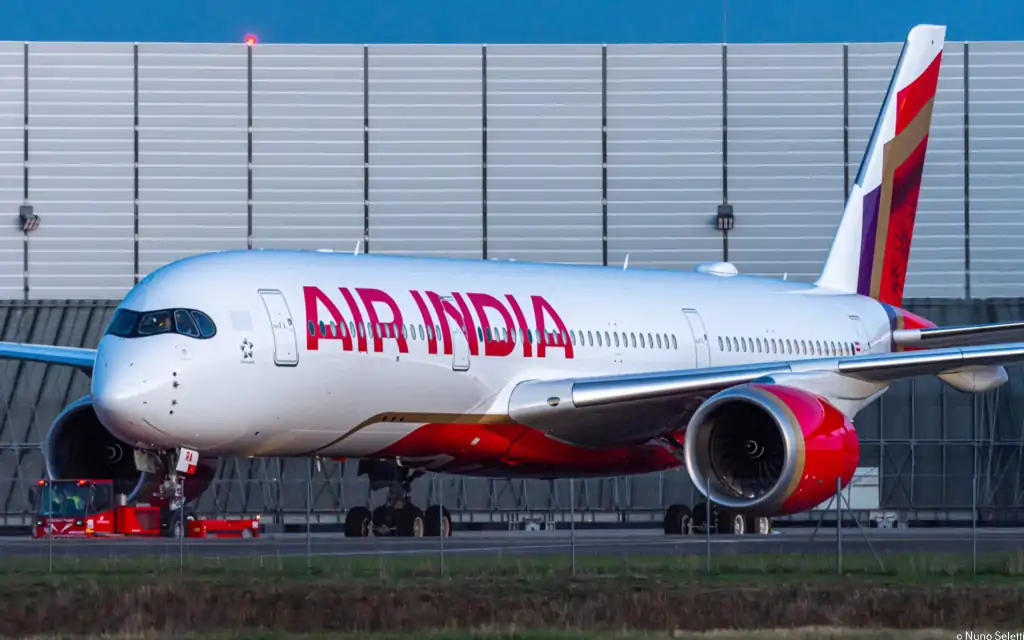
In a significant turn of events, Air India, under new private ownership, is poised to embark on a transformative journey, garnering interest from various global airlines eager to partner with the carrier. The recent statements from Air India's CEO, Campbell Wilson, shed light on the airline's strategic vision and its efforts to revitalize its position in the aviation industry.
Emerging Partnerships and Global Interest
Allure of the Indian Diaspora
Air India's CEO highlighted the growing interest from numerous airlines seeking partnerships, driven by the recognition of the vast potential in connecting with the carrier that serves as a major source of traffic. With a diaspora of 37 million people, Air India aims to better serve this demographic, signaling a positive shift in its global strategy.
Recent Interline Agreement with Alaska Airlines
The announcement of an interline agreement with Alaska Airlines further underscores Air India's commitment to expanding its presence in the crucial U.S. market. The partnership suggests ambitious plans for growth in the country, with talks of including key cities like Boston and Los Angeles in its network.
Operational Changes and Milestones
Fleet Expansion and Network Reshuffling
Air India has undergone substantial changes, encompassing fleet expansion and network reshuffling. These strategic moves aim to position the airline for sustained growth, ensuring enhanced operational capabilities and improved service offerings.
Upcoming Merger with Vistara
The impending merger with Vistara adds another layer to Air India's transformative journey. The consolidation of resources and expertise is expected to contribute significantly to the overall operational efficiency of the airline.
Global Collaborations and Codeshare Agreements
Existing Codeshare Deals
Air India has strategically engaged in codeshare agreements with several global airlines, including LOT Polish, Egypt Air, Singapore Airlines, Air Mauritius, Avianca, SriLankan Airlines, TAP Portugal, Croatia Airlines, Ethiopian Airlines, Swiss, and Lufthansa. These partnerships enable the sharing of resources and routes, fostering a collaborative approach to the aviation market.
Interest from Lufthansa and Air France-KLM
Lufthansa, closely monitoring Air India's recent progress, has expressed a desire to explore further opportunities with the Indian carrier. Reports suggest discussions about a potential collaboration, alongside Air France-KLM, for the acquisition of the government-owned maintenance repair and operations (MRO) company AI Engineering Services Limited (AIESL).
Strengthening Air India's Position
Addressing Historical Weakness
Campbell Wilson acknowledged the historical weakness of Air India, attributing the strength of some foreign airlines in India to this factor. The airline is now committed to rectifying these issues, with a focus on delivering quality service to passengers.
Ambitious Network Expansion
Air India's future plans involve a massive expansion of its domestic and international network. The objective is to offer passengers a plethora of convenient flying options, ultimately reclaiming lost market share and solidifying its standing in the aviation industry.
Conclusion
Air India's recent developments underscore a pivotal moment in its history, marked by strategic partnerships, operational enhancements, and a commitment to providing quality service. As the airline navigates this transformative journey, the global aviation community watches closely, anticipating the positive impact of these initiatives on Air India's resurgence in the competitive market.
With Inputs from Live Mint
Read next
Aequs Purses a 10-Year Agreement to Provide Critical Aircraft Components to Airbus

Radhika Bansal
16 Nov 2023
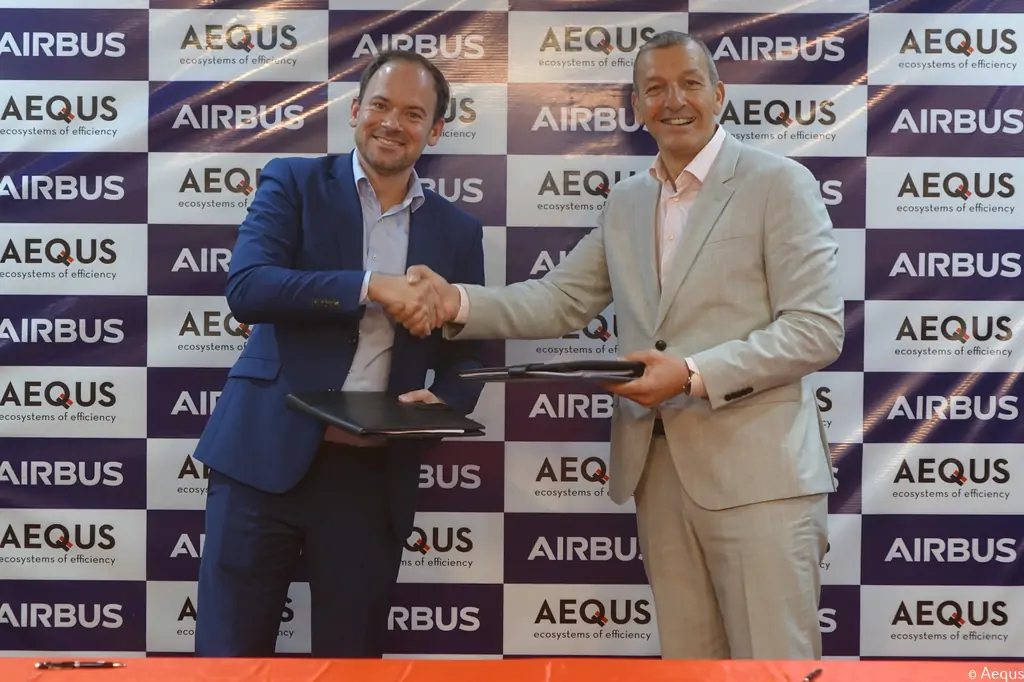
Aerospace components maker Aequs has secured a contract with European aircraft major Airbus for the supply of critical components for the A320 family, A330neo and A350 aircraft for over 10 years. Under the terms of the agreement, Aequs will make detailed parts, parts with bench assembly for wings, fuselage, and pylons for these planes, Aequs said.
Aequs has been a longstanding supplier to Airbus which was its first original equipment manufacturer (OEM) customer and has consistently been a preferred Detailed Parts Partner (D2P) to it for well over a decade. The mandate is a significant milestone not only for Aequs but also for the Indian aerospace industry, amid the country's growing significance as a global aerospace manufacturing hub, deepening Airbus' Make-in-India drive, Aequs said.
Aequs has been a longstanding supplier to Airbus and the latest supply order from the aircraft OEM comes as a big boost to the company as it sets its eyes on a two-fold increase in its aerospace revenue in the next three years from around USD 100 million at present.
"This contract is a significant moment in Aequs' journey with Airbus. We are proud to stand alongside the world's largest aircraft maker as a long-term strategic partner. It is also a testimony to the confidence in Aequs by global OEMs to enter into deeper and longer relationships, particularly at a time when the global supply chain is passing through a recalibration," said Aravind Melligeri, Chairman and CEO, of Aequs.
The Karnataka-based company late last month announced raising USD 54 million (INR 448 crore) in a fresh round of equity funding from a bunch of investors led by Singapore-based Amansa Capital for entry into a new vertical -- consumer electronics and existing operations.
Aequs Making India a Manufacturing Hub
Founded in 2006, the diversified contract manufacturing company, Aequs provides vertically integrated product solutions across aerospace, toys, and consumer durable goods industries. It currently operates manufacturing facilities across India, France, and the US.
India’s components and assembly side exports from a purely manufacturing perspective, should be around USD 1-billion with components exports estimated at closer to USD 500 million or somewhere in that range. This can be used as leverage because India is one of the largest markets today whereas its aerospace export is not in line with whatever it imports (aircraft and engines). The government needs to do something about this as 'India must get its fair share as a country. Part of the funds that the Aequs raised during the latest round was to support the growth and also to enter a new vertical -- consumer electronics for making precision components for the industry.
According to the agreement, Aequs will manufacture parts for the single-aisle family of aircraft, including parts with bench assembly for wings, fuselage, and pylons, according to the company's statement. The contract was signed by Gunnar Hansen, Head of Strategic Procurement, Detail Parts, Airbus Aerostructures, and Nils Witt, Chief Procurement Officer, Airbus Aerostructures, and Mohamed Bouzidi, President Aerospace, Aequs at Belagavi in Karnataka recently.
Airbus' “Make in India” Initiatives
On November 6, Airbus also signed contracts with Dynamatic, Gardner and Mahindra Aerospace for the supply of airframe and wing parts across Airbus' A320neo, A330neo, and A350 programs. "Make in India is at the core of Airbus' strategy in India. We are proud that we are putting in place all the critical building blocks for an integrated industrial ecosystem that will propel India into the front ranks of aerospace manufacturing nations," Rémi Maillard, President and Managing Director, Airbus India and South Asia, said in a statement.
Airbus has already procured components and services amounting to USD 750 million every year from India. The company expects the latest rounds of contracts to add significantly to those volumes. Airbus claimed that its commercial aircraft has components and technologies that are made in India. Together with its supply chain, Airbus supports nearly 10,000 jobs in India. By 2025, this number should rise to about 15,000.
Read next
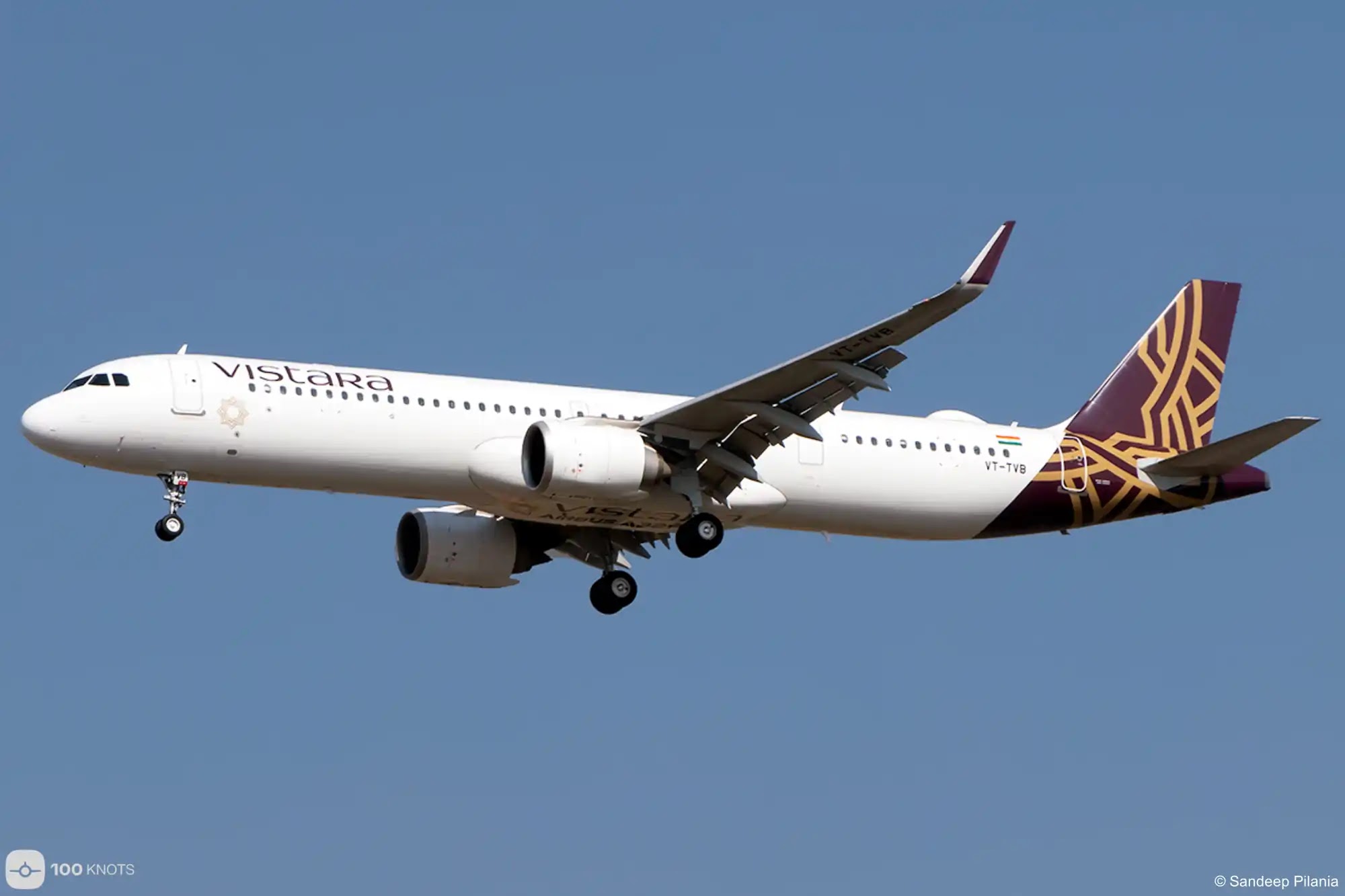
Vistara inaugurated non-stop, 6x weekly flights between Mumbai and Frankfurt on November 15. The inaugural flight, operated on Vistara’s Boeing 787-9 Dreamliner, commenced from Chhatrapati Shivaji Maharaj International Airport, Mumbai at 13:00 Hours (IST) on 15 November 2023 and will arrive at Frankfurt International Airport at 17:30 Hours (GMT). Vistara has already been flying 6x weekly between Frankfurt and Delhi.
Mr. Vinod Kannan, Chief Executive Officer, of Vistara, said, “Sensing a need for an Indian airline offering world-class experience and connecting to long-haul destinations in Europe from Mumbai; we started 5x direct flights to London Heathrow. We are now delighted to start a 6x weekly service to Frankfurt as our second European destination from India’s financial capital. We are confident that our customers will appreciate and prefer flying with India’s finest airline when planning to travel on this route.”
Vistara Introducing New Routes
Vistara plans to launch a handful of new routes next quarter as it approaches the end of its time as a standalone Indian airline, Chief Executive Officer Vinod Kannan said.
The full-service carrier will deploy new aircraft that are pending delivery for mostly international routes, Kannan said at an event to mark the introduction of Vistara’s daily Delhi-Hong Kong service on Monday, October 30. The inaugural flight was more than 90% full and demand looks very strong throughout November, he said. The inaugural flight was operated on Airbus A321 Neo aircraft.
“We will continue to expand internationally and we feel that demand will continue to grow,” Kannan told reporters in Hong Kong. “There will be two or three more new routes coming through in the first quarter of next year,” he said separately. “The focus has been international, that is where we think we bring more value to the table,” he said.
In December, Vistara will become the only airline to offer non-stop flights between Delhi and Bali using its new Airbus A321LR aircraft, and it will also soon launch a flight between Mumbai and Frankfurt, adding to its existing Delhi-Frankfurt service. It also recently started service between Delhi and the Maldives. Paris is another possible route from the Indian financial hub, Kannan said.
Mumbai, in particular, has seen much love from the airline when it comes to international operations. It now flies to several global locations from Mumbai, including Abu Dhabi, Bangkok, Colombo, Dammam, Dhaka, Dubai, Jeddah, London Heathrow, Male, Mauritius, Muscat, and Singapore.
The airline currently, has a fleet of 63 aircraft, including 48 Airbus A320neo, 10 Airbus A321 and 5 Boeing 787-9 Dreamliners and has flown more than 50 million customers since starting operations. The airline is currently flying to 32 domestic and 16 overseas destinations. Kannan said international flights will account for 40% of Vistara’s operations by the end of the financial year.
Read next
Chennai Airport Begins Trial Run for Terminal 4; Air India, Alliance Air to Operate Domestic Flights
Radhika Bansal
15 Nov 2023
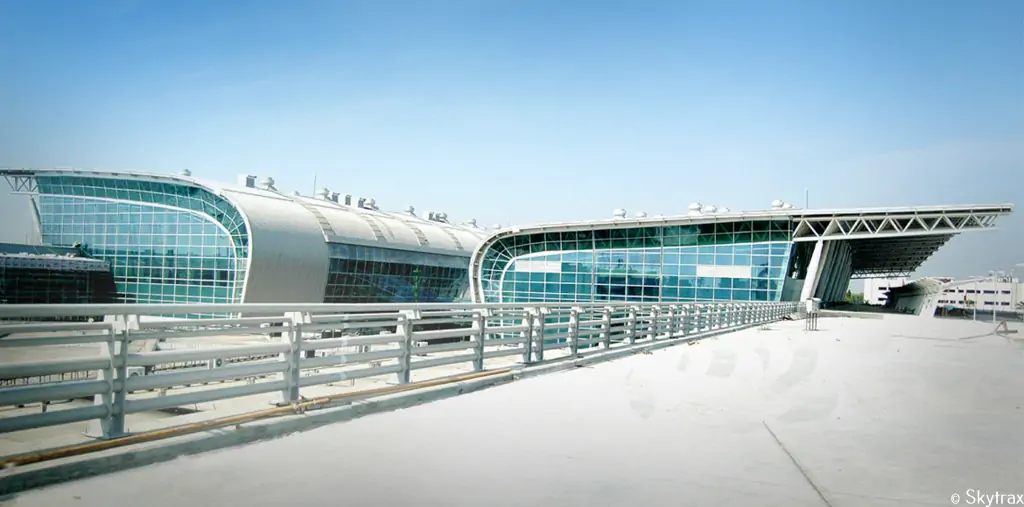
The Airports Authority of India started the trial run of Chennai Airport’s Terminal 4, with the launch of domestic flight services on Tuesday, November 14. An Air India flight carrying 148 passengers from Port Blair arrived here following the pilot launch. The aircraft later left for Bengaluru with 152 passengers on board.
Airport director C V Deepak handed over the boarding pass to the first passenger of an Air India flight, to mark the launch of services from the new terminal. Earlier, Terminal 4 was used to handle passengers of international flights and saw renovation works for the last few months.
In April, Prime Minister Narendra Modi inaugurated Phase 1 of the INR 1,260 crore new integrated terminal building at the Chennai International Airport, aimed at enhancing passenger services. The addition of this new integrated terminal building will increase the passenger serving capacity of the airport from 23 Million Passengers Per Annum (MPPA) to 30 MPPA.
"Terminal 4, which was under renovation since the commencement of T-2 is now ready to roll. Trial operations by Air India are being held on November 14 and regular domestic operations will commence from November 15,” Chennai airport said in its official social media post.
All domestic Air India and Alliance Air flights would operate from the T-4 terminal starting from November 15, it said. "Terminal 4 is now made fully operational to handle domestic flight operations. Starting November 15, all domestic operations of Air India and Alliance Air will be shifted to Terminal 4", it added.
The arrival and departure flights will now be used by Air India and Alliance Air. This will decongest the existing domestic terminal allowing the airport to sanction more frequencies and new domestic flights by other airlines in the coming months. A new terminal is now being built adjacent to the recently opened integrated international terminal.
The old international terminal was converted into a domestic terminal, with the shifting of operations of international flights to the new integrated complex. With this, AAI will be able to use the ground floor arrival terminal which was lying unused as its baggage ramp was not suitable for international flights.
The Chennai Airport in September handled 12.36 lakh domestic passengers, an increase of 13.8% over the 10.85 lakh domestic passengers handled in the same month last year. From April to September 2023, the Chennai airport handled 76.05 lakh domestic passengers as against 63.92 lakh passengers in the same period last year. This represented a 19% increase, according to Airports Authority of India data.
Chennai Airport's Expansion Plan
Chennai International Airport is all set to undergo expansion of its New Integrated Terminal Building (NITB). The expansion will drastically increase the airport’s capacity, enabling it to cater to 35 million passengers. It has also been announced that by 2025, the Chennai Airport will have a new terminal for international departures as well as a new domestic terminal.
Spread over 1323 acres of land, the Chennai Airport comprises three terminals. Chennai Airport Terminal 1 is the oldest terminal at Meenambakkam, which is now used for freight. The other terminals at the Tirusulam complex, i.e., Terminals 2 and 3, are used for domestic and international flights. Terminal 2, known as the Kamaraj domestic terminal, was the first in India to have two aerobridges. Subsequently, Terminal 3, also known as Anna International Terminal, was constructed with three aerobridges. The recent expansion of the Chennai Airport has resulted in the development of a new international block, i.e., Terminal 4. Currently, Terminal 4 is being used for departures, and Terminal 3 is used for arrivals.
Chennai Airport International serves as a major hub for domestic and international flights, connecting Chennai with various destinations across India and the world. Several airlines operate from this airport, including both full-service carriers and low-cost airlines. Some of the airlines that have been known to operate from this airport include Air India, IndiGo, Akasa Air, SpiceJet, Jet Airways, AirAsia India, GoAir, Vistara, Etihad Airways, Emirates, British Airways, Singapore Airlines, Qatar Airways, and Lufthansa.
Comment