
SpiceJet Settles Issues with Lessor Nordic Aviation Capital for Q400 Aircraft; Shares Jump 7%

Radhika Bansal
22 Jun 2023
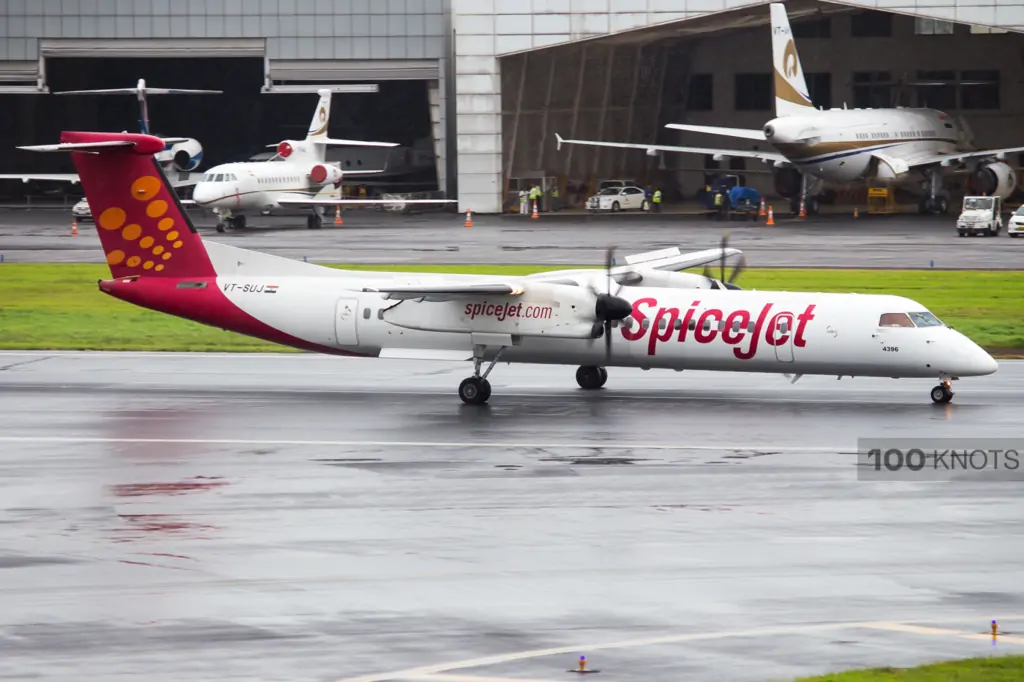
SpiceJet has entered into a settlement agreement with Nordic Aviation Capital (NAC), a major lessor for its Q400 aircraft. In a statement, the airline said the agreement settles all past liabilities for the Q400s leased by NAC to SpiceJet. The airline presently operates five Q400 aircraft from NAC in its fleet. Separately, the airline will be inducting three additional Q400 aircraft from NAC back into its fleet.
"These three planes had been repossessed by the lessor. The induction of the three planes in addition to the fleet revival and restoration program launched by the airline would result in a substantial addition of planes in the SpiceJet fleet in the coming weeks."
SpiceJet operates about 250 daily flights to 48 destinations within India and to international destinations. Its fleet is a mix of aircraft including Boeing 737 Max, Boeing 700 and Q400s. SpiceJet was launched in May 2005.
At 1:24 PM, shares of SpiceJet were up 4.4% at INR 28.7 on the BSE. The stock is down 16% in the past three months and has fallen about 30% in the past year. The budget airline also announced that three additional Q400 aircraft will also be inducted into the fleet. These planes had been repossessed by the NAC. SpiceJet aims to achieve a major restoration of its fleet with the induction of the three planes.
The Indian carrier has been scrambling to raise funds amid a string of quarterly losses, compounded by some lessors taking the airline to court to settle unpaid dues and requesting the country's aviation regulator to de-register their planes.
Earlier this month, SpiceJet said lessor FTAI Aviation would lease it up to 20 engines as it looked to restore its fleet. The carrier said last month it has begun to revive 25 of its grounded fleet using its own money and a USD 50 million line of credit through an Indian government scheme it secured.
Earlier this month, aircraft lessor Wilmington Trust SP Services (Dublin) Ltd had moved the National Company Law Tribunal (NCLT) to initiate insolvency against Indian low-cost carrier SpiceJet. Prior to that aircraft lessor Aircastle and engine lessor Willis lease finance had moved the tribunal for recovering their dues. In May 2023, three planes of SpiceJet were deregistered by the Directorate General of Civil Aviation (DGCA) at the request of lessors.
Read next
HAL Signs MRO MoU With Argentina's Fabrica Argentina de Aviones for Aerospace Collaborations
Radhika Bansal
22 Jun 2023
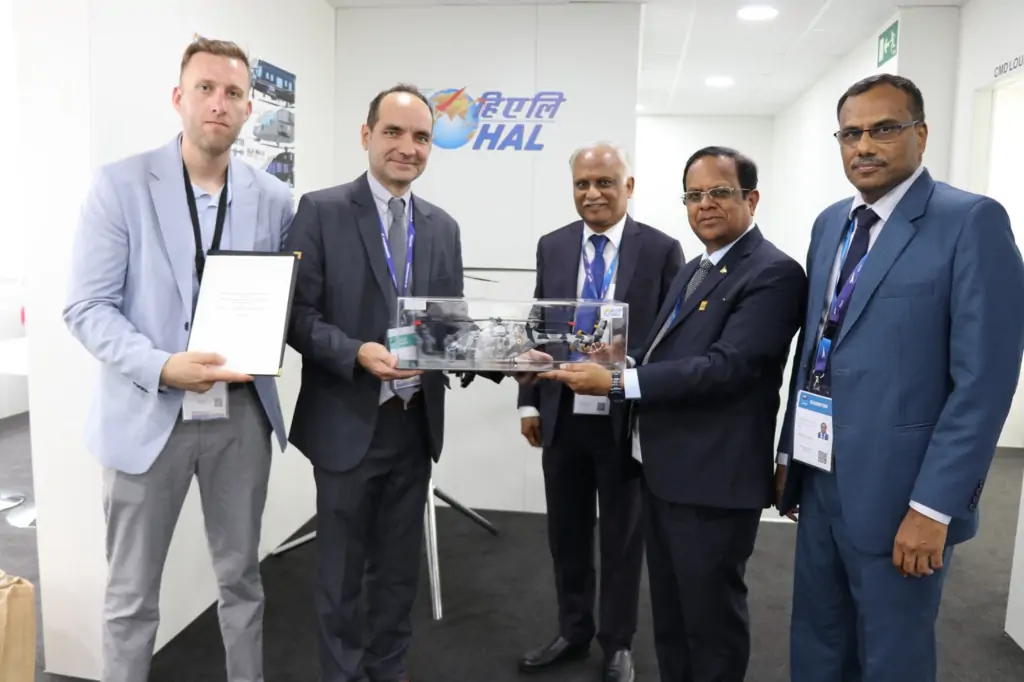
Hindustan Aeronautics Limited and Argentina's Fabrica Argentina de Aviones (FAdeA) signed an MoU towards exploring the possibilities of collaboration in the field of maintenance, repair and overhaul (MRO). The agreement will also involve meeting any offset requirements in case of the probable sale of HAL-made platforms in the Latin American region.
The pact was inked during the ongoing Paris Air Show 2023, Bengaluru-headquartered state-run company HAL said in a statement on Wednesday. Similar to HAL, FAdeA is an Argentinian state-owned aerospace company under the administrative supervision of the South American country's Ministry of Defence involved in the design, manufacture and maintenance of civil and military aircraft, it was noted.
“HAL and FAdeA signed an MoU during Paris Air Show, 2023 towards exploring the possibilities of collaboration in the field of MRO (maintenance, repair and overhaul) and to meet any offset requirements in case of probable sale of HAL-made platforms in the Latin American region,” HAL said in a statement.
Rules governing defence acquisition in different countries lay down that in all high-value capital purchases, foreign vendors must invest a certain percentage of the value of the purchase in that country to boost its indigenous capabilities. India’s offset policy, for instance, seeks to leverage capital acquisitions to develop the domestic defence industry by making it mandatory for foreign military contractors to invest in the country at least 30% of the value of all contracts worth more than INR 300 crore.
The focus of the Collaboration
The primary focus of this collaboration will be on MRO activities, which involve the maintenance, repair, and overhaul of aircraft components, systems, and structures. By leveraging their combined expertise, HAL and FAdeA aim to enhance their capabilities in this critical domain. This partnership will not only benefit both organizations but also contribute to the growth and development of the aerospace sector in the LATAM region.
Furthermore, the MoU also addresses potential offset requirements that may arise from the sale of HAL-manufactured platforms in the LATAM market. Offset obligations often arise in defence contracts, requiring the seller to invest in the buyer’s domestic industries, technology transfer, or other related areas. This agreement signifies the commitment of both HAL and FAdeA to meet such offset requirements in the event of HAL platforms being sold in the Latin American market.
The signing of this MoU demonstrates the proactive approach of HAL and FAdeA in fostering global partnerships and collaborations. By combining their strengths, the two aerospace companies are poised to unlock new opportunities, exchange technical know-how, and create synergies that will drive growth and innovation in the aerospace sector.
As the Paris Air Show continues to be a premier platform for showcasing the latest advancements in aviation, the collaboration between HAL and FAdeA adds another layer of potential breakthroughs. The agreement serves as a testament to the commitment of both organizations to furthering their global presence and contributing to the advancement of aerospace technology.
With the MoU signed, HAL and FAdeA are set to embark on a fruitful journey of collaboration, bringing together their expertise to strengthen the MRO capabilities and meet offset requirements in the LATAM region.
Earlier this year, on the sidelines of Aero India 2023, the state-owned HAL had also inked a contract with Argentinian Air Force (AAF). This was for the supply of engine repair of legacy two-tone helicopters and also for the supply of spares. It has earlier been reported that the contract was signed by Brigadier General Xavier Issac, Chief of Air Force, AAF and CB Ananthakrishnan, CMD, HAL. In an official statement which was issued later, Brigadier General Xavier Issac specified that the contract signed was for support service and is a stepping stone for future engagements between the two countries in the defence sector.
Argentina has projected a requirement for 15 new fighter aircraft, and HAL believes that the LCA Mk-1A will meet that country’s needs, the officials said. Teams from the Argentine Air Force have visited HAL and flown the LCA, they said. To be sure, the JF-17 fighter aircraft, jointly developed by China and Pakistan, is also a contender for the Argentine order.
LCA in focus
While the LCA project is on track, several HAL programmes have been hit by delays and compelled the armed forces to look for alternatives. These include the basic trainer aircraft, intermediate jet trainer and the LCA project itself. The Indian Air Force raised its first LCA squadron with two aircraft in July 2016 even though the project was sanctioned in 1983 as a replacement for the Soviet-origin MiG-21 fleet.
IAF has inducted several of 40 earlier variants of the LCA, ordered 83 improved Mk-1A variants in 2021, and is now looking at ordering the newest variant of the aircraft, LCA Mk-2. The first Mk-1A aircraft will be delivered to the IAF in February 2024, with the rest slated to join its combat fleet by 2029. In April, HAL launched a third LCA production line in Nashik to ramp up the production of the fighter jet from the current 16 to 24 in anticipation of more orders. The other two production lines are in Bengaluru.
India has set a defence export target of INR 35,000 crore by 2024-25. In November 2022, Indian defence firm Kalyani Strategic Systems Limited won an export order worth USD 155.5 million for supplying artillery guns to a friendly foreign country (believed to be Armenia), the first order won by a local company for the 155mm weapon system. That order came on the back of the Philippines ordering BrahMos missiles and Armenia choosing to buy Pinaka multi-barrel rocket launchers from India. Military exports have risen sharply, and imports have recorded a drop on the back of policy initiatives and reforms during the past nine years, the officials said.
Read next
Tejas Mark II Prototype with GE F-414 Engine to be Released by Indian ADA by 2024 End
Radhika Bansal
22 Jun 2023
The Aeronautical Development Agency (ADA) and the Hindustan Aeronautics Limited (HAL) have geared up to produce Tejas Mark II fighter by 2027-28 and ADA is ready to roll out the GE-414 powered prototype by 2024 end, reported Hindustan Times on 21 June.
As per details, the GE-414 engine will be manufactured in India under 100% transfer of technology (TOT) after approval from US Congress. Apart from Tejas Mark II, it will also power twin-engine advanced multi-role combat aircraft (AMCA-I) and twin-engine deck-based fighters (TEDBF), added the report.
The prototype, initially expected to be rolled out by early 2024, will now be unveiled by the Aeronautical Development Agency (ADA) and Hindustan Aeronautics Limited (HAL) by the end of 2024. Earlier in August 2022, the Cabinet Committee on Security (CCS) approved INR 10,000 crore for the development of four Tejas Mk-2 prototypes. Tejas Mk-2, according to the CCS's approval is slated to be inducted into the Indian Armed Forces in the 2027-28 timeframe.
Meanwhile, India plans to produce at least six squadrons of Mark II fighters for the Indian Air Force after 83 F-404-powered Tejas Mark I A has been produced and handed over to the military. Eight F-414 jet engines have already been procured by the ADA, design frozen, and critical design review has already been approved by the IAF. Now the ADA said that it will roll out the Mark II prototype by 2024 end for testing and operational clearance.
With PM Narendra Modi and his national security team have been able to deliver on the F-414 engine through the “Make in India" route, the HAL has girded up for the upcoming challenge. It will focus only on manufacturing the GE engine as no less than 500 aircraft engines have to be produced in India.
The report says that the HAL Bengaluru and Nashik divisions may be tasked to take up the job and start production in collaboration with GE. HAL has already experience in manufacturing aircraft engines as it was assembling AL31 FP following burning turbofan engines for the Russian SU-30 MKI assembly in India. Experts say HAL will fully focus on the production of the Mark II fighter as well as the GE-414 engine after the production line of Mark I A tapers off.
Benefits of the deal
On June 22, the American defence major General Electric and HAL will sign an MoU for the manufacture of the F-414 engine. Also, both the firms will exchange instruments before Prime Minister Narendra Modi and US President Joe Biden in Washington.
While the ADA under the DRDO is confident that it will deliver on Mark II on time, pressure will now be on HAL to energize the workers of PSU to meet the challenge ahead. Even as the engine will have to be produced by GE-HAL, the government may think of a special-purpose vehicle to produce Mark II fighters to meet the deadlines of the IAF.
The deal for the local manufacturing of the GE-414 engine is part of a broader effort by India and the US to deepen their defence cooperation. Once approved, the deal is expected to create more jobs and boost economic growth in India as the local manufacturing of the engine will require the development of a new supply chain in India. After the fulfilment of India’s requirements, the engines can be exported too. The Tejas Mark-II is designed to replace the ageing Mirage 2000, MiG-29 and the Anglo-French origin Jaguar aircraft of the Indian Air Force.
About GE-414 & Tejas Mark-II
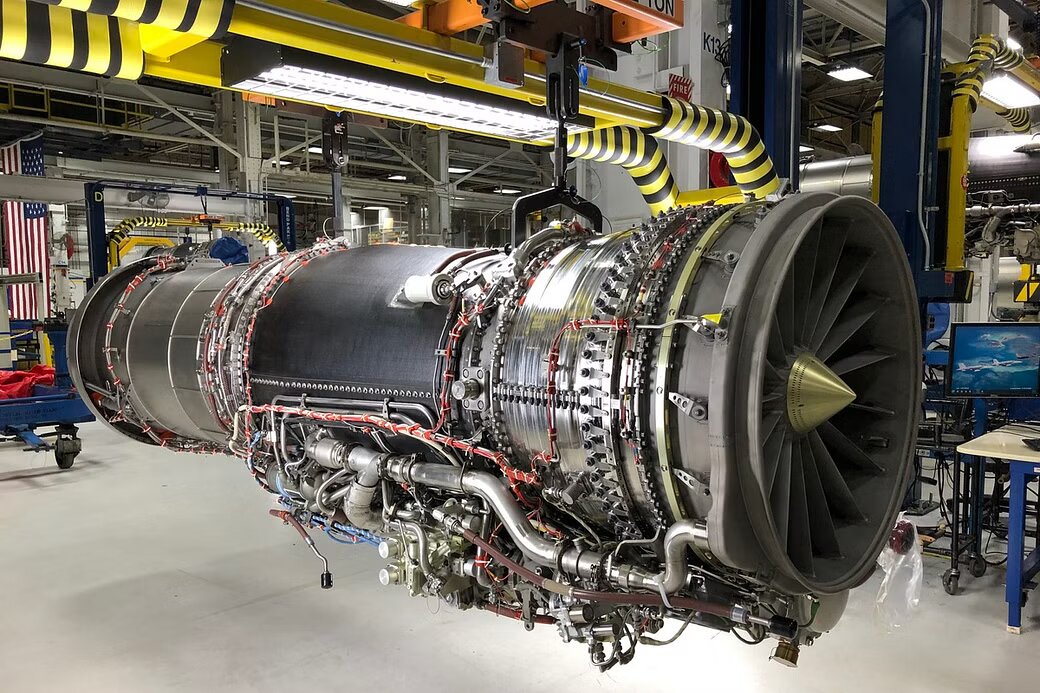
The GE-414 is a high-performance, two-spool, axial flow turbofan engine that provides various military aircraft, including the F-18 Hornet, JAS 39 Gripen, and Tejas Mark-II. It is a derivative of the GE-F-404 engine that was developed in the 1970s The Engine F-414 produces up to 18,000 pounds of thrust, giving it the power to operate in various missions. It has a proven track record of 10 million hours of flight time accumulated. This engine is designed for easy maintenance, reducing ownership costs. It meets all the current environmental regulations and has been designed to become even more environmentally friendly in the future.
The Indian Air Force (IAF) has shown its commitment by placing an initial order for six squadrons of the Tejas Mk-2, building upon the existing fleet of Tejas Mk-1 aircraft. The Tejas Mk-2 fighter is a heavier and more technologically advanced version of the initial Tejas Mk-1, 32 of which the IAF already operates, and 83 are on order. Improvements include a more powerful GE F-414 engine (98 kN thrust) instead of the current GF F-404 engine (83 kN thrust) used in the Tejas Mk-1.
Furthermore, the Tejas Mk-2 will feature various enhancements, such as the indigenous Uttam radar with Active Electronically Scanned Array (AESA) technology, an advanced Electronic Warfare (EW) suite, an Infrared Search and Track (IRST) sensor, a newly built Digital Flight Control Computer (DFCC), and an improved weapons package.
With a weight of 17.5 tonnes, the Tejas Mk-2 can carry over six tonnes of weapons, providing increased operational capabilities. Additionally, it offers a longer endurance of two hours compared to the Tejas Mk-1A's 57 minutes.
(With Inputs from Hindustan Times)
Read next


In the highly competitive aviation industry, airlines constantly seek innovative ways to enhance their operations and provide exceptional services to passengers. Riyadh Air, an upcoming world-class player in the Middle Eastern market, has recently made a strategic decision to upgrade its fleet by selecting GE's GEnx-1B engines to power its future Boeing 787-9 aircraft.
Riyadh Air Background
The Public Investment Fund (PIF) owns Riyadh Air, a world-class airline. The airline, which was launched in March 2023, will be a digitally-led, full-service carrier that will use the finest worldwide environmental and safety practices throughout its sophisticated fleet of aircraft. Riyadh Air will outfit its planes with cutting-edge technology and unique, best-in-class cabin interiors and experiences, such as next-generation digital in-flight entertainment systems and networking solutions. Riyadh Air will link passengers to over 100 destinations worldwide by 2030 by providing an extraordinary guest experience centered on authentic, warm Saudi hospitality.
Riyadh Air's Fleet Expansion Plan
Riyadh Air is committed to expanding its fleet to meet the growing demand for air travel in the region. The airline has set its sights on the state-of-the-art Boeing 787-9 aircraft, known for its fuel efficiency, range, and passenger comfort. By opting for the GEnx-1B engines, Riyadh Air aims to optimize the performance and reliability of its fleet, ensuring a superior travel experience for its passengers.
GE's GEnx-1B Engines: A Strong Option
The aviation industry has recognized GE's GEnx-1B engines for their cutting-edge technology and outstanding efficiency. These engines are intended to deliver substantial fuel savings, reduced emissions, and lower maintenance costs. The GEnx-1B engines incorporate advanced materials and innovative design features that contribute to enhanced aerodynamics and noise reduction, resulting in a smoother and more comfortable flying experience for passengers. The GEnx-1B engines, with their sophisticated architecture and novel features, are a suitable answer for Riyadh Air's ambitious fleet development ambitions.
The Benefits of GE's GEnx-1B Engines
Fuel Efficiency: The GEnx-1B engines offer significant fuel savings, leading to lower operating costs for airlines. These engines utilize advanced technologies such as lightweight composite fan blades and a unique fan bypass design, which contribute to improved fuel consumption.
Reduced Emissions: As the aviation industry places increasing emphasis on environmental sustainability, GE's GEnx-1B engines stand out for their reduced emissions. These engines employ advanced combustion technology, resulting in lower nitrogen oxide (NOx) emissions and a smaller carbon footprint.
Enhanced Performance: GE's GEnx-1B engines provide exceptional performance in terms of thrust, power, and reliability. The incorporation of advanced materials and design features allows for higher thrust levels, enabling better takeoff performance and enhanced operational flexibility.
Quieter Operations: Noise reduction is a crucial aspect of modern aircraft engines, and the GEnx-1B engines excel in this area. The innovative fan blade design and advanced acoustics contribute to a quieter flight experience, reducing noise pollution around airports and residential areas.
Benefits of the GE-Riyadh Air Partnership
The collaboration between GE Aviation and Riyadh Air brings forth a host of benefits for both entities. For Riyadh Air, the GEnx-1B engines will contribute to enhanced fuel efficiency, resulting in lower operational costs and reduced carbon emissions. The engines' advanced technology will also enable Riyadh Air to provide a quieter and more comfortable flying experience for its passengers.
The Agreement at the Paris Air Show
The collaboration between Riyadh Air and GE was formalized during the renowned Paris Air Show, a significant event in the aviation industry. The agreement entails the acquisition of 90 GEnx-1B engines, which will power Riyadh Air's fleet of 39 Boeing 787-9 aircraft. Spare engines and a TrueChoice services agreement are also included in the order. The deal was struck at the Riyadh Air chalet at the Paris Air Show, where the airline presented its new livery to the globe during a flypast over Riyadh's famed city skyline last week. The deal underscores the strong partnership between Riyadh Air and GE and signifies a milestone in the airline's growth and expansion plans.
Comments
"The agreement highlights our determination to significantly extend Saudi Arabia's connectivity with the world and fulfil our goal of connecting to 100 destinations by 2030," stated Tony Douglas, Chief Executive Officer of Riyadh Air. We look forward to fostering strong strategic ties across the aviation industry as we mould our new digitally native airline into one of the most sustainable and guest-centric carriers in the world."
"We are proud to partner with Riyadh Air to support its new fleet and fulfil its vision for long international routes," said Russell Stokes, President and CEO of GE Aerospace's Commercial Engines and Services. With its combination of power and the ability to reduce fuel consumption and CO2 emissions, GE Aerospace's GEnx engine is an ideal fit for the 787 fleet."
Conclusion
Riyadh Air's decision to use GE's GEnx-1B engines in its Boeing 787-9 aircraft demonstrates the airline's dedication to quality and innovation. Riyadh Air aspires to give a greater travel experience to its customers while optimizing operational efficiency by utilising GE Aviation's cutting-edge technologies. This strategic alliance has the potential to catapult Riyadh Air to unprecedented heights in the aviation sector.
With Inputs from GE Aerospace
Read next

Jet engines are the primary source of propulsion for modern aircraft. They work on the principle of Newton's third law of motion, which states that for every action, there is an equal and opposite reaction. In simple terms, jet engines generate thrust by expelling a high-velocity jet of exhaust gases in the opposite direction, propelling the aircraft forward.
Over the years, jet engines have undergone significant advancements in terms of efficiency, power output, and environmental impact. The early jet engines, known as turbojet engines, were efficient but had certain limitations. They consumed a large amount of fuel, resulting in high operating costs and environmental concerns. This necessitated the development of a new generation of engines that could meet these challenges.
The Basic Theory Behind Jet Propulsion
The incoming air is compressed through a series of compressor stages in a turbofan engine. In the combustion chamber, compressed air is mixed with pressurized fuel and ignited. Before exiting through the engine exhaust, the fuel-air mixture expands and passes through a series of turbine stages. The high-velocity exhaust creates thrust and propels the aircraft forward.
Introducing the LEAP Engine
The LEAP engine, short for Leading Edge Aviation Propulsion, is a state-of-the-art aircraft engine developed by CFM International, a joint venture between General Electric (GE) Aviation and Safran Aircraft Engines. It represents a leap forward in aviation engine technology, offering improved efficiency, reduced fuel consumption, and lower emissions. It is the successor to the CFM56 and competes with the Pratt & Whitney PW1000G to power narrow-body aircraft.
The Technology Behind LEAP Engines
LEAP engines incorporate cutting-edge technologies to optimize performance and efficiency. They are built using advanced materials such as ceramic matrix composites (CMCs), Carbon Fiber Reinforced Plastic (CFRP) composites, and 3D-printed components. These materials provide improved durability, temperature resistance, and weight reduction, resulting in enhanced overall engine performance.
Key Features of LEAP Engines
The LEAP engine incorporates several innovative features that set it apart from its predecessors. Some of the key features include:
Twin-Spool Architecture
LEAP engines utilize a twin-spool architecture, which improves overall engine performance. It consists of two concentric shafts, each connected to different sets of rotating components. This design allows for better control of airflow, resulting in improved fuel efficiency and thrust output.
Materials of the Future
Advanced materials, such as lightweight composites and ceramics, are used to make engine components. These materials contribute to the overall weight reduction of the engine, improving fuel efficiency and allowing for greater operating temperatures for enhanced performance.
Aerofoils in 3D
The compressor and turbine portions of LEAP engines use 3D-designed aerofoils. These aerodynamically optimized components improve airflow, resulting in enhanced efficiency and reduced fuel consumption.
Bypass Ratio
LEAP engines feature a high bypass ratio, which means a significant amount of air bypasses the core and is directed around the engine's combustion chamber. This bypassed air generates thrust while reducing fuel consumption and noise levels.
Fan Diameter
The fan diameter of LEAP engines is notably larger than previous engine models. A larger fan allows for better propulsion efficiency, contributing to increased fuel efficiency and improved performance. The fan blades are manufactured using 3-D woven RTM (Resin Transfer Molding) carbon fibre composites.
Advantages of LEAP Engines
The adoption of LEAP engines offers several advantages to the aviation industry, such as:
Fuel Efficiency
LEAP engines deliver up to 15% better fuel efficiency compared to previous engine models. This translates to significant cost savings for airlines and reduced carbon emissions, contributing to a greener and more sustainable aviation sector.
Noise Levels Have Been Reduced
The innovative design of LEAP engines decreases noise levels substantially during aircraft operation. This enhancement improves the passenger experience by making the aircraft quieter and more pleasant.
Reduced Maintenance Costs
LEAP engines are engineered to be more durable and require less maintenance. The adoption of modern materials and improved component designs helps to increase service intervals, reducing downtime and maintenance costs for airlines.
Market Demand and Future Orders
Adoption by Leading Airlines
The LEAP engine has gained substantial traction among leading airlines worldwide. Renowned carriers, such as Southwest Airlines, Ryanair, and AirAsia, have placed significant orders for aircraft equipped with LEAP engines. This underscores the industry's confidence in the engine's capabilities and its potential to deliver operational and financial benefits.
Global Market Outlook
The demand for fuel-efficient and environmentally friendly aircraft engines is projected to grow significantly in the coming years. As airlines strive to optimize operational costs and meet stringent emission regulations, the LEAP engine presents a compelling solution. Industry analysts predict a substantial increase in future orders for LEAP-powered aircraft, further solidifying its position as a game-changing engine technology.
Airlines Operating LEAP Engines
Several prominent airlines around the world have adopted LEAP engines to power their fleets. Some of the notable airlines operating LEAP engines include:

United Airlines: United Airlines has incorporated LEAP engines in their Boeing 737 MAX aircraft, benefiting from the engines' improved fuel efficiency and performance.

AirAsia: AirAsia has chosen LEAP engines to power their Airbus A320neo fleet, allowing them to achieve better operational efficiency and lower operating costs.

Ryanair: Europe's largest low-cost carrier, Ryanair, has opted for LEAP engines on their Boeing 737 MAX aircraft, prioritizing cost savings and environmental sustainability.

China Eastern Airlines: China Eastern Airlines has embraced LEAP engines on their Boeing 737 MAX and COMAC C919 fleet, benefiting from improved performance and environmental friendliness.
Environmental Impact and Fuel Efficiency
The LEAP engine variants bring substantial environmental benefits to the aviation industry. By incorporating advanced technologies and innovative design elements, these engines contribute to reducing fuel consumption and lowering emissions. The improved fuel efficiency of the LEAP engines translates into decreased greenhouse gas emissions, helping to mitigate the environmental impact of air travel. Additionally, the engines' quieter operations contribute to minimizing noise pollution around airports and neighboring communities.
Reliability and Maintenance
LEAP engines are engineered to deliver high reliability and minimize maintenance requirements. Their robust design and utilization of advanced materials ensure durability and prolonged engine life. Additionally, LEAP engines incorporate state-of-the-art monitoring systems that enable predictive maintenance, allowing airlines to proactively address potential issues before they escalate. This proactive approach significantly reduces unscheduled maintenance and enhances aircraft availability.
Technical Challenges
Despite their numerous advantages, LEAP engines face several technical challenges that need to be addressed to ensure optimal performance and safety.
Heat Management
LEAP engines operate at high temperatures, and managing this heat is crucial for their reliability and longevity. Advanced cooling systems and heat-resistant materials are employed to prevent overheating and maintain the engine's efficiency.
Combustion Dynamics
Efficient and stable combustion is vital for the proper functioning of LEAP engines. The complex interaction between air, fuel, and combustion chambers requires careful design and optimization to achieve optimal combustion dynamics, minimizing issues such as flameout or excessive emissions.
Durability Woes
LEAP engines work in harsh environments, with their components subjected to high temperatures, pressures, and mechanical strains. Developing durable and reliable materials that can withstand these demanding environments is a critical challenge in engine design.
Applications and Usage
LEAP engines power various commercial aircraft models, including the Airbus A320neo, Boeing 737 MAX, and COMAC C919. These engines have become the preferred choice for airlines globally due to their unmatched performance, fuel efficiency, and environmental consciousness. By selecting LEAP engines, airlines can optimize their operations, reduce costs, and enhance the overall passenger experience.
Variants
LEAP-1A

The LEAP-1A engine variant is specifically designed for the Airbus A320neo family of aircraft. It offers significant improvements over previous engine models, including reduced fuel consumption, lower emissions, and quieter operations. With its innovative design, the LEAP-1A engine provides enhanced reliability and durability, making it a popular choice among airlines worldwide.
LEAP-1B

The LEAP-1B engine variant is tailored for the Boeing 737 MAX series. It builds upon the success of its predecessor, the CFM56 engine, with improved fuel efficiency and reduced noise levels. The LEAP-1B engine incorporates advanced technologies, such as a larger fan diameter and optimized airflow, resulting in enhanced performance and reduced environmental impact.
LEAP-1C

The LEAP-1C engine variant is designed exclusively for the COMAC C919, a narrow-body twinjet aircraft. It brings together the latest advancements in engine technology to deliver exceptional fuel efficiency and lower emissions. With its high bypass ratio and advanced materials, the LEAP-1C engine provides improved operational efficiency, reduced maintenance costs, and a significant reduction in carbon footprint.
Challenges and Competition
While the LEAP engine has demonstrated remarkable advancements and gained significant market share, it faces competition from other engine manufacturers. Companies like Pratt & Whitney and Rolls-Royce have also developed innovative engine technologies, such as the Pratt & Whitney PurePower Geared Turbofan and the Rolls-Royce Trent series, respectively. The competitive landscape continues to drive innovation and push engine manufacturers to deliver increasingly efficient and environmentally friendly solutions.
Future Prospects
As the aviation industry continues to prioritize sustainability, LEAP engines are expected to play a significant role in shaping the future of air travel. Ongoing research and development efforts aim to further enhance the engines' fuel efficiency, reduce emissions, and improve overall performance.
Conclusion
In conclusion, the advent of LEAP engines has revolutionized the aviation industry, offering airlines a range of benefits, including improved fuel efficiency, lower emissions, and enhanced performance. Airlines worldwide are adopting LEAP engines to optimize their operations, reduce costs, and demonstrate their commitment to sustainability.
Comment