
Russian Aircraft Lessor Will Not Withdraw Lawsuit Against Airbus for Undelivered A350s

Radhika Bansal
26 Jun 2023
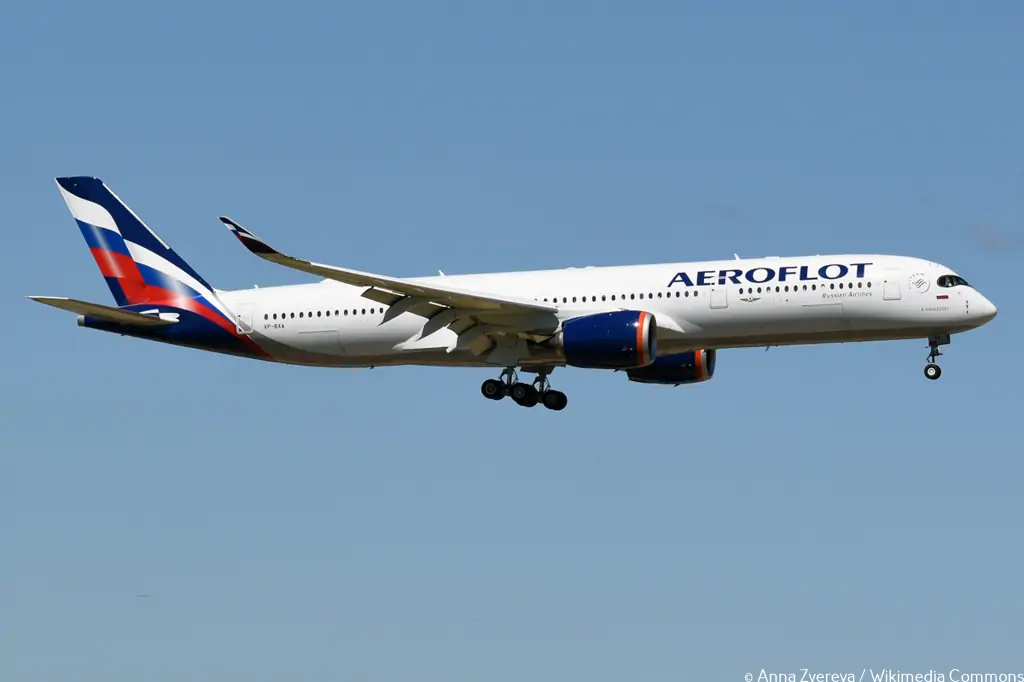
The leasing subsidiary of the state corporation Rostec, Aviacapital Service (AKS), will not withdraw its lawsuit against the French Aerospace Giant Airbus after the return of advances to Aeroflot for the undelivered four Airbus A350 aircraft. This was reported to Izvestiya on June 23 in the press service of the AKS.
“The returned advances were intended for Aeroflot. As for the lawsuit, it does not apply to the relationship between Aeroflot and Airbus, but only to the relationship between AKS and Airbus, and therefore the lawsuit will not be withdrawn, ”the leasing company said. They recalled that in total, the AKS had 17 A350 aircraft for delivery to Aeroflot.
On June 16, Aeroflot CEO Sergei Alexandrovsky announced that the company had succeeded in obtaining a USD 199 million advance payment from Airbus for the four A350s ordered in 2007. There are now seven A350-900s in the carrier's fleet. The whole deal involved the delivery of 22 of these aircraft.
AKC filed a lawsuit against Airbus with the Moscow Arbitration Court on December 13 last year. According to the case file, the Russian lessor is demanding the return of advances for USD 5.1 million, which were transferred to Airbus to pay for future deliveries of aircraft.
A350 Order
Back in 2007, Aeroflot placed an order for up to 22 A350-900s, of which seven were delivered between 2020 and 2022. The carrier has since re-registered each A350 in the wake of the Russia-Ukraine conflict - sanctions have made it difficult to maintain the Western-made aircraft, with Aeroflot even resorting to sending its planes to Iran to undergo maintenance.
Aeroflot is planning to reduce the number of dual-registered foreign aircraft in its fleet as part of a wider plan to buy out the aircraft from lessors. The carrier reportedly has over 160 aircraft with dual registrations, the majority of which are under the Bermuda Civil Aviation Authority (BCAA). If Aeroflot can reduce the number of dual-registered planes in its fleet, it would open up more international flight opportunities for the carrier.
According to Aerotime, airlines in Russia have re-registered over 360 aircraft since last year - despite this practice being in clear violation of international aviation standards, re-registering the aircraft in Russia has allowed carriers to continue operating them. Russia moved to re-register aircraft following sanctions imposed on the aviation industry over its invasion of Ukraine. Under the sanctions, EU lessors had to end contracts with Russian operators. Usually, the lessors would then repossess their aircraft.
Air India to get Undelivered A350s
Tata-owned Air India is expected to receive its first Airbus 350 wide-body aircraft in the second half of 2023 -- most likely from October, according to a report by ANI.
The Russian airline company Aeroflot's orders for A350 aircraft by Airbus will now be delivered to Air India. Russia's ongoing "special military operation" in Ukraine has led to sanctions against Russia by the US. Subsequently, European aircraft manufacturers stopped supplying planes to Russia.
"Air India is aggressively looking for expansion plans and the A-350 aircraft is part of the plan. We are in touch with the manufacturer (Airbus) to bring the aircraft at the earliest," an Air India official told ANI.
On asked if those planes to be delivered to Air India belonged to Russian Aeroflot, whose deliveries were stopped following the US sanctions, the official, who asked not to be named, said, "Till now there are no more details about... but it is confirmed that we are going to give Aeroflot aircraft which was ready for delivery to them."
In February, Air India CEO and MD Campbell Wilson said in the first media interaction that Air India passengers will get to experience the A350 aircraft on international routes and six aircraft will arrive by this year. Air India has not officially announced the deployment of aircraft and routes, but first, it will deploy for the domestic sector for some time as part of the 'Conversion Training Programme'.
Read next

The government simplified and liberalized the policy for the export of drones and Unmanned Aerial Vehicles (UAV) meant for civilian end uses from India. As per public notices issued by the Directorate General of Foreign Trade (DGFT), drones capable of a range equal to or less than 25 km and delivering a payload of not more than 25 kgs and meant for only civilian end-use, will now be subject to General Authorization for Export of Drones (GAED), a one-time general license valid for three years that would reduce compliance.
All kinds of drones and UAVs were earlier restricted for export under the category 5B of the Special Chemicals Organisms Material Equipments and Technology (SCOMET) list which with the category of items that are subject to specific regulations due to their potential dual-use nature- meaning they can have both civilian and military applications.
“SCOMET license was required for export of such items and the industry was facing challenges to export drones with limited capability which are only meant for civilian use,” DGFT said. The SCOMET policy of drones and UAVs meant for civilian use has been amended after stakeholder consultations.
The export of drones and UAVs not covered under the specified categories in the SCOMET list and capable of a range equal to or less than 25 km and delivering a payload of not more than 25 kgs (excluding the software and technology of these items) and meant for only civilian end-use, will now be subject to General Authorization for Export of Drones (GAED), a onetime general license valid for three years, it added.
Benefits of the Policy Change
This policy change will not require the drone manufacturers and exporters with GAED authorization to apply for SCOMET license for every similar export shipment meant for civilian purposes, within the validity period of three years subject to post reporting and other documentary requirements, reducing the compliance by the industry to apply for SCOMET license every time they have to export any kind of civilian drone according to the DGFT.
“This would further facilitate the UAV industry to export drones with ease, thereby, facilitating ease of doing business and promoting export from India,” it said, adding that it would push start-ups and new drone manufacturers in this field to scale up and look at the global markets, allow Indian drone manufacturers to access larger markets, and encourage innovation in the industry.
This policy change would also promote India as a global manufacturing hub of drones and UAVs and push the start-ups and new drone manufacturers in this field to scale up and look at the global markets. "It will allow Indian drone manufacturers to access larger markets, and encourage innovation in the industry," the ministry added.
What is SCOMET?
In Foreign Trade Policy, dual-use items have been given the nomenclature of Special Chemicals, Organisms, Materials, Equipment and Technologies (SCOMET). The export of dual-use items and technologies under India's Foreign Trade Policy is regulated. The export of dual-use items and technologies is either prohibited or permitted under a license. In the list of SCOMET items, chemicals come under 'Category-1'.
The application is forwarded by DGFT for seeking recommendations from DCPC. For examining these applications, the following checklist is essentially required:
(i). Item should be chemical .under "Category 1: Toxic chemical agents and other chemicals" of SCOMET List.
(ii). The intended use of chemicals should be clearly stated for which the application has been submitted.
(iii). End-Use Certificate from an exporter
(iv). Quantity and Amount values to be clearly stated
(v). A declaration that the chemical for which the application has been submitted shall not be used for any purpose that relates to the development of Weapons of Mass Destruction.
The industry is requested to ensure that the application should be submitted to DGFT with all required documents. DGFT is requested to forward the application with the above-mentioned checklist as application processing will be initiated only after receiving the above checklist.
Read next
Go First Gets Creditors' Approval for INR 425 Crore Interim Fund for Revival
Radhika Bansal
26 Jun 2023
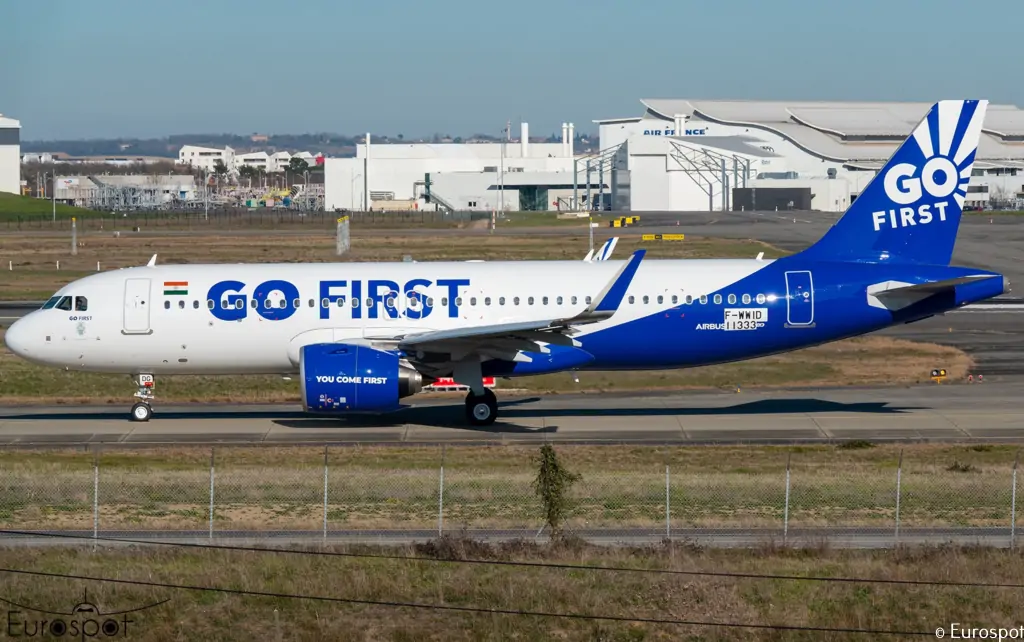
Creditors of cash-strapped airlines Go First have approved interim finance of INR 425 crore aimed at reviving the airline. While an in-principle approval for the interim finance has been granted, the plan is subject to the boards of the respective banks approving the same. Central Bank of India, Bank of Baroda, and IDBI Bank are the consortium lenders to the airline. They will seek board approvals to sanction the interim finance. Post which DGCA approvals will be sought to start the airline's operations.
The low-cost carrier's resolution professional Shailendra Ajmera had sought INR 425 crore in interim finance from the airlines’ financiers to get a revival plan going that could help restart operations, multiple sources said on Saturday, June 24. The sources said the requirement for financing could expand based on certain contingencies such as the availability of working engines for the aircraft and ticket cancellations.
The proposal for funds was put up to the committee of Go First’s creditors at a meeting earlier this week. Go First reportedly plans to resume operations in July and operate 78 daily flights with 22 aircraft. Aircraft of the cash-strapped carrier have been grounded since May 3.
The Go First bankruptcy filing lists Central Bank of India, Bank of Baroda, IDBI Bank and Deutsche Bank among its creditors, which are owed INR 6,521 crore in total. Early this May, Go First filed for bankruptcy at the National Company Law Tribunal (NCLT) and suspended its flight operations due to rising losses, primarily due to delays in the delivery of Pratt and Whitney's engines leading to the grounding of a portion of its fleet.
The airline expects immediate resolution and revival of operations. There were reports that the grounding of the Go First flights had put pressure on airfares, particularly on select routes where the now-grounded airline had its footprint.
Go First has further extended its flight cancellation on June 24. The airline said that scheduled flight operations will remain cancelled till June 28 due to operational reasons. Earlier, the flights were cancelled till June 24. Go First needs the aviation regulator's nod to kickstart operations and it plans to start operations on July 1 across 78 routes using around 22 aircraft.
The grounding of Go First flights has put pressure on airfares, particularly on select routes where the now-grounded airline had its footprint. The resumption of Go First operations is expected to ease this pressure.
What went down?
On May 2, Go First announced that it has applied to voluntary insolvency resolution proceedings before the National Company Law Tribunal (NCLT), Delhi. The announcement was made by the airline’s CEO Kaushik Khona shortly after the Wadia Group-owned carrier said it will temporarily suspend flight operations on May 3 and 4 due to a "severe fund crunch".
The low-cost carrier had said its financial crisis was sparked by "faulty" Pratt & Whitney engines that grounded about half its 54 Airbus A320neos. The US engine maker, a part of Raytheon Technologies, has called the claims without evidence. Explaining why it is facing a fund crunch, Khona told news agency PTI that the airline has grounded 28 planes, which is more than half of its fleet, due to the non-supply of engines by Pratt and Whitney. (P&W).
GoFirst is the latest Indian airline that is facing a crisis in the highly competitive airline business. In the last decade, lenders had faced challenges with recovering money lent to airlines like Vijay Mallya-promoted Kingfisher and Jet Airways following operational failures.
While in the case of Kingfisher, lenders have recovered a significant part of the money by attaching the assets of promoter Mallya, a bid to save Jet Airways is currently on at the bankruptcy court. Recently, the NCLT permitted more time for bidders of Jet Airways to pay their dues.
The plea by the airline
In its plea before the NCLT, Go First said it started receiving notices from lessors a year ago when it began to default on payments to them and vendors. The airline alleged it faced financial distress because of defective engines supplied by Pratt & Whitney (P&W). Its aircraft were grounded and could not be taken off as a result. The carrier later filed an emergency arbitration case against P&W before the Singapore International Arbitration Centre (SIAC). The emergency arbitrator passed awards directing P&W to supply 10 serviceable engines. Go First alleged P&W failed to comply with the award by the arbitrator.
The airline initiated enforcement proceedings against P&W in Delaware and other relevant jurisdictions where the engines were located. During the time of its application, Go First had 54 aircraft out of which 28 were grounded. The suspension of operations by the airline had an impact on airfares which surged on various routes amid a revival in travel.
Read next
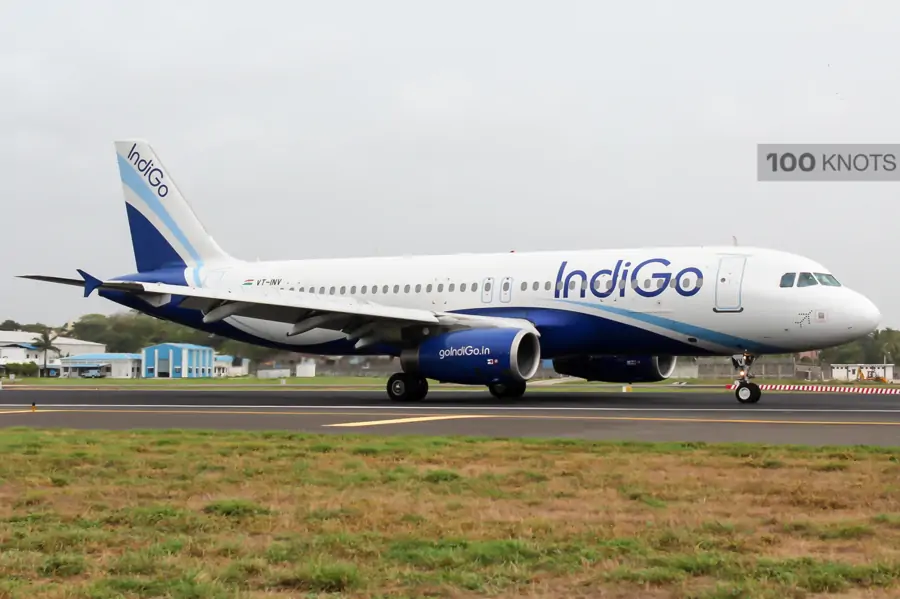
A Srinagar-Jammu IndiGo flight entered Pakistan's airspace on Sunday, June 25, the airline informed. Further, according to the carrier, the official flight was forced to enter Pakistani airspace due to bad weather. "IndiGo 6e-2124 entered in Pakistan airspace for a while due to bad weather and the flight was diverted to Amritsar," an official told ANI.
The authorities concerned in both countries were informed before the IndiGo flight entered Pakistan airspace, an airlines official said, adding that the flight diversion was well coordinated by Jammu and Lahore ATCs. Sources said the flight was about to land at Jammu airport but due to bad weather, the flight was asked to divert to Amritsar. However, after briefly entering Pakistani airspace, the official said the flight landed safely in Amritsar.
According to a report by Flight Radar 24, the aircraft involved in the incident is Airbus A321neo, registered as VT-IBN. Further, it is a new aircraft, only two months old. The IndiGo took delivery of it back on June 2, 2023.
Previous Similar Incident
In a similar incident earlier this month, an IndiGo Amritsar-Ahmedabad flight entered Pakistani airspace due to bad weather. "IndiGo flight 6E-645, operating from Amritsar to Ahmedabad had to take a deviation over Atari into Pakistan airspace due to bad weather. The deviation was well coordinated with Pakistan by Amritsar ATC via telephone. The crew was in continuous contact with Pakistan on R/T and the flight landed in Ahmedabad safely post the deviation," IndiGo said in a statement on the incident.
The incident took place at around 7:30 PM due to bad weather conditions with the plane going up to Gujranwala (close to Lahore). According to local media reports it eventually returned to India at 8:01 PM. The report quoted a Civil Aviation Authority official to explain that this was “internationally allowed" in bad weather conditions. Several flights heading to Lahore were also diverted to Islamabad on Saturday due to ‘poor visibility’.
Another One
In another similar incident, a Pakistan International Airline (PIA) plane also strayed into Indian airspace for about 10 minutes last month as it was unable to land at Lahore airport due to heavy rain. The pilots of PIA flight PK248 arrived from Damman at 8 PM on May 4 and attempted to land at the airport, but due to the heavy rain, the Boeing 777 aircraft lost its stability and could not make a safe landing.
Following instructions from the air traffic controller, the pilot executed a go-around approach. However, Pakistan media reported that due to the heavy rain and low visibility, he lost his way during the process. After passing through Tarn Taran Sahib and Rasulpur in the Indian Punjab, the plane turned back from Naushehra Pannuan making a 120 km detour through Indian territory. The plane then continued its flight to land in Multan.
Read next

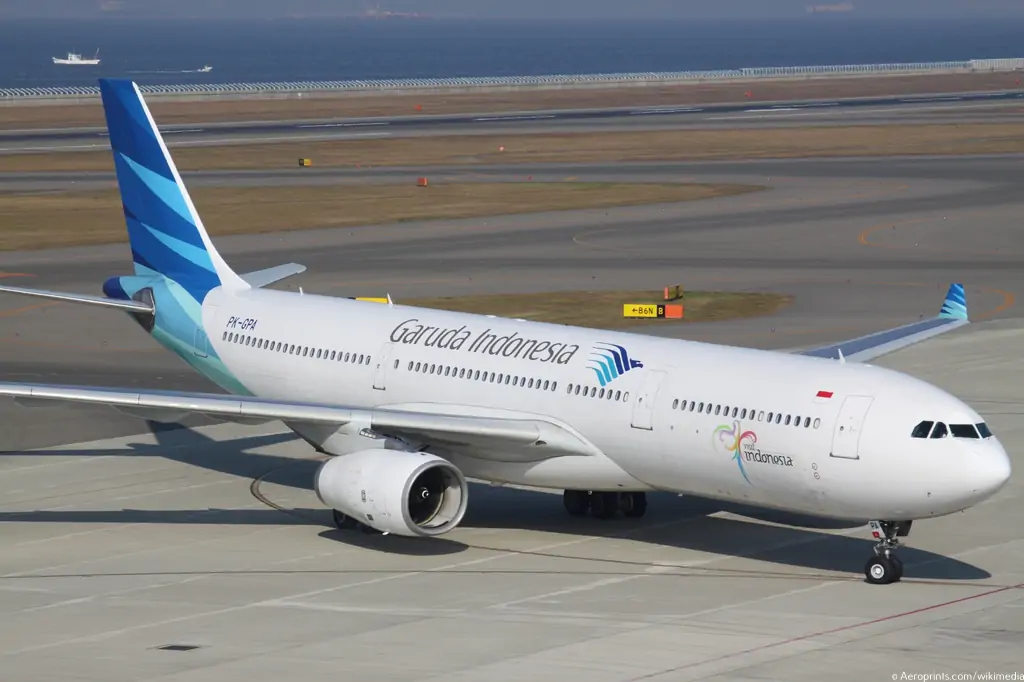
The aviation industry is constantly evolving, requiring airlines to invest in the maintenance and enhancement of their fleets. Recognizing the importance of reliable and efficient engines, GE Aerospace and Garuda Indonesia have joined forces to ensure the optimal performance of Garuda's GE and CFM engines.
The Partnership between GE Aerospace and Garuda Indonesia
The strategic cooperation between GE Aerospace and Garuda Indonesia is a significant milestone for both organizations. This partnership solidifies their commitment to excellence, safety, and efficiency in the aviation industry. By combining their expertise, resources, and capabilities, GE Aerospace and Garuda Indonesia aim to deliver top-notch engine restoration and overhaul services.
Training and Skills Development
As part of the Memorandum of Understanding, GE Aerospace will provide comprehensive training and skills development programs for the technical personnel of Garuda Indonesia and its subsidiaries, including GMF AeroAsia and Citilink. These programs will enhance the knowledge and expertise of the airline's maintenance teams, ensuring that they possess the necessary skills to maintain and service the GE and CFM engines effectively as well as leadership skills, with the goal of strengthening Garuda's service improvement.
Lease Engine Support
In the event of engine maintenance or overhaul requirements, GE Aerospace will offer lease engine support to Garuda Indonesia. This provision ensures that the airline can continue its operations seamlessly while its engines undergo restoration or servicing. By providing lease engine support, GE Aerospace guarantees minimal disruption to Garuda Indonesia's flight schedules, enabling the airline to maintain its commitment to customer satisfaction and operational efficiency.
Overhaul Services for Garuda Indonesia
GE Aerospace will be responsible for conducting comprehensive overhaul services for Garuda Indonesia's CFM56-7B and GE90-115B engines. Overhaul services play a vital role in ensuring the longevity and performance of aircraft engines. Through this partnership, Garuda Indonesia can benefit from GE Aerospace's expertise in engine restoration and optimization, resulting in enhanced engine performance and increased operational reliability.
Advantages of Strategic Cooperation
The strategic cooperation between GE Aerospace and Garuda Indonesia brings several advantages to both parties. Firstly, Garuda Indonesia can rely on GE Aerospace's extensive experience and knowledge in the aerospace industry to ensure the highest level of engine maintenance and overhaul services. This collaboration will contribute to improved operational efficiency, reduced maintenance costs, and enhanced customer satisfaction for Garuda Indonesia.
Comments
"This is a strategic step for Garuda Indonesia as a world-class airline to strengthen their fleet of GE and CFM aircraft engines and develop further skills for overhaul services with our support," said Kathy MacKenzie, Vice President, GE Commercial Programmes at GE Aerospace. "Indonesia is an important country for GE, and our support for Garuda Indonesia helps this country advance."
Garuda Indonesia President and CEO Irfan Setiaputra stated, "This longstanding collaboration of services and support between Garuda Indonesia Group and GE Aerospace reflects our commitment to accelerate our business recovery in order to optimize our mission to be an adaptive and agile company, especially in seizing market opportunity."
"In line with the current airline market trend of significant growth amid the pre-endemic phase, Garuda Indonesia focuses primarily on optimizing production capacity through operational enhancements, with one of the plans being to increase the total number of serviceable aircraft to capture greater opportunities in domestic and international networks. “As a result, having ongoing assistance from GE to ensure the aircraft's readiness to be airworthy, is one of the major principles for us to prepare a seamless, safe, and comfortable flight experience for our clients," Irfan added.
Conclusion
The strategic cooperation between GE Aerospace and Garuda Indonesia marks a significant milestone in the aviation industry. By joining forces, both companies are well-positioned to provide exceptional engine restoration and overhaul services for Garuda Indonesia's fleet. The comprehensive training programs, lease engine support, and overhaul services offered by GE Aerospace will contribute to the seamless operations and continued success of Garuda Indonesia, ensuring the utmost safety, reliability, and efficiency for its passengers.
With Inputs from GE Aerospace
Read next
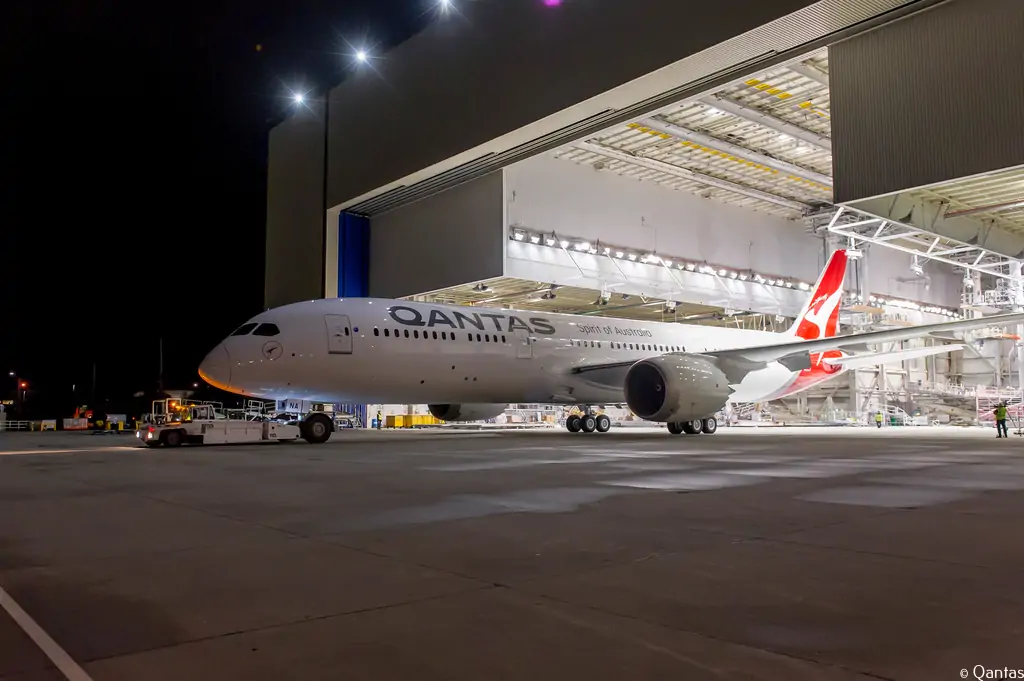
Air travel is a vital component of global connectivity, facilitating business, tourism, and cultural exchange. Airlines constantly seek ways to enhance their offerings and improve customer satisfaction. Strategic alliances enable airlines to pool resources, optimize routes, and provide customers with a wider range of destinations and seamless connections.
The Qantas-Emirates Alliance: An Overview
The Qantas-Emirates alliance was first established over a decade ago with the aim of delivering enhanced travel options for passengers traveling between Australia and the Middle East. This partnership involves code-sharing arrangements, joint pricing, and scheduling coordination. By leveraging their respective strengths, Qantas and Emirates have created a network that covers more than 50 destinations across Australia, Europe, the Middle East, and North Africa.
Benefits of the Alliance
The alliance between Qantas and Emirates offers numerous benefits to both airlines and passengers. Firstly, it expands the route networks of both carriers, allowing them to offer more destinations and a greater frequency of flights. This means that travelers have increased options and flexibility when planning their journeys. Additionally, the alliance facilitates better connectivity, smoother transfers, and streamlined baggage handling, minimizing travel disruptions, and enhancing the overall passenger experience.
Regulatory Approval and Extension
The Australian Competition and Consumer Commission (ACCC), as the governing body responsible for regulating competition and protecting consumer interests in Australia, plays a pivotal role in assessing and approving such alliances. In 2018, the ACCC renewed its permission for the Qantas-Emirates alliance, which was originally granted more than a decade ago. The recent draft determination by the ACCC proposes extending the arrangement for another five years, subject to an oversight provision on the Sydney-Christchurch route. The draft determination of the ACCC has been distributed to all interested parties, who have until July 12th to make submissions before the commission issues a final judgement.
The Oversight Provision on the Sydney-Christchurch Route
The proposed oversight provision aims to ensure competition on the Sydney-Christchurch route, as it is a popular route served by both Qantas and Emirates, and the only competitor is Air New Zealand. Under this provision, the alliance will be required to report certain performance metrics on the route to the ACCC regularly. This monitoring mechanism will help maintain fair competition and prevent any potential anti-competitive behaviour. "We have included a condition in the draft approval requiring Qantas and Emirates to provide information to the ACCC so we can monitor the competitive dynamics on this route during the term of the authorization," Brakey added.
Impact on Passengers
The extension of the Qantas-Emirates alliance will have a positive impact on passengers. With an expanded network, travelers will have access to a wider range of destinations and flight options, allowing them to plan their trips more efficiently. Seamless connections, shared frequent flyer benefits, and coordinated services will enhance the overall travel experience for passengers choosing to fly with Qantas or Emirates.
Competitive Landscape
The airline industry is highly competitive, and strategic alliances are one way for carriers to stay ahead. The Qantas-Emirates alliance enables both airlines to compete effectively against other major carriers in the region, such as Singapore Airlines and Cathay Pacific. By joining forces, Qantas and Emirates can leverage their combined strengths to offer competitive pricing, enhanced services, and greater connectivity, thereby attracting more passengers and bolstering their market position.
Future Prospects
The extension of the Qantas-Emirates alliance signals a commitment from both airlines to continue providing enhanced travel options for their customers. As the aviation industry evolves, we can expect further collaboration and innovation from Qantas and Emirates to meet the changing needs of travelers. This alliance sets a precedent for future partnerships in the industry, encouraging other airlines to explore similar arrangements for mutual benefit.
Conclusion
In conclusion, the continued approval and extension of the Qantas-Emirates alliance by the ACCC provide a boost to air travel in terms of convenience, passengers, fostering increased connectivity, seamless travel experiences, and competitive pricing. This strategic partnership between two leading airlines sets an example for the industry, encouraging other carriers to explore similar alliances. As travelers’ benefit from an expanded network and improved services, the aviation industry moves forward in creating a more seamless and customer-centric travel experience.
With Inputs from ACCC
Comment