
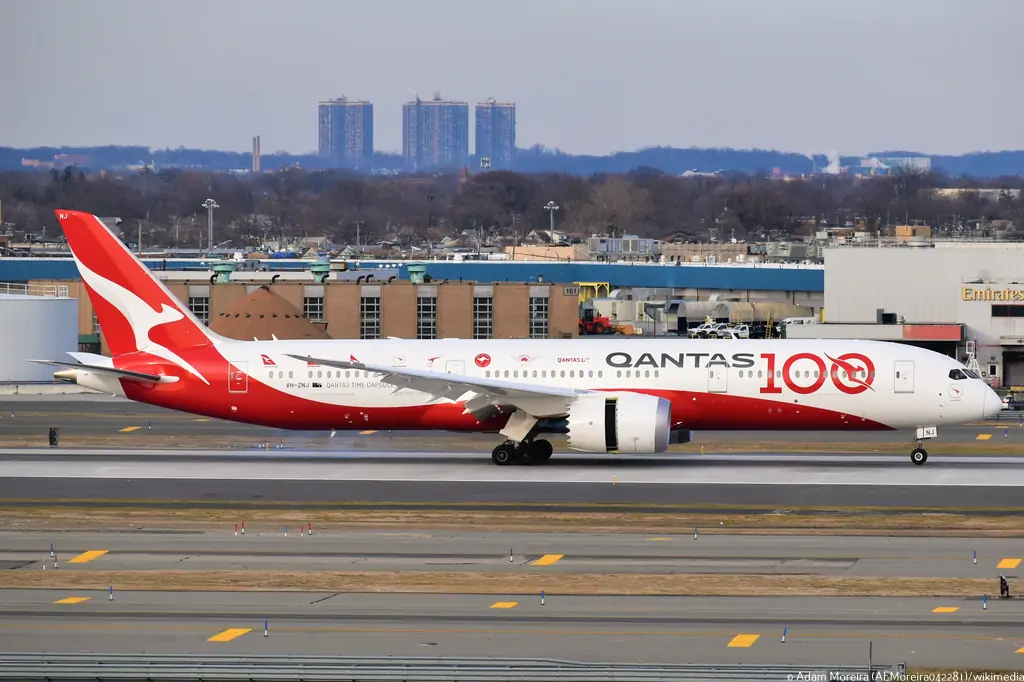
Qantas, Australia's national airline, made a historic statement on Friday that sent shockwaves across the aviation sector. The airline said that it will no longer enforce gender-based uniform restrictions, allowing male cabin crew to wear make-up and enabling women to avoid wearing high heels. Qantas is making this change to better match its regulations with the changing demands of the modern world while also providing comfort and inclusion for personnel from varied cultural backgrounds.
Understanding the Motive Behind the Uniform Changes
The desire to reflect modern cultural standards and create a more inclusive work environment drove Qantas' decision to revamp its uniform policy. When it comes to uniform regulations, the aviation industry has always followed stringent gender conventions, frequently dismissing people's particular demands and preferences. Qantas intends to disrupt these standards and establish a workplace that celebrates variety and uniqueness by deviating away from this heritage.
Gender Inclusivity in the Airline Industry
Qantas' uniform adjustments address long-standing issues that male cabin crew have experienced. For years, male airline employees have felt restricted in their capacity to express themselves due to restrictive uniform standards. Qantas conveys a powerful message about acceptance and empowerment by allowing them to wear make-up, encouraging personnel to embrace their individuality.
Revamping the uniform policy
Qantas' new uniform policy paves the way for greater multicultural participation in its workforce. Male cabin crew members will be able to express themselves through make-up, providing a touch of personal style while remaining professional. This change not only serves individual employee demands but also challenges cultural norms about gender expression.
Cabin staff can now wear make-up, wear flat shoes, and have long hair in a ponytail or bun, as long as it is in a ponytail or bun. Diamond earrings are also permitted, and rigorous standards limiting watch size and style have been abandoned.
Support and Criticism of the Uniform Changes
The action of Qantas has received considerable support from its employees and the general public. Many people applaud the airline for taking a progressive stance and deviating from antiquated traditions. This decision is regarded as an important step towards gender equality and inclusion, not just in the aviation business but also in society at large.
The Significance of Diversified Airline Representation
The decision by Qantas to discontinue gender-based uniform restrictions goes beyond simple fashion. It is an affirmation of inclusion that emphasizes the significance of diverse representation in the aviation sector. Qantas presents a precedent for other industries to follow, fostering more inclusive environments for its employees by encouraging individuality and defying established gender standards.
Impact on Employee Morale and Satisfaction
Employee morale and satisfaction are likely to improve as a result of the uniform adjustments. Allowing workers to express themselves genuinely improves confidence and develops a sense of belonging. Employees are more satisfied with their jobs when they feel appreciated and supported, which leads to better performance and customer experiences.
Potential Issues and Implementation Considerations
Implementing such a significant uniform policy shift is fraught with difficulties. It is critical to ensure that male cabin personnel receive appropriate training and guidelines for incorporating make-up into their appearance. The airline has to strike a balance between individuality and a professional image that is consistent with Qantas' corporate identity.
Conclusion
The move by Qantas to phase out gender-based uniform standards signals a big step forward in the airline industry's inclusiveness. Qantas sets an excellent precedent for other firms by modifying its policies to better meet modern expectations and respond to the demands of its diverse workforce. The airline sector has a unique chance to break down gender preconceptions and establish environments where individuals can express themselves authentically.
With Inputs from CBS News

Read next
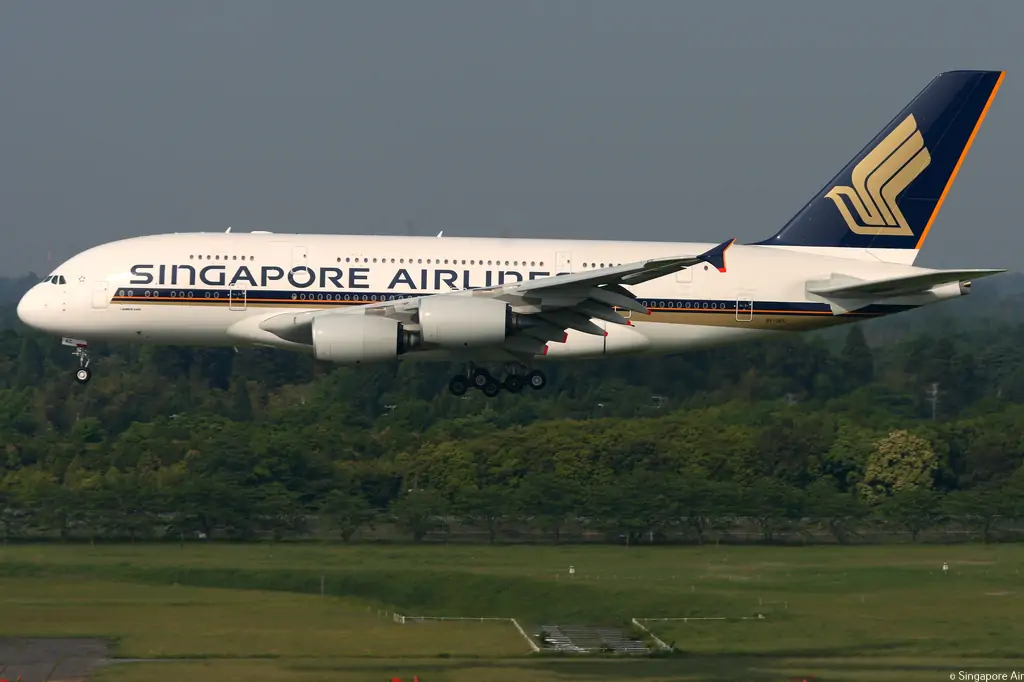
Singapore Airlines (SIA) has been operating flights to Perth, Western Australia's capital city, for over 50 years. As part of its commitment to offering outstanding customer service, SIA has announced the commencement of development on a new SilverKris Lounge at Perth Airport (PER). This new lounge will provide passengers with more space, upgraded facilities, and intriguing dining alternatives, enhancing their travel experience.
The New Lounge: Concept
The new lounge reflects features of the newly concluded flagship SilverKris Lounge in Singapore and adheres to the refreshed "Home Away from Home" concept. The premier lounge is located in Terminal 3 at Singapore Changi Airport (SIN), and its refurbishment cost around S$50 million ($37 million).
"The construction of a new lounge in Perth will improve the travel experience and underscore our commitment to the Perth market.
The New SilverKris Lounge's Features
The new SilverKris Lounge at Perth Airport seeks to make the pre-flight experience for Singapore Airlines passengers even more delightful and comfortable. The additional space provided by the lounge is one of its primary characteristics. Passengers will have additional seating options and a more serene environment to decompress before their flights.
In addition to more space, the lounge will have improved facilities to meet the demands of discerning travellers. Premium amenities such as showers, business centres, and entertainment alternatives may be available in these facilities. Passengers will have access to a variety of amenities designed to make their airport experience easier and more pleasurable.
Customer Benefits for Singapore Airlines
The new SilverKris Lounge at Perth Airport offers various advantages to Singapore Airlines passengers. Passengers with layovers in Perth may now wait for connecting flights in a comfortable and convenient setting. The lounge provides a haven for travellers to unwind, recharge, and refresh before continuing their journey.
In conclusion, Singapore Airlines' new SilverKris Lounge at Perth Airport is designed to enhance the travel experience for travellers flying to and from Perth. The lounge provides a premium pre-flight experience with additional room, improved facilities, and fresh dining options. Passengers can look forward to the new lounge's comfort and convenience, which further solidifies Singapore Airlines' commitment to providing excellence in air travel.
With Inputs from The MileLion
Read next
Jyotiraditya Scindia Talks About the Growth of Indian Aviation Industry in Next 5 Years

Radhika Bansal
09 Jun 2023

India will have more than 200 airports, heliports and water aerodromes in the next five years and Indian carriers will order up to 1,400 additional planes during the period, Union Aviation Minister Jyotiraditya Scindia said on Wednesday, June 7. Addressing a press conference on the aviation sector’s performance during the nine years of the Narendra Modi government, Scindia said India had 74 airports (including heliports and waterports) till 2014 and the number has now doubled to 148.
“In 2013-14, India saw six crore domestic flyers. Now, this number is 14.5 crore, up by 135%. Similarly, the number of international air travellers has grown by 50% during the period, from 4.7 crore to 7 crore. Besides, cargo including both domestic and international has grown by 65% from 2.2 million tonnes to 3.6 million tonnes. We have become the world’s third-largest aviation market due to the progressive policies adopted by Prime Minister Narendra Modi,” he said.
Talking about the increase in the fleet size, Scindia said in 2014, the number of aircraft with Indian carriers was 400, which has gone up to 700 now, registering a 75% growth. “Air India has just placed a historic order of 470 aircraft worth USD 70 billion. This is just the beginning. It is expected that Indian carriers will order an additional 1,200 to 1,400 planes in the next five years,” he added.
The aviation minister said the number of airports, heliports and water aerodromes will go past 200 in the next five years. “In 2014, there were only three greenfield airports. Now, 11 more are ready and 10 more have been approved. Similarly, the northeast region used to have nine airports in 2014 and the number has gone up to 17,” he said.
During the last nine years, 11 more Greenfield airports have been operationalized. Notably, the North East region has received particular attention in terms of airport development. Minister Scindia highlighted the successful construction of eight new airports in the region.
Scindia asserted that the airport sector will see an INR 1 lakh crore investment in the next few years. “By 2030, we will see 45 crore domestic flyers annually, up by 300% from the current figures. The capacity of airports is being hiked. The combined airport capacity of the six metros at present is 22 crore passengers annually. With Navi Mumbai and Greater Noida, the capacity will almost double to 41.5 crore,” he said. The minister noted that under the subsidised UDAN scheme, nearly 1.2 crore passengers have flown on 2.2 lakh flights so far. “We will soon start international UDAN flights too,” he said.
Scindia said that promoting helicopter usage, a push to flying-training schools, and Sustainable Aviation Fuel (SAF) are among the areas that the ministry is working upon. “India has now freed up a significant part of reserved defence airspace for commercial flights, leading to shorter routes and an annual fuel saving of INR 1,000 crore apart from reduced carbon emissions under the Prime Minister’s guidance. The number of air traffic controllers has doubled in the last nine years from 2,305 to 4,544 and we have got positions for 756 controllers created which will soon be filled. Institutions like ATC, DGCA, BCAS and AERA are being strengthened to safely handle the increased air traffic,” the minister said.
The post-pandemic surge of the Indian aviation ministry thanks to a rising demand for air travel, was disrupted by the sudden absence of Go First and Indi Go's struggle to get a part of its fleet back in the airspace. SpiceJet is also facing insolvency pleas from its lessors, who want to repossess their aircraft because of unpaid dues, even as passenger traffic is slated to surpass pre-pandemic levels. As rising demand and limited availability of seats have led to a surge in airfare, Scindia added that the Directorate General of Civil Aviation has sought clarity from Go First about its revival.
Additionally, Minister Scindia emphasised the government's efforts to support the maintenance and repair sector by ensuring reduced rentals for Maintenance, Repair, and Overhaul (MRO) service providers. Looking ahead, Minister Scindia stated that India is expected to have over 200 airports within the next five years with a leasing process for 29 aircraft at Gift City, a planned financial and technology hub in Gujarat.
Furthermore, Minister Scindia highlighted the significant adoption rate of the Digi Yatra initiative at airports under the Airports Authority of India (AAI). More than 50% of the airports under AAI have implemented Digi Yatra, a digital travel experience for passengers that streamlines various processes. However, Minister Scindia acknowledged that private airports currently have a lower adoption rate of Digi Yatra, ranging from 10-20%.
Highlighting the government's vision for aviation in India, he said that discussions are currently underway with leading airlines, including IndiGo and Air India, to leverage Delhi's strategic location and further enhance its connectivity with international destinations.
Read next
El Al Israel Airlines Secures Regulatory Approval to Operate Dedicated Freighter Aircraft
Radhika Bansal
09 Jun 2023

Israeli airline El Al has secured regulatory approval to operate dedicated freighters from the Israeli civil aviation authority, as it awaits its first converted aircraft. The extension to its commercial licence gives the airline the right to transport freight using all-cargo aircraft until June 5 next year.
El Al had disclosed last October that the regulator was intending to cancel the airline’s freighter authorisation because it did not have the minimum of two cargo aircraft in its fleet. With a planned amendment to the regulation reducing this minimum requirement to a single aircraft, El Al opted to acquire a Boeing 737-800 converted freighter.
The airline recently stated that the introduction of this freighter, through a dry-lease arrangement, has been held up for a few months by validation procedures. But it states that it obtained an amendment to its commercial licence from the civil aviation authority on June 7 granting the carrier the all-cargo aircraft rights. “[El Al] is continuing the validation procedure so that, upon completion, it will be able to provide cargo transportation services using cargo aircraft regularly,” it adds.
Freighter introduction held up by regulatory hitch
Israel’s El Al is yet to introduce the Boeing 737-800 freighter it had been planning to use from April, owing to a regulatory issue. The airline signed an agreement in February this year to dry-lease the aircraft which had recently been converted from passenger to cargo configuration.
But El Al says, in its first-quarter statement, that the Israeli civil aviation authority informed the carrier that a “validation procedure” is required for a “major change” that the aircraft underwent following the conversion. “According to the information given to [El Al], this procedure is expected to last several months,” says the airline.
El Al had been intending to lease the aircraft for six years from April. “[We are] working to promote the validation procedure with [the authority] with the assistance of the aircraft manufacturer,” it states. El Al adds that it has applied for a renewal of rights to transport freight in all-cargo aircraft. It has been chartering an Airbus A300-600 freighter, and last year extended the agreement to December 2024.
About El AI
El Al Israel Airlines Ltd. trading as El Al is the flag carrier of Israel. Since its inaugural flight from Geneva to Tel Aviv in September 1948, the airline has grown to serve over 50 destinations, operating scheduled domestic and international services and cargo flights within Israel, and to Europe, the Middle East, the Americas, Africa, and the Far East, from its main base in Ben Gurion Airport. El Al is the only commercial airline to equip its planes with missile defence systems to protect its planes against surface-to-air missiles and is considered one of the world's most secure airlines, thanks to its stringent security procedures, both on the ground and onboard its aircraft. Although it has been the target of many attempted hijackings and terror attacks, only one El Al flight has ever been hijacked; that incident did not result in any fatalities.
(With Inputs from Flight Global)
Read next
Wizz Air Expects its Return to Profitability in FY24 Amid Strong Summer Travel Demand
Radhika Bansal
09 Jun 2023

European low-cost airline Wizz Air is confident that strong bookings combined with a big investment in its operations to avoid last year's summer travel snags plus its growing fleet will help it swing to a profit this year. For the 12 months to the end of next March, Hungary-based Wizz said it expected a net profit of 350 million to 450 million euros ($481.59 million), a huge improvement on the annual net loss of 535 million euros it reported on Thursday, June 8. Its forecast was better than the 343 million euro consensus outlook, lifting the airline's shares by 3% to 2,838 pence.
"The fact that management is willing to give profit guidance for the current fiscal year is a sign of confidence," said Goodbody analysts. Wizz, whose main operations are in central and Eastern Europe, but also has a fast-growing Middle East business, cautioned that its outcome was contingent on there being no new adverse events such as the Ukraine war.
Last year, Russia's invasion impacted Wizz's performance forcing it to suspend operations there. A lack of fuel hedging plus airport issues also dragged. Wizz, like many airlines, was forced to cancel flights last summer after a faster-than-expected rebound in air travel coupled with labour shortages caused chaos at airports.
Jozsef Varadi, Wizz's chief executive, said the airline was better prepared for this summer, the most profitable period for European airlines. "We have invested essentially hundreds of millions in magnitude into making our operating model a lot more resilient," he said in an interview. That meant more spare aircraft, spare parts, extra pilots and cabin crew were available. Wizz said it was seeing strong bookings and higher fares for summer, in line with trends identified by competitors such as Ryanair, Europe's biggest airline, and easyJet.
Upcoming plans of the airline
The airline is set to receive 30 new A321neo aircraft from Airbus by April 2024. Varadi said he was confident those would arrive despite supply chain issues. Wizz Air also invested in hiring extra pilots and cabin crew, ensuring they were ready and available for this busy travel season. This summer, Wizz Air is expected to fly to over 62 destinations across 30 different countries from Budapest's Ferenc Liszt International Airport and Debrecen International Airport, whereby the budget carrier will provide an estimated 32% of all seats available from Hungary during this peak travel season.
The focus for the next financial year will be to reduce unit costs, meaning that Wizz Air aims to increase capacity, measured in Available Seat Kilometers (ASK) to grow by 30% Year-on-Year (YoY), with an average load factor of 90%, and achieve better aircraft utilization than during FY2020. The average gauge should grow to 226 seats, compared to 219 seats in FY2023, largely driven by an ever-growing number of Airbus A320neo family aircraft.
Directly addressing costs, the low-cost carrier wants to increase crew productivity by 25% YoY, reduce the fleet age by 11% YoY, and add 23 aircraft to its top 10 best-performing bases across its network. To top it off, Wizz Air plans to reduce disruptions by 38% YoY, mainly by adding resources in order to deal with unforeseen events.
In FY2023, Wizz Air took delivery of 35 Airbus A321neo aircraft, returning nine Airbus A320ceos to lessors. In FY 2024, the company plans to take delivery of 42 A321neos and retire 16 A320ceos from its fleet. At the end of FY2023, the airline’s total order backlog was 13 A320neos, 305 A321neos and 47 A321XLRs. However, it has mentioned one of its goals for the upcoming year is to ensure the “security of aircraft supply from Airbus”.
Wizz Air Awaits For A321XLR To Begin Flights To India
Wizz Air Holdings Plc said the expansion into India will become possible with its new long-range Airbus SE A321 models, potentially opening up a lucrative vein of future growth as demand for air travel surges in the world’s most populous nation. “There’s great potential in India, as the country has seen an immense development,” Wizz Chief Executive Officer Jozsef Varadi said in an interview in Budapest. “I think it may help Europe tackle its employment issues, while its emerging middle class will boost tourism. We’re looking into opportunities there, but this is more a medium-term issue.”
Wizz Air, a 20-year-old budget carrier from Hungary, may not have neem heard of in India but the airline plies a fleet of 121 Airbus aircraft to 155 cities in 45 countries primarily in Europe, the Middle East and Central Asia. Wizz Air has 47 of the long-range Airbus A321 XLR on order, with deliveries set to start sometime in 2024. The aircraft will allow the budget carrier to expand its operating parameter further east to markets including the Middle East, where Varadi said there’s also greater demand.
About Wizz Air
Wizz Air was legally incorporated in Hungary as Wizz Air Hungary, its headquarters is in Budapest, while parent company Wizz Air Holdings is in Jersey and listed on the LSE FTSE 250 Index. It has the largest fleet for any Hungarian airline but is not the national carrier and serves 44 countries.
Established in September 2003, it began operations in May 2004. It began trading on the LSE in February 2015. It employs around 5,500 people and is among the leading low-cost airlines in Europe, and the largest in Central and Eastern Europe, as per the company’s LinkedIn page. In 2016, it carried a milestone of 34 million passengers and followed it up with a new milestone of 200 million passengers in 2019, on its 15th birthday, the company website states.
It has a fleet of 153 Airbus A320 aircraft with an average age of 5.2 years, the company website says. These include 59 A320-200s, 41 A321ceos and 47 A321neos. It functions at more than 190 airports across 51 countries through over 1,100 routes, the website added.
In 2017, the airline launched Wizz UK and opened its London offices. In May 2019, the airline claims to have recorded the smallest environmental footprint per passenger in Europe at 56.5g CO2 per passenger/km. It expects to further cut emissions by CO2 emissions per passenger by a third by 2030. In 2020, Wizz was named the "Best Low-Cost Airline in Europe" by Airlineratings, an airline safety and product rating review website.
Read next
SpiceJet to Get Back On-Track Soon; to Lease Aircraft Engines from FTAI Aviation, Will Be Inducting 10 Aircraft Soon
Radhika Bansal
09 Jun 2023

SpiceJet said that FTAI Aviation would lease it up to 20 CFM56 engines, the first few of which the low-cost carrier would use to reactivate some of its grounded fleet over the next 2-3 months. Nasdaq-listed FTAI owns and maintains commercial jet engines with a focus on CFM56 engines. FTAI invests in aviation assets and aerospace products that generate strong and stable cash flows with the potential for earnings growth and asset appreciation.
Under the revitalisation programme, FTAI will provide SpiceJet with up to 20 engines for lease, inclusive of maintenance services. "By leveraging FTAI Aviation's engine expertise, SpiceJet will have access to a pipeline of available engines, eliminating the need for frequent shop visits. The revitalization program will reduce maintenance expense and minimize aircraft downtime, enhancing the airline's overall performance," the company said.
The first engines will be used to support the re-activation of SpiceJet's aircraft fleet over the next 2-3 months and will be critical for service on new routes. "With FTAI Aviation managing the engines, SpiceJet will strengthen its resource allocation and focus on delivering an exceptional travel experience while maximizing its operational potential," the company said.
According to the company, SpiceJet aims to demonstrate its creativity and dedication to advancing the future of low-cost air travel and the aviation industry in India, through the CFM56 revitalisation programme. The Gurugram-based airline said it had begun reviving 25 of its grounded fleet using its own money and a USD 50 million line of credit through an Indian government scheme it secured. SpiceJet had also said there were no plans to file for insolvency, quelling fears of a spillover after rival Go First filed for voluntary bankruptcy.
"SpiceJet is slowly but surely progressing towards its goal of restoring its fleet and ensuring that our aircraft stay where they rightly belong to i.e. in the skies serving our passengers. Our partnership with FTAI Aviation is a step forward in that direction that would ensure that our fleet is up and running at all times without us worrying about engines or their maintenance. Quick and ready replacements will ensure that our planes are on the ground for a minimal time," said Ajay Singh, Chairman and Managing Director, of SpiceJet.
Shares of SpiceJet Jumps
Following the development, shares of SpiceJet surged as much as 8.3% on Thursday, June 8 to hit an intraday high of INR 29 apiece on the BSE. The scrip opened marginally higher at INR 26.81 as against the closing price of the previous session at INR 26.76. At 1:40 PM, the share price of SpiceJet was trading 5.16% higher at INR 28.15. SpiceJet's shares are trading 46.2% lower than the 52-week high of INR 52.40, which the company touched on August 3, last year. The share price is trading 28% higher than the 52-week low of INR 22.65, which the company touched on May 23. During the session, the airline's market capitalisation stood at INR 1,695.40 with 50,12,940 shares exchanging hands on the BSE as against the two-week average of 14.53 shares.
Last month, the company said that the funds for the revival of its 25 grounded planes will be drawn from the government’s Emergency Credit Line Guarantee Scheme (ECLGS) and better cash accruals.
The Gurugram-based airline operates a fleet of Boeing 737s and Q-400s and is one of the country's largest regional players operating multiple daily flights under UDAN or the Regional Connectivity Scheme. The low-cost airline's market share stood at 6.9% during the January-March quarter, marginally behind rival Go First which cornered a market share of 7.8% for the first three months of 2023.
SpiceJet recently restructured over USD 100 million outstanding dues to Carlyle Aviation Partner into equity shares and compulsorily convertible debentures (CCDs). Carlyle Aviation, an aircraft lessor, is the commercial aviation investment and servicing arm of private equity giant Carlyle. Following the transaction, Carlyle Aviation will hold over 7.5% equity stake in the airline.
SpiceJet to Induct 10 more aircraft
SpiceJet is all set to induct 10 narrow-body Boeing 737 aircraft into its fleet. The decision comes against the backdrop of increasing passenger demand that the airline is planning to cater to.
The airline that entered India's aviation industry in 2005 has already signed a lease agreement for ten planes joining the fleet in September 2023. Five out of these ten aircraft are 737 Max aircraft. Meanwhile, the low-fare airline has mobilized its plan to revive its 25 grounded aircraft for which the funds will be drawn from the government’s Emergency Credit Line Guarantee Scheme (ECLGS) and better cash accruals.
"There has been a significant surge in passenger demand and we are hopeful that this trend of increased demand will continue in the latter part of the year as well. Accordingly, SpiceJet has been planning capacity addition to cater to the growing needs of the Indian aviation market," said Ajay Singh, Chairman and Managing Director, of SpiceJet. "We will be inducting ten B737 aircraft between September-October 2023. The induction of these planes, which coincides with the peak travel season in India, will help us launch new routes and strengthen our presence on existing ones," Singh added.
The Gurugram-based airline is trying to keep afloat amid several aircraft of its fleet being grounded over payment issues with lessors. It operates about 250 daily flights to 48 destinations within India and to international destinations consisting of a mix of large, medium and small metal birds including Boeing 737 Max, Boeing 700 and Q400s.
Comment