
Qantas Faces A380 Setback: Maintenance Woes Delay Fleet Reactivation Plans

Abhishek Nayar
14 Feb 2024
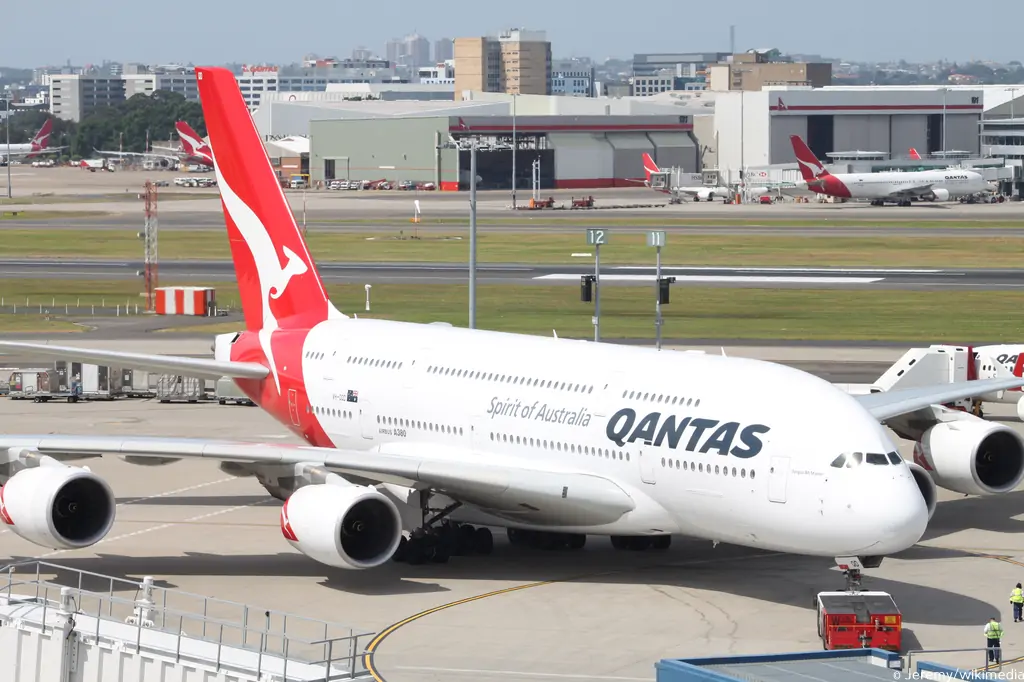
Qantas, the iconic Australian airline, finds itself grappling with unforeseen challenges as it endeavors to bring its A380-800 fleet back into service. Despite initial intentions to reactivate all remaining aircraft by the end of 2024, the airline now faces setbacks attributed to maintenance delays and supply chain constraints.
Maintenance Woes and Supply Chain Challenges
Qantas' plan to reactivate its twelve A380-800s, previously parked in California due to the COVID-19 pandemic, hit a roadblock. While eight aircraft have successfully returned to service, two others, VH-OQA and VH-OQC, have languished in Abu Dhabi for over a year due to maintenance issues. Additionally, VH-OQL is slated for cabin refurbishment, further complicating the fleet's reactivation timeline.
Impact on Flight Operations
The repercussions of Qantas' A380 setbacks reverberate through its flight schedules. Delays in reactivating the fleet prompt adjustments to planned routes and aircraft deployments. Notable changes include the postponement of A380 services on the Sydney-Johannesburg route and alterations to the frequency of Boeing 787-9 Dreamliner-operated flights on various routes.
Industry-wide Challenges
Qantas' predicament underscores broader challenges faced by airlines globally. Supplier delays, maintenance workforce shortages, and hangar availability constraints have become prevalent issues affecting fleet maintenance and upgrades. The ripple effects extend beyond individual carriers, impacting the aviation industry's capacity to swiftly recover from the pandemic's disruptions.
Qantas' Adaptation Strategy
In response to the A380 setbacks, Qantas outlines a revised plan to have seven A380s operational by early October. Despite the setbacks, the airline remains committed to maintaining essential routes, such as the Sydney-Singapore-London service, unaffected by scheduling changes.
Conclusion
Qantas' journey to reactivate its A380-800 fleet encounters unexpected hurdles, highlighting the intricate challenges inherent in aircraft maintenance and supply chain management. As the airline navigates through these obstacles, it underscores the resilience required to sustain operations amidst a dynamic and challenging aviation landscape.
With Inputs from ch-aviation
Read next

In a move signaling a strategic shift in its fleet acquisition plans, Thai Airways International has recently confirmed an order for forty-five Boeing 787-9 Dreamliners, with additional options yet to be disclosed. This decision comes amidst a backdrop of restructuring efforts and the airline's endeavor to rejuvenate its operations post-pandemic.
New Direction in Fleet Acquisition
Thai Airways' decision to opt for the Boeing 787-9 marks a departure from previous speculations, which suggested the carrier was eyeing around forty B787s and aiming for a total of 90 new aircraft, predominantly widebodies. This shift underscores the airline's adaptability and its commitment to modernizing its fleet to meet evolving market demands.
Boeing vs. Airbus Dynamics
The choice of Boeing's Dreamliner over Airbus's A350 reflects several factors, including engine preferences and commercial considerations. Notably, the B787-9 offers flexibility with engine options, whereas the A350 is exclusively powered by Rolls-Royce engines. Reports suggest that a protracted dispute with Rolls-Royce over engine pricing and maintenance played a role in Thai Airways' decision-making process.
Navigating Fleet Complexity Amidst Restructuring
Thai Airways finds itself navigating a delicate balance between streamlining its fleet and addressing capacity shortfalls in the wake of the pandemic-induced travel disruptions. The airline is currently undergoing a court-supervised business rehabilitation process, resulting in a more streamlined and efficient fleet. However, the resurgence in passenger demand has highlighted the need for additional capacity, prompting the airline to resort to leasing aircraft in the short term.
Implications for Thai Airways' Revival
The acquisition of forty-five Boeing 787-9s signifies a pivotal step in Thai Airways' revival strategy. By modernizing its fleet with fuel-efficient and technologically advanced aircraft, the airline aims to enhance operational efficiency, reduce costs, and improve passenger experience. Furthermore, the flexibility offered by the Dreamliner's engine options aligns with Thai Airways' long-term growth objectives.
Conclusion
Thai Airways International's decision to commit to forty-five Boeing 787-9 Dreamliners represents a significant milestone in its fleet renewal efforts. As the airline charts a course towards recovery amidst ongoing restructuring, the acquisition underscores its resilience and determination to emerge stronger in a post-pandemic aviation landscape. With a renewed focus on fleet modernization and operational efficiency, Thai Airways sets its sights on a brighter future in the skies.
With Inputs from ch-aviation
Read next

Boeing has announced seven teams comprising university students and early-stage start-up entrepreneurs as winners of the third edition of Boeing University Innovation Leadership Development (BUILD) program 2023-24.
The seven winning teams are Abyom SpaceTech and Defence Pvt. Ltd. and Green Aero Propulsion Pvt. Ltd. from Foundation for Innovation and Technology Transfer (FIIT) – IIT Delhi, Glovatrix Pvt. Ltd. from Society for Innovation and Entrepreneurship (SINE) – IIT Mumbai, dVerse Technologies Pvt. Ltd. from IIT Madras Incubation Cell, Backyard Creators Pvt. Ltd., BONV Technology Private Limited and Coratia Technologies Pvt. Ltd. from Technology Business Incubator (TBI) – KIIT, Bhubaneswar. These winners will be further supported by Boeing and their respective incubator partners for over a few months to help develop their ideas into market-ready and viable business solutions.
“BUILD has evolved into an aspirational and dynamic start-up platform, nurturing young entrepreneurial minds of the country with the right skills and support to scale up operations, develop cutting-edge technologies, and help implement ideas that impact not only the nation but the world at large. I want to congratulate our incubator partners for leading this program to success over these years and would like to congratulate winners and the applicants for their active participation this year,” said Salil Gupte, president, Boeing India. “We continue to remain committed to fostering innovation by nurturing the country’s brightest talent and ideas through our industry-academia collaborations and partnerships”, added Gupte.
From L-R (top row) – Second from left, Ahmed Elsherbini, VP and MD, BIETC, and chief engineer, Boeing India; Shri C.B. Ananthakrishnan, CMD, HAL; Sharath Kumar Bache Gowda, Chairman, Karnataka State Electronics Development Corporation Limited and Member of Legislative Assembly, Karnataka; Dr. G. Satheesh Reddy, President, The Aeronautical Society of India, (Former Secretary DD R&D, Chairman DRDO, and Scientific Adviser to Raksha Mantri); Salil Gupte, president, Boeing India; Dr. Vinod Kumar, Director, Promotion Directorate at IN-SPACe, Department of Space along with Boeing team, incubator partners, and the seven winners of BUILD 2023-24.
Each of these seven teams received INR 10 lakh as a financial grant, and their ideas covered solutions for community development, the defence and space industry, and sustainability.
In its third edition, Boeing continues to partner with seven incubators, namely, SINE – IIT Mumbai, FIIT – IIT Delhi, Innovation and Entrepreneurship Center – IIT Gandhinagar, IIT Madras Incubation Cell, Society for Innovation and Development – IISC Bengaluru, T-Hub Hyderabad, and TBI – KIIT Bhubaneshwar, to organize BUILD in India. The applicants were invited to submit ideas in the fields of aerospace and defense, technology start-up, social impact, and sustainability.
Ahmed Elsherbini, vice president, managing director, Boeing India Engineering & Technology Center, and chief engineer, Boeing India said, “Every year, as we invite ideas for BUILD, we remain excited about the possibilities these young minds and their ideas bring for the country. The entire process of nurturing each idea to make it into a viable business solution is delivered through interactions between our engineers, technologists, partner incubators, and the student and start-up community. The mentorship, resources, and access to the right networks help pivot growth for these start-ups and entrepreneurs.”
In 2023, BUILD attracted a record number of entrants, with over 1200 ideas submitted by more than 2200 students and start-up participants applying from tier 1, 2, and 3 cities across India. Following a stringent evaluation process, 75 shortlisted teams entered the regional boot camp, of which regional and national finalists received guidance from start-up ecosystem experts, incubator partners, and Boeing engineers to incubate ideas. Participants further received access to Boeing’s innovation ecosystem.
Boeing's India supply chain includes more than 310 local companies in India and a joint venture to manufacture fuselages for Apache helicopters and vertical fin structures for the 737 family of airplanes. Annual sourcing from India stands at over $1.25 billion. Boeing currently employs over 6,000 people in India, and more than 13,000 people work with its supply chain partners.
Read next
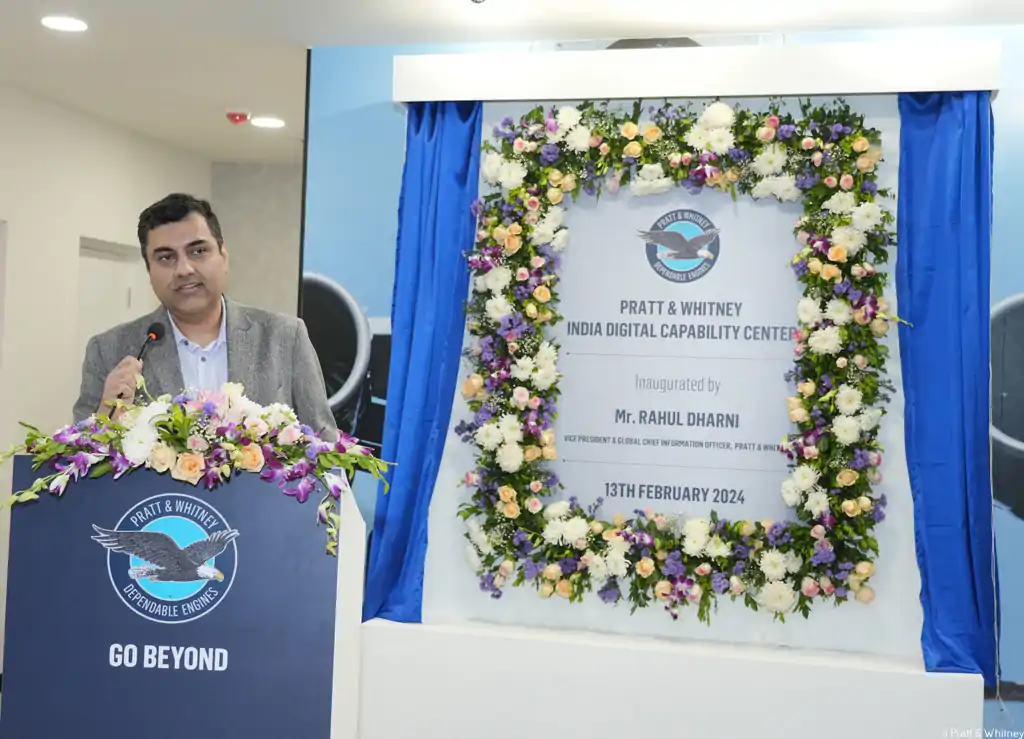
Engine-maker Pratt & Whitney has established its new India Digital Capability Center (IDCC) in Bengaluru in a move to accelerate innovation and drive digital and business transformation for Pratt & Whitney worldwide.
The facility will be co-located with Pratt & Whitney’s engineering and supply chain operations centers of excellence. The location will also facilitate close collaboration with other RTX businesses in India including Collins Aerospace and RTX Enterprise Services.
“The expansion of Pratt & Whitney’s digital technology presence in Bengaluru will allow us to leverage India’s aviation and technology talent and accelerate our digital transformation,” said Rahul Dharni, vice president & global chief information officer, Pratt & Whitney.

Pratt & Whitney has begun recruiting its first tranche of employees for the IDCC and is expected to grow to over 300 employees by 2027. The center will be focused on delivering multiple digital technology capabilities across various priority areas of Pratt & Whitney’s digital transformation.
“With $40 million already invested in engineering and supply chain operations centers in the past two years, Pratt & Whitney continues to grow its presence and contribution to India’s aerospace ecosystem with this additional multi-million-dollar investment in the IDCC,” said Ashmita Sethi, president & country head, Pratt & Whitney, India (UTCIPL).
Pratt & Whitney’s other investments in-country include a India Customer Training Center in Hyderabad and its research & development collaboration with the Indian Institute of Science, Bengaluru. Pratt & Whitney has sourced nearly $55 million in the past 10 years from leading aerospace suppliers in India and also sourced over $500 million in engineering services into India over the past two decades, the firm said.
With an Indian workforce of more than 5,000 people, RTX has one the largest presences amongst aerospace and defense firms in India, it added.
Read next

Akasa Air's CEO Vinay Dube has said the airline has more than double the pilots needed to fly its existing fleet.
The statement came after over 10 of its flights were canceled on what was Dube's birthday on Sunday because of pilot unavailability.
“I would like to clarify that we do not have a shortage of pilots. Akasa Air is sufficiently staffed with over 600 pilots, enough to operate more than double the size of our current fleet," Dube said, "We have a proven track record of being India’s most dependable and on-time airline since our inception and we continue to strive to provide our customers with a highly reliable offering."
It is unclear how then the flights had to be canceled at short notice and pilots at the airline complained of being asked to pitch in.
Akasa has a fleet of 23 Boeing Max planes and the 24th is on its way.
The airline was launched in August 2022 and has carried over 6.3 million passengers. It connects 20 cities across India, namely Mumbai, Ahmedabad, Bengaluru, Chennai, Kochi, Delhi, Guwahati, Agartala, Pune, Lucknow, Goa, Hyderabad, Varanasi, Bagdogra, Bhubaneswar, Kolkata, Port Blair, Ayodhya, Gwalior, and Srinagar.
It has also placed a firm order for 226 Boeing 737 MAX airplanes, powered by CFM fuel-efficient, LEAP-1B engines.
Read next
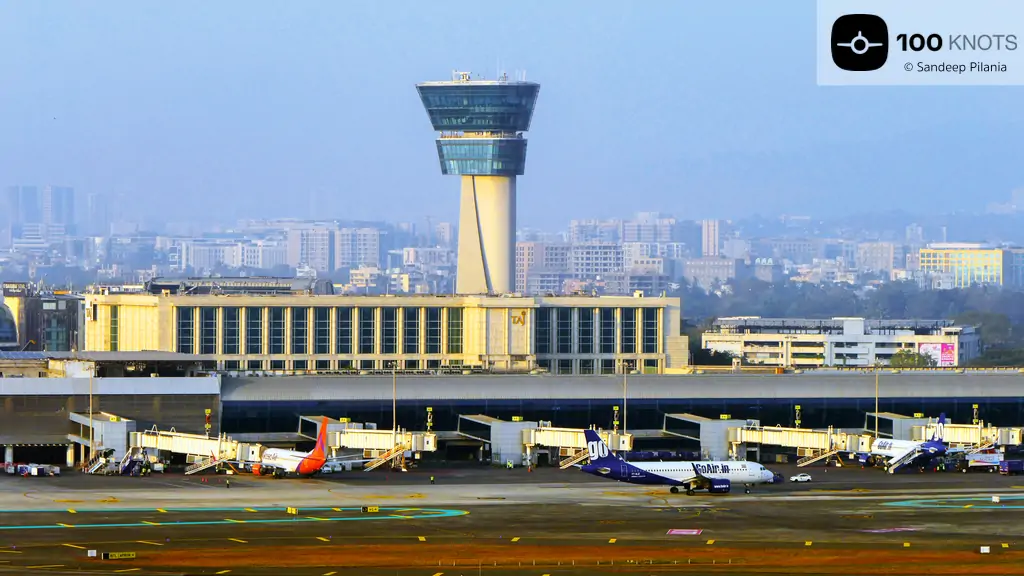
The domestic air passenger traffic for January 2024 is estimated to be up 4.5% at 125 lakh over last year's same time but decline 5% over December 2023's 138 lakh, according to an estimate by rating agency ICRA.
The January 2024 figure was also higher 3% over the pre-covid levels of January 2020's 127 lakh.
"For April 2023-January 2024, the domestic air passenger traffic stood at 1,276.35 lakh, reflecting a year-on-year growth of 15% over 10M (April 2022-January 2023), wherein the traffic stood at 1,110.31 lakh and 5% higher than pre-Covid levels (April 2019-January 2020) of 1,213.85 lakh.
"It is estimated that the domestic aviation industry operated at a passenger load factor (PLF) of 91% in January 2024, against 85% in January 2023 and 86% in January 2020 (pre-Covid levels)," Icra said.
Fuel prices, which make up 45% of the airline costs, also went up and down.
In FY2024, the ATF prices witnessed a sequential decline till June 2023. Post which, it increased sequentially till October 2023. However, they decreased sequentially again by 6% in November 2023, 5% in December 2023, 4% in January 2024, and 1% in February 2024, it added.
Comment