
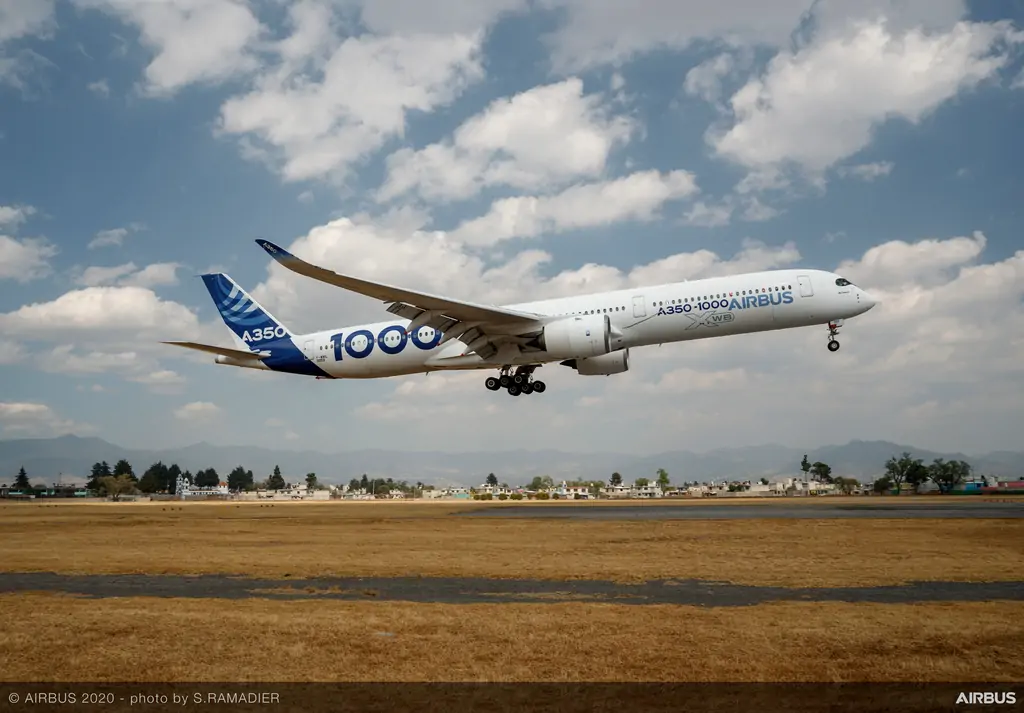
As the aviation industry continues to evolve and adapt to changing market demands, Philippine Airlines is actively seeking opportunities to enhance its services and ensure a competitive edge. The airline's recent collaboration with Airbus signifies a significant step forward in its expansion plans.
Expansion Plans for Philippine Airlines
Philippine Airlines has begun an ambitious growth strategy in order to provide its passengers with an unparalleled travel experience. The airline intends to modernize its fleet, enhance operational efficiency, and elevate the entire travel experience by investing in state-of-the-art aircraft.
Benefits of the A350-1000 Aircraft
The A350-1000, a flagship model of Airbus, is renowned for its cutting-edge technology and exceptional performance. By incorporating these aircraft into its fleet, Philippine Airlines can benefit from various advantages, including:
Enhanced Passenger Comfort: The A350-1000 has a wide interior layout, comfortable seats, and innovative in-flight entertainment systems, ensuring passengers have a pleasant and entertaining voyage.
Fuel Efficiency: The A350-1000's superior aerodynamics and fuel-efficient engines may dramatically cut fuel consumption, resulting in lower operating costs and lower carbon emissions.
Extended Range: The A350-1000's long-haul capabilities let Philippine Airlines explore new destinations and expand its route network, meeting the rising demand for international travel.
State-of-the-Art Technology: The aeroplane is outfitted with the latest and most up-to-date avionics, advanced systems, and novel features, assuring a safe, dependable, and efficient flight.
Routes
The airline stated that it would operate wide-body plane on excursions to Canada and the United States, while also looking at expanding its route network to Europe. Philippine Airlines now serves San Francisco International Airport (SFO), Los Angeles International Airport (LAX), New York John F. Kennedy International Airport (JFK), and Honolulu International Airport (HNL) in the United States. It also serves two Canadian airports: Toronto Pearson International Airport (YYZ) and Vancouver International Airport (YVR).
Finalizing the Deal
The decision to finalize the Memorandum of Understanding between Philippine Airlines and Airbus is expected to take place during the forthcoming Paris Air Show. This global aerospace event serves as a platform for key industry players to showcase their products, negotiate deals, and shape the future of aviation. As the order for the A350-1000 aircraft undergoes the final stages of contractual discussions, both parties are optimistic about reaching a mutually beneficial agreement.
Conclusion
The signing of the Memorandum of Understanding between Philippine Airlines and Airbus represents a big step forward in the airline's growth goals. Philippine Airlines hopes to improve its fleet, provide a better travel experience for passengers, and secure its position as the region's top airline by purchasing nine A350-1000 aircraft. This strategic alliance with Airbus highlights the airline's dedication to innovation, expansion, and outstanding customer service.

Read next
IndiGo Dominates the Indian Aviation Market in May; Domestic Passenger Traffic Up by 15%

Radhika Bansal
16 Jun 2023

India's domestic air traffic in May rose 36% compared to the same month last year. Domestic airlines carried 1.32 crore passengers in May, data released by the Directorate General of Civil Aviation (DGCA) on June 15 shows. Domestic air traffic in May was also up 2.5% compared to April when airlines carried 1.29 crore passengers. Air traffic has seen a considerable jump from pre-Covid levels. In May 2019, domestic airlines carried only 1.22 crore passengers.
Market Share of Indian Carriers
The market share of India's largest airline, IndiGo, rose 390 basis points in May, following the collapse of GoFirst, which stopped all operations on May 2. IndiGo's market share for May stood at 61.3%, after rising 70 basis points in April, 90 basis points in March and 130 basis points in February. The low-cost carrier flew 81.10 lakh passengers in May. One basis point is one-hundredth of a percentage point. This is the highest market share secured by the airline in its history of over 16 years.
This is the highest-ever market share clocked by IndiGo in a month and only the second instance of the airline cornering over 60% of the domestic market, an analysis of historical air traffic data shows. In July 2020, IndiGo recorded a domestic market share of 60.4%. However, it is important to note that following the outbreak of the COVID pandemic, the government asked Indian airlines to operate at reduced capacities for most of 2020. In July of that year, Indian carriers were allowed to operate at just 65% of their seat capacity. Therefore, May 2023 is the first month of normal operations in which IndiGo’s market share has breached the 60% mark.
Air India became the second-largest domestic carrier in May and garnered a market share of 9.4%, flying 12.44 lakh passengers during the period. The airline had seen its market share fall from 9.2% in January to 8.6% in April, falling 20-30 basis points every month. However, due to the grounding of Go First, the airline was able to see its market share rise once again.
Vistara's market share in May rose 30 basis points to 9%, the airline flew 11.95 lakh passengers last month. AirAsia India, which, is also part of the Tata stable, rose to number four in terms of market share. Its market share rose 30 basis points to 7.9% in May, as the carrier served 10.41 lakh passengers.
SpiceJet became the fifth-largest domestic airline operating in India in terms of market share in May following the collapse of Go First. SpiceJet carried 7.2 lakh passengers in May to garner a market share of 5.4%.
However, new entrant Akasa Air is on the heels of SpiceJet after the latter saw its market share fall another 40 basis points in May, while the former recorded an 80 basis points jump in market share. Akasa Air carried 6.29 lakh passengers to garner a market share of 4.8% in May. Most of GoFirst's market share of 6.4% carrying 8.29 lakh passengers in April went the way of IndiGo last month, as the latter carried 7.04 lakh more passengers in May when compared to April.
Passenger Load Factor & On-Time Performance
The passenger load factor, or the occupancy rate, of SpiceJet, Vistara, IndiGo, Air India and AirAsia India stood at 94.8%, 93.2%, 91.5%, 90.1%, and 92.8%, respectively, in May. Akasa Air, India's newest carrier, saw a rise in its passenger load factor to 91.1% in May, its tenth month of operations, from 73.6% in March and 84.9% in April.
In recent days, both IndiGo and Air India have increased flight frequencies on several of Go First’s popular routes, such as Delhi to Leh, Srinagar, and Pune, and Mumbai to Leh, Srinagar, and Dehradun. With no official statement regarding Go First’s return, one could expect similar figures in the coming months as well.
As many as 566 passenger complaints were received in May, data shows. The number of complaints per 10,000 passengers carried was around 0.42. The rise in passenger complaints in May was mainly due to the collapse of Go First's operations during the month.
In May, Akasa Air had the best on-time performance, for the third straight month in a row, of 92.6% at four metro airports — Delhi, Bengaluru, Hyderabad and Mumbai. IndiGo and Vistara were the second and third followed by Air Asia.
The surging airfares had forced the government to advise airlines to monitor and rationalise fares. Civil Aviation Minister Jyotiraditya Scindia met representatives of airlines on June 5, advising them to “self-monitor” prices on certain routes, particularly the ones that have been affected the most by the suspension of Go First’s operations. Scindia had also advised them to devise a mechanism to ensure reasonable pricing in the top reservation booking designators or fare buckets.
The advisory has resulted in ticket prices cooling off notably, according to officials in the Ministry of Civil Aviation (MoCA). On Tuesday, officials said that as a result of MoCA’s intervention, airfares in some sectors have declined by up to 60% over the past week. MoCA and the DGCA, while ruling out the imposition of any cap on airfares, are monitoring ticket prices daily.
Read next
Jamnagar Airport Suspends Flight Operations in Anticipation of Cyclone Biparjoy; NOTAM Issued
Radhika Bansal
16 Jun 2023

In anticipation of cyclone Biparjoy's landfall, commercial flight operations at Jamnagar Airport in Gujarat will be temporarily halted until Friday, June 16 as a precautionary measure. The airport management has issued a Notice to Airmen (NOTAM) for a duration of three days, from Wednesday to Friday.
Additionally, the airport has made necessary arrangements by storing an adequate supply of diesel and petrol for emergency operations. There are no aircraft in the parking area at the airport. As per the NOTAM, Air India and Star Air have cancelled their scheduled flights. NOTAM which means 'Notice to Airmen' -- is issued at the airport for flights coming from outside.
Cyclone Biparjoy currently formed in the Arabian Sea along Gujarat coast is likely to make its landfall later today. Earlier today, India Meteorological Department (IMD) said the cyclone was moving north-northeastwards towards Saurashtra and Kutch coast and was around 180 km away from Jakhau port. It will cross Jakhau Port (Gujarat) by tonight. Coastal districts like Porbandar and Dwarka would have high wind speeds, Very Heavy to Extremely Heavy rainfall, and high tides would be seen on the Gujarat coasts.
Coastal districts like Porbandar and Dwarka would have high wind speeds, Very Heavy to Extremely Heavy rainfall, and high tides would be seen on the Gujarat coasts. National Disaster Response Force (NDRF) and State Disaster Response Force (SDRF) were deployed in Gujarat on Wednesday. The teams are working to evacuate people and animals out of low-lying coastal areas safely. The Indian Army is also prepared to provide relief and resources to the affected areas if the need arises.
Cyclone Biparjoy
Extremely Severe Cyclonic Storm Biparjoy is a long-lived, powerful tropical cyclone that formed over the east-central Arabian Sea and made landfall near the India-Pakistan border. The third depression and the second cyclonic storm of the 2023 North Indian Ocean cyclone season, Biparjoy originated from a depression that was first noted by the India Meteorological Department (IMD) on 6 June, before intensifying into a cyclonic storm. The cyclone steadily weakened due to deep flaring convection. Biparjoy accelerated northeastward, strengthening to a Category 3-equivalent tropical cyclone and an extremely severe cyclonic storm.
As per the IMD bulletin, the cyclone is presently located 135 km west-southwest of Jakhau Port in Gujarat, 190 km west-northwest of Devbhumi Dwarka, 170 km west-southwest of Naliya, 280 km west-northwest of Porbandar, and 230 km south of Karachi, Pakistan. During landfall, the wind speed is expected to range between 115 kmph to 125 kmph, reaching up to 140 kmph. The Gujarat administration reported that over 94,000 individuals residing in eight coastal districts have been relocated to temporary shelters.
Flights Disruptions at Mumbai Airport
Cyclone Biparjoy disrupted flight operations in Mumbai. Several flights were affected on June 10 due to bad weather conditions around the city. Heavy rain and gusty winds hit the city as the cyclone Biparjoy intensified into an extremely severe cyclonic storm and advanced towards Gujarat. Several flights were either cancelled, delayed or diverted due to the bad weather conditions. Hundreds of anxious passengers expressed their displeasure about the situation on social media. Some passengers took to Twitter to complain about the inconvenience.
In a statement, Air India said that some of its flights running from Mumbai will be delayed due to bad weather and the temporary closure of the runway. "Inclement weather conditions and the temporary closure of Runway 09/27 at the Mumbai airport, in addition to other consequential factors beyond our control have resulted in delays and cancellation of some of our flights. We regret the inconvenience caused to our guests, as we make all effort to minimise the disruptions” Air India tweeted.
India's biggest airline IndiGo also announced some changes in its scheduled flights. "The agony of flight delays is equally troublesome for us. It is only under extremely uncontrollable situations we're compelled to make such changes in the schedule. We look forward to your kind understanding," Indigo tweeted responding to a passenger.
Read next
Singapore Airlines Has No Plans to Raise its Stake in Air India Beyond 25.1%
Radhika Bansal
16 Jun 2023

Singapore Airlines has no plans to raise its stake in Air India beyond 25.1%, said a spokesperson at the airline. The stake purchase is still under review with the watchdog Competition Commission of India, she added. The spokesperson was reacting to a media report that said SIA may raise its stake in the airline to 40%. The spokesperson said the report “is incorrect.” “There is no change in SIA’s position from the November 2022 announcement. The regulatory approval process for the merger of Air India and Vistara is underway, and we have nothing further to add.”
The media report, citing three people familiar with the development, stated Singapore Airlines and the Tata Group have had initial talks regarding the potential increase in stake, in response to a request from a Singapore-based airline.
Air India - Vistara Merger
Within a few days of announcing a mega 840 aircraft deal with Airbus and Boeing, the Tata group initiated the merger process between Air India and Vistara. The merger will take final shape by March 2024 and Singapore International Airlines would be investing INR 2,058.5 crore in Air India as part of the transaction. Singapore Airlines will retain a 25.1% stake in Air India post the merger is completed.
Currently, Tata Group holds a 51% stake in Vistara, whereas the remaining 49% stake is with Singapore Airlines. The merger is part of a larger plan by Tata Group to transform its aviation business. Under this, only two airlines will operate - one premium full-service carrier and one low-cost carrier. While Air India and Vistara will merge into one, AirAsia India and Air India Express will merge into one airline.
The CCI’s nod is one of many things required for the eventual merger of Air India and Vistara. According to the current timeline, the integration will be finalized sometime early next year. The Tatas will eventually control a full-segment airline (joint product of Air India and Vistara) and a low-cost carrier (joint product of AirAsia India and Air India Express). The proposed transaction involves a merger as well as an acquisition of shares and is notifiable under Section 5 of the Competition Act, 2002, the notice said.
Tata Sons and SIA plan to merge Air India and Vistara, with SIA investing an additional SUSD 360 million into Air India. Last November the merger was announced in a bid to strengthen Singapore Airlines’ presence in domestic and international skies. The deal will make Air India the country's largest international carrier and second-largest domestic carrier.
‘Horizontal Overlaps’ In The Merger
However, the notice pointed out ‘horizontal overlaps’ in areas such as the “market for domestic passenger air transport services in India; the market for international passenger air transport services in India; the market for the provision of air cargo transport services in India; and market for the provision of charter flight services in India”.
Besides, the notice cited ‘vertical relationships’ such as the upstream market for ground handling services at the Bengaluru, Delhi, Hyderabad and Thiruvananthapuram airports. “The downstream market for passenger air transport services at Bengaluru, Delhi, Hyderabad and Thiruvananthapuram airports; and the upstream market for in-flight catering services in India; the downstream market for passenger air transport services in India.”
Recently, Air India placed a historic order of 470 Aircraft with Boeing and Airbus. The Tata Group airline placed an order of 190 Boeing 737 Max aircraft, 20 B787 & 10 B777X. It has also placed an order for 40 Airbus A350s & 210 A320neo.
Read next
Vistara & Lufthansa Expands Their Codeshare Partnership to Enhance Flight Connectivity to Europe
Radhika Bansal
16 Jun 2023

Vistara, India's leading full-service carrier, has expanded its codeshare partnership with Lufthansa, one of Europe's premier airlines, enabling enhanced connectivity to Vistara customers while travelling across Europe. The bilateral codeshare agreement between Vistara and Lufthansa enables both airlines to sell flights on each other's networks, offering convenient travel options to customers.
Now, the 12 key destinations that get included in Vistara’s network are Amsterdam (AMS), Stockholm (ARN), Berlin (BER), Budapest (BUD), Copenhagen (CPH), Rome (FCO), Hamburg (HAM), Helsinki (HEL), Lisbon (LIS), Munich (MUC), Oslo (OSL), Prague (PRG), according to a company press release.
Deepak Rajawat, Chief Commercial Officer, Vistara, said, "We are delighted to further strengthen our partnership with Lufthansa, one of the world’s leading airlines. This is a testament to our continued commitment to offer enhanced connectivity, world-class service and a wide range of options to our customers. This enables our customers to conveniently book their itineraries and seamlessly travel across various parts of Europe on the joint network of Vistara and Lufthansa.”
Vistara, which is also a joint venture of Tata Sons and Singapore Airlines, and Lufthansa had entered into a unilateral codeshare agreement, in 2019, enabling the latter to add its designator code (LH) to Vistara flights for 18 destinations in India. Codesharing allows an airline to book its passengers on its partner carriers and provides seamless travel to destinations where it has no presence.
Jeffrey James, Head of Communications APAC & Chief Spokesperson, Lufthansa Group, said, "We take pride in our relationships and India our partnership with Vistara embodies our strong commitment to the country. As the third largest aviation market globally, India remains a key focus for our Group and we are delighted to further strengthen our relationship with Vistara, offering Indian travellers more choice, more options and more connectivity between Europe and the subcontinent.”
Vistara has consistently focused on expanding its international reach and delivering exceptional service to its customers. The expansion of the codeshare partnership with Lufthansa is a strategic move that aligns with Vistara's growth strategy and its goal of connecting India to key global destinations. With this bilateral codeshare agreement, Vistara continues to establish itself as a leading player, in the Indian aviation industry, known for its commitment to service excellence, innovation, and customer satisfaction.
Lufthansa operates a diverse fleet of A320 family jets, the A330, A340, A350, and 787 for its operations. Meanwhile, Vistara operates a fleet of 787s, A320 family jets, and a few 737s. Apart from Lufthansa, Vistara has codeshare partnerships with British Airways, Japan Airlines, Singapore Airlines and United Airlines.
No US expansion
Vistara, a joint venture between Tata Group and Singapore Airlines, has a fleet of 61 planes and no aircraft are on the ground, he added. The fleet has three owned and one leased wide-body aircraft. Kannan said the airline has decided not to fly to the US as planned earlier. "The main reason is that to fly to the US, I need a lot of aircraft. One single daily operation from India to the US will need at least three aircraft. I have to wait for three aircraft to come and I don't know if it will be spaced out. By the time it will start, the integration (will be) happening," he noted.
In 2021, Vistara formally applied for DOT permission, which was granted promptly. But its plans were affected due to the non-availability of long-haul aircraft to operate these flights. Interestingly, it wasn’t COVID that played a role in this, but the production and delivery delays by Boeing for its Dreamliners forced the airline to postpone its plans.
Against the backdrop of the ongoing process of merger with Air India, post which the Vistara brand will cease to exist, Kannan said the people who built the Vistara brand are going to be there and it is always good to leave on a high. To a query on what the Vistara brand is, he said it is "something that was built with a lot of attention, care, attention, pain, sweat, money and a lot of money was put in. Thankfully, we are in a situation where people realise that we are a good brand to travel with. Air India needs people from Vistara. They are growing... whether people have the job, is not the issue. The issue is what job they will have," he said.
Future of Vistara
In November 2022, Tata Group announced the merger of Vistara with Air India, and under the deal, Singapore Airlines will have a 25.1% stake in Air India. Subject to regulatory approvals, the deal is expected to be complete by March 2024. Singapore Airlines will invest INR 2,059 crore in Air India.
The Vistara chief said airfares are always a matter of supply and demand. "Airfares are sky high because of a few reasons. One is Go First as on routes they were operating, capacity has come down; secondly, the seasonality demand, in May, all the destinations Go First used to fly are super peak... as much as we want, capacity has not come back to the same extent as what Go First has taken away. Biggest solution (to have) is capacity addition," he said.
“The integration process has finally begun. Multiple things need to happen. For example, we need to apply for several approvals, like from the competition authorities, ministries and so on,” Vistara CEO Vinod Kannan told ATW on the sidelines of the IATA AGM in Istanbul. “We expect approvals, assuming everything goes right, in a matter of three to five months,” he said. If the process goes as planned, the integration could be complete in nine to 12 months.
Until then, Vistara continues to operate independently. The carrier recently took delivery of a fourth Boeing 787-9 and launched five weekly Mumbai-London Heathrow services on June 1, which will increase to daily when the carrier receives a fifth 787-9.
Comment