
No Planes, No Refund, No Jurisdiction — Jet Airways' Liquidator Hits a Triple Wall

Abhishek Nayar
15 Sep 2026
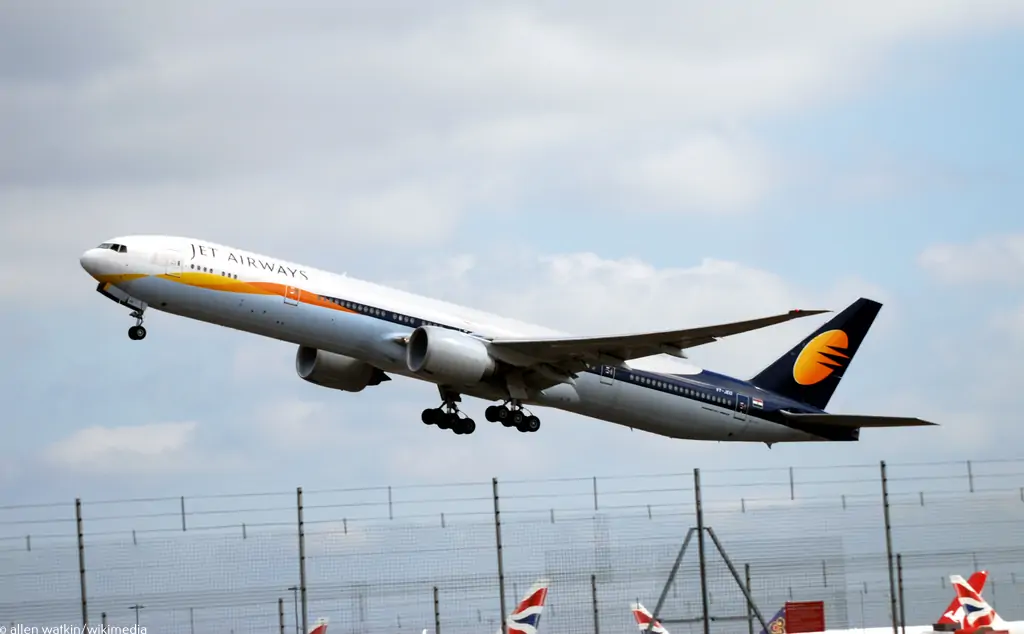
The ghost of Jet Airways continues to haunt India's aviation and legal corridors. In a significant ruling, the National Company Law Tribunal's (NCLT) Mumbai bench has dismissed a plea filed by Jet Airways' liquidator seeking recovery of Rs 500 crore — roughly USD 92.13 million — in advance payments made to American aerospace giant Boeing for aircraft that were never delivered.
A Deal Struck in 2013, A Crisis by 2019
The roots of the dispute trace back to 2013, when Jet Airways entered into purchase agreements with The Boeing Company for two aircraft — the 737-8 and the 787-9 — making substantial advance pre-delivery payments totalling USD 92.13 million to secure the order.
But Jet Airways never saw those planes. As the airline began haemorrhaging cash, Boeing suspended the purchase agreements in May 2019, citing payment delays on Jet's part. Just weeks later, in June 2019, Jet Airways was admitted into the Corporate Insolvency Resolution Process (CIRP).
Boeing Files a Claim — and Adjusts Its Books
With insolvency proceedings underway, Boeing lodged a claim before the Resolution Professional, adjusting the USD 92.13 million advance already received from Jet against its outstanding dues. The net admitted claim stood at Rs 721.19 crore, which later swelled to Rs 873.78 crore due to currency fluctuations during the prolonged liquidation process.
In December 2020, Boeing formally terminated the purchase agreements by issuing a termination notice, drawing a definitive line under the transaction.
The Supreme Court Steps In — Liquidation Ordered
After years of failed revival attempts, the Jalan Kalrock Consortium — the successful resolution applicant — was unable to implement the approved resolution plan. On November 7, 2024, the Supreme Court ordered Jet Airways into liquidation. The NCLT formally commenced the liquidation process on November 26, 2024.
Liquidator Demands Money Back; Boeing Refuses
Once the liquidator was appointed, he sought the return of the USD 92.13 million in advance payments, arguing the funds formed part of the liquidation estate under Section 36 of the IBC and were recoverable since Boeing never supplied the aircraft.
Boeing pushed back firmly. The company argued that the advance payments had already been adjusted against its larger admitted claim, and stood legally extinguished through set-off under Regulation 29 of the IBBI (Liquidation Process) Regulations, 2016.
NCLT Rules: This Is Not Our Fight
A two-member bench of NCLT comprising Prabhat Kumar and Sushil Mahadeorao Kochey ruled that the dispute was fundamentally contractual in nature and beyond the tribunal's jurisdiction under Section 60(5) of the IBC.
The bench observed that whether Boeing was justified in suspending and terminating the agreements, forfeiting the advance payments, and invoking set-off were questions requiring a full-fledged trial — with evidence and evaluation of the underlying agreements, which neither party even placed on record, citing confidentiality concerns.
The matter now heads to a competent civil court, leaving Jet Airways' creditors and the liquidation estate with yet another long legal road ahead.
Read next
The Government Is Now Co-Piloting SpiceJet — And That Should Worry Everyone
Abhishek Nayar
11 Sep 2026

It is not every day that a sitting Civil Aviation Minister publicly acknowledges that a domestic airline is under regulatory surveillance. But that is precisely what happened when Minister K Rammohan Naidu, speaking on the sidelines of a conference in New Delhi, confirmed that both the Ministry of Civil Aviation and the Directorate General of Civil Aviation (DGCA) are actively monitoring SpiceJet's financial health and day-to-day operations. The statement was brief, but its implications were anything but.
The Slide Began Early — And Has Not Stopped
To understand where SpiceJet stands today, the numbers from February tell the real story. At the start of 2024, the airline held a 3.9 percent share of India's domestic aviation market — modest, but functional. What followed was a slow, painful erosion. By June, that figure had fallen to 1.9 percent. By July, it slipped further still, to just 1.6 percent, according to the latest official data released by aviation authorities. In a fiercely competitive market dominated by IndiGo and others, losing more than half your market presence in a matter of months is a structural crisis.
Salaries Withheld, Fleet at Bare Bones
Behind the statistics lies a situation that is deeply unsettling for thousands of SpiceJet employees. Sources with knowledge of the airline's internal affairs revealed that salary payments have been significantly delayed, with many staff members not having received their wages since May. For an airline workforce that operates under demanding conditions, the financial uncertainty has compounded an already difficult environment.
The operational picture is equally grim. According to fleet tracking platform Planespotters.net, SpiceJet is currently operating with just 11 aircraft — a number that would struggle to serve a regional carrier, let alone a budget airline that once aspired to compete on a national scale.
September Brings a Lifeline — On Paper
On September 3, SpiceJet made an announcement designed to shift the narrative. The airline confirmed it had finalised lease agreements with three aircraft operators for the addition of 20 planes to its fleet — 15 Boeing and 5 Airbus aircraft — to be inducted under damp and wet lease arrangements ahead of the winter schedule.
According to the airline, the aircraft are set to arrive in phases between mid-October and mid-November, timed to align with the Durga Puja travel surge that traditionally marks the beginning of India's peak winter travel season. SpiceJet stated that the inductions would bolster both its domestic and international network capacity through winter and into the following summer peak.
A Comeback Plan Under the Regulator's Gaze
Whether the 20-aircraft plan translates from announcement to tarmac remains the defining question. With the DGCA and the ministry watching, with salaries in arrears and only 11 planes airborne, SpiceJet's winter gamble is being placed under the harshest possible spotlight. The airline has room to recover — but the margin for error has all but disappeared.
Read next

What began as a commercial investment question spiralled into a two-week national debate in Singapore. At the centre of it: Singapore Airlines' 25.1% stake in Air India and a reported request for roughly $1.5 billion in fresh equity from its owners — Tata Sons and Singapore Airlines — to fund the Indian carrier's ongoing turnaround.
The controversy first broke into public view when opposition Workers' Party lawmaker Kenneth Tiong urged that funds from Temasek — the state investor that majority-owns Singapore Airlines — not be channelled toward propping up the Indian airline.
The Government Draws a Line
On Tuesday, Transport Minister Jeffrey Siow addressed parliament directly, drawing a firm line between state obligations and commercial strategy. He clarified that Singapore Airlines is a listed company that funds investments from its own balance sheet and had not sought additional capital from shareholders.
"Building globally competitive companies means entering potentially difficult markets against people who got there first and staying the course when there is turbulence," Siow said. He added pointedly: "We cannot tell our companies to go out and compete, and then treat every tough year abroad as proof that they should stay home."
Siow also noted that Air India's losses do not automatically become Singapore Airlines' liabilities, and that the capital request from Air India does not obligate the carrier to provide it.
A Loss That Looms Large
The financial context is difficult to ignore. Air India's losses widened to $2.33 billion in the year to March, part of a multibillion-dollar transformation programme that could take up to a decade to fully bear fruit. Singapore Airlines acknowledged on Tuesday that Air India's turnaround is a "complex, multi-year programme" and characterised its stake as a long-term strategic commitment aligned with its multi-hub growth strategy.
Temasek Holds Firm
Amid the parliamentary scrutiny, state investor Temasek publicly backed Singapore Airlines. On Saturday, Senior Minister K. Shanmugam stated that Temasek, as a shareholder, expects Singapore Airlines to make responsible investment decisions — and that such decisions are the company's to make.
When Debate Turned Toxic
The controversy did not remain polite. Shanmugam flagged a troubling undercurrent: the public debate had given rise to anti-Indian racist commentary online, with Temasek's CEO and senior management targeted over their ethnicity. He asked police to examine the comments. Prime Minister Lawrence Wong condemned the abuse on Sunday.
Tiong, whose parliamentary question triggered the debate, categorically rejected racism and xenophobia, maintaining that his concerns had always been strictly commercial.
The Verdict: Patience Required
Singapore Airlines reiterated on Tuesday that all investments in India are and will continue to be funded through its own internal resources, subject to board approval. The government's message was clear — global ambition demands patience, and not every bet pays off in the first innings.
With Inputs from Reuters
Read next
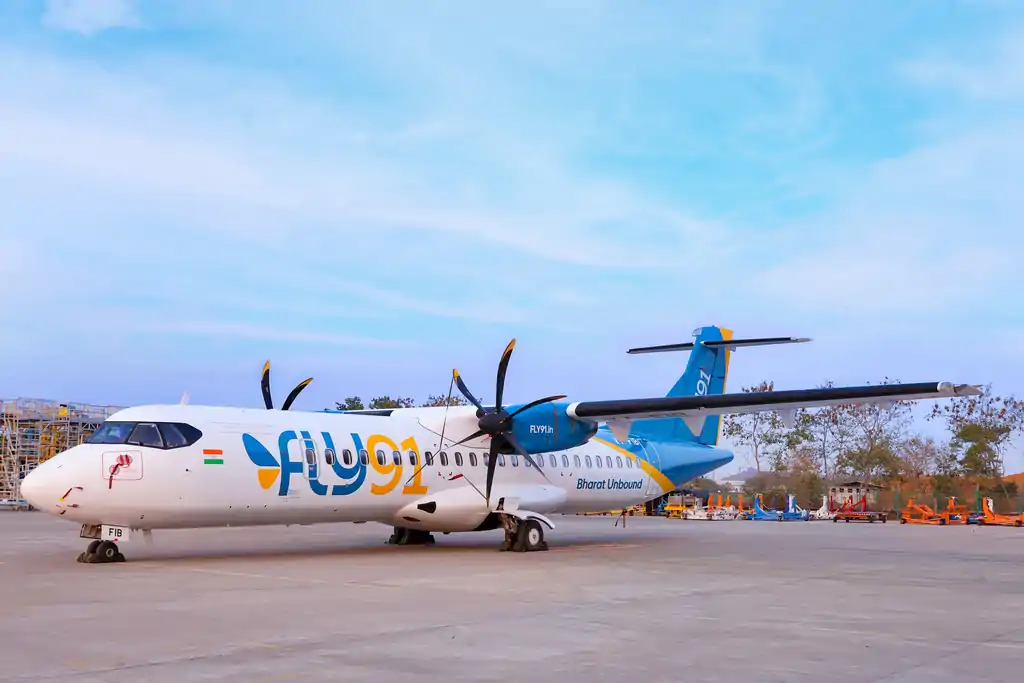
Regional carrier Fly91 has placed an order for 40 ATR-72 turboprop aircraft — one of the largest orders for the type in recent times — as the airline looks to dramatically expand connectivity to smaller towns and cities across India that have long been bypassed by larger commercial jets, according to people aware of the development.
At list price, the deal is valued at more than $1 billion, though airlines typically secure substantial discounts on orders of this scale. Spokespeople for both Fly91 and aircraft manufacturer ATR did not respond to queries seeking official confirmation.
Doubling the Fleet, Expanding the Map
The order represents a significant inflection point for the young carrier. Fly91 currently operates a small fleet of ATR-72 aircraft, connecting airports under the Indian government's UDAN regional connectivity scheme — including destinations such as Sindhudurg and Jalgaon. The 40 new aircraft will more than double the airline's fleet and substantially expand its footprint across tier-2 and tier-3 cities that remain chronically underserved by aviation infrastructure.
Deliveries are slated to begin towards the end of 2027 and are expected to be completed over a period of five years.
Fueling the Expansion
Alongside the aircraft order, Fly91 is in the process of raising approximately Rs. 250 crore from a combination of existing and new investors to support its broader expansion plans, the people said.
The Case for Turboprops in India
Manoj Chacko, Founder and CEO of Fly91, made the airline's strategic rationale clear. "We are heavily bullish on the India story and want to build a reliable transportation company out of India," he said. "There are 100 such airports in India where a big aircraft like Airbus A320 and Boeing 737 can't go. The ATR-72 aircraft perfectly suits those routes and for our cost model."
The ATR-72, a twin-engine turboprop built for short-haul and thin routes, is widely regarded as the aircraft of choice for regional connectivity in markets where infrastructure constraints rule out larger narrowbody jets.
A Market the Big Players Left Behind
India's aviation story has, for years, been dominated by carriers chasing the high-density metro corridors. Fly91's order signals a deliberate counter-bet — that the country's next wave of air travel growth lies not in the skies above Mumbai or Delhi, but across hundreds of smaller cities and towns that have rarely, if ever, seen scheduled airline service.
If the strategy holds, the carrier could emerge as a defining force in India's regional aviation landscape — one turboprop route at a time.
With Inputs from Economic Times
Read next
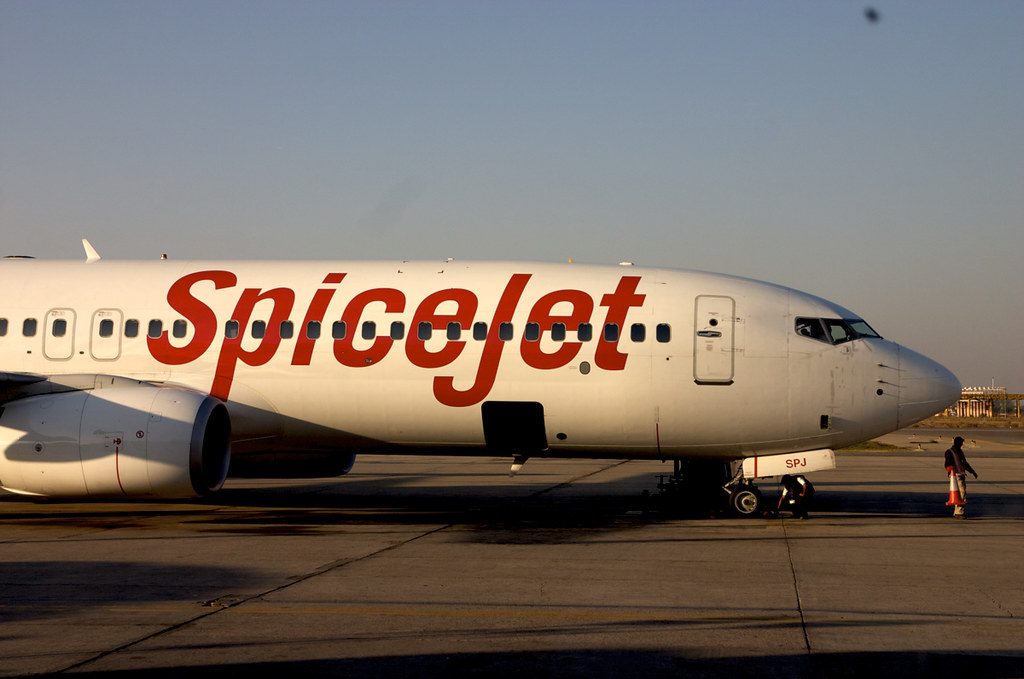
SpiceJet has finalised lease agreements to induct 20 aircraft into its operational fleet, comprising 15 Boeing jets and five Airbus planes. The entire lot is scheduled to join the airline between mid-October and mid-November 2026, timed precisely to coincide with the winter schedule and the year-end holiday travel rush.
The aircraft will operate under damp and wet lease arrangements. Under a damp lease, the aircraft owner supplies the plane along with flight crew and maintenance support, while SpiceJet provides its own cabin crew. A wet lease goes a step further — the lessor takes over operations entirely, supplying a complete crew, insurance, and maintenance cover.
The Airbus Wildcard: Higher Seats, Bigger Impact
Among the five incoming Airbus aircraft, the induction will include the A321 variant — a wider, higher-capacity narrow-body that exceeds the seating available on SpiceJet's current narrow-body fleet. The airline intends to deploy these jets on high-demand routes during the peak holiday window, squeezing more passengers onto the busiest sectors.
With the 20 aircraft joining its fleet, SpiceJet is targeting 200 daily flights for the holiday season and winter schedule. The expanded capacity is expected to strengthen operations across both the airline's domestic and international networks.
Airfare Relief on the Way?
SpiceJet believes the additional capacity will bring greater stability to the market. The airline stated that the expanded fleet is expected to ease pressure on airfares during periods of peak demand — a welcome development for travellers who have contended with elevated ticket prices in recent years. Beyond the winter, SpiceJet added that the fleet will continue to support operations through the following peak summer travel season.
Echoes of Last Year's Expansion
The current induction closely mirrors a similarly sized expansion SpiceJet carried out a year prior. For the winter of 2025–26, the airline had added 20 aircraft between October and November 2025 — a mix of damp-leased Boeing 737s, an Airbus A340 wide-body, and reactivated grounded jets. That round of additions helped SpiceJet more than double its operational fleet and triple its available seat kilometres (ASKM), driving daily flights to a peak of 250, up from just 125 during the preceding summer schedule.
Engine Overhauls Keeping Pace
Running parallel to the fleet induction, SpiceJet has been overhauling engines from its grounded aircraft. The airline has dispatched close to 19 engines to maintenance, repair, and overhaul (MRO) facilities worldwide — including CFM LEAP-1B engines powering its Boeing 737 MAX fleet and turboprop engines from its Q400 fleet. The move signals a broader effort to restore more of its existing fleet to service alongside the newly leased arrivals.
Read next
SpiceJet Walks a Financial Tightrope — Rs. 50 Crore Missed, Court Watching
Abhishek Nayar
01 Sep 2026

SpiceJet has failed to deposit the first instalment of Rs. 50 crore as mandated by the Delhi High Court, reigniting concerns about the airline's financial health and its ability to honour legal commitments in the long-running dispute with KAL Airways Pvt. Ltd. and former Sun TV chairman Kalanithi Maran.
The missed deadline of August 27 has pushed the matter back into the spotlight, with the court now awaiting September 21 to examine SpiceJet's bona fides.
How It Came to This
The payment obligation stems from the Delhi High Court's July 13 order, under which SpiceJet and its promoter Ajay Singh had undertaken to deposit Rs. 50 crore within 45 days, followed by the remaining Rs. 94.51 crore within 90 days — totalling Rs. 144.51 crore. The court had framed this as a test of the airline's sincerity.
Before that, the Supreme Court on May 19 had declined to interfere with the High Court's earlier judgment but allowed SpiceJet to approach the High Court given a new ECLGS policy window.
SpiceJet's Defence: Waiting on a Second Tranche
In court on Monday, senior advocate Mukul Rohatgi argued that SpiceJet had applied for Rs. 1,000 crore under the Emergency Credit Line Guarantee Scheme (ECLGS) 5.0 and received Rs. 151 crore as the first tranche in June. He stated that those funds were entirely consumed by operational necessities — Aviation Turbine Fuel, airport charges, engine lease payments and employee salaries.
Rohatgi submitted that SpiceJet had applied for the second tranche with its lender on June 26 and expected it around September 15, subject to the bank's approvals. He claimed the Rs. 50 crore deposit would have been made had those funds arrived.
A Court Unmoved — For Now
Justice Subramonium Prasad declined to pass any interim order against SpiceJet or Ajay Singh, observing that Rohatgi's request appeared to be in the nature of anticipatory relief. The court left it open to KAL Airways and Maran to take appropriate legal steps and directed that any such application be listed on September 21.
SpiceJet has formally sought a four-week extension on both instalments.
The Bigger Picture: Fewer Flights, More Stakes
SpiceJet has cited the West Asia crisis as a significant operational blow, stating its daily flights dropped from approximately 160 on February 28, 2026, to just 73. The airline warned that forcing the Rs. 50 crore payment without the second ECLGS tranche could jeopardise operations and affect roughly 5,169 employees and 5,500 vendors.
The airline has also argued that if its Section 34 challenge to the underlying arbitral award succeeds fully, it stands to recover approximately Rs. 449.86 crore from Maran and KAL Airways. Even a partial win on the interest component alone would entitle it to a refund of around Rs. 179 crore. Those proceedings are now listed for November 3, 2026.
September 21 is the next critical date — and likely the most consequential one SpiceJet has faced yet.
With Inputs from ANI
Comment