

Airlines based in Oman have announced their decision to increase the frequency of flights to Kerala. According to the national carrier Oman Air and the budget airline Salam Air, the new services will operate from October. During the first week of October, a daily service will be started by Oman Air on the Muscat-Thiruvananthapuram route. Currently, Oman Air conducts connection services from Muscat to Thiruvananthapuram along with Air India. However, when direct flights are introduced, the fares would come down, offering a relief to passengers.
Meanwhile, Salam Air said that it would launch daily services on the Kozhikode-Muscat route from October 1. Booking of tickets for these services has already started. At present, Oman Air conducts two daily services on the Muscat – Kozhikode route, while Air India Express has one daily service. With Salam Air also launching its service, travellers from the Malabar area in Kerala would benefit.
Oman Air's Presence in India
According to the Global Distribution System (GDS) Sabre, in the first two quarters (Q1&Q2) of 2019, 951,456 people travelled between Oman and India, with Oman Air's market share being the highest (27.94%), closely followed by Air India Express (25.48%). In the same months of 2022, the total traffic between the two countries decreased by 20%, for a total of 760,860 passengers.
Although Oman Air is the leading carrier between Oman and India, the airline faces fierce competition from Indian and Gulf carriers when it comes to traffic from the Gulf region. Indeed, in Q1&Q2 2022, the first airline between the Gulf and India was the Indian low-cost carrier IndiGo, with a market share of 20.82%, followed by Air India Express (16.66%), and Air India (11.39%). As for the Gulf carriers, Emirates ranks 5th, with a market share of 7.9%, followed by Saudi Arabian Airlines (5.85%). Oman Air is the 11th carrier per passenger traffic, with a market share of 2.1%.
Between August and October 2022, Oman Air will deploy the most capacity from Oman to India, with Available Seat Kilometres (ASKs) totalling 628 million, according to the Official Airline Guide (OAG). Additionally, the carrier will provide 286 858 seats and 1,598 frequencies in total. Air India Express, the second carrier in the market, will provide 41% less capacity in terms of ASKs than Oman Air. Between August and October 2022, IndiGo will deploy the largest capacity across the Middle East, offering 9,894 frequencies and 85% more seats to India than Oman Air.
The importance of effectively establishing a connection between India and the Sultanate of Oman also results from the fact that the Indian community there makes up the majority of the expat population. Therefore, demand between the two countries is expected to remain high throughout the whole year, but especially during the holiday seasons, when ex-pats tend to fly home. Indeed, in 2019, traffic peaks can be spotted around the winter and summer months, as the graph below illustrates.

Read next
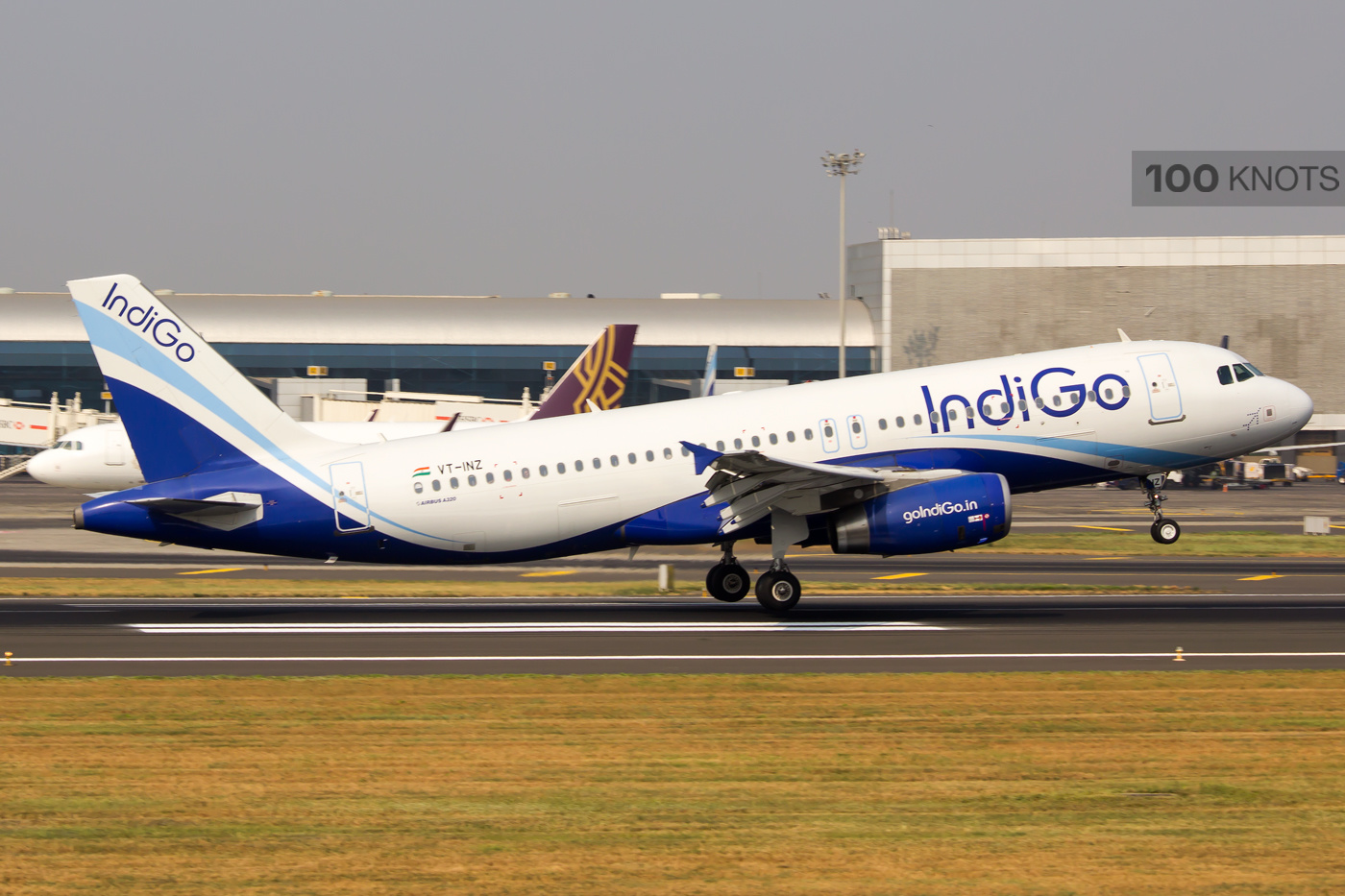
The board of InterGlobe Aviation Ltd, which operates India’s largest airline IndiGo, on September 4, approved the creation of financial services arms with an initial investment of INR 30 crore. The company in a filing to the exchanges outlined that the Board of Directors has approved the incorporation of a Private Limited Company with an initial investment of INR 30 crore.
The airline's board has approved the investment which will be setup in the Special Economic Zone at Gujarat International Finance Tec-City, the airline said in an exchange filing with the stock exchanges. Furthermore, the airline's board has also approved issuing corporate guarantees worth up to USD 996 million to secure the payment obligations of the aforesaid wholly-owned subsidiary. While the airline did not specify the name of the new arm or its exact function, the airline mentioned that the subsidiary would be involved in the financing of aviation assets.
IndiGo's announcement comes just a few days after Air India became the first major airline to set up a leasing unit at IFSC Gift City in Gujarat.
Air India’s Leasing Unit
Air India will also establish an aircraft leasing unit in the special economic zone in India's Gujarat state known as IFSC Gift City. The new wholly Air India-owned leasing entity will be known as AI Fleet Services IFSC Limited. The estimated project cost is INR 7,253 crore. At present, domestic carrier finances their aircraft leases mainly through Ireland, Singapore and Hong Kong.
The carrier's six A350-900s, due to start arriving later this year, will arrive under an AI Fleet Services IFSC Limited financial lease. Air India Chief Financial Officer Vinod Hejmadi and company secretary Kalpana Rao are slated to take senior management and board roles at the leasing entity, which will have an authorised capital of INR 500 million and paid-up capital of INR 300 million. Beyond the six A350s, AI Fleet Services IFSC Limited will supply aircraft to Air India and its subsidiary airlines via operating and finance leases.
Air India placed an order for 470 aircraft earlier this year, sourced from Boeing and Airbus. Air India will take a portion of those planes on an outright purchase basis while intending to source the majority of them under sale/lease-back terms. The A350-900s, among the first aircraft in the order to be delivered, include airframes originally destined to go to Russian carriers.
India’s GIFT City
Last year the government exempted aircraft leasing companies from paying corporate and withholding tax on leasing transactions in a bid to promote aircraft leasing from GIFT City. The exemptions are part of the government’s efforts to transform the country into a global aircraft leasing hub to rival centres such as Dublin or Singapore by incentivising foreign lessors to commence operations from GIFT City.
Currently, the lion’s share of global aircraft leasing is done through Ireland and China. India hopes to get a piece of it through IFSC. In Feb 2021, the International Financial Services Centre Authority (IFSCA) issued a framework for aircraft leasing in India. Taking learnings from Dublin, IFSC Gift City provides several incentives including tax benefits for 10 years from business profits, no capital gain tax, no stamp duty, and no GST on transactions carried out through the entity among others. The government has been trying to get aviation players to set up shop at Gift City for the past two and a half years.
IndiGo will need permissions and approvals from the Reserve Bank of India to invest in the GIFT City. The place offers relaxed norms to companies wanting to do business in the state. It also received investments from Alphabet Inc.’s Google in June, when the American tech company decided to open its global fintech operation centre there in June this year.
Documentation obtained following an August 7 committee meeting of the IFSC Special Economic Zone (SEZ) approval committee stated, "Free on-board value for the export (inflow) of services for five years is projected at INR 16.85 billion with a projected import (outflow) of foreign exchange at INR 16.75 billion, resulting in a net foreign exchange of INR 93 million. The project cost is estimated at INR 72.53 billion."
Dipesh Shah, IFSC Gift City's director of development, told the news outlet that the special economic zone was working to attract airline leasing customers, offering tax breaks for ten years from business profits, no capital gain tax, no stamp duty, and no GST on transactions carried out through the entity. "GIFT IFSC provides a level playing field for undertaking aircraft leasing services," he said. "We have already registered around 22 leasing firms, and 100 plus assets are leased in India. We welcome Air India's move, and we hope it pushes other airlines to follow suit."
Taking learnings from Dublin, IFSC Gift City provides several incentives including tax benefits for 10 years from business profits, no capital gain tax, no stamp duty, and no GST on transactions carried out through the entity among others. The government has been trying to get aviation players to set up shop at Gift City for the past two and a half years.
Regulatory enabling from the IFSCA has already brought about 19 lessors to GIFT IFSC with 29 assets leased from IFSC in India and overseas, covering fixed-wing aircraft, helicopters, engines and ground support equipment. IFSCA expects the number of aircraft leased from GIFT City to see a sharp increase soon because of taxation parity.
IndiGo’s Financial Report
Gaurav Negi, the airline's chief financial officer, announced the creation of a venture capital arm of IndiGo while addressing a post-earnings conference call on August 2. Negi had on August 2 said that IndiGo has applied for regulatory approval to start a venture capital arm of IndiGo to invest in travel-related businesses. "We are looking to start a venture capital firm for investments into startups operating in aviation, consumer and allied sectors such as travel & lifestyle, hospitality, and transportation," Negi said. He added that the venture capital firm will have an initial fund of INR 7 crore.
As of 30 June, India’s largest airline had free cash amounting to INR 15,691 crore, up 89% from the previous quarter. IndiGo posted its highest-ever quarterly consolidated net profit at INR 3,090.6 crore for the first quarter of 2023-24 (FY24). It was on the back of high load factors, lower fuel costs, and better foreign exchange rates. In Q1 of the last financial year, IndiGo incurred a consolidated net loss of INR 1,064.2 crore.
IndiGo currently operates about 323 aircraft and has previous orders totalling 470 aircraft. These are supposed to be delivered by the end of this decade. The board’s decision means that India’s largest airline will receive about 480 planes by 2030-end. IndiGo had June placed an order for 500 A320 family planes — making it the world’s largest single-tranche aircraft order — with Airbus. However, the delivery of these 500 planes will begin in 2030 and end by 2035. IndiGo has an order book of close to 970 aircraft.
Read next
Vistara Begins Preparations to Merge With Air India; Conducts Aptitude Tests & Culture Survey
Radhika Bansal
05 Sep 2023
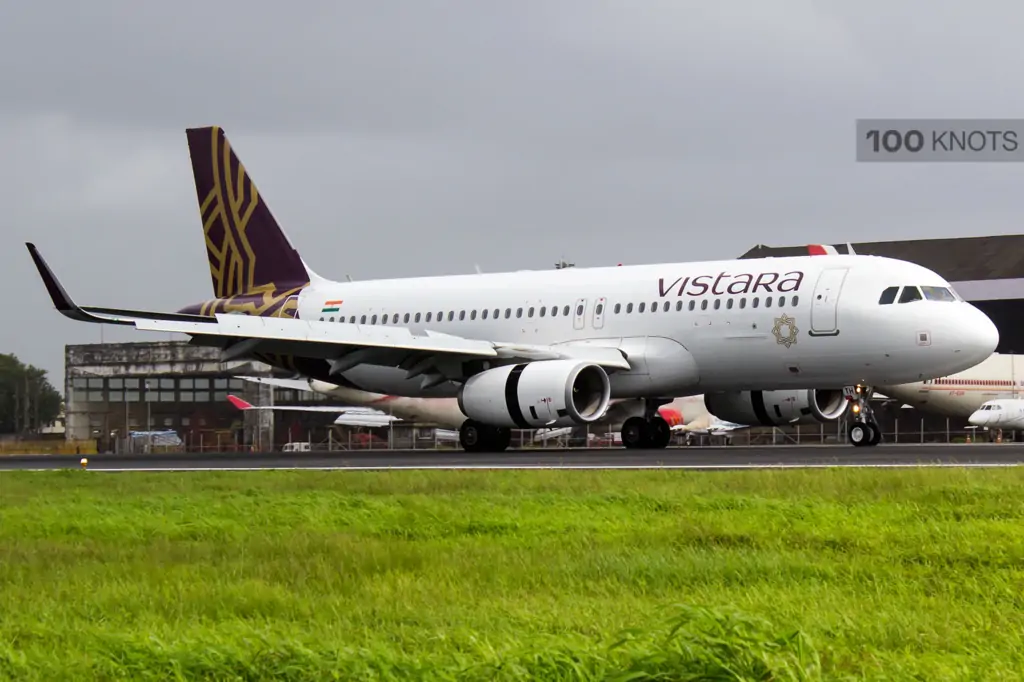
Vistara is conducting aptitude tests for its staff and has launched a culture survey as it prepares to merge with Air India. The aptitude tests are part of a fitment process and will help identify meaningful roles in the merged entity for Vistara employees, reported Hindu BusinessLine.
On Friday, September 1 the Competition Commission of India (CCI) approved Vistara’s merger with Air India. The CCI nod will enable the two airlines to align their networks and schedules. A complete merger is expected by next June after receipt of all regulatory approvals. A common salary structure and seniority list have been drawn up for pilots of all the Tata Group airlines. Vistara has already carried out town hall meetings to explain the process that is being followed for the integration of seniority lists, the report further mentioned.
“We are now also starting the process of fitment for the rest of the staff in the organisation. The aim remains to ensure that each of our staff have a meaningful role in the integrated entity and this procedure is to ensure the most viable fitment for the staff and the organisation in this regard,” Vistara’s CEO Vinod Kannan wrote in a staff email on Friday. Consulting firm Mercer is assisting Vistara in the fitment process. While Vistara has around 5500 employees, Air India’s existing staff strength is 16500.
Last month Vistara also rolled out a survey to collect staff inputs for the culture it wants to promote in the combined organisation. “ This is a pulse check of the current culture in Vistara and also for you to have input on the culture that we want to inculcate and promote in the integrated organisation,” Kannan wrote.
Vistara which is a joint venture of Tata Sons and Singapore Airlines began operations in 2015. It has 61 aircraft including Airbus A320Neos and Boeing 787-9 planes. Air India has 116 aircraft and another 470 planes on order which will be delivered over the decade. “A common seniority list has been drawn for pilots of all Tata group airlines. With the CCI approval we now hope our pilots will be able to transition to Airbus A350 and Boeing 777 aircraft,” said a captain from Vistara.
Air India - Vistara Merger
The development is a major step forward for Tata Group in consolidating its aviation business. Vistara and Air India, two full-service airlines, are part of the Tata Group. Singapore Airlines (SIA) holds a 49% stake in Vistara. The airline was started in 2015. The Tata Group had said that it will merge Vistara with Air India and Air Asia India with Air India Express to eventually have one full-service carrier Air India and one Low-Cost Carrier Air India Express.
As a part of the deal, SIA would pump INR 2,059 crore in the expanded share capital of Air India for a 25.1% stake. Tata Sons would own the remaining 74.9% stake in the combined entity. The companies had then said that the consolidation of Vistara with Air India by March 2024. Tatas re-entered into the airline market in 2013 with Vistara & AirAsia India. Vistara is a 51:49 joint venture between Tata Sons Private Limited and Singapore Airlines Limited (SIA). Last year in January, the Tata Group also acquired Air India and Air India Express.
Tata Sons and SIA filed a merger application with the CCI in April this year, mentioning that the proposed merger of Vistara with Air India would not alter the competitive landscape or cause any adverse impact on competition in India. They had expressed hope to seal the merger deal by March 2024. The parties to the combination are Tata Sons Pvt Ltd (TSPL), Air India Ltd, Tata SIA Airlines Ltd (TSAL) and Singapore Airlines Ltd.
Merger's Impact on the Indian Aviation Industry
Tata Sons-run had conveyed to the antitrust regulator Competition Commission of India (CCI) that a proposed merger of the two will not impact competition adversely as rivals are present on most routes that the combined entity will fly, according to a report. With the CCI approval in place, Air India and Vistara will start the process of aligning schedules and networks. The two sides will also undertake alignment of reservation systems, and loyalty programmes among other things.
Approval will also be required from the National Company Law Tribunal and other regulatory authorities and a full merger is expected by next June. The CCI approval has come subject to compliance with voluntary commitments offered by the parties. Air India has committed to make tweaks to its plan, said a source.
According to the DGCA data for July, Vistara has an 8.4% market share whereas Air India has a market share of 9.9%. AirAsia has a 7.5% stake. Together, Air India could have over 30% market share of Indian skies, second to IndiGo which has a market share of 63%.
.As per the latest available Vistara has 5500+ employees including 2500 pilots and cabin crews. In the previous fiscal alone, the airline hired over 2,100 employees in the reporting fiscal. The airline currently has a fleet of 60 aircraft, including 46 Airbus A320neo, 10 Airbus A321neo and 4 Boeing 787-9 Dreamliner aircraft and has flown more than 42 million customers since starting operations. Earlier this year, the Tata-owned Air India, which recently announced a massive order of 470 aircraft with Boeing and Airbus, now plans to hire over 4,200 cabin crew trainees and 900 pilots this year.
In August, Tata Group was reported to be requesting some Air India Boeing 787 pilots to begin operating Vistara’s Dreamliner fleet. First reported by The Economic Times, the consent requests saw both carriers begin to integrate crew members based out of Mumbai’s Chhatrapati Shivaji Maharaj International Airport. A source said, "Most of Vistara's Dreamliner pilots have their base in Delhi and it needs some in its Mumbai base. Air India has some very senior Dreamliner captains in Mumbai, who are close to retirement. Captains are scarce in this market and so it's a good short-term fit.”
(With Inputs from Hindu BusinessLine)
Read next

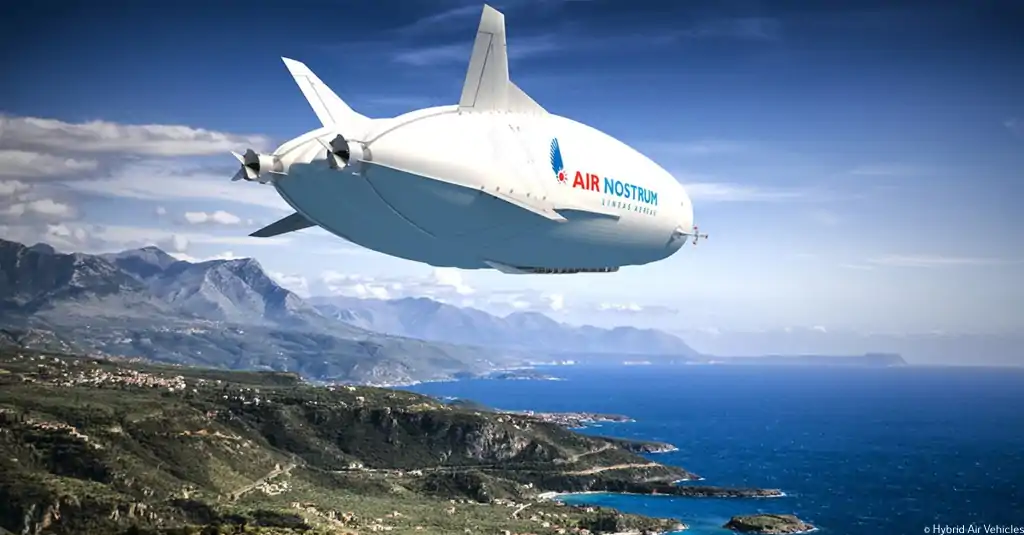
In a significant move towards sustainable aviation, Air Nostrum, a prominent regional airline in Spain, has taken the aviation industry by storm by increasing its order for the revolutionary Hybrid Air Vehicles' "Airlander 10" airship. Originally set at 10 aircraft, the order has now doubled to a total of 20. This decision marks a pivotal moment in the airline's commitment to eco-friendliness and a reduction in carbon emissions.
The Airlander 10: A Glimpse into the Future

A Sustainable Vision
The Airlander 10, currently in the development phase and set to take flight no later than 2027, represents a leap forward in sustainable aviation. This innovative airship is designed to transport up to 100 passengers or carry equivalent cargo while emitting minimal emissions. Its unique hybrid design combines the best features of airplanes, helicopters, and airships, making it an environmentally conscious choice for modern transportation.
Eco-Friendly Advantages
One of the key advantages of the Airlander 10 is its remarkably low environmental impact. Unlike conventional aircraft, the Airlander 10 produces significantly fewer carbon emissions per passenger, making it a greener choice for the future of aviation. As the world grapples with climate change concerns, the increased order for these airships signifies a commitment to reducing the airline industry's carbon footprint.
Air Nostrum's Pioneering Role
A Strong Commitment
Air Nostrum's decision to increase its order for the Airlander 10 is a testament to the airline's dedication to sustainability. By opting for a larger fleet of these eco-friendly airships, Air Nostrum aims to lead by example in the aviation sector. The company is setting a high standard for others to follow, demonstrating the feasibility of sustainable alternatives in air travel.
Partnering for a Greener Future
Air Nostrum's involvement as a member of Hybrid Air Vehicles' Development Partner Program is a strategic move that goes beyond merely purchasing airships. This partnership allows the British company to gather valuable feedback for the development of the Airlander 50, its next-generation airship model.
The Airlander 50, with its 50-ton payload, will be significantly larger than its predecessor, which is currently the largest aircraft in the world by certain metrics. By actively participating in the development process, Air Nostrum contributes to the evolution of cleaner and more efficient air travel.
"There are many factors that motivate us to fly Airlander, including very low fuel consumption, which brings great ecological and economic benefits; and the high operational versatility of being able to take-off and land on land and water," stated Miguel Angel Falcón, Chairman of Mel Air and Vice President of Air Nostrum.
Conclusion
Air Nostrum's decision to increase its order for the Airlander 10 is a significant step towards a more sustainable future for aviation. As this remarkable airship takes flight in the coming years, it will serve as a beacon of hope for an industry looking to reduce its environmental impact. Air Nostrum's leadership in this endeavor, coupled with its partnership with Hybrid Air Vehicles, underscores the importance of innovation and collaboration in creating a greener tomorrow for air travel.
With Inputs from Hybrid Air Vehicles
Read next
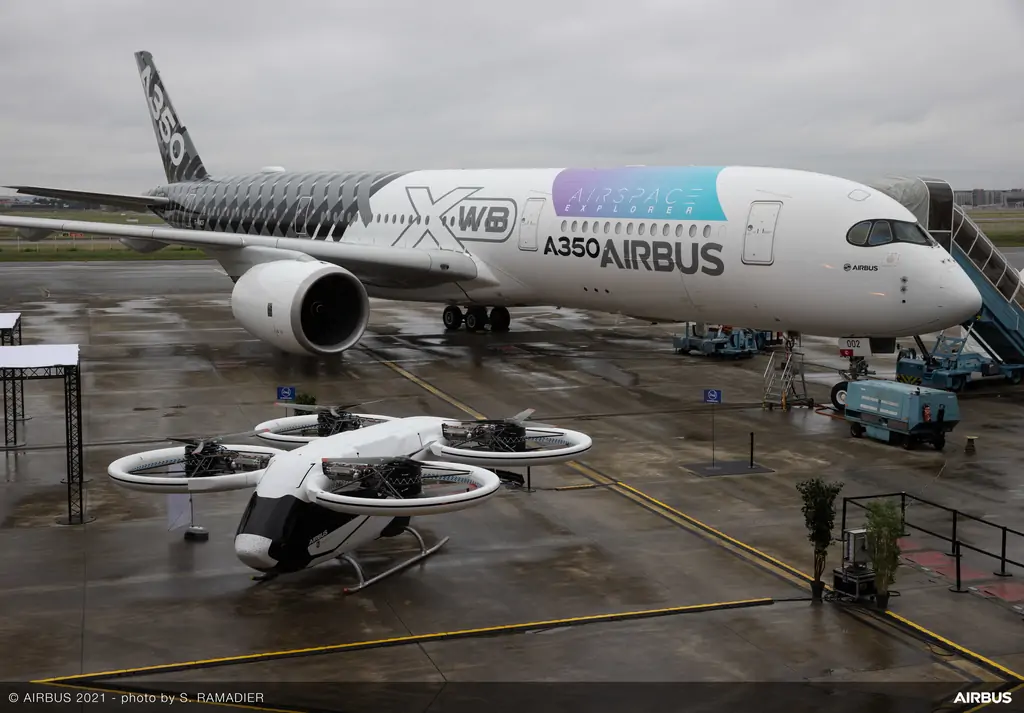
In a significant development for the aviation industry, Air France-KLM and Airbus have announced their plans to embark on an exciting joint venture that will revolutionize the maintenance and supply chain management of Airbus A350 components. This collaboration, unveiled on September 4, 2023, signifies a game-changing move in the global aerospace sector.
A New Era of Collaboration
The Genesis of the Partnership
The journey towards this groundbreaking partnership began when Air France SA ("Air France") and Airbus SAS ("Airbus") entered into exclusive negotiations. Their primary goal was to establish a joint venture dedicated to Airbus A350 component maintenance services, which includes supply chain management, repairs, and the creation of a worldwide pool of aircraft components.
A Shared Vision
The proposed collaboration takes the form of a 50-50 joint venture, with both Air France and Airbus contributing aircraft component assets into the joint venture's pool. This equal partnership demonstrates a shared vision and commitment to the success of the venture. The joint venture is expected to be operational by the first half of 2024, subject to all regulatory requirements and approval by all relevant authorities.
Key Objectives
Elevating Component Maintenance
One of the primary objectives of this partnership is to enhance the maintenance services for Airbus A350 components. This move aims to improve the overall reliability and longevity of these critical aircraft parts.
Efficient Supply Chain Management
Efficient supply chain management is crucial for the aviation industry. By pooling resources and expertise, Air France and Airbus intend to optimize the supply chain, reducing downtime and ensuring the availability of components when needed.
Cost Optimization
Costs in the aviation industry can be substantial. Through this joint venture, both companies hope to achieve cost optimization by sharing resources and streamlining operations.

Industry Implications
A Competitive Edge
This collaboration gives Air France and Airbus a significant competitive edge in the market. By offering comprehensive maintenance services for Airbus A350 components, they can attract more airlines looking for reliable solutions.
Global Reach
With a worldwide pool of aircraft components, this partnership enhances the global reach of Air France and Airbus. Airlines from around the world can benefit from their services, further solidifying their position as industry leaders.
Innovation in Aerospace
This collaboration is not just about maintenance; it's also a platform for innovation. Air France and Airbus can work together to develop advanced technologies and solutions for the aviation industry.
The Road Ahead
Navigating Challenges
While the partnership holds great promise, it is not without its challenges. The companies will need to navigate regulatory approvals, align their operational processes, and ensure a seamless transition of assets into the joint venture.
Commitment to Excellence
Both Air France and Airbus are committed to upholding the highest standards of excellence in this venture. Customers can expect top-notch service and reliability as a result.
Comments
"This project aims to bring customers the best expertise of our two companies on a product as high-tech as the A350," stated Anne Brachet, Executive Vice President Air France-KLM Engineering & Maintenance. We will be able to better adapt to market requirements and ensure long-term customer satisfaction with support solutions that are always responsive, of high-quality, and at the right price."
"We're in the business of offering the very best service to our customers," commented Cristina Aguilar, Senior Vice President Customer Services at Airbus. "As the world's A350 fleet grows, so does the necessary support." Air France-KLM Engineering & Maintenance and Airbus have a long-standing relationship and combining our complementary A350 component skills and capabilities will deliver an enhanced service."
Conclusion
The Air France-KLM and Airbus joint venture for Airbus A350 component maintenance services are a groundbreaking development that promises to reshape the aviation industry. With a shared vision, commitment to excellence, and a focus on innovation, this partnership is poised for success.
With Inputs from Airbus
Read next
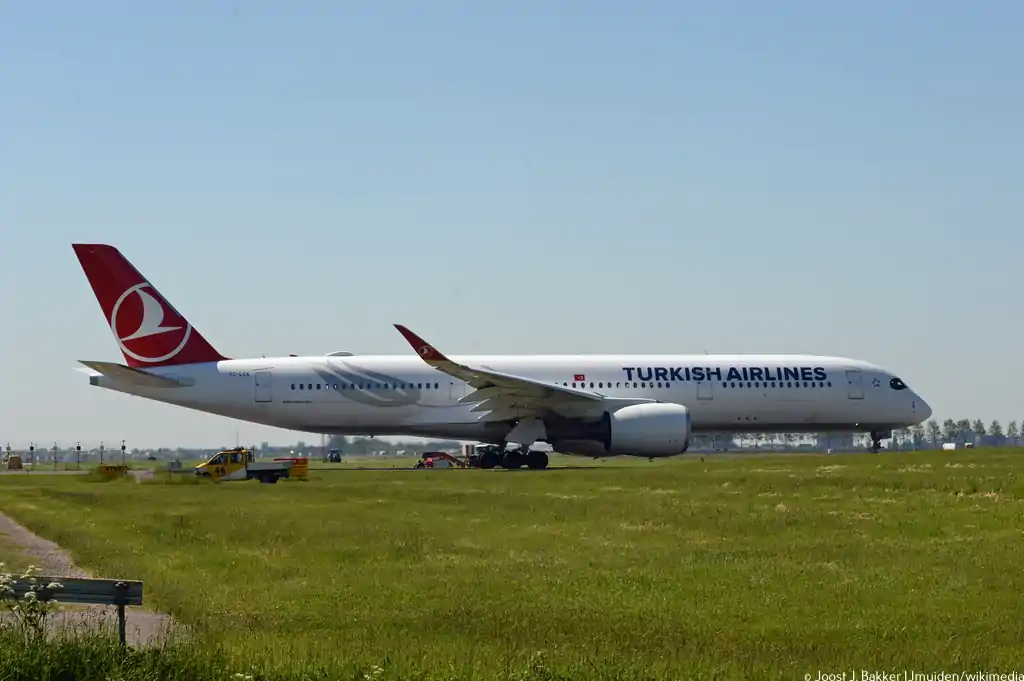
In an exciting development for aviation enthusiasts and travelers alike, Turkish Airlines has recently disclosed its plans to enhance its fleet by acquiring ten brand-new Airbus A350-900 aircraft. This strategic move, which was publicly announced to the Istanbul stock market, aligns with the airline's ambitious expansion goals. The delivery of these state-of-the-art aircraft is scheduled between 2025 and 2027, marking a significant milestone in the airline's growth trajectory.
A Step Towards Expansion
The Airlines' Vision for Growth
Turkish Airlines has long been a prominent player in the global aviation industry, known for its exceptional service and extensive network. With its continuous efforts to expand its operations and improve passenger experience, the decision to incorporate ten more Airbus A350-900 aircraft into its fleet is a testament to the airline's commitment to growth.
Meeting the Demand
The airline industry is constantly evolving, and Turkish Airlines recognizes the importance of staying ahead of the curve. By adding these ten new aircraft, the company aims to meet the growing demand for international travel, offer more routes, and provide passengers with the latest in-flight amenities and comfort.
Mega Order
However, it is unclear if the ten aircraft are the initial batch of the much-anticipated mega-order that Turkish Airlines is supposed to be planning. The impending order, which might number up to 600 aircraft, was stated by Turkish Airlines' chairman Ahmet Bolat in May 2023 as part of the airline's goal to double in size over the next decade.
Turkish Airlines is anticipated to opt for an assortment of 400 narrow-body and 200 wide-body aircraft in its final composition. The acquisition is also expected to be divided between Airbus and Boeing in accordance with the airline's existing two-supplier fleet policy, and will most likely comprise Airbus A320-family and B737 MAX aircraft, as well as Boeing 787 and 777 aircraft and Airbus A350s.
A Closer Look at the Airbus A350-900

Cutting-Edge Technology
The Airbus A350-900 is renowned for its advanced technology, making it a top choice for leading airlines worldwide. These aircraft are equipped with the latest innovations in aviation, ensuring enhanced fuel efficiency, reduced emissions, and a quieter flying experience.
Spacious Interiors
Passengers traveling with Turkish Airlines aboard the A350-900 can expect spacious and comfortable cabins. With a focus on passenger well-being, the aircraft's interiors are designed to reduce fatigue and provide a relaxing atmosphere during long-haul flights.
Turkish Airlines' Commitment to Sustainability
Reducing Environmental Impact
In today's environmentally conscious world, airlines are under increasing pressure to reduce their carbon footprint. Turkish Airlines takes this responsibility seriously and has chosen the A350-900 for its eco-friendly features. These aircraft consume less fuel and emit fewer greenhouse gases, aligning with the airline's commitment to sustainability.
Meeting Future Emission Standards
As aviation regulations become stricter regarding emissions, Turkish Airlines' decision to invest in the A350-900 demonstrates its proactive approach to meeting and exceeding these standards. By 2027, the airline will have a modern and eco-efficient fleet that complies with the latest environmental requirements.
Conclusion
Turkish Airlines' announcement of adding ten Airbus A350-900 aircraft to its fleet is a significant step forward in the airline's journey of growth and sustainability. With delivery expected between 2025 and 2027, passengers can look forward to a more comfortable and eco-friendly travel experience. Turkish Airlines remains committed to providing top-notch service while contributing to a greener future for aviation.
With Inputs from Turkish Airlines
Comment