
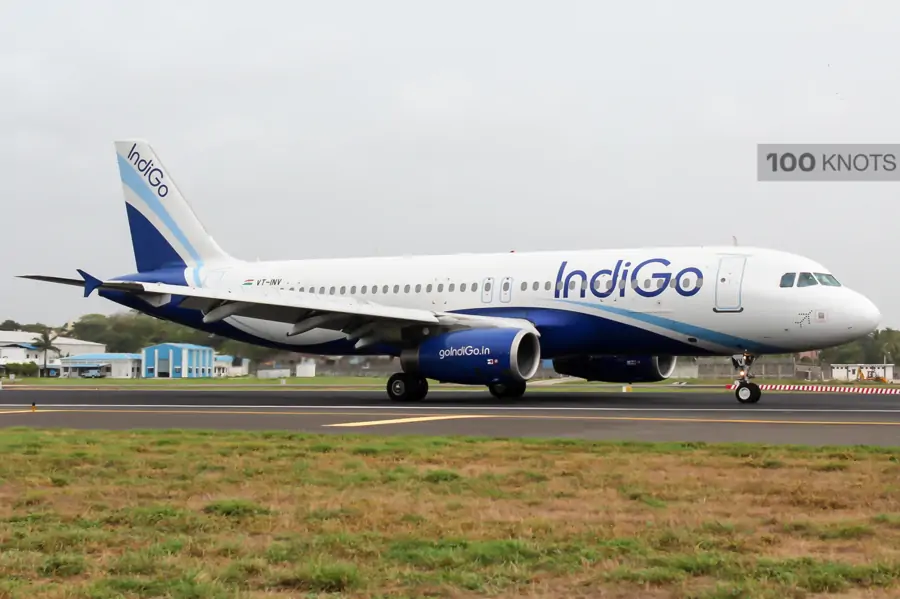
Malaysia Airlines, IndiGo sign codeshare agreement
- Both airlines to place codes on each other’s flights
Malaysia Airlines and IndiGo have signed a Memorandum of Understanding (MoU) for a codeshare partnership and mutual cooperation agreement.
The agreement will enable both carriers to provide customers with more options and flexibility for seamless travel between Malaysia and India, the firms said.
Through this cooperation, Malaysia Airlines will be able to strengthen its connectivity into India as the marketing carrier on IndiGo operated flights, while IndiGo customers get to explore more Southeast Asia destinations through Malaysia Airlines’ extensive network. This reciprocal arrangement will allow both carriers to provide seamless connections to their customers, besides enabling them to enjoy an integrated travel itinerary among other facilities.
Izham Ismail, Group Managing Director of Malaysia Aviation Group, said, “With India being our largest international market, we are delighted to enter this MoU with IndiGo to further widen our reach beyond the nine hubs we currently operate within India. This collaboration underscores our ongoing commitment to providing diverse travel options and flexibility to this growing aviation market, with a primary focus on enhancing the customer journey. We look forward to fostering cultural exchange and making travel more accessible for both Malaysia Airlines and IndiGo passengers as we extend our inimitable Malaysian Hospitality to ensure a warm and welcoming experience for all our guests.”
Pieter Elbers, Chief Executive Officer, IndiGo, said, “We are pleased to announce our proposed codeshare agreement with Malaysia Airlines, the national carrier of Malaysia. This partnership will not only offer seamless travel experience between India and Malaysia, but also enhance international trade opportunities by improving accessibility. This codeshare is in line with our vision to provide access to an unparalleled network, while delivering on our promise of providing on-time, affordable, courteous, and hassle-free travel experiences.”
Malaysia Airlines currently operates 71 weekly flights to nine key hubs in India, including New Delhi, Mumbai, Bengaluru, Chennai, Hyderabad, Kochi, Ahmedabad, Amritsar and Trivandrum.

Read next

Virgin Atlantic starts daily service from London to Bengaluru
- Set to launch a second flight to Mumbai too
Virgin Atlantic is expanding its India operations launching a direct service between London and Bengaluru even as it announced its second daily flight to Mumbai taking to the skies in October.
The new flight to Mumbai will be the airline’s fifth daily service to India and from 2025, Virgin Atlantic will offer over one million seats to the country, a 350% capacity growth since 2019, cementing India’s position as a key strategic market for the airline and marking its largest area of growth outside the United States.
Alongside customer flying, the increase is also a huge boost for cargo operations with additional capacity to support the movement of goods from the fashion, pharmaceuticals, and tech sectors. With five daily services, Virgin Atlantic Cargo will offer over 40 million kg of space to and from India, a 336% increase in capacity versus 2019.
Virgin Atlantic CEO, Shai Weiss touched down in Bengaluru meeting with partners and customers while experiencing the bustling city for himself. Shai joined British Deputy High Commissioner, Chandru Iyer, in autorickshaws as they visited some of the iconic sites in the city, with the airline’s award-winning cabin crew handing out some of Virgin Atlantic’s signature onboard treats such as- ice lollies and Mile High afternoon tea.
The new services will operate on the airline’s state of the art aircraft, 787-9 Dreamliner offering customers the option of Upper Class, Premium, and Economy Delight, Classic and Light as well as the airline’s signature Upper Class social space. It will also offer seamless connectivity and a premium long-haul experience for those customers connecting via London Heathrow to and from destinations throughout North America including Seattle, San Francisco, and New York JFK, with Virgin Atlantic and transatlantic joint venture partner, Delta Air Lines.
In addition to offering direct services to Delhi, Mumbai, and Bengaluru, Virgin Atlantic has a strategic partnership with IndiGo. Customers can book one ticket which allows them to connect seamlessly from other destinations in India such as Ahmedabad, Goa and Hyderabad onto London Heathrow. In total the partnership offers 36 additional destinations and has so far connected over 80,000 customers since the launch in September 2022.
Virgin Atlantic is also pleased to quadruple the number of Indian based cabin crew this summer. Through GSA partner InterGlobe Air Transport, the airline will now average four Indian cabin crew on each flight in order to deliver a more personalised service to our Indian customers.
Shai Weiss, CEO, Virgin Atlantic said, “I am thrilled to be here in Bengaluru, celebrating not one but two new Virgin Atlantic services. There is a huge opportunity for us in India, it has a dynamic, fast-growing economy and we’re anticipating huge growth in demand for international travel from the region. We know both our customers and people love travelling here and we have a rich history in India. Next year marks 25 years of operations and with our new daily service to Bengaluru and second daily service to Mumbai, it will be the first time that we’ll offer more than one million seats from London Heathrow. These new flights reaffirm our commitment to the country, allowing our customers to travel seamlessly throughout India and beyond, flying on one of the youngest fleets in the skies, with our signature service, delivered by our amazing people.”
Chandru Iyer, British Deputy High Commissioner to Karnataka & Kerala and HM Deputy Trade Commissioner – South Asia (Investment) said, “I couldn't be prouder to welcome another great British brand to the city of Bengaluru. Virgin Atlantic will continue to be a key player in strengthening our living bridge between the UK and India. With the growing number of Indian business travellers, tourists, and students to the UK, the addition of Virgin Atlantic to the existing air travel options would be of tremendous benefit to the entire southern region of India, and we at the British Deputy High Commission Bengaluru warmly welcome Virgin Atlantic.”
Read next

Air India moves to a spend-based rewards system instead of a miles-based one so far.
Air India has upgraded its Flying Returns loyalty programme, introducing a simplified new structure, more customer-friendly features, renamed tiers, and an updated identity, the airline said in a statement.
In its first overhaul in more than a decade, Flying Returns moves away from the legacy model of miles-based collection of points to a “fairer, more equitable” spend-based approach.
Flying Returns Members will be able to enjoy the benefits of the new programme and collect points based on the new structure, starting today.
“The revamp of Flying Returns is an important step forward in the way the ‘new’ Air India intends to serve and delight customers. We spent the past year listening, gathering insights from over 50,000 customers, and benchmarking our program against the best loyalty offerings out there. This deep dive, coupled with a complete digital overhaul, has resulted in a much stronger and value-delivering programme that we are proud to present today,” said Nipun Aggarwal, Chief Commercial & Transformation Officer, Air India. “We are confident that this evolution of Flying Returns, along with more strengths we will add to the programme in due course, will elevate it to the forefront of global loyalty programmes.”
Some highlights of the reimagined Flying Returns programme are as follows:
- Spend more, earn more: With Flying Returns now becoming a spend-based programme, the amount of Flying Returns Points that Members will be able to collect per flight will now be based on the amount they spend on a ticket rather than the distance they fly, thus delivering greater value for money spent over miles flown.
- Evergreen Points: Flying Returns Points will now never expire, as long as a Member takes at least one flight on Air India every 24 months, regardless of their Membership Tier level.
- No blackout dates and no restrictions: Members can redeem Flying Returns Points to purchase any Air India seat that is available for sale; there are no restrictions.
- Cash+Points: Members will now be able to pay for their Award flight using a combination of Flying Returns Points and cash, thus providing greater flexibility.
- Global reach and value: As India's most globally connected loyalty program, Flying Returns offers its Members the ability to earn or redeem points on 25 other Star Alliance partner airlines across the world. This global network comprises among the very best airlines for quality and service in their respective regions and enables members to redeem for flights to over 700 destinations worldwide.
- Global status: Members will also enjoy their Flying Returns Tier privileges across all Star Alliance member airlines worldwide, as well as access to 1000+ lounges across the world for those with applicable Membership Tier levels.
- Renamed Membership Tiers: Flying Returns will continue to offer four Membership Tier levels that have been renamed: Red (from ‘Base’), Silver (from ‘Silver Edge’), Gold (from ‘Golden Edge’), and Platinum (from The Maharaja Club).
- Priority and premium one-stop member service: Silver, Gold, and Platinum members will have access to a one-stop member service contact centre that will provide a seamless experience in immediately addressing any member inquiries and requests.
- Family Pool: Members will be able to combine their Flying Returns Points with others in their family, for free, enabling them to redeem for travel sooner.
- The benefit of booking direct: Members will earn 2 additional bonus Flying Returns Points for every INR 100 spent in booking flights directly on Air India’s website (airindia.com) or mobile app.
- More options to collect Flying Returns Points: Members can now also collect Flying Returns Points across a wide range of Air India’s non-airline partners, including car rentals, hotel stays, shopping, lifestyle experiences, and more.
Launched in 1994, Air India's Flying Returns programme boasts a long history, making it India’s oldest frequent flyer programme. The programme was last updated in 2012.
Member Benefits | Red | Silver | Gold | Platinum |
Qualification Criteria | NA | 15000 Points or | 30000 Points or | 45000 Points or |
Earn on Air India, Star Alliance flights and lifestyle partners | Yes | Yes | Yes | Yes |
Spend points on Air India and Star Alliance flights | Yes | Yes | Yes | Yes |
Enrolment Bonus | 1000 Points | NA | NA | NA |
Priority & Premium one-stop Customer Service | NA | Yes | Yes | Yes |
Fee waivers on itinerary changes* – Domestic on AI | NA | Flat fee of | 1 free change per ticket up to 24 hours before departure | 2 free changes per ticket up to 24 hours before departure |
Fee waivers on itinerary changes* – International on AI and Star | NA | NA | 1 free change per ticket up to 72 hours before departure | 2 free changes per ticket up to 24 hours before departure |
Fee waivers on itinerary cancellations* – Domestic on AI | NA | NA | Flat Fee of | Free up to 24 hours before departure |
Discount on seat selection* – AI operated flights | NA | 50% off on standard seat on domestic sector only (promotional offer) | 100% off on standard seats across network | 100% off on all seats across network |
Fly Early* benefit at airport- Domestic on AI | NA | NA | Yes | Yes |
Priority check-in at dedicated counters | NA | Yes | Yes | Yes |
Excess Baggage Allowance on Air India flights** | NA | +10 kg (promotional offer) | +20 kg or 1 Piece up to 23 kg | +20 kg or 1 Piece up to 23 kg |
Lounge Access (with 1 guest) at AI Owned / Star / Contracted lounges | NA | NA | Yes | Yes |
Priority Boarding | NA | Yes | Yes | Yes |
Priority Baggage Delivery | NA | Yes | Yes | Yes |
Cabin Upgrade vouchers* – Domestic for Air India flights | NA | 1 upgrade voucher | 2 upgrade vouchers | 3 upgrade vouchers |
Read next


As Pakistan International Airlines (PIA) grapples with financial woes, the newly elected Pakistani government under the leadership of Shehbaz Sharif is forging ahead with plans to partially privatize the national carrier. Recent reports indicate that three Gulf countries—United Arab Emirates (UAE), Saudi Arabia, and Qatar—are actively pursuing a majority stake in PIA. This move comes as part of Pakistan's commitment to the International Monetary Fund (IMF) for a USD 3 billion bailout package, which requires privatization of state-owned entities like PIA.
Gulf Interest and International Attention
Reports from Pakistan-based outlets highlight the keen interest of Gulf nations, particularly UAE, Saudi Arabia, and Qatar, in acquiring a significant portion of PIA. Additionally, entities associated with France, the Netherlands, Germany, Malaysia, and Turkey have also expressed interest in the airline. However, Gulf countries seem to be leading the race, displaying the most enthusiasm towards investing in PIA.
IMF Bailout Conditions and PIA's Debt Burden
Pakistan's decision to partially privatize PIA stems from the IMF bailout conditions, necessitating the privatization of underperforming state-owned enterprises. With a staggering debt of PKR 825 billion (USD 3 billion), PIA stands as one of the biggest burdens on Pakistan's taxpayers. The partial privatization aims to offload 51% of PIA's shares along with control over its day-to-day operations.
Financial Negotiations and Debt Restructuring
To facilitate the privatization process, the Pakistani government has finalized a term sheet with seven local banks, addressing concerns over PIA's substantial debt owed to these institutions. Under the agreement, banks have agreed to roll over debts for ten years, reducing the annual interest rate from 23.5% to 12%. The government, in turn, will be responsible for the debts transferred to a new holding company, funded by the proceeds from the partial privatization.
Reconstitution of PIA Board and Management
In parallel to financial negotiations, significant changes have been made to PIA's governance structure. The newly reconstituted 11-person board comprises seven independent directors and four government officials, including heads of local commercial banks and representatives from key government departments. Air Vice Marshal Aamir Hayat has been reaffirmed as PIA's CEO, signaling continuity in leadership amidst the restructuring process.
Path Forward and Implications
As negotiations progress and plans for partial privatization unfold, the fate of PIA hangs in the balance. The government's efforts to attract foreign investment and alleviate PIA's debt burden are critical for the airline's survival and the broader economic landscape of Pakistan. With Gulf countries showing strong interest and financial restructuring underway, the future trajectory of PIA will undoubtedly shape the aviation industry in the region.
Conclusion
The push towards partial privatization of PIA represents a pivotal moment for Pakistan's national carrier and its economic landscape. As Gulf countries and other international entities express interest, the spotlight is on Pakistan to navigate the complexities of privatization while ensuring sustainable growth and financial stability for PIA. As negotiations continue and plans materialize, the fate of PIA will be closely watched by stakeholders both domestically and abroad.
With Inputs from ch-aviation
Read next
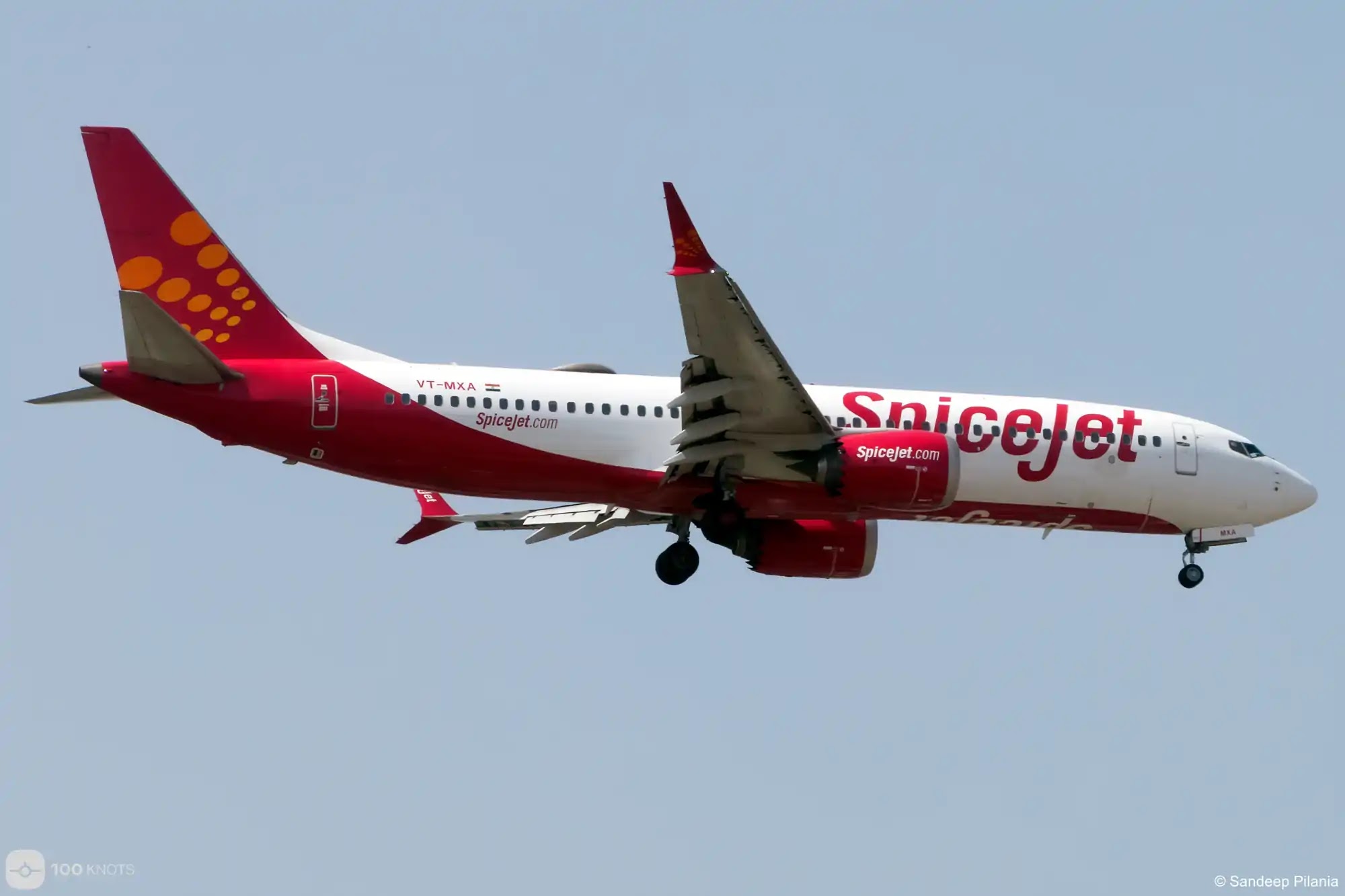
In a recent hearing at the Delhi High Court, SpiceJet, one of India's leading low-cost carriers, has come under scrutiny for its failure to comply with court orders regarding a longstanding dispute with its former owner, Kalanithi Maran, and his associated entity, KAL Airways. The dispute, stemming from a majority ownership transfer in 2015, has escalated, with accusations of "willful disobedience" leveled against the airline and its managing director, Ajay Singh.
Background of the Dispute
The origins of the conflict trace back to 2015 when ownership of SpiceJet shifted hands from Maran to Ajay Singh. However, promises of warrants and preference shares to Maran as part of the transfer did not materialize, leading to a legal battle. In 2018, Maran was awarded a substantial sum, totaling INR 5.79 billion (USD 69.4 million) plus interest. Despite repeated court orders, SpiceJet and Singh failed to fulfill their financial obligations, leading to further legal entanglements.
Allegations of "Willful Disobedience"
During a hearing on March 28, 2024, at the Delhi High Court, accusations of "willful disobedience" were made against SpiceJet and Ajay Singh for failing to pay INR 500 million (USD 6 million) to Maran and KAL Airways by the specified deadline of March 18. Despite claims from SpiceJet's counsel that a partial payment of INR 250 million had been made on March 27, Maran's counsel argued that the airline had intentionally disregarded previous court orders.
Legal Ramifications and Ongoing Proceedings
The court's decision on the matter holds significant implications for SpiceJet and Ajay Singh. With Maran seeking not only the enforcement of payment but also permission to seize the airline's accounts at Yes Bank, the stakes are high. Additionally, Maran's counsel highlighted SpiceJet's recent capital raising endeavors and plans to acquire Go First, suggesting that the airline should prioritize clearing its existing liabilities.
What Lies Ahead
As the legal battle between SpiceJet and Maran unfolds, the airline faces potential contempt charges, alongside the looming threat of further financial penalties. The court's upcoming decision on April 25, 2024, will be closely watched by industry observers, stakeholders, and legal experts alike. Whether SpiceJet will be held accountable for its alleged "willful contumacious conduct" remains to be seen, but the outcome of this legal saga could have far-reaching consequences for the airline and its leadership.
In conclusion, the ongoing dispute between SpiceJet and its former owner underscores the importance of compliance with court orders and the potential repercussions of failing to do so. As both parties await the court's verdict, the outcome of this legal battle will undoubtedly shape the future trajectory of SpiceJet and serve as a cautionary tale for companies navigating similar conflicts in the Indian aviation industry.
With Inputs from ch-aviation
Read next
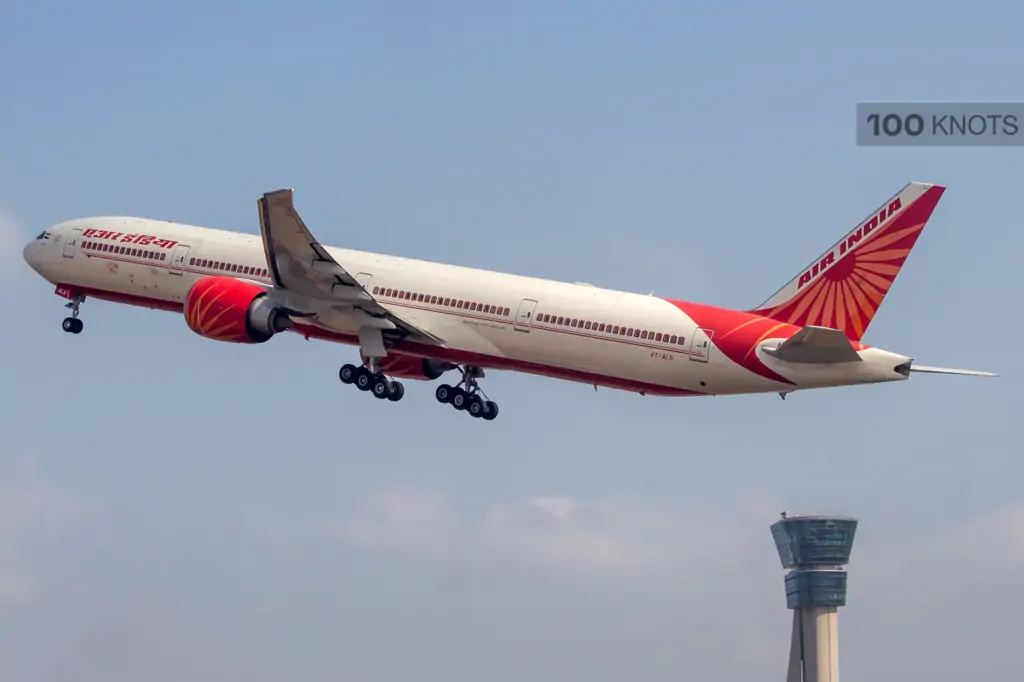
After an extensive seven-year investigation, the Central Bureau of Investigation (CBI) in India has decided to discontinue its inquiries into alleged irregularities surrounding the leasing of aircraft at Air India. The probe, which commenced in 2017 following allegations of impropriety, has concluded with the finding of no evidence of wrongdoing. This development marks a significant chapter in the complex narrative surrounding Air India's lease decisions, implicating prominent figures and raising questions about accountability and governance within the aviation sector.
The Allegations and Investigation
In 2006, Air India entered into lease agreements for four Boeing 777 aircraft, despite anticipating the delivery of its own B777s from 2007 onwards. This decision led to a surplus of capacity, with several aircraft grounded between 2007 and 2009, incurring substantial financial losses for the airline. Allegations emerged suggesting that the leases were orchestrated to benefit private entities, prompting a Supreme Court-mandated investigation in 2017.
Key Players and Political Context
The lease contracts were finalized during the tenure of the United Progressive Alliance government, under the leadership of then-Minister of Civil Aviation, Praful Patel. While the initial allegations implicated Patel and other unnamed individuals, no charges were ever brought against him. The timing of the investigation's closure coincides with Patel's nomination as a candidate for the Rajya Sabha polls by the National Congress Party, adding a political dimension to the unfolding narrative.
CBI's Decision and Implications
The CBI's decision to close the investigation without providing a reason raises questions about the accountability and transparency of the process. Despite detailed allegations of impropriety and potential financial losses to the government exchequer, the closure of the probe leaves the matter unresolved. The forthcoming court hearing on April 15 will provide an opportunity to scrutinize the arguments for closure and evaluate the implications of this decision.
Impact on Air India and Aviation Sector Governance
The prolonged investigation and subsequent closure have cast a shadow over Air India's operational decisions and highlighted systemic challenges within the aviation sector. The case underscores the need for robust governance mechanisms to prevent misuse of public resources and ensure accountability at all levels. Moving forward, stakeholders must prioritize transparency and integrity to safeguard the interests of both the industry and the public.
Conclusion
The closure of the CBI's investigation into the Air India lease saga marks the end of a prolonged chapter characterized by allegations of impropriety and financial mismanagement. While the decision to discontinue the probe raises concerns about accountability and governance, it also underscores the complexities inherent in investigating such cases. As the story continues to unfold, it serves as a reminder of the importance of upholding ethical standards and institutional integrity within India's aviation sector.
With Inputs from ch-aviation
Comment