
Korean Air's Lobbying Efforts in the U.S. to Secure Asiana Airlines Merger

Abhishek Nayar
16 Oct 2023
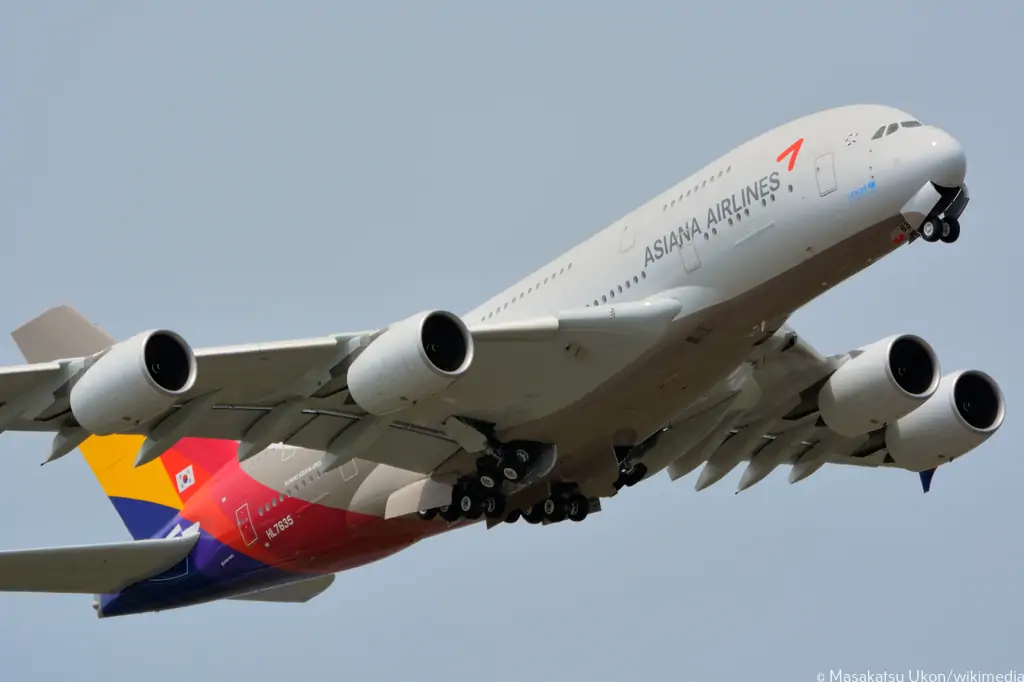
In a bid to finalize its proposed merger with Asiana Airlines, Korean Air (KE) has embarked on an extensive lobbying campaign in the United States, allocating approximately $520,000 for these efforts since the beginning of 2022.
The merger, valued at KRW 1.8 trillion won (USD 1.34 billion), requires approval from antitrust authorities in multiple jurisdictions, including the United States. The Department of Justice (DOJ) in the U.S. has shown reluctance to grant approval, raising concerns about the merger's future and its implications for the aviation industry.
Background
The merger between Korean Air and Asiana Airlines was officially initiated in late 2020, setting in motion a complex, cross-border consolidation of the two South Korean aviation giants. While most antitrust authorities in the 14 jurisdictions involved have swiftly granted approval, a significant roadblock remains in the form of the DOJ, along with several other notable bodies, including those in China, Japan, the European Union, and the United Kingdom.
The Rise of Lobbying Efforts
In 2019 and 2020, Open Secrets, a U.S. non-profit organization that tracks lobbying spending, recorded no lobbying expenditures by Korean Air in the United States. However, in 2022, a significant change occurred, with Korean Air investing $400,000 in lobbyists over the course of the year, followed by an additional $120,000 in the first half of 2023. These funds were allocated to address the DOJ's resistance to the merger, indicating the increasing importance of lobbying in transnational business transactions.

Challenges and Controversies
The Department of Justice in the United States has voiced concerns about the merger's potential impact on competition in the airline industry. There are fears that Korean Air may have to make substantial concessions to gain approval, such as surrendering specific routes and releasing airport slots in prominent European cities.
In a revised proposal submitted to the European Commission, Korean Air has offered to give up route rights and divest Asiana's profitable cargo division. This has raised questions about the merger's economic viability, as certain stakeholders, including the Asiana Airlines Pilots' Union, argue that these concessions could harm the national economy and diminish Korea's standing in the global aviation sector.
A National Asset at Stake
The Asiana Airlines Pilots' Union has emphasized the national significance of route transportation rights, viewing them as more than just assets for airlines but as part of the country's heritage. Surrendering these rights for the sake of the merger has raised concerns about the potential negative impact on the Korean economy and the aviation industry as a whole.
The European Commission's Decision and the Road Ahead
The European Commission is anticipated to announce its decision regarding the merger no earlier than January 2024. This decision is expected to weigh heavily in the eventual determination by the Department of Justice, which is not anticipated until after that date. The fate of the merger hangs in the balance, and the extensive lobbying efforts by Korean Air continue to play a crucial role in shaping the outcome.
Conclusion
Korean Air's substantial lobbying efforts in the United States underscore the challenges and complexities of international mergers and acquisitions, especially in the aviation industry. The fate of the proposed merger with Asiana Airlines remains uncertain, as concerns about competition, economic consequences, and the impact on national assets persist. The industry, stakeholders, and aviation enthusiasts around the world are eagerly awaiting the decisions of the European Commission and the U.S. Department of Justice to determine whether this merger will indeed take flight or be grounded.
With Inputs from ch-aviation
Read next
Aviation Ministry Increases Validity Period of a Pilot Licence From 5 to 10 Years

Radhika Bansal
16 Oct 2023

The validity period of a pilot licence has been increased from five to 10 years following the latest amendment to the aircraft rules, the Ministry of Civil Aviation was quoted by Business Standard as saying in a notification dated October 10.
According to the amendment, the validity period of the airline transport pilot’s licence (ATPL) and commercial pilot’s licence (CPL) has been extended to 10 years each. They will be issued to pilots at the time when their licences are up for renewal. Earlier, the validity of both ATPL and CPL was set at five years. In 2014, the pilot licence renewal period was enhanced from two to five years.
Pilot Licences Issued in 2023
A total of 993 commercial pilot licences have been issued this year till July 24. Minister of State for Civil Aviation V K Singh informed the Lok Sabha in August that currently, there are 36 Flying Training Organisations (FTOs) operating at 57 bases. According to data provided as part of a written reply, 993 Commercial Pilot Licences (CPLs) and 407 Airline Transport Pilot Licences (ATPL) have been issued this year till July 24. In 2022, a total of 1,165 CPLs and 720 ATPLs were issued.
According to data provided as part of a written reply, 993 Commercial Pilot Licences (CPLs) and 407 Airline Transport Pilot Licences (ATPL) have been issued this year till July 24. In 2022, a total of 1,165 CPLs and 720 ATPLs were issued.
An individual is eligible to apply for CPL after completing at least 200 hours of flying and fulfilling other conditions. Besides, the individual has to clear theory papers and once successful, the CPL is given for a period of five years subject to complying with various requirements. The Directorate General of Civil Aviation (DGCA) issues three types of pilot licenses -- CPL, Air Transport Pilot Licence (ATPL) and Private Pilot Licence (PPL). While CPL allows a pilot to start flying as a co-pilot, ATPL permits a pilot to be the commander. PPL is issued for operating private planes.
Directorate General of Civil Aviation (DGCA) has also refuted claims suggesting that a staff shortage is causing delays in the issuance of pilot licences. The DGCA official also claimed that the total number of commercial pilot licences (CPL) issued in the year 2022 was the highest in the last decade and this number had already been surpassed in September this year. Further, the number of CPLs in 2023 is likely to be the highest ever as DGCA has already seen an increase of 45% as of August 31 compared to the entire year of 2022.
Action Against “False Lights” near Aerodrome
The fresh amendment has also extended the scope and power for the government to take action against anyone exhibiting “false lights” — lantern lights, kite lights and laser lights — in the vicinity of an aerodrome. When such lights are flashed in the vicinity of an aerodrome, they can be mistaken for aeronautical ground lights or an aeronautical beacon and can endanger the safety of an aircraft and its passengers. They can also disrupt an aircraft’s operations and pose a hazard to the flight’s operating crew.
The radius of the vicinity around an aerodrome has been increased from five kilometres to five nautical miles (around 9.2 km). The notification added that the government may report such incidents if an individual fails to extinguish the false lights in the area concerned.
If any owner or person who is served a notice under the rule neglects it for 24 hours, the central government or any person authorised by it could enter the place and extinguish the light, the notification said. The government or authorised individual may also report the matter to the police station concerned for action under Section 281 or 283 or both of the Indian Penal Code, it added.
(With Inputs from Business Standard)
Read next
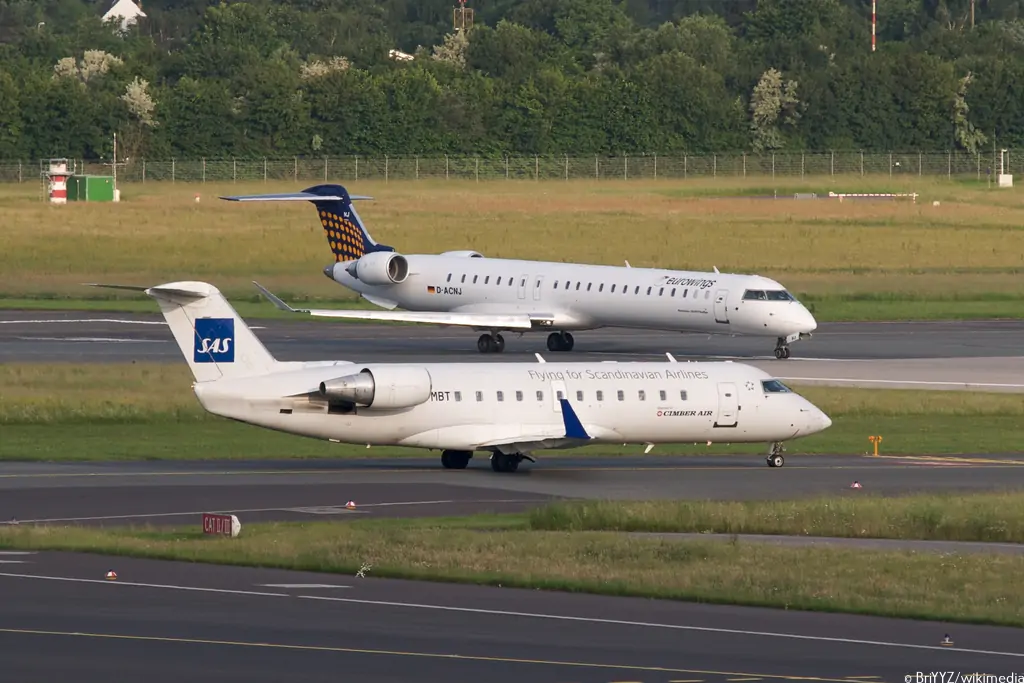
As we move into the future, the business aviation industry is poised for substantial growth. Honeywell, a renowned engine maker, recently released its annual Global Business Aviation Outlook, projecting robust demand for new business jets over the next decade. The report underscores that despite the challenges posed by the COVID-19 pandemic, the industry is on an upward trajectory.
Steady Growth in Demand
Honeywell's latest forecast indicates that the global demand for new business jets is expected to remain strong, with approximately 8,500 new planes set to be delivered through 2033. This projection aligns with Honeywell's rolling 10-year estimate provided in the previous year. However, what sets the 2023 forecast apart is the value of these anticipated deliveries, which has increased by $4 billion, reaching a total of $278 billion.
The Pandemic Effect
One of the driving forces behind this sustained growth in demand is the impact of the COVID-19 pandemic. The pandemic prompted a surge in newcomers to private aviation. Both users and buyers flocked to the sector as the wealthy sought greater control over their travel, opting for private flying to ensure safety and convenience.
Temporary Dips and Future Growth
Global flight activity is expected to dip by 4% in 2023 compared to 2022. Factors contributing to this decline include inflation and the resumption of commercial air services on key routes. Despite this temporary setback, Honeywell's report predicts that flight activity in 2023 will finish at least 10% above 2019 levels.
Moreover, Honeywell anticipates that flight activity will stabilize in 2024 and experience significant growth in 2025. The driving forces behind this revival include an accelerated surge in initial public offerings (IPOs), rising corporate profits, and easing inflation rates.
Positive Outlook for Private Jet Makers
Honeywell, a major engine supplier to private jet manufacturers such as Bombardier and General Dynamics-owned Gulfstream, foresees a promising future. The company expects new private jet deliveries in 2024 to be 10% higher than in 2023, with expenditure on private flying projected to rise by approximately 13%. This paints a bright picture for manufacturers and the broader industry.
Expanding User Base
The report also highlights that new users in business aviation will contribute significantly to the increased demand, adding 500 aircraft and driving a 6% increase in the number of flights over the next decade. This expanding user base is indicative of the industry's resilience and its ability to adapt to evolving travel preferences.
Conclusion
Honeywell's annual Global Business Aviation Outlook for 2023 paints a promising picture for the business aviation industry. Despite temporary challenges, the demand for business jets is expected to remain robust over the next decade.
The effects of the COVID-19 pandemic, coupled with factors like rising corporate profits and the growth in IPOs, are poised to fuel this growth. With new users entering the market and an optimistic outlook for private jet manufacturers, the business aviation sector appears to be on a steady upward trajectory, setting the stage for a flourishing future.
With Inputs from Reuters
Read next
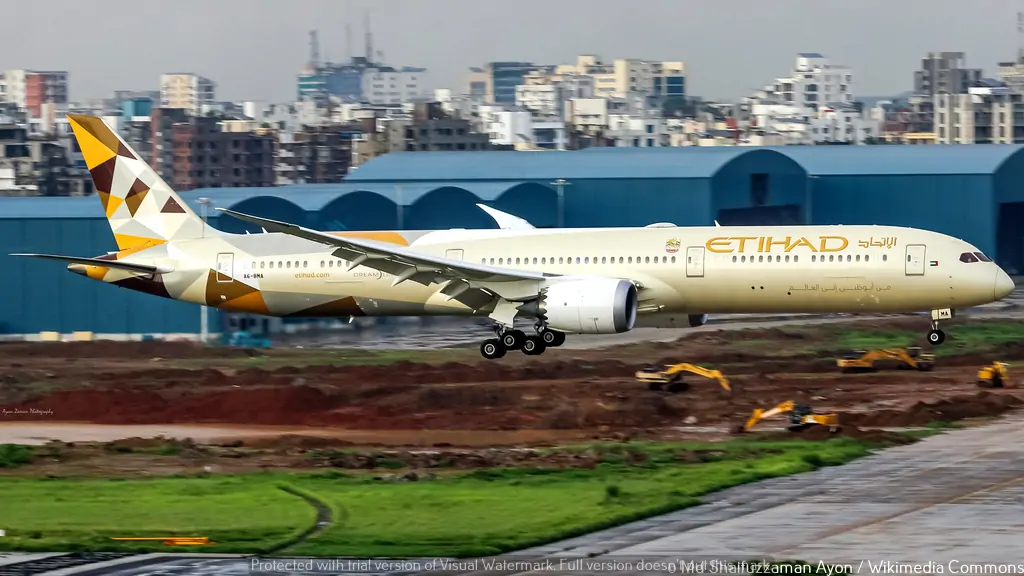
Etihad Airways has welcomed the latest addition to its expanding fleet as a new Boeing 787-10 Dreamliner landed at Abu Dhabi International Airport on Friday, October 13. After a thorough check by Etihad’s engineering team, the new arrival will go straight into service and is set to start flying guests from 15 October.
Antonoaldo Neves, Etihad Airways Chief Executive Officer, said: “The arrival of our latest 787 Dreamliner underlines our passion to grow this year by enhancing the quality of our customer experience and the reach of our network. This is all part of our vision for 2030 supporting our growth as underlined by the new destinations to Osaka, Copenhagen and Dusseldorf we began operating two weeks ago.”
According to Etihad, this aircraft and the three Dreamliner 787-9s, which will be delivered shortly, are up to 25% more fuel efficient than many comparable aircraft of their size. This particular aircraft is 2.9 years old, as it was placed in storage throughout the delivery delay issue that the American planemaker has been dealing with.
Etihad confirmed that the aircraft is one of four Dreamliners set to be delivered this year. Additionally, its arrival came three years to the date of the delivery of its last 787-10, which was on October 13, 2020. The delivery of A6-BMJ is also a long time coming.
According to ch-aviation, Etihad first ordered the aircraft in November 2013, and it was seven years until it had its first flight in December 2020. The plane’s delivery was likely delayed until now due to the pandemic’s negative impact on the industry. Three slightly smaller 787-9s will also join the airline’s fleet this year.
Currently, Etihad has 29 active 787-9s and 10 larger 787-10s in its fleet, totaling 39 Dreamliners, according to ch-aviation. While the jets offer up to 25% more fuel efficiency than comparable aircraft of their size, they also provide ultimate comfort and luxury for passengers. All cabins onboard the aircraft come with premium amenities such as blankets, pillows, and amenity kits to ensure passengers stay comfortable on long-haul flights.
About Etihad
Founded in 2003, Etihad Airways is the national carrier of the Emirate of Abu Dhabi, based at Abu Dhabi International Airport. Operating a fleet of narrow and wide-body Airbus and Boeing aircraft, Etihad provides a rapidly expanding network of services within the Middle East and to Africa, Europe, Asia, North America and Australia. In addition to its core activity of passenger transportation, Etihad earns significant revenue from its cargo operation, Etihad Crystal Cargo. Etihad Airways forms part of the Etihad Aviation Group.
The airline operates more than 1,000 flights per week to over 120 passenger and cargo destinations in the Middle East, Africa, Europe, Asia, Australia, and North America, with a fleet of 102 Airbus and Boeing aircraft as of February 2020. In 2015, Etihad carried 14.8 million passengers, a 22.3% increase from the previous year, delivering revenues of USD 9.02 billion and net profits of USD 103 million. Its main base is Abu Dhabi International Airport.
Read next
Air India Express Set to Expand its Fleet by Adding 50 new Boeing 737 MAX Aircraft in Next 15 Months
Radhika Bansal
14 Oct 2023
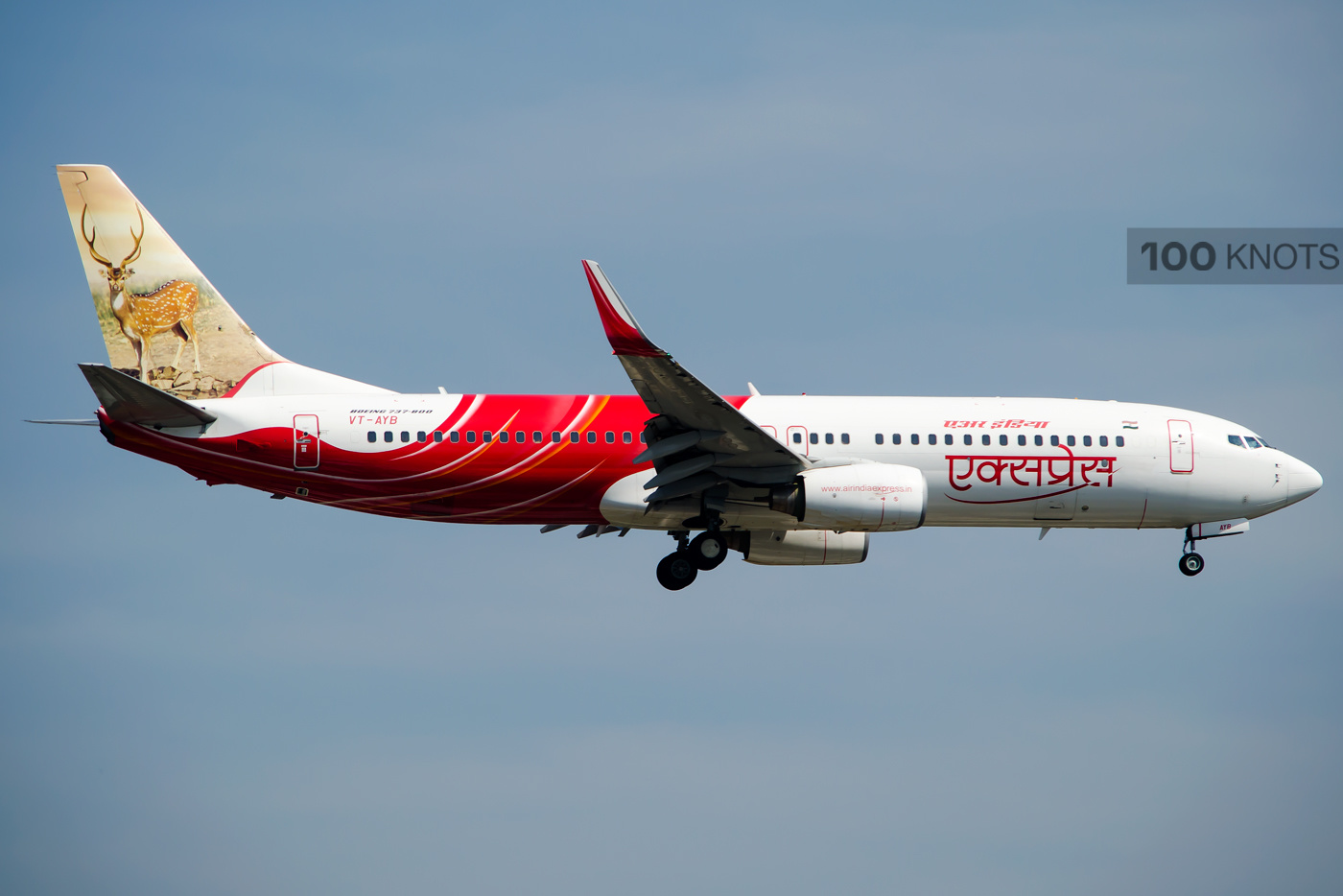
Air India Express, which is in the process of merging AIX Connect with itself, plans to induct 50 new B737 MAX planes in the next 15 months as the Tata Group bolsters its aviation business. Besides, the combined entity of Air India Express, also the country's first international budget carrier, and AIX Connect, formerly known as AirAsia India, will be launching its new brand on October 18.
In a message to staff this week, Air India Express and AIX Connect Managing Director Aloke Singh said key milestones, including migration to a common reservations and check-in system, have been achieved in terms of integration of the two carriers. Currently, the combined entity has a fleet of 56 aircraft, including 26 B737, 2 B737 MAX, 5 A320neo and 23 A320.
"Over the next 15 months, a total of 50 new B737 MAX aircraft will join the LCC fleet, allowing us to grow our network to new destinations and increase flights on existing routes," Singh said in the message. According to him, the focus is now on the preparedness for deploying this capacity and that already, more than 800 aircrew and other operational personnel who have joined the entity are under various stages of training.
Together, the combined entity operates around 2,700 flights every week. Out of them, about 700 are operated by Air India Express and the rest by AIX Connect. They fly to 44 destinations, including 14 international ones. The combined entity will be the Low-Cost Carrier (LCC) of the Tata Group which took over the reins of Air India and Air India Express in January last year.
"On the integration front, key milestones have been achieved; these include migration to a common reservations and check-in system, a common website and agent portal, aligned product and service offerings, and above all, use of a common brand and domain," Singh said in the message.
Meanwhile, Tata Group is in the process of consolidating its airline business. Apart from Air India Express-AIX Connect integration, Air India is merging Vistara with itself. Vistara is a joint venture between Tatas and Singapore Airlines, in which the former holds a 51% stake. India is one of the fastest-growing aviation markets in the world and air traffic is also on the rise.
Air India Express Inducts Aircraft from AirAsia India
AIX Connect (formerly known as AirAsia India) completed the transfer of an A320 aircraft, the VT-ATJ, to Air India Express as part of the merger of the two airlines, Air India's CEO and MD Campbell Wilson told employees in a letter on October 6.
"VT-ATJ, at A320 originally from Air Asia India, became the first to transfer into the Air India Express fleet after completing DGCA’s detailed five-phase CAP3100 process," Wilson said. He added that other aircraft will soon be transferred from the fleet of AIX Connect to Air India Express to ensure that the two low-cost carriers operate as one and the airline has full flexibility to deploy aircraft most optimally and efficiently across its network.
"VT-ATJ has now been operating domestically for a few days and will commence international service tomorrow, Oct 7. Well done to the IX/I5 teams for the regulatory and preparatory work involved," Campbell said.
In fact, it recently received its first two 737 MAXs, marking the beginning of the deliveries of more than 150 of the type ordered for the airline. The two MAXs that recently flew to India were part of the 55 Boeing 737 MAX 8 aircraft initially meant for various Chinese carriers.
Air India Express is slated for a significant fleet development due to the merger. Not only will it receive more than 25 A320s of AirAsia India but also strengthen its Boeing 737 fleet by adding the MAX series of aircraft in the coming years. In fact, it recently received its first two B737 MAXs, marking the beginning of the deliveries of more than 150 of the type ordered for the airline.
Comment