
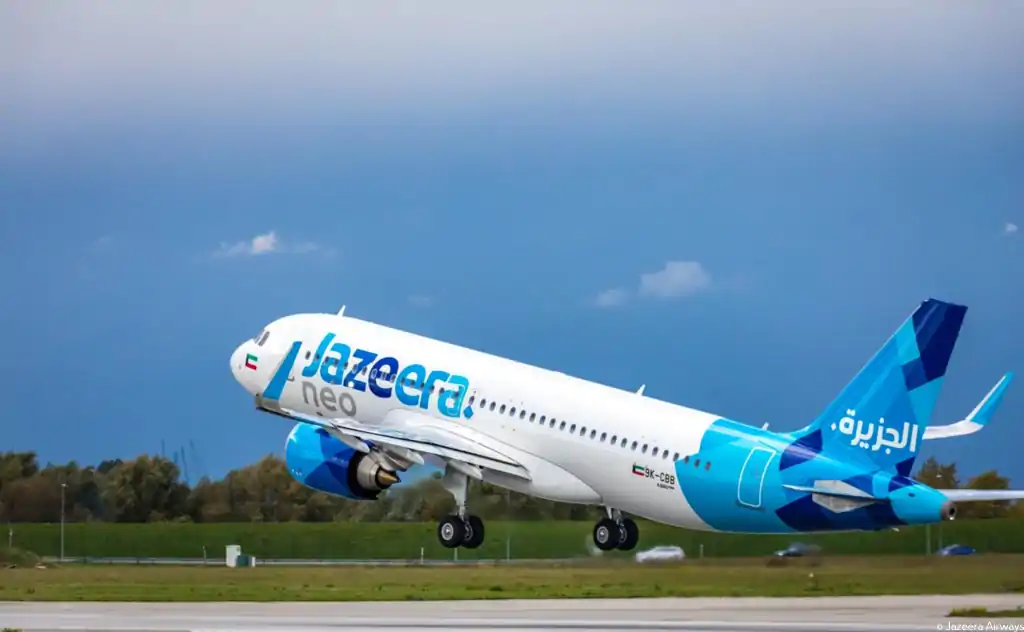
Jazeera Airways, a prominent player in the aviation industry, has recently released its financial results for the year 2023, raising questions about its trajectory amidst changing market dynamics. Let's delve into the numbers, strategies, and future prospects of the airline.
Financial Performance & Operational Highlights
In 2023, Jazeera Airways reported a net profit of KD 6.13 million, a significant decline of 69.5% compared to the previous year. Despite a notable increase in operating revenue by 8.8%, operating profit witnessed a sharp decline of 56.2%. The fourth quarter of 2023 particularly saw a challenging period with a net loss of KD 7.14 million, reflecting a downturn in performance.
Despite the financial setbacks, Jazeera Airways experienced growth in passenger numbers, reaching 4.68 million for the full year, showcasing a remarkable increase of 30.6%. The airline also bolstered its market share in Kuwait to 36.24%, indicating a strong foothold in the region. Noteworthy operational achievements include an expansion of routes to 64 destinations and fleet expansion to 23 aircraft, demonstrating a commitment to growth.
Strategic Initiatives & Future Outlook
Jazeera Airways remains steadfast in its commitment to enhancing operations and customer experience. Investments in infrastructure, such as the development of Jazeera Terminal 5 with improved facilities, underline the airline's dedication to passenger satisfaction. Additionally, the adoption of eco-friendly practices, such as switching to sustainable food service ware and publishing its first ESG sustainability report, reflect Jazeera's proactive stance towards environmental responsibility.
Looking ahead, Jazeera Airways has ambitious growth plans, aiming to serve over 100 destinations and increase its fleet size to 35 aircraft within the next five years. The airline anticipates crossing the 80% mark in load factor in the next three years, signifying confidence in future demand. Moreover, ongoing expansions, including the construction of a new hangar for maintenance checks, underscore Jazeera's readiness to cater to the evolving needs of its expanding customer base.
Conclusion
In summary, Jazeera Airways navigates a mixed landscape of financial challenges and strategic advancements. While facing headwinds in profitability, the airline demonstrates resilience through operational growth, market expansion, and sustainability efforts. With a clear vision for the future and proactive measures in place, Jazeera Airways positions itself for continued success in the dynamic aviation industry.
As the airline charts its course amidst uncertainties, the question remains: Is Jazeera Airways poised to soar to new heights or will it encounter turbulence along the way? Only time will tell.

Read next


The Airline Pilot's Association of India has decided to merge with the Professional Pilot's Association or PPA creating a mega pilot body, its convenor Sam Thomas said in a note this week.
The new grouping will be led by Capt. Shakti Lumba who will take over the administration of ALPA lndia while Capt. Harpreet Singh Uppal will be the General Secretary, Jaqiit Singh Sandhu the treasurer, Anil Rao Joint Secretary and Thomas will be the director of IFALPA.
"We would also like to inform you that the benevolent fund membership has been steadily increasing post the increase in premium by FlP. Cheques of all members superannuating and withdrawing from the benevolent fund have been processed," Thomas told members, "Further would like to thank all existing members for their undying faith in ALPA lndia and we welcome all new members to the mega body of pilots."
PPA will maintain its Banglore office and a new office in Delhi will be opened.
Thomas was the key spokesperson when Jet Airways pilots led an agitation a few years back.
Read next
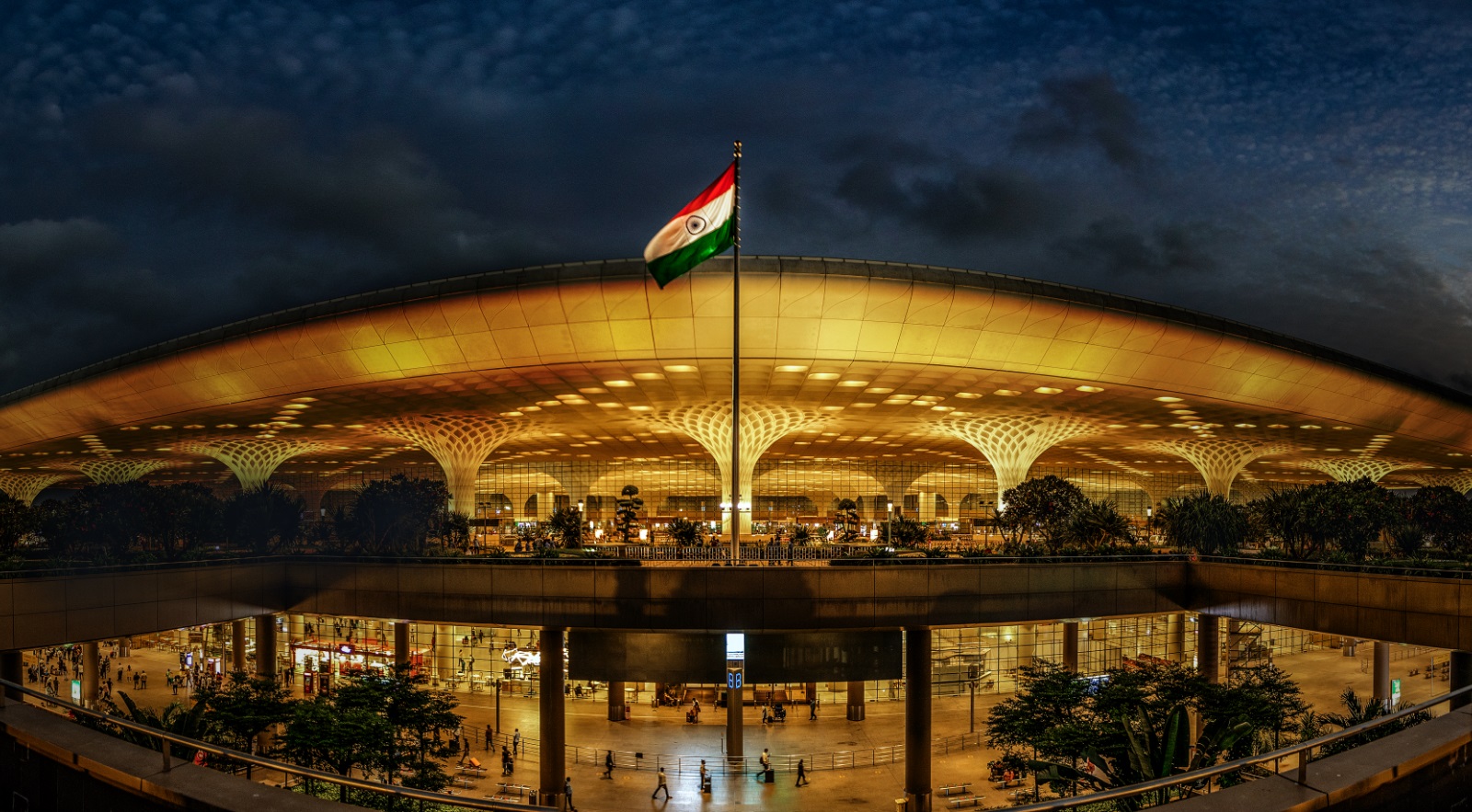
The Airports Authority of India has asked Adani Group-led Mumbai Airport to cut flights from 46 to 44 per hour during peak hours from 44 to 42 during non-peak hours after it found heavy congestion was leading to delayed departures and fuel burn.
In a note the civil aviation ministry said with the uplifting of travel restrictions post-pandemic, airports have witnessed a considerable increase in air traffic and air space congestion.
Mumbai Airport, being one of the busiest airports in the country, suffers from congestion and excess capacity on its runways, which inadvertently leads to air space congestion, whereby flights are forced to hover over the city for a long duration of around 40-60 minutes.
Considering that an aircraft on average consumes 2000kg of fuel per hour, such long duration circling time, causes significant wastage of fuel for the aircraft ranging from 1.7 kilolitres of jet fuel (approx. costing around Rs 1.8 Lakh) for a 40 minutes circling time in the air to around 2.5 Kilolitres of jet fuel (approx. costing around Rs. 2.6 lakhs) for a 60 minute circling time . It is to be understood that such an increase in fuel cost would eventually be borne by the consumers. This also has a cascading effect on the efficiency of airports operations leading to a longer wait time, and inordinate delays, affecting both passengers and airlines adversely.
In order to remedy such air space congestion, an analysis was conducted by Airport Authority of India, which found that air traffic permitted per hour during the 6 hours of High Intensity Runway Operations (HIRO i.e. from 0800 hrs. to 1100 hrs. & 1700 to 2000 hrs) was almost equivalent to air traffic permitted per hour during the remaining 18 hours of the day. In addition to the above slots, General Aviation & Military Aircraft operations were also allowed without any restrictions.
While Mumbai Airport is running at its full capacity, it was found that the persistent congestion was caused due to, (i) excessive slot distribution with limited time margins on behalf of the airport operator, (ii) non-adherence of the slots on behalf of the airlines and (iii) non-scheduled operations during peak hours.
"The Airport Operator being the slot provider as well as the manager of slots to the airlines, should have proactively taken steps to streamline and regulate the air traffic movements, to resolve this problem. However since, no such action was initiated by them, Ministry of Civil Aviation has had to step in. Airport Authority of India, being the Air Navigation Service Provider, issued directives to the airport operator in the form of Notice to Air Men (NOTAMs) on January 2, 2024, which restricted the air traffic movements (ATM) during HIRO (i.e. from 0800 hrs- 1100 hrs., 1700 - 2000 hrs & 2115hrs -2315 hrs )period from 46 to 44 per hour and in non-HIRO period from 44 to 42 period. Further General aviation aircraft operations during HIRO period have also been restricted. It is expected that MIAL should take immediate action to ensure that all airlines are on board with the prescribed restrictions," the ministry said adding, "This action has been taken in larger public interest from the perspective of airspace safety, the efficiency of operations and passenger satisfaction.
Read next

The Sirius Jet, the world’s first hydrogen-powered, zero-emissions, vertical
takeoff and landing (VTOL) aircraft, features a high-speed capability, quieter ducted fan jets, and an innovative hydrogen powertrain.
This jet boasts a range of 1150 miles– eight times that of traditional eVTOLs, and a speed of 323 mph– three times faster.

Under this deal, Mehair will oversee the assembly of 50 Sirius Millennium Jets and 1,400 Millennium Hydrogen Fan Jets, along with integrating 50 Hydrogen Fuel Cell Powertrains and 10 Hydrogen Generation Units in India, marking a new era of zero-carbon aviation, the firm said.
"Joining forces with Sirius Jet marks a significant step for India’s aviation, promising passengers luxurious yet economical travel with zero emissions," said Siddharth Verma, the Managing Director of MEHAIR.
"This strategic alliance with MEHAIR lays the foundation for a greener future in air travel; embodying a commitment to eco-friendly aviation and technological excellence," said Alexey Popov, the CEO of Sirius Aviation AG.
Read next

The key Terminal 2 of the airport was modernized by a GVK Infrastructure-led consortium with an impressive start and welcomed 12 million passengers in its inaugural year. The group won the bid to modernize the airport in 2006
In the calendar year 2023, it reached a peak of 31 million passengers, a significant portion of the total 51.58 million passengers.
Average daily flights (ATMs) rose from 410 in the inaugural year to 640 in 2023.

Accommodating this surge, baggage handling capacity has also increased. In January 2024, over 100,000 bags are processed daily within 15 minutes, maintaining a 99% efficiency rate.
"The CSMIA's facade has become an iconic representation of Mumbai, resonating with residents and global travelers alike. Its unique design and infrastructure are integral to the airport's modernization. Terminal 2 prioritizes energy efficiency, designed to withstand UV exposure, and maximize natural light, reducing heat penetration. Drawing inspiration from the graceful peacock feather, the airport's logo embodies national pride, India's diversity, and a commitment to global standards. Over the years, the exterior continues to turn heads with its striking presence, symbolizing Mumbai's progress and sophistication," the airport said in its note.
Furthermore, the terminal has consistently upgraded infrastructure and technology to meet increasing travel demand. Initiatives include Enhancing the experience in security areas, introducing Taxiway Z to enhance airside function, installing self-service E - gates, introducing DigiYatra at Terminal 2 and implementing a Parking Guidance System, ensuring a seamless experience. Terminal 2 has evolved significantly, boasting an expansion of direct destinations served from CSMIA, it added.
From emitting 29,294 metric tonnes of CO2 in FY15 to just 491 metric tonnes in FY24, CSMIA witnessed a drastic reduction in emission. The airport took a pioneering step in April 2022, becoming India's first airport to adopt hybrid technology powered solely by green energy. Presently, 5% of the airport's electricity is generated onsite, with the remaining 95% sourced from green alternatives like hydro and wind energy. The airport's ambitious goal to achieve "Operational Net Zero Carbon Emission" involves deploying a 10Kwp Hybrid Solar Mill, transitioning fossil vehicles to electric, and installing a Vertical Axis Wind Turbine expected to produce 13,140 kWh annually.
Read next
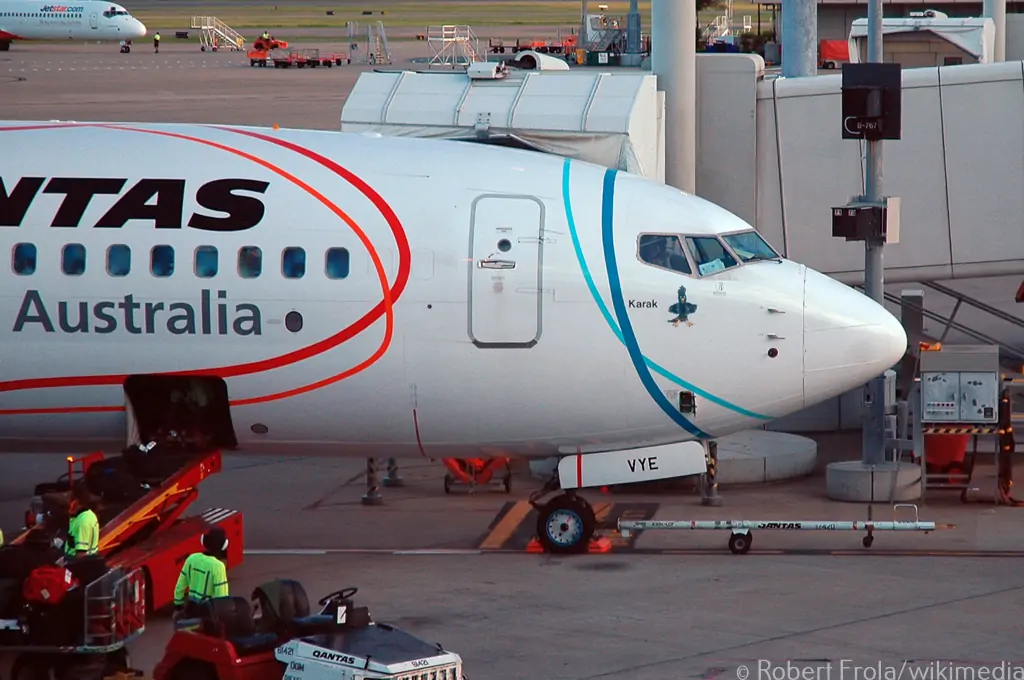
Qantas Airways, Australia's leading airline, finds itself navigating stormy skies as it grapples with the looming threat of strike action by Network Aviation pilots. Amidst a protracted pay-related dispute, the Australian Federation of Air Pilots (AFAP) has announced a fresh three-day strike, adding to the turbulence already faced by the airline. With negotiations deadlocked and tensions escalating, Qantas is gearing up to implement contingency plans to mitigate the impact on its operations and passengers.
Background of the Dispute
The roots of the conflict trace back to a standoff between Qantas and its pilots at Network Aviation, a subsidiary operating in Western Australia. Despite multiple attempts to reach a consensus, the pilots have rebuffed a proposed enterprise deal on three occasions, citing dissatisfaction with the terms offered. As the impasse persisted, frustration mounted on both sides, culminating in the AFAP's decision to escalate the dispute through industrial action.
The Escalation: AFAP's Strike Announcement
The announcement of a three-day strike by Network Aviation pilots sent shockwaves through Qantas and the broader aviation industry. With Network Aviation playing a crucial role in charter operations for the resource sector, the potential disruption has raised concerns about the continuity of essential services and logistical challenges for businesses reliant on air transport.
Qantas' Response: Contingency Planning in Motion
In response to the heightened threat of industrial action, Qantas wasted no time in mobilizing its contingency planning efforts. Recognizing the need to safeguard its customers and minimize disruption, the airline has committed to developing comprehensive strategies to navigate the impending challenges. These plans are expected to be finalized in the coming days, underscoring Qantas' proactive approach to crisis management.
Legal Maneuvers: Qantas' Pursuit of Fair Work Commission Intervention
Amidst the escalating tensions, Qantas took a decisive step by lodging an "intractable bargaining application" with the Fair Work Commission. This move reflects the company's determination to break the deadlock through external arbitration, signaling a shift towards legal intervention as negotiations reached an impasse.
Network Aviation's Perspective
Trevor Worgan, Chief Operating Officer of Network Aviation, defended the company's position in light of the escalating dispute. Emphasizing the exhaustion of negotiation efforts, Worgan reiterated the necessity of seeking arbitration to resolve the impasse. Despite the uncertainty looming over future hearing dates, Network Aviation remains steadfast in its commitment to safeguarding its interests amidst the ongoing turmoil.
Conclusion: Navigating Uncertain Skies
As Qantas braces for the impact of the impending strike, the airline faces a formidable test of its resilience and adaptability. With the specter of disruption looming large, the coming days will witness the unfolding of a high-stakes battle between management and labor. In a climate of uncertainty and volatility, Qantas' ability to weather the storm and emerge stronger will hinge on its strategic foresight, operational agility, and commitment to customer-centricity amidst adversity.
With Inputs from Reuters
Comment