

IndiGo has signaled that its operational expenses will climb following the aviation regulator's implementation of stricter flight duty time limitations for pilots, with the second phase of these rules now in effect since November 1.
Financial Impact of Regulatory Changes
The airline's Chief Financial Officer Gaurav M Negi addressed analysts during the September quarter earnings call, outlining how multiple operational challenges will pressure the carrier's cost structure. Negi explained that the airline faces mounting expenses from three primary sources: grounded aircraft, temporary plane leasing arrangements, and the newly implemented Flight Duty Time Limitation norms. He acknowledged that despite the regulator softening its initial proposal, the revised rules still carry meaningful financial implications for the airline's operations.
Two-Phase Implementation Timeline
The Directorate General of Civil Aviation rolled out the new FDTL norms through a staggered approach. The watchdog activated the first batch of regulations on July 1, while the second set became operational on November 1. The regulator originally planned to implement all twenty-two proposed clauses in June 2024 but revised this timeline after industry feedback. The DGCA ultimately brought fifteen clauses into force during the July phase, reserving the remaining provisions for the November rollout.
Regulator Adjusts Night Landing Requirements
The civil aviation authority modified its stance on night operations in the second phase, permitting pilots to conduct more nighttime landings than the original framework allowed. This adjustment emerged after the DGCA submitted an affidavit to the Delhi High Court earlier this year, explaining its phased implementation strategy. However, pilot associations have voiced strong opposition to this relaxation, raising concerns about crew fatigue despite the additional rest time provisions embedded in the Civil Aviation Requirement 2024.
Grounded Fleet Compounds Cost Pressures
Negi highlighted that IndiGo's Aircraft On Ground situation presents another significant cost challenge. The airline currently keeps more than forty planes grounded, with this figure expected to remain elevated through year-end. IndiGo CEO Pieter Elbers expressed dissatisfaction with these groundings during a virtual media interaction on Tuesday, attributing the issue to persistent problems with Pratt & Whitney engines. Elbers offered a silver lining, noting that each passing day reduces the proportion of affected engines within IndiGo's total fleet.
Capacity Expansion Strategy
The carrier has turned to damp leasing arrangements to bolster its capacity while managing its grounded fleet. This approach involves leasing aircraft along with their crews, which Negi identified as another upward cost driver. IndiGo operates approximately 2,300 daily flights as India's dominant airline, making operational efficiency critical to its market position. The CFO maintained an optimistic outlook, projecting that stable or improving ticket yields will help counterbalance these escalating operational expenses.

Read next
Will Indian Pilots Finally Get the Rest They Need, or Will Airlines Keep Them Flying?
Abhishek Nayar
05 Nov 2025

The Association of Air Line Pilots (ALPA) India has raised serious concerns about aviation safety in the country, directing a pointed appeal to the Directorate General of Civil Aviation (DGCA) on Tuesday. The pilots' association demands that the regulator implement new flight duty time and rest period norms completely, without granting exceptions that could compromise pilot safety and passenger security.
Airlines' Commercial Interests Overshadowing Safety Concerns
ALPA India has accused the aviation regulator of prioritizing certain operators' commercial interests over its fundamental responsibility to ensure flight safety. The association argues that selective relaxations in implementing the revised Civil Aviation Requirement (CAR) 2024 undermine the DGCA's primary mandate. These dispensations and deferments have been granted without conducting meaningful consultations with pilots, who bear the direct burden of fatigue-related risks and understand the safety implications better than anyone else.
The Journey of Flight Duty Time Limitations Reform
The DGCA introduced revised Flight Duty Time Limitations (FDTL) in 2024 to provide pilots with increased rest periods between flights. Airlines initially opposed these regulations despite growing evidence about pilot fatigue affecting flight safety. The aviation industry had planned to implement the new norms starting June 1, 2024, but the timeline has since undergone multiple revisions.
Implementation Gets Delayed Through Court Proceedings
The implementation strategy took a dramatic turn when the DGCA appeared before the Delhi High Court earlier this year. In its affidavit, the regulator announced that the new FDTL norms would roll out in phases rather than all at once. This decision came after the Indian Commercial Pilots Association, Indian Pilots Guild, and Federation of Indian Pilots filed petitions before the court challenging aspects of the revised regulations. The court proceedings forced the DGCA to reconsider its implementation approach.
Partial Implementation Leaves Key Protections Pending
The regulator divided the 22 proposed clauses into two implementation phases. Fifteen clauses took effect on July 1 this year, providing some relief to pilots. However, seven crucial clauses remain pending, including a significant change that reduces night landings from six to two under the new norms. These remaining provisions were scheduled to become effective from November 1, but pilots now fear further delays or exemptions could weaken these critical safety measures.
Pilots Demand Complete Implementation Without Compromise
ALPA India insists that fragmentary implementation and selective exemptions defeat the purpose of the safety reforms. The association emphasizes that pilots directly experience the physical and mental toll of inadequate rest periods, making their input essential for crafting effective regulations. By bypassing consultations with these frontline aviation professionals, the DGCA risks implementing regulations that may look comprehensive on paper but fail to address real-world safety challenges that exhausted pilots face during critical flight operations.
Read next
Azul Airlines Breaks Through Financial Turbulence With Major Creditor Deal
Abhishek Nayar
03 Nov 2025

Brazilian carrier Azul has secured a pivotal settlement with its unsecured creditors, marking a decisive breakthrough in its financial rehabilitation efforts following its Chapter 11 bankruptcy filing this past May. The airline announced this development on Saturday, signaling progress in its quest to restore financial stability.
The Settlement's Strategic Importance
The agreement with unsecured creditors establishes a concrete framework for Azul's financial recovery. The airline emphasized in its official statement that this settlement creates a transparent roadmap for navigating its Chapter 11 proceedings, removing significant uncertainty that had clouded its restructuring efforts. This development addresses one of the most complex aspects of bankruptcy reorganization, as unsecured creditors typically face the most challenging negotiations in such proceedings.
Regional Aviation Crisis Context
Azul's bankruptcy filing positioned the carrier as the most recent Latin American airline to seek court protection from creditors. The region's aviation industry has witnessed multiple carriers collapsing under severe financial pressure that originated during the COVID-19 pandemic. The pandemic devastated air travel demand across Latin America, forcing airlines to operate with drastically reduced revenues while maintaining substantial fixed costs. Many carriers in the region struggled to recover as passenger numbers remained depressed and operational expenses soared due to inflation and currency fluctuations.
Timeline for Emergence
The Brazilian airline has maintained its optimistic outlook regarding its exit from Chapter 11 protection. Company representatives previously stated their expectation to complete the bankruptcy proceedings and emerge as a restructured entity in early 2026. This timeline suggests Azul anticipates finalizing remaining negotiations with other stakeholder groups and obtaining court approval for its reorganization plan within the coming months.
Understanding Chapter 11 Protection
The Chapter 11 process allows companies to continue operating while restructuring their debts under court supervision. This legal mechanism provides breathing room for distressed companies to negotiate with creditors, reduce obligations, and develop sustainable business models. For airlines like Azul, this protection proves particularly valuable because it prevents individual creditors from seizing aircraft or other critical assets while the company works toward comprehensive solutions.
Broader Implications
Saturday's announcement demonstrates Azul's progress in addressing its financial challenges systematically. The settlement with unsecured creditors removes a major obstacle in the restructuring process, though the airline still faces additional steps before completing its transformation. The company must finalize agreements with other stakeholder groups and satisfy court requirements before emerging from bankruptcy protection. Nevertheless, this creditor settlement represents tangible momentum in Azul's efforts to rebuild its financial foundation and resume normal operations as a viable competitor in Brazil's aviation market.
With Inputs from Reuters
Read next
Can India Transform Itself into the Global Air Cargo Powerhouse the World Needs?
Abhishek Nayar
03 Nov 2025
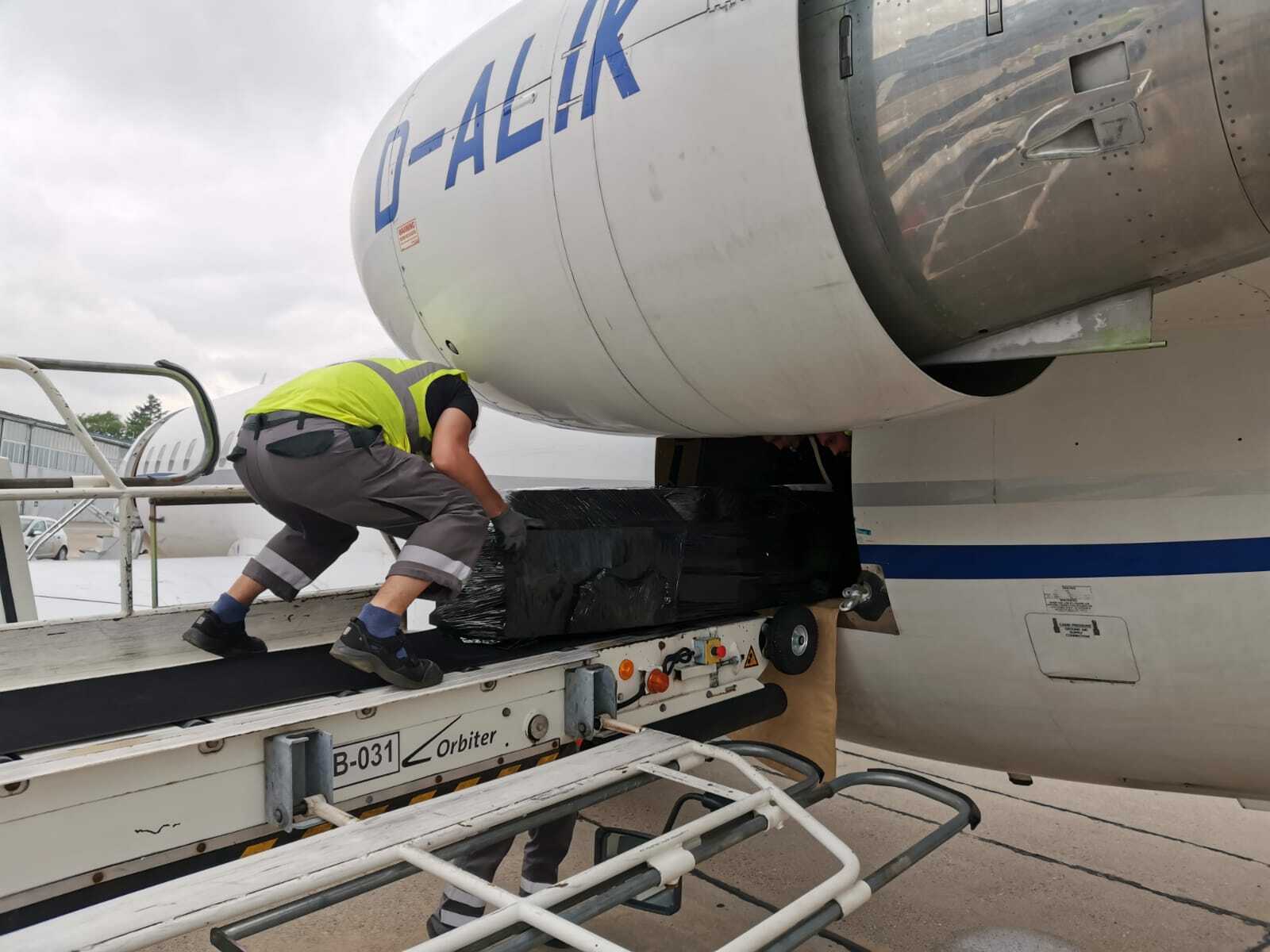
India stands at a critical juncture in its aviation history, positioning itself to capture a significant share of the global air cargo market. As the Chartered Institute of Logistics and Transport marks International Day of Supply Chain, Logistics and Transportation on November 3, industry leaders assess whether the nation possesses the ingredients necessary to emerge as the world's premier air cargo hub.
Regulatory Reforms Signal Shifting Priorities
The Bureau of Civil Aviation Security recently eliminated mandatory cargo re-screening requirements at transfer airports, streamlining operations across major transshipment centers including Mumbai, Delhi and Kolkata. This policy shift addresses long-standing bottlenecks that have hampered cargo movement efficiency. Jaideep Mirchandani, Group Chairman of Sky One, views this development as foundational to India's ambitious target of processing 10 million tonnes of cargo annually by 2030.
Mirchandani explains that reaching this milestone demands coordinated action across multiple dimensions. Policy reforms must advance in tandem with infrastructure expansion and digital transformation throughout the air cargo ecosystem. The success equation requires customs authorities, airports, airlines, shippers and freight forwarders to synchronize their operations, creating seamless cargo flows that meet international standards for speed and transparency.
Strategic Geography Meets Operational Ambition
India's geographical position offers inherent advantages that global hubs like Hong Kong and Dubai have long exploited. These established centers process massive transit cargo volumes, routing shipments across continents through their facilities. Mirchandani identifies transshipment development as a priority area where India can leverage its location between major trade corridors to capture regional cargo flows that currently bypass Indian airports.
Infrastructure Investment Accelerates Capacity Growth
Physical infrastructure expansion forms the backbone of India's cargo ambitions. Mirchandani highlights the newly inaugurated Navi Mumbai International Airport and the forthcoming Noida International Airport as transformative projects that will significantly expand national cargo handling capacity. These greenfield developments complement ongoing terminal expansions at existing airports, creating the physical foundation needed to accommodate projected volume increases.
Technology Reshapes Competitive Dynamics
Digital innovation emerges as a critical differentiator in modern cargo operations. Mirchandani emphasizes that blockchain, Internet of Things sensors and artificial intelligence can revolutionize process efficiency while reducing operational costs and enhancing transparency. India's booming e-commerce sector generates surging demand for reliable air cargo services, creating immediate opportunities for technology adoption that optimizes workflows and improves accuracy.
Balancing Growth with Sustainability
Mirchandani concludes that India must pursue a multidimensional strategy encompassing optimization, technological advancement, operational resilience, environmental stewardship and geographical advantage. Global cargo demand continues its rapid ascent, yet capacity limitations, cost structures and environmental imperatives create complex operational challenges. Smart capacity management, turnaround efficiency improvements, automation deployment and environmentally responsible practices will determine whether India realizes its potential. The question remains whether coordinated execution across public and private sectors can transform ambition into sustained competitive advantage in the global air cargo marketplace.
Read next

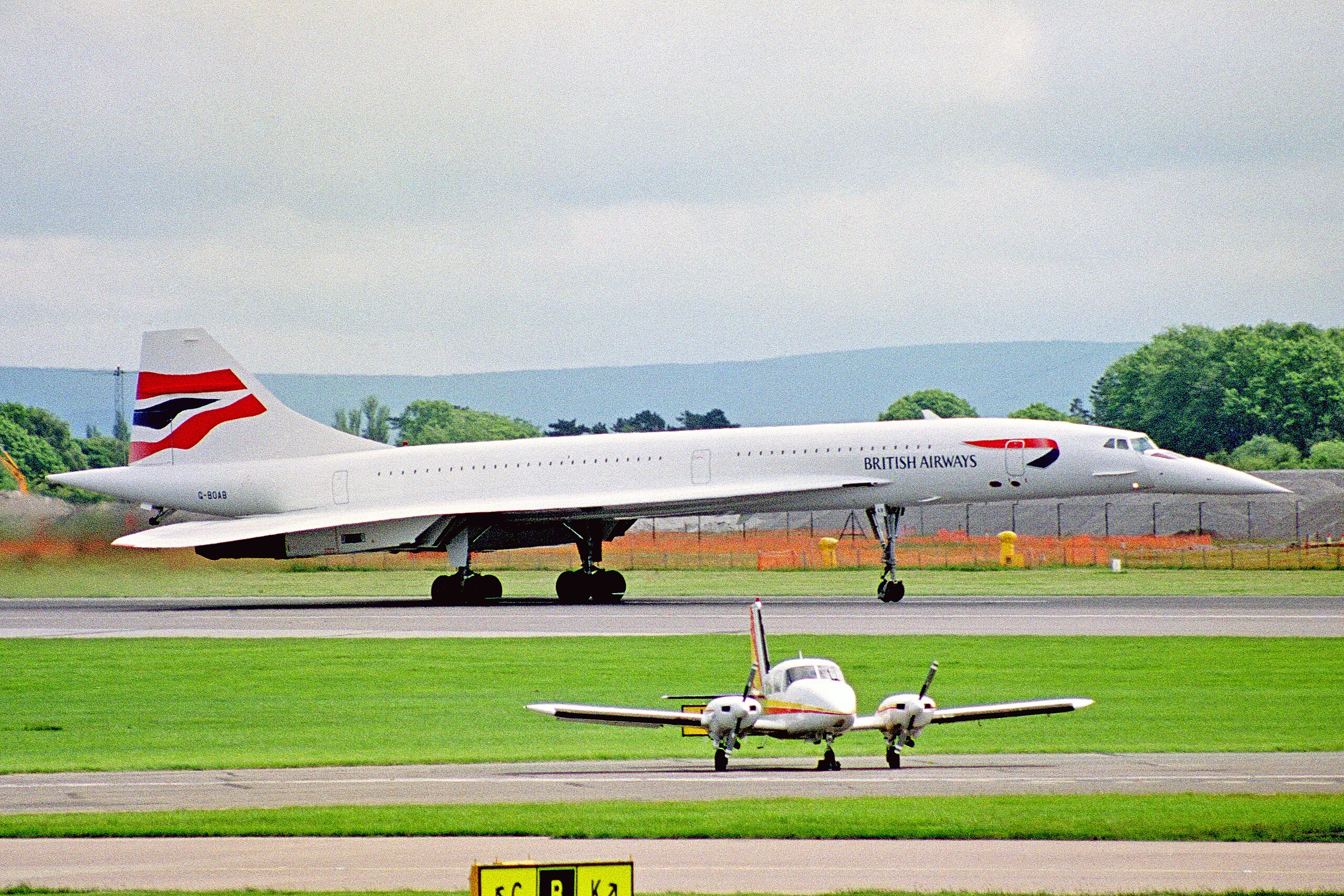
There are aircraft that transport passengers, and then there was Concorde – a machine that didn't just fly, it soared into legend. For the pilots fortunate enough to command this supersonic marvel, flying Concorde wasn't merely a job; it was an extraordinary privilege that defined their careers.
Concorde: The Supersonic Jet
Captain James Andrew, flight-development manager for Concorde at BOAC, captured the essence of what made this aircraft special. Contrary to what one might expect from such a revolutionary design, Concorde "handled very well" and was surprisingly easier to fly than conventional aircraft like the Boeing 747. Andrew described it perfectly as "a pilot's plane," and those who flew it couldn't have agreed more.
The approach to Mach 1 – that magical threshold where you break the sound barrier – presented no particular problems. Instead, pilots found themselves commanding an aircraft that responded beautifully to their inputs, combining raw power with remarkable precision. This wasn't a temperamental thoroughbred requiring constant management; it was an extension of the pilot's will.

Cockpit Engineering
What truly fascinated pilots was Concorde's instrumentation. While many systems were reasonably conventional, the aircraft featured cutting-edge technology that was genuinely revolutionary for its time. The Inertial Navigation System, installed years before GPS became commonplace, allowed pilots to calculate their position and speed with unprecedented accuracy. These "pretty fancy" computerised instruments represented aviation's future, and Concorde pilots had front-row seats to that future.
The cockpit itself told a story of intelligent design. The famous droop nose – that distinctive feature that lowered during takeoff and landing – wasn't just for show. With Concorde's delta wings forcing an extremely steep angle of attack during these critical phases, and that elegant needle nose extending forward, runway visibility would have been impossible without it. Pilots appreciated this thoughtful engineering that solved real operational challenges.

Image Credits- Flickr
Experience of Supersonic Flight
Flying at Mach 2 meant experiencing aviation in ways few pilots ever would. The aircraft would expand by 6 to 10 inches at cruising speed due to thermal expansion as external temperatures rose. Pilots could actually feel the plane growing beneath them, a visceral reminder that they were pushing the boundaries of what commercial aviation could achieve.
Cruising at altitudes between 55,000 and 60,000 feet – roughly twice the altitude of conventional airliners – offered pilots views that bordered on the celestial.
At maximum altitude, they could see the Earth's curvature, a privilege typically reserved for astronauts.
More Than Just Speed
What pilots loved most wasn't merely the velocity – though whisking passengers across the Atlantic faster than a rifle bullet certainly had its appeal. It was the complete package. Concorde could deliver 38,000 pounds of thrust through its Rolls-Royce Olympus engines, achieving a maximum speed of 1,330 mph. Yet it could also perform with grace and precision.
Pilot Brian Walpole demonstrated that Concorde could pull off manoeuvres worthy of a fighter jet, proving this wasn't just a straight-line speed machine.
That agility, combined with the ogival delta wing design's stability at high speeds, made it a genuine pleasure to fly.
Dreams Met Reality
Despite its technical brilliance and the devotion of its pilots, Concorde faced insurmountable challenges that led to its retirement in 2003. The retirement was announced by Air France and British Airways due to rising maintenance costs, low passenger numbers following the July 2000 crash, and the slump in air travel following the September 11 attacks.

Main Reasons Concorde Stopped Flying
• High Fuel Consumption: On a regular flight, Concorde consumed 6,771 gallons of fuel, and the cost quickly exceeded the profit made from the flight, rendering Concorde unprofitable to operate.
• Skyrocketing Maintenance Costs: British Airways faced the need for an enhanced maintenance programme requiring investment that could not be justified in the face of falling revenue.
• Limited Manufacturer Support: Airbus was not willing to continue producing parts beyond October 2003, making continued operations impossible.
• Noise and Route Restrictions: Concorde was restricted to only going supersonic over the ocean because it sent a shockwave strong enough to shatter glass if it went over densely populated areas.
• The 2000 Paris Crash: In 2000, an Air France Concorde's engine failure and subsequent crash killed all 109 people on board and 4 people on the ground. Many believe this event accelerated the retirement.
• Post-9/11 Travel Decline: The attacks massively lowered the demand for a premium first-class experience, and costs were continuing to mount.
• Prohibitive Ticket Prices: By the 1990s, a round-trip between the US and London could set one back by around $10,000, keeping it reserved for the affluent.
Bottom Line
When the fleet was retired after just 27 years of service, pilots lost more than an aircraft – they lost a flying experience that may never be replicated. For the pilots who flew her, Concorde represented aviation's golden age – a time when speed, luxury, and engineering excellence converged to create something truly extraordinary.
Their favourite thing? Perhaps it was simply being part of something that will never quite be matched again.
Read next
Cabin Crew Training Gets a Serious Upgrade: DGCA's New Framework Promises Sharper Skills Over Ticked Boxes
Abhishek Nayar
31 Oct 2025

India's aviation watchdog is rolling out a game-changing approach to cabin crew training, and it's about time someone asked the question: when an emergency strikes at 35,000 feet, does it matter how many hours someone spent in a classroom, or does it matter whether they can actually handle the crisis?
The Directorate General of Civil Aviation is preparing to introduce a Competency Based Training and Assessment framework specifically designed for cabin crew members, marking a significant shift in how India's aviation industry approaches safety training. Shweta Singh, who serves as Chief Flight Operations Inspector at the DGCA, revealed during a conference in the national capital on Thursday that the regulator expects to release draft norms for this new framework within the next month. The initiative builds on a similar framework that the DGCA successfully introduced for pilots back in 2022, suggesting that lessons learned from that rollout will inform this latest effort.
What Makes This Different From Traditional Training
The CBTA framework represents a fundamental departure from conventional training methods that often emphasize logging hours and completing modules. Instead, this approach zeroes in on whether crew members can actually perform critical tasks when seconds count. Singh illustrated the practical nature of this training with a vivid example that cuts to the heart of aviation safety. If a fire suddenly breaks out in the cabin during a flight, the framework will assess whether crew members can effectively manage the emergency, communicate clearly under pressure, and execute the necessary protocols. These performance indicators will be woven throughout the training program, creating a more realistic and demanding preparation process.
The framework will launch on a voluntary basis for airlines, giving carriers the flexibility to adopt the standards at their own pace while the industry adjusts to the new expectations. This measured approach acknowledges that overhauling training programs requires significant planning and resources, though the long-term benefits for passenger safety remain the driving force behind the initiative.
Why This Matters Now More Than Ever
The timing of this announcement reflects India's explosive growth in civil aviation. The country currently ranks among the world's fastest expanding aviation markets, with domestic airlines placing massive aircraft orders that signal ambitious expansion plans. As fleets grow larger and route networks spread wider, airlines will need substantially more pilots and cabin crew to staff these operations. This expansion makes the quality of training even more critical than the quantity of personnel.
Captain Ashim Mittra, Senior Vice President for Flight Operations at IndiGo, reinforced this perspective during the same conference, emphasizing that crew competency outweighs sheer numbers. His observation captures a crucial insight: having fifty crew members who merely completed their training checklist matters far less than having crew members who can think clearly and act decisively when passengers depend on them. With India's skies growing busier by the month, the DGCA's new framework ensures that growth and safety advance together rather than competing priorities.
Comment