
India's Bankruptcy Law Amendment Boosts Aircraft Leasing in Aviation Sector

Abhishek Nayar
07 Oct 2023
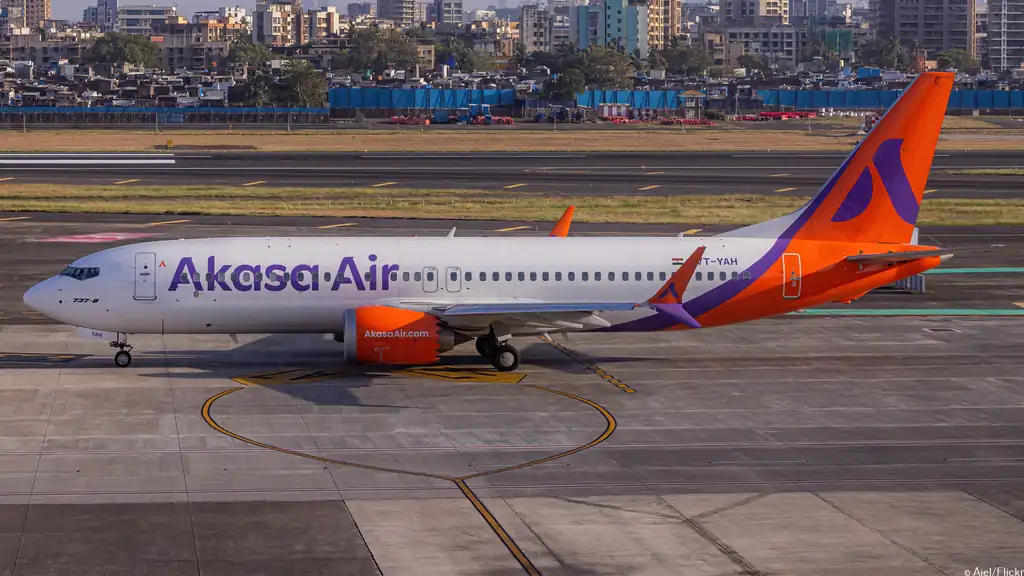
In a significant move that is expected to have a transformative impact on India's aviation sector, the Ministry of Corporate Affairs (MCA) recently made crucial amendments to the country's bankruptcy legislation. These changes have far-reaching implications, particularly for aircraft lessors, and are being hailed as a forward-thinking step towards fostering growth and competitiveness within the Indian aviation industry.
A Game-Changing Amendment
The recent amendment to India's Insolvency and Bankruptcy Code (IBC) has introduced a revision to sub-section (1) of Section 14, providing a lifeline for aircraft lessors in the country. The primary change permits aircraft lessors to repossess their aircraft, a vital privilege that was previously unavailable under the existing legal framework.
Vinay Dube, the founder and CEO of Akasa Air, has expressed his enthusiasm and approval for this amendment. He believes that it will pave the way for greater collaboration between lessors and Indian airlines by enabling more competitive leasing rates. Dube commended the government and the Civil Aviation Minister for aligning India's laws with the Cape Town Convention, a move that brings international best practices into Indian legislation.
Unlocking Growth Potential
The timing of this legislative change couldn't be more critical for the Indian aviation sector. Currently, approximately 80% of aircraft in India are leased, indicating the industry's heavy reliance on leasing agreements. As the sector continues to expand, welcoming new players and witnessing increased operational activity, the need for robust support from lessors becomes paramount.
This amendment will bolster confidence among lessors, both domestic and international, encouraging them to engage more actively with Indian airlines. Lowering the hurdles for aircraft repossession will mitigate some of the risks associated with leasing in India, attracting more lessors to invest in the growing market.

The Cape Town Convention Connection
One crucial aspect of the recent amendment is its alignment with the Cape Town Convention, which India is a signatory to, though it has not yet been ratified by the Indian Parliament. The Convention and its Protocol establish international standards and practices for the leasing and financing of movable assets, including aircraft. By incorporating these principles into Indian law, the government has signaled its commitment to meeting global standards in the aviation industry.
It's important to note that while the amendment permits lessors to repossess their aircraft, it does not apply to ongoing insolvency cases, such as the Go First case. This exception reflects the government's intention to uphold the sanctity of existing legal proceedings while introducing reforms for the future.
A Reversal of Fortunes
Before this amendment, India's standing in the eyes of the global aviation leasing community had been less than favorable. The Aviation Working Group (AWG) had previously downgraded India's rating in its compliance index for the Cape Town Convention, citing concerns about the legal framework's adequacy. In September, AWG revised India's score to two out of five from 3.5 earlier in its compliance index. The recent amendment is expected to boost India's rating and enhance its reputation as a leasing-friendly destination.
Conclusion
The recent revision to India's bankruptcy legislation, allowing aircraft lessors to repossess their aircraft, is a milestone moment for the Indian aviation industry. It not only aligns the country's laws with international best practices but also signals the government's commitment to fostering growth and competitiveness within the sector. As the Indian aviation industry continues to soar, this amendment is set to be a catalyst for increased collaboration and investment, propelling India to new heights in the global aviation arena.
With Inputs from CNBC TV
Read next

In a bid to meet the surging demand for international travel, the International Airlines Group (IAG), the parent company of British Airways, is currently engaged in negotiations with aviation giants Boeing and Airbus regarding the possible acquisition of a fleet of widebody aircraft. This move comes as part of IAG's strategy to modernize its aging Boeing 777 fleet.
The Need for Fleet Upgradation
Replacing Aging Boeing 777s
The backbone of British Airways' long-haul operations has been its Boeing 777 aircraft for years. However, with these planes showing signs of age and increased maintenance costs, it has become imperative for IAG to consider an upgrade. The negotiation with Boeing and Airbus is a strategic move to secure newer and more efficient widebody aircraft.
Meeting the Rising Demand
One of the key drivers behind this potential aircraft order is the resurgence of international travel. After a prolonged period of travel restrictions due to the global pandemic, airlines worldwide are experiencing a surge in passenger demand. This demand has put pressure on airlines like British Airways to expand their fleets to accommodate more travelers.
The Prospective Order
The Scale of the Order
According to insider’s privy to the situation, IAG is contemplating a substantial order of 20 or more widebody aircraft. This significant acquisition would not only replace the aging Boeing 777s but also position British Airways for growth in the coming years.
Exploring Options with Boeing and Airbus
IAG's negotiations are not limited to a single manufacturer. Both Boeing and Airbus are being considered as potential suppliers for the new widebody aircraft. This approach allows IAG to explore the most suitable options that align with their operational needs and financial considerations.
Industry Implications
Boosting Manufacturers
Negotiations of this magnitude have far-reaching implications for the aviation industry. A substantial order from IAG would provide a much-needed boost to both Boeing and Airbus, helping them recover from the economic downturn caused by the pandemic.
Meeting Environmental Goals
With environmental concerns becoming increasingly important, this order also presents an opportunity for IAG to invest in more fuel-efficient and environmentally friendly aircraft. Newer widebody models often come equipped with advanced technologies that reduce carbon emissions, contributing to a greener aviation industry.
Conclusion
As international travel demand continues to surge, IAG's negotiations with Boeing and Airbus signify a strategic move to stay competitive and meet passenger needs. The potential acquisition of 20 or more widebody aircraft is not only about fleet expansion but also about embracing newer, more efficient, and environmentally friendly options. The aviation industry will be watching closely as IAG makes its final decision on this significant order.
With Inputs from Reuters
Read next
India Exempts Aircraft Objects from Insolvency Law Moratorium to Boost Aviation Industry
Abhishek Nayar
07 Oct 2023

In a significant development for India's aviation industry, the Ministry of Civil Aviation has recently exempted aircraft objects from the insolvency law moratorium, signaling a commitment to bolster the confidence of aircraft lessors in the country's aviation market.
This exemption, made under the Insolvency and Bankruptcy Code (IBC), comes as a response to legal battles initiated by various aircraft lessors seeking to repossess planes leased to the grounded airline, Go First. The airline ceased operations in early May and is currently undergoing an insolvency resolution process under the IBC.
Exemption from the Moratorium
On October 3, 2023, the corporate affairs ministry issued a notification exempting aircraft objects registered in the international registry from the applicability of the moratorium under the IBC. This move was carried out in alignment with international treaties and conventions that India is a party to, particularly those related to civil aviation.
India has been a signatory to The Convention on International Interests in Mobile Equipment, commonly known as the Cape Town Convention. This convention covers various matters specific to aircraft equipment and was adopted jointly by the International Civil Aviation Organization (ICAO) and the International Institute for the Unification of Private Law in Cape Town on November 16, 2001. The recent notification serves to fulfill India's commitment to this convention, particularly in assisting lessors and financiers when insolvency proceedings are initiated against debtors.
Boosting Lessors' Confidence
The Ministry of Civil Aviation emphasized its commitment to maintaining the confidence of lessors in the Indian aviation market by reducing their risks. The move to exempt aircraft objects from the moratorium is seen as a crucial step toward achieving this goal.
One of the key reasons behind this decision is the recognition that the insolvency-related hurdles faced by lessors have been contributing to higher costs for Indian airlines. It is estimated that these impediments have resulted in an additional cost of USD 1.2-1.3 billion in terms of lease costs for Indian airlines. This financial burden has the potential to reduce the supply of aircraft on favorable terms to Indian carriers, which could adversely affect the entire aviation industry.
Furthermore, the increased lease costs could be transferred to the public in the form of higher airfares on all routes. This, in turn, would have a ripple effect on various sectors dependent on air connectivity, including tourism and cargo transportation.
In light of these potential consequences, the Ministry of Civil Aviation sees the exemption from the moratorium as a necessary measure to safeguard the interests of the aviation sector and the broader economy.
Legal Clarity and Implications
Gaurav Gupte, a Partner at the law firm Cyril Amarchand Mangaldas, pointed out that the notification provides much-needed clarity and certainty regarding the rights of aircraft creditors, including lessors, in cases of airline insolvency. However, it's essential to note that if lessors decide to repossess aircraft, it could raise doubts about the airline's ability to continue operating as a going concern and the prospects of recovery for other creditors.
Conclusion
The exemption of aircraft objects from the insolvency law moratorium is a strategic move by the Indian government to alleviate the financial burdens faced by lessors and to bolster confidence in the country's aviation market. This decision, in alignment with international conventions and treaties, is expected to have a positive impact on the aviation industry, ensuring the continued growth of air connectivity in India while also benefiting related sectors such as tourism and cargo transportation. However, it is essential to monitor how this exemption will affect the operations and financial health of airlines, particularly those undergoing insolvency resolution processes.
Read next
flynas Boosts its Fleet Size to 56 With Arrival of 5 Airbus A320neo Aircraft

Radhika Bansal
06 Oct 2023
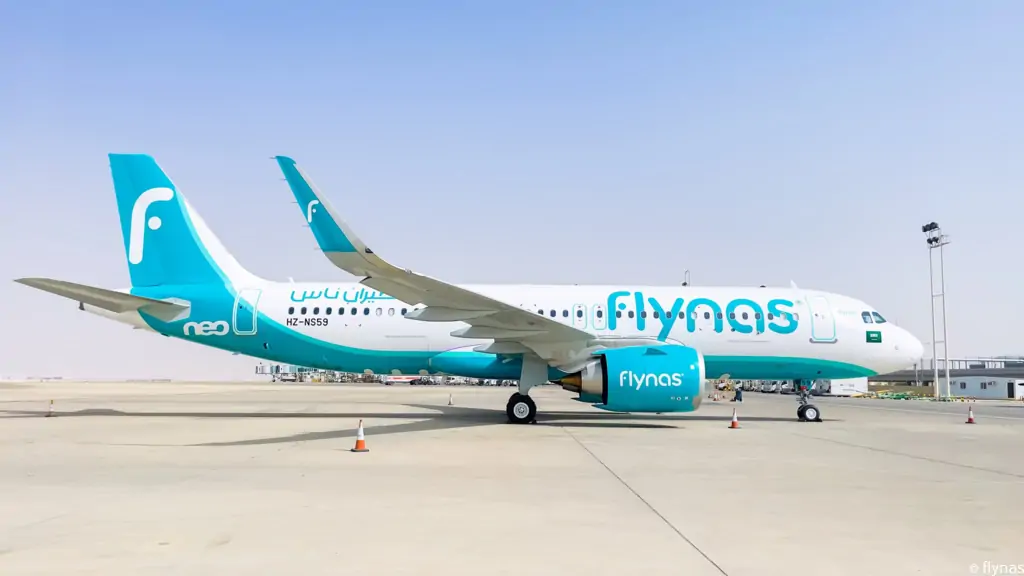
Saudi Arabian low-cost airline flynas has bolstered its fleet with the arrival of five Airbus A320neo aircraft in one month. The deliveries have boosted the carrier’s all-Airbus fleet to 56 aircraft, reflecting growth of more than 100% in the last two years.
The growth is part of flynas’ ‘We connect the world with KSA’ expansion, in line with the national civil aviation strategy to reach 330 million passengers and 100 million tourists, as well as increasing the international destinations linked with the Kingdom of Saudi Arabia to more than 250 by 2030.
With the delivery of the new five A320neo, the total number of aircraft received by flynas this year has reached 11, with 19 A320neo aircraft in total scheduled for delivery in 2023.
Bander Almohanna, CEO and managing director of flynas, said: “This new batch of aircraft reflects flynas’s commitment to achieving its strategy of growth and expansion by upscaling its fleet and multiplying the seating capacity of domestic and international flights in line with objectives of the program of serving pilgrims to streamline access to the two holy mosques and the national strategy of civil aviation to enable national airlines to participate in linking the world with the Kingdom. The rise of our fleet will enable us to increase our expansion plans in the current year through the launch of new domestic and international destinations, and in particular, the company, over the next weeks, will receive new eight planes as part of the batch scheduled for delivery in 2023 of 19 aircraft, within an order of purchasing 120 aircraft from Airbus. Hence, the company proceeds to bolster its position as the largest low-cost carrier in the Middle East and one of the top 5 airlines in the world.”
He indicated that flynas is preparing to launch its latest operations base in Madinah Airport before the end of 2023, making it the only carrier with four operations bases across Saudi Arabia.
flynas's Expansion Plans
Increasing the number of its A320neo aircraft to 39 aircraft, representing about 70% of its fleet, reinforces flynas’ commitment to sustainability and environmental protection. flynas connects more than 70 domestic and international destinations with more than 1500 weekly flights and has flown more than 60 million passengers since its launch in 2007, to reach 165 domestic and international destinations, in line with the objectives of the Saudi Vision 2030.
The arrival of so many new Airbus A320neos allows flynas to open more routes, such as the one launched this week between Jeddah and Bishkek, the capital city of Kyrgyzstan in Central Asia. The expansion into Central Asia fits with the objectives of the Pilgrim Experience Program, which aims to make access to the holy mosques easier and is a promising growth opportunity for flynas.
Since then, this A320neo has returned to a variety of domestic and international routes, operating flights from Jeddah to destinations including Dubai (DXB), Karachi (KHI), Riyadh (RUH) and Giza Sphinx International (SPX). With new aircraft arriving regularly flynas is launching a new operations base at Madinah Prince Mohammad Bin Abdulaziz Airport (MED) by the end of the year, when it will be the only airline with four operations bases across Saudi Arabia.
Read next
Noida Airport Set to Commence Operations With 65 Flights Per Day by October 2024
Radhika Bansal
06 Oct 2023

The Noida International Airport, which is being developed near Gautam Buddha Nagar’s Jewar, will begin commercial operations as anticipated by the end of 2024, and as many as 65 flights will be operational from that airport, according to government officials. The first phase of the airport, which last month received its unique IATA code DXN, has an October 2024 commissioning deadline.
Out of 65 flights under consideration, 25 would be of the ‘domestic’ category and connect to significant destinations like Mumbai, Kolkata, and Bengaluru. In addition to this, a total of 37 trips would fall under the "Regional" category; these flights would go to smaller cities where planes fly less frequently. Apart from that, 2 international flights and one cargo jet will also begin operating from Noida airport, according to reports.
For International carriers, airlines operating from Dubai and Singapore are under consideration. “If the attempt to select two foreign airlines does not work out, Indian airlines will be chosen for international travel from Noida Airport,” said an official.
"The trial run of the flights is expected to begin by the end of February 2024. “If the attempt to select two foreign airlines does not work out, Indian airlines will be chosen for international travel from Noida Airport,” said an official.
In its initial year, the airport is expected to be used by about 5 million people, according to the Techno-Economic Feasibility Report (TEFR). “The challenge will be to attract passengers, to develop a complete environment so that people choose Jewar in place of IGI Airport for their travel,” said the official.
It is projected that 5 million passengers will use the Noida International Airport by the end of the first year of operations. The projected annual footfall for the first phase is 12 million passengers. Construction of the proposed second runway will commence once the airport reaches 80% of this capacity.
Spread across 1,334 hectares in Jewar, the site is strategically connected to NCR and Western UP: It is 72 km from IGI Airport, 40 km from Noida, and 130 km from Agra. It is also about 30 km from State Highway 22A (which connects Palwal and Aligarh) and 700 metres from the Yamuna Expressway.
Noida Airport’s Multi-Modal Cargo Hub
Air India's joint venture firm AISATS and Yamuna International Airport Pvt Ltd announced signing a concessionaire agreement for a multi-modal cargo hub at the upcoming Noida International Airport which is expected to be operational in 2024. As part of the plan, Air India SATS Airport Services Private Limited (AISATS) will design, build, finance and operate the cargo hub, which is expected to come up on 87 acres of land and provide quick, convenient and intermodal connectivity to and from manufacturing hubs across the country.
Through this facility, AISATS aims to provide India's logistics sector with a cargo processing and transportation grid that will help reduce logistics costs significantly, streamline processes for seamless coordination, and bring speed and transparency to the country's supply chain, according to a release.
"The AISATS cargo hub at Noida will play an integral part in providing just-in-time cargo facilities for the north India region and will support in levelling up the Indian logistics and air cargo sectors with infrastructure, value-added services and improved cost efficiency," said Nipun Aggarwal, Chairman of AISATS.
The strategic location of this first-of-its-kind cargo hub will seamlessly connect multiple modes of transportation with consolidated ancillary and value-added services, establishing a highly efficient route for cargo throughput across India and abroad, AISATS said. The hub will provide a Coolport for handling temperature-sensitive cargo such as perishables and pharmaceuticals, along with separate domestic and international cargo terminal zones and dedicated courier terminals to handle express courier shipments.
Additionally, the MMCH will house a bulk utilisation program (BUP) facility for integrators and global forwarders, the AISATS said, along with a consolidation centre for freight forwarders and agents, a customs-controlled warehouse, a logistics park for e-commerce players and 3PL warehouses, and a trucking centre with world-class parking amenities. Through this facility, AISATS aims to provide India's logistics sector with a cargo processing and transportation grid that will help reduce logistics costs significantly, streamline processes for seamless coordination, and bring speed and transparency to the country's supply chain, according to a release.
The company's technology-driven solutions such as a cloud-based cargo management system for end-to-end cargo tracking, reporting and network connectivity will benefit all stakeholders. The company will also provide a single-window cargo community system to enable more efficient communications and a smart warehouse with technologies such as automated dimension scanners, conveyors, radio frequency identified trackers, autonomous vehicles, and video analytics-based monitoring.
Read next
IndiGo Adds Fuel Charge on Domestic & International Routes Amid Rise in ATF Prices
Radhika Bansal
06 Oct 2023

Biggest domestic carrier IndiGo on October 5 said that it is introducing a fuel charge on domestic and international routes, effective October 6 to check rising ATF prices. The decision follows the significant increase in Aviation Turbine Fuel (ATF) prices, which have surged in the last three months with consecutive monthly price hikes, the carrier said in a statement.
ATF accounts for a substantial portion of an airline's operating expenses, necessitating fare adjustment to address such a cost surge. Under this pricing structure, passengers booking IndiGo flights will incur a fuel charge, per sector, based on the sector distance, it added.
The Indian aviation sector experiences its peak travel season between October and December. The inclusion of a fuel charge component in airfares is anticipated to have a sizable impact on IndiGo’s passengers, according to experts. The civil aviation regulator Directorate General of Civil Aviation (DGCA) is yet to announce the winter schedule of flights. The last two years saw a decline in the total number of flights.

IndiGo has imposed a fuel charge of INR 300 for flights covering up to 500 kilometres (km) and INR 400 for those between 501 and 1,000 km. Such a graded increase has been applied to all flight categories, with those covering distances of 3,501 km and above incurring a fuel charge of INR 1,000. An IndiGo official said about 60% of the airline's flights were in the 0-1,000 km range. This is not the first time that IndiGo has introduced a fuel charge. In May 2018, the airline introduced a similar component to offset a substantial increase in ATF prices. This was later removed when the prices came down.
IndiGo is India’s largest airline with a domestic market share (by passengers carried) of over 60%. With over 320 aircraft in its fleet, the airline operates over 1,900 daily flights and its network covers 81 domestic and 32 international destinations.
Increasing ATF Prices
On October 1, the government jet fuel or ATF price by 5 per cent -- the fourth straight monthly increase since July. Aviation turbine fuel (ATF) price was increased by INR 5,779.84 per kilolitre, or 5.1%, in the national capital to INR 118,199.17 per kl from INR 112,419.33, according to a price notification of state-owned fuel retailers.
The increase comes from the steepest-ever 14.1% increase (INR 13,911.07 per kl) effected on September 1, and an 8.5% or INR 7,728.38 per kl increase on August 1. The fourth straight increase in jet fuel prices, which makes up for 40% of an airline's operating cost, will increase the burden on already financially-strained airlines. On July 1, the ATF price had gone up by 1.65% or INR 1,476.79 per kl. In four increases, ATF prices have gone up by a record INR 29,391.08 per kl.
State-owned Indian Oil Corporation, Bharat Petroleum Corporation Ltd, and Hindustan Petroleum Corporation Ltd revise ATF prices on the first day of every month based on the average international price in the previous month. Rates, which vary from state to state depending on the incidence of local sales tax or VAT, have been increased to firm up global prices in the last couple of months.
Global benchmark Brent crude traded at over USD 90 per barrel for most of September, although its price has softened considerably over the past few days. Along with crude oil, which is the raw material for petroleum fuels including jet fuel, margins on various fuels also firmed up in the international market. The outlook for ATF margins has been particularly robust, given the rising global demand for the fuel as air travel normalises to pre-pandemic levels. Along with crude oil, which is the raw material for petroleum fuels including ATF, margins on various fuels have also been firming up in the international market as major oil producers Saudi Arabia and Russia announced the extension of their voluntary supply cuts till the end of 2023.
Comment