
How Did India's Newest Airline Crack a Global Safety Milestone in Record Time?

Abhishek Nayar
02 Dec 2025

Akasa Air has accomplished what typically takes airlines years to achieve. The young carrier secured registration under the IATA Operational Safety Audit programme just over three years after launching operations in August 2022. This achievement places the airline among an elite group of carriers meeting the highest international safety standards.
Understanding the Significance of IOSA Registration
The International Air Transport Association established IOSA as a comprehensive evaluation system that scrutinizes how airlines manage their operations. The audit examines eight critical operational domains spanning flight operations, engineering and maintenance, cabin operations, ground handling, cargo management, security protocols, and organizational management frameworks. Airlines pursuing this certification voluntarily subject themselves to rigorous international scrutiny.
What Made This Achievement Remarkable
Akasa Air's timeline stands out in the aviation industry. Captain Gaurav Pathak, who serves as the airline's Chief of Flight Safety, emphasized that reaching this milestone within three years demonstrates exceptional discipline across the organization. The airline built its safety infrastructure from inception rather than retrofitting systems later, which accelerated the certification process.
The voluntary nature of Akasa Air's IOSA pursuit reveals strategic intent. While not mandatory for all carriers, the airline chose to undergo this demanding evaluation to validate its operational standards against global benchmarks. This decision signals the carrier's ambition to position itself as a world-class operator rather than merely meeting local regulatory requirements.

The Building Blocks of Safety Excellence
Since commencing operations, Akasa Air has implemented globally benchmarked processes throughout its organization. The airline invested heavily in training programs designed to instill safety consciousness at every operational level. This approach created a resilient safety culture where employees across departments understand their role in maintaining operational integrity.
The audit evaluated how effectively the airline integrates safety protocols into daily operations. Examiners assessed whether maintenance crews follow standardized procedures, whether flight crews execute protocols consistently, and whether ground staff maintain security standards. Every operational touchpoint underwent scrutiny during the comprehensive review.
Implications for India's Aviation Landscape
This certification enhances Akasa Air's credibility as India's aviation sector continues expanding. The recognition demonstrates that newer carriers can achieve international operational standards quickly when they prioritize safety infrastructure from the outset. The airline now operates with the same certification that established international carriers hold, eliminating any perceived gap between emerging and legacy operators.
The IOSA registration also strengthens Akasa Air's position as it scales operations across India and potentially beyond. International partners, regulators, and passengers increasingly view IOSA certification as a fundamental credential for airlines seeking to operate globally. By securing this validation early, the carrier has removed a significant barrier to future expansion.
Captain Pathak confirmed that the airline remains committed to continuous improvement despite achieving this milestone. The certification represents a foundation rather than a destination, with the airline pledging to strengthen its systems as passenger volumes grow and route networks expand.
With Inputs from Akasa Air
Read next
Indian Aviation Authority Orders Urgent Safety Fix for Dozens of Airbus Passenger Jets
Abhishek Nayar
29 Nov 2025

India's aviation safety watchdog has directed airlines to immediately inspect and fix a critical computer system on dozens of Airbus passenger aircraft flying across the country. The Directorate General of Civil Aviation issued this urgent safety order on November 29, 2025, requiring operators to address a potential vulnerability in systems that help pilots control their aircraft during flight.

What Prompted This Safety Action
The regulatory directive stems from concerns about elevator aileron computers, which form part of the sophisticated electronic systems that translate a pilot's control inputs into actual aircraft movements. These computers play an essential role in modern passenger jets, where electronic signals have largely replaced the mechanical cables and pulleys that once directly connected cockpit controls to wing and tail surfaces. The civil aviation authority referenced a European safety bulletin numbered 2025-0268-E as the technical basis for requiring these inspections and potential replacements.
Which Aircraft Need Attention
Airlines operating Airbus narrowbody jets must examine their entire fleets of A318, A319, A320, and A321 aircraft. The safety order covers both conventional models and the newer fuel-efficient variants that Airbus designates with an "N" suffix in their model numbers. Specifically, the directive affects over three dozen different aircraft configurations spanning the A319-111 through A319-173N models, numerous A320 variants from the A320-211 through A320-273N, and similarly extensive coverage of A321 models including both standard and neo versions. The aviation authority made clear that every single aircraft within these families requires attention, regardless of when it rolled off the production line or which airline operates it.
What Airlines Must Do Now
The directive establishes firm requirements that leave no room for interpretation. Airlines cannot operate any affected aircraft unless they have verified compliance with the modification requirements spelled out in the safety order. This means carriers must ground planes if necessary, until technicians complete required inspections and install replacement computers where needed. The civil aviation authority placed the burden squarely on operators to demonstrate their aircraft meet current safety standards before returning them to passenger service.
Tracking Compliance and Maintaining Records
Beyond the physical work of inspecting and modifying aircraft, the aviation regulator expects airlines to maintain meticulous documentation throughout the compliance process. Operators must update their internal records to reflect both this specific modification and ensure their master lists of mandatory safety actions remain current. This paperwork serves a vital purpose in aviation safety management, allowing regulators to track which aircraft have received necessary attention and identify any gaps in compliance across the industry.
The directive points airlines toward Chapter 7 of Section II in the Airworthiness Procedure Manual, where they will find standardized instructions for completing the required modifications and documenting their work according to regulatory expectations.
Read next
India's Aircraft Maintenance Market Races Toward $4B Milestone as Foreign Exchange Savings Mount
Abhishek Nayar
27 Nov 2025
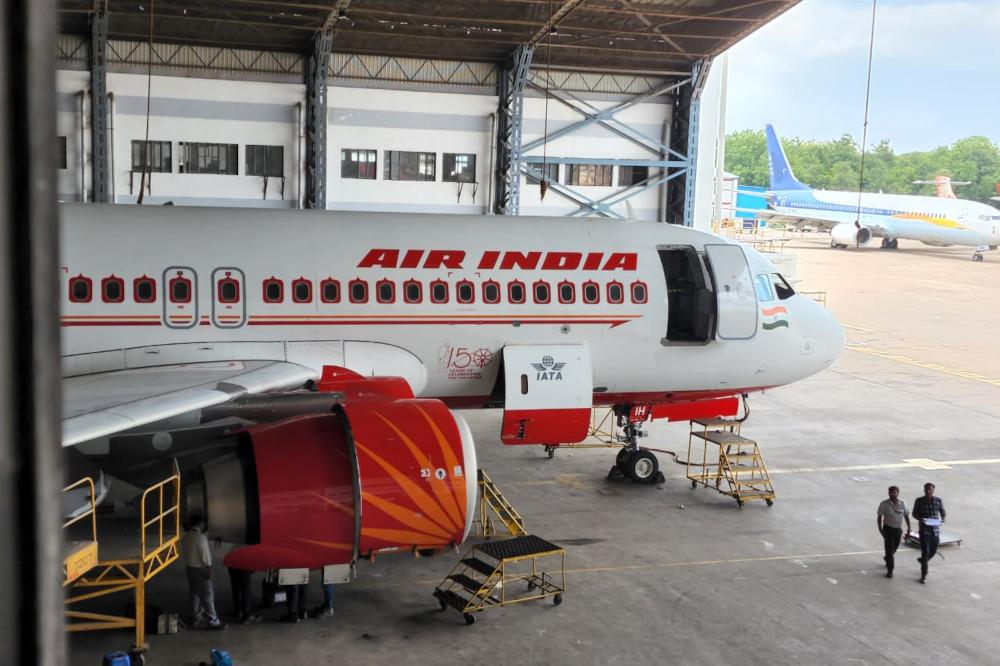
India's aviation maintenance sector stands at the threshold of transformation as the country positions itself to capture a $4 billion market opportunity by 2031, Civil Aviation Minister K Rammohan Naidu announced on Wednesday during the inauguration of a new MRO facility in the city.
India Emerges as Preferred Maintenance Destination
The Civil Aviation Minister addressed attendees at Wednesday's ceremony, marking a significant milestone for the nation's aerospace infrastructure. Naidu emphasized that India is positioning itself as the preferred destination for aircraft maintenance activities worldwide. This strategic positioning builds on the country's existing strengths while addressing a critical gap in its aviation ecosystem.
The new facility from French aerospace giant Safran Aircraft Engine Services India, scheduled to become fully operational in 2026, represents a major boost for indigenous capabilities in the rapidly expanding aviation sector. It embodies India's growing sophistication in the complex world of aircraft maintenance, repair and overhaul operations.
Massive Foreign Exchange Savings on the Horizon
The minister outlined substantial economic benefits flowing from developing indigenous MRO capabilities. Airlines currently send aircraft abroad for maintenance work, draining foreign exchange reserves. By performing these activities domestically, India expects to save up to $15 billion in foreign exchange over the coming years.
These savings will not remain locked within airline balance sheets. Naidu assured that carriers will pass cost reductions directly to passengers, making air travel more affordable for millions of Indians. This creates a virtuous cycle where improved infrastructure drives down costs, which in turn stimulates demand and justifies further investment.
Explosive Growth Meets Explosive Demand
India operates as one of the world's fastest expanding civil aviation markets, with domestic airlines placing orders exceeding 1,500 aircraft. This unprecedented fleet expansion creates enormous demand for maintenance services, making the development of domestic MRO infrastructure critically important.
The minister projected the MRO sector will grow at 8.9 percent annually, driving the market from its current size to the anticipated $4 billion valuation by 2031. This growth rate reflects both the expanding fleet size and increasing complexity of modern aircraft requiring sophisticated maintenance capabilities.
Building Blocks of a Global Aviation Hub
Naidu articulated a broader vision extending beyond maintenance facilities. India aims to establish itself as a comprehensive global aviation hub, competing with established centers in Singapore, Dubai and other regional powerhouses. Advanced MRO facilities represent essential building blocks in this ambitious construction.
The infrastructure will boost indigenous capabilities precisely when India needs them most. As airlines take delivery of hundreds of new aircraft over the next decade, having world-class maintenance infrastructure domestically eliminates bottlenecks that could otherwise constrain growth. The combination of expanding fleets, growing passenger numbers and developing infrastructure positions India uniquely in the global aviation landscape.
Read next

French aerospace giant Safran announced a bold expansion plan on Wednesday that positions India at the center of its global growth strategy. The company projects its annual revenue from India will surge to more than 3 billion euros, equivalent to $3.48 billion, by 2030—a threefold increase from current levels.
A Major Manufacturing Commitment Takes Shape
The announcement came as Safran inaugurated a sophisticated maintenance, repair, and overhaul facility for LEAP engines in Hyderabad, located in southern India. The company invested 200 million euros in this facility, which will begin operations next year. What makes this development particularly significant is Safran's commitment to generating half of its projected Indian revenue through facilities established within the country itself, as CEO Olivier Andries confirmed in his statement.
This strategic move carries substantial weight when considering Safran's global scale. The company reported total revenue of 27.32 billion euros in 2024, making India's projected contribution a meaningful portion of its worldwide operations.
Understanding the LEAP Engine's Market Position
Safran produces LEAP engines through CFM International, a joint venture with GE Aerospace that has become central to modern commercial aviation. The LEAP-1A engine competes directly with Pratt & Whitney to power the popular Airbus A320neo aircraft family, while the LEAP-1B serves as the exclusive engine option for the Boeing 737 MAX. This market positioning ensures Safran will benefit directly from India's massive aircraft procurement plans.
India's Aviation Ambitions Draw Prime Ministerial Attention
Prime Minister Narendra Modi personally addressed the facility's inauguration, revealing he had recently met with Safran's board. During his remarks, Modi urged the aerospace group to consider establishing aircraft engine and component design facilities in India, aligning with his government's broader vision to transform the country into a global aviation hub.
The Economics Driving This Transformation
Modi highlighted a compelling economic reality that underscores the urgency of developing domestic capabilities. Indian airlines have ordered more than 1,500 new aircraft, creating enormous demand for maintenance and repair services. However, facilities outside India currently handle 85 percent of this maintenance work, which significantly increases both expenses and turnaround time for Indian carriers.
What This Means for India's Aviation Sector
Safran's expansion reflects India's emergence as the world's fastest-growing aviation market. By establishing comprehensive maintenance and manufacturing capabilities within India, the company addresses practical industry needs while positioning itself to capture revenue that currently flows to overseas facilities. This approach creates jobs domestically while reducing the logistical challenges Indian airlines face when servicing their expanding fleets.
The timing of Safran's investment coincides with India's aviation sector reaching a critical inflection point, where infrastructure development must keep pace with unprecedented fleet growth to sustain the industry's upward trajectory.
With Inputs from Reuters
Read next
Adani Defence Makes Bold Entry Into Pilot Training With FSTC Acquisition Talks
Abhishek Nayar
25 Nov 2025
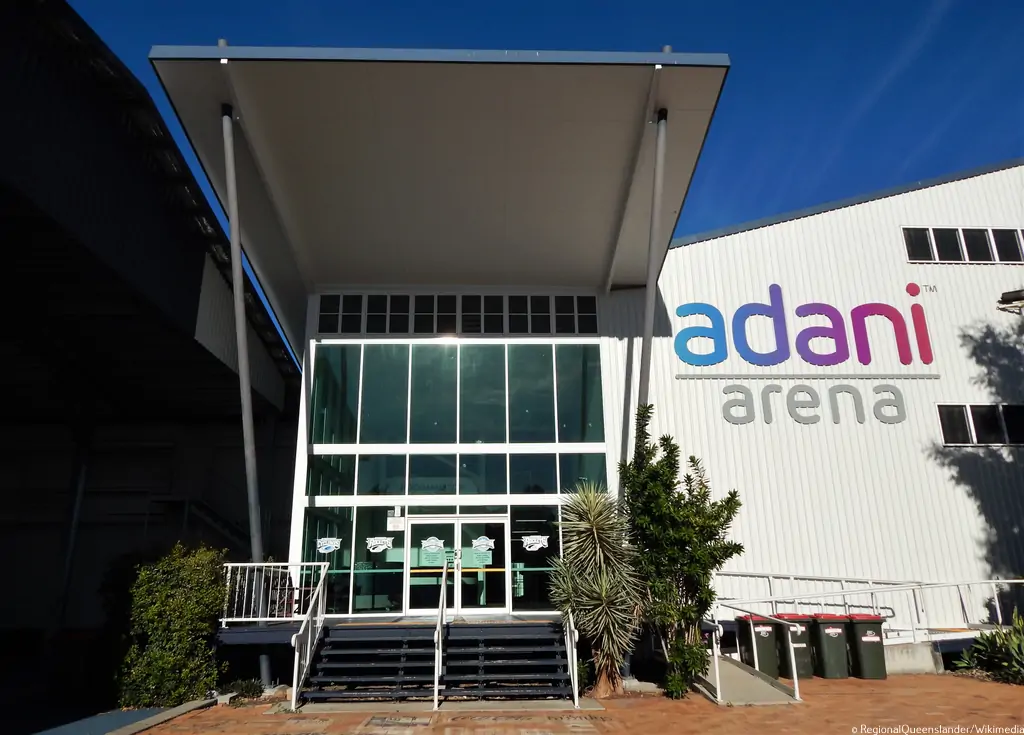
The Adani Group is negotiating what could become its most significant entry yet into India's pilot training industry. The conglomerate's defense and aerospace division has entered advanced discussions to acquire Flight Simulation Technique Centre, a move that would place it at the center of India's rapidly expanding aviation training sector.
Understanding FSTC's Operations
Flight Simulation Technique Centre has built a substantial infrastructure since its establishment in 2012. The company operates four simulator centers strategically positioned across Gurugram, Hyderabad, and Mumbai, complemented by four flight training academies in Haryana, Surat, and Solapur. This network serves both commercial airlines and defense forces, providing the mandatory simulator-based training hours that every pilot requires for certification and ongoing skill development.
The Structure Behind the Deal
Adani plans to execute this acquisition through Horizon Aero Solutions, a carefully structured partnership that reflects the group's collaborative approach to aerospace expansion. Horizon operates as a 50:50 joint venture between Adani Defense Systems and Technologies and Prime Aero. Adani Enterprises fully owns ADST, while Prajay Patel, son of NCP leader Praful Patel, promotes Prime Aero. This partnership model has already proven effective for the group's aerospace ambitions.
Adani's Aggressive Aerospace Expansion
The FSTC acquisition represents just one piece of a broader aerospace strategy that ADST has pursued with remarkable speed. In December 2024, the company made its first major move by acquiring a majority stake in Air Works, establishing its presence in aircraft maintenance, repair, and overhaul services. Shortly afterward, ADST secured a 50 percent stake in Indamer Technics, with Prime Aero holding the remaining share. The group has deployed nearly Rs 5,000 crore into the aerospace and defense sector and intends to triple this investment in the coming years.
Why Pilot Training Matters Now
The timing of this acquisition aligns with unprecedented demand for trained cockpit crews across India. Three converging factors drive this demand: heightened defense requirements, ongoing geopolitical uncertainties, and surging commercial aviation traffic. ADST already supplies drones, loitering munitions, and combat systems to Indian defense forces, including equipment deployed during Operation Sindoor, the four-day India-Pakistan confrontation in May this year.
FSTC's Financial Performance
FSTC's financial trajectory demonstrates the sector's growth potential. In FY24, the company generated operating profits of Rs 124.2 crore from revenues of Rs 214.5 crore. This marked significant growth from the previous year, when operating profits stood at Rs 96.4 crore on revenues of Rs 165.1 crore. India Ratings and Research attributed this revenue surge to continuous fleet expansion through strategic loans and internal resources.
The Competitive Landscape
FSTC would join a competitive but undersupplied market. CAE Simulation Training, a joint venture between Canada's CAE and InterGlobe Enterprises, currently trains pilots for IndiGo and Akasa. Flywings Simulator Training Centre is preparing for an initial public offering. CAE forecasts India will require approximately 20,000 new pilots over the next decade, while the broader Asia-Pacific region may need around 98,000 pilots during the same period, creating substantial opportunity for established training providers.
Read next
Can India's Airspace Handle Double the Traffic Without Building New Runways?
Abhishek Nayar
25 Nov 2025
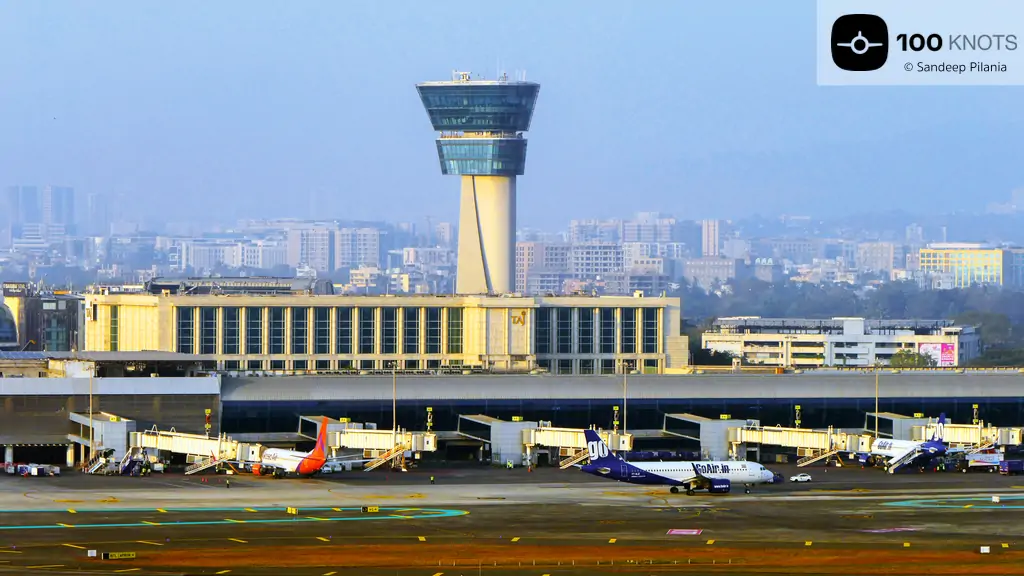
India's aviation sector faces an unexpected bottleneck. While airports have expanded their terminals and infrastructure rapidly, the airspace above them has become the real constraint. The Airports Authority of India now tackles this challenge with a ?15,000–17,000 crore modernization programme that promises to transform how aircraft move through Indian skies without constructing a single new runway.
The Invisible Infrastructure Crisis
The organization has identified 65 airports across the country that will undergo systematic upgrades by 2029. This ambitious timeline reflects the urgency of India's aviation capacity crunch. The investment splits into two distinct categories, with 60 percent dedicated to civil construction and 40 percent channeled toward technological advancement. The construction budget primarily funds air traffic control towers, structures that serve as the nerve centers for managing aircraft movements.
The technology investment targets automation systems, surveillance equipment, and advanced navigation infrastructure. These upgrades aim to squeeze more efficiency from existing airspace rather than expanding physical footprints. This approach represents a fundamental shift in how aviation authorities think about capacity constraints.
Four Strategic Locations Get Priority Treatment
AAI will construct entirely new control towers at Bhogapuram, Navi Mumbai, Dholera, and Jewar. These locations currently lack major aviation facilities but are poised to become significant hubs as their new airports commence operations. The towers will integrate next-generation air navigation services from day one, giving these emerging airports a technological advantage over older facilities that must retrofit systems into existing structures.
Different Airports, Different Solutions
The modernization programme recognizes that airports face varying levels of congestion. AAI has developed a tiered strategy that matches intervention intensity to traffic volume. Thirteen airports handling over 100 aircraft movements daily receive the most aggressive upgrades. Five of these facilities will see their control towers completely demolished and rebuilt with modern specifications. The remaining eight high-traffic airports will retain their physical structures while receiving comprehensive technological overhauls.
Twenty-two medium-traffic airports will undergo renovation projects that blend physical improvements with system upgrades. Another twenty-six airports will keep their existing towers untouched but gain enhanced navigation and surveillance capabilities. This graduated approach allows AAI to deploy resources where they generate maximum impact.
Closing the Gap with Global Standards
Indian airports currently manage 44 to 46 aircraft movements per hour at their busiest facilities. This figure trails international leaders that process 56 to 57 movements during peak periods. AAI plans to bridge this performance gap through improved automation, refined arrival and departure sequencing, and optimized aircraft spacing protocols. These enhancements collectively increase throughput without requiring additional runways or terminal gates.
Building Human Capacity Behind the Technology
Hardware upgrades alone cannot solve capacity constraints. AAI simultaneously expands its training infrastructure in Prayagraj, Hyderabad, and Gondia to develop a larger pool of qualified air traffic controllers. The Prayagraj center receives particular attention, with plans for new simulators, radar systems, and additional buildings. This investment ensures that trained personnel will be ready to operate sophisticated new systems as they come online across the network.
With Inputs from Elite Wealth
Comment