
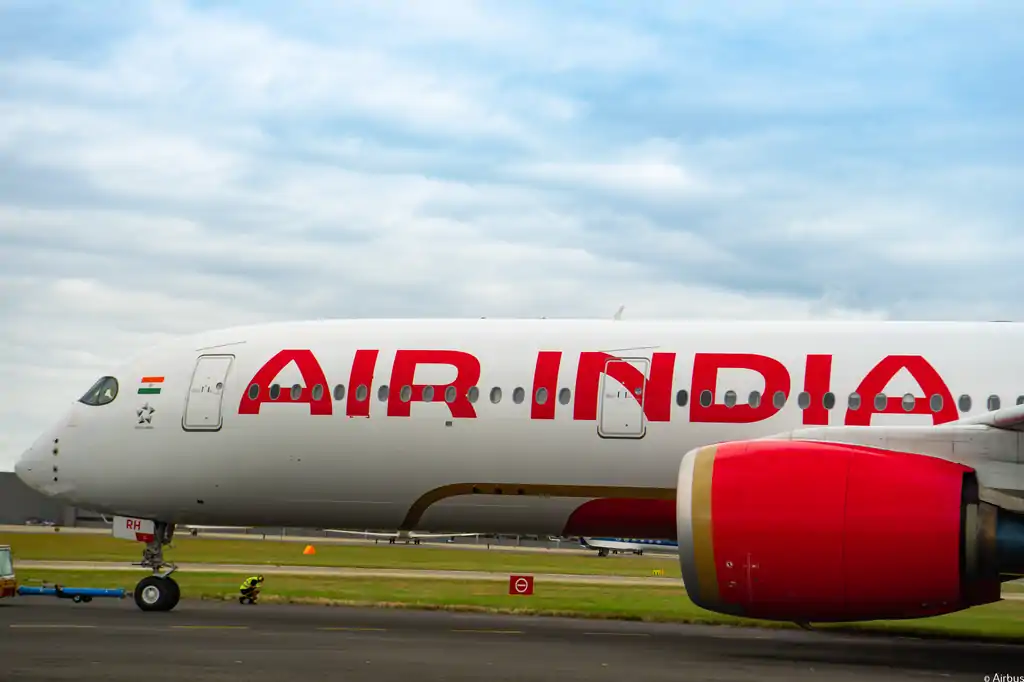
Air India's fiscal year ending March 31, 2025, opened on an optimistic note. The carrier posted operating profits in the first weeks of April 2025, suggesting that Tata Group's ambitious turnaround plan was gaining traction. Those early green shoots, however, would prove short-lived.
When Everything Went Wrong at Once
The turbulence began in May, when Pakistan shut its airspace to Indian carriers following a brief military conflict. The closure forced Air India onto longer, more expensive routes to the United States and Europe — an immediate blow to operating costs and yields.
Then came June's catastrophic event: the crash of a Boeing 787 Dreamliner that killed more than 240 people. The disaster shook the airline to its core, compelling it to scale back both international and domestic services at a time it could least afford to.
Losses Dwarf Internal Estimates
The compounding crises pushed Air India's annual loss to over 220 billion rupees — approximately $2.4 billion — far exceeding the $1.6 billion internal estimate Bloomberg News had reported in January. The record loss has now forced the airline to seek emergency financial support from its shareholders.
Tata Group, Air India's controlling shareholder, and Singapore Airlines — which holds a 25.1% stake acquired after merging its affiliate Vistara with the carrier in 2024 — are both in active talks to inject fresh capital. However, the infusion being discussed may fall short of what Air India actually needs, meaning the airline may have to explore additional financing options.

A Region on Fire, Fuel Costs Surging
The Middle East, which accounts for 16% of Air India's total capacity, has been virtually grounded due to the regional conflict. Flights to Europe and North America have been rerouted over longer, costlier paths precisely when jet fuel prices have spiked — a double blow to the bottom line.
Adding to the pressure, US President Donald Trump's tariffs on India and a crackdown on foreign worker visas further dampened passenger demand on key transatlantic routes.
Leadership Cracks at the Top
The financial crisis has also triggered a leadership rupture. CEO Campbell Wilson announced his intention to step down later this year, creating uncertainty at a critical moment. Meanwhile, the aviation regulator's latest annual audit ranked Air India worst among carriers for safety compliance — a reputational wound that compounds its financial pain.
The Stakes for Tata Group
The losses carry consequences beyond the airline itself. Bloomberg News reported in February that stemming Air India's bleeding had been set as a key condition for approving a third term for Tata Group Chairman Natarajan Chandrasekaran. Singapore Airlines has also seen its own earnings weighed down by Air India's deteriorating performance.
A Turnaround Still Waiting to Take Off
Despite aggressive fleet expansion plans and high ambitions, Air India has struggled to improve service quality and lift yields to competitive levels. The airline's target to break even operationally this fiscal year has now been firmly grounded — leaving its future course heavily dependent on shareholder resolve and market recovery.
With Inputs from Economic Times

Read next
SpiceJet Grounded by London Court: The $8 Million Debt That Exposes an Airline on the Edge
Abhishek Nayar
10 Apr 2026

London's Commercial Court has ruled against SpiceJet, ordering the Indian low-cost airline to pay approximately $8 million to Sunbird France 02 SAS, a French aircraft engine lessor, over unpaid rent and maintenance charges for three aircraft engines. The summary judgment, granted on Wednesday, found that SpiceJet had no viable defense against the claim — a damning legal verdict that further deepens the airline's already precarious financial position.
Debt Rooted in the Pandemic Years
The financial obligations in question stretch back to the height of the COVID-19 pandemic. The unpaid maintenance accruals date as far back as November 2020, while the overdue rent payments began accumulating from January 2022. These were not debts that emerged overnight — they represent years of deferred obligations that the airline failed to honor, even as the aviation industry slowly recovered from the pandemic's catastrophic blow to air travel.
Default Notices, Repossession, and a Silent Defendant
After months of non-payment, Sunbird France 02 SAS issued formal default notices in July 2022, signaling a breaking point in the lessor's patience. The repossession of all three engines followed progressively — beginning in late 2022 and concluding by mid-2023 — marking a tangible, physical consequence of the airline's inability to meet its financial commitments. What made the court's ruling particularly stark was SpiceJet's conduct during the legal proceedings: the airline did hire British solicitors, but never submitted a defense or responded to Sunbird's application. The court, left with an unopposed case, had no difficulty ruling in the lessor's favor.
A Strain Years in the Making
The Sunbird ruling is not an isolated incident but the latest chapter in a prolonged financial crisis. SpiceJet's troubles have compounded since the global grounding of the Boeing 737 MAX, which decimated its operational fleet, and the COVID-19 pandemic, which wiped out passenger demand entirely. Together, these events gutted the airline's revenue while costs continued to mount. Meanwhile, domestic competition has intensified with the rise of Akasa Air, which has steadily captured market share that SpiceJet can ill afford to lose.
Auditors Flag a Going Concern Warning
Perhaps most alarming of all is what SpiceJet's own financial disclosures reveal. The airline's auditors have formally flagged uncertainty over its ability to continue as a going concern — a warning that signals deep structural distress. Their concerns are anchored in mounting cumulative losses and a significant gap between the airline's current liabilities and its available assets. In plain terms, SpiceJet owes more than it currently has, and the runway ahead is narrowing with each passing quarter.
For an airline that once positioned itself as a budget-travel powerhouse in India's booming skies, the London court ruling is a stark reminder of how far SpiceJet has fallen — and how much further it may yet have to go before it finds stable ground.
Read next
Can a War Hundreds of Miles Away Ground Indian Airlines' Finances — And What's Being Done About It?
Abhishek Nayar
10 Apr 2026

India's airport tariff regulator, the Airports Economic Regulatory Authority of India (AERA), acting on directions from the central government, has ordered a 25% reduction in landing and parking charges at major airports for domestic flights. The relief measure, effective immediately, is set to last three months and is aimed squarely at easing the mounting financial burden on the country's airlines.
A Double Blow From Two Fronts
The financial strain on Indian carriers has been compounding from two separate but simultaneous shocks. The first is a longstanding restriction barring Indian airlines from flying over Pakistani airspace, a detour that significantly increases fuel consumption and operational costs on several key routes. The second, more recent blow has come from the ongoing Iran war, which has disrupted regional airspace and added further pressure on route efficiency and aviation costs.
India's two largest carriers, IndiGo and Air India, formally sought the rationalization of fees levied by airports, citing this convergence of pressures. Their appeal was among the key drivers behind AERA's swift intervention.
The Weight of Airport Charges
The significance of this relief becomes clearer when placed in a global context. According to the International Air Transport Association, the airline industry's leading lobby group, airport and air navigation service charges represent the third largest expense category for airlines worldwide, trailing only fuel and labour costs. For carriers already squeezed on the fuel front by conflict-driven disruptions, even a temporary reduction in infrastructure fees carries meaningful financial weight.
AERA acknowledged that the reduction would result in under-recoveries for airports — that is, revenue they would otherwise have collected — but clarified that these shortfalls will be addressed and compensated during future tariff reviews.
Markets React to a Ceasefire
On the same day news of the charge reduction circulated, IndiGo's shares surged as much as 10% on the stock exchange, hitting the upper circuit limit. The broader airline sector also rallied on the back of a separate development: the United States announced a two-week ceasefire with Iran, prompting investor optimism that airspace disruptions in the region may soon ease.
The convergence of regulatory relief and ceasefire news painted an unusually positive picture for a sector that has been navigating turbulent skies — both literally and financially — for months.
Read next
Can Willie Walsh Fix What December Broke — And Then Take IndiGo to the World?
Abhishek Nayar
06 Apr 2026

IndiGo, India's largest airline commanding roughly 65% of domestic flights, stunned the aviation world this week by appointing Willie Walsh — current head of the International Air Transport Association (IATA) and former CEO of British Airways parent International Airlines Group — as its next Chief Executive Officer.
The move came on the heels of the worst operational crisis in the carrier's two-decade history, when it cancelled thousands of flights in December due to poor planning around pilot rest and duty regulations, stranding tens of thousands of passengers and drawing sharp regulatory warnings for mismanagement.
The Man Who Once Called Aviation a "Fight for Survival"
Walsh, 64, is no stranger to turbulence. His earliest CEO role at Ireland's Aer Lingus saw him clash fiercely with unions and slash costs so aggressively that he earned the enduring nickname "Slasher Walsh."
He subsequently guided Aer Lingus through a transformation from a short- and medium-haul carrier into a long-haul airline — experience that aviation analysts at Alton Aviation Consultancy believe will prove directly valuable to IndiGo as it pursues international growth. Walsh ends his IATA term on July 31 and is expected to assume charge at IndiGo by August 3.
Reputation on the Runway — The First Crisis Walsh Must Land

Before any global ambitions can take flight, Walsh faces a more immediate task: rebuilding IndiGo's hard-earned reputation for punctuality, which was badly damaged by the December cancellations.
Rajan Mehra, former India head of Qatar Airways, acknowledged the scale of the challenge while expressing cautious optimism — noting that Walsh's depth of experience makes him capable of steering the recovery, even if the process will not happen overnight.
Markets React, Investors Place Their Bets
Financial markets responded with immediate confidence. IndiGo's share price surged 6% the day after the appointment was announced — a notable reversal for a stock that had shed 22% of its value in the year to that point, following an 11% gain the year before. Jefferies analysts noted in a client note that Walsh's experience helming a multi-brand airline group positions IndiGo well for stronger international partnerships, policy negotiations, and network-building.
The Global Ambitions — And the Storms Ahead
Under outgoing CEO Pieter Elbers, IndiGo expanded from roughly 25 international destinations in 2022 to more than 40 today, ordered 60 Airbus widebody aircraft, and secured long-range single-aisle jets. Its first Airbus A350 is expected in 2028.
Walsh inherits this expanding footprint alongside serious external headwinds — Pakistan's airspace ban on Indian airlines following last year's military tensions has forced costly reroutes to western destinations, while ongoing Middle East conflict has pushed fuel prices higher and added further delays to international routes.
Aviation advisory CAPA India notes that scaling internationally will also require Walsh to restructure IndiGo's operating model and bring in senior leadership beneath him.
Read next
Will a Partial ATF Price Hike Be Enough to Shield Indian Airlines From the Global Storm?
Abhishek Nayar
02 Apr 2026

In a move welcomed by the Indian aviation industry, the government on Wednesday intervened to cushion domestic carriers from spiraling fuel costs, choosing a measured approach over a full-blown price revision. PSU oil marketing companies, operating under the Ministry of Petroleum and in consultation with the Ministry of Civil Aviation, announced a partial and staggered increase in Aviation Turbine Fuel (ATF) prices of 25 per cent or Rs 15 per litre for domestic airlines. Civil Aviation Minister K Rammohan Naidu shared the development in a post on X, framing it as a deliberate and considered decision made with the industry's stability in mind.
West Asia Conflict Adds Fuel to the Fire
The timing of the intervention is no coincidence. Indian carriers have been bearing the financial brunt of ongoing airspace restrictions in the West Asia region, a direct consequence of the conflict gripping the area. These restrictions are forcing airlines to reroute international flights along significantly longer paths, leading to substantially higher fuel consumption per journey. The compounding effect of global market volatility and these operational disruptions had placed Indian aviation in a particularly precarious position, making some form of government relief not just welcome, but necessary.
SpiceJet CMD Calls It a 'Significant Relief'
SpiceJet Chairman and Managing Director Ajay Singh was among the first industry voices to respond to the government's announcement. In a formal statement issued the same day, Singh described the decision as a significant relief for the Indian aviation sector at a time of unprecedented global uncertainty. He underscored that the government's timely intervention would go a long way in helping airlines navigate what he characterized as one of the most challenging global crises in recent times — a period defined by severe external disruptions and extreme volatility in fuel markets.
A Calibrated Move, Not a Complete Fix
The decision to implement only a partial increase rather than passing the full burden onto carriers reflects an awareness within the government that the industry remains fragile. While the relief does not eliminate the cost pressures airlines face, it signals a policy posture that prioritizes sector resilience over revenue optimization in the short term — a stance the industry will be watching closely as the global situation continues to evolve.
Read next
When geopolitical tensions flare thousands of kilometres from Indian shores, the turbulence doesn't stay contained. The ongoing West Asia conflict — drawing in the United States, Israel, and Iran — has been sending shockwaves through Indian aviation ever since hostilities escalated on February 28, and the country's civil aviation ministry is now scrambling to cushion the blow.
The Cost Crisis Gripping Indian Airlines
At the heart of the crisis lies a deceptively simple equation: jet fuel accounts for roughly 40 per cent of an airline's total operational costs. When oil prices surge and flight routes lengthen simultaneously, that number climbs fast. The West Asia turmoil has done exactly that — spiking crude prices while forcing Indian carriers to reroute flights to Europe and North America through longer corridors, burning significantly more fuel per journey. Airlines have also been compelled to cut scheduled services to the West Asia region altogether, shrinking revenues even as costs balloon.
Ministry Steps In: Tax Relief on the Table
Recognizing the mounting pressure, Civil Aviation Minister K. Rammohan Naidu and the ministry have taken the issue directly to state governments. A highly placed source confirmed that discussions have been initiated with chief ministers across the country, exploring the possibility of reducing the Value Added Tax (VAT) levied on Aviation Turbine Fuel (ATF).
The disparity in state-level ATF taxation is striking — and telling. Delhi charges a VAT of 25 per cent on jet fuel, while neighboring Uttar Pradesh levies just 1 per cent. Such wide variation means that airlines operating out of high-tax states bear a structurally heavier cost burden, making the case for rationalization all the more urgent.
Centre Acts on Excise, But ATF Gets a Different Treatment
The central government moved this week to cut excise duty on petrol and diesel in response to surging oil prices — a signal that it is alive to the fuel cost emergency. However, the special additional excise duty on the export of diesel and ATF was simultaneously hiked, a deliberate policy choice aimed at prioritizing the domestic availability of these fuels rather than allowing them to flow out to international markets.
DGCA Stays in Contact With Global Counterparts
On the regulatory front, India's aviation watchdog, the Directorate General of Civil Aviation (DGCA), has been maintaining active contact with its counterparts in other countries to track the evolving West Asia situation. On March 26, DGCA chief Fiaz Ahmed Kidwai acknowledged plainly that airlines were facing serious challenges and that operating costs were climbing. While expressing cautious optimism — "we hope we see better days" — he underlined that the DGCA was simultaneously pushing for ease of doing business for carriers, alongside stronger protections for passenger rights.
What Comes Next
The ministry is reportedly weighing multiple options beyond the fuel tax conversations, though specifics remain closely held. For now, the industry watches and waits — hoping that policy relief arrives before the financial strain becomes irreversible.
Comment