

India is on the brink of a revolutionary transformation in air navigation, thanks to the deployment of its regional Satellite-Based Augmentation System (SBAS) known as GAGAN (GPS Aided GEO Augmented Navigation). This advanced system is set to redefine how air navigation is conducted in India, making it safer, more accurate, and more reliable. With over 25 airports already conducting successful trial satellite-based approaches, and many more in the pipeline, the future of Indian aviation looks promising.
What is SBAS?
Satellite-Based Augmentation Systems (SBAS) enhance the performance of Global Navigation Satellite Systems (GNSS), such as GPS. They improve the accuracy, reliability, and integrity of GNSS signals by correcting measurement errors and providing crucial information about signal quality. The key parameters of SBAS are:
- Accuracy: The precision of the location data.
- Availability: The availability of the service when needed.
- Integrity: The trustworthiness of the information.
- Continuity: The system's ability to provide an uninterrupted service.
The Importance of SBAS in Aviation
For satellite-based approaches, particularly Localizer Performance with Vertical guidance (LPV) approaches, these four parameters are essential. If any parameter is compromised, the approach cannot be completed, posing a significant risk. LPV approaches offer a precision comparable to Instrument Landing Systems (ILS) but with the advantage of not requiring ground-based equipment, making them a game-changer for aviation.
GAGAN: India's Pride
GAGAN places India among an elite group of nations with operational SBAS systems, including the USA (WAAS), Europe (EGNOS), Japan (MSAS), Russia (SDCM), and the Australia-New Zealand joint venture (SPAN). This achievement not only enhances India's aviation capabilities but also showcases its technological prowess on the global stage.
Challenges and Solutions
Ionospheric Activity

One significant challenge for GAGAN is India's proximity to the equator, where ionospheric activity can affect GNSS signals. This activity introduces errors, particularly in the integrity parameter, which is critical for safe LPV approaches. During trials, vertical protection levels (VPL) sometimes exceeded acceptable limits, reaching up to 100 meters, which necessitated discontinuing the approach.

Mitigation Strategies
Through persistent efforts and innovative strategies, such as conducting approaches early in the morning when ionospheric activity is minimal, Indian aviation authorities successfully maintained VPLs below the critical 50-meter threshold. This strategic adjustment has led to numerous successful and precise LPV approaches, marking significant progress.
The Future with Dual Frequency Multi Constellation GNSS Receivers
To fully overcome ionospheric challenges, the implementation of Dual Frequency Multi Constellation GNSS receivers is essential. These receivers can access multiple signals from each satellite, effectively removing major ionospheric errors and reducing standalone accuracy to within a single meter. This technology is already in use in regions like Europe and the USA, where LPV approaches are standard at most airports.
The Path Forward
India's commitment to enhancing its air navigation system through GAGAN is evident. As trials continue and technology advances, the adoption of dual frequency receivers will be a pivotal step. This upgrade will ensure that GAGAN consistently meets all key parameters, paving the way for widespread implementation of LPV approaches across the country.
Conclusion
The successful integration of GAGAN into India's aviation infrastructure promises to redefine air navigation. By addressing current challenges and embracing advanced technologies, India is poised to join the ranks of nations where satellite-based approaches are the norm. This transformation will not only enhance safety and efficiency but also revolutionize the aviation industry in India, making it a global leader in satellite-based air navigation.

Read next
Alaska Airlines Strikes a Tentative Deal: Can It Prevent a Summer Travel Chaos?

Abhishek Nayar
24 Jun 2024
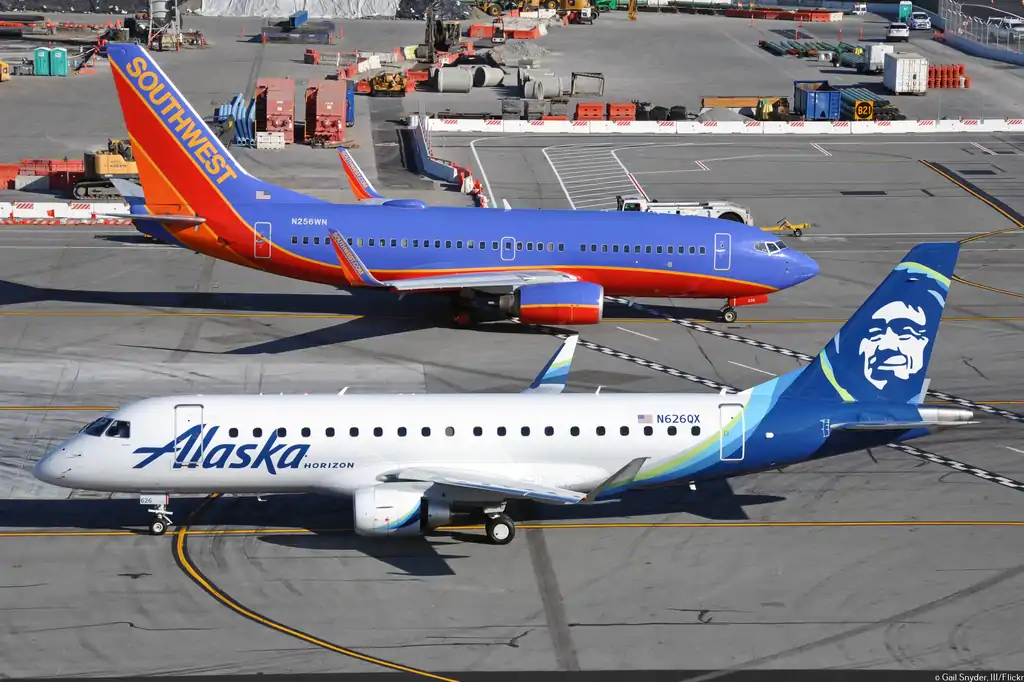
Seattle-based Alaska Airlines has successfully reached a tentative agreement with its flight attendants union, narrowly averting a potential strike during the peak summer travel season. The negotiations concluded on Friday, resulting in what is reported to be a record-breaking contract for the airline’s crew members. While this tentative deal marks a significant milestone, the contract still awaits ratification, requiring approval from the union's leadership and a subsequent vote by its members.
High Stakes Amid Growing Tensions
The urgency for Alaska Airlines to finalize this deal cannot be understated. Earlier this month, flight attendants from the airline staged a picket at Seattle-Tacoma International Airport (SEA), demanding fair wages and improved working conditions. The threat of a strike loomed large, with the airline's summer schedule already expanded by an additional million seats to accommodate the anticipated surge in travel demand.
Implications for the Summer Travel Season
A strike by Alaska Airlines' flight attendants would have caused severe operational disruptions, significantly impacting travelers during one of the busiest seasons of the year. The tentative agreement comes as a relief to both the airline and its passengers, who can now look forward to a smoother travel experience.
The Broader Industry Landscape
Alaska Airlines' successful negotiation is notable in the context of ongoing labor disputes within the US aviation industry. Other major carriers, including American Airlines and United Airlines, are also embroiled in contract negotiations with their flight attendants’ unions. However, not all airlines have reached positive outcomes. As of Thursday, discussions between American Airlines and its flight attendants' union ended without a resolution, raising the possibility of a strike.
The Path to Ratification
The next steps for Alaska Airlines involve the fine-tuning and review of the contract details by the union’s leadership, followed by a membership vote. The airline remains optimistic that the union will find the terms satisfactory, thus preventing any strike action.
What If the Deal Falls Through?
Should the deal not pass the ratification process, the flight attendants could potentially strike 30 days after receiving approval from the National Mediation Board. This looming possibility underscores the importance of a favorable agreement to avoid the operational chaos that a strike would bring.
Looking Ahead
As the ratification process unfolds, all eyes are on Alaska Airlines and its flight attendants’ union. The successful negotiation of this tentative deal serves as a crucial step in maintaining smooth operations during the peak travel season. Moreover, it highlights the broader challenges and dynamics at play within the aviation industry, where labor relations remain a critical factor in ensuring operational stability and passenger satisfaction.
Read next
Will Boeing Face Criminal Prosecution Over 737 MAX Crashes? DOJ’s Decision Looms
Abhishek Nayar
24 Jun 2024
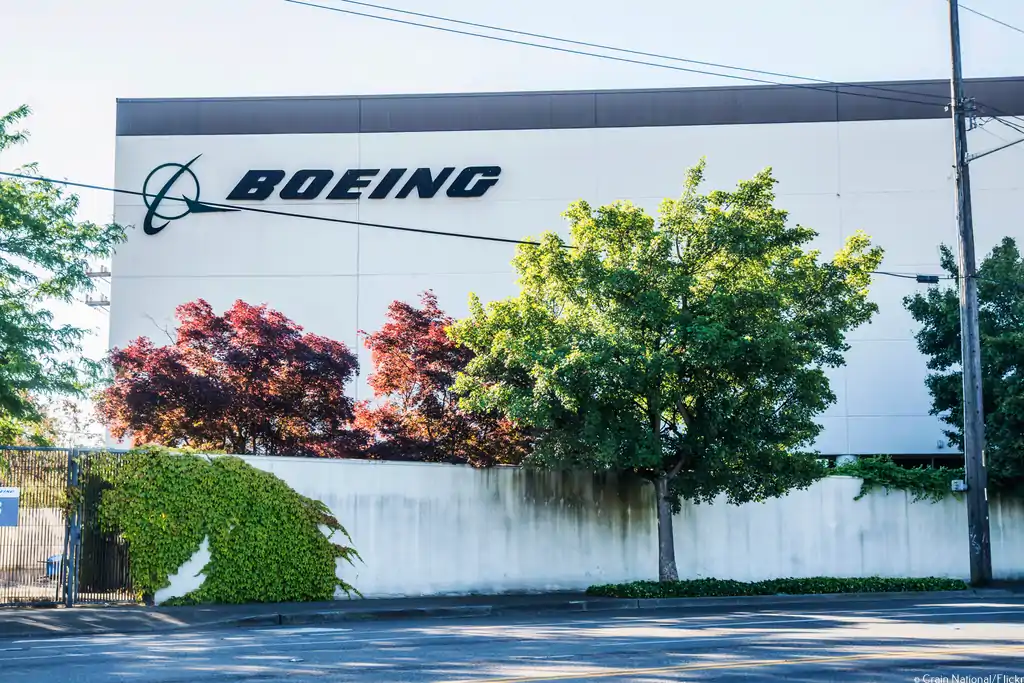
The U.S. Department of Justice (DOJ) is currently grappling with a critical decision: whether to pursue a criminal prosecution of Boeing for allegedly violating a deferred prosecution agreement (DPA) established in 2021. This agreement was originally put in place to shield Boeing from criminal prosecution related to two fatal 737 MAX crashes in 2018 and 2019. As the deadline for the DOJ’s decision approaches, the stakes are high for both Boeing and the families of the crash victims.
Background: The Tragic Crashes
In 2018 and 2019, two Boeing 737 MAX aircraft crashed, resulting in the tragic loss of 346 lives. These crashes, occurring in Indonesia and Ethiopia, were attributed to flaws in the aircraft's design, specifically the Maneuvering Characteristics Augmentation System (MCAS). Following extensive investigations, Boeing faced intense scrutiny and legal challenges.
The 2021 Deferred Prosecution Agreement
In January 2021, Boeing reached a DPA with the DOJ, agreeing to pay $2.5 billion to resolve a criminal investigation into its conduct surrounding the crashes. This agreement required Boeing to overhaul its compliance practices and shielded the company from prosecution over a fraud conspiracy charge.
Alleged Violations and DOJ’s Investigation
In May 2023, the DOJ announced that Boeing had violated the terms of the DPA. This conclusion was reached after an incident involving a new Alaska Airlines Boeing 737 MAX 9 jet on January 5, 2023, exposed continued safety and quality issues at Boeing. Despite these findings, Boeing has maintained that it complied with the agreement.

Conflicting Reports and DOJ’s Response
Recently, the New York Times reported that the DOJ was expected to allow Boeing to avoid criminal prosecution for violating the DPA. However, Glenn Leon, chief of the DOJ’s fraud section, refuted this claim in an email to lawyers representing the victims' families, stating, "The department has not made a decision on how to proceed or whether to pursue prosecution of Boeing." The Times later revised its story to indicate that the DOJ is still considering its options.
Families of Victims Demand Accountability
Families of the victims have long criticized the DOJ’s handling of Boeing's case, arguing that the initial DPA failed to hold the company fully accountable for the crashes. This week, they urged prosecutors to impose a hefty fine of nearly $25 billion on Boeing and to move forward with a criminal prosecution.
DOJ’s Options and Upcoming Deadline
Federal prosecutors have until July 7 to inform a federal judge in Texas of their decision. Their options include proceeding with a criminal case against Boeing, negotiating a plea deal, or extending the deferred prosecution agreement for another year. Each potential outcome carries significant implications for Boeing’s future and its accountability.
What’s Next for Boeing?
As the DOJ deliberates, the aviation industry and the public at large await a resolution. Will the DOJ pursue a criminal prosecution, or will Boeing once again avoid the full force of legal repercussions? The decision will not only impact Boeing but also set a precedent for corporate accountability in cases of severe negligence and misconduct.
Conclusion
The question of Boeing’s accountability remains unanswered as the DOJ weighs its options. For the families of the crash victims and for Boeing itself, the forthcoming decision will be a crucial turning point. The world watches closely, seeking justice for the lives lost and hoping for a future where corporate responsibility takes precedence over profit.
With Inputs from Reuters
Read next
COMAC's Ascent: Will the Chinese Planemaker Disrupt Airbus and Boeing’s Duopoly?
Abhishek Nayar
22 Jun 2024

In an evolving aviation landscape, the duopoly of Airbus and Boeing, the world's leading aircraft manufacturers, is facing potential disruption. The emergence of the Commercial Aircraft Corporation of China (COMAC) as a formidable player in the passenger jet market signifies a shift that could transform the industry. COMAC’s C919 jet, designed to compete with Airbus' A320 and Boeing's 737 MAX, is garnering attention and optimism about breaking the long-standing duopoly.
The Current Market Landscape
Airbus and Boeing dominate the aircraft supply chain for airlines worldwide. However, both companies are currently navigating significant challenges. Airbus is grappling with production bottlenecks amid record-high orders, while Boeing is embroiled in safety investigations and production issues following a mid-air panel blowout incident in January.
COMAC’s Unique Opportunity
Firoz Tarapore, CEO of Dubai Aerospace Enterprise (DAE), one of the top 10 aircraft leasing companies globally, believes that COMAC has a unique opportunity over the next decade. Tarapore described the C919 as a "perfectly fine aircraft" and noted that COMAC could transform the duopoly into a triopoly due to Airbus' production saturation and Boeing's ongoing troubles.
Expanding Horizons: COMAC's Global Ambitions
Currently, COMAC's planes are predominantly operational within China and with an Indonesian airline. The Chinese planemaker is aggressively pursuing certification from Europe’s aviation regulator for its C919 jet, aiming to attract international customers. However, industry insiders caution that without certifications from the U.S. or European Union and the development of more efficient aircraft, COMAC’s international inroads will be challenging.
Robust Demand and Strategic Inroads
Despite these challenges, Tarapore remains optimistic. He highlights the "extremely robust" demand for aircraft in China and nearby regions, suggesting that COMAC has a "very good chance of making a solid inroad." The post-pandemic surge in global travel has led to a spike in aircraft orders. Supply chain issues and maintenance industry labor shortages have caused delivery delays, creating a window of opportunity for COMAC to capture market interest.
Production Woes of Airbus and Boeing
Airbus has announced that production slots for its popular A320 family are fully booked until the decade's end. Meanwhile, Boeing’s situation is more precarious. The company is dealing with a significant safety crisis, ongoing U.S. regulatory investigations, potential prosecutions, and a decline in production rates for its best-selling 737 MAX.
A Vision for the Future
Tarapore envisions a future where the industry is no longer dominated by Airbus and Boeing alone. He hopes Boeing will undergo structural and cultural reforms to return to producing high-quality aircraft at historic production rates. For DAE, which manages a fleet of 500 aircraft, Boeing's delivery delays have impacted their supply chain, receiving only half the expected aircraft this year.
Conclusion
Looking ahead 30 years, Tarapore is confident that the aviation industry will no longer be a duopoly. COMAC is poised to play a much more significant role, driven by robust demand in the Asian market and the persistent challenges faced by Airbus and Boeing. As COMAC continues to innovate and expand, the aviation industry may witness a significant shift, welcoming a new major player into the fold.
The Takeaway
As COMAC strives to gain international certification and efficiency, the landscape of the aviation industry could see substantial changes. Airlines and lessors around the world are closely watching COMAC’s progress, which could redefine competitive dynamics and offer more choices in the global market. The next decade will be crucial in determining whether COMAC can indeed break the Airbus-Boeing duopoly, ushering in an era of triopoly in the passenger jet market.
With Inputs from Reuters
Read next
Is Boeing About to Reacquire Spirit AeroSystems? A Complex Deal on the Horizon
Abhishek Nayar
24 Jun 2024
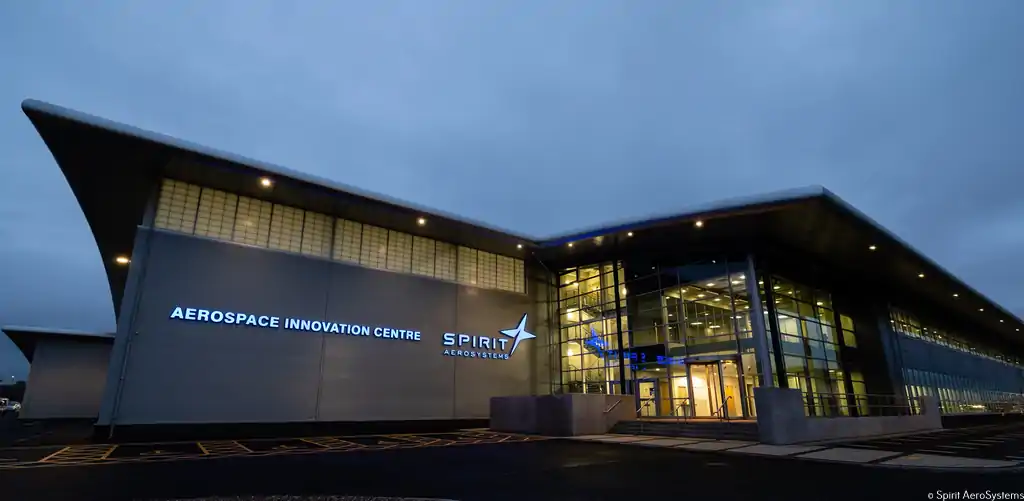
The aerospace industry is abuzz with speculation and anticipation as Boeing inches closer to potentially reacquiring its former subsidiary, Spirit AeroSystems. This move, which could significantly reshape the dynamics within the sector, has been closely monitored by analysts, investors, and industry insiders. With the mid-year deadline fast approaching, let's dive into the details of this intricate deal and its potential implications.
A Deal in the Making: The Current Status
Last month, Boeing’s Chief Financial Officer, Brian West, indicated that an acquisition deal with Spirit AeroSystems might be finalized by mid-year. Now, with the deadline looming, reports suggest that the agreement is nearing completion. Both The Air Current and Reuters reported on June 20 that an announcement might be imminent, with Boeing possibly revealing the agreement next week.
The Airbus Factor: A Key Player in the Negotiations
One of the most significant complexities of this deal is Spirit AeroSystems' relationship with both Boeing and Airbus. Spirit supplies critical aerostructures to both aerospace giants, necessitating Airbus's involvement in the acquisition discussions. According to Bloomberg, Airbus is close to securing an agreement to acquire several Spirit units that supply its programs. This potential arrangement highlights the intricate nature of the deal and underscores the necessity of careful negotiation to satisfy all parties involved.
Stock Market Reaction: Investor Optimism
The market has responded positively to the prospect of this acquisition. Spirit AeroSystems' stock price surged by approximately 8% on June 21, reflecting investor confidence in the potential benefits of the deal. Despite the enthusiasm, Boeing has remained tight-lipped, declining to comment on the matter, while neither Spirit nor Airbus has responded to requests for comments.
Challenges and Considerations: Spirit's Troubles
Spirit AeroSystems has faced numerous operational and financial challenges in recent years, grappling with quality problems amid labor shortages and incurring substantial losses on its composite structures work. Boeing, which originally owned Spirit before spinning it off in 2005, revealed in March that it was contemplating reacquiring the supplier to address these persistent issues and stabilize a crucial part of its supply chain.
Boeing's Strategic Move: Fixing Supply Chain Issues
Boeing's consideration of this acquisition comes on the heels of a serious incident in January involving an Alaska Airlines 737 Max 9's door-plug failure. Investigations revealed that Boeing employees had improperly reinstalled a door plug initially removed for Spirit personnel to fix a rivet issue. This incident underscored the critical need for Boeing to streamline and secure its supply chain, making the potential reacquisition of Spirit a strategic move.
Airbus's Potential Acquisitions: A Global Impact
For Airbus, the potential acquisition of Spirit units is significant. Bloomberg reported that Airbus is nearing a deal to acquire operations in Kinston, North Carolina; Saint-Nazaire, France; Belfast, Northern Ireland; and Prestwick, Scotland. These facilities are integral to Airbus's production, with Kinston producing A350 center-fuselage sections and Belfast manufacturing A220 wings. Such acquisitions would allow Airbus to maintain control over critical components of its supply chain, mitigating any disruptions from Boeing’s potential reacquisition of Spirit.
The Path Forward: Divestitures and Defense Contracts
A Boeing acquisition of Spirit AeroSystems is far from straightforward. Analysts suggest that Spirit would likely need to divest its Airbus-related work as a prerequisite. Additionally, Spirit's involvement in classified defense programs could pose competitive conflicts if integrated into Boeing’s operations, necessitating further divestitures or restructuring.
Conclusion: A Deal to Watch
As the deadline approaches, the aerospace industry watches closely. The potential reacquisition of Spirit AeroSystems by Boeing is a complex and multi-faceted deal with significant implications for both Boeing and Airbus. While the final outcome remains uncertain, the developments in the coming weeks will undoubtedly shape the future of the aerospace supply chain. Stay tuned as this high-stakes negotiation unfolds.
With Inputs from Flight Global
Read next

The Association of Professional Flight Attendants (APFA), representing approximately 28,000 flight attendants at American Airlines, has reported that the latest round of negotiations with the airline has ended without a resolution. The union revealed on Thursday that no favorable agreement was presented by the carrier, moving the attendants one step closer to a potential strike.
The Path to a Strike: A Complex Journey
Despite the mounting tensions, the flight attendants cannot initiate a strike without the approval of the National Mediation Board (NMB). The NMB must first determine that both parties are at an impasse and that further negotiations would be futile. This intricate and prolonged process significantly complicates the possibility of a strike for airline workers.
In a statement emailed to Reuters, American Airlines expressed its commitment to ongoing negotiations, emphasizing the potential for a mutually beneficial agreement. "This agreement is within reach and we look forward to additional dates being scheduled," an airline spokesperson stated.
Negotiations: A Timeline of Turmoil
The current series of negotiations commenced in January 2020 but faced a hiatus during the peak of the COVID-19 pandemic, resuming in June 2021. Earlier this month, American Airlines proposed an immediate 17% wage increase for its flight attendants, a proposition that the APFA unanimously rejected.
Union’s Stance and Next Steps
The APFA has been vocal about its dissatisfaction with the airline's offers, underscoring the need for a contract that better reflects the flight attendants' contributions and demands. The union's call for a strike authorization vote signals its readiness to escalate actions if necessary.
Potential Implications for Travelers
As the negotiations continue, passengers may wonder about the potential impact on their travel plans. While the immediate threat of a strike remains controlled by the NMB’s processes, prolonged uncertainty and tension could affect service quality and operational efficiency.
Conclusion
With the APFA and American Airlines locked in a stalemate, the future remains uncertain for the carrier's flight attendants. Both sides acknowledge the need for a resolution, yet the road to an agreement is fraught with challenges. As the skies over American Airlines grow stormier, passengers and employees alike await the next developments in this high-stakes negotiation.
With Inputs from Reuters
Comment