
From India to Europe: Pharmaflight’s Growing Role in Pilot Training ecosystem

Editorial Team
03 Jun 2026
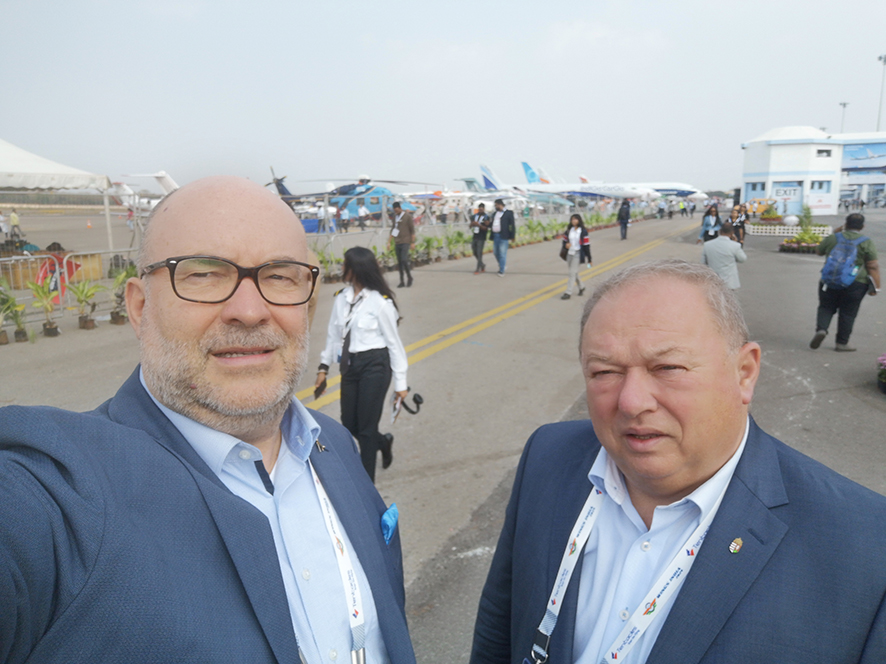
In May 2025, a new chapter began in the history of the Pharmaflight Aviation Academy in Debrecen when the first Indian pilot trainees arrived for the institution’s integrated EASA CPL training program. Almost a year has passed since then, and we asked Zoltán Sajtos, the international training director at the Pharmaflight Aviation Academy, about his experiences so far.
Where did the idea come from for the academy to launch a commercial pilot training course for Indian applicants?
Gyula Gyori, chairman of Pharmaflight’s board of directors, pointed out in 2024 that India is experiencing explosive growth in air travel, as the country’s two largest airlines have ordered more than a thousand new aircraft, and India will need approximately twenty thousand new pilots to operate them in the coming years. Pharmaflight Aviation Academy has gained significant experience over the past few years, as it operates as an affiliated aviation engineer department of the Faculty of Engineering at the University of Debrecen. To date, more than two hundred students have graduated from the University of Debrecen’s Faculty of Aeronautical Engineering, who, in addition to their B.S. degrees, have obtained a Commercial Pilot License (CPL) approved by the European Union Aviation Safety Agency (EASA) and a type rating for the Airbus A320 aircraft under the auspices of the Pharmaflight Aviation Academy. Over the past eight years, applicants from more than forty countries have come to Debrecen for professional pilot training, enabling the Pharmaflight Aviation Academy to prepare for the arrival of Indian pilot candidates. This was followed by a major
marketing effort in India, during which we sought out local professional partners through whom the admissions process was launched. As a result, the first students arrived last May.

Through which Indian partners can interested young people from India come to Debrecen?
There are several pilot training organizations in India that provide theoretical training for applicants approved by the local aviation authority, the DGCA. In addition, numerous flight schools offer courses, but local training organizations can only meet the sudden surge in interest to a limited extent. That is why they are seeking partners abroad, including in the United States, South Africa, Australia, and now in Europe through Pharmaflight Aviation Academy. I am proud to say that our training organization is a pioneer in the Indian market, where previously students were sent primarily to the United States for FAA training, but India has also realized that the commercial pilot license issued by EASA is currently the most valuable in the industry, as it is accepted by more than seventy airlines in over forty countries worldwide. Thanks to this, and to a media campaign launched in collaboration with local partners, an increasing number of young Indians have decided to pursue an EASA CPL and complete the required training in Debrecen.
What requirements must applicants meet?
The basic admission requirements are a valid aeromedical certificate, high school graduation exam scores at the required level in mathematics and physics, and a valid passport for travel. Successful applicants will then receive a Hungarian and EU temporary residence permit valid for 18 months, following review and approval by the Migration Office of the Hungarian Ministry of the Interior, which allows them to enter Hungary and begin their flight training.
Where are the students who started in Debrecen last June now?
All of them have already completed the theoretical training, which is based on the ATP (Air Transport Pilot) curriculum; that is, students in the EASA CPL course study the ATP theoretical subjects across a total of thirteen topics and take exams before their 18-month full training program concludes. In addition, starting in the third month, their practical training begins on the academy’s Tecnam P2008JC single-engine glass-cockpit training aircraft. On these, they first fly with an instructor and performing training patterns and cross country flights; later, when their instrument flight training begins, they switch to the twin-engine Tecnam 2006P, which also features a glass cockpit. Several students in the first group are already at this stage.
How many aircraft are there in the Pharmaflight Aviation Academy’s fleet?
Currently, three single-engine Tecnam P2008JCs and three twin-engine Tecnam 2006Ps are available to the students, but we just returned from the Aero Expo 2026 exhibition in Friedrichshafen, Germany, where we held advanced negotiations with the Italian manufacturer Tecnam regarding the purchase of three additional Tecnam P2008JC NG next-generation training aircraft. With this, we plan to increase the number of aircraft in the Tecnam fleet to nine by the end of the year. However, the current fleet is sufficient for training Indian pilot candidates, as we maintain the aircraft under a Continuous Airworthiness Management Organization (CAMO) and perform the necessary maintenance tasks on them. To ensure this runs smoothly, we maintain constant communication not only with our maintenance organizations (MRO) but also with the aircraft manufacturer Tecnam and the engine manufacturer Rotax. With this fleet, we can seamlessly provide training for more than 100 students annually. In addition, other aircraft can be used if necessary.
How many Indian students are currently enrolled at the Pharmaflight Academy?
Following the first group that arrived last May, additional students from India arrived in November and January, and now a new group—the fourth—is set to arrive in May. This means that nearly fifty students are participating in the training. Most applicants have already completed the DGCA ground school course offered by our partner Indian academies back home, so they arrive in Debrecen with a solid foundation of theoretical knowledge. Most of the Indian applicants will remain in Hungary for a while after obtaining their EASA CPL to accumulate the required flight hours in accordance with the commercial pilot license requirements set by the Indian authorities; there are also those who have enrolled in the flight instructor course to gain even more flight experience—whether at the Pharmaflight Academy or at another flight school, before applying to become a commercial pilot with an airline.
Why should Indian and other international applicants choose Pharmaflight ?
As I mentioned, the Pharmaflight Aviation Academy has gained significant professional experience in international pilot training over the past few years. In addition, we have five different level training simulators that allow us to provide instruction from the basics all the way up to the highest level, including MCC (Multi-Crew Cooperation) training, not to mention that the Pharmaflight Pilot Academy has its own Airbus A320 FFS (Full Flight Simulator), on which, following EASA CPL training, an Airbus A320 type rating can be obtained through a five-week course. Another unique feature among training organizations is that our academy has its own EASA-approved aeromedical centre and we also operate an aviation physiology laboratory in house, so students can obtain the Class 1 EASA aeromedical certification required for flight training directly from our institution. In addition, Pharmaflight has developed its own physiological monitoring program called the PHAPA Aviation, which plays a major role in ensuring that, throughout the 18-month training program, trainees remain in the optimal mental and physical condition successfully complete the theoretical course and pass the required regulatory exam, as well as ensuring they are adequately prepared and fit during flight training to perform various flight tasks.
Read next
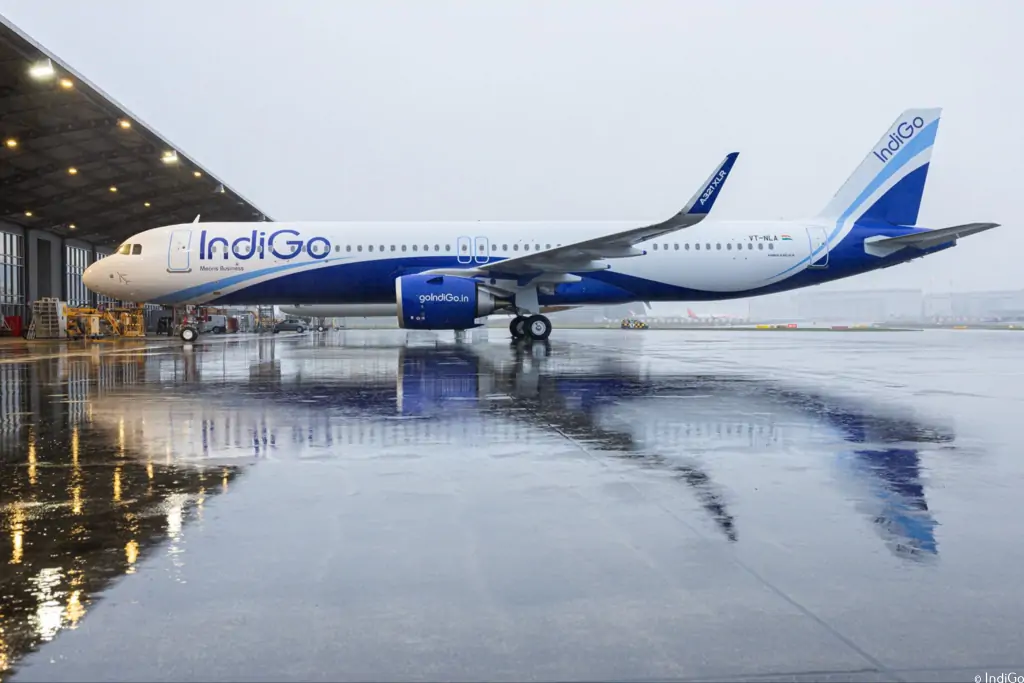
InterGlobe Aviation, the parent company of IndiGo, announced on Friday that its Board of Directors had approved a plan to deploy up to $450 million toward the acquisition of aircraft, engines, and other aviation assets. The decision was disclosed through a regulatory filing released alongside the airline's quarterly financial results, signaling an intent to shift meaningfully toward fleet ownership rather than reliance on leased equipment.
Under the approved structure, InterGlobe Aviation will partially prepay finance lease obligations worth up to $450 million to InterGlobe Aviation Financial Services IFSC Pvt Ltd, a wholly owned subsidiary. The subsidiary will then channel these funds into acquiring aviation assets, including aircraft, aircraft engines, and spare parts.
A Fleet Built for the Long Haul
The move comes as IndiGo continues to aggressively expand its network. During FY26, the airline grew its capacity by 9.5 per cent to 172.4 billion available seat kilometres (ASKs) and carried 123.4 million passengers across the full financial year. By the close of March 2026, IndiGo's fleet had grown to 441 aircraft, ranking it among the largest airline fleets in the region.
The carrier's fleet today is notably diverse, comprising Airbus A320 and A321 variants, ATR turboprops for regional routes, dedicated freighter aircraft, and both Boeing 737 and Boeing 787 planes for wider network coverage. During the January-March quarter, the airline added a net one passenger aircraft to its operating lineup.
A Difficult Quarter Clouds the Picture
The fleet expansion announcement arrived alongside a set of weak quarterly earnings. IndiGo reported a net loss of Rs 2,536 crore for the January-March quarter — a stark reversal from the profit of Rs 3,067 crore posted in the same period a year earlier. Revenue from operations remained largely stagnant, registering a marginal rise of about 1 per cent year-on-year to Rs 22,438 crore.
Operationally, the quarter presented multiple headwinds. While capacity rose 3.4 per cent despite disruptions tied to tensions in West Asia, passenger traffic slipped 1.1 per cent to 31.6 million travelers. Seat occupancy fell to 85.8 per cent from 87.5 per cent recorded in the same quarter a year ago.
Profitability also took a hit from weaker yields and elevated costs. Revenue earned per available seat kilometer dropped 2 per cent year-on-year, while non-fuel operating costs remained high. Although lower fuel prices provided partial relief, they were insufficient to counter the dual pressure of weaker revenue and adverse foreign exchange movements.
The Full-Year Picture Holds Steadier Ground
Despite the quarterly setback, IndiGo maintained that its core business remained fundamentally resilient. For the full financial year FY26, the airline posted a profit of Rs 7,500 crore when the impact of foreign exchange movements and exceptional items is excluded — a figure the airline cited as evidence that its underlying operations continue to hold firm as it pursues long-term fleet and network growth.
Read next
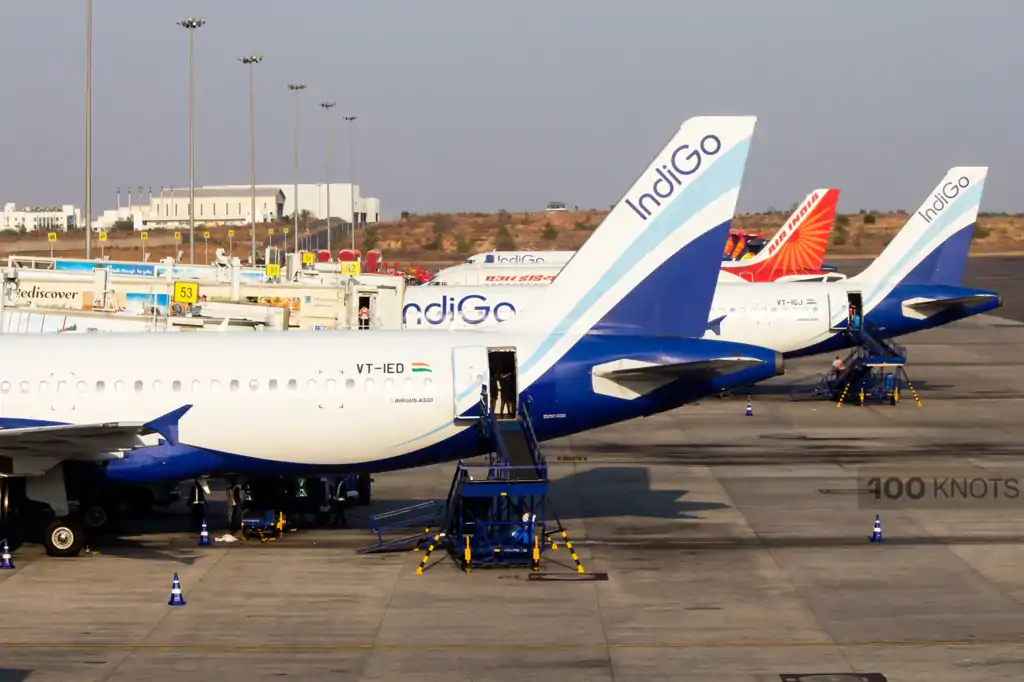
Two of India's most prominent carriers — Air India and IndiGo — have announced significant reductions in their flight operations for the June to August 2026 period, citing the sustained burden of elevated aviation turbine fuel (ATF) prices as the primary driver. The twin announcements mark one of the more consequential capacity pullbacks in Indian domestic aviation in recent memory, raising immediate questions about seat availability and airfare levels through the summer travel season.
Air India has confirmed a reduction of up to 22 per cent in its domestic flight schedule across the three-month window — the steeper of the two cuts. IndiGo, which holds the largest market share in Indian aviation, has announced a comparatively smaller but still significant 5 to 7 per cent reduction in domestic capacity, alongside a sharper 17 per cent cut in international capacity.
Air India's Official Statement: 'Temporarily Rationalized Operations'
Air India made its position official on Wednesday, confirming that it had temporarily rationalized operations on certain domestic routes, with reductions in frequency on select sectors between June and August 2026. The airline clarified that this domestic adjustment follows a prior decision to trim select international services during the same period — meaning the carrier has now curtailed both its international and domestic networks in parallel.
In a statement, Air India said the adjustments were driven by the sustained impact of high fuel prices on overall operations — language that points directly to the structural cost pressure ATF costs have placed on the airline's commercial viability over recent months.
The Root Cause: A Global Fuel Crisis Traced to the Middle East
The fuel crisis currently battering Indian aviation is not isolated — it is the downstream consequence of a sharply escalating geopolitical situation. Brent crude oil prices surged more than 50 per cent over roughly three months as tensions in the Middle East intensified following the conflict between the United States and Iran. Energy markets have remained under sustained pressure due to fears of prolonged supply disruptions across the region.
A critical pressure point has been the Strait of Hormuz — one of the world's most strategically important oil shipping routes — where disruptions have directly impacted global crude supply. The Strait handles a significant share of global crude oil transportation, and any interruption along the route sends immediate shockwaves through international energy markets.
Prices Ease Slightly, But the Damage Is Already Done
Although Brent crude prices have moderated from their peak and were trading at around USD 96 per barrel at the time of reporting, they remain significantly elevated compared to the levels that prevailed before geopolitical tensions escalated. For airlines, which lock in operational decisions weeks in advance, the damage from the sustained price spike had already been absorbed — and the reduced summer schedules are the visible result of that financial strain on India's civil aviation sector.
Read next
Can Compensation for Engine Failures Really Be Taxed as a "Service"? IndiGo Takes the Fight to Delhi High Court

Abhishek Nayar
25 May 2026
The Delhi High Court on Friday granted interim relief to InterGlobe Aviation, the parent company of IndiGo, restraining tax authorities from taking any coercive action against the carrier in connection with a Goods and Services Tax demand of nearly Rs 458 crore. A Division Bench of Justice Nitin Wasudeo Sambre and Justice Ajay Digpaul, at the preliminary stage itself, observed that the payments received by the airline appeared to be compensatory in nature and did not constitute a "supply" under GST law.
The Engine Failures That Started It All
The dispute has its roots in a series of aircraft groundings during 2018-19 and 2019-20, when engines supplied by an overseas aircraft engine manufacturer allegedly developed faults. With aircraft forced out of operation, IndiGo suffered significant losses from reduced flying hours and widespread business disruption. The foreign manufacturer subsequently issued credit notes worth approximately Rs 2,000 crore to offset those commercial losses.
How the Tax Department Saw It Differently
Tax authorities took a starkly different view of these payments. They treated the credit notes as consideration for a taxable service, arguing that IndiGo had effectively agreed to "tolerate" the engine deficiencies in exchange for compensation — a transaction they said attracted GST under the reverse charge mechanism. The demand, along with an equivalent penalty, was what IndiGo challenged before the High Court.
IndiGo's Defense: Breach Cannot Be a Service
Senior Advocate V Lakshmikumaran, appearing for the airline, argued that the payments were purely compensatory in character and could not be classified as consideration for any service rendered. He pointed out that IndiGo had already paid Integrated GST at the time of importing the aircraft and engines, and that the later credit notes merely addressed financial losses caused by engine failures. The airline relied on Section 7 of the Central GST Act and a CBIC circular dated August 3, 2022, which clarifies that a taxable supply arises only where there is an agreement — express or implied — to perform, refrain from, or tolerate an act in exchange for consideration. "The contract is entered into for performance, not for breach," the airline argued before the Bench. IndiGo further contended that even if the transaction were treated as a service, it would qualify as an export of service since the supplier was based abroad and payments arrived in foreign exchange, eliminating GST liability altogether.
Court Issues Notice, Stays Coercive Action
The High Court issued notice to the tax department, whose counsel accepted service in court. When the Bench asked how the revenue's interests would be protected during the case's pendency, IndiGo pointed to its financial standing, noting that it was not a "fly-by-night operator" and paid over Rs 20,000 crore in taxes annually. Recording these submissions, the Bench directed that no coercive steps be taken against the airline until the next date of hearing, which is expected after the court vacation.
With Inputs from Business Standard
Read next
Can SpiceJet Escape an $8 Million Engine Debt Chasing It Across Continents?
Abhishek Nayar
22 May 2026

A France-based aircraft engine lessor has taken its battle against SpiceJet to Indian courts, marking a significant cross-border legal escalation. Sunbird France 02 SAS moved the Delhi High Court on Thursday seeking enforcement of a judgment already secured in the United Kingdom, turning up the pressure on the financially strained Indian carrier.
The Roots of the Dispute
The conflict traces back to 2019, when Sunbird France 02 SAS leased three aircraft engines to SpiceJet. The lessor alleges that the airline failed to honor its obligations in the form of lease rentals and maintenance dues, accumulating a total outstanding of approximately $8 million. Sunbird subsequently pursued legal remedy in the UK Commercial Court, which ruled in its favor in March, directing SpiceJet to clear the dues.
Delhi High Court Steps In
With the UK judgment in hand, Sunbird approached the Delhi High Court seeking its enforcement in India. Justice Vikas Mahajan, presiding over the matter, directed SpiceJet to file an affidavit disclosing its assets — a standard step in execution proceedings that allows a creditor to identify what a debtor holds and how recovery can be made.
SpiceJet Pushes Back
SpiceJet did not take the proceedings lying down. Senior counsel Amit Sibal, representing the airline, sought additional time from the court to obtain instructions on the asset disclosure requirement. More substantively, SpiceJet challenged the very maintainability of Sunbird's execution petition, raising a procedural objection that could potentially stall the enforcement process.
The Stamp Duty Argument
At the heart of SpiceJet's legal defense lies a technical but consequential argument. The airline contended that the power of attorney filed by Sunbird France 02 SAS was neither stamped nor had stamp duty been paid under the Indian Stamp Act. Under Indian law, an unstamped or insufficiently stamped document cannot be admitted as evidence or relied upon in legal proceedings, making this a potentially significant hurdle for the lessor's case if upheld by the court.
"A Running Airline, Not a Fly-By-Night Operator"
Opposing any immediate order on asset disclosure, Sibal struck a notably defensive but reassuring tone, reminding the court that SpiceJet remains an operational airline. "It was a running airline and not a fly-by-night operator," he argued — an implicit assurance that the airline intends to engage with the process rather than evade it, while simultaneously urging the court not to treat it as a defaulter requiring urgent coercive action.
What Happens Next
The Delhi High Court has scheduled the next hearing on the asset disclosure aspect for Monday. The court will examine both SpiceJet's objections regarding the stamp duty issue and the question of whether the airline must reveal its assets in the interim. The outcome could set a meaningful precedent for how foreign commercial judgments against Indian aviation companies are enforced domestically.
Comment