
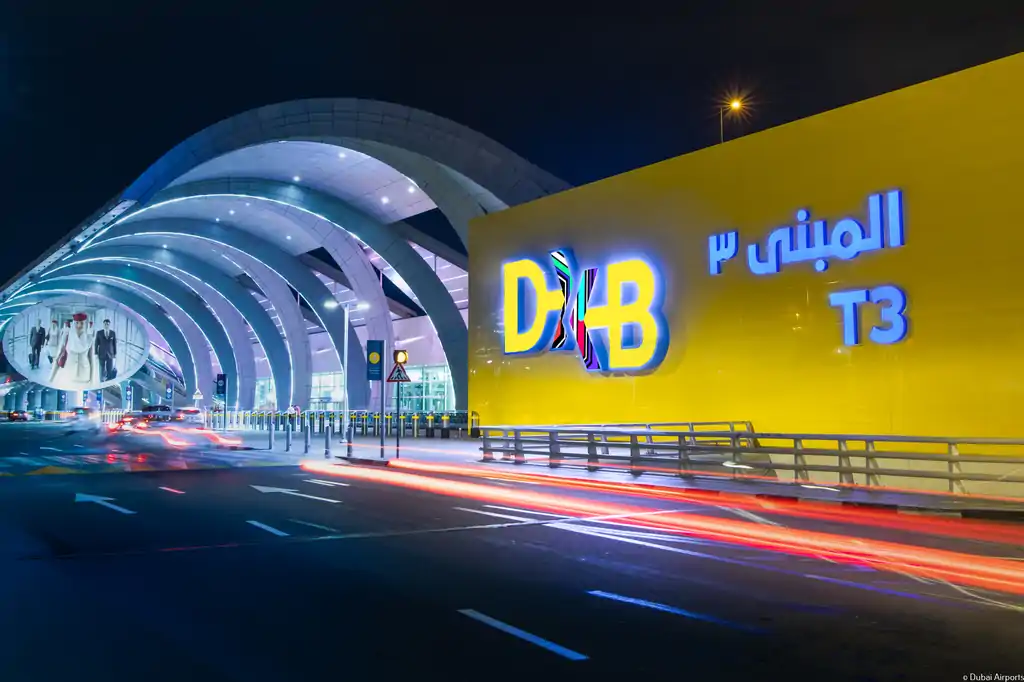
Dubai International Airport (DXB), one of the world's busiest airports, has been grappling with capacity challenges due to its geographical constraints. With its current infrastructure reaching its limits, the airport's CEO, Paul Griffiths, has outlined a strategic plan to handle an additional 25-30 million passengers annually. However, as this expansion reaches its zenith, the focus inevitably shifts to the development of Dubai World Central Airport (DWC), marking a significant chapter in the evolution of Dubai's aviation landscape.
Current Capacity Challenges & Expansion Plans at DXB

Dubai International Airport has long been a global aviation hub, handling nearly 90 million passengers annually before the onset of the COVID-19 pandemic. Despite its remarkable success, the airport faces limitations on all sides, leaving no room for expansive growth. Griffiths acknowledges the constraints but remains optimistic about maximizing DXB's throughput.
In response to the pressing need for increased capacity, DXB is set to undergo a series of strategic expansions. These include the expansion of Terminal 2, optimization of throughput in Concourse C, and the reconstruction of Concourse E, a vital remote processing facility. Griffiths believes that these measures can unlock an additional 25-30 million passengers annually, crucial for accommodating the influx of new Emirates aircraft.
The Inevitable Shift to DWC

While DXB's expansion plans address immediate needs, the inevitable transition to Dubai World Central Airport looms large. Commonly known as DWC, this airport currently serves low-cost carriers but harbors grand ambitions. Griffiths outlines plans for significant developments at DWC, including expansive maintenance facilities for Emirates and flydubai. The question now is not if but when the transition will take place.
Challenges in Persuading Airlines to Move & The Eventual Closure
Despite DWC's potential, convincing airlines to transition poses a challenge. Griffiths draws parallels with airports like London Gatwick or Newark Liberty, emphasizing that airlines prefer proximity to their competitors. However, with Dubai's carriers placing substantial aircraft orders and showing optimism about the future, the transition may become more enticing.
Griffiths foresees the closure of Dubai International Airport once Dubai World Central becomes fully operational. Maintaining two airports in such close proximity would be economically impractical, making it a logical decision for DWC to take over as the primary aviation hub for Dubai.
Future Developments and Considerations
The realization of DWC as the new aviation hub is still in its nascent stages. Additional construction is required before the transition becomes feasible, with discussions ongoing about the potential construction of a second runway at DWC. Griffiths hints at the necessity of a second runway in the near future, underscoring the continuous evolution of Dubai's aviation infrastructure.
Conclusion
Dubai's aviation sector is at a crossroads, with DXB's strategic expansions paving the way for increased capacity in the short term. However, the inevitability of a shift to Dubai World Central Airport signals a transformative chapter in the city's aviation history. As construction and planning continue, the eyes of the aviation world remain fixed on Dubai, eagerly anticipating the next stage in its journey to maintain its status as a global aviation powerhouse.

Read next
JetSetGo Forges Strategic Partnerships to Pioneer Advanced Air Mobility in India
Abhishek Nayar
22 Jan 2024
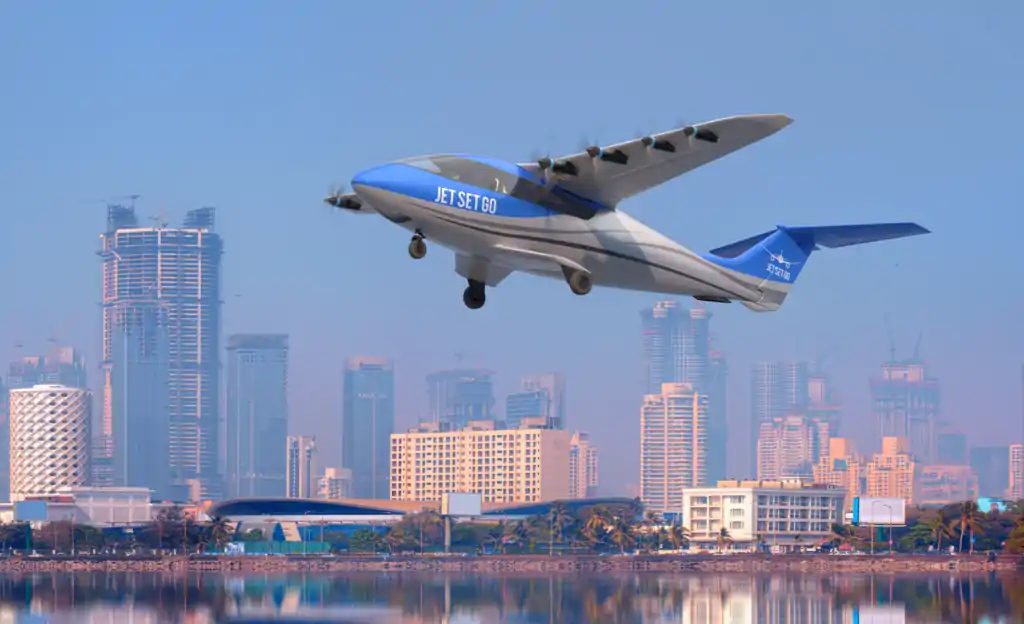
India's aviation landscape is set to undergo a revolutionary transformation with JetSetGo, the country's premier marketplace for private jet and helicopter charters, entering into strategic partnerships with global aviation technology leaders - Electra.aero, Horizon Aircraft, and Overair. The collaboration aims to bring Advanced Air Mobility (AAM) solutions to India, offering a glimpse into the future of air transportation.
Strategic Partnerships and Agreements
JetSetGo has inked agreements to acquire 150 aircraft, valued at $780 million, from the partner companies, with provisions for additional acquisitions that could potentially scale the fleet size to 280. This ambitious move underscores a total deal value exceeding $1.3 billion. The partnerships were unveiled at the inaugural AAM conference held at Begumpet Airport, marking a significant milestone in the evolution of India's aviation sector.
AAM Event and Stakeholder Participation
The first-ever AAM conference saw active participation from operators, Original Equipment Manufacturers (OEMs), regulators, investors, and policymakers. The event featured an Innovation Zone at the exhibition and a conference session dedicated to discussing the opportunities and challenges in developing Advanced Air Mobility in India’s cities and regions.
Advanced Air Mobility & Optimal Use Cases
Advanced Air Mobility employs cutting-edge aviation technologies, including electric and hybrid-electric propulsion, to facilitate air taxi-style services for short-distance travel within and between cities. JetSetGo believes that AAM solutions hold immense potential to enhance mobility and connectivity across India's urban and regional landscapes, analogous to the transformative impact commercial air travel has had.
According to JetSetGo's analysis, the selected AAM aircraft designs are well-suited for five identified use cases: airport transfers, regional connectivity, intercity commute, intracity shuttles, and urban air taxis. The company plans to deploy hybrid-electric planes initially, followed by advanced electric eVTOL aircraft for future urban air mobility applications as the necessary infrastructure develops in India’s cities.
CEO's Vision and Optimism
Kanika Tekriwal, JetSetGo’s CEO and co-founder, expressed her excitement about the partnerships, emphasizing the scale of the vision and the transformative potential of AAM in India. She stated, "India has the energy and the building blocks to become the world's leader in AAM solutions tailored for developing economies." JetSetGo aims to lead the discourse, apply global technologies, and collaborate with local stakeholders to make Advanced Air Mobility a reality.
Partner Perspectives & Potential Impact of AAM

Brandon Robinson, CEO of Horizon, expressed his honor at JetSetGo's commitment, highlighting the sustainability and efficiency of their Cavorite X7 eVTOL aircraft. Marc Ausman, Chief Product Officer of Electra.aero, commended JetSetGo's pioneering role in embracing AAM and integrating hybrid-electric short takeoff and landing (eSTOL) aircraft into its fleet. Valerie Manning, Chief Commercial Officer for Overair, expressed excitement about supporting JetSetGo's commitment to sustainable air mobility in India.
Advanced Air Mobility has the potential to revolutionize transportation, alleviate urban congestion, provide rapid regional connectivity, and spur economic growth. With lighter, emission-free aircraft designs, AAM promises eco-friendly intra-city and last-mile transportation options. India's vast untapped market offers an ideal testing ground for sustainable air taxi and commuter solutions, addressing issues of traffic congestion, environmental impact, and aviation emissions.
Conclusion
JetSetGo's strategic partnerships and significant aircraft acquisitions mark a crucial step towards realizing the vision of Advanced Air Mobility in India. The collaboration with global aviation technology leaders’ positions India as a potential leader in AAM solutions, showcasing the country's commitment to embracing innovative technologies for sustainable and efficient air transportation. The journey towards AAM in India holds promise not only for improved mobility but also for economic growth and environmental sustainability.
Read next
Spirit Explores Debt Refinancing Amidst Merger Setback and Financial Woes
Abhishek Nayar
20 Jan 2024

Spirit Airlines, a prominent player in the airline industry, is navigating financial turbulence as it grapples with the fallout from a blocked $3.8 billion merger with JetBlue Airways. Investor concerns about the company's financial future have triggered a slide in its share prices, prompting Spirit to consider debt refinancing options to bolster its balance sheet. This article delves into the recent developments surrounding Spirit Airlines, examining the challenges it faces and the strategic measures it is taking to weather the storm.
Merger Disruption and Financial Concerns
Merger Setback
Spirit Airlines' shares began their descent on Tuesday following a U.S. judge's decision to block the anticipated $3.8 billion merger with JetBlue Airways. The setback raised questions about Spirit's financial stability, contributing to a challenging environment for the airline.
Shareholder Apprehensions
Investor concerns are palpable, prompting a closer look at Spirit's financial health. The company's response to these concerns is vital for assuaging fears and maintaining confidence in its operations.
Debt Refinancing as a Strategic Move
Refinancing Plans
Despite the setback, Spirit Airlines remains resolute in its commitment to financial stability. A source, requesting anonymity, revealed that the company is actively exploring options for debt refinancing rather than opting for a restructuring strategy. This move aims to shore up the airline's balance sheet and address impending debt maturities.
Loyalty Program Debt
Fitch Ratings highlighted the looming challenge for Spirit, emphasizing the $1.1 billion loyalty program debt set to mature in September 2025. The urgency of addressing this refinancing risk adds a layer of complexity to Spirit's strategic financial planning.

Industry Challenges and Operational Adjustments
Engine Issues and Pricing Pressures
Spirit Airlines has been grappling with challenges related to RTX's Pratt & Whitney Geared Turbofan (GTF) engines, impacting its operational efficiency. Additionally, excess industry capacity in key markets has led to pricing pressures, compelling Spirit to engage in promotional activities with steep discounts to fill its planes.
Bankruptcy Speculations
Analysts have speculated about the possibility of Spirit considering bankruptcy as a strategic move to streamline its balance sheet. However, the airline remains steadfast in its confidence, asserting its commitment to delivering affordable fares.
Strategic Measures and Future Outlook
Sale-Leaseback Transactions
To address immediate liquidity concerns, Spirit Airlines recently entered into sale-leaseback transactions for 25 aircraft, injecting approximately $419 million in cash into its operations.
Operational Adjustments
In response to the evolving challenges, Spirit is adjusting its aircraft delivery schedule through the end of the decade and implementing measures to slow capacity growth. The company also plans to cut $100 million in structural costs, aiming for a leaner and more efficient operation.
Conclusion
Spirit Airlines finds itself at a critical juncture as it confronts financial challenges exacerbated by a failed merger and industry headwinds. The decision to focus on debt refinancing rather than restructuring signals the company's commitment to navigating these challenges strategically. As Spirit continues to adapt its operations and implement cost-cutting measures, the industry will closely watch how the airline steers through the turbulence and works towards a more resilient and sustainable future.
With Inputs from Reuters
Read next

In a strategic move to capitalize on the rapid expansion of the Indian aviation market, Airbus is set to double its sourcing value from India, reaching $1.5 billion in the coming years. This initiative reflects the European planemaker's commitment to harnessing the potential of the world's fastest-growing aviation market, driven by a surge in aircraft deliveries to major Indian carriers such as IndiGo, Air India, and the upcoming Akasa Airlines.
Current Sourcing Landscape
Airbus presently engages with more than 40 suppliers in India, including prominent entities like Tata Advanced Systems and Mahindra Aerospace. These suppliers play a pivotal role in providing components and services for Airbus' commercial and defense aircraft, as well as helicopter platforms. The current sourcing value stands at $750 million, and the planemaker aims to double this figure to $1.5 billion in the near future.
Wings India Event Insights & India's Aviation Boom
Remi Maillard, President of Airbus India and South Asia, announced the ambitious growth plan during the "Wings India" event held in Hyderabad. Maillard emphasized that the global aviation industry is increasingly focusing on India, and the nation's aviation supply chain is undergoing a transformative phase.
India has positioned itself as the world's fastest-growing aviation market, with the fleet size of its airlines expected to surpass 2,000 by 2030, a significant leap from the current 700. The Indian government is actively supporting this growth by investing approximately $12 billion in the construction of new airports and the refurbishment of existing ones.
Key Suppliers and Growth in Capacities
The growth of Airbus' sourcing value in India is supported by key suppliers, such as Tata Advanced Systems and Mahindra Aerospace, both contributing to the development of a robust aviation supply chain. Civil Aviation Minister Jyotiraditya Scindia highlighted the substantial progress made by domestic manufacturers, noting that aerospace manufacturing has taken strong roots in the country.
India's Role in Global Aerospace Manufacturing
Minister Scindia proudly declared that every Airbus and Boeing aircraft produced internationally carries a part made in India. The nation's aerospace capabilities have expanded significantly, keeping pace with global demands. However, he also expressed the need for Airbus and Boeing to consider establishing final assembly lines for planes in India, aligning with the country's aspirations for a more prominent role in aircraft production.
Challenges and Opportunities
While assembly represents a relatively small percentage (5% to 7%) of a plane's overall value, the political significance attached to it cannot be overlooked. Despite India's lobbying efforts for jet assembly, Airbus and Boeing have primarily focused on increasing sourcing and procurement from the country. The recent surge in plane orders, including a record-breaking order by IndiGo for 500 Airbus planes and a substantial order by Air India, underscores the immense opportunities for growth in India's aviation sector.
Conclusion
Airbus' ambitious plan to double its sourcing value from India to $1.5 billion reflects a strategic alignment with the booming Indian aviation market. As the nation continues to invest in infrastructure and experiences unprecedented growth in its airline fleet, Airbus recognizes the potential for a mutually beneficial partnership with Indian suppliers. The call for establishing final assembly lines further emphasizes India's evolving role in the global aerospace manufacturing landscape.
With Inputs from Reuters
Read next

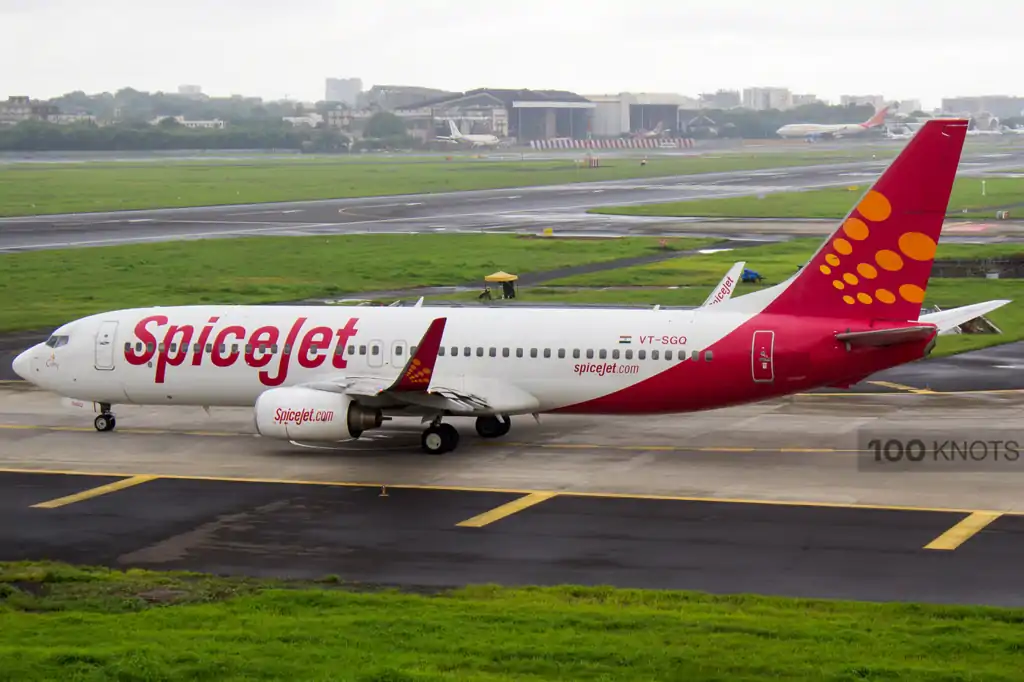
SpiceJet will launch flights from 8 cities to Ayodhya, the airline said on Friday.
In addition to the previously announced non-stop flights from Chennai, Bengaluru, and Mumbai, SpiceJet will extend its services to include routes from Delhi, Ahmedabad, Jaipur, Patna, and Darbhanga starting February 1.
"This strategic expansion is aligned with SpiceJet's commitment to offering seamless travel options to passengers while contributing to the growth of regional connectivity," the airline said in a statement.
Last week, SpiceJet announced a special flight from Delhi to Ayodhya on January 21, 2024, catering to passengers attending the auspicious 'Pran Pratishtha' ceremony at the Shri Ram Temple on January 22.
Read next

Kempegowda International Airport Bengaluru (BLR Airport) has soared to new heights, clinching the prestigious 'Best Airport of the Year' title at the Wings India Awards 2024 held in Hyderabad on January 18. The airport also bagged the '>25 MPPA Traffic Award,' solidifying its position as a leader in the aviation industry. This accolade is a testament to BLR Airport's unwavering commitment to operational excellence, seamless passenger experience, environmental stewardship, and cutting-edge technology.
Operational Excellence and Passenger Experience
Over the past year, BLR Airport has significantly increased its passenger capacity, addressing the growing demand for air travel. The airport's dedication to a stress-free passenger experience is evident through the expansion of entry gates, check-in counters, and informative display boards. Terminal 2 (T2), spanning an impressive 255,661 square meters, has been designated for international operations, equipped to handle 25 million passengers annually. Expanded immigration and emigration counters contribute to reduced wait times, enhancing the overall journey for travelers.
Environmental Stewardship
BLR Airport takes its environmental responsibility seriously, holding a Level 4+ Transition status under the Airport Carbon Accreditation (ACA) program. The airport has achieved net energy-neutral status, banned single-use plastics at food and beverage outlets, and actively engages in extensive landscaping and afforestation drives. Remarkably, BLR Airport is water-positive, regenerating more water than it consumes. The commitment to sustainability extends to the use of 100% renewable energy across its entire campus.
Sustainable Design of Terminal 2
Terminal 2 stands as a testament to BLR Airport's commitment to sustainable design, being pre-certified with a Platinum LEED rating by the US Green Building Council (USGBC) and the Indian Green Building Council (IGBC) Green New Building Platinum certification. It is the largest terminal globally to achieve these distinctions. The design seamlessly blends modern technology with India's rich culture and heritage, featuring over 60 artworks depicting the 'Naurasas' or nine emotions. The 'Terminal in a Garden' concept provides a unique experience, allowing passengers to traverse amidst greenery in the bustling airport environment.
Innovation and Technology
Innovation and technology are key drivers at BLR Airport, ensuring a smooth and efficient passenger experience. The adoption of cutting-edge solutions like Digi Yatra facial recognition for contactless boarding, the BLR Pulse app providing real-time updates, and self-baggage drop systems for faster check-in showcase the airport's commitment to passenger convenience. The Automated Tray Retrieval System (ATRS) further streamlines baggage screening, contributing to overall operational efficiency. Notably, in October 2023, BLR Airport secured the top position as the world's most punctual airport for three consecutive months, highlighting its dedication to operational excellence and on-time departures.
Conclusion
The recognition of BLR Airport as the Best Airport in India at the Wings India Awards 2024 is a culmination of its relentless focus on customer experience and substantial investments in capacity. As BLR Airport continues to ascend to new heights, it aims to serve as the new Gateway to South and Central India, setting a benchmark for excellence in the aviation industry.
Comment