
Did India Just Free Airlines From a Fare Trap That Was Quietly Grounding the Industry?

Abhishek Nayar
23 Mar 2026

India is set to lift domestic airfare caps on March 23, 2026, as directed by the Union Ministry of Civil Aviation — ending a contentious pricing policy that airlines had been fighting to dismantle for months. The caps, first introduced in December, were designed as a consumer protection measure following mass flight cancellations by IndiGo. But what began as a short-term fix quietly transformed into a financial stranglehold on the industry.
How the Caps Came to Be
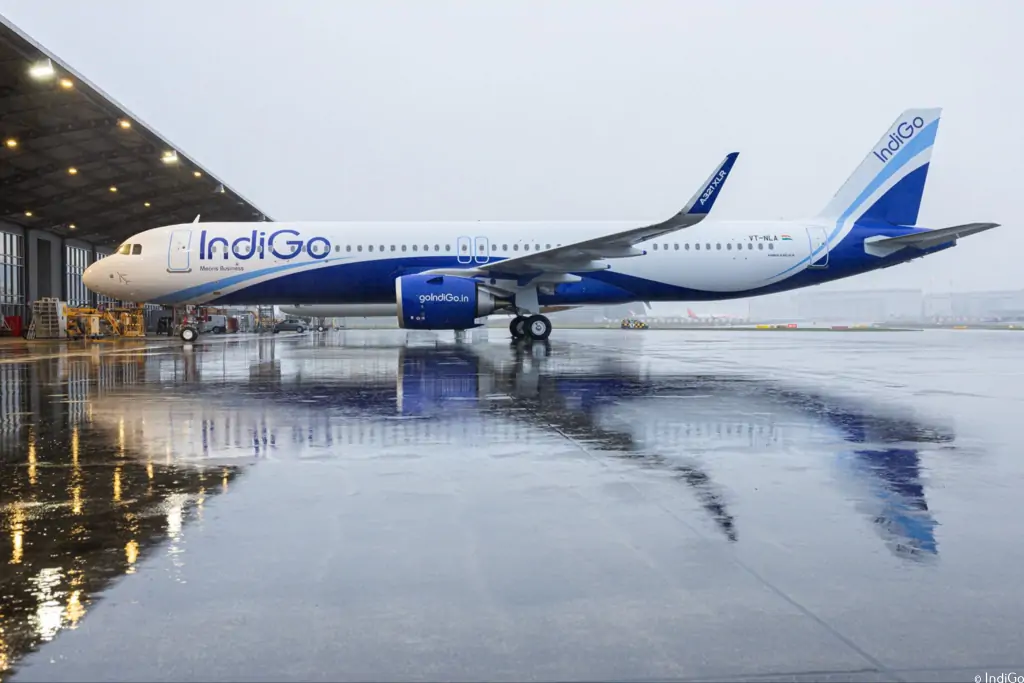
The story begins in December, when IndiGo — India's largest carrier — triggered widespread travel chaos through large-scale operational disruptions. The government stepped in swiftly, imposing price ceilings on domestic air tickets based on travel distance, with the maximum one-way fare capped at ?18,000. At the time, the move was broadly seen as necessary to prevent airlines from exploiting the disruption-driven demand surge.
The Crisis That Wouldn't Quit
What the government perhaps did not anticipate was how quickly the external environment would deteriorate. Even as IndiGo's operational crisis eased, a far larger storm was brewing. The ongoing conflict in West Asia sent jet fuel prices soaring, dramatically raising the cost of operating every single flight. At the same time, a Pakistani airspace ban forced Indian carriers operating international routes to take longer flight paths — burning more fuel and inflating costs further.
Airlines Sound the Alarm
By March 12, the pressure had built to a breaking point. The Federation of Indian Airlines — representing IndiGo, Air India, and SpiceJet — wrote directly to the government with an unusually frank warning. The letter cautioned that if the caps remained in place, airlines would be compelled to pull back from routes and shelve fleet expansion plans. More gravely, it warned that several carriers risked being pushed into financially unviable territory, raising the spectre of airline failures. "If the current situation continues, airlines will face severe financial losses, pushing several operators closer to unsustainable financial conditions and potentially threatening their continued viability," the letter stated.
A Regulation With No Exit Plan
Part of what made the caps particularly damaging was the absence of a clear end date. The policy lingered well past the initial crisis without a defined review mechanism, leaving airlines unable to plan pricing strategies or forecast revenues with any confidence — a serious problem in a capital-intensive industry already operating on thin margins.
One Problem Solved, Another Looms
Even as the fare caps are lifted, airlines are flagging another regulatory headache. A separate government directive requires carriers to offer at least 60% of seats on every flight without seat selection charges. Airlines warn this rule could distort fare structures and paradoxically push overall ticket prices higher — a concern that regulators will now need to weigh carefully.
What Comes Next
With the caps gone as of March 23, fares on high-demand routes are likely to see upward movement. Whether that translates into sustainable relief for airlines — or sticker shock for passengers — will be the defining question of India's aviation sector in the months ahead.
Read next

India's Ministry of Civil Aviation has rolled out a sweeping package of passenger-first reforms, signaling a decisive shift in how airlines operating in the country must treat their customers. Issued through the Directorate General of Civil Aviation, these measures tackle some of the most persistent grievances Indian travelers have voiced for years — from hidden seat charges to opaque baggage rules and poorly communicated passenger rights.
The Seat Pricing Shake-Up That Changes Everything
At the core of the overhaul is a landmark directive on seat allocation. Airlines must now make at least 60% of seats on any flight available at no extra charge, directly targeting the practice of charging passengers for basic seat selection. This single rule has the potential to meaningfully reduce the gap between the advertised ticket price and what a traveler ultimately pays at checkout.
Equally significant is the mandate around group and family travel. Passengers sharing the same PNR — whether a couple, a family with children, or a group of friends — must now be seated together, preferably in adjacent seats. The days of families being split across distant rows due to algorithmic seat assignments are set to end.
Baggage Policies Brought Into the Open
The reforms also take direct aim at the frustrating ambiguity that surrounds special baggage. Airlines have been directed to publish clear, accessible policies covering sports equipment, musical instruments and pets — categories that have long existed in a grey zone, leaving travelers uncertain about costs and conditions until they were already at the airport.
Passenger Rights Move From Fine Print to the Front Page
Perhaps the most structurally important change is the renewed push to enforce passenger rights during disruptions. Whether a flight is delayed, cancelled or a passenger is denied boarding, airlines must now prominently display travelers’ entitlements across every customer touchpoint — from their official websites and mobile apps to booking platforms and physical airport counters.
Crucially, this information must be made available in regional languages, a step that significantly broadens awareness among India's vast and linguistically diverse flying population.
Why These Reforms Matter Right Now
These changes arrive at a moment when Indian aviation is experiencing extraordinary growth. India has emerged as the world's third-largest domestic aviation market, with airports now handling over five lakh passengers every single day. Schemes like UDAN have played a central role in this expansion, bringing air travel within reach of millions who were previously priced out entirely.
The Road Ahead
With the market booming and passenger volumes climbing steadily, the timing of these reforms reflects a recognition that rapid growth must be matched with equally robust consumer protections. The question now is one of implementation — whether airlines will comply in letter and spirit, and whether enforcement mechanisms will prove strong enough to hold them accountable. For millions of Indian flyers, the answer cannot come soon enough.
Read next
Inside One of the World's Most Competitive Fully Funded Pilot Scholarship: How Pruthvi Boppani Cracked it

Sakshi Jain
24 Mar 2026

In a world where opportunities in aviation are often gated by cost and access, stories like Pruthvi Boppani’s stand out: not just for what he achieved, but for how he achieved it. Rising above millions of applicants across India, Pruthvi secured a place among the select few chosen for the highly prestigious Stipendium Hungaricum Scholarship, becoming one of only 40 students worldwide to pursue the BSc Professional Pilot program under this “fully funded, merit-based” initiative. But this isn’t just a story about selection. It’s a story about endurance, consistency, and proving excellence over time.
Stipendium Hungaricum Programme
Stipendium Hungaricum Programme is a merit-based scholarship, awarded by the Government of Hungary, supports outstanding international students by covering full tuition, accommodation, monthly stipend, visa support, and health insurance, enabling recipients to pursue higher education and professional training in Hungary. The selection process is highly competitive and spans approximately 9 months. Applications typically open in November and close in January, after which the University Grants Commission of India announces preliminary nominations for Indian applicants. Shortlisted candidates proceed through additional evaluations, written examinations, and interviews, with final results announced around July.
Across all academic fields in Hungary, only about 50 undergraduate nominees from India are typically selected through the national nomination process each year. Within this system, individual programs then conduct their own international selection. The professional pilot training program itself admits only about 40 students worldwide, drawing candidates from more than 90 countries who have already passed rigorous screening in their respective home countries.
The program is academically and technically demanding. Students must meet strict academic and flight-training standards throughout the program. Failure in academic examinations, aviation theory tests, or flight check rides can result in immediate loss of scholarship eligibility.
The difficulty of the program is reflected in its completion rate.
Out of the 40 students admitted worldwide, only 28 ultimately graduated from the program, highlighting the intensity of both the engineering-level academic curriculum and professional pilot flight training requirements.
Story of Pruthvi Boppani- Test of Grit
For Boppani, earning this scholarship meant beginning professional pilot training in Europe, gaining exposure to international aviation standards, advanced training environments, and hands-on flight operations under globally recognized aviation regulations.
Winning the scholarship was only the beginning. The program itself demands a level of discipline that few can sustain. While the scholarship covers tuition, accommodation, and living expenses, it comes with strict expectations. Any failure, whether in academics, flight training, or aviation examination, can result in immediate revocation. There is no room for complacency.
Pruthvi's Scholarship Achievement
Initially, he came to know about the Stipendium Hungaricum Programme through a fellow student in his library. At that time, after seeing the limited number of seats available worldwide for pilot training and the level of competition, he did not focus much on applying. However, just 3 days before the application deadline, he decided to proceed and prepared his entire application within a short time, ensuring all requirements were met before submission. Around 2 months later, he received the initial result confirming that he had been selected among approximately 50 undergraduate nominees from India through the University Grants Commission of India.
Following this, he entered the next stage of competition at the international level, where he competed with candidates from 90+ countries specifically for the pilot training program.
This stage included both a written examination and an oral interview. In the written test, he scored 100/100, and in the oral interview, he was able to answer all questions effectively, which placed him among the top candidates for selection.
The entire process from application submission to final results took approximately 9 months, requiring patience, consistency, and strong performance at each stage.
Pruthvi didn’t just meet these expectations, he exceeded them. He successfully completed his BSc in Professional Pilot alongside his Commercial Pilot License (CPL), achieving an outstanding 90% overall. His journey also included A320 type certification, a significant milestone that reflects both technical proficiency and readiness for modern commercial aviation.
Redefining Success in Aviation
Aviation is often perceived as a field limited by financial barriers. Stories like Pruthvi’s challenge that narrative. A fully funded, merit-based pathway, earned through ability alone- highlights what is possible when opportunity meets preparation. It shifts the focus from “who can afford it” to “who can achieve it.” And in doing so, it sets a powerful precedent for aspiring aviators.
Read next

The Indian government has revealed a significant gap in aviation safety infrastructure. As many as 176 aircraft operated by non-scheduled and general aviation operators across the country are flying without flight data recorders (FDR) or cockpit voice recorders (CVR) — the critical devices commonly known as "black boxes" that investigators rely upon after accidents to determine what went wrong.
What the Government Told Parliament
Minister of State for Civil Aviation Murlidhar Mohol made this disclosure in a written reply to the Rajya Sabha on Monday. His statement came in response to a direct question about whether the government-maintained data on aircraft lacking these recording devices. Mohol confirmed that out of a total of 2,263 aircraft registered and issued certificates of airworthiness before January 1, 2016, a substantial subset remains unequipped with the life-saving recorder technology.
The Rule That Created the Gap
Under existing Indian aviation norms, aircraft with a take-off weight of less than 5,700 kilograms are only mandatorily required to carry CVRs if they received their airworthiness certificate on or after January 1, 2016. This regulatory threshold means that older, lighter aircraft — many of which continue to operate commercially — are effectively exempt from the black box requirement, simply because they were certified before the rule came into force.
The Jharkhand Crash That Brought This Into Focus
The disclosure takes on added weight in the aftermath of a deadly accident. A nearly 40-year-old Beechcraft C90A aircraft crashed in Jharkhand last month, claiming seven lives. Investigators quickly discovered that the aircraft carried neither a cockpit voice recorder nor a flight data recorder — making it significantly harder to piece together the chain of events that led to the tragedy.
Why the Aircraft Was Not in Violation
Crucially, the Beechcraft was not breaking any rule. The aircraft had been issued its airworthiness certificate back in 1987 — nearly three decades before the mandatory recorder requirement was introduced. Because the regulation was not retroactively applied, the plane was under no legal obligation to carry the devices, even as it continued flying passengers well into the 21st century.
The Bigger Picture
The 176 figure represents a structural blind spot in India's civil aviation safety net. Without flight data or cockpit voice recorders, crash investigators are left without the most reliable tools to determine the cause of an accident, identify systemic failures, or issue safety recommendations that could prevent future tragedies. The Jharkhand crash has now thrown a spotlight on whether India's current exemption policy — grandfathering older aircraft out of modern safety requirements — adequately protects passengers in an era where general aviation is growing steadily.
Read next
Which Indian Airline Is Flying With the Fewest Pilots Per Plane — And Should Passengers Be Worried?
Abhishek Nayar
13 Mar 2026
India's Civil Aviation Ministry took center stage in Parliament on Thursday, unveiling a detailed breakdown of pilot strength and staffing ratios across the country's major domestic airlines. The data, presented by Minister of State for Civil Aviation Murlidhar Mohol in response to questions raised in the Lok Sabha, revealed striking differences in how airlines manage their pilot workforce.
IndiGo Sits at the Bottom of the Pilot Ratio Rankings

The most headline-grabbing figure from the minister's statement was IndiGo's pilots-to-aircraft ratio of just 7.6 — the lowest among all domestic carriers surveyed. For context, this ratio measures how many pilots an airline maintains for every aircraft in its fleet, and a lower number can indicate tighter staffing buffers.

At the opposite end of the spectrum, SpiceJet leads with the highest ratio of 9.4 pilots per aircraft, closely followed by Akasa Air at 9.33. Air India stands at 9.1 pilots per aircraft, while its subsidiary Air India Express registers 8.8 — both comfortably above IndiGo's figure.
Breaking Down the Numbers: Who Has the Most Pilots?
Despite its lower ratio, IndiGo commands the largest absolute pilot workforce among Indian carriers, with a total of 5,200 pilots — a reflection of the airline's sheer scale as the country's dominant low-cost carrier. Notably, 970 of those pilots are women, underscoring IndiGo's relatively strong representation of female aviators.

Air India follows with 3,123 total pilots, including 508 women. Air India Express, the budget arm of the Air India group, reports 1,820 pilots on its rolls, with 234 female pilots among them.

Newer Airlines Show Their Growing Pains

Akasa Air, the youngest carrier in the mix, currently employs 761 pilots, including 76 women. SpiceJet, which has faced well-documented financial turbulence in recent years, has 375 pilots in total, with 58 being women — the smallest absolute workforce in the data presented.
The Foreign Pilot Question: Who Is Relying on Expat Talent?
The minister also addressed a separate parliamentary question regarding the employment of expatriate pilots. Air India Express leads this category with 48 foreign pilots on its payroll, while IndiGo has hired 29 expat pilots. The reliance on foreign talent often points to gaps in the domestic supply of trained pilots — a long-standing structural challenge in India's rapidly expanding aviation sector.
What the Data Really Tells Us
The figures collectively paint a nuanced picture of India's aviation workforce. While IndiGo's low pilot ratio raises natural questions about operational pressure on its crews, the airline's massive fleet size and total pilot count suggest a complex operational equation rather than a simple shortfall. The data signals that as Indian aviation continues its aggressive growth trajectory, pilot recruitment, training pipelines, and workforce diversity will remain critical conversations — both inside Parliament and beyond.
Comment