
Delhi Airport Planning to Hike Aircraft Parking Charges for Grounded Aircraft

Radhika Bansal
04 Dec 2023
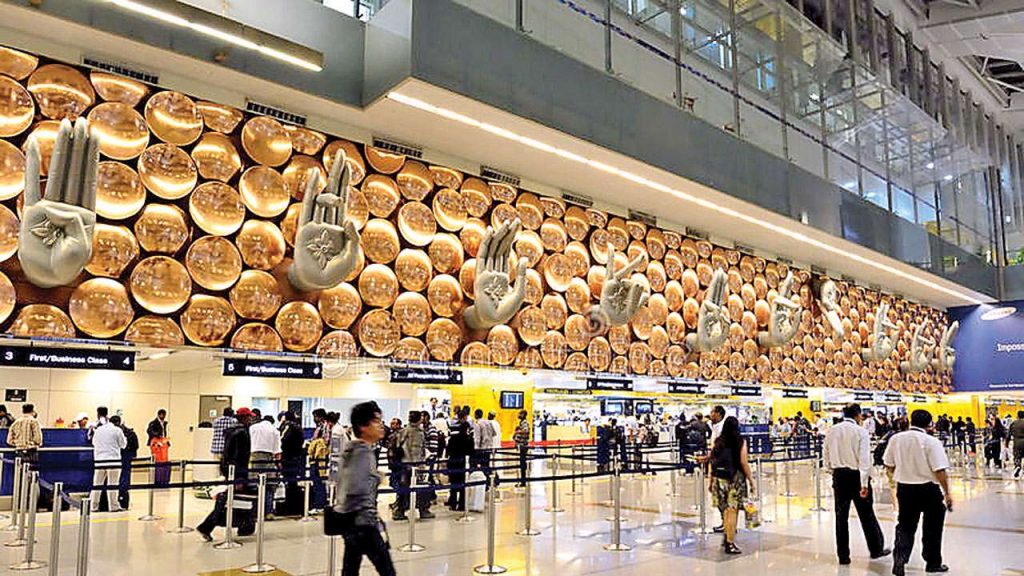
Delhi Airport operator DIAL plans to levy higher charges from airlines for grounded aircraft as they occupy available parking space and impact overall operational efficiency, amid rising instances of grounding of planes due to technical and other issues.
"We are planning that in the next traffic calculation, we are going to request that for people who are grounding (aircraft) here for more than a certain period, there should be some sort of higher charges because otherwise, it disturbs the operations of other airlines," Delhi International Airport Ltd (DIAL) CEO Videh Kumar Jaipuriar said.
Jaipuriar, who is in charge of the country's largest airport, was responding to a query on whether the operator will look at levying higher charges from airlines for aircraft that are grounded at the airport. The next traffic review of the airport is to happen early next year.
As many as 64 planes of various airlines, including IndiGo, SpiceJet and Air India, were grounded at the airport as of November 17, according to an airport spokesperson. A total of 24 aircraft of IndiGo, 6 of SpiceJet, 2 of Air India and 1 of Alliance Air were on the ground, the spokesperson said. Further, 23 planes of Go First, 5 of Zoom Air and 3 of Jet Airways remained grounded at the airport. All of them are currently non-operational airlines.
An official said the grounding of the aircraft was due to various reasons, including technical issues and some airlines going into insolvency proceedings. Currently, the Indira Gandhi International Airport (IGIA), operated by DIAL, has 295 parking stands for aircraft.
Major Issue of Grounded Aircraft
In a recent report, aviation consultancy CAPA India said, 161-166 planes of IndiGo, Air India, Go First and SpiceJet are grounded in the country and that the total number is projected to rise to 196-201 aircraft by the end of March 31, 2024.
"We have the maximum number of parking stands for aircraft. Unfortunately, a lot of that is being used by grounded aircraft... Once these aircraft are off the ground, then we can be comparable to any of the biggest airports in the world in terms of the number of parking stands," Jaipuriar said.
Indian carriers have nearly 1,500 planes on order. Currently, the Delhi Airport, which is also the country's largest airport, has three terminals -- T1, T2 and T3. Depending on traffic trends, the operator will decide on having T4.
At present, only T3 has international operations. The airport handles around 1,300 to 1,500 flight movements daily. The expansion of T1 is likely to be completed by February-end next year and the operator has plans to convert T2 into an international terminal for a short term. At present, T2 is for domestic flights. The airport expects to have more than 70 million passenger traffic in the current fiscal ending March 2024. DIAL is a consortium led by the GMR Group.
Read next
Air India Pilot Unions Raises Concerns to DGCA Over Flight Duty & Rest Period Schemes
Radhika Bansal
04 Dec 2023

Air India pilot unions IPG and ICPA on Saturday, December 2 expressed "deep concern" over the flight duty and rest period scheme adopted by the Tata Group airline, accusing the carrier of deviating from the DGCA-approved norms.
The two unions -- Indian Pilots' Guild (IPG) and Indian Commercial Pilots' Association (ICPA) -- in a joint communication to the Directorate General of Civil Aviation also alleged that the introduction of a side policy, along with the flight duty time limitation (FDTL) scheme, by Air India seems to "undermine the authority and purpose" of the DGCA approval.
The pilot unions have also sought a review and assessment of the issue by the DGCA, requesting it to take appropriate measures to address the matter. Pilots and cabin crew's flight duty time limitations are governed by the aviation safety regulator DGCA, which proposed more rest hours for the pilots last month.
In recent months, the issue of fatigue has been in focus, especially after the death of an IndiGo pilot, who had collapsed at the boarding gate of Nagpur airport in September. And last month, an Air India pilot during a training session showed signs of discomfort and later died at the Delhi airport.
However, Air India said the pilot was not on active flying duty and was undergoing conversion training to operate wide-body aircraft.
What do the Pilot Unions Have to Say?
"We are writing to express our deep concern and disappointment regarding recent developments concerning the Flight and Duty Time Limitations (FDTL) scheme at Air India," the two Air India pilot unions said in the communication addressed to the DGCA.
Alleging that there has been a "deviation" from the DGCA-approved Air India FDTL scheme, and an "Air India Rostering practices Policy" has been suddenly framed and implemented by the management from December 1, the letter stated that the "policy is in violation of DGCA CAR FDTL and that it is not part of the DGCA-approved Air India FDTL Scheme.
"The said policy is not approved by the DGCA. The DGCA plays a pivotal role in ensuring the safety and reliability of civil aviation operations in our country. The approval of the FDTL scheme is a testament to the thorough evaluation and consideration of safety measures to protect both airline crew members and passengers," it added.
"The policy seems to undermine the authority and purpose of DGCA approval. We kindly urge the DGCA to review and assess the implications of Air India's side policy on the FDTL CAR. It is crucial to ensure that any changes made by airlines align with the approved regulations and do not compromise the safety and well-being of crew and passengers," the letter noted.
The pilot unions are urging the DGCA to conduct a thorough review and assessment of Air India's new policy, emphasizing the importance of ensuring that airline practices are in line with DGCA regulations. The letter highlights the need for compliance with safety norms to protect both crew members and passengers, stressing that any deviation from approved regulations could jeopardize overall safety and well-being in the aviation sector. The situation reflects a broader concern about the balance between operational efficiency and safety in the rapidly evolving Indian aviation industry.
Not the First Time
Back in August, the Indian Pilots Guild (IPG), representing Air India pilots, voiced serious concerns over the impact of a new rostering tool on the fatigue levels of flight crews. This tool, designed to optimize scheduling, has inadvertently led to prolonged waiting periods between duty hours, raising alarm bells about crew alertness and overall performance.
However, as the IPG has pointed out, the implementation of such tools has not been without unintended consequences. One of the most significant concerns raised by the union is the extended waiting periods that pilots and cabin crew now face between their duty hours. While these gaps are not technically considered "rest" periods, they are extended enough to raise concerns about crew alertness and readiness.
IPG stated in a letter to Air India Head of Safety Henry Donohoe last week that the constant pursuit of operational efficiency and economic advantages has resulted in an unintentional overshadowing of the principal goal of Flight Duty Time Limitation (FDTL) regulations.
The Directorate General of Civil Aviation establishes Flight Duty Time Limitation (FDTL) to ensure adequate recuperation periods for pilots and cabin crew personnel. Following the unfortunate passing of an IndiGo pilot, the issue of pilot fatigue has been brought to the forefront. Last week, the pilot collapsed and died at the boarding gate at Nagpur airport while preparing to operate a flight from Nagpur to Pune.
The IPG argued that these extended waiting periods can contribute to the accumulation of fatigue over time. Fatigue is a serious concern in aviation, as it can impair cognitive functions, reaction times, and decision-making abilities. The safety of both the crew and passengers depends on the crew's ability to perform at their best, especially during critical phases of flight.
Read next
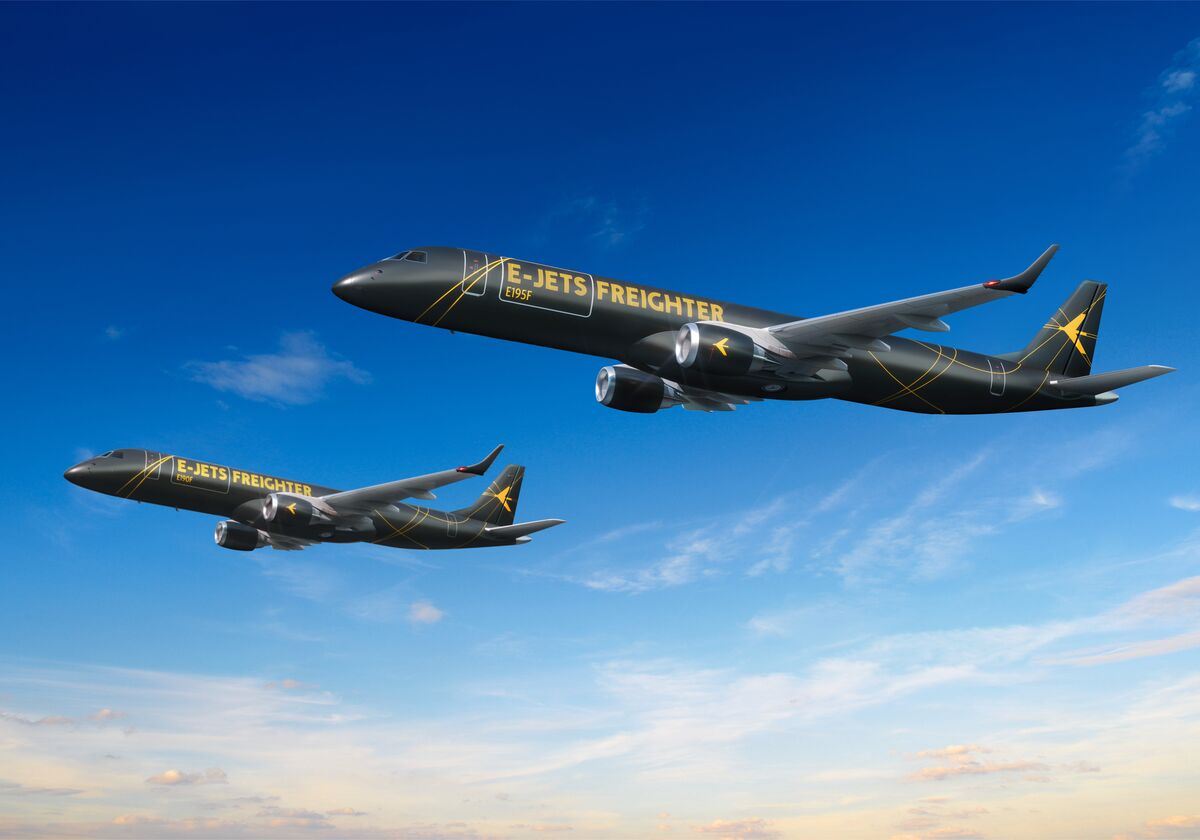
Embraer is advancing its passenger-to-freighter (P2F) conversion programme on schedule, with delivery of the first E190 Freighter set for the second quarter of 2024.
The company unveiled the livery for the first E190F during a 30 November ceremony for employees in San Jose dos Campos. Embraer has begun ground testing the E-Jet Freighter in Brazil, with a flight testing programme to follow.
”Recent achievements of the programme include changes to the jet interior, removing the seat and liners, reinforcing the floor, installing metal plugs on the windows and installing the rigid cargo barrier,” Embraer says. ”The cargo loading system was also installed and tried out with both pallets and containers.”
Changes have also been made to the aircraft’s exterior, including a new door frame and matching door, both designed and produced by Embraer.
The airframer secured a deal with Lanzhou Aviation Industry Development Group for 20 E-Jet P2F conversions at the Paris Air Show in June. It had previously secured an order for 10 units from Irish lessor Nordic Aviation Capital, with Kenyan cargo carrier Astral Aviation to be the launch operator.
About New Freighter Aircraft
Embraer’s P2F programme launched last year, covering E190s and E195 conversions, seeking to capitalise on e-commerce-driven demand for fast deliveries and extend the lives of its ageing passenger jets.
The E190F will have a payload of 10,700kg (23,600lb), while the E195F’s will be 12,300kg. The aircraft will have a volume of 3,632 cubic feet, while the larger E195F will have a 4,171 cubic feet interior. The E190F and E195F can deliver similar payloads to freighters like the Boeing 737-300F but at up to 25% lower cost because they have a longer range than turboprop freighters.
As part of the conversion, the E190 received a reinforced floor, a 9G rigid cargo barrier, a cargo loading system, and a new door for the loading of cargo into the body of the plane.
The company has described the jet as filling a gap in the market between turboprops and larger narrow bodies, saying it will be well placed to take over the operations of larger aircraft that are not being fully utilised.
Upcoming Orders
While this is the first E190 to undergo conversion for freight operations, the jet has already achieved success in the passenger aviation industry, with companies such as Singapore’s Scoot and Jordan’s Royal Jordanian Airlines utilising the jet.
Notably, while Azul was the first to launch an E195 converted freighter back in February 2022 in collaboration with the Brazilian aerospace engineering company LHColus Technologia, this will be the first time that Embraer will perform conversion work on its E195 aircraft.
In May 2022 Ireland-based Nordic Aviation Capital (NAC) became the launch lessor for the Embraer E-Jet Passenger-to-Freighter (P2F) programme, launched in March 2022. Embraer announced that NAC will convert up to 10 of its fleet of E190s and E195s to freighter aircraft. Embraer has also secured a significant deal with an undisclosed client for the conversion of up to ten Embraer E-jets from passenger to freighter (P2F), with deliveries expected to commence in early 2024. Over the next 20 years, Embraer anticipates up to 700 first-generation E-Jet P2F conversions will be required. Having delivered more than 1,600 E-Jets overall, Embraer anticipates that the growing demand for P2F services across the globe will also influence both the E190 and E195.
The company has previously stated that it expects to hand its first freighter over for certification with Brazilian authorities by the end of this year, with those in China and the USA to follow.
Read next
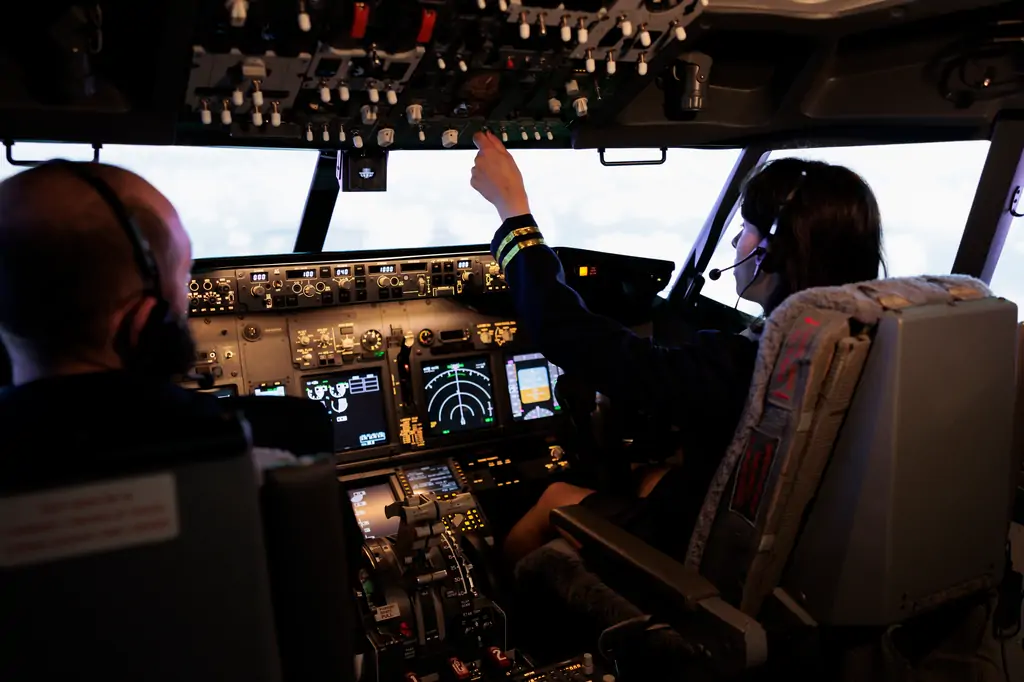
When we think of piloting aircraft, we predominantly conjure images of the pilot sitting transfixed on the airplane instruments. While this is often true, it is not always the case. In fact, there are two different ways that airplanes navigate. One way is by using the instruments. The other employs a considerably older instrument… The human eyeball, otherwise known as flying visually.
VFR (Visual Flight Rules) is where pilots have to be able to see the ground or horizon at all times and IFR (Instrument Flight Rules) where pilots fly by sole reference to their cockpit instrumentation and can fly in zero visibility like cloud, fog & night.
Visual Flight Rules (VFR) flights, as you may have guessed, are the simplest and most enjoyable method of operating a flying machine, whereas IFR takes more experience and a more advanced aircraft.
Visual Flight Rules (VFR)
VFR is the method of flying where pilots rely on external visual references to navigate the aircraft. This involves observing terrain features, landmarks, and the horizon. Pilots typically use mountains, roads, rivers, cities, and buildings as points of reference. VFR flying is suitable for good weather conditions, with pilots required to adhere to Visual Meteorological Conditions (VMC) set by the FAA.
Weather Conditions and Color Codes

- VFR - Visual Flight Rules (Green): Ceilings higher than 3,000 feet AGL and visibility more than 5 SM.
- MVFR - Marginal Visual Flight Rules (Blue): Ceilings between 1,000 and 3,000 feet AGL or visibility between 3 and 5 SM.
- IFR - Instrument Flight Rules (Red): Ceilings less than 1,000 feet AGL or visibility less than 3 SM.
- LIFR - Low Instrument Flight Rules (Purple): Ceilings less than 500 feet AGL or visibility less than 1 SM.
Benefits of Flying VFR
- Scenic Views: VFR flying offers breathtaking views, allowing pilots to enjoy the beauty of landscapes.
- Ease of Learning: VFR is generally easier to learn, making it an ideal starting point for aspiring pilots.
- Fewer Rules: VFR is straightforward, with pilots navigating based on what they see outside the cockpit.
Special VFR (SVFR)
Special VFR is a variation of VFR used when weather conditions deteriorate below VFR minimums at airports surrounded by controlled airspace. Pilots can request permission from Air Traffic Control (ATC) to enter or depart this airspace under SVFR, provided no conflicting traffic is present.
Another time SVFR is useful is when the pilot is attempting to leave a controlled airport when the weather at the airport is below VFR minimums but the surrounding weather is above VFR minimums - for example, if the airport is in a valley and surrounded by light fog, but the sky above the valley is clear blue for hundreds of miles.

Instrument Flight Rules (IFR)
IFR is a method of flying that relies on cockpit instruments for navigation, allowing pilots to operate in low visibility conditions. To fly IFR, pilots must undergo specialized training and hold an Instrument Rating. The aircraft must also meet specific equipment requirements, varying for commercial airliners and smaller private planes.

IFR Equipment Requirements
Airliner under FAA 14CFR 125.205:
- A vertical speed indicator;
- A free-air temperature indicator;
- A heated pitot tube for each airspeed indicator;
- A power failure warning device or vacuum indicator to show the power available for gyroscopic instruments from each power source;
- An alternate source of static pressure for the altimeter and the airspeed and vertical speed indicators;
- At least two electrical generators;
- Two independent sources of energy (with means of selecting either), of which at least one is an engine-driven pump or generator;
- An airspeed indicating system with a heated pitot tube or equivalent means for preventing malfunctioning due to icing;
- A sensitive altimeter;
- Instrument lights providing enough light to make each required instrument, switch, or similar instrument easily readable;
Private Cessna under FAA 14CFR 91.205(d):
- Generator or alternator
- Rate of Turn Indicator
- Attitude Indicator
- Ball (inclinometer)
- Clock
- Altimeter
- Radio/Navigation Equipment (appropriate for flight)
- Directional Gyro/Heading Indicator
- In addition to its Day & Night VFR Required Equipment
Benefits of Flying IFR
- Weather Independence: IFR allows flying in various weather conditions, including clouds, fog, and at night.
- Access to Restricted Airspace: Certain airspace is accessible only to IFR traffic, providing more routing options.
- Precision and Safety: IFR flying is precise, with radar control ensuring safe separation between aircraft.
Challenges
- Mental Fatigue: IFR requires constant concentration, leading to mental fatigue.
- Potential Disorientation: Flying solely by instruments may cause disorientation, requiring disciplined focus.
Conclusion
Both VFR and IFR flying have their merits and challenges. VFR offers the joy of flying with scenic views, simplicity, and flexibility. On the other hand, IFR provides unparalleled weather independence, precise navigation, and access to restricted airspace. Whether one is harder than the other depends on individual preferences, training, and the pilot's ability to adapt to different flying conditions. Ultimately, both methods contribute to the rich tapestry of aviation, offering pilots diverse ways to navigate the skies.
With Inputs from Pilot Teacher, Pilot Institute
Read next
Alaska Air Group's Strategic Acquisition of Hawaiian Airlines and Fleet Expansion

Abhishek Nayar
04 Dec 2023
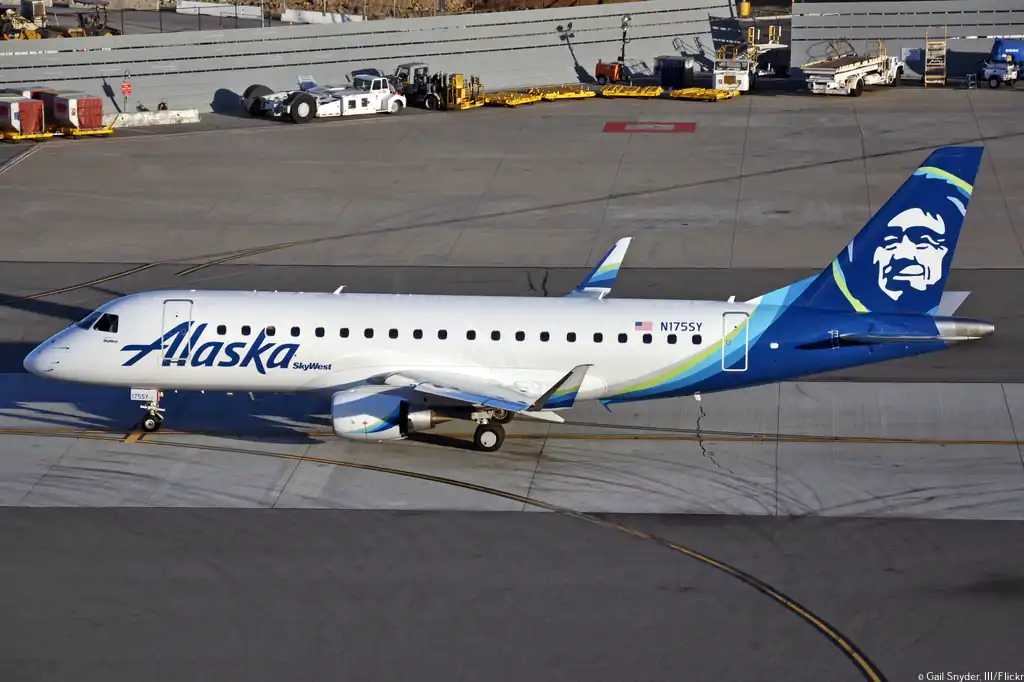
In a significant development for the airline industry, Alaska Air Group, the managing entity of Alaska Airlines and Horizon Air, has announced the acquisition of Hawaiian Airlines. The deal, valued at $1.9 billion, was officially disclosed on localcareglobalreach.com after leaks surfaced on social media platforms. This move not only reshapes the competitive landscape but also introduces new dynamics to the West Coast and Hawai'i travel market.
Deal Overview
The reported $1.9 billion deal, inclusive of around $900 million in Hawaiian Airlines' debt, signifies a strategic expansion for Alaska Air Group. The acquisition is poised to bring about a 3x increase in unique destinations, reaching a total of 87, surpassing competitors like United, Delta, Southwest, and American Airlines. The CEO of Alaska Airlines, Ben Minicucci, expressed enthusiasm, stating, "This combination is an exciting next step in our collective journey to provide a better travel experience for our guests and expand options for West Coast and Hawai'i travelers."
Fleet Expansion and Composition
As part of the deal, Alaska Air Group is set to reintroduce Airbus aircraft into its operations, incorporating the A330 and A321 models. The addition of Hawaiian Airlines' Boeing 787s will contribute to a fleet totaling 365 aircraft spread across Alaska Airlines, Horizon Air, and now, Hawaiian Airlines. This move aims to offer passengers an increased number of premium seats, encompassing both first-class and business seating with extra legroom.
Passenger Loyalty Programs
For passengers of both airlines, the merger promises an enhanced loyalty program. Hawaiian Airlines' loyalty members will enjoy benefits through a comprehensive program that includes the ability to earn and redeem miles on 29 global partners. The program will also provide elite benefits on all oneworld Alliance airlines, expanded global lounge access, and advantages associated with the combined program’s co-brand credit card.

Employee Impact and Commitment to Hawai'i
The acquisition will have a notable impact on Hawaiian Airlines' employees, as Honolulu is slated to become an Alaska Air Group hub. The commitment to maintain and grow union-represented jobs in Hawai‘i, including pilot, flight attendant, and maintenance bases, underscores the strategic importance of the Hawaiian market for the newly expanded airline group.
Leadership Statements and Future Outlook
In a joint statement, executives from both Alaska Air Group and Hawaiian Airlines pledged to prioritize the preservation and growth of jobs in Hawai‘i. Peter Ingram, President and CEO of Hawaiian Airlines, expressed optimism about the partnership, stating, "Together, Hawaiian Airlines and Alaska Airlines can bring our authentic brands of hospitality to more of the world while continuing to serve our valued local communities."
Regulatory Approvals and Union Response
While the transaction has received approval from both boards, it is subject to regulatory approvals, a process expected to take 12-18 months. The Association of Flight Attendants (AFA-CWA), representing Flight Attendants at both Alaska and Hawaiian, issued a statement emphasizing their commitment to ensuring the merger benefits employees, mirroring the advantages outlined for shareholders and consumers.
Conclusion
Alaska Air Group's acquisition of Hawaiian Airlines represents a strategic move to enhance its presence in the competitive airline industry. The expanded fleet, increased destinations, and strengthened loyalty programs signal a positive trajectory for the combined entity. As the aviation landscape evolves, the successful completion of this acquisition will likely reshape travel options for passengers and strengthen the position of Alaska Air Group in the market.
Read next
VietJet Aviation and Novus Aviation Capital Forge Partnership for Aircraft Financing and Leasing in Vietnam
Abhishek Nayar
04 Dec 2023
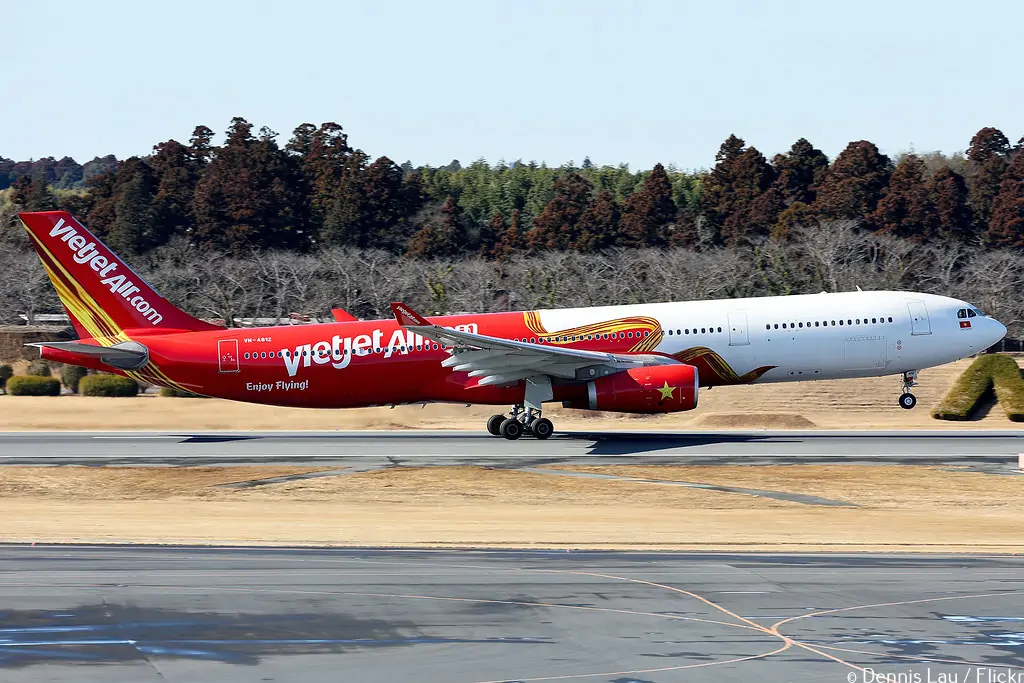
Vietnam's leading budget airline, VietJet Aviation, has recently joined forces with UAE-based Novus Aviation Capital to establish a groundbreaking aircraft financing and leasing firm in Vietnam. This strategic move, formalized through a memorandum of understanding, marks a significant development in the aviation industry and is poised to facilitate VietJet's expansion plans.
Formation of a Joint Venture
In an announcement made on December 2, 2023, VietJet revealed the establishment of a joint venture with Novus Aviation Capital. This partnership aims to create a specialized entity focused on aircraft financing and leasing within Vietnam. The memorandum of understanding outlines the collaborative efforts between the two entities to address the growing demand for air travel in the region.
Initial Focus on 15 New Aircraft
The newly-formed firm is set to kickstart its operations by providing financing and acquisition services for 15 new aircraft. These aircraft, ordered by VietJet from aviation giants Boeing and Airbus, are scheduled for delivery starting in 2024. This move aligns with VietJet's commitment to modernizing its fleet and enhancing its operational capabilities.
Booming Aviation Industry in Vietnam
Vietnam has witnessed a surge in air travel demand in recent years, driven by economic growth and increased connectivity. The establishment of a dedicated aircraft financing and leasing firm reflects the confidence of industry players in the potential for sustained growth in the Vietnamese aviation market.
Key Players
- VietJet Aviation: As a prominent player in the Vietnamese aviation sector, VietJet has consistently pursued innovative strategies to strengthen its market position. This collaboration underscores the airline's commitment to adopting a robust financial framework to support its ambitious growth plans.
- Novus Aviation Capital: A UAE-based aircraft leasing and financing company, Novus Aviation Capital, brings its global expertise to the joint venture. This partnership allows Novus to participate in the burgeoning Southeast Asian aviation market, leveraging its financial acumen and industry experience.
Long-Term Implications
The establishment of an aircraft financing and leasing firm in Vietnam is expected to have long-term implications for both VietJet and the broader aviation landscape in the region. It provides an avenue for sustainable growth, allowing airlines to access necessary capital for fleet expansion while mitigating the financial risks associated with aircraft acquisition.
Conclusion
The collaboration between VietJet Aviation and Novus Aviation Capital signifies a pivotal moment in the Vietnamese aviation industry. As the joint venture begins its operations, it is poised to play a crucial role in shaping the future of air travel in Vietnam, offering a robust financial framework to support the dynamic expansion plans of airlines like VietJet. This partnership not only fosters economic cooperation between Vietnam and the UAE but also exemplifies the strategic initiatives undertaken by industry leaders to navigate the evolving landscape of global aviation.
With Inputs from Reuters
Comment