
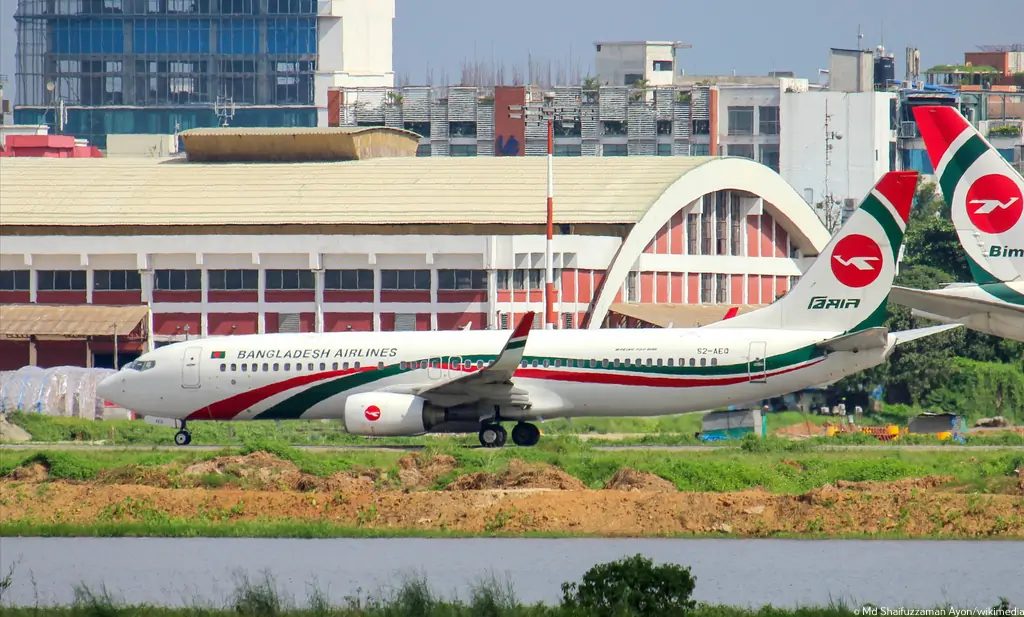
Biman Bangladesh Airlines, the country's national flag carrier, currently operates a fleet of 19 aircraft. The fleet consists mainly of Boeing jets and Dash-8 turboprops. Despite its modest size, the airline serves slightly more than 20 percent of the country's air passengers, according to Civil Aviation and Tourism Minister M. Rashiduzzaman Millat.
The Boeing Deal Comes First
Eleven More Jets Join the Order Book
Bangladesh's government recently signed a deal for 11 additional Boeing jets for its national carrier. The latest order covers five 787-10 Dreamliners and six 737-8 MAX aircraft. With this agreement, Biman's Boeing commitments now total 25 aircraft.
Airbus Enters the Picture
Ten More Aircraft on the List
Only days after the Boeing agreement, the government signalled that its fleet shopping is far from over. Bangladesh is now looking to buy 10 aircraft from France's Airbus for Biman, Millat said, as the administration pushes ahead with plans to expand the national carrier's fleet.
What Airbus Would Deliver
The proposed purchase includes four A350-900 wide-body aircraft and six A321neo narrow-body jets. If the deal goes through, the Airbus acquisition would add to Biman's Boeing commitments, giving the airline aircraft from both of the world's biggest planemakers.
Where the New Planes Would Fly
Long Haul and High Demand
The planned A350s would mainly operate high-demand routes to the Middle East, along with long-haul services to Europe and North America. These are the routes where a bigger, more modern wide-body presence could matter most for a carrier of Biman's size.
Closer to Home
The A321neos, by contrast, would be deployed on regional and shorter-haul routes. This would give the airline a dedicated workhorse for shorter journeys, alongside the long-range ambitions of the A350s.
What Happens Next
A Signing Could Come as Early as October
The government could sign an agreement with Airbus as early as October, Millat said. If that timeline holds, Biman would have moved from a 19-aircraft fleet of mainly Boeing jets and turboprops to a substantially larger order book within a matter of weeks. For a carrier that currently serves just over a fifth of the country's air travellers, the coming months could prove decisive.
With Inputs from Reuters

Read next
India's Youngest Major Airline Just Built a Loyalty Base of One Lakh in Thirty-Five Days
Abhishek Nayar
26 Sep 2026

Akasa Air announced that its newly launched loyalty programme, Akasa Elevate, surpassed the 1,00,000-member mark — all within five weeks of going live. The achievement positions Akasa Air among the fastest airlines in India to build a six-figure loyalty base, and signals something more significant than just impressive numbers: passengers are choosing to stay.
Born on an Anniversary
Akasa Elevate was launched to coincide with the airline's fourth anniversary, a deliberate choice that tied the programme's identity to the airline's growth story. Designed to reward frequent flyers with greater value, personalised recognition, and enhanced travel benefits, the programme builds directly on what Akasa calls the "Akasa Experience" — warm, dependable, and increasingly aspirational service.
How the Programme Works
Members earn Elevate Points on eligible flights and ancillary purchases, with bonus rewards on direct bookings. The programme operates across four tiers, with progression unlocked through either flights flown or money spent — making it accessible regardless of how a customer travels. Higher tiers bring unlimited priority services, premium airport recognition, dedicated support, and a range of benefits covering seats, baggage, meals, and travel flexibility.
For those who flew Akasa before the programme existed, the airline introduced a limited-period Retro Claim feature, allowing passengers who travelled from April 1, 2026 onwards to join Akasa Elevate and claim their points retrospectively — a move that immediately rewarded the airline's most loyal early adopters.
What Leadership Is Saying
Naarayan T V, Chief Marketing Officer at Akasa Air, credited the milestone to the trust passengers have placed in the brand. He noted that at the core of Akasa's growth is a rapidly expanding base of repeat customers whose preferences have directly shaped the airline's evolution, adding that the airline remains deeply grateful to every member who chose to be part of this journey.
The Bigger Picture
Akasa Elevate's rapid rise does not exist in isolation. The airline currently operates 43 Boeing 737 MAX aircraft across 37 destinations, spanning 31 domestic and seven international cities. It has served over 30 million passengers since launching in August 2022, and holds a firm order for 226 Boeing 737 MAX aircraft — a fleet that is both the youngest and greenest flying Indian skies today.
The programme, by design, is built to scale alongside this expansion, promising new capabilities, partnerships, and benefits as Akasa Air's network continues to grow.
Read next
Three Years Old and Already Ordering 200 Jets. What Is Akasa Air Building?
Abhishek Nayar
25 Sep 2026
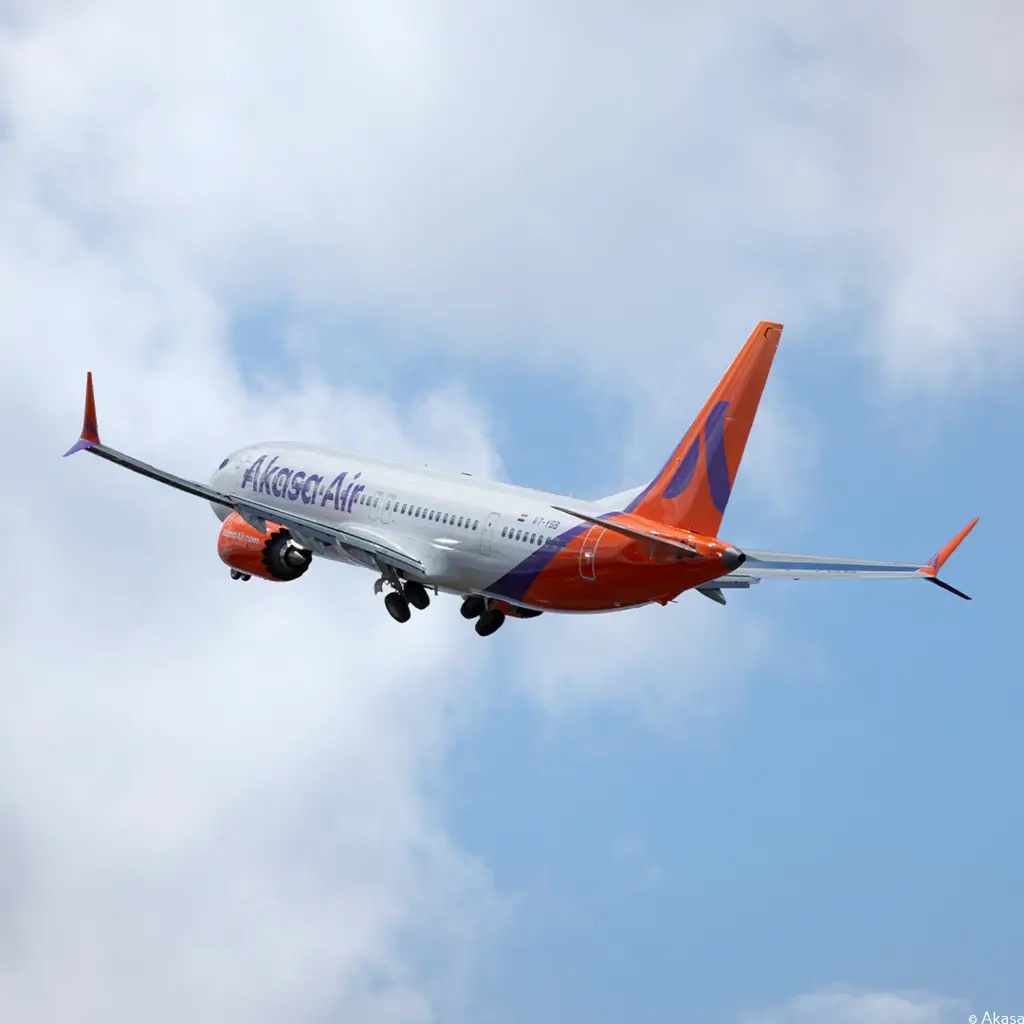
Akasa Air, India's third-largest airline, is in advanced talks to order more than 200 Boeing 737 MAX jets, citing people familiar with the matter. The Mumbai-based carrier, which only took to the skies in 2022, is rapidly positioning itself as one of Boeing's most ambitious customers in Asia.
The proposed order is designed to extend Akasa's fleet pipeline well into the next decade. The airline already holds unfilled orders for 183 Boeing 737 MAX aircraft — making this additional purchase a move to sustain growth momentum beyond 2032.
Where Things Stand Today
As of now, Akasa operates a fleet of 43 Boeing 737 MAX jets. Nine aircraft have been delivered so far in the current calendar year, adding to a fleet that has grown steadily since the carrier's launch. The 737 MAX remains central to Akasa's strategy, prized for its fuel efficiency and lower operating costs — a critical edge in India's fiercely competitive aviation market.
What Comes Next and When
A formal decision on the potential order is expected early next year, with final terms likely to be locked in during the second half of 2027. While negotiations are ongoing, the scale of the deal signals Akasa's confidence in India's long-term air travel boom and its own trajectory within it.
Going Global: The 60-40 Ambition
Beyond fleet size, the order is intertwined with a bolder strategic shift. Akasa is targeting a 60-40 domestic-to-international capacity split over the next two to three years — a significant departure from its current domestic-heavy operations.
Chief Executive Vinay Dube made the airline's international ambitions explicit in August. "I can see us getting up to 60-40… maybe two to three years from now," he said. "As aircraft deliveries improve, we will allocate more capacity to international destinations."
The numbers already tell a compelling story. DGCA data shows Akasa carried 400,525 international passengers in just the first half of 2026 — surpassing the 368,743 international passengers it flew across the entirety of 2025.
A Young Airline Playing the Long Game
What makes Akasa's trajectory remarkable is its speed. In roughly four years, the carrier has gone from launch to negotiating one of the largest aircraft orders in Indian aviation history. By securing deliveries deep into the 2030s, Akasa is not merely reacting to demand — it is building the infrastructure to shape it.
For Boeing, the deal would further cement a relationship that has already delivered one of its more consistent order books in the region. For India's aviation sector, it is yet another signal that the country's air travel market is no longer just growing — it is transforming.
Read next
Who Owns the Sky? India's Government Wrestles With a High-Stakes Aviation Question
Abhishek Nayar
23 Sep 2026

India's Civil Aviation Minister K Rammohan Naidu stirred considerable buzz in the aviation industry when he publicly acknowledged that the government is actively weighing the possibility of allowing airport operators to hold ownership stakes in airlines — a move that could fundamentally reshape how India's aviation ecosystem is structured.
Naidu made the remarks while speaking to reporters on the sidelines of a signing ceremony for the next phase of the Udaan regional connectivity scheme.
The Scale India Needs
Before addressing the ownership question, the minister laid out an ambitious baseline for India's aviation future. He stated that to fully capitalise on the country's current surge in air travel demand, India needs a minimum of five airlines each operating fleets of at least 100 aircraft — a scale the country is yet to reach.
He also reiterated the government's commitment to expanding airport infrastructure, saying India should ideally have over 350 airports. "People, even in small towns, want airports in their vicinity," Naidu said, framing the expansion as both a present aspiration and a long-term necessity tied to the Viksit Bharat 2047 vision.
The Adani Question That Sparked It All
The conversation took a sharper turn when a reporter raised the Adani Group's reported interest in acquiring a stake in an airline. The minister did not address the conglomerate by name, but his response was pointed: the country needs more airlines, and if someone is willing to invest in starting one, the government is supportive.
"The first idea is to provide the passenger with more airlines as an option," Naidu said.
A Legal Grey Zone — With Exceptions
Naidu also clarified an important legal nuance. While Operation, Management and Development Agreements — known as OMDA agreements — governing major PPP airports such as Delhi and Mumbai do contain restrictions on airport operators owning airlines, not all airport operators are bound by such clauses.
Pointing specifically to Delhi International Airport Limited (DIAL), a private operator, the minister noted there is currently no rule that explicitly prevents it from launching an airline. "That is why we have to see; we have to take a balanced approach," he said.
No Decision Yet — But the Deliberation Is Underway
Naidu was careful to note that no final decision has been made. The government, he said, will assess the pros and cons of the cross-ownership model before moving forward. The broader intent, however, appears clear: India's aviation policymakers are seriously entertaining a structural shift that could open the skies to a new class of airline investors — ones who already own the runways.
Read next
The Airline That Won't Stop Bleeding — Can Tata's Vision Outlast Air India's Losses?
Abhishek Nayar
18 Sep 2026
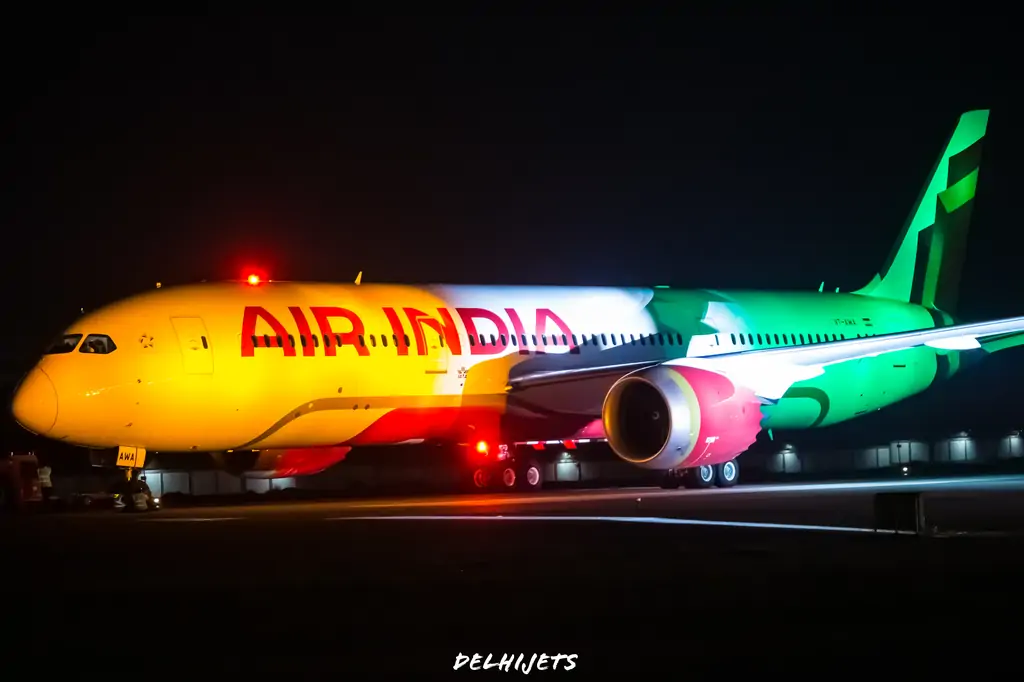
Air India's financial wounds deepened sharply in the fiscal year ending March 2026, with the Tata Group-owned carrier posting a consolidated net loss of Rs. 22,238.23 crore — more than double the Rs. 10,858.83 crore loss recorded in the previous year. The numbers, drawn from regulatory filings, paint a stark picture of an airline that has been battered from nearly every direction simultaneously.
When the Books Turned Red
The airline's total consolidated income contracted to Rs. 71,869.94 crore in FY26, down from Rs. 78,635.61 crore in FY25 — a significant erosion in revenue at a time when costs were climbing in the opposite direction. Total consolidated expenses swelled to Rs. 93,733.31 crore, compared to Rs. 89,317.12 crore a year earlier. The figures include the financials of Air India Express.
The Crash That Changed Everything
The most defining event of the fiscal year came in June 2025, when Air India Flight AI171 went down in a fatal accident, killing 260 people — one of the deadliest aviation disasters in recent memory. The tragedy cast a long shadow over the airline's operations, reputation and finances throughout the year.
Regulatory filings confirmed that the parent company is covered under aviation hull and liability insurance, and has received the agreed settlement from its insurer towards the aircraft loss and related costs. The net impact has been recorded as an exceptional item in the books. Management has stated that no material financial impact on reserves or losses is presently expected from associated claims.
Where the Money Went
Aircraft repair and maintenance costs climbed to Rs. 14,976.45 crore from Rs. 13,901.82 crore in the previous year. Fuel expenses, however, offered a rare silver lining — falling to Rs. 26,871.80 crore from Rs. 29,023.37 crore, likely a reflection of easing global fuel prices.
The most alarming surge came in foreign exchange losses, which exploded to Rs. 7,388.23 crore in FY26 from just Rs. 1,545.01 crore a year prior — a near-fivefold jump that underscores the brutal impact of currency volatility on an airline with significant dollar-denominated obligations.
Standalone Numbers Tell a Starker Story
On a standalone basis — excluding Air India Express — the airline's loss widened to Rs. 15,367.75 crore in FY26 from Rs. 3,975.75 crore in FY25. Standalone total income also fell sharply to Rs. 53,662.15 crore from Rs. 64,343.09 crore.
The Long Road Ahead
Tata Sons Chairman N. Chandrasekaran, writing in the group's 2025-26 Annual Report released in July, acknowledged the scale of the challenge head-on. He described Air India's transformation as a five-to-ten year journey, citing years-long supply chain disruptions in critical components, the overhaul of legacy systems and culture, fleet renewal and the building of a large cadre of aviation professionals.
The numbers confirm that the journey is far from over — and far more turbulent than anticipated.
Read next
No Planes, No Refund, No Jurisdiction — Jet Airways' Liquidator Hits a Triple Wall
Abhishek Nayar
15 Sep 2026
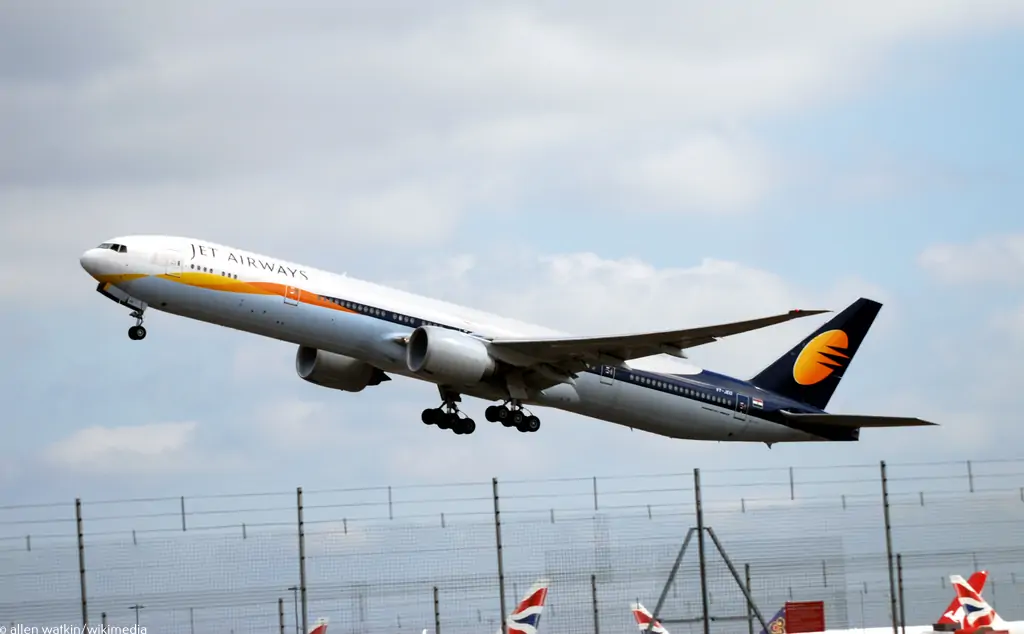
The ghost of Jet Airways continues to haunt India's aviation and legal corridors. In a significant ruling, the National Company Law Tribunal's (NCLT) Mumbai bench has dismissed a plea filed by Jet Airways' liquidator seeking recovery of Rs 500 crore — roughly USD 92.13 million — in advance payments made to American aerospace giant Boeing for aircraft that were never delivered.
A Deal Struck in 2013, A Crisis by 2019
The roots of the dispute trace back to 2013, when Jet Airways entered into purchase agreements with The Boeing Company for two aircraft — the 737-8 and the 787-9 — making substantial advance pre-delivery payments totalling USD 92.13 million to secure the order.
But Jet Airways never saw those planes. As the airline began haemorrhaging cash, Boeing suspended the purchase agreements in May 2019, citing payment delays on Jet's part. Just weeks later, in June 2019, Jet Airways was admitted into the Corporate Insolvency Resolution Process (CIRP).
Boeing Files a Claim — and Adjusts Its Books
With insolvency proceedings underway, Boeing lodged a claim before the Resolution Professional, adjusting the USD 92.13 million advance already received from Jet against its outstanding dues. The net admitted claim stood at Rs 721.19 crore, which later swelled to Rs 873.78 crore due to currency fluctuations during the prolonged liquidation process.
In December 2020, Boeing formally terminated the purchase agreements by issuing a termination notice, drawing a definitive line under the transaction.
The Supreme Court Steps In — Liquidation Ordered
After years of failed revival attempts, the Jalan Kalrock Consortium — the successful resolution applicant — was unable to implement the approved resolution plan. On November 7, 2024, the Supreme Court ordered Jet Airways into liquidation. The NCLT formally commenced the liquidation process on November 26, 2024.
Liquidator Demands Money Back; Boeing Refuses
Once the liquidator was appointed, he sought the return of the USD 92.13 million in advance payments, arguing the funds formed part of the liquidation estate under Section 36 of the IBC and were recoverable since Boeing never supplied the aircraft.
Boeing pushed back firmly. The company argued that the advance payments had already been adjusted against its larger admitted claim, and stood legally extinguished through set-off under Regulation 29 of the IBBI (Liquidation Process) Regulations, 2016.
NCLT Rules: This Is Not Our Fight
A two-member bench of NCLT comprising Prabhat Kumar and Sushil Mahadeorao Kochey ruled that the dispute was fundamentally contractual in nature and beyond the tribunal's jurisdiction under Section 60(5) of the IBC.
The bench observed that whether Boeing was justified in suspending and terminating the agreements, forfeiting the advance payments, and invoking set-off were questions requiring a full-fledged trial — with evidence and evaluation of the underlying agreements, which neither party even placed on record, citing confidentiality concerns.
The matter now heads to a competent civil court, leaving Jet Airways' creditors and the liquidation estate with yet another long legal road ahead.
Comment