
Day Two Highlights: Senior Executive Development Program on Aviation Law and Management

Sakshi Jain
21 Nov 2025
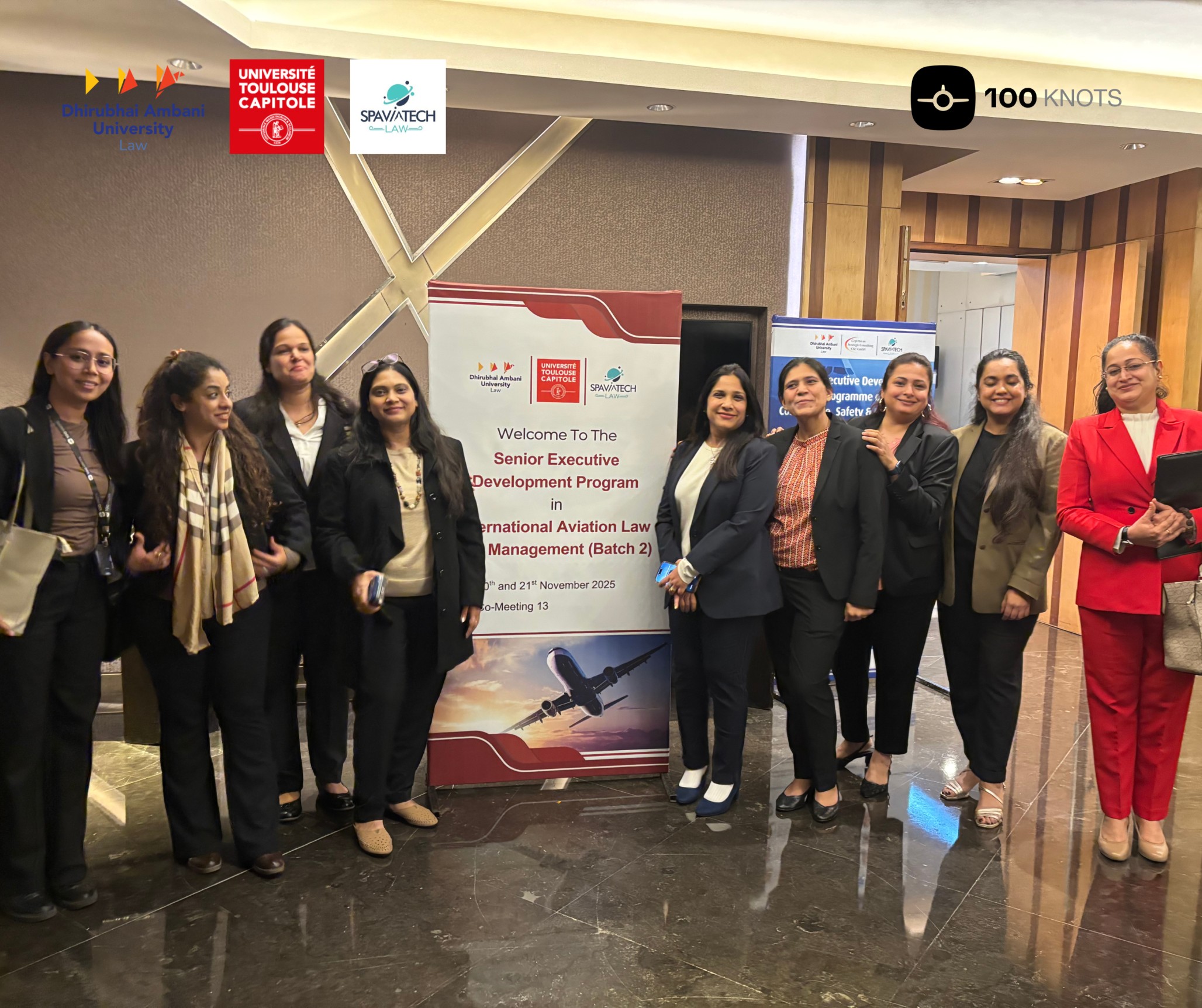
Day Two of the Senior Executive Development Program on Aviation Law and Management continued on 21st November 2025 at the Pullman, Aerocity, New Delhi, bringing forward a structured set of discussions led by senior legal, regulatory, and industry experts. Organised by Dhirubhai Ambani University – School of Law in collaboration with Université Toulouse 1 Capitole, France, and Spaviatech Law, the second day focused on the commercial, legal, and governance dimensions of contemporary aviation.
Session Speakers
The day opened with a session on Legal and Commercial Dimensions of Aviation Deals: A General Counsel’s Perspective, delivered by Ms. Lubinisha Saha, General Counsel (India & South Asia) at Airbus India. The session provided participants with an overview of the legal considerations and commercial elements involved in aviation transactions, reflecting the operational realities faced by legal teams within the aerospace sector. This was followed by a session on Liability and Claims in Aviation: Legal and Regulatory Perspectives, presented by Mr. Syed Tamjeed Ahmed, Co-Managing Partner at Spaviatech Law. The discussion focused on the legal principles governing aviation liability and the regulatory structure that shapes claims management within the industry. The session offered a factual outline of the frameworks that guide operators, regulators, and legal practitioners.

The programme then progressed to a session on Environmental Governance in Aviation – Balancing Growth, Innovation, and Regulatory Compliance, led by Prof. (Dr.) Laurent Grosclaude, Head of the Aviation Law LL.M. Program at Université Toulouse Capitole. His presentation addressed the environmental governance mechanisms relevant to aviation and highlighted the regulatory requirements that accompany sectoral growth and technological advancement.
After the midday break, the next session focused on Aviation Leasing and Financing: Principles and Practices, jointly led by Prof. (Dr.) Laurent Grosclaude and Mr. Syed Tamjeed Ahmed. The session outlined the foundational principles that define aircraft leasing and financing arrangements, offering participants a structured understanding of the legal and commercial aspects involved in such transactions. The presentation also reflected the shared roles of legal frameworks and financial instruments in shaping modern aviation operations.
The later part of the day featured a comprehensive Panel Discussion on Emerging Trends in Aviation, bringing together multiple senior industry representatives. The panel included Ms. Sharmila Barathan, Government Affairs & Policy Leader for GE Aerospace in South Asia; Mr. Pran Sathiadasan, Vice President Commercial Operations (Indian Subcontinent) at flydubai; Prof. (Dr.) Laurent Grosclaude; and Mr. Malik Almajadalawi, Deputy Head of Compliance for Europe at Collins Aerospace. The discussion was moderated by Ms. Rakhee Biswas, Co-Managing Partner at Spaviatech Law. The session collectively examined current developments and sectoral trends shaping the aviation landscape.

Bottom Line
The programme concluded with the Valedictory Address and Certificate Distribution, delivered by Mr. Faiz Ahmed Kidwai, IAS, Director General of the Directorate General of Civil Aviation (DGCA). His address formally marked the closing of the two-day programme and recognised the participation of attendees across both days. Overall, Day Two maintained the structured, informative format of the programme, offering participants a detailed understanding of the legal, regulatory, commercial, and policy dimensions of the aviation sector. The sessions collectively provided a comprehensive conclusion to the Senior Executive Development Program on Aviation Law and Management.
Read next
SpiceJet Slashes $50 Million Debt Through Strategic Equity Deal with Aviation Giant

Abhishek Nayar
21 Nov 2025

SpiceJet has executed a significant financial restructuring that removes Rs 442.25 crore from its balance sheet while securing critical resources for future operations. The budget carrier completed its equity share allotment to Carlyle Aviation Partners on Wednesday, marking a pivotal moment in its recovery strategy.
The Settlement That Changed Everything
The airline reached this settlement agreement with Carlyle Aviation Partners back on September 11, addressing lease dues totaling $121.18 million. The restructuring delivers $89.5 million in immediate liquidity to SpiceJet, providing the breathing room the carrier desperately needs as it works through its operational challenges.
How the Equity Swap Works
SpiceJet's Allotment Committee met on November 18 and approved issuing 10,41,72,634 equity shares to the global leasing firm. Each share carries a face value of Rs 10 and was priced at Rs 42.32, which includes a premium of Rs 32.32 per share. The airline issued these shares on a preferential basis under the non-promoter category, completing a crucial component of the settlement terms.
The agreement includes an innovative profit-sharing mechanism that protects SpiceJet's interests. If Carlyle Aviation Partners sells these shares and realizes proceeds exceeding $50 million, the airline will apply a portion of that excess amount toward future lease obligations, creating additional financial relief down the road.
Unlocking Maintenance Resources
Beyond debt reduction, the settlement unlocks substantial operational resources. SpiceJet gains access to $79.6 million in cash maintenance reserves that the airline can deploy for aircraft and engine maintenance work. Additionally, the carrier receives $9.9 million in cash maintenance credits applicable against future lease payments, providing flexibility in managing its financial commitments.
Leadership Perspective on Recovery
Ajay Singh, who serves as both Chairman and Managing Director, emphasized the strategic importance of this development. He described the settlement as an important milestone that demonstrates SpiceJet's commitment to building financial resilience. Singh highlighted how removing these liabilities while accessing maintenance reserves and credits provides meaningful support as the airline revives its fleet and expands operations.
The executive revealed that several additional restructuring initiatives remain in progress, expressing optimism about closing these deals soon. Singh framed these efforts as essential steps toward creating a stronger airline that better serves customers, partners, and shareholders.
Recent Financial Performance
The carrier reported a net loss of Rs 635.42 crore for the September quarter last week. Foreign exchange losses, additional expenses from grounded and re-inducted aircraft, and airspace restrictions contributed to this increased deficit. This financial context makes the Carlyle Aviation Partners settlement particularly significant, as it addresses legacy liabilities while providing resources for operational improvements.
Read next

India's aviation safety watchdog has summoned airlines and pilot groups to address mounting concerns that recent changes to cockpit crew regulations may be undermining the very safety protections they were designed to provide.
The Regulatory Reversal That Has Pilots Alarmed
The Directorate General of Civil Aviation has scheduled meetings in New Delhi next week with airline operators and pilot associations after granting dispensations that some safety advocates view as troubling rollbacks. The regulator has permitted airlines to schedule more night landings and extended duty hours for two-pilot Boeing 787 Dreamliner operations, modifications that pilots' organizations argue prioritize airline profits over passenger safety.
The controversy centers on flight duty time limitation norms that the government had celebrated as historic reforms when announced in January 2024. Officials had championed these rules as breakthrough measures that would combat pilot fatigue and strengthen flight safety. The regulations introduced substantial changes including expanded weekly rest periods reaching 48 hours, redefined night hours, and critically reduced the permissible number of night landings from six to just two.
Airlines Fought the Rules, Courts Forced Compliance
Domestic carriers including IndiGo and Air India initially resisted implementing the new standards. The airlines eventually adopted the regulations only after the Delhi High Court issued directives compelling compliance. However, implementation stretched more than a year beyond the original timeline, with the DGCA rolling out the changes in phases beginning in June and concluding this month.
The regulator has now called a Monday meeting with the Federation of Indian Pilots and the Airlines' Pilots Association to examine the dispensations granted to various carriers. A second meeting will address the fatigue risk management system that has become another flashpoint in the debate.
Pilots Accuse Regulator of Betraying Safety Commitments
Pilot associations have accused the DGCA of tweaking regulations that were supposedly designed to address fatigue and enhance safety to instead serve the commercial interests of private airlines. The Federation of Indian Pilots has escalated its challenge by filing a contempt plea against the regulator in Delhi High Court.
The dispute affects operations of Boeing 787 aircraft flown by Air India and IndiGo, though regulatory jurisdiction differs between the carriers. While Air India registers its aircraft with the DGCA, IndiGo operates its Dreamliners on damp lease from foreign lessors, placing them outside Indian regulatory oversight.
The Battle Over Scientific Fatigue Management
The DGCA introduced draft guidelines in September for a fatigue risk management system intended to complement existing duty time rules. The proposed framework promises scientific, data-driven approaches to managing pilot fatigue. However, the Indian Commercial Pilots Association has rejected the draft, warning that India's unique operational conditions and ongoing court proceedings demand extreme caution before shifting from prescriptive regulations to performance-based frameworks.
Pilot representatives fear airlines view the fatigue management system as an escape route from court-mandated protections. Critics warn that allowing carriers to develop customized fatigue management schemes could enable them to prioritize operational efficiency over flight safety, effectively circumventing the stricter regulations they fought against implementing.
Read next
Day One Highlights: Senior Executive Development Program on Aviation Law and Management
Sakshi Jain
20 Nov 2025
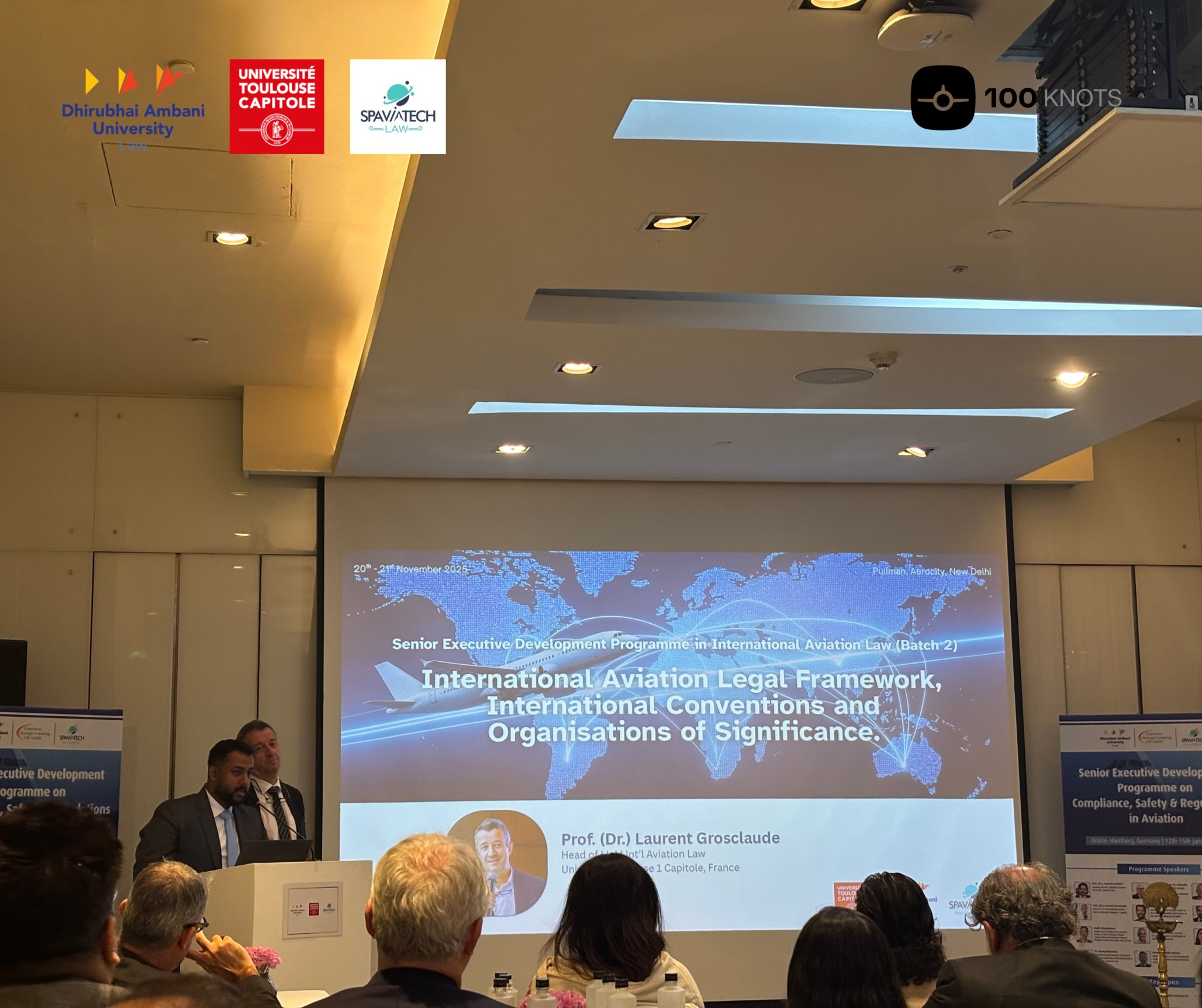
The Senior Executive Development Program on Aviation Law and Management commenced on 20th November 2025 at the Pullman, Aerocity, New Delhi, bringing together leading experts from academia, industry, and regulatory bodies for a focused exploration of aviation safety, liability, legal frameworks, and accident investigation. Organised by Dhirubhai Ambani University – School of Law in collaboration with Université Toulouse 1 Capitole, France, and Spaviatech Law, the programme offered participants an in-depth overview of key legal and operational issues shaping the aviation sector.
Session Speakers
The day began with an Inaugural Session, marked by the ceremonial lighting of the lamp. Prof. (Dr.) Avinash Dadich, Founding Director at Dhirubhai Ambani University – School of Law, opened the event with his Welcome Remarks, outlining the university’s vision for strengthening specialised aviation law education and emphasising the importance of multi-disciplinary engagement.
Following this, Prof. (Dr.) Mattiuse Poumarède, Dean at Toulouse School of Law, Université Toulouse 1 Capitole, delivered the Partner Address, highlighting the relevance of international academic collaborations in advancing aviation regulatory studies. The session concluded with a Vote of Thanks and context-setting by Mr. Sivadhat Madhav Menon, Vertical Head of Aviation Law and Management at the university, who introduced the structure and objectives of the two-day programme.
The first thematic session focused on the International Aviation Legal Framework, International Conventions, and Organisations of Significance. Delivered by Prof. (Dr.) Laurent Grosclaude, Head of the Aviation Law LL.M. Program at Université Toulouse Capitole, the session examined major global aviation conventions and the institutional structures that govern international civil aviation. The discussion provided participants with a foundational understanding of the legal environment that underpins cross-border aviation operations.

The next session explored India’s Aviation Ecosystem – Current Realities and Future Pathways, presented by Mr. Ashwani Acharya, Founding Core Team Member of IndiGo Airlines and CEO of RedBird Flight Training Aviation Pvt. Ltd. His session highlighted the changing dynamics of the Indian aviation landscape and offered a factual overview of developments influencing airlines, training organisations, and the broader ecosystem.
The programme then moved into a session on Drones in India – Opportunities, Challenges and the Way Forward, led by Mr. Amber Dubey, Former Joint Secretary at the Ministry of Civil Aviation and Senior Advisor at McKinsey and Company. His presentation addressed the evolving policy environment for unmanned aircraft systems in India and outlined the opportunities and regulatory considerations surrounding drone operations.
The final session of the day focused on Air Accident Investigations: Global Best Practices, Safety, and Airworthiness Compliance. It was delivered jointly by Dr. Lalit Gupta, Former Joint Director General at the Directorate General of Civil Aviation (DGCA), Government of India, and Mr. Malik Almajadalawi, Deputy Head of Compliance for Europe at Collins Aerospace. Together, they discussed internationally recognised practices in accident investigation and emphasised the importance of safety systems, organisational compliance, and airworthiness standards.

Bottom Line
Overall, Day One of the programme offered a clear, structured, and informative set of discussions led by subject-matter experts. The sessions collectively provided participants with a comprehensive understanding of international legal frameworks, India’s aviation landscape, drone regulations, and accident investigation methodologies. The day concluded on a productive and engaging note, setting a strong foundation for the sessions scheduled for Day Two.
Read next
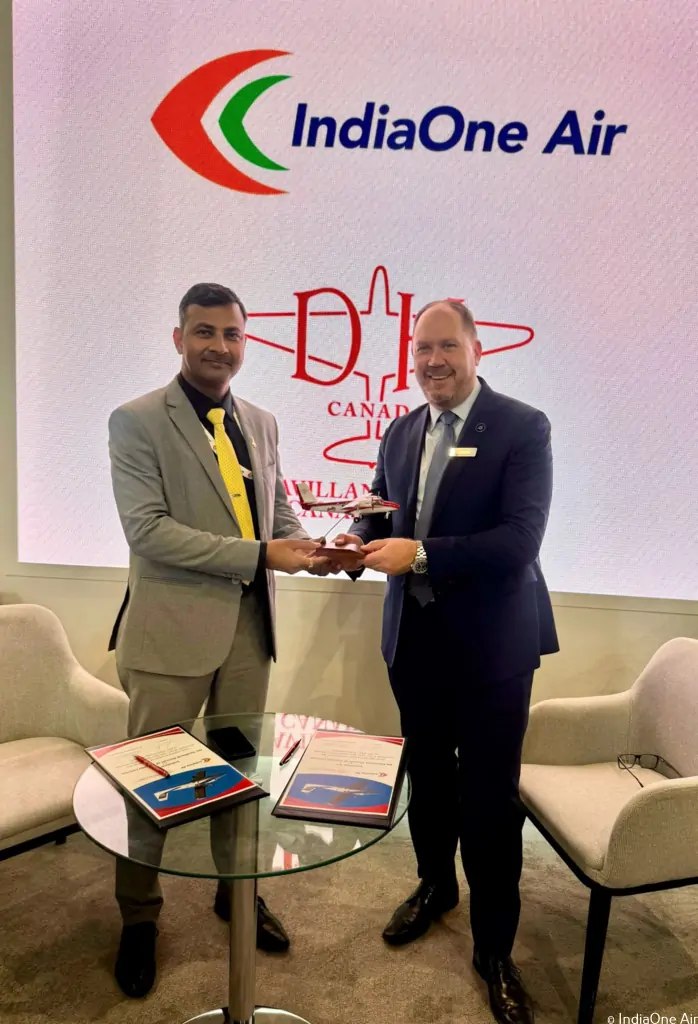
De Havilland Aircraft of Canada Limited has secured a significant partnership with IndiaOne Air, a regional airline operator in India. The companies announced their collaboration during the 2025 Dubai Airshow, where IndiaOne Air signed a Letter of Intent to acquire up to ten Twin Otter Series 300-G aircraft.
Strategic Expansion Into Underserved Markets
IndiaOne Air plans to deploy these aircraft to serve remote and underserved regions across India. The Twin Otter 300-G represents the latest generation of De Havilland's proven platform, offering capabilities that perfectly match the airline's expansion strategy. The aircraft will enable IndiaOne Air to establish connectivity in areas where limited airport infrastructure has historically restricted air travel access.
Wing Commander Prem Kumar Garg (Retd), who serves as Chief Executive Officer of IndiaOne Air, explained the rationale behind selecting this particular aircraft model. The Twin Otter 300-G suits the airline's operational requirements as it expands to regional destinations with smaller runway lengths. The aircraft's performance characteristics, reliability, and versatility align with the company's core mission of connecting previously isolated communities and making air travel accessible throughout India.
Supporting National Aviation Objectives

Himanshu Shah, serving as Promoter and Director at IndiaOne Air, emphasized that this partnership advances the airline's long-term vision of becoming India's leading regional carrier serving the country's heartlands. Fellow Promoter and Director Shaishav Shah added that the Twin Otter 300-G embodies the company's commitment to operational excellence and sustainable regional connectivity while supporting the Government of India's UDAN initiative, which aims to provide equitable air access across the nation.
De Havilland Strengthens Indian Market Presence
Ryan DeBrusk, Vice President of Sales and Marketing at De Havilland Aircraft of Canada, welcomed IndiaOne Air into the company's global network of operators. He noted that IndiaOne Air's selection validates the Twin Otter 300-G's proven performance in challenging environments worldwide. De Havilland Canada commits to supporting IndiaOne Air as the airline expands its network and establishes connections between more communities across India.
Aircraft Capabilities Driving the Decision
The Twin Otter Series 300-G brings several technological and operational advantages to IndiaOne Air's fleet. As the newest variant of the globally trusted Twin Otter platform, it delivers improved operational efficiency through advanced avionics systems and provides enhanced passenger comfort. The aircraft's short take-off and landing capabilities make it particularly well-suited for operations in diverse and demanding environments, allowing airlines to serve airports with limited infrastructure that larger commercial aircraft cannot access. This deal marks De Havilland Canada's growing presence in India's rapidly expanding regional aviation sector.
With Inputs from De Havilland
Read next
Indian Aviation Industry Faces Steeper Financial Turbulence as Losses Set to Double
Abhishek Nayar
19 Nov 2025

The domestic aviation sector confronts mounting financial pressures as industry analysts project losses will surge to nearly twice their previous levels. Rating agency Icra released findings on Tuesday revealing that airlines will likely record net losses between Rs 9,500 crore and Rs 10,500 crore for the fiscal year ending March 2026, marking a significant deterioration from the Rs 5,500 crore loss estimated for the current fiscal year.
Expansion Plans Collide with Economic Reality
The aviation industry finds itself caught in a challenging paradox where fleet expansion drives up costs even as passenger demand shows signs of cooling. Airlines have committed to substantial aircraft deliveries, which simultaneously increase capital expenditures and operational costs. These new aircraft additions create higher lease obligations and maintenance requirements, straining already tight margins across the sector.
Icra maintains a stable outlook while forecasting modest domestic passenger traffic growth of four to six percent for FY26. The agency projects the industry's interest coverage ratio will hover between 1.5 and 1.7 times during this period, indicating airlines will generate just enough earnings to service their debt obligations with minimal buffer.
Traffic Growth Loses Altitude
Passenger traffic expansion has decelerated noticeably from previous years. The previous financial year recorded 7.6 percent growth, with total passenger volumes reaching 16.53 crore. Current projections suggest this momentum will not sustain into the coming fiscal year.
Multiple factors contribute to this slowdown. Cross-border tensions create uncertainty for international routes, while global disruptions ripple through travel patterns. The June 2025 aircraft tragedy has particularly impacted consumer confidence, triggering travel hesitancy among potential passengers. Recent air traffic control operational disruptions have further complicated the situation, creating additional uncertainty for travelers planning their journeys.
October figures offered mixed signals about recovery prospects. Domestic air passenger traffic reached 1.43 crore, representing a 4.5 percent year-on-year increase and a 12.9 percent sequential jump from September. Airlines expanded capacity during this period, with domestic departures hitting approximately 99,816 flights, marking a 10.8 percent sequential increase and 1.7 percent year-on-year rise.
Supply Chain Constraints Ground Progress
Technical challenges continue plaguing airlines beyond demand-side pressures. Supply chain bottlenecks and engine failures have forced significant portions of fleets to remain grounded. As of March 31, 2025, approximately 133 aircraft across select airlines sat idle, representing fifteen to seventeen percent of the total industry fleet.
These groundings create cascading financial consequences. Airlines incur grounding-related expenses while simultaneously paying higher lease rentals for replacement aircraft. The substitute planes often operate with reduced fuel efficiency, further eroding margins. This combination of increased costs and operational inefficiencies compounds the sector's financial stress.
The projected losses, while substantial, remain considerably lower than the Rs 21,600 crore and Rs 17,900 crore losses reported in FY22 and FY23 respectively, suggesting the industry has achieved some recovery from pandemic-era devastation even as new challenges emerge.
Comment