
Civil Aviation Ministry Approves Proposed Site At Cheruvally Estate For Sabarimala Airport Project

Radhika Bansal
17 Apr 2023

The Union Ministry of Civil Aviation has approved for the proposed Sabarimala International Greenfield airport in Erumeli, marking a significant step forward in the state government's ambitions to establish an airport for pilgrims to Sabarimala. The state government's report on the techno-economic feasibility assessment was taken into consideration while approving the project. A detailed project report (DPR) for the project would shortly be prepared by the government, according to sources. According to reports, "the government will quickly locate a competent agency to draught the DPR and begin the processes sooner rather than later."
Confirming the development, V Thulasidas, special officer for the Sabarimala Airport, said the project has passed a major hurdle by gaining the approval of the Civil Aviation Ministry. “It was a long-drawn process as the Union Ministry had sought several clarifications based on our report. As the sanction was received after the scrutiny of a steering committee under the Civil Aviation Ministry, which consists of representatives from the director general of civil aviation (DGCA), Airport Authority of India (AAI) and other govt departments connected with the airport project, we have passed a major milestone in the technical side of the project. Now we can step into all further procedures.”
Current Situation of the Project
Presently, the social impact assessment (SIA) study for the project in Erumeli South and Manimala villages, under the aegis of the Centre for Management Development (CMD), is in its final stage. SIA is mandatory for land acquisition as per the Right to Fair Compensation and Transparency in Land Acquisition, Rehabilitation and Resettlement Act (LARRA), 2013. The Environment Impact Assessment (EIA), being done by Louis Berger, the company which prepared the techno-economic feasibility report for the project, is also nearing completion. Earlier, soil tests were conducted for the project.
According to him, the proposed airport will have a 3.5-km-long runway with adequate width to enable the operation of aircraft of all sizes. Upon completing the land acquisition, the detailed project report (DPR) will be formulated, followed by the constitution of a Special Purpose Vehicle (SPV) to execute and operate the project. “Assuming that all the requisite approvals are received, it will take another three to four years to construct the airport,” he added
As per the latest government order (GO), a total of 1,039.876 hectares (2,570 acres) of land in Erumeli South and Manimala villages in Kanjirappally taluk will be acquired for the construction and development of the airport. The proposed area includes 2,263.18 acres of land in Cheruvally Estate, presently under the possession of Ayana Charitable Trust under K P Yohannan’s Believers’ Church, and an additional extent of 307 acres outside the estate.
HC Grants Permission
In yet another fillip to the Sabarimala airport project, the Kerala High Court has granted consent to the Kerala Government to proceed ahead with the Social Impact Assessment survey of the Cheruvally Estate where the proposed greenfield facility is being planned. The court also dismissed a petition moved by the Ayana Charitable Trust, which currently owns the Cheruvally Estate, seeking to cancel a notice issued by the State Government for the survey under the Kerala Survey and Boundaries Act. (The Trust was previously named Gospel For Asia which is behind the Believers Church.)
Earlier, the State Government had issued an order to take over 1039.876 hectares (2,570 acres) of the Cheruvally Estate spread over Erumeli South and Manimala villages in Kanjirappally Taluk. Subsequently, the Revenue Department posted a notice on the estate building as a preliminary step to carry out a survey.
Location of the upcoming airport
The Union Ministry of Civil Aviation has granted site clearance for the Sabarimala Greenfield Airport project in Kerala. The Ministry gave the clearance based on various inspections carried out at Cheruvally Estate in the Kottayam district and nearby areas. The new airport at Cheruvally is expected to boost development in five districts in Central Kerala and the adjacent hill region.
The Aviation Ministry’s site clearance is a major development related to the airport project which certifies that the Cheruvally estate and adjacent land are suitable to construct an airport. The clearance follows satisfactory replies given by the state government to queries raised by the Director General of Civil Aviation (DGCA) and the Airports Authority of India (AAI).
The next step after site clearance is land acquisition for which the Kerala Industrial Development Corporation has initiated preliminary measures. Subsequent steps are the preparation of a detailed project report, setting up a company for airport construction and operations and appointment of a consultancy. Tenders would be invited for construction after land acquisition procedures are completed.
Read next


The US Department of Transportation (USDOT) has revealed passenger traffic figures for January 2023, which show a significant rise in passenger travel when compared to the same month in 2022, with figures from January 2023 approaching the record 70.8 million passenger movements set in January 2020. The figures show a 28 percent annual growth rate, which is a notable indicator of recovery for the aviation sector, which was heavily damaged by the COVID-19 epidemic.
Continued Progress
The most recent statement from the EPA, published earlier this week, verified the quick post-pandemic recovery of air travel in the United States, despite weather-related delays and obstacles through December.
Overview of the Report
The USDOT's January passenger traffic report is based on the Bureau of Transportation Statistics (BTS). The report includes data on the number of passengers who flew locally and internationally during the month of January. Passenger enplanements, deplanements, and connecting passengers are among the types of data collected.
Two measurements of passenger enplanements on US airlines
January, seasonally adjusted:
- System-wide enplanements (78.1 million) are up 4.0% from December 2022 (75.1 million).
- Enplanements were down 3.5% in January compared to the all-time high of 80.9 million in January 2020.
- Domestic enplanements (68.5 million) were 3.7% lower than the all-time high of 71.1 million in January 2020.
- International enplanements (9.58 million) were 2.2% lower than the all-time high of 9.79 million in January 2020.
January, unadjusted:
- System-wide enplanements (67.1 million) were 6.5% lower than in December 2022 (71.7 million).
- January system-wide enplanements were down 5.2% from the all-time high of 70.8 million set in 2020.
- Domestic enplanements (58.1 million) were 5.8% lower than the all-time January high (61.6 million) set in 2020.
- International enplanements (9.03 million) were 1.5% lower than the all-time high in January (9.16 million).
Passenger Traffic: Domestic vs. International
According to the data, domestic passenger traffic climbed by 27.5% when compared to the same time in 2022. In January 2023, 62.8 million people travelled inside the United States. This is a huge rise from the 49.3 million domestic passengers who travelled in January 2022.
Travel Demands
With the termination of the COVID-19 national emergency, which President Joseph Biden signed into law on April 10, travel restrictions to the United States are likely to ease in May, with unvaccinated tourists authorized to enter the country for the first time.
Busiest Airports
In addition, the research identifies the busiest airports in terms of passenger volume in January 2023. Hartsfield-Jackson Atlanta International Airport, Los Angeles International Airport, Dallas/Fort Worth International Airport, Denver International Airport, and Chicago O'Hare International Airport were the top five airports in terms of passenger traffic.
Personnel Shortage
In response to increased passenger demand, airlines and airports have initiated recruiting sprees to ensure smooth operations during peak seasons and to avoid a repetition of the disruption observed in the summer of 2022. Nevertheless, airport operations in New York and Washington, DC, are projected to be reduced between May 15 and September 15, owing to local shortages of Air Traffic Control (ATC) personnel.
Conclusion
The January passenger traffic data from the USDOT shows a significant rise in passenger travel when compared to the same time in 2022. The increase in passenger travel is a good indication for the aviation sector, which has been battling to recover from the COVID-19 pandemic's impact. Domestic and international passenger traffic climbed by 27.5% and 34.2%, respectively, according to the study. In terms of passenger traffic, the top five busiest airports were Hartsfield-Jackson Atlanta International Airport, Los Angeles International Airport, Dallas-Fort Worth International Airport, Denver International Airport, and Chicago O'Hare International Airport.
With Inputs from atlas-network
Read next
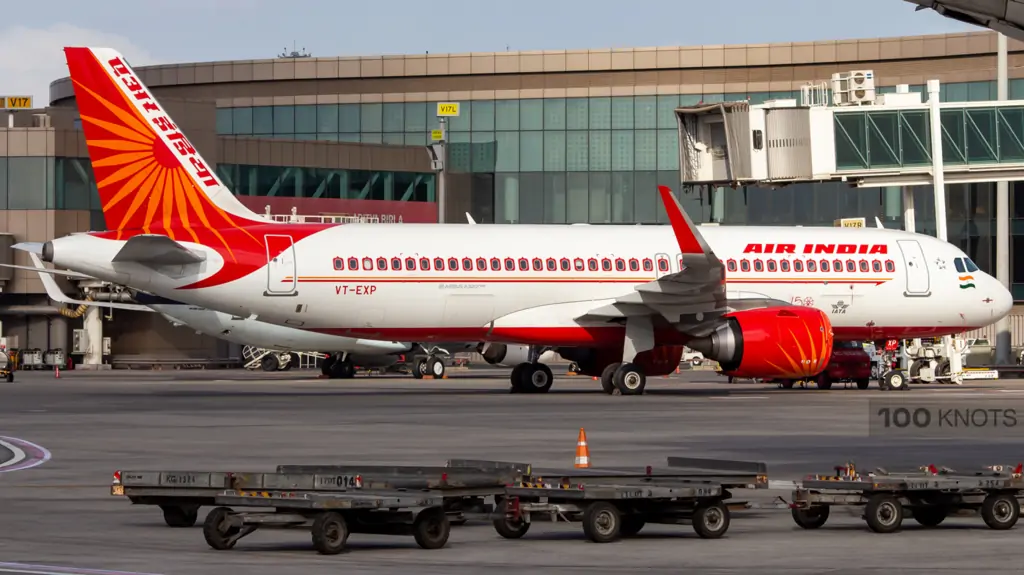
Air India, India's national airline, is poised to showcase new cabin décor and uniforms for its cabin crew, according to CEO Campbell Wilson in an internal message. The airline has been working on this project for some time, and the new appearance is set to debut soon.
The Statement
The CEO stated that the designs were "progressing nicely" and that arrangements for their "reveals" were being finalized. Mr. Wilson has stated that while the renowned Maharajah may continue to be a part of the airline's mascot, it may also feature a "she."
Interior Remodeling: A Fresh Look
Air India intends to completely redesign its interiors, from the seats to the carpets and lighting. The airline has been working with a design team to provide its passengers a modern, sleek, and comfy appearance. The renovated interiors will have a modern feel, with an emphasis on comfort and convenience.
Fresh Uniforms: A Distinctive Look
Air India also intends to introduce new uniforms for its cabin personnel. A team of famous fashion designers designed the new uniforms, which are meant to be fashionable, comfortable, and useful.
The Implications of the Improvements
The airline's move to remodel its décor and uniforms comes at a critical juncture. The Indian government is presently in the process of privatization the airline, and the new appearance of Air India is considered a key step in enticing possible purchasers.
Prior Issues
While most COVID-19 cutbacks were restored for most employees in September, pilots reported they continued to witness certain cuts, such as the minimum pay equivalent of 70 hours being decreased to 20 hours.
Conclusion
Air India's new décor and uniforms are designed to give customers a contemporary and pleasant flying experience. The airline has worked hard to make its cabins seem sleek and modern, with an emphasis on comfort and convenience. The new uniforms will also be fashionable and utilitarian, with a nod to Indian culture.
With Inputs from TheHindu
Read next
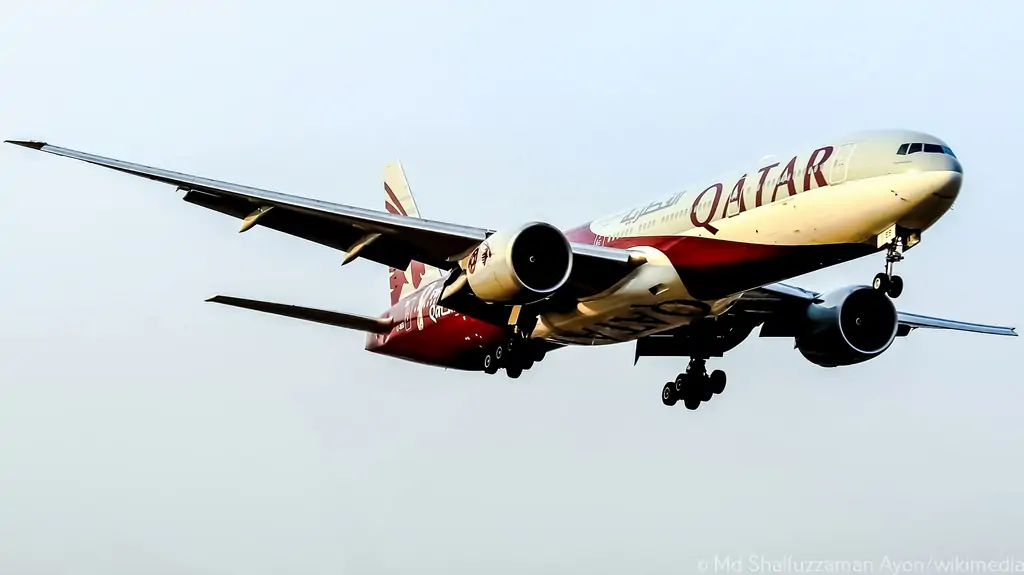
Qatar Airlines just received its first Boeing 737 MAX, marking an important milestone in the airline's fleet expansion. The MAX 8 aircraft took off from Everett Paine Field on April 13th for the lengthy ferry flight to the airline's Doha headquarters. The upcoming MAX 8s, some of which have been bought by Russia's S7, are expected to replace the airline's older Airbus A320-200s on shorter international trips.
The History of the Boeing 737 MAX
The Boeing 737 MAX is a narrow-body plane built for short- to medium-distance trips. It is the fourth generation of the Boeing 737 family, featuring modern technology and aerodynamic enhancements that make it more fuel-efficient and environmentally friendly than its predecessors.
Aircraft Specifications and Details
A7-BSC is the registration of the aircraft that will be Qatar Airlines' first Boeing 737 MAX. The plane formerly had test registration N4022T but was scheduled to ultimately take registration VP-BXJ before receiving a Qatari registration. It has the manufacturer's serial number (MSN) 43329 and Line No. 8134. According to Planespotters.net, this aircraft has eight business class seats and 168 economy class seats. According to Aviation Flights (previously BOE Family Flights), this aircraft was originally ordered by Russia's S7 Airlines and would take to the skies on December 10th, 2021. Due to Russia's delay in re-certifying the MAX, the plane was transported directly to storage before undertaking additional test flights in February, March, and April 2023. The jet had accumulated around eight and a half hours of test-flight time across seven flights. A7-BSC took off from Everett Paine Field at 09:36 a.m. local time on April 13th, landing at Iceland's Keflavik airport at 12:47 a.m. local time (UTC +0) on April 14, 2023, for a technical refueling stop. It is slated to continue on to Doha, where it will be met by Qatar Airlines, which is scheduled to depart KEF later that evening. According to Great Circle Mapper data, KEF is 3,641 nautical miles (6,742 kilometers) from Doha's Hamad International Airport (DOH). The maximum range of the 737 MAX-8, which Qatar Airlines is receiving, is listed on Boeing's product page as 3,550 nautical miles (6,570 km).
Fleet
At least nine of Qatar Airlines' 'new' 737 MAX 8s will be procured from an order placed by Russia's S7. The additional S7-affiliated jets, in addition to the A7-BSC, are as follows:
A7-BSA (formerly VP-BXE)
A7-BSB (formerly VP-BXI)
A7-BSD (formerly VP-BXK)
A7-BSE (former registration unknown)
A7-BSF (formerly VP-BXF)
A7-BSG (formerly VP-BXM)
A7-BSH (formerly VP-BXG)
A7-BSI (formerly VP-BXH)
The 737 MAX 8 will be flying alongside Qatar Airlines' Airbus A320-200. The airline now operates 29 Airbus aircraft, the oldest of which is roughly 13-and-a-half years old and its newest A320-200 being seven and a half years old. The average age of the A320-200 fleet is about 11 years. Because one of Qatar Airlines' primary concerns is maintaining a youthful and contemporary fleet of aircraft, the A320s are 'ageing out' of the airline's ideal age. As a result, the 737 MAX will assist Qatar Airlines in meeting and maintaining its aim of flying a youthful fleet of aircraft.
Destinations
There are numerous current destinations where the A320-200 is deployed. Yet, according to FlightRadar24.com, the Airbus narrowbody travels as far as Zagreb (Croatia), Zanzibar (Tanzania), Hyderabad (India), and Tbilisi (Georgia). Possibly, in the future, the MAX 8 will operate routes similar to these as well.
Safety precautions
Following two deadly incidents involving the 737 MAX in 2018 and 2019, Boeing has made substantial efforts to assure the aircraft's safety. Significant adjustments have been made to the aircraft's software and training programmes, and the aircraft has been recertified by aviation authorities worldwide. Qatar Airlines has likewise taken precautions to protect its passengers and personnel. The airline has a solid safety record and has adopted thorough safety and health precautions in response to the COVID-19 epidemic that took place a few years prior.
Conclusion
The delivery of Qatar Airlines' first Boeing 737 MAX is a significant milestone for both the airline and the aviation industry as a whole. The innovative technology and environmentally friendly design of the aircraft will allow the airline to operate more effectively and responsibly while also offering customers a better flying experience. As the airline expands its fleet, it is positioned for significant expansion and success in the coming years.
With Inputs from Aerotime
Read next

After an El Al Boeing 777 became quiet while traveling through air traffic control sectors, Austrian fighter jets were dispatched. The jet was unresponsive for around 12 minutes before reestablishing radio communication and continuing to Tel Aviv without incident.
The Situation
On Monday, April 10th, El Al flight LY338 from Amsterdam Schiphol Airport (AMS) to Ben Gurion Airport (TLV) was flying over southern Germany when it was diverted to the next sector in Austria by air traffic control (ATC). The aircraft took off from Amsterdam at 10:24 local time, reaching cruising altitude at 10:43, and then failing to react to contacts for about 30 minutes, beginning at 11:08. According to The Aviation Herald, pilots failed to react to repeated calls from Austrian ATC on several frequencies, including the emergency guard channel, prompting officials to scramble two Eurofighter jets to establish visual contact and considering the possible security danger posed by the unexpected radio silence, the military decided to take no chances.. The two fighter jets went to FL370 and made visual contact with the passenger airliner somewhere over Corinthia, Austria's rugged southern area. According to sources, communication with the Boeing 777-200 (registration: 4X-ECF) was re-established at the same time as visual contact.
What Might Have Been the Case
According to i24news, El Al has issued a statement on the event: "As part of its intended flight path, the flight LY338 took off from Amsterdam and flew through the airspace of Germany and Austria. Contact with Austrian air traffic control was not made during the changeover from German to Austrian airspace for an unspecified cause. Once the control centre and another El Al jet in the air distracted the plane's crew's attention, contact was established with Austrian control. After making contact again, the jet continued on its trip to Israel without incident." One probable theory is that the 777 experienced a technical failure; however, aircrafts are designed with redundant communication systems for just this circumstance; it is also possible that weather interference caused a momentary loss of communications. Another probable explanation is that the pilots were sleeping, especially because they did not answer on various frequencies. While a single pilot may take a period of 'managed rest,' sleeping by both pilots is not authorized under any circumstances. Regrettably, this has happened previously, with two Ethiopian Airlines pilots missing their landing because they were sleeping, as well as two ITA Airways pilots falling asleep over France. The sight of the fighter planes apparently alarmed passengers on the trip, with one passenger noting, "The plane was so close, we saw the missiles." The traveler went on to say that the crew did not make an onboard notification about the event. According to FlightRadar24.com, the aircraft involved in Monday's incident had only returned to service a week prior, on April 4th, adding validity to the defective systems explanation. According to Planespotters.net, only three of El Al's six Boeing 777s are now operational.
Conclusion
The incident with the El Al airliner temporarily becoming quiet and the subsequent scramble of fighter jets emphasizes the need of being in regular contact with air traffic control. While the event proved to be a false alarm, it demonstrates the Austrian military's readiness and swift response to possible security threats. It also serves as a reminder of the continual need for enhanced aviation security measures, as threats to aviation continue to adapt and alter. Overall, this occurrence demonstrates the alertness and expertise of those in charge of guaranteeing the safety of aviation travelers all over the world.
With Inputs from TimesofIsrael, avherald
Read next
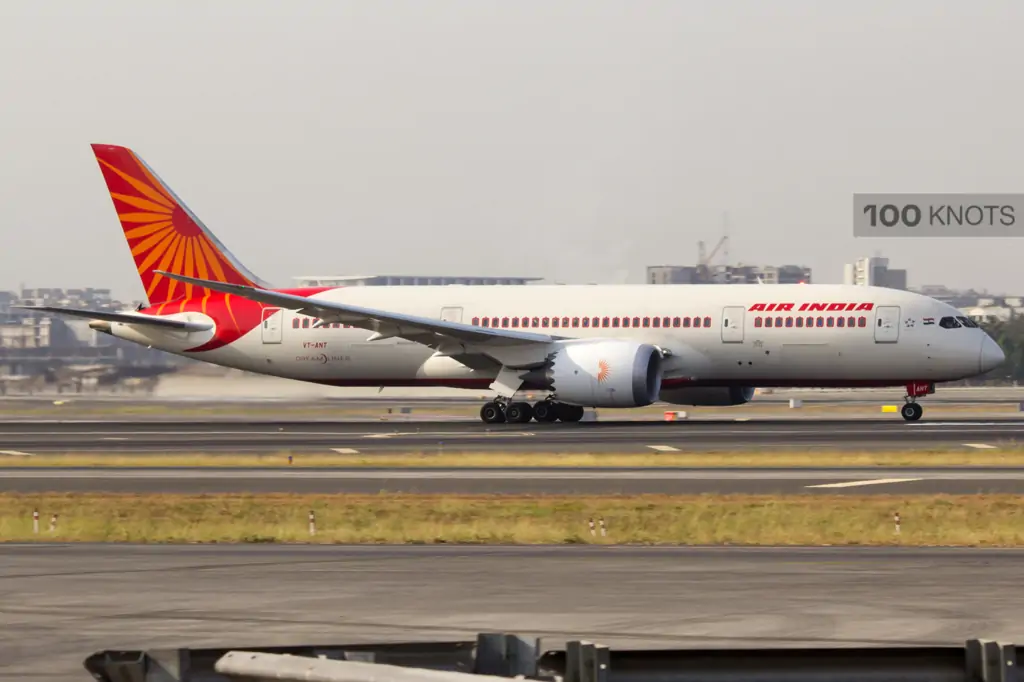
Air India is temporarily reducing the frequency of flights to Oman, Dubai, Abu Dhabi, and Qatar to manage the problem of crew and plane shortages. According to a report by MoneyControl, from the last week of April to May end, the airline has cancelled one flight every week on both sides between Delhi and Muscat, Delhi and Dubai, and Delhi and Abu Dhabi.
"Air India and Air India Express are aligning their networks causing several Air India flights to be cancelled," an Air India official told MoneyControl. Another official said that the airline's decision to cut flights to the West Asian countries is part of the carrier's network restructuring to make the most of its fleet of planes.
"Air India will cut flights to the Middle East after Eid-ul-Fitr as traffic falls drastically after the Eid holidays in those countries, while domestic summer traffic in India will rise due to school vacations," he said adding that to benefit from Eid-ul-Fitr traffic, Air India has also temporarily increased the frequency of flights between India and the United Arab Emirates (UAE) in April.
Air India issued circulars to travel agents. Air India will not be operating its weekly Delhi-Muscat flight on Saturdays from April 29 to May 27 and its weekly Delhi-Doha flights on Sundays from April 30 to May 28. The airline will also not be operating its Delhi-Dubai flight on Tuesdays from May 2 till May 30, and its Delhi-Abu Dhabi flights on Wednesdays from May 3 to May 31.
The first official also noted that some flights between India and West Asian nations would be impacted in the coming months as Air India and AIX Connect, formerly AirAsia India, align their networks. Air India Express has also increased the services from Thiruvananthapuram to Dubai and Abu Dhabi from five to six.
Transformation on the way
For the past six months, Air India has struggled with a shortage of pilots and planes as it strives to grow under its new owners, the Tata Group, and extend its worldwide operations, the report noted. In March, Air India's MD and CEO Campbell Wilson said that the airline would reduce the frequency of flights to the US due to crew shortage. “As of now, six weekly flights to the US, three to Newark and three to San Francisco and will be trimmed due to crew shortage for the coming two-three months,” Wilson had said.
The airline which had earlier denied a crew crunch has also been forced to pull down six weekly flights to the US due to a lack of staff. These cancellations hit Air India a couple of months after it announced plans to bring 4,200 cabin crew members and 900 pilots on board in 2023.
VRS Scheme
After 1,500 employees chose the voluntary retirement programme (VRS) the airline offered in June 2022, the company has been experiencing a crew shortage, the report said. The airline began offering the first phase of the VRS to 4,500 eligible employees who were over 40 and had worked for the company continuously for 20 years. A second VRS was launched by the airline in March for about 2,100 qualified personnel.
About 12,085 people worked for the airline at the time of its privatization, of which 8,084 were regular employees. To address the need for Boeing 777 pilots, Air India is also in need of temporary international pilot hires, the report further added.
The second phase of Vihaan
'Taxi', the first phase of the transformation plan Vihaan.AI, which focused on "addressing legacy issues of the airline at scale and laying the foundation for future growth," has concluded, the airline said and added that now the second phase 'Take Off', -- that will focus on developing the platforms, processes, and systems needed to build toward excellence -- has commenced. In this phase, Air India is expected to complete the consolidation of its airline business, develop a world-class institute for training and build on the momentum seen in the first phase. Air India CEO and MD Campbell Wilson said the first six months of the transformation journey had made great strides in tackling many issues that had built up over the years, and the airline has come a long way in establishing foundations for growth.
The second phase will also witness the consolidation of AirAsia India and Air India Express; the Low-Cost Carrier (LCC) entity has already merged their core reservations platforms, websites, and customer-facing systems. "Vistara will also be merged with Air India following the grant of regulatory approval. The release said that developing a world-class training academy will also take shape as the future direction and configuration of the airline's line and base maintenance," the release said.
Apart from launching premium economy seats for the first time on select long-haul flights, Air India has revamped its menus on international and domestic routes. The airline also rolled out over 29 new policies across employees to improve welfare, designed new remuneration programs for legacy staff, and "onboarded more than 3,800+ employees across crew and other functions to support capability and growth," the release said.
Comment