
Chinese Carrier Hainan Airlines Faces Backlash Over New Cabin Crew Weight Limits; Airline Defends Itself

Radhika Bansal
13 Jun 2023

Chinese carrier Hainan Airlines has defended imposing weight requirements on flight attendants after reports of the new policy went viral on social media and sparked a public backlash. State media initially reported that the airline, one of the country’s biggest, introduced a new policy in early June that threatened to ground female attendants if their weight exceeded the “standard limit.”
According to state-run Global Times, the rule was part of a series of broader guidelines on appearance issued to cabin crew, with the “standard” weight calculated by height. The policy applies to all cabin crew, regardless of gender.
For instance, an attendant measuring 158 centimeters (5.1 feet) – the average height of a Chinese adult woman – would be required to stay within 48 kilograms (105 pounds). Flight attendants who are less than 5% over that standard will have their weight monitored monthly and undergo a review, while those weighing 10% over the standard will be immediately suspended and put on a “weight-reduction plan” supervised by the company, Global Times reported
On Monday, Hainan Airlines confirmed that they used a “weight reference standard” – but said it applied to all flight attendants regardless of gender. The airline also said the measure “cannot be interpreted as a simple criterion to suspend a flight attendant as some media did.”
The standard is “based on the standard human body weight reference and matched with the healthy weight range measurement for the crew” the airline said, adding that the rules are used to evaluate and manage the crew’s “health, physical shape and posture.” “This is intended to advocate healthy living habits and maintain a good professional image and healthy physique by anchoring the reference target, rather than passively waiting for individual crew members’ physique to change significantly and then affect safety service work,” it said.
People Criticises the Airline
The response came after a weekend of building anger online, with Chinese social media users reacting to the initial state media reports with criticism towards what they see as a reflection of the country’s skewed gender norms.
“I just need the flight attendant to be fully qualified in professional knowledge, well-practised in safety procedures, and wear the most suitable shoes and clothes for emergencies. Her weight is none of my business,” read a top comment on the Twitter-like platform Weibo.
Several users pointed out that being a flight attendant is a physically demanding job that should prioritize the employee’s strength and stamina instead of maintaining low weight – especially in emergencies, where attendants are responsible for keeping passengers safe.
Airlines Changing Norms
Others argued that airlines in many Western countries have dropped the requirement for high heels and skirts in recent years. Last week, Australian airline Qantas released new guidelines for employees that provide one set of requirements for everyone, abandoning the previously separate regulations for male and female employees – meaning staff of any gender can now wear long hair, have makeup or no makeup if they choose, and wear flat shoes. Alaska Airlines also launched gender-neutral uniform guidelines for flight attendants last year.
Virgin Atlantic and British Airways have adopted similar policies for greater inclusivity. In September 2022, Virgin Atlantic scrapped gendered workwear to allow staff to wear “the uniform that best suits them and how they identify” – although less than a month later the airline confirmed that gender-free unforms would not be worn on the flight carrying England’s football team to the World Cup in Qatar. British Airways also overhauled its rules in 2022, giving the crew the choice of what make-up or accessories they want to wear, regardless of their gender.
Other Asian airlines have made headlines in recent years for imposing weight rules on cabin crew. In 2015, Air India asked 125 flight attendants to lose weight, while Pakistan’s national airline ordered cabin crew to abide by weight limits or face being grounded in 2019.
Read next
Singapore Airlines Appoints New CFO & COO; Air India - Vistara Merger Top Priority
Radhika Bansal
13 Jun 2023
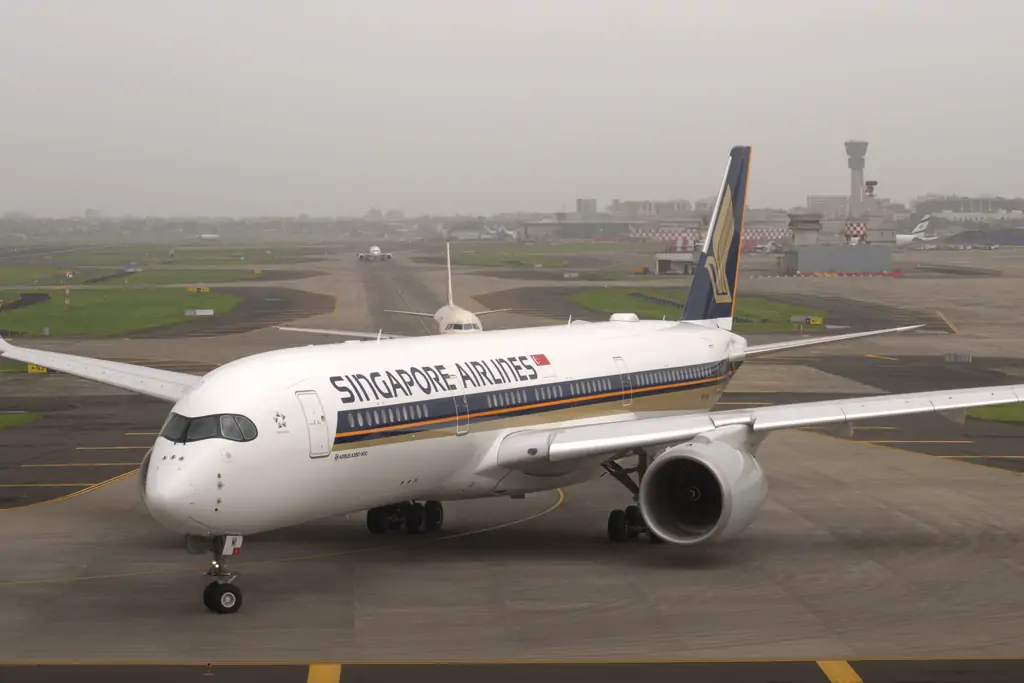
Singapore Airlines has appointed insider JoAnn Tan as its first female chief financial officer to replace Tan Kai Ping who will take over as chief operations officer. As senior vice president of marketing planning, JoAnn Tan led the company's efforts to restore its network connectivity and capacity after international borders reopened after the pandemic, the airlines said.
Meanwhile, CFO Ping is known for helping strengthen the carrier's financial resilience and for his involvement in the proposed merger between Air India and Vistara. He will now be responsible for Singapore Airlines' Cabin Crew, Customer Services and Operations, Engineering, and Flight Operations divisions.
More About JoAnn Tan
Tan was most recently senior vice president of marketing planning, a post she took up in April 2021. She joined the Asian carrier in 1999, initially in the passenger marketing department, and has since served in several senior roles including positions overseas in China and Australia. She became senior manager of network planning and also worked in the network revenue management division, before driving a transformation programme in 2017 which featured the integration of SilkAir into Singapore Airlines.
Tan, who is currently in the role of Senior Vice President of Market Planning, was a major part of opening up the airline's international connectivity after the COVID-19 pandemic began to slow down. The airline released a statement regarding the new CFO: “This was critical in helping (SIA Group) to capture the significant pent-up demand for air travel and deliver its record passenger revenue in FY2022/23."
Tan played a major role in creating new connections with its budget airline Scoot. She also oversaw other businesses that are part of the Singapore Airlines Group, such as KrisFlyer, Kris+, and Pelago.
CFO Ping’s Promotion Beneficial for Air India-Vistara Merger
Singapore Airlines on Monday announced the promotion of Tan Kai Ping, a senior officer extensively involved in the proposed merger of Air India and Vistara, to Executive Vice President of Operations and Chief Operations Officer.
The merger between Air India and full-service carrier Vistara is a key plank of SIA's multi-hub strategy, the Singapore flag carrier said in a release on Monday. On November 29 last year, Tata Group announced the merger of the two airlines under a deal where SIA will also acquire a 25.1% stake in Air India.
Tan, who was extensively involved in the proposed merger of India's flag carrier and Vistara, also spearheaded the SIA Group's successful fundraising efforts during the Covid-19 pandemic. He led a multi-year initiative to strengthen the group's financial resilience, optimise working capital, and build the capacity and capability of SIA's Finance Division to meet the future needs of the business.
Tan, currently Executive Vice President of Finance and Strategy and Chief Financial Officer, managed the restructuring of the SIA Group's aircraft order book, deferring capital expenditure and re-aligning the delivery stream in tandem with future capacity and fleet requirements.
Read next
IndiGo's Co-Founder Rakesh Gangwal Likely to Sell its 5-8% Stake Worth INR 7,500 crore
Radhika Bansal
13 Jun 2023
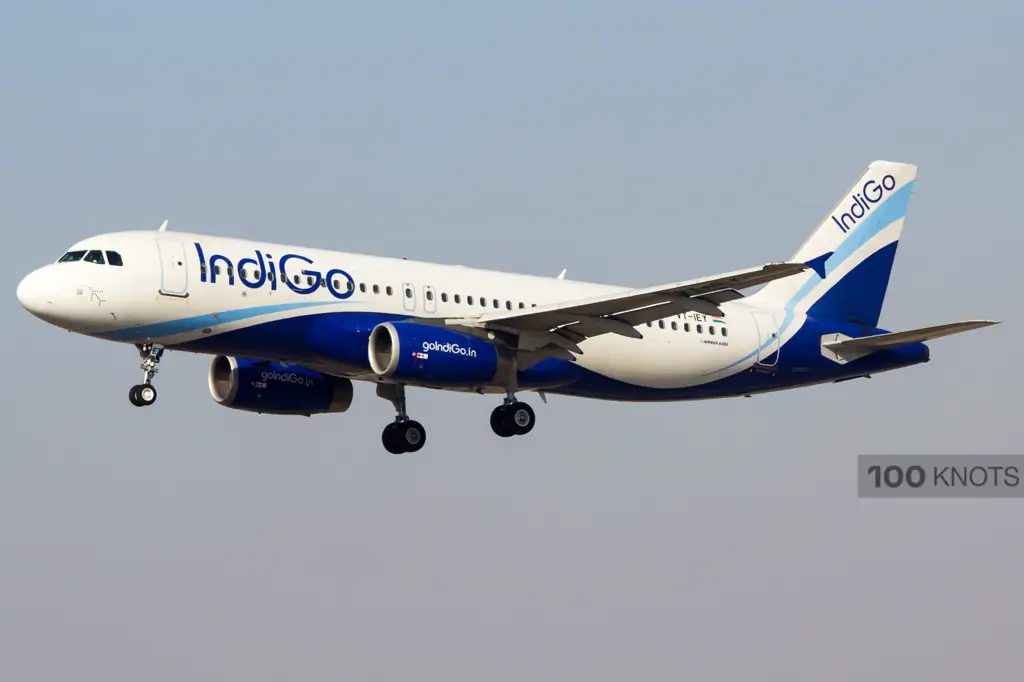
The family of IndiGo's co-founder Rakesh Gangwal is likely to sell between 5-8% stake in the Indian airline's parent InterGlobe Aviation Ltd, worth up to INR 7,500 crore ($909.58 million), CNBC Awaaz said in a report, citing sources. According to exchange data, Rakesh Gangwal and his wife, Shobha Gangwal, hold 13.23% and 2.99% respectively in InterGlobe as of March 31, while their Chinkerpoo Family Trust holds a 13.5% stake.
The report said the Gangwal family will likely sell stakes in block deals when the lock-in for shares opens on July 15. Shobha Gangwal had cut her stake in the company by over 4% in February. Interglobe Aviation and a representative for the Gangwal family did not immediately respond to Reuters' request for comment.
Rakesh Gangwal resigned from the company's board in February 2022 and said that he would cut his stake in the airline over five years. Rakesh Gangwal and Rahul Bhatia, who co-founded IndiGo in 2006, fell out in early 2020 when the former sought to modify certain rules in the company's articles of association.
Shares of the company, which are up over 19% year to date, fell as much as 3.1% after the stake sale report.
IndiGo's Growing Market Presence
IndiGo shares have gained significantly in the last year. The stock is up nearly 35% in the last tone year against a 19% gain in the equity benchmark Sensex. In the last three months, the stock has gained 27% against an 8% gain in the Sensex. The stock traded 2.02% lower at INR 2,362.25 on BSE around 11:35 AM.
As per data from the Directorate General of Civil Aviation (DGCA), IndiGo's market share grew from 56.8% in March to 57.5% in April, while those of SpiceJet and Go First declined from 6.4% and 6.9% in March to 5.8% and 6.4%, respectively, in April.
IndiGo's yields, a metric for profitability, rose 10.2% year-on-year to INR 4.85 per kilometre in the March quarter. Yields are expected to be even higher in Q1FY24 driven by an increase in capacities and gradual replacement of CEOs (current engine option) with the neo or new engine option family which is about 20% more fuel efficient. A fleet size of 350 in FY24 will help yields further, it added. The brokerage has pegged yields at INR 5.30 per kilometre in FY24.
Possible New Aircraft Order
Airbus is closing towards a potentially record deal to sell 500 narrow-body A320-family jets to India's largest carrier IndiGo, Reuters reported recently citing sources. The European planemaker has emerged as the front-runner for an order eclipsing Air India's historic provisional purchase of 470 jets in February, the sources said on the sidelines of an airline industry meeting in Istanbul. IndiGo, the country's largest airline with a domestic market share of more than 57%, has a fleet of over 300 planes and operates more than 1,800 daily flights.
Such a deal would be worth some USD 50 billion at the most recently published Airbus list prices, but would typically be worth less than half this after widespread airline industry discounts for bulk deals, according to aircraft analysts. They said that Airbus and Boeing are also competing in separate talks to sell 25 A330neo or Boeing 787 wide-body jets to the same airline.
Airbus and Boeing have been racking up billions of dollars of new orders stretching beyond 2030 as airlines lock in supplies well ahead amid looming shortages. Indian carriers now have the second-largest order book, with over 6% share of the industry backlog, behind only the United States, according to a June 1 report by Barclays.
The bullish outlook by IndiGo comes as the world's third-largest aviation market is seeing a strong rebound in travel post-Covid, with domestic and international passenger numbers surging despite high fares. IndiGo aims to double its capacity by the end of the decade and expand its network, especially in international markets.
Read next
DGCA Relaxes Norms for International Flight Operations for Indian Carriers
Radhika Bansal
13 Jun 2023

The Directorate General of Civil Aviation (DGCA) on June 12 eased norms for Indian airlines to operate flights to a new international destination, at a time when local carriers IndiGo, Air India, Vistara, and Akasa Air are looking to expand their international footprint.
In a statement, DGCA mentioned that they conduct an assessment of the preparedness of Indian airline operators before permitting their operations to a new foreign destination. The checklist for assessing a new destination has been pruned from 33 points to just 10 in a bid to make it easier for them to spread their network to hitherto unserved places.
“This systemic reform comes at a time when the Indian carriers are poised to expand their international footprint," the DGCA said in a notification.
“To further ease the process for grant of such permission the existing regulatory requirements have been comprehensively reviewed in consultation with all stakeholders and the current 33-point checklist has been rationalised and reduced to a 10-point checklist related to their preparedness for the intended operations, removing other generic and redundant provisions in the existing checklist," it said.
"The objective of this rationalisation is to simplify and facilitate the process for Indian carriers to start a new international destination and would significantly reduce the documentation/compliances required to be submitted by the operators. This systemic reform comes at a time when the Indian carriers are poised to expand their international footprint," the statement added.
Airlines Plan to Go International
Air India, IndiGo, Vistara, and Akasa Air are all looking to expand their international operations. IndiGo is looking to start direct flights to six new destinations in Africa and Central Asia in August, while Air India is looking to increase flights to Europe, West Asia, and the US. Similarly, Akasa Air is also looking to start international operations in December 2023.
IndiGo will launch codeshare flights to four cities in the United States via Istanbul from June 15 onwards. The flights, which will be operated in partnership with Turkish Airlines, will connect the cities of New York, Boston, Chicago, and Washington. The codeshare agreement, which allows two or more aviation companies to use and market the same flight under their respective brands, was inked between IndiGo and Turkish Airlines in 2019. Codesharing allows an airline to book its passengers on its partner carriers and provide seamless travel to destinations where it has no presence.
IndiGo had launched codeshare connections to 33 European destinations, including Scotland, Bulgaria, Spain, the Netherlands, Greece, Belgium, Hungary, Denmark, Ireland, the United Kingdom, France, the Czech Republic, Austria, Switzerland, Italy and Portugal. IndiGo had, last week, announced that it would also operate direct flights to five new international destinations in Africa and Central Asia, including the major cities of Tbilisi, Almaty, Nairobi, Tashkent and Baku, from July onwards.
In a departure from its single-aisle strategy, IndiGo earlier this year began international operations in Istanbul with a Boeing 777, its first wide-body aircraft, taken from codeshare partner Turkish Airlines, which provides the pilots.
While noting that it is taking a "massive step in its international expansion strategy," IndiGo said it will be adding an "impressive 174 new weekly international flights between June and September 2023, including new destinations, routes, and frequencies". The expansion also comes at a time when there is a rising demand for international travel from, to and via India, as well as the government's efforts to develop an international aviation hub in the country. The bullish outlook by IndiGo comes as the world's third-largest aviation market is seeing a strong rebound in travel post-COVID, with domestic and international passenger numbers surging despite high fares.
The expansion of overseas connectivity has been undertaken by IndiGo, India's largest carrier by fleet size and domestic market share, at a time when its rival Air India is also bolstering its fleet. The Tata Group-owned airline had, in February, placed one of the biggest aviation orders for 250 Airbus aircraft and 220 Boeing planes.
Read next


It is natural to wonder how high commercial planes can fly when we stare at the sky and watch them soar through the clouds. Commercial planes are contemporary mechanical marvels enabling us to travel vast distances quickly and comfortably. These aircraft are capable of reaching astounding altitudes, but they are also limited in a multitude of ways. A variety of factors, including engine performance, weight constraints, and aerodynamics, influence a commercial jet's altitude.
It is a regular occurrence for travelers. You buckle your seat belt, (hopefully) listen to the pre-flight safety demonstration, and get ready for departure. After a few moments, the pilot states, “Ladies and gentlemen, we have just reached our cruising altitude of 35,000 feet. I am going to shut off the seatbelt sign, and you are free to walk around the cabin. But please keep your seatbelt fastened while in your seat, in the event of some unexpected turbulence.”
It is time to relax and wait for the refreshment cart to show up. But how many of us have thought about exactly how high planes fly? Most commercial airplanes typically cruise at altitudes ranging from 33,000 to 42,000 feet, or around six to almost eight miles above sea level, which is regarded as the “sweet spot.” Too high, and oxygen becomes insufficient to fuel the engines; too low, and air resistance increases. This ideal height is related to the typical weight of a commercial aircraft; thus, bigger jets fly lower, and lighter planes fly higher.
Aircraft often travel between 35,000 to 36,000 feet in the air. To put it in context, Mount Everest's summit measures 29,029 feet. But that is why we have pressurized cabins: so, you do not feel like you are trying to breathe on the summit of Mount Everest. According to the UCAR Centre for Science Education, the area is known as the lower stratosphere and is located just above the troposphere, the lowest section of the atmosphere. Flying offers several advantages in this area, making it one of the most popular modes of transportation for travelers.
Altitude and Jet Engine Performance
To comprehend the relationship between jet engine performance and altitude, we must delve into the thrust concept. The thrust force moves an aircraft forward. Simply put, the "push" compensates for drag and permits the plane to fly through the air.
Factors Influencing Commercial Jet Altitude
Engine Power and Performance
Commercial jet engines are intended to produce enough power to propel the aircraft forward. The air density drops as altitude climbs, resulting in decreased engine performance. Jet engines burn oxygen from the atmosphere, and the thin air at high altitudes reduces their efficiency. Therefore, the engine power diminishes as the aircraft climbs higher.
Payload Capacity and Weight
Commercial airplanes' weight and payload capacity are also important factors in determining altitude. The structure and wings of the aircraft are built to support a certain maximum weight. The decreasing air density generates less lift as the plane climbs higher, demanding higher speeds to maintain altitude. Carrying more weight would necessitate even more power and speed, pushing the aircraft beyond its capabilities.
Aerodynamics and Drag
Aerodynamics is critical to aircraft performance, especially at altitude limits. Drag is the resistance generated by the interaction between the aircraft and the surrounding air when it travels through the air. The air density is lower at higher altitudes, resulting in a decrease in lift along with greater drag. These variables make maintaining stability and reaching greater altitudes more difficult.
Efficiency of Fuel
The primary motivation for flying at higher altitudes is to conserve fuel. Since the thin air creates less drag on the aircraft, it can use less fuel to maintain speed. Less wind resistance means more power and less work. This is also why it is referred to as "cruising" altitude: the plane is "sailing" through the air, following the path of least resistance.
Weather
Flying thousands of feet above the earth also allows airplanes to avoid much of the foul weather that people on the ground are subjected to. Do you know how it feels to see nothing but a bluebird sky, only to land in miserable rain at your destination airport? That is entirely due to the altitude. Most planes are traveling above the troposphere, where most meteorological events occur.
In Case of an Emergency
If anything, disastrous happens to an airplane at 35,000 feet, such as engine power loss, the pilot has far more time to cope with the issue than if the aircraft were only at 10,000 feet. This may seem foolish, but keep in mind that planes can land safely even if both engines fail, so giving yourself extra time to get your ducks in a row before attempting such a maneuver could save lives.
What Happens If a Plane Flies Too High?
When the plane reaches a certain altitude, there is insufficient oxygen to power the engines. "Most aircraft are limited by engine power," remarked pilot Peter Wheeler on Quora. "Because the air is less dense at altitude, the engine can take in less and less air each second as it climbs, until it can no longer generate enough power to climb."
Commercial Jet Altitude Restrictions
Pressurization and Passenger Comfort
Passenger comfort and pressurization are two of the key reasons commercial airplanes cannot fly at excessive altitudes. As an aircraft ascends, the air pressure outside rapidly decreases, resulting in a large pressure differential between the cabin and the outside world. To protect the safety and comfort of passengers, aircraft are pressurized to maintain a comfortable and safe environment within the cabin. However, the amount of pressure differential that may be achieved has limits, and exceeding these limits would endanger passenger comfort and safety.
Air Traffic Control and Regulations
Commercial aviation operates within a highly regulated framework. Air Traffic Control (ATC) monitors and regulates aircraft movement to maintain safety while preventing collisions. ATC assigns different altitudes to commercial jets in order to maintain separation between aircraft and promote effective operations. These altitudes are determined in advance based on variables such as airspace congestion, navigation routes, and aircraft performance. As a result, commercial aircraft must adhere to these allotted altitudes, restricting their ability to fly high.
Keeping Away from Traffic and Hazards
Planes do not always fly at the same altitude for the same reason that many of us wish we could do on the ground: avoiding traffic. Flying higher allows planes to avoid birds, drones, small aircraft, and helicopters that fly at lower altitudes. According to Your Mileage May Vary, the direction your plane is flying might also influence the height it will reach. Planes heading east (including northeast and southeast) will fly at odd heights (i.e., 35,000 feet), whereas planes flying west will fly at even altitudes. To avoid a collision, routes in the same direction are frequently arranged such that planes are 1,000 feet above or below each other. Because light aircraft do not have pressurized cabins, they must stay below 10,000 feet. Any higher, and the pilot must wear an oxygen mask to remain conscious.
Limitations of Aircraft Structure
Aside from engine and pressurization factors, aircraft structural limits are also important in determining maximum altitude. Commercial airplane materials and designs are carefully designed to resist the stress and strain experienced during flight.
Airbus and Boeing Narrowbodies

When it comes to the original Airbus A320 series, these twinjets have a service ceiling ranging from 39,100 to 41,000 feet. This is somewhere between 11,917 and 12,497 meters. Meanwhile, the A320neo family has a somewhat lower maximum service ceiling than its predecessor. Indeed, the A319neo, A320neo, and A321neo families have a service ceiling of up to 39,800 feet (12,131 m).

Boeing's 757 is an industry veteran at the company's headquarters in the United States. The 757-200, 757-200F, and 757-300 service ceilings are 42,000 feet (12,801 meters).
Corporate Jets

The Embraer E-Jet and E2 series have gained fame in recent years as regional aircraft with narrower, four-abreast economy-class cabins. The service ceiling for all of the planes in these ranges is 41,000 feet (12,496 meters).

Widebodies from Airbus and Boeing

It has already been more than three decades since the inaugural flight of the Airbus A330, which took place in October 1992. The aircraft has a service ceiling of 41,100 feet (12,527 meters), which is marginally below that of the A340. This quadjet was built alongside the A330, and its maximum ceiling is somewhat greater, at 41,450 feet (12,634 meters).

Lufthansa originally boasted that its 747-400 had the highest service ceiling in its fleet, with a maximum service ceiling of 44,947 feet (13,610 meters). The contemporary 747-8, with a service ceiling of 43,100 feet (13,137 meters), is also flown by the German flag carrier. As it happens, this value is comparable to the majority of Boeing's widebody twinjets.
Conclusion
Because of advancements in aviation technology, commercial planes can reach astounding altitudes. However, they have intrinsic restrictions that prohibit them from soaring any higher. Engine performance, weight limitations, aerodynamics, passenger comfort, safety considerations, and regulatory requirements all contribute to commercial jet altitude limitations. While future improvements may push these restrictions further, achieving a balance between pushing the limits and preserving passenger safety and comfort is critical.
With Inputs from Travel and Leisure, UCAR Centre for Science Education, The Smithsonian, Your Mileage May Vary, Traveller, The Sun
Comment