
China Eastern Airlines Receives Third C919 Aircraft as Part of Landmark Deal with COMAC

Abhishek Nayar
11 Dec 2023
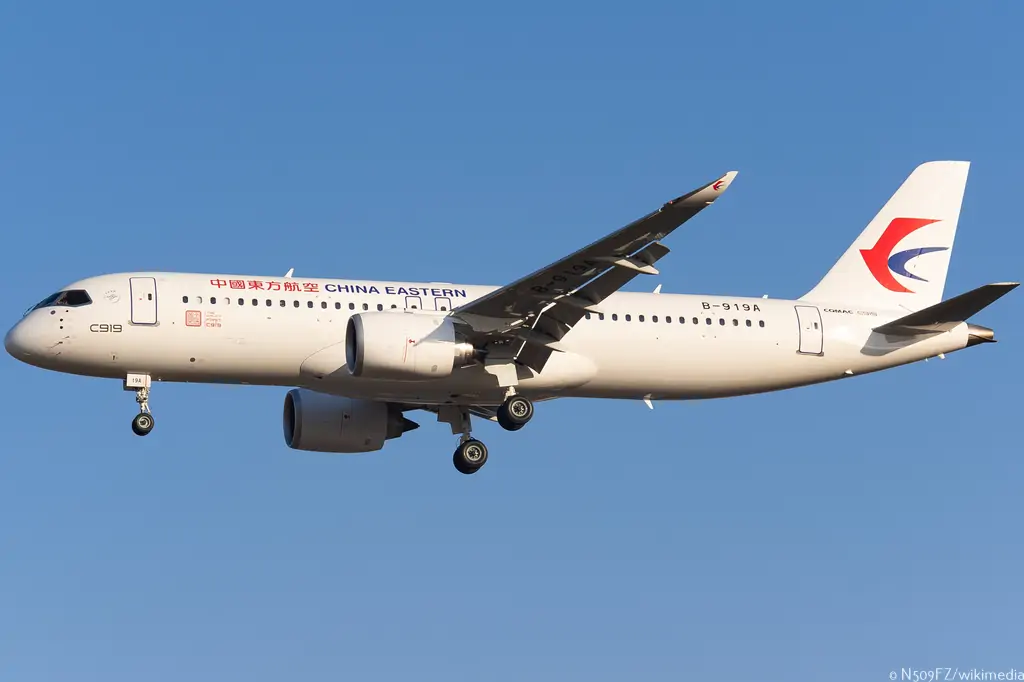
China Eastern Airlines has recently taken delivery of its third C919 narrow-body airliner from the Commercial Aircraft Corporation of China (COMAC). The state-owned manufacturer delivered the aircraft, registered as B-919D, in a ceremony at Shanghai Pudong International Airport on December 9, 2023. This delivery marks a significant milestone in the carrier's partnership with COMAC, following a groundbreaking deal in September 2023.
Background on the C919 Program
The C919 program, initiated in 2009, represents China's ambitious foray into the narrow-body single-aisle aircraft market, challenging established players like Boeing and Airbus. The aircraft received its type certificate from the Civil Aviation Administration of China (CAAC) on September 29, 2022, attesting to its compliance with international airworthiness standards.
China Eastern Airlines' Strategic Partnership with COMAC
China Eastern Airlines had placed an order for five C919 aircraft in 2021, and the B-919D is the third delivery from this initial batch. The carrier has already integrated the B-919A and B919C into its fleet, with the inaugural C919 entering service on December 9, 2022, and the second aircraft commencing operations in August 2023.
In a remarkable move in September 2023, China Eastern Airlines inked a historic deal with COMAC, committing to a nearly $10 billion order for 100 additional C919 aircraft. This transaction currently holds the record for the largest single order of C919 narrow-body jets, solidifying the airline's confidence in the capabilities and future success of the domestically developed aircraft.
Delivery Schedule and Growth Plans
According to the terms of the agreement, China Eastern Airlines anticipates receiving up to ten C919s per year between 2025 and 2027. The delivery rate is set to increase to 15 aircraft annually from 2028 to 2030, reaching its peak with 20 C919s in 2031. This ambitious schedule reflects the carrier's commitment to modernizing its fleet and supporting the growth of domestic aviation.
Key Features of the B-919D
The B-919D, a three-month-old aircraft, is configured with a two-class cabin layout, accommodating up to 164 passengers. This modern airliner is poised to launch passenger services shortly, contributing to the expansion of China Eastern Airlines' route network.
Conclusion
China Eastern Airlines' reception of the third C919 aircraft underscores the airline's confidence in the capabilities of COMAC's domestically developed narrow-body jet. As the C919 program continues to evolve and gain traction in the global aviation market, it represents a significant achievement for China's aerospace industry. The strategic partnership between China Eastern Airlines and COMAC further solidifies the country's position as a key player in the commercial aviation sector, challenging the dominance of traditional industry leaders.
Read next

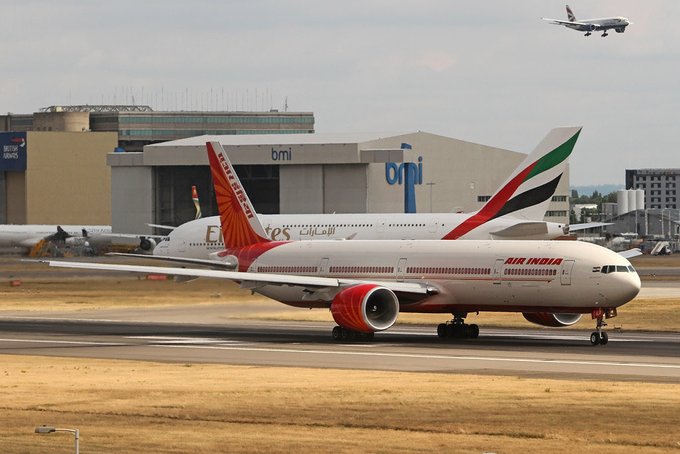
Emirates connects the world to, and through, their global hub in Dubai and has a particularly strong presence in the South and Southeast Asian region. While Air India is the flag carrier of India, with the largest international network and most nonstop routes connecting India with global destinations. India’s largest conglomerate, The Tata Group, reacquired Air India in January 2022.
November 2023 flights stats
Emirates operated net 14,500 flights in the month of November out of which 13,749 were for passenger operations and remaining 751 flights were employed for freighter cause. Dubai International Airport (DXB), being their base saw 13,086 Emirati flight movements. Average flight time per flight was 6 hrs 38 minutes. Moreover, the airline's highest frequency was 6X daily Dubai-London using their largest equipment A380 and had almost 3,000 seats capacity on an average. Dubai-Delhi was the second major route with 4X daily B777 ops.
The resurgent Air India with the help of new B777 additions and more serviceable B787s managed 2,014 flights. New Delhi's IGI Airport saw 1,514 flight movements followed by 464 appearances at Mumbai's CSI Airport. Average block time per flight came out be 8 hrs 54 minutes which is impressive when compared with global peers. The Indian major ran 3X daily Delhi-Dubai and had 2x daily(one more which ran thrice weekly) frequency on Delhi-London route.
Future outlook
Both airlines like any business are actively looking to add new destinations and add more frequency to existing routes to cater for increased demand. Emirates is targeting pre-pandemic state and grow further from there and Air India is looking to add more widebody equipment with latest cabin product and IFE system to their fleet and harness the full potential of inter-governmental traffic rights.
Air India seems better placed for higher growth rate as it will be able to provide direct flights from India to the far -off places where earlier it used to be operationally difficult due to aircraft range limitations. Also, going forward it does not seem to face any reasonable competition from domestic peers on long distance routes.
In spite of all factors mentioned above, it will still be very nascent to compare these two airlines on a global stage. Air India can scare Emirates on some routes but to challenge it is still far off. Emirates is a well established and efficiently run airline which operates to around 140 destinations in 85 countries.
Order book at a glance
Emirates currently operates a feet of 238 widebody aircraft - 116 A380s & 122 B777s. Freighter division of the operator, Skycargo operates 11 B777Fs. On the other hand, Tata owned Indian flag carrier is wielding 50 Boeing only widebody fleet - 23 B777s & 27 B787s.
Air India has placed a mammoth order for 70 wide-body planes–20 787-9 Dreamliners and 10 777X aircraft from the US based manufacturing giant. In the case of the 40 wide-body planes on order with Airbus, the airline now has a 50:50 split--20 each of A350-900 and A350-1000 aircraft. In the original order, Air India had gone for six A350-900 and 34 A350-1000 planes.
Dubai based carrier is boasting an order book of 305 aircraft - 65 A350s, 35 B787s and 205 B777s. Freighter division of the the airline, Skcargo has 15 B777Fs on order.
While Emirates made headlines with its multi-billion dollar deal at the recently concluded Dubai air show, its sister airline, FlyDubai, also made a significant announcement. The low-cost carrier, known for operating single-aisle Boeing 737 aircraft on shorter distances, unveiled an order for 30 Boeing 787-9 Dreamliners, marking a major change in its fleet strategy. This move signals FlyDubai's expansion into long-haul operations, providing more options for travellers.
Read next
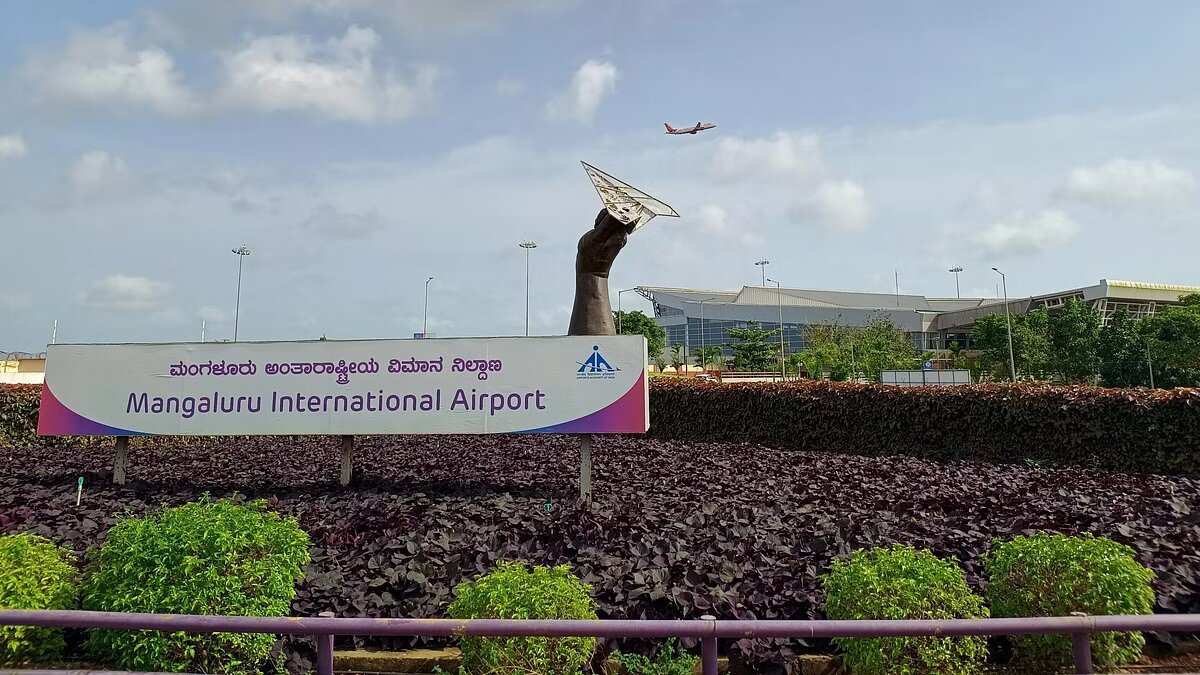
The Mangaluru International Airport (MIA) handled a record 1,78,314 passengers in November, the highest number in the current financial year. This includes 1,32,762 domestic and 45,552 international passengers. The total number of passengers handled in November represents a 10.3% growth over passengers handled in October 2023, a release from the airport mentioned.
With this, the airport has handled 12,86,207 passengers in the first eight months of the current fiscal as against 11,95,499 passengers in the corresponding period last year. The steady stream of chartered flights (general aviation) that the airport handles also has played its part in aiding the passenger growth, the release said.
The upward trend in passenger movement can also be gauged from the fact that the air traffic movements (ATMs) at the airport in November rose to 1,298, also the highest in the current fiscal, as against 1,222 ATMs in October 2023.
The average number of passengers that the airport handled from April to November during the current financial year was 1,60,780 as against 1,49,438 passengers in the corresponding period last year. The airport in November handled an average of 5,944 passengers daily (reaching a peak of 7,468 passengers on November 25), as against 5,215 passengers in October.
The increase in air traffic movements since October 29 when the winter schedule came into effect has also contributed to the above numbers. An increase in business and leisure travel in the festive season across India has also gone on to contributed to the gradually increasing footfalls at the airport, the spokesperson said.
The airport currently provides connectivity to nine domestic and seven international destinations. Previously MIA had handled 7,304 passengers on November 20, 2021; 7,168 passengers on on November 6, 2021; and 7,084 passengers on November 27, 2021.
About the Airport
Mangalore International Airport (also known as Mangaluru International Airport) is an international airport serving the coastal city of Mangalore, India. It is one of only two international airports in Karnataka, the other being Kempegowda International Airport, Bangalore. Mangalore International Airport is the second busiest airport in Karnataka. In addition to domestic destinations, flights depart daily for major cities in the Middle East. The airport was named Bajpe Aerodrome, when it opened on 25 December 1951 by former Prime Minister Jawaharlal Nehru who arrived on a Douglas DC-3 aircraft.
Presently, it ranks 12 in the list of airports with international passenger air traffic. After Delhi, Mumbai, Chennai, Kochi, Bangalore, Hyderabad, Kolkata, Thiruvananthapuram, Ahmedabad, Kozhikode, and Tiruchirappalli international airports. The airport had 8.91 lakh passengers in the FY 2011-12 and witnessed a growth rate of 5.44%. According to the airport sources, it has a target of achieving 16 lac passenger traffic in the FY 2016–17.
Read next
Cathay Pacific Purchases 6 A350 Freighter Aircraft for its Cargo Division

Radhika Bansal
09 Dec 2023
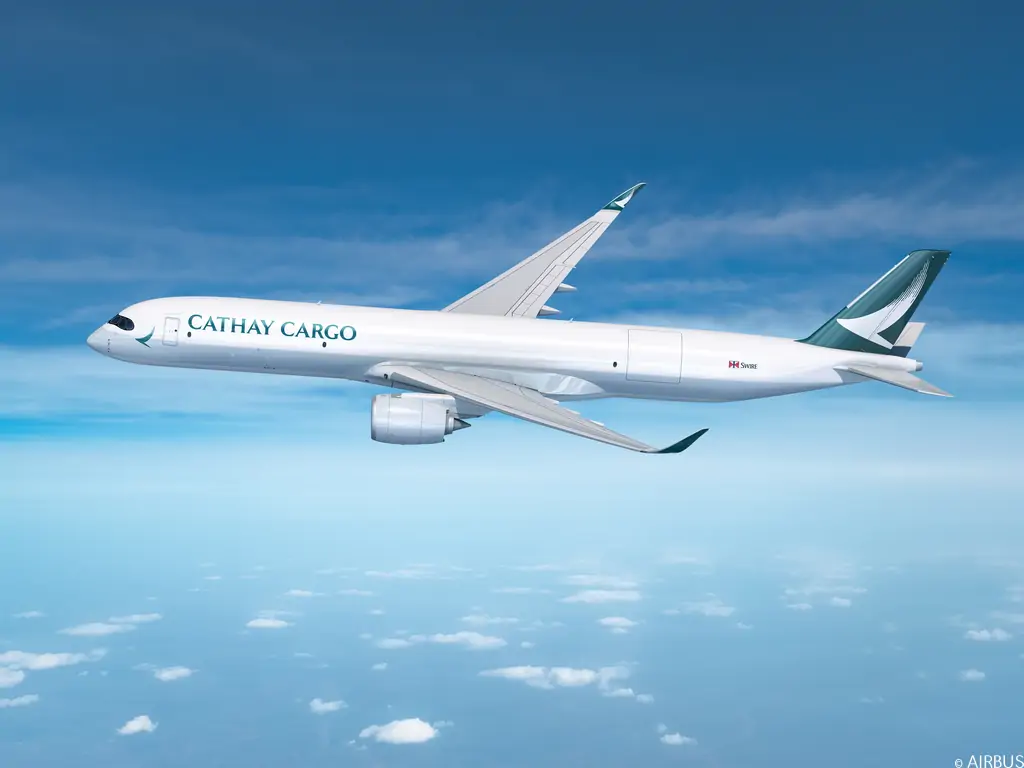
Hong Kong's Cathay Pacific Airways has placed a firm order to purchase six Airbus A350 freighters with a list price of USD 2.71 billion, as it replaces its ageing Boeing 747 cargo jets.
Airbus edged out Boeing in a closely fought sales campaign to sell freighter aircraft to Cathay Pacific Airways Ltd. The Hong Kong carrier will buy six A350 freighters and secure the rights to a further 20 of the cargo jets. Deliveries will start in 2027 and should be completed by the end of 2029. Cathay, which has six older model 747-400ERFs and 14 newer 747-8Fs expects the six A350s to be delivered from 2027 and by the end of 2029.
In a boost to the European planemaker, Cathay, one of the world’s biggest freighter airlines by capacity, opted for the new generation composite plane marking its largest cargo aircraft order in 16 years. The purchase is worth around USD 2.7 billion before customary significant discounts are applied, Cathay said.
“As we move into 2024, our rebuild journey is gaining momentum,” Cathay Chief Executive Officer Ronald Lam said in the statement. “This order marks another major component in our investment for the future. These highly fuel-efficient, next-generation freighters will provide important additional cargo capacity, expand our global network and contribute to our sustainability leadership goals.”
Christian Scherer, Airbus Chief Commercial Officer and Head of International emphasised the market value of the new aircraft for Cathay’s fleet. Scherer said: “The aircraft will fit seamlessly with Cathay’s existing A350 passenger fleet while lowering operating costs to a level never before seen in increasingly competitive cargo markets. At the same time, it will bring a very significant reduction in carbon emissions, contributing immediately to sustainability goals.”
Features of A350F
The new aircraft, which will be equipped with Rolls-Royce Trent-XWB97 engines, features a fuel consumption and carbon emissions reduction of up to 40% compared to the older 747F aircraft. As noted by Airbus, starting in 2027, only the A350F will be able to fully comply with the ICAO’s higher CO2 emissions criteria. The A350F is designed to carry a payload of up to 122 tons and fly up to 4,700 nautical miles at a significantly lower cost than existing cargo jets. Over 70% of the airframe is made of advanced materials, resulting in a 50-ton lighter take-off weight than the Boeing competitor, according to Airbus.
Airbus earlier this year said it expects to deliver the first A350 freighter, currently under development, in 2026. The Cathay Cargo order brings Airbus’ total orderbook for the new widebody jet to 41. Other customers include Qatar Airways, CMA CGM Air Cargo, Etihad Airways, Silkway West Airlines and Singapore Airlines. The last order prior to Cathay Cargo was by Air France/KLM in January.
Cathay’s preferred pick of Airbus to supply the new freighters comes despite operating an all-Boeing fleet of 20 747 freighters for its core cargo unit.
Cathay's Fleet Specifications
Cathay is already one of the largest operators of the A350, with a current fleet of 47 aircraft. The freighters will provide maintenance and training commonality with the passenger aircraft. Cathay Pacific also operates many Boeing 777 passenger jets in addition to the 747 freighters. And it has ordered 21 Boeing new-era 777-9 widebody passenger aircraft. But the airline passed over Boeing’s 777-8 freighter, the redesigned replacement for the current 777 freighter that must still be certified by U.S. regulators. Boeing plans to begin deliveries of the 777-8 freighter in 2027.
Cathay's choice for the next phase of cargo operations was seen as a key test for the two freighters, given the airline operates both Boeing 777 and A350 passenger models. The Airbus freighters will link Hong Kong and the Chinese mainland coupled with long-haul destinations in North and South America as well as Europe, Cathay said.
According to International Air Transport Association data, Cathay Pacific is the world's fifth-largest air freight carrier and the third-largest traditional freight airline behind Qatar Airways and Emirates when specialist express parcel carriers FedEx and UPS are excluded. Its aircraft order book also includes 21 Boeing 777-9 passenger planes scheduled to be delivered in 2025 and 49 Airbus A320neo and A321neo aircraft expected to be delivered by 2029.
Read next
Volaris and Pratt & Whitney Reach Compensation Agreement Amid Engine Inspections
Abhishek Nayar
09 Dec 2023
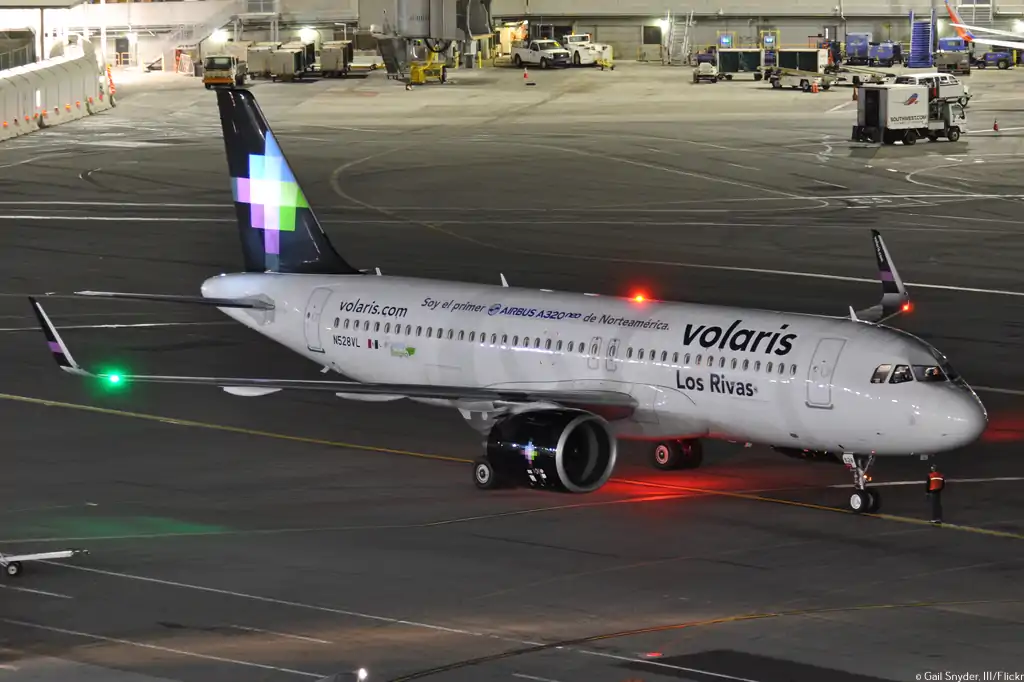
Volaris, the Mexican low-cost carrier, has announced a compensation deal with engine manufacturer Pratt & Whitney for the removal of engines from its A320neo Family jets. The agreement aims to alleviate the financial impact of the groundings caused by issues with PW1000G engines.
Background
In October, Volaris CEO Enrique Beltranena revealed ongoing negotiations with Pratt & Whitney for a "negotiated compensation and support package" to address the challenges arising from engine inspections. The carrier operates 119 aircraft, with 45 A320-200Ns, six A321-200Ns, and eighteen A321-200NX equipped with PW1000G engines.
Compensation Agreement Details
In a recent filing to the Mexican Stock Exchange on December 5, Beltranena confirmed the successful conclusion of talks, stating, "We have reached an agreement with P&W that contemplates compensation for each GTF engine removed from our fleet." The compensation is designed to assist in covering fixed costs associated with engine inspections, complementing mitigation efforts outlined in a previous earnings call.
Impact on Capacity and Operations
As a response to the ongoing inspections, Volaris reduced its capacity in the Mexican market in November. However, the carrier strategically redeployed some capacity abroad to capitalize on the positive demand and take advantage of the Category 1 air safety status reinstated by the United States for Mexico in the autumn.
November Traffic Results
Volaris released preliminary traffic results for November, revealing a 2.2% year-on-year capacity decline but also a 1.8% increase in the load factor, reaching 89.8%. The United States, among the five countries served by the carrier besides Mexico, played a significant role in this positive performance.
Fleet Breakdown
Out of the 119 aircraft in operation, sixteen A320neo and three A321neoNX jets equipped with PW1000G engines are currently inactive. Volaris acknowledges the possibility of continued inspections into 2024 and 2025, with long-term impacts on the groundings expected to become clearer in the first quarter of the coming year.
Workforce Adjustments
In response to operational adjustments necessitated by the ongoing inspections, Volaris reported laying off 200 staff members one month ago, emphasizing the challenges faced by the airline in navigating these unforeseen circumstances.
Conclusion
Volaris' successful compensation agreement with Pratt & Whitney marks a significant step in addressing the financial implications of the ongoing engine inspections. As the airline continues to adjust its operations and navigate uncertainties surrounding the inspections, the agreement provides a crucial lifeline to mitigate the impact on fixed costs and ensure a more stable path forward. The aviation industry will keenly watch for further developments and the carrier's ability to adapt to the evolving situation in the coming months.
With Inputs from ch-aviation
Comment