
Supreme Court Steps In
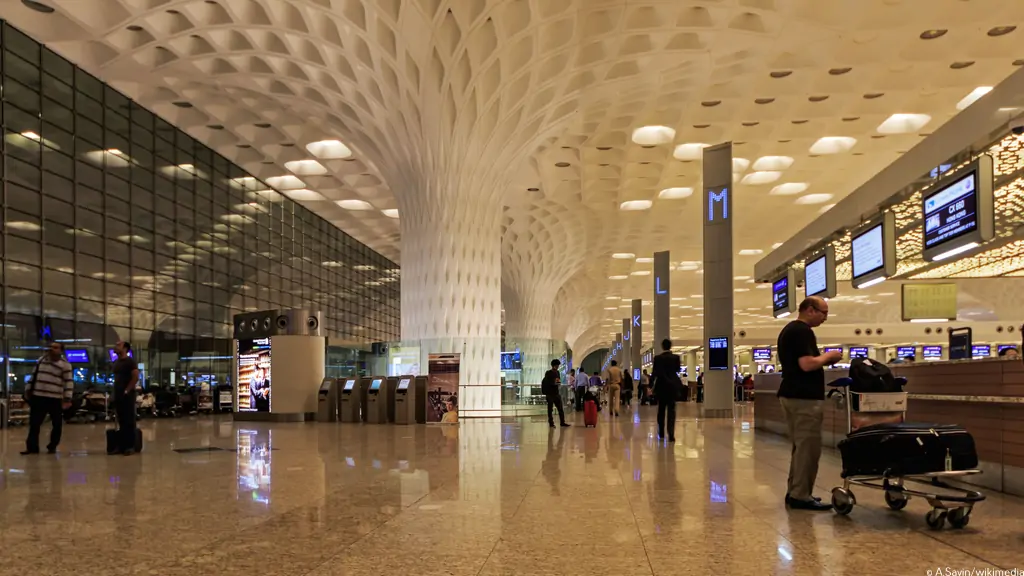
The Supreme Court of India stepped into a significant legal battle on November 25, 2026, issuing notice on a plea by Mumbai Travel Retail Private Limited. The company challenged a Bombay High Court judgment that refused to grant blanket immunity from domestic regulatory laws to goods sold at Mumbai International Airport's duty-free shops. A Bench of Justices Aravind Kumar and Vipul M Pancholi is now overseeing the matter.
The Products at the Centre of the Storm
At the heart of the dispute are tobacco-free nicotine pouches, sold under the brands ZYN and FOX, at Terminal 2's international departure duty-free outlets. The trouble began on October 3, 2025, when Mothers Against Vaping filed a complaint raising health hazard concerns about the products.
Regulatory Action Triggers Legal War
Following an inspection on March 5, 2026, the Assistant Drugs Controller prohibited their sale on April 2, 2026. Days later, on April 8, authorities communicated that the pouches qualified as drugs under Section 3(b) of the Drugs and Cosmetics Act, 1940, requiring an import licence and registration certificate. Mumbai Travel Retail and Flemingo Dutyfree Shop Private Limited jointly challenged these restrictions before the Bombay High Court.
High Court Draws the Line
On September 22, 2026, a Division Bench of Justices Suman Shyam and Advait M Sethna rejected the operators' core argument. The court held that duty-free exemptions apply only to fiscal measures — customs duties and indirect taxes — and do not shield goods from India's domestic regulatory framework. The court, however, stopped short of conclusively classifying the nicotine pouches as drugs, noting that classification depends on composition and intended use, and permitted operators to approach the CDSCO with supporting material.
The Customs Frontier Argument
Before the Supreme Court, Senior Advocate Shyam Divan argued that goods stored in a bonded warehouse for duty-free sale remain legally outside the customs frontier, citing the Customs Act, 1962. He relied on the Supreme Court's 1999 ruling in Garden Silk Mills Limited v Union of India and its 2012 ruling in Hotel Ashoka v Assistant Commissioner of Commercial Taxes, both of which treated bonded warehouse transactions as occurring before goods enter domestic consumption. Divan maintained that laws governing metrology, packaging, and food safety therefore cannot automatically apply to such goods.
What Hangs in the Balance
The Supreme Court's eventual ruling could reshape how India's entire duty-free retail industry is regulated — determining whether airports are genuinely borderless commercial zones or simply tax-exempt extensions of domestic territory.
With Inputs from Money Control

Read next
A Struggling Airline Looks Beyond Passengers for Its Next Revenue Lifeline
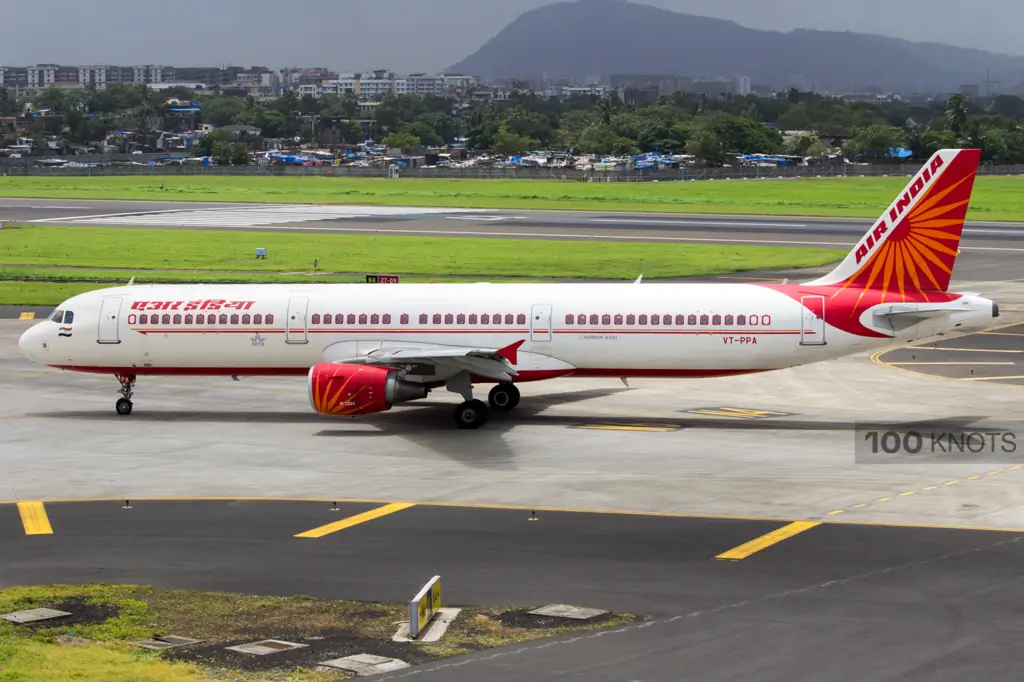
Air India Group, still deep in a difficult financial turnaround, is exploring entry into the dedicated freighter business — a move that could reshape how India's flag carrier operates and competes on the global stage.
Chief Executive Tewolde Gebremariam, who took charge in October after more than a decade leading Ethiopian Airlines, communicated the development to employees, signalling that cargo is now firmly on the group's strategic radar.
The Numbers That Made This Urgent
The timing is not incidental. Air India's consolidated net loss more than doubled to Rs 22,238 crore in FY26, up from Rs 10,859 crore the previous year. Revenue fell to Rs 71,870 crore from Rs 78,636 crore, while expenses climbed to Rs 93,733 crore. Passenger numbers dropped from 43.8 million to 36 million, and the load factor slipped from 85% to 81%. Against this backdrop, Gebremariam has prioritised profitability, operational discipline, and a Rs 6,000 crore cost-reduction target.
Why Cargo, and Why Now
India's air cargo market is growing fast. Domestic scheduled cargo traffic rose 24% to roughly 978,000 tonnes in FY26, while international cargo climbed 20.6% to 2.13 million tonnes, according to provisional DGCA data. Sectors driving demand include e-commerce, pharmaceuticals, electronics, and time-sensitive exports.
Crucially, foreign airlines still carry a large chunk of cargo moving into and out of India, leaving domestic carriers with an underserved opportunity. A dedicated freighter fleet — which uses main-deck cargo space rather than just belly holds — would allow Air India to handle larger shipments, offer more predictable schedules, and compete directly for high-value international freight contracts.
Who Has Already Made This Move
Air India would not be entering entirely uncharted territory. IndiGo has already built a cargo footprint through belly-hold capacity and dedicated freighters, transporting 438,147 tonnes in calendar 2025 — an 11% year-on-year rise. Globally, Emirates SkyCargo sets the benchmark, operating 13 Boeing 777 freighters and moving 2.4 million tonnes in FY26, generating revenue of 16.2 billion dirhams. Emirates has also begun converting passenger aircraft into freighters to expand capacity efficiently.
What Air India Must Figure Out
Entry into this segment is not straightforward. The group must decide whether to acquire new freighters, convert existing aircraft, or lease capacity. Beyond aircraft, it would need to build ground-handling infrastructure, cargo sales capabilities, and logistics networks capable of competing with established operators.
The economics hinge on securing consistent cargo volumes, maintaining high aircraft utilisation, and developing strong connections between major international freight corridors — ideally ones that complement Air India's existing passenger routes and hubs.
The Road Ahead
No fleet size, investment figure, or launch timeline has been disclosed. For now, the idea remains in the exploratory stage. But if executed well, a dedicated freighter business could diversify Air India's revenue base and reduce its dependence on a passenger segment that is still finding its footing.
The question is whether Air India can build something new without deepening the financial strain it is already working hard to escape.
Read next
India's Skies Are Worth $18 Billion — And Investors Are Lining Up to Prove It
Abhishek Nayar
25 Nov 2026

Adani Airport Holdings seals fresh equity deal with 360 ONE, pushing total investor capital past $1.35 billion
Adani Airport Holdings Ltd (AAHL), the airport subsidiary of Adani Enterprises Ltd, has signed a binding agreement with 360 ONE Alternates Asset Management Ltd to raise Rs. 2,790 crore — approximately $300 million — through fresh equity share issuance. The deal values the airport operator at around $18 billion ahead of the investment.
Building on a Landmark Capital Round
The 360 ONE deal does not stand alone. It follows a blockbuster Rs. 9,825-crore ($1 billion) investment by a consortium that included Alpha Wave Global, Premji Invest, Singapore's state investor Temasek, and funds managed by BlackRock — a round that AAHL itself described as one of the largest primary equity investments by financial institutions in India's airport infrastructure sector.
Under the new agreement, 360 ONE Asset will subscribe to freshly issued equity shares at the same terms and valuation as those earlier investors, formally acceding to the Shareholders' Agreement signed with the initial consortium.
The Ownership Picture After Both Deals Close
Once both transactions are complete and regulatory approvals are in place, the combined investor group — spanning the original consortium and 360 ONE — will collectively hold approximately 7.01% of AAHL. The total equity capital raised across both rounds now stands at roughly $1.35 billion.
What Jeet Adani Said
Jeet Adani, Non-Executive Director of AAHL, framed the transaction as a broader statement on India's aviation trajectory. "Having such marquee, long-term investors on board is a testament to their confidence in India's aviation growth story," he said. He added that AAHL's ambition extends well beyond runways — the company aims to build integrated ecosystems around its airports, turning them into airport cities that blend aviation, commerce, leisure, and regional logistics under one roof.
The Target: 200 Million Passengers a Year
The capital raised through both rounds will fund AAHL's aggressive expansion and modernisation programme. The company is targeting annual passenger-handling capacity of 200 million — more than double its historical capacity of around 96 million.
To get there, AAHL has initiated sweeping upgrades across its airport network, with parallel development of airport city projects designed to generate revenue well beyond core aeronautical operations. Retail, hospitality, and commercial activities are central to the strategy, aimed at improving both the passenger experience and the company's revenue mix.
Why This Deal Matters
The 360 ONE investment is not just a capital event — it signals sustained institutional appetite for India's airport infrastructure at a time when the country's aviation sector is among the fastest-growing in the world. With $1.35 billion now committed and a roadmap to double capacity, AAHL is making its case to become one of the defining airport platforms in Asia.
Read next

A Watchdog Warning No One in Indian Aviation Can Afford to Ignore
The Federation of Indian Pilots (FIP) has fired a pointed warning shot at India's civil aviation establishment, calling on the Directorate General of Civil Aviation (DGCA) to urgently investigate whether SpiceJet's deepening financial crisis is quietly eroding the safety culture inside the airline's operations.
The Letter That Sparked Concern
On Sunday, FIP wrote directly to Civil Aviation Minister K Rammohan Naidu, asking for ministerial intervention and urging the DGCA to conduct both a financial and safety assessment of the embattled budget carrier. The pilots' body did not mince words, drawing a direct line between financial distress and the human factors that underpin safe flight operations.
DGCA Had Already Moved First
The FIP letter followed swift regulatory action earlier in the week. On November 17, the DGCA issued a show cause notice to SpiceJet, demanding detailed responses to a string of concerns — rising flight cancellations, operational disruptions linked to delayed payments, and specific regulatory violations. The airline was given a seven-day window to respond.
SpiceJet's Own Numbers Tell a Troubling Story
The airline's domestic market share has fallen sharply, dropping from 1.2 per cent in August to just 0.6 per cent in September — a staggering halving within a single month. In a bid to stabilise its position, SpiceJet's board on November 18 approved a plan to raise up to Rs 5,500 crore, signalling the scale of the financial hole the airline is attempting to plug.
What the Pilots Are Actually Asking For
FIP's recommendations are both specific and systemic. For SpiceJet in particular, the association has sought a full audit of the airline's Safety Management System, its fatigue-risk management protocols, and the environment in which employees currently report safety concerns. It has also called for verification of the airline's actual cash position and working capital, along with scrutiny of outstanding salary dues owed to pilots, engineers, and cabin crew.
The FIP additionally wants regulators to assess whether SpiceJet can maintain approved crew strength and comply with Flight Duty Time Limitations — the rules that govern how long a pilot can legally work before mandatory rest.
The Silence That Endangers Flights
Perhaps the sharpest observation in FIP's letter concerns what financial stress does to a safety culture from the inside. Employees who fear job loss or salary cuts, the association argued, become reluctant to report fatigue or operational concerns — a chilling effect on the very reporting mechanisms that aviation safety depends upon. "A healthy safety culture requires employees to raise concerns without intimidation or fear of retaliation," FIP stated.
A Reform Proposal for the Whole Industry
Looking beyond SpiceJet, FIP has recommended mandatory annual financial health and safety-risk assessments for every scheduled airline in India, with quarterly monitoring introduced for any carrier showing signs of financial stress. A conditional working capital support mechanism for financially viable airlines was also floated as a potential safeguard.
Read next
Code Red at 30,000 Feet: SpiceJet Cancels Over 31 Flights in a Single Day
Abhishek Nayar
20 Nov 2026
A Morning of Chaos at India’s Busiest Airports
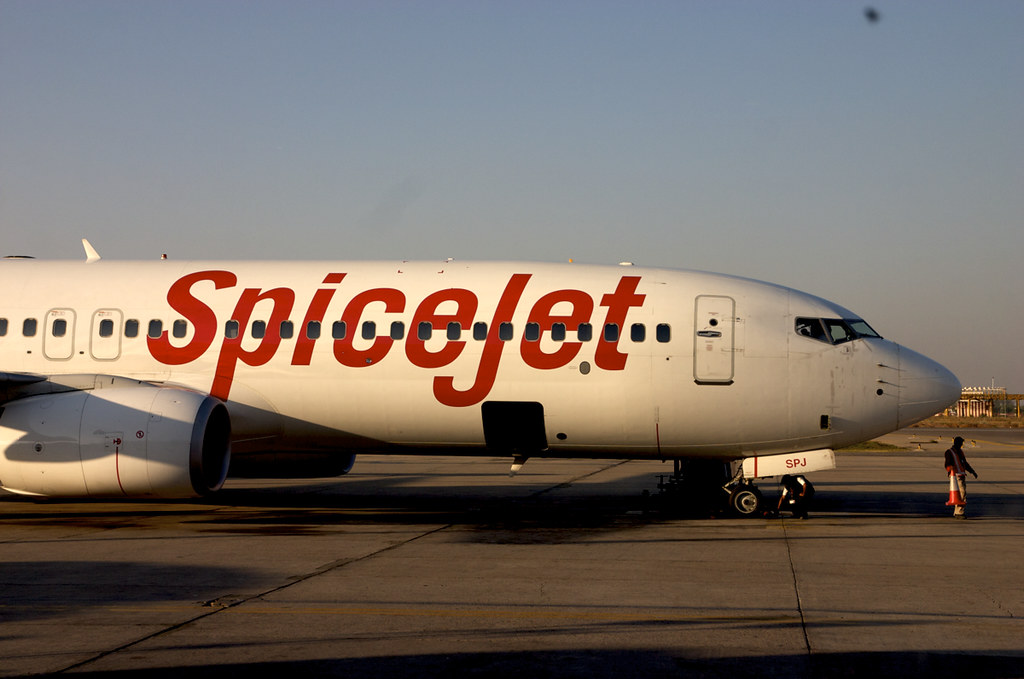
Thursday turned turbulent for thousands of Indian air travellers as SpiceJet, one of the country’s oldest low-cost carriers, cancelled at least 31 of its 42 scheduled flights across Delhi, Mumbai, and Bengaluru airports. The scale of disruption, confirmed by airport operators’ data, has set off alarm bells across the aviation industry.
Delhi’s Indira Gandhi International Airport bore the brunt of the crisis, with 16 of SpiceJet’s 22 scheduled services either cancelled or marked ‘not operating’. Ten of those were departures — to cities including Mumbai, Srinagar, Leh, Pune, Bagdogra, Patna, Bengaluru, and Dharamshala — while six arriving flights from Leh, Srinagar, Bengaluru, Pune, and Dharamshala also failed to operate.
Mumbai and Bengaluru Feel the Shockwaves
At Mumbai, three of four SpiceJet flights were cancelled, with departures to Darbhanga and Delhi grounded and an incoming Delhi service also axed. Bengaluru recorded the most balanced damage — six departures and six arrivals cancelled, affecting routes to and from Delhi, Mumbai, Varanasi, and Darbhanga.
GMR-controlled Delhi International Airport Limited (DIAL) broke its silence on X on Thursday morning, cautioning passengers that “due to operational challenges being faced by SpiceJet airline, some flights may be impacted,” and directing travellers to contact the airline directly.
The Financial Spiral That Got Here
SpiceJet’s collapse has not been sudden. The airline has posted consolidated net losses across six consecutive financial years between FY2019 and FY2024, accumulating approximately Rs. 5,950 crore in losses. A slim profit of Rs. 62 crore in FY25 briefly raised hopes, but the airline has since recorded cumulative losses of around Rs. 1,117 crore across the first three quarters of FY26 alone — with results for Q4FY26, Q1FY27, and Q2FY27 yet to be released.
The airline is currently grappling with unpaid dues to aircraft lessors and service providers, delayed staff salaries, and ongoing payment disputes. On November 12, Dubai Airports suspended SpiceJet’s check-in services over Rs. 35.85 crore in outstanding dues to ground-handler Dnata, cancelling four international flights in the process.
A Market Share in Freefall
The numbers tell a damning story. SpiceJet’s domestic market share has collapsed from 3.9 per cent in January to just 0.6 per cent in September, per DGCA data. The airline carried 5.92 million domestic passengers in January; by September, that figure had crashed to 730,000.
A Last-Ditch Rescue Plan
On Wednesday — just a day before the mass cancellations — SpiceJet’s board approved a proposal to raise up to Rs. 5,500 crore through one or more fundraising routes to stabilise its finances, while also directing management to fast-track talks with potential new investors.
Despite the mounting crisis, the DGCA is yet to instruct SpiceJet to halt forward bookings — a step that would signal an imminent grounding. For now, thousands of passengers are left stranded, waiting, and wondering: how much longer can SpiceJet stay airborne?
With Inputs from Rediff
Read next
India’s Aviation Safety Put to the Test
The United States Federal Aviation Administration (FAA) has launched a formal audit of India’s civil aviation safety oversight system, with assessors on the ground from November 16 to 20, 2026.
The audit spans three critical domains: aircraft operations, airworthiness, and personnel licensing — the same pillars that underpin the safety of every commercial flight operating between the two countries.
What the FAA’s IASA Programme Actually Means
The audit is being conducted under the FAA’s International Aviation Safety Assessment (IASA) programme, a framework that evaluates whether a country’s aviation regulator can effectively oversee its carriers in accordance with standards set by the International Civil Aviation Organization (ICAO).
In practical terms, it determines which Indian carriers are eligible to fly directly to the United States or enter into codeshare arrangements with American airlines. Right now, Air India stands as the only Indian carrier operating direct flights to US destinations.
India’s Rocky Road to Category 1 — and What’s at Stake
India currently holds Category 1 status, the top tier under IASA, but that standing has not always been guaranteed. In December 2012, ICAO audited India’s Directorate General of Civil Aviation (DGCA) and flagged two Significant Safety Concerns in operations and airworthiness.
Though those were resolved by August 2013, the damage had been noted. The FAA audited the DGCA in September 2013, followed by a December 2013 follow-up — and in January 2014, India was downgraded to Category 2. DGCA moved swiftly to fix the identified gaps, and Category 1 status was restored in 2015.
The Most Recent Audit Cycle
The previous round of scrutiny began in October 2021, when the FAA audited DGCA across the same three focus areas.
Final consultations followed in April of the following year, with additional FAA reviews in July and September 2022. The outcome of that cycle was formally announced in April 2023 — India retained its Category 1 standing.
A Shadow Over the Timing
The 2026 audit arrives against a sombre backdrop. Last year, an Air India Boeing 787-8 — bound for London Gatwick — crashed shortly after takeoff from Ahmedabad, claiming 260 lives in one of India’s worst aviation disasters on record.
This year has also seen a series of helicopter accidents and other safety incidents across the country. How these events factor into the FAA’s assessment of India’s oversight capability remains to be seen, but their weight is unlikely to go unacknowledged.
What Comes Next
With India positioned as one of the world’s fastest-growing civil aviation markets, the results of this audit carry consequences well beyond regulatory formality.
Category 1 status is a commercial lifeline — its retention clears the path for Indian carriers to expand US operations and forge codeshare partnerships with American airlines. The FAA’s findings, expected in the months following the November assessment window, will signal whether India’s aviation infrastructure is growing as fast as its ambitions.
Comment