
Can Britain's Rolls-Royce Make India Its Third Manufacturing Powerhouse After US and Germany?

Abhishek Nayar
29 Dec 2025

The prestigious British aero-engine manufacturer Rolls-Royce has announced ambitious plans to establish India as its third "home market" outside the United Kingdom, signaling what could become one of the most significant foreign investments in India's defense manufacturing sector. This strategic pivot comes as the company seeks to position itself at the heart of India's rapidly expanding military-industrial ecosystem.
The Vision Behind India's Elevation
Sashi Mukundan, who serves as executive vice president of Rolls-Royce India, revealed in a recent interview that the company is preparing for substantial investments across multiple sectors including jet engines, naval propulsion systems, land-based combat vehicles, and advanced engineering capabilities. The announcement carries particular weight because Rolls-Royce currently considers only the United States and Germany as home markets beyond Britain, where the company maintains extensive manufacturing facilities and deep operational roots.
The centerpiece of this expansion involves developing a next-generation aero engine specifically designed to power India's Advanced Medium Combat Aircraft, commonly known as the AMCA programme. This indigenous fighter jet represents India's ambitions to join the elite club of nations capable of producing fifth-generation combat aircraft entirely within their borders.
From Fighter Jets to Naval Dominance
What makes Rolls-Royce's proposition particularly intriguing is the potential spillover effect into naval applications. Mukundan explained that the company possesses a rare capability among global engine manufacturers: the ability to "marinize" aero engines, essentially adapting aircraft engine cores for use in naval propulsion systems. This technical expertise could prove invaluable for India's expanding naval fleet, particularly in developing electric propulsion capabilities that modern warships increasingly require.
The logic behind this dual-use approach addresses a fundamental economic challenge. Building a complete marine propulsion supply chain from scratch becomes financially unviable when naval quantities remain relatively small. However, if India develops the aero-engine core domestically, that same supply chain can efficiently support both aviation and maritime applications, making the entire venture economically sustainable.
Strategic Partnerships Taking Shape
The company plans to finalize two memoranda of understanding with Indian defense public sector undertakings. One agreement focuses on manufacturing engines for the Arjun main battle tanks, while the other targets engines for future combat vehicles that India's armed forces will deploy in coming decades.
Mukundan emphasized that intellectual property rights for any jointly developed engines would be co-owned with India, giving New Delhi strategic control over critical defense technology. All design work could be conducted within India with appropriate technology transfers, fundamentally different from traditional buyer-seller relationships that have characterized many previous defense deals.
Global Track Record Backing Bold Claims
Rolls-Royce's confidence stems from an impressive development history. The company has been certifying new engines every eighteen months across both commercial and combat applications. Their EJ200 engine powers the Eurofighter Typhoon with ninety kilonewton thrust capacity, while the company leads engine development for the Global Combat Aircraft Programme involving Britain, Japan, and Italy to create sixth-generation fighter capabilities.
Mukundan pointed to India's scale, policy clarity, and increasingly sophisticated industrial ecosystem as factors making this investment compelling beyond mere market access considerations, positioning the country as a genuine long-term strategic partner.
Read next
Pakistan's National Airline Finds a Buyer After Years of Struggle: What This Means for the Country's Economic Future
Abhishek Nayar
24 Dec 2025
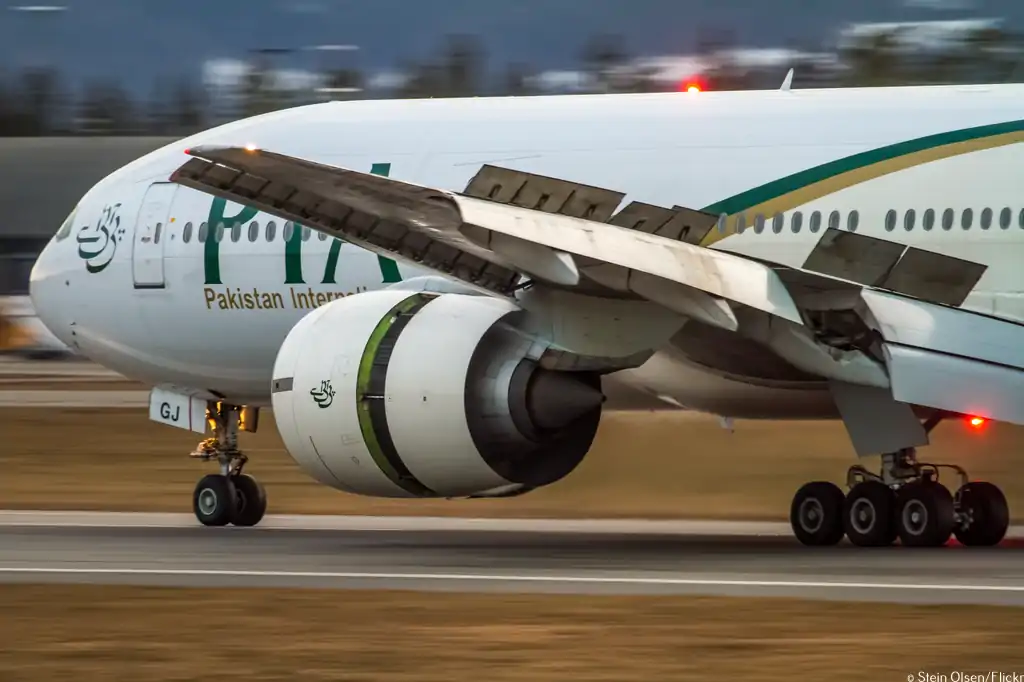
The journey to privatize Pakistan International Airlines finally reached a turning point on Tuesday when the Arif Habib Corporation-led consortium emerged victorious with a substantial bid that captured national attention and marked a historic moment for Pakistan's reform agenda.
A Dramatic Auction Unfolds on Live Television
The bidding process itself became a spectacle that gripped the nation. Cabinet members and viewers across Pakistan watched as three sealed envelopes were ceremoniously placed into a transparent box adorned with the country's national emblem. When officials cut open the box with scissors and revealed the bids, the Arif Habib Corporation consortium's offer of 135 billion Pakistani rupees, equivalent to $482.32 million, immediately stood out. This sparked an intense back-and-forth battle with the Lucky Cement-led group, while Air Blue's $95 million proposal fell short of the minimum threshold of approximately $357 million set for the 75 percent stake.
Understanding Why This Sale Matters Now
This auction represents the government's second attempt at selling the troubled airline, following a disappointing effort last year that attracted only one bidder offering a mere $36 million against a minimum price of $305 million for a smaller 60 percent stake. The renewed push forms part of Pakistan's broader commitment to economic reforms required after securing a crucial $7 billion bailout from the International Monetary Fund. The sale would mark Pakistan's first major privatization in nearly twenty years, signaling the government's determination to restructure loss-making state enterprises.
The Road Ahead for Pakistan's Flag Carrier
Shahid Habib, CEO at Arif Habib Limited, expressed confidence immediately following the auction, telling reporters that the consortium would transform PIA into one of the world's best airlines. However, significant hurdles remain before the deal closes. The winning consortium must pay 67 percent of its bid within 90 to 120 days, with the balance due a year later.
The airline's recent turnaround efforts have created more favorable conditions for this sale. Pakistan's government strategically assumed most of PIA's legacy debt, helping the carrier post its first pre-tax profit in two decades. Additionally, Britain and the European Union recently lifted a five-year ban that had excluded PIA from lucrative routes, substantially improving the airline's prospects and valuation.
Government officials revealed that the transaction structure remains flexible, with authorities open to selling up to 100 percent of PIA at a 15 percent premium above the 75 percent threshold. The airline is currently valued at 180 billion rupees by the government. This privatization effort extends beyond PIA, encompassing state-owned banks, power companies, and various other struggling enterprises as Pakistan pursues comprehensive economic restructuring.
With Inputs from Reuters
Read next
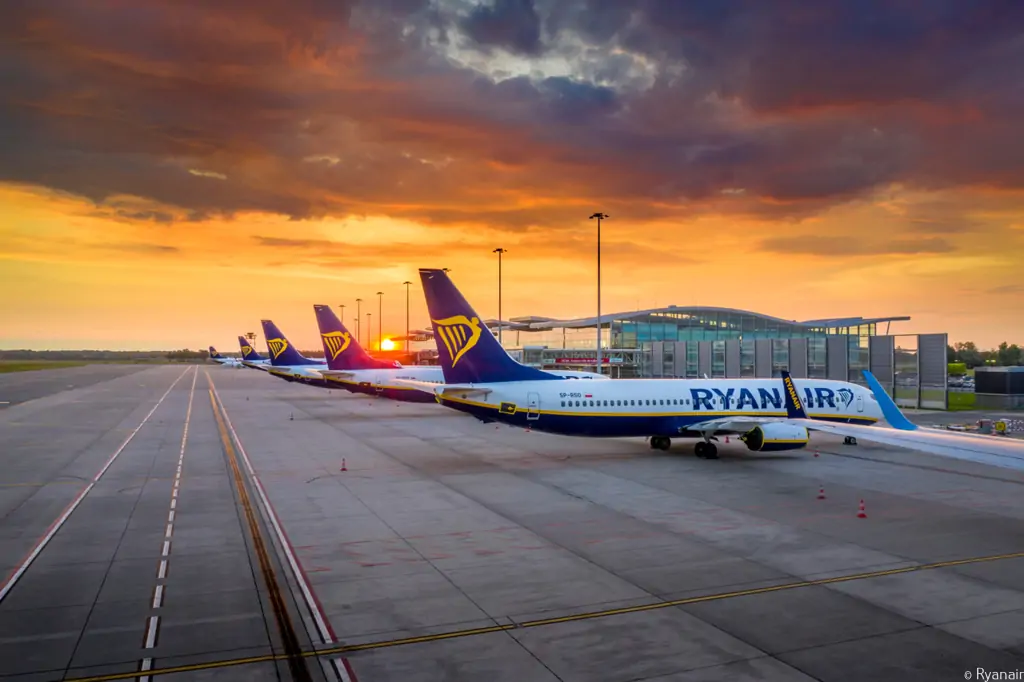
Europe's aviation landscape faced a seismic shake-up this Tuesday when Italy's competition authority dropped what may be the largest single penalty ever imposed on the continent's biggest budget airline. The question on everyone's mind: what exactly did Ryanair do to warrant such an extraordinary punishment?
The Massive Penalty That Shocked the Aviation Industry
Italy's competition watchdog announced a staggering fine exceeding 255 million euros, equivalent to roughly 300 million dollars, against Ryanair for what regulators describe as systematic abuse of its dominant market position. The investigation centered on how the Irish budget carrier interacted with travel agents and online booking platforms across Italy, revealing practices that authorities believe fundamentally undermined fair competition.
What Ryanair Allegedly Did Wrong
The regulatory body's investigation uncovered a troubling pattern of behavior that unfolded over more than a year. According to the authority, Ryanair deliberately created barriers that prevented travel agencies from packaging its flights alongside other carriers or complementary services. The airline allegedly made it economically unfeasible or technically impossible for these intermediaries to offer customers the bundled travel options they increasingly demand.
The watchdog identified three specific tactics that raised red flags. Initially, Ryanair introduced facial recognition verification procedures that complicated the booking process for third-party sellers. When that approach proved insufficient, the airline escalated its strategy by blocking payments originating from online travel agencies altogether. The final step involved imposing restrictive partnership agreements on travel agents, effectively limiting their freedom to include Ryanair flights in comprehensive travel packages.
Understanding Ryanair's Market Dominance
The Italian authority's decision rested heavily on its assessment of Ryanair's overwhelming presence in the market. Regulators emphasized that the airline's dominant position extends far beyond mere market share statistics, though those numbers continue climbing. The watchdog pointed to numerous additional factors demonstrating that Ryanair possesses significant market power, allowing it to operate with considerable independence from both competitors and consumer preferences.
This combination of substantial market control and strategic behavior gave Ryanair the ability to dictate terms that other airlines in weaker positions simply could not impose. The alleged abuse persisted from April 2023 through at least April of the current year, spanning a critical period of post-pandemic travel recovery.
Ryanair Fights Back Against the Ruling
The airline wasted no time mounting its defense. In a statement posted on its corporate website, Ryanair dismissed the Italian regulator's decision as both bizarre and legally unsound. The company argued passionately that its direct distribution model, which bypasses traditional intermediaries, actually delivers superior value to consumers by reducing costs and simplifying the booking process.
Ryanair announced its intention to immediately appeal the decision, setting the stage for what promises to be a lengthy legal battle. The outcome could reshape how budget airlines across Europe structure their relationships with travel agencies and online booking platforms, potentially affecting millions of travelers who rely on these intermediaries for convenient trip planning.
With Inputs from Reuters
Read next
Mexico's Aviation Giants Unite: Inside the Merger That Could Reshape Latin American Air Travel
Abhishek Nayar
20 Dec 2025

Two of Mexico's most prominent budget airlines announced a groundbreaking partnership on Thursday that promises to reshape the country's aviation landscape and potentially transform how millions of Mexicans travel domestically.
A New Low-Cost Powerhouse Emerges
Volaris and Viva, the nation's two busiest carriers, revealed they have reached an agreement to merge their operations, creating what would become Mexico's largest domestic airline group. The announcement, which confirms reports that had been circulating earlier this week, marks a significant consolidation in Mexico's competitive aviation market.
The structure of this merger reflects a careful balance between integration and independence. While the two airlines will combine their ownership at the holding-company level, they plan to maintain their individual brand identities and keep their commercial operations separate. This approach allows both carriers to preserve their distinct market positions while leveraging the benefits of unified ownership.
Building on Common Ground
The partnership makes strategic sense given the airlines' operational similarities. Both Volaris and Viva operate exclusively with Airbus aircraft and fly comparable routes throughout Mexico, making integration smoother than it might be with more disparate carriers. Their combined network could offer passengers expanded options while potentially driving down costs through increased operational efficiency.

Enrique Beltranena, Volaris Chief Executive, expressed optimism about the merger's prospects, stating that the formation of the new airline group should unlock substantial growth opportunities for air travel across Mexico. The companies believe this consolidation will strengthen low-cost air travel in the country by expanding route networks and reducing operating expenses, ultimately contributing to broader economic growth.
The Road Ahead and Regulatory Hurdles
The merger timeline stretches into 2026, when the companies expect to finalize the deal while maintaining their stock listings in both Mexico and New York. However, several significant obstacles remain before the partnership can take flight. Antitrust regulators must approve the merger, and the combined entity will likely face opposition from Aeromexico, currently Mexico's flagship international carrier and a major domestic competitor.
The ownership structure represents a true merger of equals. Viva shareholders will receive newly issued shares in Volaris' holding company, while existing Volaris investors will maintain their current stakes, resulting in an even fifty-fifty split between both sides. The board will draw members from both carriers, with transportation magnate Roberto Alcantara, who controls Viva through his transportation group IAMSA, serving as chairman.
Turbulent Times for Mexican Aviation
This merger unfolds against a backdrop of recent challenges facing Mexico's aviation sector, particularly tensions with United States regulators. Recent months have seen disputes over flight slots at Mexico City's main airport and disagreements about cargo flight relocations, with American authorities rejecting numerous Mexican airline routes to the United States in October.
These regulatory tensions underscore the complex environment in which the new airline group will operate, as it seeks to compete in a market where American operators currently dominate international routes, carrying more than half of passengers on international flights involving Mexico.
With Inputs from Reuters
Read next

India's ambitious plans to transform its aviation landscape have found an eager partner in the Adani Group, which is preparing to stake billions on a bet that could reshape how millions of Indians travel. The conglomerate's airport division has announced it will compete aggressively for all eleven airports the federal government plans to privatize, marking a bold expansion in an already impressive portfolio.
The Billionaire's Blueprint for Domination
Jeet Adani, director at Adani Airports Holdings Limited, revealed during a Mumbai interview this week that his company intends to bid on every single airport included in the government's latest privatization push. This strategic decision forms part of an eye-watering $11 billion capital deployment plan focused exclusively on airport infrastructure over the coming five years. The targeted airports include high-profile locations like Amritsar and Varanasi, cities steeped in religious and cultural significance that draw substantial passenger traffic.
The Adani Group's airport subsidiary has already established itself as India's largest airport operator by sheer number of facilities, currently managing seven airports scattered across the nation. While competitor GMR Group holds the distinction of handling more passengers overall, Adani's strategy appears focused on geographic spread and future growth potential rather than current passenger volumes alone.
Building From the Ground Up
What sets Adani's approach apart is not merely acquiring existing infrastructure but creating new aviation hubs entirely. This month marks a significant milestone as the company prepares to operationalize its first completely self-built airport near Mumbai, demonstrating capabilities beyond simply managing leased government facilities. This project represents years of planning, construction, and regulatory navigation in one of the world's most complex aviation markets.
The Numbers Behind the Gamble
Jeet Adani explained that while the airport business has achieved largely positive EBITDA status, the capital-intensive nature of airport development means substantial cash deployment remains necessary before the division reaches full cash-positive operations. He candidly acknowledged there is no fixed timeline for taking AAHL public, stating that any initial public offering or corporate restructuring would hinge on achieving specific operational and financial milestones first.
Riding India's Aviation Wave
The confidence driving this massive expansion stems from compelling market fundamentals. Indian aviation witnessed approximately 174 million passenger journeys throughout 2024, representing a robust ten percent increase compared to the previous year, according to International Air Transport Association data. Indian airlines have collectively ordered more than 1,300 aircraft since 2023, signaling extraordinary confidence in sustained growth.
The Indian government's vision amplifies this optimism further, aiming to expand from the current 163 airports to between 350 and 400 facilities by 2047. This infrastructure push involves long-term leases of government-owned airports to private operators while simultaneously encouraging construction of entirely new aviation facilities.
Despite the aviation sector's allure, Jeet Adani firmly ruled out entering the airline business itself, citing notoriously thin profit margins and acknowledging that running airlines requires a fundamentally different operational mindset than building and managing infrastructure assets.
With Inputs from Reuters
Read next
Fatal Plane Crash Claims Lives of Former NASCAR Champion Greg Biffle and Family

Sakshi Jain
19 Dec 2025
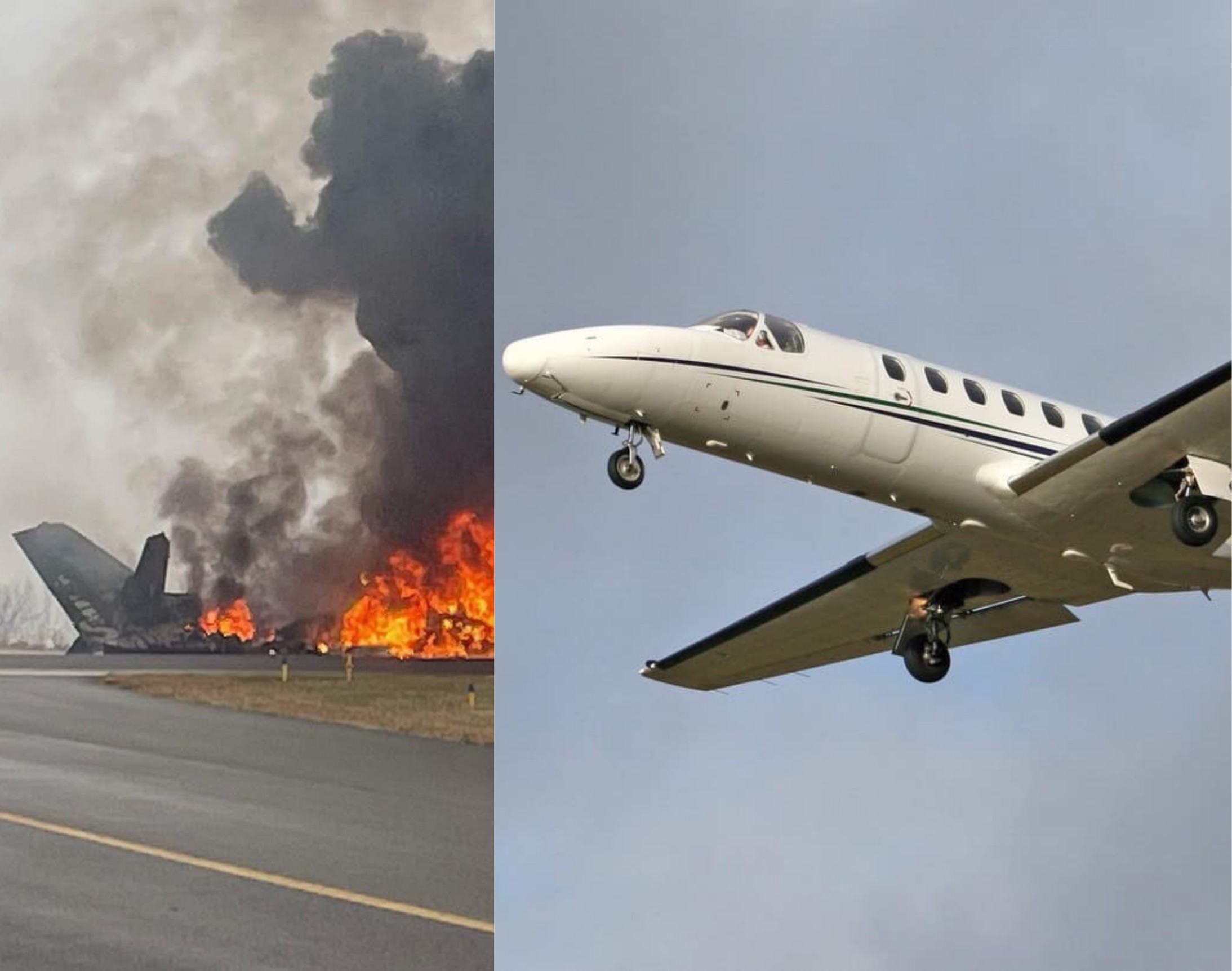
A Cessna C550 corporate jet crashed during landing at Statesville Regional Airport (SVH) in North Carolina on Thursday morning, killing all 7 people aboard. The aircraft went down around 10:20 local time on the airport’s east runway, according to officials investigating the incident. Authorities confirmed that former NASCAR driver Greg Biffle, 55, perished in the crash along with his wife Cristina, daughter Emma, son Ryder, and three other passengers. A highway patrol spokesman stated that witnesses on the ground verified Biffle’s presence on the aircraft before departure.
Details of the Crash
The Cessna C550, owned by a private company associated with Biffle, took off from Statesville Regional Airport at approximately 10:06 local time. The jet remained airborne only briefly before crashing on the runway’s eastern section. Airport Director John Ferguson reported that flames had already engulfed the aircraft when he reached the scene. The National Transportation Safety Board (NTSB) dispatched an investigative team to determine the crash’s cause. Statesville Regional Airport (SVH), located 45 minutes north of Charlotte, remains closed as crews remove debris from the runway. The facility serves Fortune 500 companies and several NASCAR racing teams. NASCAR released a statement honoring Biffle as “more than a champion driver” and “a beloved member of the NASCAR community.”
North Carolina Governor Josh Stein praised Biffle’s courage and compassion, highlighting his hurricane relief work. Motorsport YouTuber Garrett Mitchell confirmed on Facebook that Biffle’s family was traveling to visit him when the crash occurred, expressing devastation over the loss. Officials withheld information about casualties during their initial press conference as investigation procedures commenced.
Comment