
Cabin Crew Training Gets a Serious Upgrade: DGCA's New Framework Promises Sharper Skills Over Ticked Boxes

Abhishek Nayar
31 Oct 2025

India's aviation watchdog is rolling out a game-changing approach to cabin crew training, and it's about time someone asked the question: when an emergency strikes at 35,000 feet, does it matter how many hours someone spent in a classroom, or does it matter whether they can actually handle the crisis?
The Directorate General of Civil Aviation is preparing to introduce a Competency Based Training and Assessment framework specifically designed for cabin crew members, marking a significant shift in how India's aviation industry approaches safety training. Shweta Singh, who serves as Chief Flight Operations Inspector at the DGCA, revealed during a conference in the national capital on Thursday that the regulator expects to release draft norms for this new framework within the next month. The initiative builds on a similar framework that the DGCA successfully introduced for pilots back in 2022, suggesting that lessons learned from that rollout will inform this latest effort.
What Makes This Different From Traditional Training
The CBTA framework represents a fundamental departure from conventional training methods that often emphasize logging hours and completing modules. Instead, this approach zeroes in on whether crew members can actually perform critical tasks when seconds count. Singh illustrated the practical nature of this training with a vivid example that cuts to the heart of aviation safety. If a fire suddenly breaks out in the cabin during a flight, the framework will assess whether crew members can effectively manage the emergency, communicate clearly under pressure, and execute the necessary protocols. These performance indicators will be woven throughout the training program, creating a more realistic and demanding preparation process.
The framework will launch on a voluntary basis for airlines, giving carriers the flexibility to adopt the standards at their own pace while the industry adjusts to the new expectations. This measured approach acknowledges that overhauling training programs requires significant planning and resources, though the long-term benefits for passenger safety remain the driving force behind the initiative.
Why This Matters Now More Than Ever
The timing of this announcement reflects India's explosive growth in civil aviation. The country currently ranks among the world's fastest expanding aviation markets, with domestic airlines placing massive aircraft orders that signal ambitious expansion plans. As fleets grow larger and route networks spread wider, airlines will need substantially more pilots and cabin crew to staff these operations. This expansion makes the quality of training even more critical than the quantity of personnel.
Captain Ashim Mittra, Senior Vice President for Flight Operations at IndiGo, reinforced this perspective during the same conference, emphasizing that crew competency outweighs sheer numbers. His observation captures a crucial insight: having fifty crew members who merely completed their training checklist matters far less than having crew members who can think clearly and act decisively when passengers depend on them. With India's skies growing busier by the month, the DGCA's new framework ensures that growth and safety advance together rather than competing priorities.
Read next
Is Air India's $1.14 Billion Bailout Request the Price Tag for Resurrection or Desperation?
Abhishek Nayar
31 Oct 2025

Air India finds itself reaching deep into its shareholders' pockets, requesting at least Rs 10,000 crore (roughly $1.14 billion) from its parent companies Singapore Airlines and Tata Sons. This isn't exactly the kind of shopping spree that makes investors cheer, particularly when the bill comes after the airline's deadliest crash in recent history claimed more than 240 lives in June.
When Dreams Meet Disaster
The Tata Group-owned carrier hasn't had much time to celebrate its privatization journey that began in 2022. Just as the airline was hitting its stride with ambitious modernization plans, the June catastrophe threw a massive wrench into its transformation efforts. Bloomberg News broke the story on Thursday, revealing that the funding request comes at a particularly delicate moment when Air India desperately needs to rebuild both its infrastructure and its battered reputation.
The requested funds would flow proportionally according to ownership stakes, which means Tata Group, holding a commanding 74.9% share, would shoulder the lion's share of the financial burden. Singapore Airlines, which controls the remaining stake, would contribute accordingly. The two parent companies now face a choice between structuring this support as an interest-free loan or pumping it in through equity, though neither option sounds particularly exciting from an investment standpoint.
More Than Just Writing Checks
Air India isn't simply asking for cash to patch holes in its balance sheet. The carrier plans to channel these funds into comprehensive system overhauls and service improvements that have apparently been long overdue. Perhaps most significantly, the airline intends to build robust in-house engineering and maintenance departments, suggesting that outsourcing these critical functions may have contributed to its current predicament.
Singapore Airlines has already signaled its commitment to the partnership, with a spokesperson confirming that the carrier has been working closely with Tata Sons throughout Air India's transformation journey. The support extends beyond financial contributions, including technical expertise and operational guidance that Air India clearly needs during this challenging period.
Promises and Pressure
Earlier this week, Air India's CEO stepped forward with pledges to improve the carrier's internal practices, though cynics might wonder if this promise arrives fashionably late to the safety party. The statement reflects the immense pressure facing leadership as they navigate the aftermath of the June disaster while simultaneously trying to execute an ambitious modernization strategy.
The situation places Air India at a crossroads where every decision carries enormous weight. The airline must convince passengers it remains safe while overhauling operations, satisfy shareholders who now face unexpected capital calls, and compete in an increasingly demanding aviation market where reputation matters almost as much as on-time performance.
With Inputs from Reuters
Read next
More Seats, More Smiles — and More USBs: How Air India Express Is Gearing Up to Xpress-Up 2026
Abhishek Nayar
29 Oct 2025

Air India Express just raised the volume on its growth playlist — adding planes, re-seating cabins, and rolling out a feel-good brand campaign that practically begs you to book a weekend escape. The Tata-owned low-cost carrier told reporters it plans to add 20–24 aircraft in calendar year 2026, while simultaneously standardizing and upgrading a big chunk of its 737-8 fleet to modern interiors. It’s a classic combo: growth and comfort — low fares, with a side of USB-C.
Fast facts (for the headline skimmers)
- Target: 20–24 new aircraft in CY26.
- Retrofitting: 50 Boeing 737-8s to be upgraded by mid-2026 with new seats, USB-C ports, ovens, carpets and mood lighting.
- Current fleet ~ 115 aircraft after 15 inductions in the last six months.
- Network: ~2,700 weekly domestic flights on 114 routes and ~780 international flights on 70 routes (winter schedule expansion; +25% vs Winter 2024).
Why the hurry? — Strategy in plain English (and occasional airline jargon)
Air India Express is doubling down on domestic growth while keeping its international short-haul footprint healthy. Two years ago, their network leaned heavily to short-haul international routes (~60% international); today the split is much closer to 50:50, and management says domestic capacity has been the faster-growing engine lately. That’s why you’ll see more flights connecting metros with tier-2 and tier-3 cities, plus beefed-up hub activity at Delhi, Mumbai and Bengaluru.
The logic: domestic India travel demand is booming, and adding more aircraft + more seats is the quickest way to capture market share — assuming you can get the planes out of the factory and past the paint shop. (Spoiler: supply-chain watch remains a variable.)
The makeover: what the retrofit actually means for passengers
If “new seats and mood lighting” sounds like airline speak, here’s the human translation:
- Ergonomic synthetic-leather seats with thicker armrests and improved legroom (yes, legroom is back in fashion).
- In-seat USB-C charging ports — for people who need to charge their third coffee-driven device.
- Onboard ovens for hot meals, upgraded carpets and Boeing Sky Interior mood lighting — nicer vibes on short-haul hops.
- Line-fit Collins Aerospace seats on some new deliveries (i.e., seats fitted at production, not retrofitted later). The airline says the first line-fit delivery is expected in December.
In short: more seats, but better ones — and a consistent product across the fleet that helps operations and passenger experience. (Also: fewer seat-belt extenders. Probably.)
Numbers that matter (and a tiny spreadsheet of airline math)

Air India Express has been scooping up aircraft fast — about 15 in the past six months, taking its fleet near 115 — mixing Airbus A320/A321s, Boeing 737NGs and 737-8/Max types. The planned addition of 20–24 aircraft next year would accelerate growth further, provided Boeing’s production and the global supply chain cooperate.
Consolidation note: many of the 737-8s were acquired as “white-tail” aircraft (initially built for other operators), so the retrofit/unification program is both practical and cost-efficient.
Brand play: “Xplore More, Xpress More” — marketing that actually says something
Air India Express launched a campaign called Xplore More, Xpress More, positioning itself as vibrant, inclusive and modern — a tone that supports both its fleet refresh and network push. The carrier is translating product upgrades into a brand promise: more routes, more frequency, and a refreshed onboard look and feel. Expect splashy social posts, quick promos and ads that try to make your next quick getaway irresistible.
What this means for flyers — the good, the cheeky, the practical
- Good: More flights + retrofitted cabins = more choices and better short-haul comfort. USB-C ports? Yes, please.
- Cheeky: More seats = lower per-seat cost. Translation: competitive fares that make weekend jaunts to Goa look dangerously affordable.
- Practical: If you’ve got a loyalty preference for seat pitch and in-flight meals, check the aircraft type before booking; not every plane will be retrofitted overnight.
Competition check: who’s sweating?

Budget airlines in India are tightening their belts and sharpening their offers. As competition intensifies, Air India Express’ twin strategy of fleet and product upgrades helps it stand out, especially on high-frequency domestic routes. The broader Air India group claims around 30% market share at group level, while Air India Express sits at roughly 11–12% domestic share — room to grow if strategy execution holds.
Final bite: the runway ahead
If plans unfold as stated — 20–24 deliveries in 2026, 50 737-8 retrofits by mid-2026, and more domestic depth — travelers can expect more capacity, a more consistent onboard product, and (hopefully) fewer seatbelt-adjacent surprises. The wildcard remains aircraft delivery pacing and hangar capacity: converting ambition into reality takes good project management and a few prayers to the supply-chain gods.
TL; DR
- Air India Express plans to add 20–24 aircraft in calendar year 2026.
- It will retrofit 50 Boeing 737-8s by mid-2026 with Collins seats, USB-C, ovens, carpets and mood lighting.
- Fleet is ~115 aircraft after 15 recent inductions.
- Winter 2025 plan: ~2,700 weekly domestic flights (114 routes) and ~780 international short-haul flights (70 routes) — >25% growth over Winter 2024.
- Strategy: focus on faster-growing domestic market while keeping international short-haul strong; brand campaign = “Xplore More, Xpress More.”
With Inputs from The Economic Times
Read next

India’s civil aviation regulator, the Directorate General of Civil Aviation (DGCA), has flagged a string of regulatory non-compliances at Akasa Air after a surveillance review — and asked the airline to fix them. The findings reportedly span flight safety, the airline’s safety-management system (SMS), and flight-duty time limits, with complaints of repetitive procedural slip-ups, documentation gaps and systemic failures.
What happened (short version)
The DGCA examined Akasa Air’s surveillance data for the April–September period and unearthed multiple non-conformities — things like recurring procedural lapses and gaps in paperwork, plus weaknesses where the system should have caught and corrected mistakes. The regulator has asked the airline to take remedial action.
Akasa Air’s public line is straightforward and (politely) corporate: it says it “always submits comprehensive responses to all observations raised within the prescribed timelines” and reiterated its commitment to safety and regulatory compliance.
The specifics — what the DGCA flagged (as reported)
- Repetitive procedural lapses: The DGCA reportedly described some issues as “repetitive” or “persistent” — meaning the same kinds of problems have occurred more than once rather than a one-off glitch. That’s the regulator’s way of saying “fix the root cause, not just the symptom.”
- Documentation gaps: Missing or inconsistent records — aviation’s equivalent of misplacing the recipe card for safety. Accurate records matter for audits, investigations and, crucially, for day-to-day safe operations.
- Systemic failures: When multiple small problems point to a bigger process or oversight issue. DGCA’s note suggests process-level corrections, not just individual retraining's.
- Flight duty time & safety-management concerns: Crew duty limits and SMS are central to fatigue mitigation and safety culture; regulators watch these closely. The DGCA’s review reportedly included these domains.
Why this matters
Airline operations are complex and regulators run regular surveillance to ensure the safety net holds. A finding doesn’t automatically mean an immediate safety crisis — often it means the regulator wants corrective steps and verification that fixes are effective. Recent months have seen multiple airlines face regulatory scrutiny across a range of issues, so the DGCA’s activity fits into a broader tightened oversight environment.
Think of it like this: if the DGCA were a music director, they’re listening for sour notes and asking the band to rehearse one section a little harder — especially if the same guitar riff keeps missing the beat.
What Akasa Air says (and what to watch for next)

Akasa’s statement emphasizes timely responses and continued commitment to safety. That’s standard — and sensible — corporate communication. The real follow-up items to watch are:
- What corrective actions does Akasa publicly commit to? (policy updates, retraining, internal audits)
- Will the DGCA demand independent verification or impose timelines? (the regulator sometimes asks for proof of change and follow-up audits).
Context: DGCA’s recent spotlight on airline safety
Over the past months, the DGCA has been active with audits and surveillance across Indian carriers, citing a range of lapses at different airlines. This is part of stronger oversight in the sector — partly reactive (after incidents) and partly proactive. In short: regulators are listening harder.
Light-hearted sanity check (because journalism can be human too)
- No, this is not a reason to cancel your next trip. Airline safety is layered — multiple people, processes and technologies must fail simultaneously for something catastrophic to occur. What’s happening is the regulator making sure those layers aren’t fraying.
- Yes, paperwork matters. Someone, somewhere, will probably be told to love Excel a little more.
- No, it’s not a boardroom soap opera — it’s process improvement with sternly worded memos.
What passengers should look for
- Clear communication from the airline if corrective actions affect schedules or flights (most fixes are administrative).
- If you’re a frequent flyer, notice if the airline offers transparency reports or publishes audit-related updates — that’s a good sign.
- If you’re curious (or worried), reputable news outlets and regulatory press releases will carry the substance; social posts often over-simplify.
Bottom line (aka the news you can actually use)
DGCA's findings are a sign of oversight doing its job: identify problems, force remediation, and verify. Akasa Air says it responds within timelines and is committed to safety. The coming days and weeks will show whether changes are systemic and lasting — and that’s the real story to follow.
TL; DR
- DGCA flagged multiple regulatory non-compliances at Akasa Air after reviewing April–September surveillance data.
- Issues reportedly include repetitive procedural lapses, documentation gaps and systemic failures across flight safety and SMS domains.
- Akasa Air says it submits comprehensive responses to DGCA observations within prescribed timelines and remains committed to safety.
- The DGCA routinely audits carriers; recent months have seen heightened scrutiny across the industry.
- For passengers: stay informed via official updates; this is oversight and remediation — not an immediate reason for panic.
Read next
Senior Executive Development Programme in International Aviation Law and Management: Dhirubhai Ambani University, School of Law

Sakshi Jain
29 Oct 2025
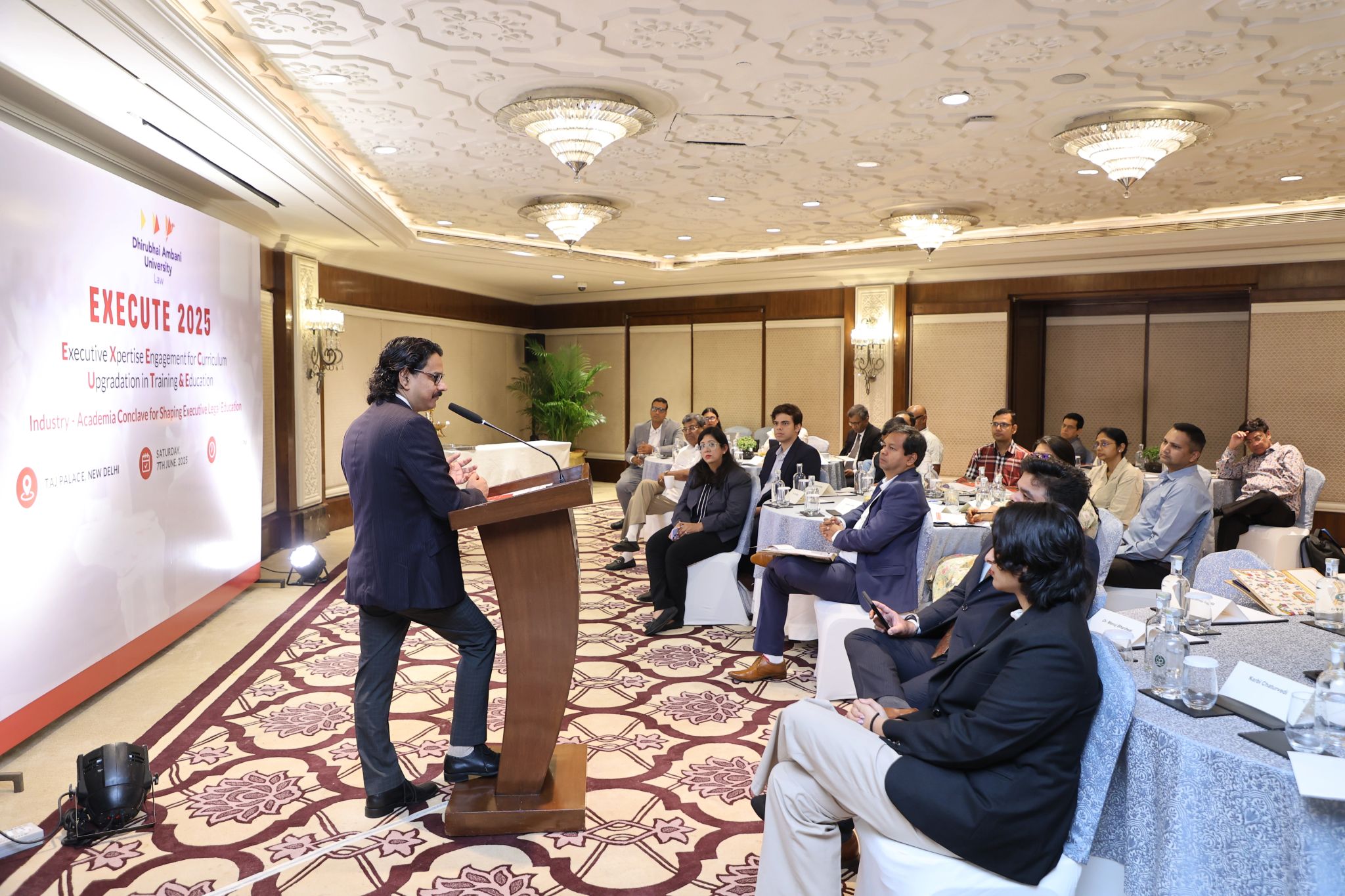
NEW DELHI, October 29 — The second batch of the Senior Executive Development Programme in International Aviation Law and Management is being organised by Dhirubhai Ambani University – School of Law in partnership with Université Toulouse 1 Capitole, France, and Spaviatech Law.
Programme Details
The intensive two-day executive development initiative, tailored exclusively for senior executives and key decision-makers within the global aviation industry, will take place at Pullman Aerocity, New Delhi, on November 20-21, 2025.
Designed for professionals with a minimum of 5 years of experience in aviation, the programme targets heads of airline operations and maintenance, directors and VPs in aircraft leasing and financing, chief legal officers, heads of compliance, regulatory advisors, and executive leaders in sales, marketing, and corporate strategy within aviation enterprises.

Distinguished Expert Faculty Panel
The programme features an exceptional lineup of industry leaders and subject matter experts from globally renowned organisations:
- Prof. (Dr.) Avinash Dadhich – Founding Director, Dhirubhai Ambani University – School of Law
- Prof. (Dr.) Laurent Grosclaude – Head of LL.M. in International Aviation Law, Université Toulouse 1 Capitole, France
- Prof. (Dr.) Matthieu Poumarède – Dean, Toulouse Law School, Université Toulouse 1 Capitole, France
- Dr. Lalit Gupta – Former Joint Director General, DGCA, Government of India
- Lubinisha Saha – Head of Legal & Compliance for Airbus, South Asia
- Mr. Amber Dubey – Former Joint Secretary, Ministry of Civil Aviation; Senior Advisor, McKinsey & Company
- Mr. Ashwani Acharya – Founding Member, IndiGo & CEO, RedBird Flight Training Aviation Pvt. Ltd.
- Ms. Sharmila Barathan – Government Affairs & Policy Leader, GE Aerospace (South Asia)
- Mr. Malik Almajadalawi – Deputy Head of Quality and Compliance for Europe, Collins Aerospace
- Ms. Rakhee Biswas – Co-Managing Partner, Spaviatech Law
- Mr. Syed Tamjeed Ahmad – Co-Managing Partner, Spaviatech Law
- Mr. Sivadath Madhu Menon – Head of Aviation Law & Management, Dhirubhai Ambani University – School of Law
- Dr. Manuj Bhardwaj – Head of Executive Education, Dhirubhai Ambani University – School of Law
Comprehensive Curriculum
This flagship executive education initiative provides in-depth knowledge of international legal and management frameworks that are reshaping today's aviation landscape. The thoughtfully designed curriculum addresses critical contemporary challenges and opportunities through seven core modules:
Day 1 – Legal, Regulatory, and Operational Frameworks:
- International Aviation Legal Framework, International Conventions and Organisations of Significance
- India's Aviation Ecosystem – Current Realities and Future Pathways
- Air Accident Investigations: Global Best Practices, Safety, and Airworthiness Compliance
- Drones in India – Opportunities, Challenges, and Way Forward
Day 2 – Operations, Finance, and Sustainability:
- Liability and Claims in Aviation: Legal and Regulatory Perspectives
- Environmental Governance in Aviation – Balancing Growth, Innovation, and Regulatory Compliance
- Aviation Leasing and Financing: Principles and Practices
- Panel Discussion on "Emerging Trends in Aviation"

Building on Success: The First Batch
The inaugural batch of this Executive Development Programme was successfully conducted in Toulouse, France, in June 2025, in partnership with Université Toulouse 1 Capitole. The programme brought together senior leaders from prominent organizations including FlyDubai, CAE, Reliance Group, K. Singhania & Co., and featured sessions led by industry luminaries such as Karl Hennessee (Senior VP, Head of Litigation & Investigations at Airbus), Mélanie Etienne (Head of Investigations and Product Integrity Legal at Airbus), and Alexandre Faÿsse (General Counsel at Safran).
Programme Benefits
Participants will receive:
- Joint International Certification issued by Dhirubhai Ambani University – School of Law and Université Toulouse 1 Capitole, France
- Expert-Led Learning through comprehensive sessions on international civil aviation law, liability, aircraft leasing, and accident investigations
- Professional Networking opportunities to establish meaningful connections among top executives and sector experts nationally and globally
- Global Career Pathways, unlocking opportunities within one of the fastest-growing global industries
- Distinguished Alumni Network provides access to a prestigious community of accomplished aviation professionals

Selective Enrollment and Scholarship Opportunities
To maintain an optimal learning environment with personalised attention and enriched peer-to-peer exchange, enrollment for Batch 2 is strictly limited to 30 participants.
Merit-based scholarships of up to 10% are available to candidates demonstrating academic distinction or outstanding professional expertise. Special category scholarships of up to 10% are also available to women professionals, veterans of the Armed Forces, and practitioners working in the social impact sector.
Programme Fees:
- Indian citizens: INR 80,000 (inclusive of taxes)
- International participants: USD 1,000 (inclusive of taxes)
Selection will be conducted through a comprehensive application review, professional background assessment, and candidate interaction process. Admissions are evaluated holistically on a case-by-case basis, with emphasis on professional achievements, leadership potential, and contributions to the aviation field.
About the Organisers
Dhirubhai Ambani University – School of Law aims to create and train a community of lawyers and non-lawyers guided by the ideals of industry-academia collaboration and entrepreneurial spirit in a globalised Indian economy. The institution offers interdisciplinary and practical education with insights and instruction provided by top-tier academicians from Ivy League universities, Russell Group Universities, and the Top 100 Law Schools.
Université Toulouse 1 Capitole traces its roots to the Faculty of Canon Law, founded in 1229. Specialising in Law, Economics, and Management, the university is ranked among the top 100 globally in Economics/Business. Located in Toulouse, the heart of France's aviation industry, its Aviation Law programme provides unparalleled exposure to Airbus, Thales, Dassault, and leading aviation law experts.
Spaviatech Law is a boutique law firm specialising in aerospace, aviation, and technology law. Founded by alumni of the University of Toulouse Capitole and Leiden University, it focuses on regulatory compliance, dispute resolution, and legal advisory services for the fast-growing Indian aviation sector.
Apply here
Programme Details: Here
Read next
No A’s in the Air: Inside the First DGCA Ranking of Flying Training Organisations
Abhishek Nayar
27 Oct 2025
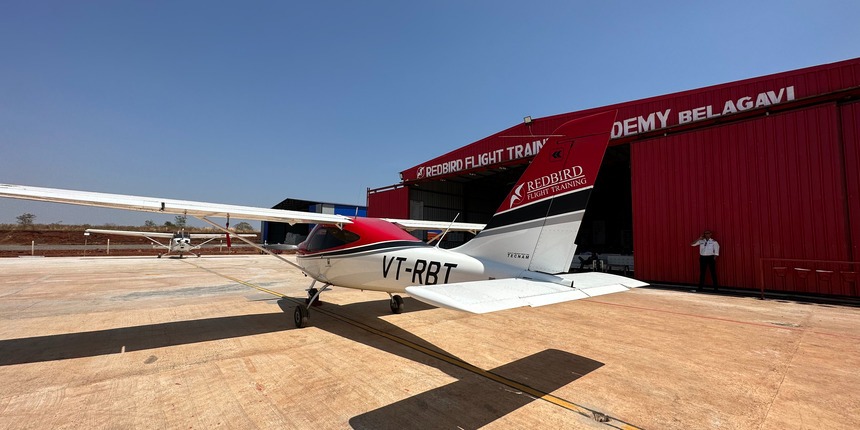
Imagine getting a report card where every student shows up in the same room, and none of them brought an A. That’s basically what happened when India’s aviation regulator released its first-ever rankings of Flying Training Organizations (FTOs) — and the results were, well, blunt. Out of 35 FTOs, none earned A+ or A, 13 landed in B, and 22 fell into C. Eyes widened. Questions popped. The Civil Aviation Ministry is now stepping in to review why the cupboards are so, ahem, empty.
What actually happened? — The short story
On October 1, 2025 the DGCA published a new ranking framework for all DGCA-approved Flying Training Organizations. The scoring bands: 85%+ = A+, 70–<85% = A, 50–<70% = B, and below 50% = C. Under that framework, none of the 35 FTOs hit the A or A+ bands; most are in the lower two categories. The regulator will publish rankings biannually (next scheduled list: 1 April 2026).
Why the fuss? (Because safety and pilots aren’t a drill)
Pilot training isn’t just about pretty logbooks and smooth landings — it’s about safety culture, operational discipline, compliance, and giving students real, timely support. DGCA’s evaluation covered operational aspects, performance, safety standards, compliance, and assistance to students; the results imply many training outfits need systemic upgrades rather than cosmetic fixes.
What the minister said — a dose of accountability (with realistic timelines)
Civil Aviation Minister K. Rammohan Naidu has said he will meet representatives of FTOs to discuss ways to raise standards. He also clarified that while regular airline review meetings are useful, monthly performance reviews of FTOs aren’t necessary — DGCA’s biannual rankings and targeted follow-ups (including DGCA notices for Category C outfits) will be the main oversight tools.
The DGCA playbook — how the scoring works (the nerdy but important part)
The DGCA’s public notice and ranking annex set out the rules: each FTO is scored across multiple parameters (safety, operations, compliance, student assistance, etc.) and placed into one of four categories. Those in Category C (score below 50%) will receive a formal notice from the regulator to conduct self-analysis and improve. The idea: transparency — accountability — improvement. Fingers crossed.
So...why did so many FTOs score poorly?
A few likely causes (and yes, these are a mix of official pointers and plain common sense):
- Infrastructure & fleet gaps: Not enough serviceable aircraft or simulators to give trainees the hours they require.
- Safety & compliance weaknesses: Audits likely found shortfalls in paperwork, maintenance records, or SOP adherence.
- Training throughput issues: Long waits or rushed training episodes that affect quality.
- Student support & transparency: Poor counselling, unclear timelines for CPL progression, or inadequate grievance redressal.
This isn’t a finger-pointing exercise—think of it as a wake-up call that the training ecosystem needs investment and better oversight.
What happens to the students (and to people dreaming of a pilot’s life)?
Short answer: nothing catastrophic — but expect change. Trainees at Category C schools will get notices and should expect improvement plans or more detailed audits. Prospective students now have public rankings to help pick a training institute — useful, because in the past you mostly had brochures and promises. In other words: more transparency, better choices — and maybe a few tough conversations.
How FTOs can actually improve (not in corporate-speak)
Here are concrete, practical moves training schools can use to climb the next leaderboard:
- Fix the fleet, not the playlist — ensure aircraft and simulators are maintained and available so trainees get logged hours without excuses.
- Safety drills daily, not yearly — build a proactive safety culture: briefings, checklists, honest incident reporting.
- Clear student pathways — publish real timelines and support services (counselling, make-up flights, fee clarity).
- Digital transparency — maintain up-to-date records and dashboards DGCA/parents/trainees can review.
- Peer review & partnerships — smaller schools can partner with better-run clubs to share simulators, instructors, or SOPs.
Do these and you get better outcomes — and maybe a shiny A to brag about at the annual alumni reunion.
The political and industry angle — not dramatic, but meaningful
This is as much a policy moment as a quality moment. The ministry’s decision to meet FTO reps means there’s political will to act, not just scorecards. And for airlines and lessors watching the pilot pipeline, better training standards mean more reliably trained new pilots — which helps the industry scale safely. In short: this isn’t a witch-hunt; it’s a systems check.
Final verdict — optimistic, with a side of realism
The headline was stark: none in A or A+. But that’s also useful: it sets a clear baseline. With biannual public rankings, DGCA’s oversight, ministerial attention, and pressure from students and airlines, there’s a credible path to improvement. It’ll take investment, honest audits, and time — but the next ranking (1 April 2026) will be a true litmus test of progress.
TL; DR
- DGCA released its first-ever FTO rankings; 35 FTOs evaluated — 0 A+/A, 13 B, 22 C.
- Scoring bands: 85%+ A+, 70–<85% A, 50–<70% B, <50% C.
- Category C schools will get notices to self-analyze and improve.
- Civil Aviation Minister K. Rammohan Naidu will meet FTO reps; monthly FTO reviews aren’t planned — rankings will be biannual (next: 1 Apr 2026)
Bottom line: transparency is up, quality pressure is up — and future trainees can use rankings to make smarter choices. Improvement required, but a path exists.
Comment