
Boeing 737 MAX fuselage Supplier Spirit AeroSystems Halts Work Ahead of Labour Strike

Radhika Bansal
23 Jun 2023
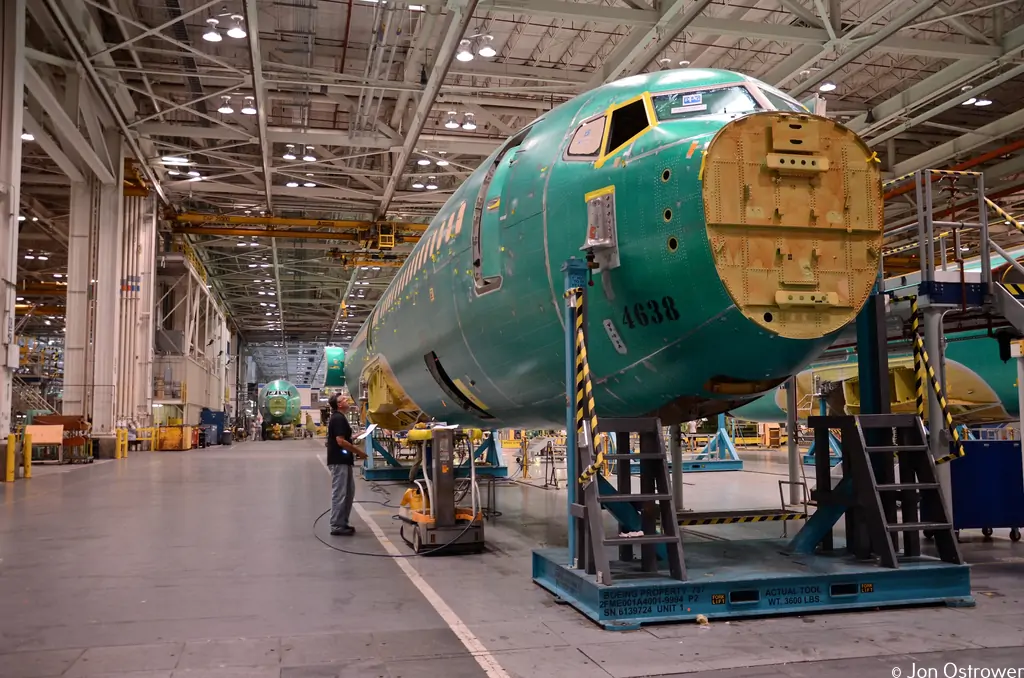
Boeing supplier Spirit AeroSystems halted work at a Wichita, Kansas, plant on Thursday, June 22 after workers voted against a new labour deal and for a strike. Spirit makes fuselages for Boeing 737 Max and pylons for Airbus A220s at the plant. Spirit fell more than 9% on Thursday, June 22, while Boeing’s shed more than 3%.
“In light of the decision to strike by Spirit AeroSystems employees represented by the International Association of Machinists and Aerospace Workers today, Spirit will suspend factory production before the expiration of the contract,” Spirit said.
The issue comes as Boeing is trying to ramp up production of 737 Max planes. Boeing has some Spirit-made fuselages in inventory but declined to say how many or what the impact of the production halt would be on Boeing’s output of 737s. The planemaker has been working to boost the output of its 737 MAX jets to 38 per month from the current level of 31, and 787 aircraft to five per month from the present level of four this year.
Boeing has more than 100 MAX planes in its inventory, so it could shift workers from production to modifying inventory jets to keep deliveries flowing in the event of a stop at its production facility in Renton, Washington. “I want to encourage all of us to stay focused on our task at hand, which is to continue to build and deliver the finest airplanes in the world,” Stan Deal, CEO of Boeing’s commercial airplane unit, said in a note to employees. “We will update all of you as we gain further insights from our partners at Spirit.”
What Happened?
The production halt began with the first shift, two days before the contract covering roughly 6,000 workers was set to expire. The strike is scheduled to begin just after midnight on Saturday, the union said. “The IAM’s dedicated and hardworking membership at Spirit AeroSystems has worked without fail during tumultuous times, including a pandemic that saw everything grind to a halt,” the union said in a statement. “Most of our members have concluded that the company’s offer is unacceptable.”
The union said that 79% of workers voted against the contract and 85% voted for the strike. Rickey Wallace, general vice president of IAM’s 14-state southern territory said the union wants to return to the bargaining table as soon as possible. “It’s our goal to get an agreement,” he said.
Union workers rejected a tentative deal that included up to an average pay bump that compounded 34% through general wage increases, cost-of-living adjustments, and a guaranteed annual bonus. It also included a 14.7% increase in retirement benefits; increased paid time off and job security enhancements, plus made Sunday overtime voluntary. About 55% of Spirit's U.S. workers were covered by the agreement, which will expire this month. Spirit had 12,735 workers in its six U.S. facilities, of which 11,000 were located in Wichita.
Boeing Intends To Ramp Up 737 MAX Production
Boeing has upped its monthly production plan to 38 planes from 31. The company expects to deliver up to 450 737 planes this year. Boeing CEO Dave Calhoun has apologised to customers for the delay in delivery of its popular 737 Max aircraft after learning about a manufacturing issue in the aft fuselage section of the plane. "The worst part of the notice of the defect that we got is the timing. It is right at the centre of their (airlines) summer schedules and we have to differ deliveries for that period, it costs some real money, so apologies to everyone, we are working very closely with them, Calhoun told CNBC in an exclusive interview.
Air India & Akasa Air are the two Indian airlines that have placed orders for the 737 Max aircraft and sources said their expansion plans are likely to be hit as Boeing reschedules deliveries. Air India was expecting some 737 Max planes out of the 190 it ordered to be delivered this year itself. Akasa Air is also awaiting 53 of the 72 aircraft it had ordered that will be delivered by 2027.
But according to the Boeing CEO, these delays are for a short period and their annual delivery guidance is on track. "We still believe we are within that guidance, we are clearly going to differ some things from the second quarter to the third quarter & a bit to the fourth quarter, but on balance, we think we are in a pretty good shape to meet that guidance," he said. "As demand surges across our markets, we must focus together on execution and meeting our customer commitments,” the CEO told employees.
737 Fuelsage Issue
Boeing benefited from more 737 and 787 handovers, although “customer considerations” relating to 787s offset the revenues. While it acknowledges that near-term production of 737s will be affected by inspections and rework, following the discovery of a manufacturing process issue in the aft fuselage of certain aircraft, the airframer is maintaining its projection of 400-450 deliveries. It aims to increase 737 output to 38 aircraft per month later this year and reach 50 per month over 2025-26. Boeing also intends to lift monthly production of 787s – currently at three aircraft – to five in late 2023 and, in 2025-26, reach 10.
Referring to the 737 issues, he says it poses ”no immediate safety of flight concern” and that the company will “work diligently” to ensure aircraft meet the company’s standards before delivery. Calhoun says he is “proud of the team” for ”immediately and transparently” bringing the matter forward with the regulator and Boeing’s customers. “This is how we continuously improve,” he adds.
During a first-quarter briefing, chief executive Dave Calhoun stressed that the company was “working in a very constructive way” with fuselage supplier Spirit AeroSystems and that near-term deliveries and production will be lower, and the levels will recover over the coming months.
He says the issue is “understood” and isolated to two specific fittings. “And we know what we have to do,” he states. “Unfortunately the timing of these delivery shortfalls will impact summer capacities for some customers. And we feel terrible about that.”
Boeing delivered 113 737s over the first quarter including 53 in March. Boeing ended the quarter with some 225 737 Max jets in its inventory, including 138 built for customers in China. Some 30 of the Max jets in the inventory are Max 7s and 10s. Boeing stresses that the certification timelines on these variants “have not changed”.
Read next
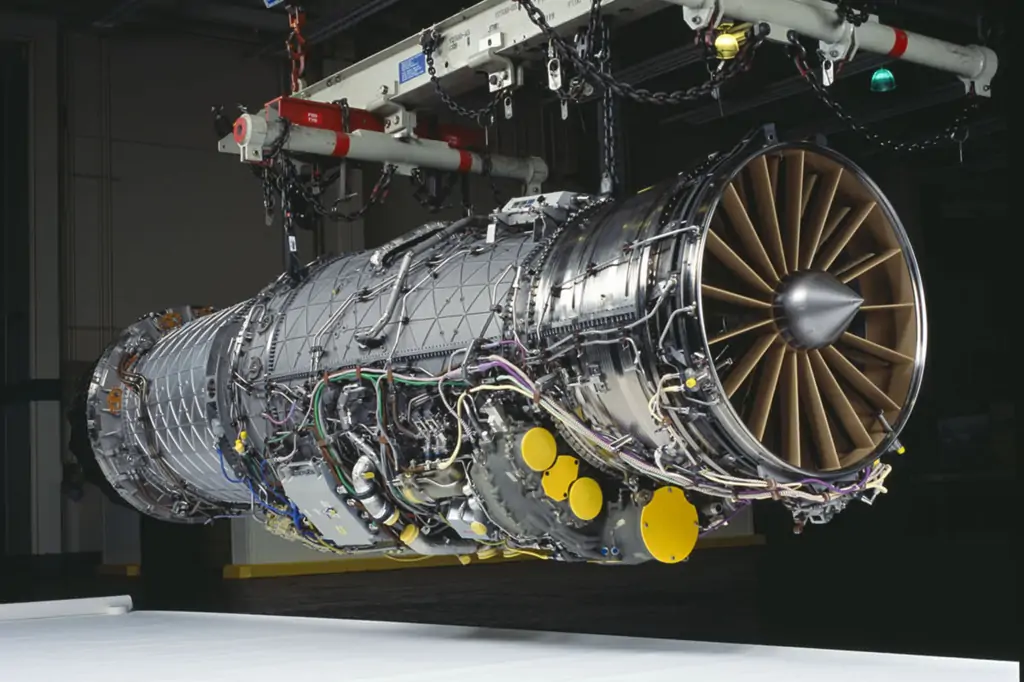
GE Aerospace, the US-based aircraft engine supplier, on June 22 announced the signing of a memorandum of understanding (MoU) with India's public defence firm Hindustan Aeronautics Ltd (HAL) to produce fighter jet engines for the Indian Air Force (IAF). The agreement includes the "potential joint production" of F414 engines in India, GE Aerospace said, adding that it "continues to work with the US government to receive the necessary export authorisation for this". The effort is part of the IAF’s Light Combat Aircraft (LAC) Mk2 program, a press release issued by the American aerospace company noted.
The signing of the pact, said GE Aerospace, is a "major milestone amidst Indian Prime Minister Narendra Modi’s official state visit to the United States". The agreement with HAL will also advance GE Aerospace’s "earlier commitment to build 99 engines for the Indian Air Force as part of the LCA Mk2 program", the company added.
"Our F414 engines are unmatched and will offer important economic and national security benefits for both countries as we help our customers produce the highest quality engines to meet the needs of their military fleet," GE Aerospace's chief executive officer H Lawrence Culp Jr said. "This is a historic agreement made possible by our longstanding partnership with India and HAL...We are proud to play a role in advancing President Biden and Prime Minister Modi’s vision of closer coordination between the two nations," he added.
GE Aerospace has operated in India for more than four decades. In 1986, it began working with India's Aeronautical Development Agency and HAL to support the development of LCA with F404 engines.
The company's F404 and F414 engines are currently part of the LCA Mk1 and LCA Mk2 programs. "In total, 75 F404 engines have been delivered and another 99 are on order for LCA Mk1A. Eight F414 engines have been delivered as part of an ongoing development program for LCA Mk2," the release stated.
LCA MK2 and F414 Engines
The LCA Mk2 will form an important element of IAF’s future air combat capabilities, and its first flight could take place next year, setting the stage for its production and subsequent operational availability around 2028 to replace the Mirage 2000s and Jaguars.
The single-engine fighter jet will be the most advanced LCA variant. The government has sanctioned around ?10,000 crore for the LCA Mk2 programme. The Cabinet Committee on Security, headed by Modi, in August 2022 cleared the much-awaited LCA Mk2 project.
The F414 has evolved from the F404 engine that powers the existing LCA variants. The LCA Mk2 is expected to provide a significant boost to the Atmanirbhar Bharat (self-reliant India) campaign, one of the government’s foremost priorities. The new fighter jet will cater to the future requirements of IAF, which has already inducted several of the 40 earlier variants of the LCA and ordered 83 newer Mk1A variants.
The LCA Mk2 will come with enhanced survivability, better situational awareness for pilots, improved range, network-centric capabilities, integrated avionics, and an ability to quickly switch from one role to another, Indian officials aware of the project said. The new aircraft will have a payload capacity of 6.5 tonnes and will be able to carry a mix of weapons including beyond visual range air-to-air missiles, air-to-ground missiles, heavy precision-guided weapons and conventional bombs, the officials said. The 17.5-tonne fighter will have a maximum speed of 1.8 Mach and a service ceiling of 50,000 feet.
The US engine maker began working with the Aeronautical Development Agency (ADA) and HAL to support the development of LCA with F404 engines in 1986, three years after the project was approved to gradually replace the Soviet-origin MiG-21 fighters with new warplanes.
Subsequently, GE Aerospace’s F404 and F414 engines have been part of the development and production of aircraft in the LCA series. “In total, 75 F404 engines have been delivered and another 99 are on order for LCA Mk1A. Eight F414 engines have been delivered as part of an ongoing development programme for LCA Mk2,” the statement said. So far, more than 1,600 F414 engines have been delivered globally. With more than five million flight hours and eight nations with F414-powered aircraft in operation or on order, the F414 continues to exceed goals, it further said.
Of the 123 LCA variants already ordered, 20 each are in the initial operational clearance (IOC) and the more advanced final operational clearance (FOC) configurations. The remaining 83 LCA Mk1A fighter jets will come with additional improvements over the FOC aircraft. The IAF has already inducted most of the earlier 40 LCA variants.
The Mk1A will come with digital radar warning receivers, external self-protection jammer pods, active electronically scanned array radar, advanced beyond-visual-range missiles, and significantly improved maintainability. The LCA Mk2 will be a further development of the Mk1A fighter. At a later stage, the F414 could also power the indigenous twin-engine deck-based fighter (TEDBF) and the initial variants of the advanced medium combat aircraft (AMCA), the officials said.
Timeline for the Rollout
The MoU puts the company in a strong position to create a family of products in India, including the F404 engine that currently powers the LCA Mk1 and LCA Mk1A aircraft, and GE Aerospace’s selection for the prototype development, testing and certification of the AMCA programme with the F414-INS6 engine, the US engine maker said. “In addition, GE will continue to collaborate with the Indian government on the AMCA Mk2 engine program,” it added.
The LCA Mk2 is expected to fill the gap between the Mk1A and the homegrown fifth-generation AMCA. The IAF’s modernisation map envisages the deployment of around 120 stealth fighters (six squadrons) from 2032 onwards. AMCA is expected to be developed in two phases. The first two squadrons will consist of the Mk1 version of AMCA and the remaining four squadrons will be raised with a more advanced version with a raft of sixth-generation technologies. Sixth-generation technologies are more advanced than those in any fighter jet currently in service globally.
While the AMCA Mk1 could be equipped with the F414, the Mk2 version will require a more powerful engine, said one of the officials cited above. There is a possibility of equipping AMCA with directed energy weapons, superior anti-missile systems, advanced missile approach warning systems and teaming it with unmanned systems.
In early June, India and the US announced the conclusion of a new road map for future defence industrial cooperation with the goal of fast-tracking technology cooperation and co-production in critical areas such as air combat and land mobility systems; intelligence, surveillance, and reconnaissance; munitions, and the undersea domain, in a renewed push for deepening collaboration in the sector during delegation-level talks between defence minister Rajnath Singh and his American counterpart Lloyd J Austin.
In his meeting with Culp Jr on Wednesday, Modi discussed GE’s greater technology collaboration to promote manufacturing in India. Modi invited GE to play a greater role in the aviation and renewable energy sector in the country. The PM also held talks with Micron CEO Sanjay Mehrotra and Applied Materials president Gary E Dickerson.
GE Aerospace is a world-leading provider of jet engines, components and systems for commercial and military aircraft with a global service network to support these offerings. GE Aerospace and its joint ventures have an installed base of more than 40000 commercial and 26000 military aircraft engines.
Read next
Star Air Signs Pool Program Services Agreement With Embraer for its Expanding Fleet
Radhika Bansal
23 Jun 2023
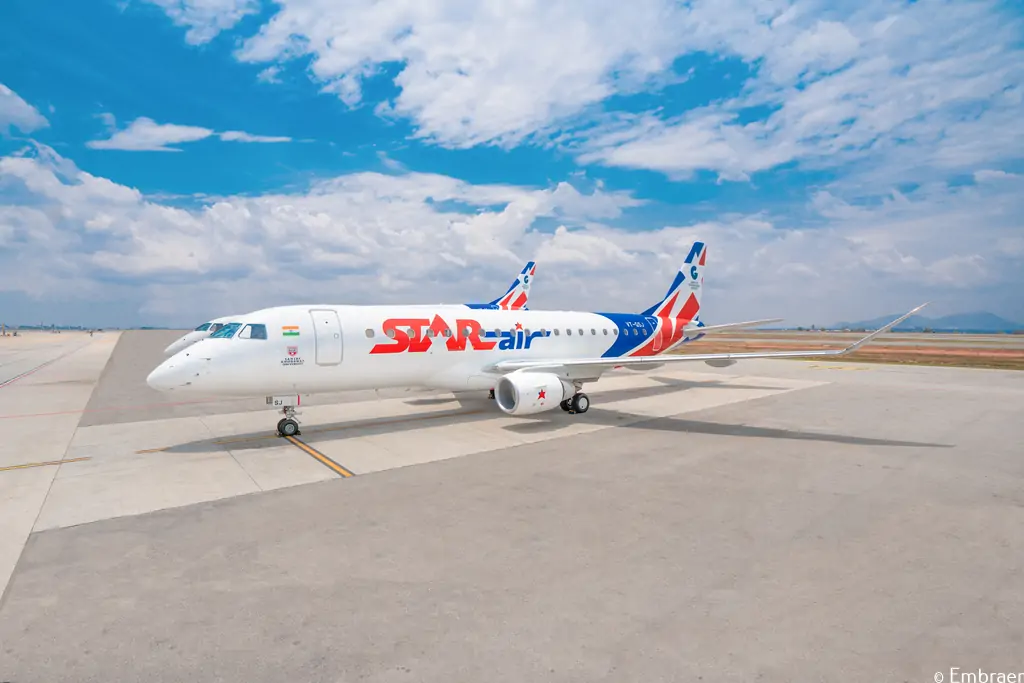
Star Air and Embraer have joined hands in a significant partnership to ensure support and maintenance services for Star Air's expanding fleet of Embraer E175s and existing E145s. The two entities have signed a Pool Program Services Agreement, solidifying their commitment to delivering uninterrupted operations and enhanced customer experience.
Under this agreement, Embraer will provide comprehensive support solutions to Star Air's aircraft. As the fleet expands, Embraer will ensure the availability of high-quality, genuine spare parts, logistics support, and technical assistance, thereby optimizing aircraft performance and reducing maintenance-related downtime and ensuring the fleet remains in optimal condition.
"We are happy to announce our collaboration with Embraer through this Pool Program Services Agreement," said, Capt. Simran Singh Tiwana, CEO of Star Air. "This strategic partnership represents a significant milestone for us as we continue to expand our operations and aim to provide unparalleled services to our customers. Embraer's reputation for excellence and their commitment to customer satisfaction make them the perfect partner for us."
Johann Bordais, President and CEO of Embraer Services and Support, reiterated Embraer’s commitment to Star Air’s continued growth. “AHEAD uses predictive analytics solutions to forecast when maintenance tasks will be needed by our customers, allowing them to plan maintenance schedules,” Bordais stated, emphasising the enhanced operational efficiency it offers.
The Embraer Pool Program
Star Air has leased four E175s in 2022 and two of them have started operations since May 2023. The contract provides access to the Pool Program, which includes component exchanges and repair services for a wide range of repairable components for the airline's E175s. The E175 Pool Program agreement is in addition to the ongoing pool program for Star Air's fleet of five ERJ145s. Star Air's 12-month average schedule reliability stands at 99.67%, one of the highest among ERJ145 operators.
Star Air's operations will benefit from the AHEAD (Aircraft Health Analysis and Diagnosis) Premium which comprises early detection capabilities by monitoring systems trends and patterns, to increase aircraft availability, minimizing unexpected maintenance downtime, reducing technical interruptions, and avoiding flight cancellations. This is aimed at enhancing the dispatch ability of Star Air's E175 fleet. Star Air is an all-Embraer jet operator, and flies to multiple destinations across India, both scheduled and non-scheduled (charter) flight services. Star Air is the first airline to offer business class seats on regional routes.
The Embraer Pool Program is designed to allow airlines to minimize their upfront investment in high-value repairable inventories and resources while taking advantage of Embraer's technical expertise along with its vast component repair service provider network. The results are significant savings on repair and inventory carrying costs, reduction in required warehousing space, and the virtual elimination of the need for resources required for repair management, while ultimately providing guaranteed performance levels. Currently, the Pool Program supports more than 50 airlines worldwide.
About Star Air
Star Air, the aviation arm of Sanjay Ghodawat Group is a regional airline based in Bengaluru, India having commenced commercial flight operations in January 2019 with a deep focus on providing affordable and convenient travel options to its passengers in-line with its motto of Connecting Real India. The airline currently operates a fleet of 5 Embraer E145 and 2 E175 aircraft from its two operational bases, Bengaluru Airport (BLR) and Belagavi Airport (IXG) to 17 destinations across India that include: Ahmedabad, Ajmer (Kishangarh), Indore, Jodhpur, Kalaburagi, Mumbai, Surat, Tirupati, Jamnagar, Hyderabad, Nagpur, Bhuj, Bidar, Kolhapur and Jaipur.
About Embraer
A global aerospace company headquartered in Brazil, Embraer has businesses in Commercial and Executive aviation, Defense & Security and Agricultural Aviation. The company designs, develops, manufactures and markets aircraft and systems, providing Services & Support to customers after-sales. Since it was founded in 1969, Embraer has delivered more than 8,000 aircraft. On average, about every 10 seconds, an aircraft manufactured by Embraer takes off somewhere in the world, transporting over 145 million passengers a year.
Embraer is the leading manufacturer of commercial jets with up to 150 seats and the main exporter of high-value-added goods in Brazil. The company maintains industrial units, offices, and service and parts distribution centers, among other activities, across the Americas, Africa, Asia and Europe.
Read next
Boeing to Invest USD 100 Million in Infrastructure & Pilot Training in India
Radhika Bansal
23 Jun 2023
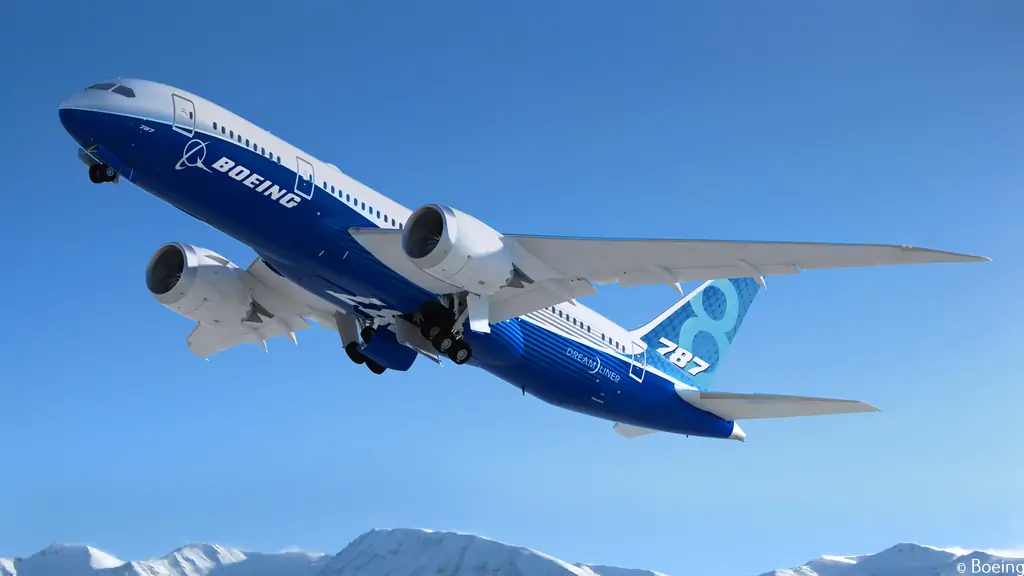
Boeing, among the world's leading aerospace companies, has announced a significant investment in India, signalling its commitment to supporting the country's aviation industry. The company has announced a whopping USD 100 million investment in infrastructure and pilot training programmes, aimed at addressing India's growing demand for skilled pilots. Over the next two decades, India is projected to require approximately 31,000 new pilots, and Boeing intends to play a pivotal role in meeting this demand.
The investment is a testament to India's emergence as a key player in the global aviation market, the company said. With a rapidly expanding middle class and increasing air travel demand, the Indian aviation sector has witnessed remarkable growth in recent years. Boeing's decision to invest in India not only underscores the company's confidence in the country's potential but also reflects its strategic vision to tap into this lucrative market, it added.
As part of its investment, Boeing has completed the construction of a state-of-the-art C-17 aftermarket support facility for maintenance, repair, and overhaul (MRO) services. This facility will enhance the company's ability to provide support to the Indian Air Force's fleet of C-17 aircraft. In addition, Boeing has also established a new parts logistics centre in India, which will facilitate efficient supply chain management and delivery of critical components.
Biden on Air India Order
During Thursday, June 22’s joint address at the White House, Prime Minister Narendra Modi and US President Joe Biden said Air India's agreement with Boeing to acquire over 200 American-made aircraft further strengthens the bond between the two nations. This deal not only benefits India's civil aviation sector but also has significant implications for the American economy. The purchase of these aircraft is estimated to support more than one million jobs across 44 states in the United States. It highlights the mutually beneficial nature of the partnership between Boeing and India, contributing to the modernisation and growth of both countries' aviation industries, Biden said.
US President Joe Biden hailed a "historic agreement" for Air India to purchase 220 Boeing airplanes with a list price of $34 billion. The order includes 190 737 MAXs, 20 787s, and 10 777Xs. Air India has options for an additional 50 737 MAXs and 20 787s. "This purchase will support over one million American jobs across 44 states, and many will not require a four-year college degree," Biden said in a statement.
Boeing in India
The collaboration between Boeing and India is not new. Over the years, Boeing has been actively involved in various initiatives and partnerships in the country. The company has established strong ties with Indian aviation stakeholders, including airlines, government bodies, and educational institutions. These collaborations have focused on initiatives such as pilot training programs, aerospace research and development, and technology transfer, all aimed at fostering the growth of the Indian aviation ecosystem.
Boeing's investment in India aligns with the broader vision of the Indian government to transform the country into a global aviation hub. With the implementation of progressive policies, infrastructure development, and emphasis on skill development, India is striving to create an enabling environment for the aviation industry to thrive.
Boeing has acquired a third of new aircraft orders from India in the past 18 months, per data compiled by UK-based analytics firm Circium. Its market share fell by over 50% in the past decade standing at 23% by the end of 2022. Boeing in India operates with the C17 cargo aircraft, the P8 anti-submarine warfare aircraft, the Apache attack helicopter, and the Chinook transport helicopter. There is also the entire narrow-body and wide-bodied head-of-state fleet with Boeing 737, 777 and 787.
Read next

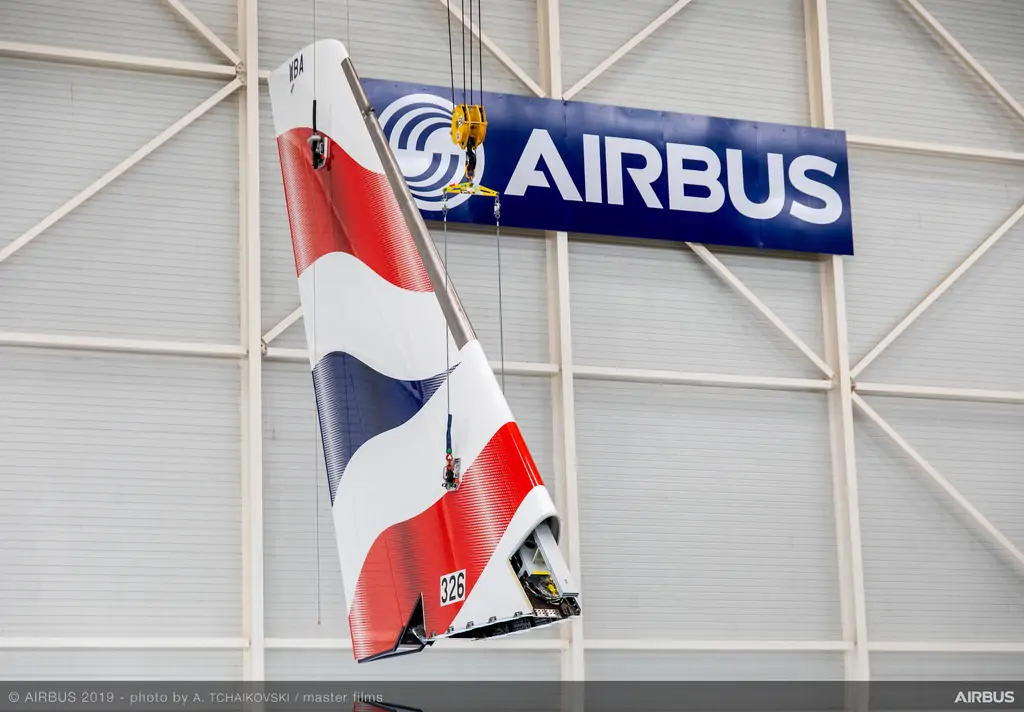
The aerospace industry has experienced a surge in demand due to increased air travel, advancements in technology, and emerging markets. To keep pace with this demand and maintain their competitive edge, aerospace manufacturers such as Airbus are actively expanding their operations.
Airbus' Ambitious Expansion Plan
As a prominent player in the aerospace sector, Airbus has consistently demonstrated its commitment to innovation and customer satisfaction. With its ambitious expansion plan, the company aims to address the industry's growing demands while maintaining its high standards of quality and safety. The creation of 13,000 new positions is a testament to Airbus' dedication to delivering cutting-edge aircraft and services to its global clientele. Planemakers and aerospace suppliers are grappling with labor shortages ranging from engineers to machine shop personnel, which is impeding ambitions to scale up aircraft manufacturing in order to meet growing travel demand.
Strategies to Fill the 13,000 New Positions
Airbus has implemented a comprehensive strategy to fill the 13,000 new positions effectively. This strategy involves a multi-faceted approach that includes attracting top talent, investing in employee training and development, and leveraging partnerships to ensure a diverse and highly skilled workforce. By adopting these strategies, Airbus can secure the human resources needed to support its growth plans and maintain its position as an industry leader. Airbus stated that it has filled almost 7,000 positions thus far. "It's remarkable because when you have nearly one-third of your resources joining the company that represent the future, you can think about the future differently," said Thierry Baril, Airbus' chief human resources officer, during the Paris Airshow.
Nurturing Talent: Airbus' Focus on Recruitment and Training
To attract highly skilled professionals, Airbus places great emphasis on recruitment. The company actively seeks out individuals with diverse backgrounds and expertise, aiming to create a workforce that brings together unique perspectives and experiences. Additionally, Airbus provides comprehensive training programs to equip its employees with the necessary skills and knowledge to excel in their respective roles. By fostering a culture of continuous learning and development, Airbus ensures its workforce remains adaptive and capable of meeting evolving industry demands.
The Importance of Diversity and Inclusion in Airbus' Workforce
Recognizing the value of diversity and inclusion, Airbus strives to create an inclusive work environment that fosters innovation and creativity. By embracing individuals from different cultures, backgrounds, and perspectives, the company encourages collaboration and generates a wide range of ideas. Airbus believes that a diverse workforce strengthens its ability to deliver innovative solutions that meet the needs of an increasingly globalized market.
Ensuring Employee Well-being and Engagement
Airbus understands the importance of employee well-being and engagement in achieving operational excellence. The company prioritizes the health, safety, and work-life balance of its employees by offering competitive benefit packages and promoting a positive work environment. By valuing its workforce and providing opportunities for growth and advancement, Airbus cultivates a motivated and engaged team that is dedicated to delivering exceptional results.
Collaboration and Partnerships: Key Factors for Success
Airbus recognizes that collaboration and partnerships play a vital role in meeting customer demands and driving innovation. The company actively engages with suppliers, customers, and industry stakeholders to foster mutually beneficial relationships. By collaborating with external entities and leveraging shared expertise, Airbus can optimize its operations, streamline processes, and stay at the forefront of technological advancements in the aerospace industry.
Technological Advancements and the Future of Aerospace Manufacturing
In an era of rapid technological advancements, Airbus embraces innovation to enhance its manufacturing processes and deliver state-of-the-art aircraft. The company invests heavily in research and development, exploring cutting-edge technologies such as artificial intelligence, automation, and sustainable manufacturing practices. By embracing these advancements, Airbus aims to enhance productivity, reduce environmental impact, and shape the future of aerospace manufacturing.
Conclusion
Airbus' proactive approach to filling over half of the 13,000 new positions it plans to create in 2023 demonstrates its commitment to meeting the growing demands in the aerospace industry. Through strategic recruitment, employee development, and fostering collaboration, Airbus aims to maintain its position as a global leader in aviation. By embracing diversity, prioritizing employee well-being, and leveraging technological advancements, the company is poised to deliver innovative solutions that shape the future of aerospace manufacturing.
With Inputs from Reuters
Read next

As concerns regarding climate change and environmental impact continue to grow, the aviation industry has been actively seeking innovative solutions to reduce its carbon footprint. Sustainable flight represents a significant leap forward in this endeavor, aiming to develop aircraft that are environmentally friendly while maintaining optimal performance.
The X-66A's Inception
The X-66A, also known as the Sustainable Flight Demonstrator (SFD), born out of a collaboration between Boeing and NASA, is a pioneering project in the realm of sustainable flight. It serves as a research platform for testing and assessing various technologies aimed at achieving greater fuel efficiency and emissions reduction. By heavily modifying the MD-90 aircraft, the team can explore new possibilities and push the boundaries of aviation.
The Collaborative Effort: Boeing and NASA's Partnership
The partnership between Boeing and NASA brings together the expertise of two industry giants in aerospace engineering. By pooling their resources and knowledge, they strive to develop game-changing innovations that will shape the future of aviation. The joint effort allows for efficient utilization of research capabilities and accelerates progress towards sustainable flight.
CFM International's RISE Engine: An Engineering Marvel
CFM International, a renowned pioneer in the field of aviation propulsion, has been chosen to provide the power for the X-66A. With a rich history of developing high-performance engines, CFM International brings its expertise to the table, ensuring that the X-66A is equipped with a cutting-edge propulsion system.
Key Features and Innovations of the X-66A
The X-66A showcases several key features and innovations that make it a true pioneer in sustainable flight. Some notable aspects include:
Aerodynamic Enhancements: The X-66A boasts a streamlined design, optimizing its efficiency and reducing drag.
Lightweight Construction: Advanced materials, such as carbon composites, are utilized to reduce the weight of the aircraft, resulting in improved fuel efficiency.
Electric Propulsion: The X-66A integrates electric propulsion technologies to further enhance efficiency and reduce environmental impact.
Advanced Avionics: Cutting-edge avionics systems enable precise control and monitoring of the aircraft's performance, contributing to optimal efficiency.
Advantages of the Sustainable Flight Demonstrator
The Sustainable Flight Demonstrator offers numerous advantages that pave the way for a more sustainable aviation industry:
Environmental Impact Reduction: By leveraging advanced technologies, the X-66A aims to significantly reduce carbon emissions and noise pollution, minimizing its ecological footprint.
Fuel Efficiency: The innovations incorporated into the X-66A result in improved fuel efficiency, leading to reduced operational costs and resource consumption.
Technological Progress: The development of the X-66A drives the advancement of sustainable aviation technologies, fostering innovation throughout the industry.
Overcoming Challenges: Navigating the Path to Sustainable Flight
While the X-66A represents a major step forward in sustainable flight, several challenges need to be overcome. These include the development of reliable energy storage systems, addressing regulatory hurdles, and ensuring the scalability and affordability of sustainable technologies. However, with concerted efforts from industry stakeholders and ongoing research and development, these challenges can be tackled to bring sustainable flight closer to reality.
The Future of Aviation: Implications of the X-66A and RISE Engine
The X-66A and CFM International's RISE engine have far-reaching implications for the future of aviation. As the industry transitions towards sustainable practices, the technologies and insights gained from the X-66A project will inform the development of next-generation aircraft. With a focus on fuel efficiency, reduced emissions, and improved performance, the aviation sector is poised for a greener and more sustainable future.
Conclusion
The X-66A, a collaborative endeavor between Boeing and NASA powered by CFM International's RISE engine, represents a monumental step towards sustainable flight. This visionary aircraft showcases cutting-edge technologies and innovations that have the potential to revolutionize the aviation industry. By prioritizing fuel efficiency, emissions reduction, and technological advancements, the X-66A sets the stage for a more sustainable and environmentally conscious future of flight.
With Inputs from AeroTime, The Air Current
Comment