

Airbus Helicopters is adding two new variants to its H125 family of helicopters. The company on 24 April said it would introduce militarised attack and utility configurations of the H125 single-engined civil helicopter. “The new offerings complement the extensive line of military helicopters already produced by Airbus, including the H125M,” Airbus says.
The armed variant will be designated the AH-125 Ares, while the utility variant will be known as the MH-125 Ares. Scott Tumpak, vice president of military sales for Airbus’s defence business in the USA, says the new types represent the “latest evolution” of the H125 line. “The AH-125 and MH-125 Ares helicopters will offer the capability, reliability and flexibility needed by America’s allies and partners as they perform an array of rotary-wing missions, ranging from light attack to disaster response and other para-public missions,” he says.
Airbus says the rotorcraft will also be able to perform air assault, search and rescue and casualty evacuation missions. Both Ares variants will be produced at the current Airbus H125 assembly plant in Columbus, Mississippi. Airbus does not yet have any orders for the new militarised airframes, but Tumpak says the company sees the AH-125 and MH-125 as filling an “open niche” in the market for military helicopters.
“There’s not a single-engine aircraft on the market that offers international users an easily reconfigurable and multi-mission capability,” Tumpak says.
Specifications of the New Variant
Airbus says the Ares can be “easily re-configured” for its various mission sets in under 30 minutes. Weapons installation, engineering and certification for the AH-125 will be overseen by Virginia-headquartered MAG Aerospace. Armaments available under the programme include a .50 calibre (12.7mm) machine gun, unguided rockets and precision weaponry. Despite plans to produce the Ares rotorcraft in the USA, Airbus says the US Department of Defense (DoD) will not be the focus for Ares sales.
“We don’t see any requirements with the US Army or with the DoD for this platform,” Tumpak says. “This is targeted for export, be that [foreign military sales] or direct sales of aircraft made in Mississippi.”
Globally, the H125 family accounts for almost 80% of the single-engine market and has the highest number of certified modifications (supplemental type certificates) available. With the new addition of a flexible weapons capability, the H125 helicopter will easily be re-configured between multiple mission sets in less than 30 minutes, ranging between light attack, air assault, search and rescue, casualty evacuation, and disaster response, as well as other combat and para-public operations.
MAG Aerospace will perform the weapons installation design, engineering, certification and manufacturing. The helicopter will accommodate a wide range of weapons such as a .50 cal (12.7 mm) gun and unguided rockets, and precision-guided weapons as a growth option. The installation allows for doors-on-flight throughout the mission.
“MAG Aerospace is thrilled to team with Airbus to combine our unique platform engineering and modification capabilities with the world-class leader in the single-engine helicopter market. It’s an honour to work with Airbus and expand our ability to serve our partners in the U.S. and worldwide,” said Matt Bartlett, President of MAG Aerospace.
The H125 is the world’s top-selling helicopter with a long history of use by U.S. law enforcement and government agencies. Currently, the H125 is the light enforcement helicopter used by U.S. Customs and Border Protection, with more than 100 H125 family aircraft in service, making the U.S. government the single largest customer and operator of the aircraft.
Airbus in the US
Airbus provides a range of reliable and versatile helicopters to the U.S. government and military, enabling them to perform various missions. More than 480 UH-72A and UH-72B Lakota helicopters have been delivered to the U.S. Army and National Guard since the program began in 2006. Airbus also supports the U.S. Coast Guard’s fleet of nearly 100 MH-65 helicopters, which play a critical role in the USCG’s homeland security, drug interdiction and lifesaving missions.
The US Army is currently developing its next-generation aircraft under the Future Vertical Lift initiative. The Bell V-280 Valor tiltrotor was recently confirmed as the final choice for the service’s future troop carrier and utility lift type, eventually replacing the Sikorsky UH-60 Black Hawk. Bell and Sikorsky are still in competition for a separate design, known as the Future Attack Reconnaissance Aircraft.
About H125
The Eurocopter AS350 Écureuil (or Squirrel), now Airbus Helicopters H125, is a single-engine light utility helicopter originally designed and manufactured in France by Aérospatiale and Eurocopter (now Airbus Helicopters). In North America, the AS350 is marketed as the AStar. The AS355 Ecureuil 2 is a twin-engine variant, marketed in North America as the TwinStar. The Eurocopter EC130 is a derivative of the AS350 airframe and is considered by the manufacturer to be part of the Écureuil single-engine family. The AS350 is in service around the world and operated by private individuals, airline and charter operators, emergency medical teams, governments and law enforcement agencies.
The H125 has broken world records throughout its career. In 2005, the AS350 B3 broke the world record for the highest-altitude landing and takeoff, performed on Mount Everest at 8,848 metres (29,029 feet) – a title still held today. In May 2013, the AS350 B3 performed the world's highest long-line rescue operation on Lhotse, the world's fourth-highest mountain, located in the Himalayas, at 7,800 metres (25,590 feet).
The H125 is equipped with a Safran Helicopter Engines Arriel 2D turboshaft engine with a dual-channel full authority digital engine control (FADEC) unit, plus a third independent and automatic back-up channel and an automatic start-up. The engine is fitted with an engine data recorder.

Read next
Boeing Detects Issues With 737 Max Aircraft; Can Impact Air India & Akasa Air Deliveries
Radhika Bansal
25 Apr 2023

One of the biggest manufacturers of commercial aircraft, Boeing, has detected issues with the manufacturing of 737 Max planes, the most used aircraft in Indian skies, CNBC-TV18 reported on April 24.
The issues are likely to hit the fleet expansion of Air India, Akasa Air, which placed a major order with Boeing recently, CNBC TV-18 added citing sources. The orders also include 190 737 MAX aircraft for Air India, which is part of its mega-deal for 470 aircraft from Boeing and Airbus at about $70 billion.
Following the development, Boeing told CNBC-TV 18 to “expect lower near-term 737 MAX deliveries due to manufacturing issues. We are in contact with customers concerning their delivery schedule.” Elaborating on the issue, Boeing also stated that a supplier used non-conforming fittings in the Aft Fuselage Section which was detected in the aircraft.
Detected Problem
Original equipment manufacturers (OEMs) operate with the support of several external vendors. They ask these vendors to supply the required parts in accordance with the set standards. Some vendors fail to comply with these standards and supply parts that do not meet the OEM's requirements. Therefore, the faulty parts need to be changed to ensure the aircraft’s safety and airworthiness.
However, Boeing has clarified that the planes already in service will not have an impact since this is not an immediate flight safety issue, the report added. Regardless, the planes still in the production line or inventory will be replaced. Hence, Boeing may have to reschedule its delivery arrangements.
“This is not an immediate safety of flight issue and the in-service fleet can continue operating safely. However, the issue will likely affect a significant number of undelivered 737 Max airplanes, both in production and in storage,” a Boeing spokesperson said.
The supplier, Spirit AeroSystems, notified Boeing about the non-standard manufacturing process used during the installation process pertaining to 737-7, 737-8, 737-8-200 and P-8 model airplanes, creating the potential for a non-conformance to required specifications.
In February, Air India announced provisional deals for 220 aircraft from Boeing and 250 aircraft from Airbus. The order will be funded with a combination of resources including internal cash flow, shareholder equity and sale-and-leaseback of aircraft. At that time, CEO Campbell Wilson had said, “We have committed to a historic order of new aircraft that will start entering the fleet from the end of this year through the end of the decade, to both transform the fleet and power significant network and capacity expansion.”
Akasa Air also has a pending order of around 72 737 Max aircraft with the company. The new airline was planning to purchase more aircraft as part of its fleet expansion plans, but the discovery by Boeing has made the situation uncertain for the airline. The Mumbai-based airline was expecting deliveries of 12-16 aircraft per year from next year as part of the total 72 units of the 737 Max aircraft order it placed earlier. It has a total of 19 aircraft in its fleet as of today.
Ramp up Production of 737 Max
Last week, Boeing CEO Dave Calhoun said that the production ramp-up plans of the 737 remain unchanged for the year despite the manufacturing problems the company is facing. The manufacturer was forced to cut production following two plane crashes in 2018 and 2019 that killed 346 people.
He further added that the long-term guidance for 2025-26, which calls for production to be upped to 50 737 Max aircraft per month, remains unchanged. The company is planning to ramp up production to 38 jets per month by June before hitting 42 per month by January 2024 and 52 a month by January 2025.
The issues in Boeing 737 Max assume significance as in 2019, the aircraft had two fatal crashes in Ethiopia and Indonesia killing more than 346 people. The aircraft was grounded for around 20 months after that and the subsequent pandemic led to huge losses for the company. Federal investigations showed that the problem was caused by a faulty stall-prevention system known as MCAS, and the MAX was cleared to resume flights in late 2020.
Read next

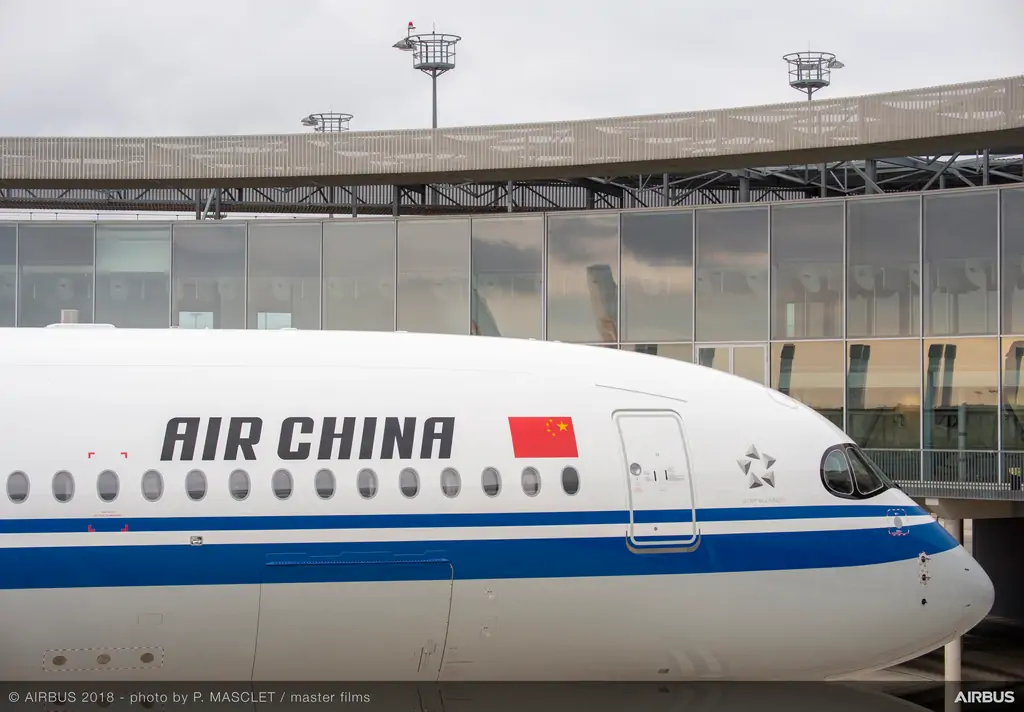
Air China, the People's Republic of China's flag carrier airline, recently claimed that 2023 will be a "turning point for recovery" in the aviation sector. In addition, the corporation indicated that it intends to "mitigate" domestic competition while seeking to extend its worldwide reach.
Background of the Airline
With a fleet of over 400 aircraft and a network of more than 200 domestic and international destinations, Air China is a key participant in the aviation sector. In recent years, the airline has experienced several obstacles, including rising rivalry from other Chinese carriers and the impact of the COVID-19 epidemic on worldwide travel demand. Air China, on the other hand, is bullish about the future, seeing 2023 as a "turning point for recovery" in the aviation sector. The airline has big intentions to extend its worldwide network, with a special emphasis on new lines to Europe and North America.
Present Situation
Air China believes domestic airline competition "will be mitigated" in the immediate future, following a harsh year in which travel demand fell under the weight of China's now-scrapped 'zero-COVID' restrictions. Air China adds in the remarks accompanying its annual report that Chinese airlines are "proactively" modifying fleet sizes, with total fleet expansion slower in 2022 than in 2021. "The slowdown in fleet size growth... is conducive to alleviating the operating pressure arising from overall excess capacity in the short term and competition in the industry during the recovery and growth period," the airline says. Air China, along with its state-owned counterparts, China Eastern Airlines and China Southern Airlines, suffered full-year losses as a result of the country's zero-infection policies. The Star Alliance carrier performed the poorest of the 'Big Three,' incurring an operational deficit of CNY 35.4 billion ($5.1 billion) for the fiscal year ending December 31, 2022. This compares to a loss of CNY 16.9 billion in 2021. Revenue fell 28% year on year to CNY56.3 billion, with passenger revenue suffering the greatest drop. Full-year traffic at the Star Alliance airline fell 42%, with passenger numbers decreasing 44%. " China's civil aviation industry will embrace a turning point for recovery in 2023. " As a result, business travel and vacation trips will continue to be growth drivers for the aviation sector, and air travel demand will become more diversified, tailored, and popular," it says.
Air China's International Expansion Plans
Air China will face a number of hurdles in order to reach this aim, including greater competition from other airlines and the need to adapt to changing customer tastes and travel patterns. In addition, the corporation is aggressively investing in technology and digital infrastructure in order to improve the passenger experience and operational efficiency. Air China is seeking to lessen domestic competition from other Chinese carriers in addition to focusing on worldwide expansion. This will include a variety of initiatives, including optimising its domestic route network and developing new products and services to match the demands of Chinese consumers.
Recovering from the COVID-19 Pandemic
The COVID-19 epidemic has had a huge influence on the aviation sector, with many airlines fighting to survive as demand has decreased and expenses have risen. Air China is not immune to these issues, but the airline is adopting a proactive approach to recovery, using a variety of initiatives to protect passenger safety and rebuild customer confidence. Improved cleaning and disinfection processes, the development of innovative technologies to prevent interaction between passengers and employees, and the introduction of flexible booking policies to give clients more peace of mind are among these efforts.
Conclusion
Looking ahead, Air China is ideally positioned to capitalise on China's and the world's expanding demand for air travel. The corporation is primed for success in the next few years, thanks to its focus on worldwide development, attempts to reduce local competition, and proactive strategy for recovery from the COVID-19 epidemic. Finally, Air China's future goals show the company's ambition and vision for long-term growth and success. Despite growing competition and the COVID-19 epidemic, Air China is dedicated to providing a world-class passenger experience and extending its worldwide network. As a result, 2023 might be a watershed moment in the aviation sector, with Air China well positioned to lead the charge.
With Inputs from FlightGlobal
Read next
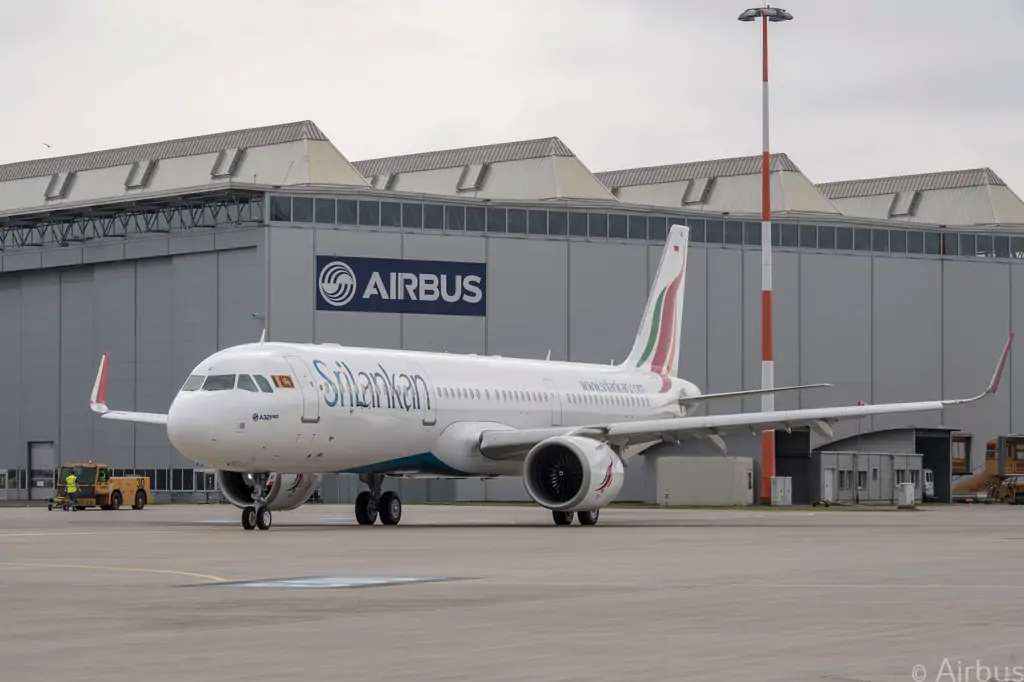
SriLankan Airlines, one of South Asia's main airlines, has been servicing customers for more than four decades. The airline operates internal and international flights to locations in Asia, Europe, and the Middle East with a fleet of around 20 aircraft. The airline, however, is presently facing a huge issue in the form of an engine shortage that is impacting its narrowbody fleet.
What is the source of the engine shortage
SriLankan Airlines' engine scarcity is the consequence of numerous problems, including global supply chain challenges and the impact of COVID-19 on the aviation sector. There has been an increase in demand for aircraft engines in recent years, notably in the narrowbody market sector. However, engine supply has been unable to keep up with demand, resulting in delays and backlogs in the construction and delivery of new engines. The COVID-19 outbreak further exacerbated the problem by disrupting the whole aviation sector and supply chain. Because of the drop in demand for air travel, several airlines have cancelled or delayed orders for new aircraft and engines. As a result, engine manufacturers' production plans and priorities have had to be adjusted, resulting in additional delays and shortages. The engine shortage has impacted SriLankan Airlines' narrowbody fleet, which comprises Airbus A320 and A321 aircraft. These planes fly short and medium-distance routes to locations in South Asia, Southeast Asia, and the Middle East. Because of the engine scarcity, the airline has had to ground some of its aircraft, reduce flying capacity and frequency, and change flight schedules and itineraries.
Current Scenario
SriLankan Airlines (UL, Colombo International) has refuted reports that financial difficulties prompted them to halt planes, calling such assertions "misleading." The airline claims that the large number of planes sitting on the ground is due to a worldwide scarcity of engines for narrowbody Airbus aircraft and significant repair wait times. Three narrowbody Airbus were grounded two months ago owing to CFM International engine supply concerns. Those planes are still grounded, and Colombo-based media are claiming that two more are not flying.
In February, one A321-200N registered as 4R-ANF (msn 8106), one A320-200N registered as 4R-ANA (msn 7486), and one A321-200 registered as 4R-ABQ (msn 3397) were verified to be grounded. According to Colombo's Daily Mirror, two A321-200Ns, 4R-AND (msn 7697) and 4R-ANE (msn 7891), are presently grounded. A second A320-200N registered as 4R-ANB (msn 7535) is likewise out of service, according to Ch-aviation fleets advanced data. These seven jets, all powered by LEAP-1A32 engines, account for about half of SriLankan Airlines' narrowbody fleet, with just one A321neo and five A320-200s remaining flying. Furthermore, one A330-200 and one A330-300 are designated as inactive.
According to an unidentified source, the groundings were caused by a shortage of cash, which prevented regular engine maintenance. However, according to SriLankan Airlines, this is untrue. "The aircraft are grounded due to a global shortage, not a lack of funds, as incorrectly stated in some news reports," according to a statement. "The Airbus A320N family aircraft are currently awaiting engines following shop visits as the global industry faces a shortage of engines and long lead times for engine repairs for this type of aircraft due to a technical reliability issue." SriLankan Airlines is now collaborating with its suppliers to find a solution, and the worldwide supply of engines is likely to increase in the next few months."
SriLankan Airlines' Impact of Engine Shortage
The engine scarcity has had a substantial influence on the operations of SriLankan Airlines, generating interruptions and financial losses. Due to limited aircraft capacity and frequency, the airline has had to cancel and postpone several flights, causing passengers annoyance and aggravation. The airline has also had to change its flight schedules and itineraries, affecting its competitiveness and market share. Furthermore, the engine scarcity has raised the airline's maintenance and operational expenses. The airline has resorted to leasing engines from other airlines or engine leasing businesses, which is an expensive and short-term option. Additionally, the airline has had to incur additional costs for rerouting and accommodating passengers affected by aircraft cancellations and delays.
The Future of SriLankan Airlines
SriLankan Airlines has been looking for other alternatives and sources to alleviate the engine shortage. The airline has been looking into leasing or acquiring engines from other sources, as well as collaborating with engine manufacturers to hasten the delivery of new engines. The airline has also changed its flight schedules and itineraries, focusing on high-demand routes while cutting flights on low-demand routes. In the future, SriLankan Airlines intends to expand and enhance its fleet, including the purchase of additional narrowbody and widebody aircraft. The airline has been in discussions with aircraft manufacturers and leasing businesses to investigate possible fleet renewal and growth alternatives. These strategies seek to boost the airline's competitiveness and market share, as well as operational efficiency and profitability. The government and stakeholders are also important in alleviating SriLankan Airlines' engine shortage. The government can give help and incentives to the airline, such as tax breaks and financial aid. The government should also collaborate with other stakeholders, such as engine manufacturers and airlines, to address global supply chain concerns and assure engine availability for SriLankan Airlines and other airlines.
Conclusion
To summarise, SriLankan Airlines' engine scarcity dilemma is a complicated issue that necessitates a multifaceted solution. Management and stakeholders at the airline must collaborate to discover alternative solutions and suppliers, as well as prepare for future fleet expansion and upgrades. While the current situation is difficult for the airline and its passengers, it is critical to stay positive and proactive in pursuing answers. SriLankan Airlines can overcome this difficulty and continue to give exceptional service to its customers with the correct tactics and assistance.
With Inputs from Ch-Aviation
Read next
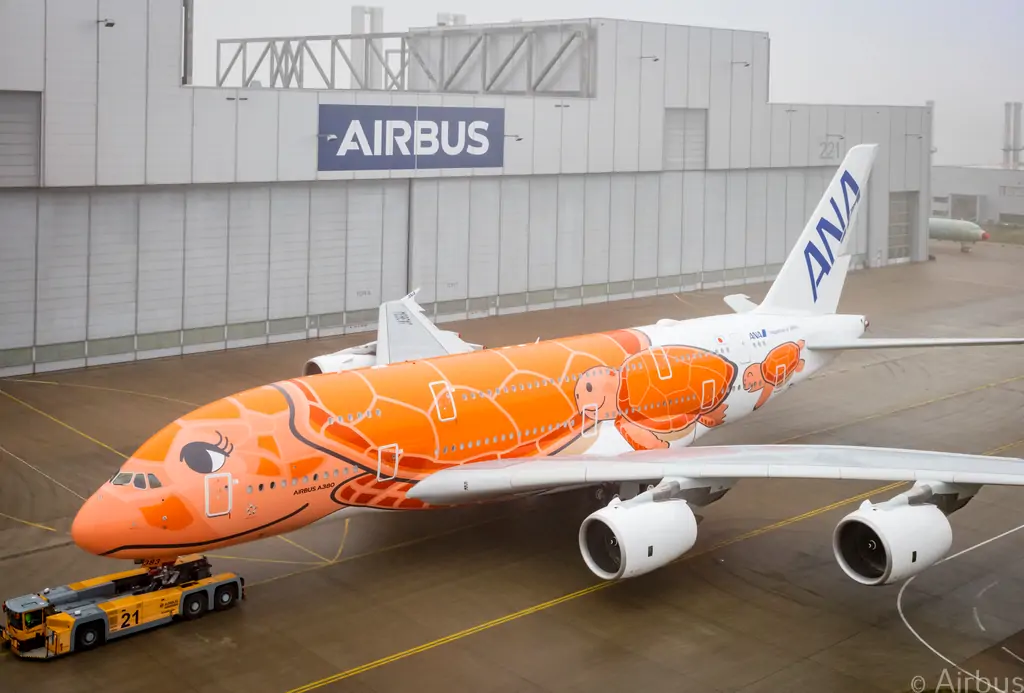
All Nippon Airways (ANA) of Japan has improved its profit forecast for the fiscal year ending March 2022 and revealed its flight schedule for fiscal year 2023. This follows the airline's announcement that it will return to profitability in the first quarter of the current fiscal year, which ends in June 2021. The COVID-19 epidemic has had a significant impact on ANA, one of Japan's leading airlines. The airline's recent moves are encouraging for the sector and for travellers planning trips to Japan in the future.
Present Situation
With its fiscal year 2022 closing on March 31st, Japan's All Nippon Airways has switched its attention to fiscal year 2023, but not before increasing its profit prediction for fiscal year 2022. The airline today revised its FY2023 Flight Schedule, which runs from May 1st to October 28th, 2023. On Friday, parent firm ANA Holdings Inc. notified the market that its profit target for FY2022 had been increased. In the interest of full transparency, ANA Holdings has amended the revision it published on February 2nd, which was a revision of an earlier modification made on October 31st, 2022.
Profit
Notwithstanding the revisions, ANA Holdings currently predicts an operating profit of 120 billion yen ($897 million) for the fiscal year ending March 31, 2023. This is an increase from the February forecast of 95 billion yen ($710 million), and an increase over the October 2022 projection of 65 billion yen ($486 million). To summarise, ANA Holdings has increased its operational profit expectation from 65 billion yen to 120 billion yen ($486-$897 million) in five months, indicating how well it is performing now that travel restrictions in Asia have been abolished. According to the airline, foreign passenger revenues increased significantly in the fourth quarter due to increased demand for business and inward travel to Japan. Ordinary income is expected to be 110 billion yen ($822 million) in FY2022, with income attributable to parent owners expected to be 89 billion yen ($665 million), compared to losses of 185 billion yen ($1.38 billion) and 144 billion yen ($1.07 billion) in FY2021. It's interesting that ANA revealed these statistics last Friday when it's supposed to release its official full-year results on Thursday, but it might be a market disclosure obligation in Japan.
In a mid-term plan released in February, ANA stated that it anticipates operating profit to reach 200 billion yen in fiscal 2025. In fiscal 2025, the airline's fleet will increase to near pre-pandemic levels of 295 and will exceed that level in fiscal 2030.
Measures to Reduce Costs: To save money, ANA said in 2020 that it will decrease its staff by 3,500 personnel, slash CEO compensation, and postpone the delivery of new aircraft. These efforts have reduced operational expenditures, which has contributed to an increase in profit expectations.
Fuel price reduction: The decrease in gasoline prices has also contributed to ANA's increased profit predictions. The epidemic has reduced demand for oil, which has resulted in lower prices. Because airlines use a lot of fuel, lower fuel prices translate into cheaper operational expenses.
Increase in Domestic Flight Passenger Demand: Finally, ANA's enhanced profit projections are owing to increasing demand for domestic flights. With travel restrictions in place, many Japanese citizens prefer to go within Japan rather than abroad. ANA has responded by increasing the number of domestic flights and destinations available, resulting in increased income.
Updates to the FY2023 timetable
In addition to the revised profit forecasts, ANA announced its flying schedule for fiscal year 2023. There are 153 new routes in the calendar, with new destinations in Europe, North America, and Asia. ANA intends to boost foreign flights by 15% over fiscal year 2022. The airline also intends to expand its fleet by ten aircraft, increasing its overall fleet size to 261. This growth is good news for the airline sector and for travellers planning to visit Japan in the future years.
- ANA will also enhance frequency on the Tokyo Narita - Shanghai Pudong route to seven weekly roundtrips beginning May 1st. Along with the flights from Tokyo Haneda, there will be three roundtrips each day from the Tokyo metropolitan region to Shanghai (Pudong and Hongqiao).
- After being stopped since March 2020, the Kansai - Shanghai Pudong route will reopen on June 5th with three roundtrips weekly.
- The Tokyo Narita - Guangzhou route will have daily roundtrip service beginning May 1st, while the Haneda - Shenzhen route will have daily roundtrip service beginning May 20th.
There are also updates on seven routes from Japan to China, four of which have increased frequency, two of which have new or restored services, and one has been discontinued. The impacted routes with enhanced frequency include those from Tokyo Narita to Dalian, Shanghai, Guangzhou, and Beijing, with the Kansai - Shanghai and Haneda - Shenzhen routes beginning. The Tokyo Narita - Shenzhen route is losing two weekly roundtrips. Outside of Mainland China, ANA will increase its weekly flights from Tokyo Narita to Hong Kong International Airport from three to seven on July 1st. There are also adjustments to the Tokyo Haneda - Munich Airport route, which will expand from three to four weekly flights beginning June 6th. This route will now depart Haneda on Tuesdays, Thursdays, Fridays, and Sundays and return the next day.
New Routes to North America: In the United States, ANA intends to establish new routes to San Jose, California, and Washington Dulles International Airport. Flights to Los Angeles, Chicago, and New York will also be increased in frequency.
New European Routes: ANA intends to open new routes to Milan, Italy, and Moscow, Russia. Additionally, the airline will boost the frequency of its flights to London and Frankfurt.
New Asian Routes: ANA intends to open new flights to Bangkok, Thailand, and Mumbai, India. Flights to Singapore, Jakarta, and Taipei will also be increased in frequency.
Fleet Expansion:ANA aims to add 20 new aircraft to its fleet, including the Airbus A320neo and the Boeing 787-9 Dreamliner. The airline will also retire 16 older planes, including the Boeing 777-200 and 737-700.
ANA's Response to COVID-19
ANA, like many other airlines, has had to adjust to the COVID-19 pandemic's obstacles. The airline has taken many precautions to guarantee the safety of its customers and employees, including obligatory mask use, improved cleaning and sanitization, and the use of onboard air purifiers. For travellers who need to adjust their travel plans because to the pandemic, ANA also provides flexible booking choices.
What Does This Mean for the Aviation Industry
The airline sector will benefit from ANA's increased profit forecasts and extended schedule for FY2023. The epidemic has taken a heavy toll on the sector, and many airlines are fighting to stay viable. The success of ANA suggests that the sector may be on the mend. However, the sector still confronts other hurdles, including the unknown future of the epidemic, travel restrictions, and a drop in worldwide demand. It remains to be seen how the sector will react to these issues and whether it will be able to fully recover.
Conclusion
ANA's recent moves, including increased profit forecasts and the publishing of its flight schedule for fiscal year 2023, are encouraging for the airline sector and travellers planning to visit Japan in the future years. The airline's better financial performance and development ambitions demonstrate the industry's resilience and the possibilities for recovery in the post-pandemic world. In the next year, travellers can expect more destinations and expanded flights from ANA, as well as assurances of the airline's dedication to safety in these difficult times.
With Inputs from Reuters
Read next

Flights from Berlin airport were cancelled on Monday owing to a strike. The airport personnel union organized the walkout in response to delayed discussions over wages and working conditions. The walkout is anticipated to last all week, creating major disruption for travellers.
Background Details
Berlin Airport (BER), commonly known as Berlin Brandenburg Airport (BER), is located near Schönefeld and is one of Germany's busiest airports. Several airlines, notably Lufthansa, Eurowings, and EasyJet, use the airport as a hub. The airport has faced multiple delays and setbacks, including construction obstacles and budgetary difficulties, and will not open to the public until 2020.
The Lockout
The Verdi union, which represents thousands of airport workers, including luggage handlers, security staff, and ground crew, called the strike. The union is asking for a 9.8% wage rise and better working conditions for its members. The union and the airport administration have been negotiating for several months but have yet to reach an agreement.
Present Situation
Employees at Berlin and Hamburg airports walked out on Monday in a protracted dispute over pay rises, causing flight disruptions in both cities.
Employees at the aviation security, passenger check, and personnel and goods control departments at Berlin's BER airport went on strike on Monday. Because passengers cannot be screened and subsequently permitted into the security area without these staff, all passenger aircraft departures had to be cancelled.
Over the weekend, German government officials and labor unions agreed on a wage agreement for more than 2.5 million public-sector workers, putting an end to a protracted dispute and averting potentially disruptive all-out strikes. However, airport personnel were not included in that arrangement.
The Effect on Travellers
Travellers have been significantly impacted by the strike, with all departures from the airport cancelled on Monday. Passengers have been urged not to arrive at the airport and to contact their airlines for additional information on rebooking or refund alternatives. The strike is anticipated to last the entire week, resulting in further cancellations and delays.
Alternative Modes of Transportation:
Conclusion
The airport strike in Berlin has created severe hardship for travellers, with all departures cancelled on Monday. The strike is likely to last the entire week, and travellers have been encouraged to seek alternate transportation. The airport administration and the union are still negotiating, and it is uncertain when an agreement will be reached.
With Inputs from AP
Comment