
Air India & Vistara Announces Interline Partnership To Ease Travel Journey

Radhika Bansal
03 May 2023
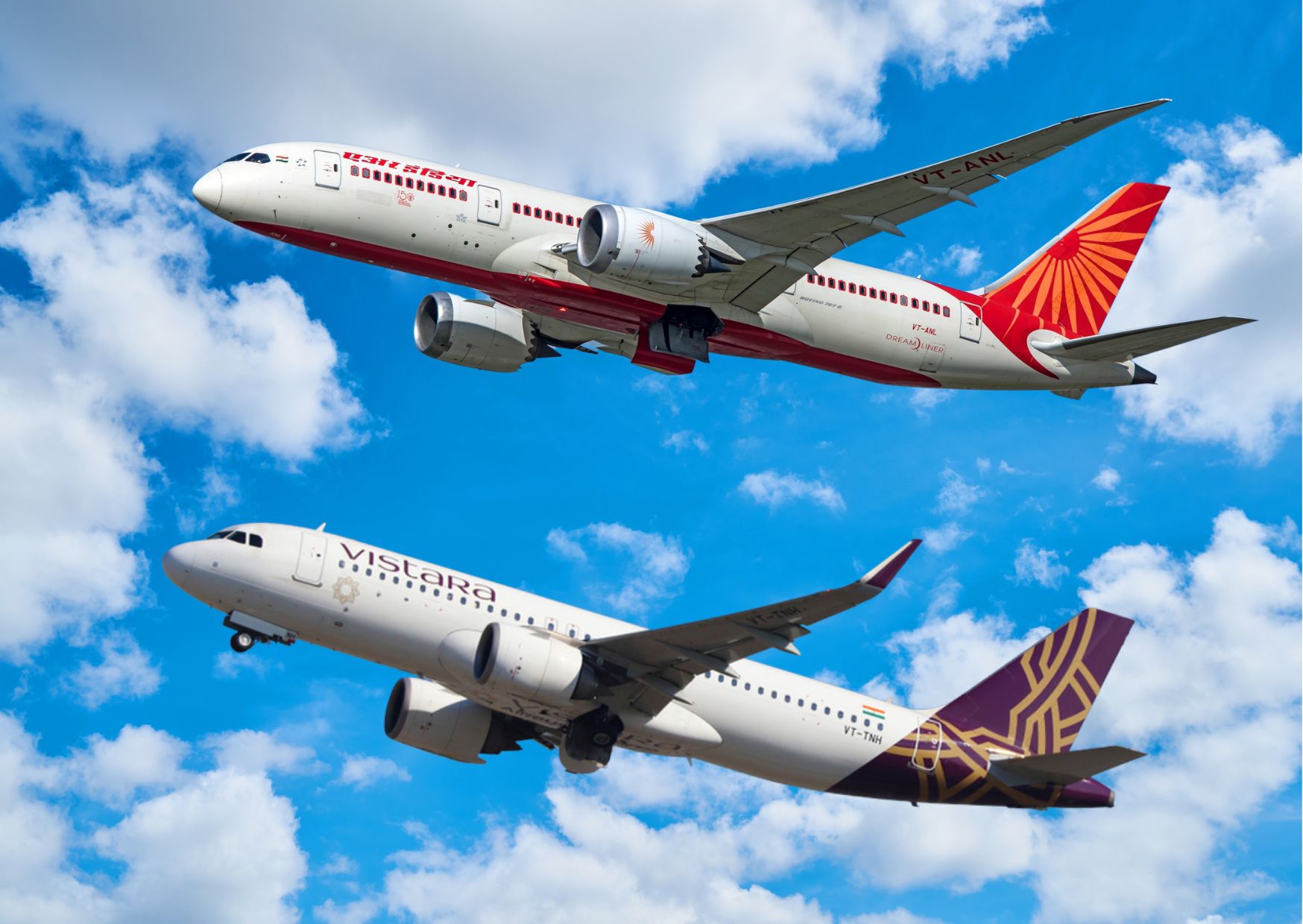
Air India and Vistara customers can now get their boarding passes at the first point of departure for all the travel sectors on a single ticket, and have their baggage checked in through to their final destinations. Tata-owned Air India and Vistara, a joint venture between the Indian conglomerate and Singapore Airlines, have signed an interline agreement that is used to handle passengers or baggage between two or more airlines.
This is primarily used to handle passengers and baggage travelling to destinations with multiple stops. The scope of the agreement between the two airlines includes Inter Airline Through Check-in (IATCI) implementation. Air India and Vistara operate at the same terminals at most major airports in India, adding to the ease of the on-ground travel experience for customers with interline itineraries.
Air India and Vistara have also implemented ‘Interline Considerations on Irregular Operations (IROPs)’ or the ‘disruption transfer’ functionality. This enables the two airlines to seamlessly transfer passengers to one another’s first available alternative flights in case of operational disruptions such as delays, cancellations, diversions, etc. and minimise any inconvenience to their guests, Air India said in a statement.
Last year, both carriers entered into an Interline Considerations on Irregular Operations (IROPs) agreement which enabled them to transfer domestic and international passengers to each other in case of a disruption in flight operations involving either airline. The arrangement between them enables airport teams of both airlines to offer alternative first available flights to minimise inconvenience to passengers. Before that, Air India and AirAsia India had also entered into a similar agreement with AirAsia India for two years.
Comments of the Officials
Speaking of the interline partnership, Campbell Wilson, CEO & MD, of Air India, said: “We are pleased with our interline partnership with Vistara, which will provide greater connectivity and convenience to our joint customers travelling within and outside of India on both our expanding route networks." He further added, "Our common commitment to excellence in safety and customer service lies at the forefront of this partnership. We look forward to serving Vistara’s customers with additional travel choices to Air India destinations across the Americas, Europe, Far East, Australia, and the Middle East."
"This partnership is reflective of our deep-rooted commitment to offering our customers the finest and the most convenient way to fly across the world. We are delighted to further strengthen our relationship with Air India and connect our customers to new destinations in their wide network," Vinod Kannan, Chief Executive Officer, Vistara said.
The new interline partnership with Vistara is in addition to over 100 interline agreements and close to 50 through check-in agreements it has with partner airlines globally, such as Lufthansa, United Airlines, Air Canada, and Singapore Airlines, among others.
Air India's Growth Plan
Last year in September, Air India formed a five-year strategy to gain at least 30% market share under its transformation plan called Vihaan.AI. Under the five-year roadmap, the airline strives to significantly grow its international routes and focuses on sustainable growth, profitability and market leadership. Recently, Air India announced having entered the 'take off' phase in 'Vihaan.AI', which is focused on developing the platforms, processes, and systems needed to build toward excellence.
Air India served as a government-run enterprise and the national carrier for a period of 69 years before being reacquired by the Tata Group in January 2022 under a government-led strategic divestment programme.
The partnership is also expected to drive competition in the Indian aviation industry, which has been dominated by two major players, IndiGo and SpiceJet. With this partnership, Air India and Vistara will be able to compete more effectively by providing customers with a wider range of options and a more seamless travel experience.
Read next
Air Works Launches Line Maintenance Services For International Airlines at Kathmandu Airport
Radhika Bansal
03 May 2023
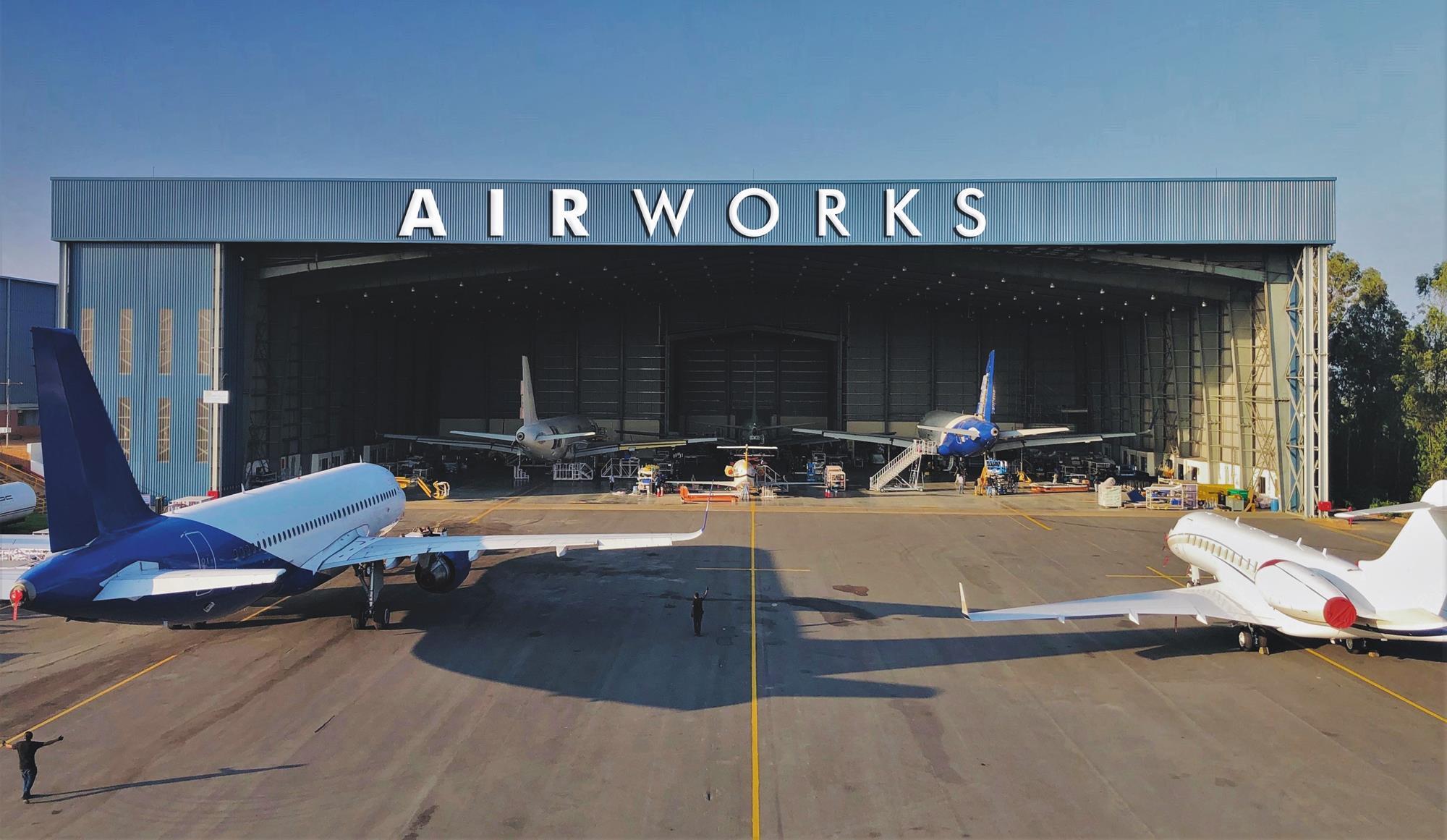
Air Works, India’s largest independent provider of aviation services and MRO said that it has started providing line maintenance services to foreign airlines from Kathmandu, Nepal. Air Works has now increased its presence in the SAARC area as a result of the launch.
To provide its well-regarded line maintenance services from Nepal's busiest international airport, Tribhuvan International Airport (TIA) in Kathmandu, the business has partnered with Siris Aircraft Maintenance Repair and Overhaul Pvt. Ltd. (SAMRO), situated in Kathmandu. The siris.aero Group, which has been in the aviation sector in Nepal for more than 30 years, includes Siris Aircraft MRO (SAMRO). To provide aircraft maintenance/services and support, the organisation has teamed up with recognised aviation & MRO companies and top manufacturers.
SAMRO is Nepal’s first private and independent Approved Maintenance Organization (AMO) with a strong presence at the Tribhuvan International Airport. Licensed by the Government of Nepal including the Ministry of Culture, Tourism & Civil Aviation, as well as the Ministry of Industry, it holds 145 Approval from the Civil Aviation Authority of Nepal (CAAN) to undertake technical handling services including Line maintenance, periodic inspection as well as the rectification of minor defects, at the international airport.
Commenting on its SAARC expansion, Mr. D Anand Bhaskar, Managing Director & CEO, of Air Works Group said, “For a long, our key international customers had been requesting us to expand our services footprint in the region and today, we are extremely happy to have been able to take this first step in association with Siris Aircraft MRO. The development is also well-timed from a market perspective, given the strong revival in air traffic and the enhancement of aviation infrastructure in Nepal. We believe that this launch could lay the foundation for expanding the scope of our current collaboration with Siris to other airports and other operators in Nepal, which could eventually lead to an enhancement in the scope of services beyond the current transit/ daily/ weekly checks.”
He also remarked, “The extension of our operational footprint into Nepal reflects Air Works’ strong and positive customer relationships that have been built over a decade and are underscored by a philosophy of trust, reliability, mutual understanding and cooperation.”
Reports indicate that international passenger traffic in Nepal has rebounded to near pre-Covid levels, registering an increase of 141% from 2021, primarily driven by gains in tourism. This also corresponds with higher international flight movements now that pandemic curbs have been completely eased.
About The Collaboration
Under the terms of the collaboration, while SAMRO will liaise with local regulatory authorities and provide technical manpower and infrastructure including equipment & tooling, Air Works will depute certifying staff or Maintenance Engineers, to clear the aircraft, besides undertaking business development. The services will be executed under the Air Works’ Quality system which has been extended to cover the new station.
Commenting on the collaboration, Mr. Arun Malla, Executive Chairman, Siris Aircraft MRO said, “We are delighted to collaborate with Air Works – India’s numero uno aviation engineering & maintenance company and MRO brand, acclaimed for its domain expertise, workmanship, and professionalism to offer Line maintenance services from the Tribhuvan international airport. The association will not only expand our market proposition but will also enrich our culture and strengthen our work practices, which will help us to be in sync with global service delivery benchmarks. With Air Works now at Kathmandu, incoming international carriers to the airport can be sure of “flying assured”, underlining the country’s commitment to safety. With burgeoning air traffic, Kathmandu and other emerging airports in Nepal represent a cradle of opportunities and beginning with Line services, we intend to leverage and enlarge our relationship gradually and cover the entire country.”
Currently, over 30 leading international airlines fly to and from Tribhuvan International Airport (TIA) to more than 45 destinations throughout Asia and the Middle East. Despite Gautam Buddha International Airport (GBIA) – Nepal’s 2nd major airport that began international operations last year, Tribhuvan International Airport continues to be the country’s hub for international carriers.
As part of the agreement, Air Works would be extending its entire gamut of approvals covering Boeing (737/ 767/ 777/ 787 family), Airbus (319/ 320/ 321/ 330/ 350 family) and ATR 42/ 72 (500/ 600) aircraft to the new station. Interestingly, the new venture already has a leading Middle Eastern airline as its first customer.
With a pan-India presence across 19 international airports, Ai Works is already the biggest provider of Transit or Line Maintenance services to foreign carriers [airlines and cargo] operating into the country. Air Works holds approvals from Civil Aviation Authorities of over 20+ countries that certify it to maintain both narrow-body and wide-body aircraft at leading airports in the country and now, at Kathmandu. In what may be of interest to the industry, Air Works’ relationship with Nepal goes back almost sixty years when it used to maintain and undertake 12/24 monthly checks on the Dakotas operated by Nepal Airlines (formerly Royal Nepal Airlines Corporation).
About Air Works
As one of India’s oldest aviation brands that commenced business in 1951, Air Works Group’s commitment towards MRO & aviation services has been exceptional and this network expansion underscores that the company’s capabilities are on par with international standards. As the Group spreads its wings in the region, its formidable client base will likely benefit from this partnership and its resulting synergies. Air Works is also certified to maintain more than 50 types of aircraft, making it also the most diversified MRO in the country with a pan-India network of 27 locations. The Group also provides commercial aircraft asset management services, avionics and aircraft finishing services apart from MRO-related offerings. Its customers include both civil (fixed wing + rotary wing) and military services, including commercial airlines, business aviation (owners/ operators) companies, and Indian defence forces.
Earlier this year, Air Works was once again bestowed with the Best MRO Services Award by ASSOCHAM in recognition of its contribution towards the growth of the Civil Aviation sector. Its group company - SA Air Works (JV with Scandinavian Avionics) recently became Indian Civil Aviation’s first Avionics Design Organization [DOA], with the capability to design DGCA-certified STCs and repair schemes for a whole array of aircraft including helicopters. Last month, Air Works became the first MRO in India to successfully complete the End-of-lease check on an A320neo aircraft, within the country.
Established in 1951, Air Works Group is India’s biggest and most highly diversified independent MRO with the largest pan-India network presence across 27 cities. It is the preferred MRO partner to global aviation OEMs, aircraft owners/ operators (including fixed-wing & rotary-wing), lessors, airlines, and the Indian Defense Services, offering a host of services including MRO and heavy checks, line maintenance, cabin interior solutions, exterior finishing and painting, avionics upgrades, integrations and retrofits, end-of-lease/ redelivery checks, maintenance training (CAR 147), and asset management services to domestic and international clients.
Specialized services such as avionics, component repairs and asset management services are offered via Group companies – SA Air Works and Acumen Aviation. Air Works undertakes base maintenance for ATR 42/72, A320 and B737 family of aircraft as well as medium and large business jets at its EASA and DGCA-certified facilities including Mumbai, Delhi, Hosur and Kochi, supported by duly certified, in-house shops. The Company also undertakes the modification and assembly of rotary-wing aircraft and is an Authorized Service Centre (ASC) for Bell and Leonardo helicopters.
Air Works enjoys an impeccable reputation in the industry for proven capabilities, outstanding workmanship, quality, and an exceptional safety orientation. The Company takes immense pride in its 71-Year aviation legacy and a culture that accords paramount importance to customers, which has allowed it to successfully deliver several India-first and industry-first projects. The Group is the recipient of several industry awards and was recently adjudged the Best MRO Service Provider by the Ministry of Civil Aviation, Govt. of India.
About SA MRO PVT. LTD. and SIRIS AERO
Siris Aircraft MRO Pvt. Ltd. (SAMRO) is Nepal’s first private, independent Approved Maintenance Organization (AMO) holding 145 Approval from the Civil Aviation Authority of Nepal (CAAN), which allows it to offer technical handling services including Line maintenance, periodic inspections and rectify minor defects. The company is part of Nepal-based siris.aero Group that has other aviation businesses namely, Siris Aviation (General Sales Agency), SK Flightline (Ground Handling), and Avicon (Aviation Consulting and Asset Sale/Purchase). Siris.aero has offered maintenance/ services and support with complete aviation solution systems to the local and international aviation community for over 3 decades.
The Group enjoys a strong reputation, is financially sound and employs over 75+ number of experienced and highly skilled professionals including engineers and technicians. Its key services include Line maintenance services and engineering support to international airlines, Line & Base maintenance for helicopters, Ramp and passenger services for international airlines, Logistics and Spares support, Asset Management, Component repair and overhaul, Installation and bench tests, Aviation consulting as well as liaison with regulatory and airport authorities for operator support.
Read next
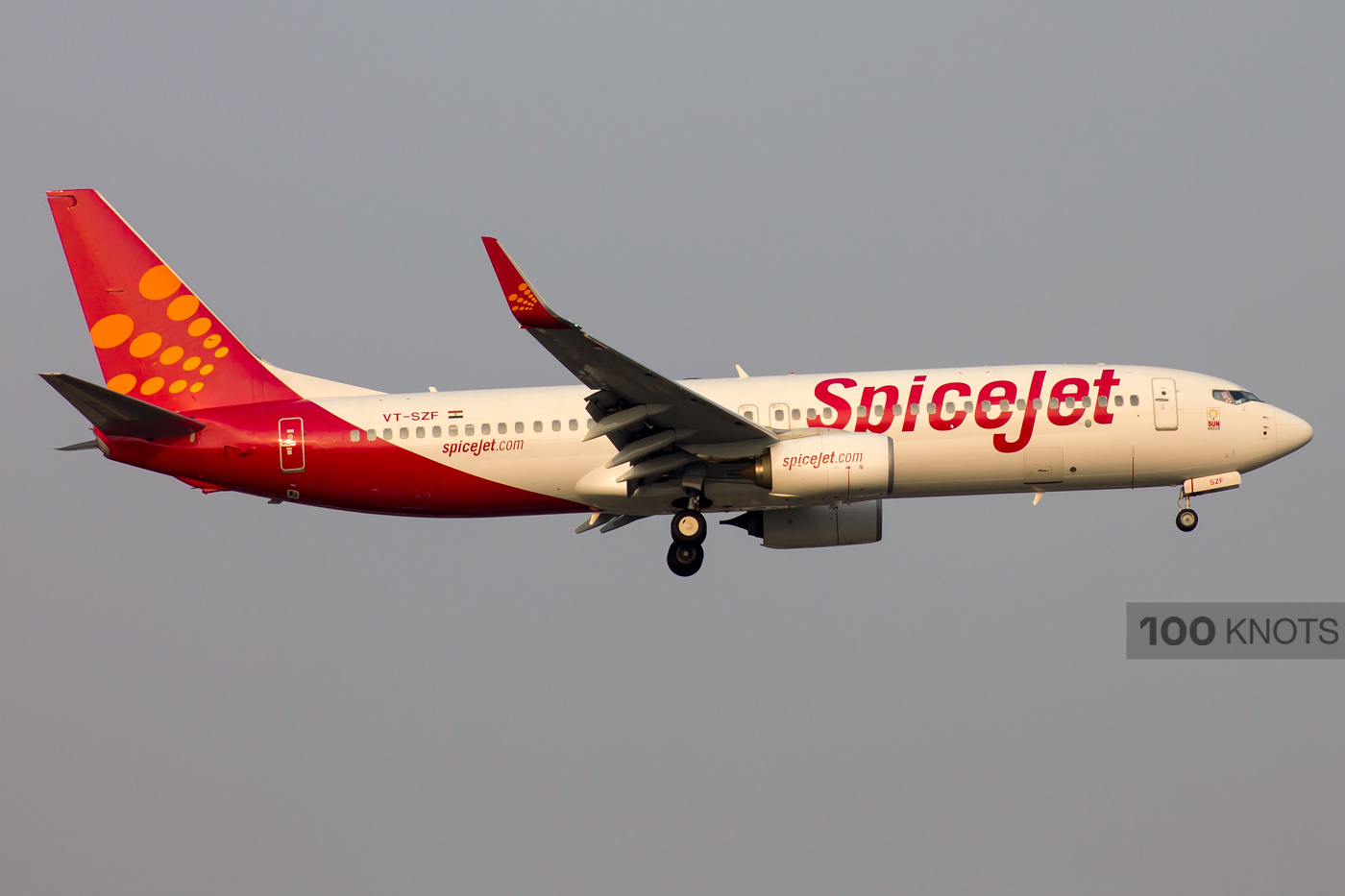
Low-cost carrier SpiceJet has announced a revival plan for its 25 grounded aircraft amid the Go First bankruptcy case. SpiceJet said in a press release that INR 400 crore for the revival of its aircraft would be drawn from the government’s Emergency Credit Line Guarantee Scheme (ECLGS) and better cash accruals.
Ajay Singh, Chairman and Managing Director, of SpiceJet, said, “We are meticulously working towards returning to service our grounded fleet back in the air soon. The majority of the ECLGS funding received by the airline would be utilized for the same, which will help us capitalise and make the most of the upcoming peak travel season.”
SpiceJet cited the government's Emergency Credit Line Guarantee Scheme (ECLGS) and improved cash flow for the aircraft revival plan. SpiceJet faces severe financial difficulties, with its net worth at the end of March 2022 being a negative INR 4,340 crore. Additionally, it reported losses before tax of over INR 3,870 crore in the four years leading up to March 2022.
The carrier has had to ground some of its Boeing 737 Max aircraft and is still grappling with working capital issues, despite the modified Emergency Credit Line Guarantee Scheme (ECLGS) intended to assist airlines. It is currently operating with approximately 44 planes, with around 25 aircraft grounded, partly due to supply-chain obstacles. This comes after the Directorate General of Civil Aviation (DGCA) in July 2022 restricted SpiceJet's flights to 50% of departures approved under the summer schedule.
Troubles For The Airline
DGCA had said at the time that SpiceJet, on several occasions, either turned back to its originating station or continued landing at the destination with degraded safety margins. The regulator also noted that poor internal safety oversight and inadequate maintenance actions had degraded the safety margins.
From January 2022 to February 2023, SpiceJet wrongly denied boarding to 3,377 passengers, the highest among all airlines in India. The airline has paid INR 64.66 lakh rupees as compensation to affected passengers in the same period. Experts had said that the large number of denied bookings was due to overbooking by the airline.
SpiceJet restructured its USD 100-million outstanding dues to aircraft lessor Carlyle Aviation Partners into equity shares and compulsorily converted debentures (CCDs) in the previous month. The airline's board sanctioned the issuance of new equity shares worth USD 29.5 million, as a result of which Carlyle Aviation Partners will possess more than a 7.5% equity stake in SpiceJet.
On May 2, domestic budget carrier Go First declared that it had applied to voluntary insolvency resolution proceedings at the National Company Law Tribunal (NCLT) in Delhi. The announcement was made by the airline's CEO, Kaushik Khona, shortly after the carrier, owned by the Wadia Group, declared a temporary suspension of flight operations on May 3 and 4 due to a severe funds crunch. Khona also stated that the airline will resume its flights once the NCLT approves the application.
The company's market share plunged to a fiscal year low of 6.4%, down from 12.7% in March 2018, air traffic data from the aviation regulator for March showed. Rival IndiGo, in stark contrast, saw a sequential increase in market share to 56.8%, marking a six-month-high.
In a sign of the fierce competition in a sector dominated by IndiGo and the recent merger of Air India and Vistara under the Tata group, Go First filed for insolvency on Tuesday, marking the first major airline collapse in India since Jet Airways filed for bankruptcy in 2019.
Shares of SpiceJet rallied over 5% in the early hours of May 3 after the company announced that it would look to borrow INR 400 crore to fix 25 grounded aircraft. At 10:35 AM, SpiceJet was trading at INR 33 on the BSE, up 4.8% from its previous close, while India's benchmark Sensex fell 0.3%.
Read next
Emirates President Predicts Sustained Demand: No Impact from The Upcoming Competition

Abhishek Nayar
03 May 2023
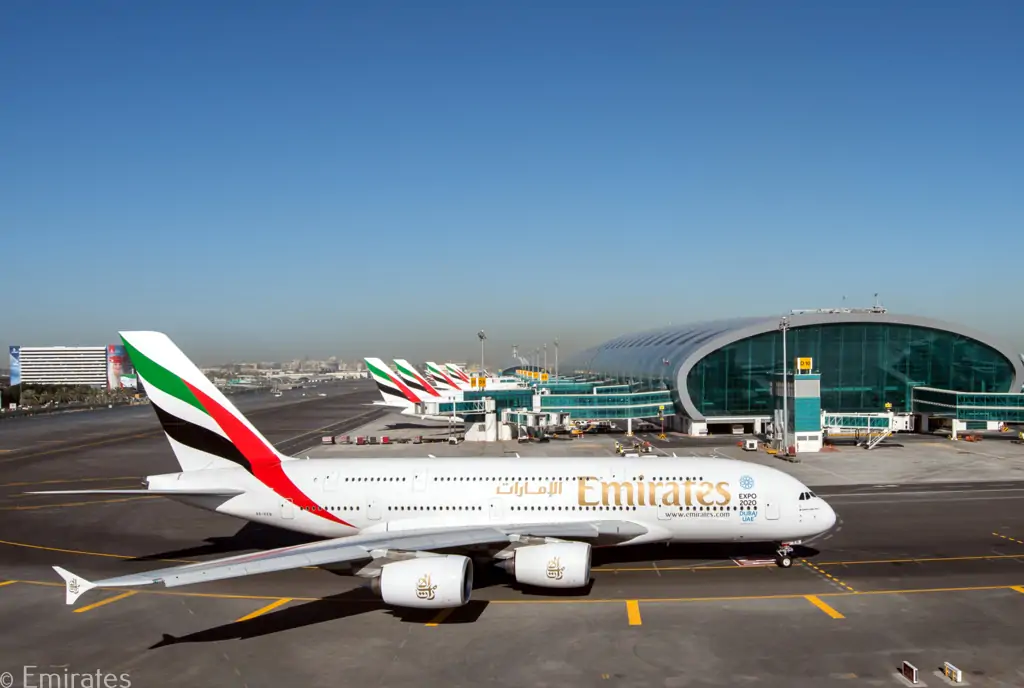
In recent years, the airline industry has undergone substantial changes, with new rivals rising and incumbent carriers experiencing problems. Despite the competition, Emirates President Sir Tim Clark believes the airline is well-positioned to continue its growth and popularity.
The Upcoming Contest
Several new airlines have emerged in recent years, all vying for a piece of the market. However, Clark believes that the upcoming competition will not pose a significant threat to Emirates. He feels that these airlines lack the infrastructure and resources that Emirates has amassed over the years. Furthermore, the existing airlines with which Emirates competes are struggling to keep up, making it unlikely that new airlines will succeed.
Current Situation
Emirates Airline President Sir Tim Clark stated on Tuesday that the addition of new Saudi airlines and the expansion of regional competitors will not have an impact on the Dubai-based carrier, adding that he expects strong demand, particularly for leisure travel.
"We had 86 flying last year, and we need to get another 20-30 in the air as soon as we can," Clark said, saying that supply chain concerns were complicating the refurbishing process. He also stated that Emirates had 165 aircraft on order, with "probably more on the way." He predicted that new Airbus A350 passenger planes will begin flying in August of next year, with 50 delivered over a two-and-a-half-year reduced delivery timetable. "We need them as quickly as possible," he added.
Emirates' Distinctive Selling Proposition
Emirates has various differentiating selling points that set it distinct from its competitors. The airline's dedication to provide a great customer experience is one of the most crucial. Emirates makes significant investments in its fleet, providing opulent cabins, cutting-edge entertainment systems, and gourmet meals. Furthermore, Emirates has a global network of destinations, making it simple for travellers to reach their destination. These elements have led to Emirates' success and will most likely continue to attract consumers in the future.
The Growth Strategy of Emirates
Emirates' expansion plan focuses on broadening its worldwide network, increasing customer service, and investing in its fleet. The airline operates a fleet of over 250 aircraft and continues to invest in new jets to provide its customers with cutting-edge technology and comfort. Furthermore, Emirates has alliances with several other airlines, allowing it to provide customers with more destinations and flight options.
The Emirates' Pandemic Response
The epidemic has had a huge impact on the aviation sector, with several carriers fighting to remain in business. Emirates, on the other hand, has weathered the storm because of its strong financial position and capacity to react to changing conditions. To safeguard its passengers and employees, Emirates moved quickly to introduce safety practices like required mask use and better cleaning processes. Moreover, despite the difficult economic conditions, Emirates has continued to invest in its fleet.
Conclusion
Despite increased competition in the market, Emirates President Sir Tim Clark is sure that the airline will continue to see continuous demand. Emirates' dedication to offering a great customer experience, worldwide network of destinations, and fleet investment are expected to keep the airline ahead of the competition. Furthermore, Emirates' response to the pandemic demonstrated its ability to adapt to changing circumstances as well as its dedication to the safety of its passengers and employees.
With Inputs from Reuters
Read next
Alaska Airlines Forced to Abolish Gendered Limitations Imposed on Flight Attendant Uniforms
Abhishek Nayar
03 May 2023

After a male flight attendant filed a gender discrimination case, Alaska Airlines was forced to rethink its dress code policies. The airline had required male and female flight attendants to wear separate uniforms, which the complainant claimed violated his rights. In reaction to the situation, Alaska Airlines has decided to discontinue the use of gendered uniforms for their staff.
Current Scenario
Gender discrimination in the workplace has long been a problem, and the aviation sector is no different. Historically, airlines have imposed gender-specific dress requirements, with female flight attendants being obliged to wear skirts and heels and male flight attendants expected to wear trousers and a jacket. This difference has irritated many employees, who believe that their gender should not dictate what they wear to work.
Justin objected to Alaska Airlines' standards, which required flight attendants to wear either a "male" or "female" uniform and prohibited combining the two. They also requested a specific exemption to the regulation based on their gender identification, but that request was finally refused. Wetherell responded to the end of their court struggle by saying,
Prior History
The narrative begins in June 2021, when the American Civil Liberties Union (ACLU) sent a letter to Alaska Airlines outlining the prejudice experienced by Wetherell, a gender-fluid individual working as a flight attendant for the airline.
Alaska Airlines replied by issuing a statement expressing its support for the LGBTQ+ community and highlighting all of its recent diversity initiatives. However, the ACLU and Justin were not satisfied and filed a lawsuit against the airline under the Washington Law Against Discrimination (WLAD).
Employee Opinions
Many Alaska Airlines employees welcomed the decision to eliminate gendered uniforms. Wetherell acknowledged his happiness with the outcome in a statement, saying, "It feels good to know that I was able to make a difference for myself and for others." Other employees have also expressed support for the decision, claiming that it will contribute to a more inclusive and respectful workplace.
The Obstacles
While the elimination of gendered uniforms is a step in the right direction, there are still many challenges that must be addressed before true gender equality in the workplace can be achieved. These difficulties include compensation discrepancies, a lack of promotion possibilities, and unconscious prejudice. Addressing these difficulties will require a collaborative effort on the part of both businesses and employees.
Conclusion
Alaska Airlines' decision to discontinue gendered uniforms is a significant victory for workplace gender equality. The airline is setting an example for other businesses to follow by treating all employees equally, regardless of gender. However, much work remains to be done in order to achieve true gender equality. It is up to all of us to keep fighting for a more welcoming and courteous workplace.
Read next

JAL has revealed its intention to fly its first cargo planes in 13 years. This is a big achievement for the airline, which has not flown any dedicated cargo flights since 2010.
Present Situation
On Tuesday, Japan Airlines (JAL) announced that it will fly its own planes to assist its cargo operations. Three Boeing 767-300ER Freighters will commence service by the end of fiscal year 2023, according to the airline. JAL will fly its own specialised cargo aircraft for the first time in more than a decade. According to the carrier, the freighters are joining the airline as part of a new business strategy.
JAL intends to expand its freight business by forming agreements with logistics companies and operating routes that ensure consistent demand. The airline stated that it intends to grab domestic and international e-commerce, parcel delivery, and other high-growth freight practices. The airline stated that the "2024 issue" is connected to a scarcity of truck drivers in Japan as a result of labour legislation changes that would take effect next year.
Freighter Planes Are Required
The increased demand for air cargo services is one of the primary drivers driving JAL's intention to relaunch freighter jets. With the expansion of e-commerce and worldwide trade, the volume of air cargo being delivered throughout the world has increased significantly.
The Advantages of Freighter Planes
JAL will be able to provide a variety of benefits to its customers by reintroducing cargo aircrafts into its fleet. These are some examples:
- Increased Capacity: Because freighter jets are primarily built to transport goods, they have a substantially bigger capacity than passenger flights. JAL will be able to transport more goods in a single journey, resulting in cheaper transportation costs and shorter delivery times.
- Improved Flexibility: Unlike passenger flights, freighter planes do not have fixed schedules, so they may deliver goods to a variety of locations. JAL will be able to provide more flexible transport alternatives to its clients, who will be able to pick from a greater range of routes and delivery times as a result of this.
- More Dependability: Freighter planes are more dependable than passenger planes because they have less wear and tear and are built to endure the rigors of hauling big cargo. This will make JAL's air cargo services more reliable, and customers will receive their items on schedule and in good shape.
The Impact on Japan's Air Cargo Industry
The decision by JAL to reintroduce freighter jets will have a huge influence on Japan's air cargo market. Currently, foreign airlines transport the majority of air cargo in Japan, as Japanese airlines have been unable to compete in this sector owing to a lack of specialized cargo planes.
Conclusion
Finally, JAL's decision to reintroduce freighter planes is a significant development for the airline and the Japanese air cargo industry. JAL will be able to provide more efficient, flexible, and dependable air cargo services to its clients by investing in dedicated cargo planes, while also increasing the competitiveness of the Japanese air cargo business.
Comment