

Indian carriers SpiceJet and Air India are among the six airlines which have successfully completed the risk-based approach audit of the International Air Transport Association (IATA) - the largest trade group of global airlines, according to a report by The Economic Times. The other airlines are American Airlines. British Airways, LATAM, Luxair and Qatar Airways.
The risk-based approach audit is a new form of IATA’s operational and safety audit which is fine tuned to the particular airline’s operational requirement. This is different from the compliance-based approach.
The risk-based approach audit recognizes that aviation safety is not static but a dynamic and evolving process. With the continuous development of aircraft technologies, changes in operational environments, and a multitude of factors that contribute to flight safety, audit programs must keep pace. By embracing a risk-based approach, airlines can better tailor their safety measures to their specific operations, thereby increasing the effectiveness of their safety protocols.
This approach acknowledges that safety is not solely about meeting minimum compliance requirements. It places a greater emphasis on understanding an airline’s operations, its unique challenges, and its proactive commitment to safety. By doing so, airlines can take a more comprehensive approach to risk management, allowing them to identify potential hazards and address them before they become safety issues
Air India Stenghting its Approach Towards Safety
The report further added that Air India has also become one of the 20 signatories of IATA's Safety Leadership Charter. The charter has been developed in consultation with IATA members, and the wider aviation community, to support industry executives in evolving a positive safety culture within their organizations.
Furthermore, Air India’s participation in IATA’s Safety Leadership Charter exemplifies the airline’s dedication to fostering a culture of safety. The charter aims to encourage industry leaders to create an environment that prioritizes safety above all else. It is a recognition of the importance of developing a positive safety culture within an organization, where safety is not just a set of rules and procedures but a fundamental aspect of the company’s DNA.
Mark Searle, IATA’s Global Director of Safety, highlights the need for audit programs to evolve in parallel with advancements in the aviation industry. These advancements include new technologies and practices that can enhance safety. Sticking to conventional compliance-based assessments can be limiting in this dynamic environment. Therefore, embracing a risk-based approach is essential for staying at the forefront of safety measures and ensuring that aviation remains one of the safest modes of transportation.
Eduard Ciofu, Flight Standards Deputy Director at the European Union Aviation Safety Agency, notes that transitioning to a risk-based approach will not be without its challenges. This approach will require oversight methodologies to adapt to the new paradigm, which will necessitate collaboration between airlines, regulators, and industry organizations. However, the benefits are substantial, as the industry can identify and mitigate risks more effectively, ultimately enhancing aviation safety on a global scale.
(With Inputs from The Economic Times)

Read next

In a significant move that reaffirms its commitment to the Boeing 737 MAX series, Southwest Airlines has placed a firm order for an additional 108 B737-7 aircraft. This substantial order cements Southwest's position as a major operator of the forthcoming B737 MAX variant. The airline's decision to expand its fleet underscores the continued confidence in Boeing's aircraft, despite the challenges faced by the MAX series in recent years.
The Southwest-Southwest Connection
Southwest Airlines, often referred to as an LCC (Low-Cost Carrier), has long been associated with the Boeing 737 series. This latest order adds to their already substantial fleet of Boeing 737s, and it comes as part of their strategy to modernize and upgrade their aircraft inventory.
Details of the Order
The commitment to purchase 108 B737-7 aircraft enhances Southwest's existing order book for this particular variant to a staggering 300 aircraft. However, neither the airline nor the manufacturer has disclosed the specific delivery timeline for these new jets. The B737-7 is not expected to receive certification before mid-2024, which means Southwest's latest acquisition is looking toward the long-term future.
Other Customers for the B737-7
Apart from Southwest Airlines, there are only a handful of other confirmed customers for the B737-7. Allegiant Air (24[18 + 6 converted]), Luxair (4), Ruili Airlines (2), and SkyUp Airlines (2) are among the few that have placed orders for this aircraft, with relatively smaller orders compared to Southwest's commitment. Allegiant Air recently converted six of its B737-7 orders into B737-8-200s, showcasing the flexibility of the MAX series to meet the diverse needs of airlines.

Fleet Renewal Strategy
Southwest's fleet strategy involves replacing older aircraft with more fuel-efficient and environmentally friendly models. The new B737-7s will gradually replace the airline's aging fleet of 406 B737-700s, which have been workhorses for the airline for many years.
Simultaneously, Southwest is in the process of introducing the larger B737-8s to replace its 207 B737-800s. This strategic transition allows Southwest to benefit from the flexibility of its Boeing order book, ensuring that the airline can maintain a modern and efficient fleet while awaiting the certification of the B737-7.
Conclusion
Southwest Airlines' order of 108 B737-7 aircraft not only solidifies its position as a dominant future operator of the B737 MAX series but also demonstrates the airline's confidence in Boeing's ability to deliver on its promises. As the aviation industry continues to evolve, Southwest is taking strategic steps to renew and expand its fleet, ultimately ensuring that it remains at the forefront of the industry. With the B737-7s on the horizon, Southwest is poised to maintain its reputation as a leading low-cost carrier with a commitment to safety, efficiency, and passenger satisfaction.
With Inputs from ch-aviation
Read next
JetBlue Expands Partnership with BOC Aviation in Sale-and-Leaseback Agreement

Abhishek Nayar
27 Oct 2023
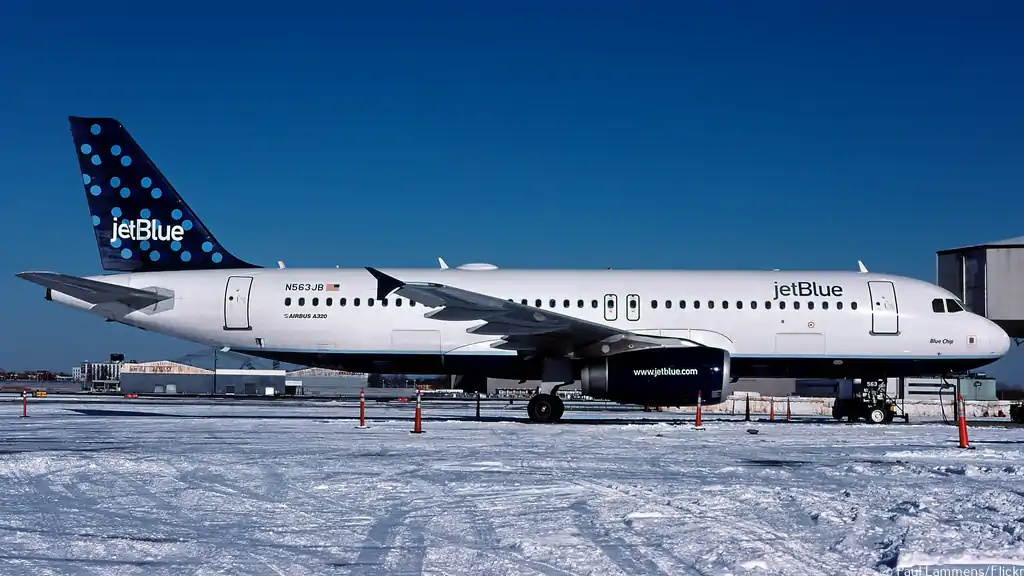
In a move to enhance its fleet flexibility and financial stability, JetBlue Airways has recently entered into another sale-and-leaseback agreement with BOC Aviation, a Singapore-based lessor.
This new agreement covers a total of ten Airbus aircraft, consisting of eight A220-300s and two A321neo aircraft, which will be leased back to the airline through BOC Aviation (USA), a wholly-owned subsidiary of the lessor. This marks the third finance lease agreement between the two companies in 2023, further strengthening their partnership in the aviation industry.
Expanding the Partnership
JetBlue's latest agreement with BOC Aviation underscores the airline's commitment to optimizing its aircraft portfolio. The deal involves finance lease transactions for the ten Airbus aircraft, with the closing expected to take place in 2023. This expansion of their partnership is the most recent development in a series of agreements between JetBlue and BOC Aviation.
Earlier in the year, JetBlue and BOC Aviation had already signed two finance lease agreements, bringing the total number of aircraft involved in these deals to 27. In the June agreement, two A321neo and five A220 aircraft were included, while the September deal covered an additional five A321neo and five A220 aircraft.
JetBlue's Existing Fleet
JetBlue Airways boasts a diverse fleet, including Airbus A321 and A220 series aircraft. As of the latest information available, the airline operates twenty A321-200NX aircraft, with ownership of 14 of them and the other six being leased from DAE Capital. Additionally, JetBlue operates nine A321-200NX(LR)s that are owned by the airline itself.
The airline's fleet of A220s consists of nineteen owned aircraft, reflecting its commitment to expanding its A220 series. Furthermore, JetBlue has a substantial number of aircraft on order from the manufacturer, Airbus. This includes eighty-one A220s, thirty-four A321-200NX aircraft, nine A321-200NX(LR)s, and thirteen A321-200NY(XLR)s, highlighting the company's growth plans and the importance of securing aircraft through leaseback agreements.
Benefits of Sale-and-Leaseback Agreements
Sale-and-leaseback agreements have become increasingly common in the aviation industry. Such agreements enable airlines to unlock capital tied up in aircraft, providing them with more financial flexibility to invest in their core operations. Leasing aircraft can also help airlines manage their fleet size and composition more efficiently, adapting to changing market demands and economic conditions.
Conclusion
JetBlue Airways' ongoing partnership with BOC Aviation in sale-and-leaseback agreements demonstrates the airline's commitment to optimizing its fleet and ensuring financial stability.
The recent agreement covering eight A220-300s and two A321neo aircraft strengthens their relationship, bringing the total number of aircraft involved in these finance lease transactions to 27. These agreements allow JetBlue to access capital and adjust its fleet size, positioning the airline for continued growth and success in the competitive aviation industry.
With Inputs from ch-aviation
Read next
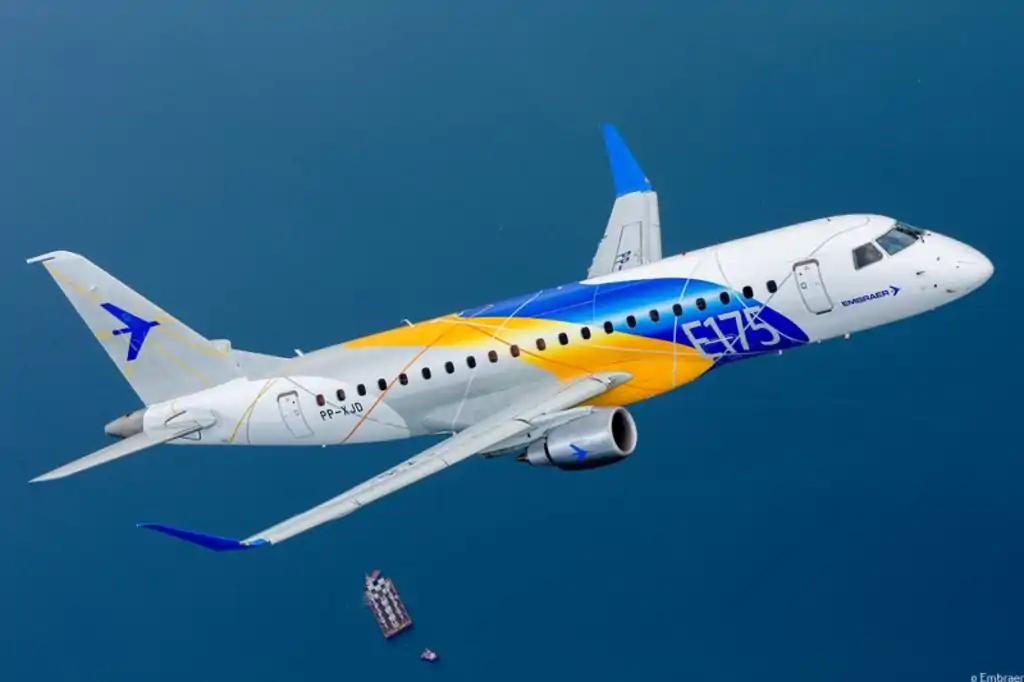
Embraer, a leading Brazilian aerospace company, has reported a significant boost in its firm order backlog, fueled by a freshly disclosed deal with SkyWest. This development not only reinforces Embraer's position in the aviation industry but also reflects the continued growth of its E175 aircraft.
Backlog Reaches $17.8 Billion
Embraer proudly announced on Thursday, October 26, 2023, that its firm order backlog had soared to a remarkable $17.8 billion by the end of the third quarter. This substantial increase, as per a securities filing by the company, represents a notable $500 million growth over the previous quarter.
SkyWest's Fresh Order
A significant contributor to this surge in backlog is the newly revealed order from SkyWest, a prominent regional airline. SkyWest has committed to purchasing 19 of Embraer's E175 aircraft, a deal valued at $1.1 billion. The delivery of these aircraft is expected to commence in the final quarter of 2024.
A Boost in Aircraft Deliveries
Embraer's performance in the third quarter of 2023 demonstrated its robust capacity to deliver aircraft. The company delivered a total of 43 aircraft during this period, up from 33 deliveries in the same quarter of the previous year. This achievement has contributed to a cumulative total of 105 aircraft delivered year-to-date, reflecting Embraer's strong production capabilities and market demand.
The SkyWest-E175 Agreement
According to Embraer, the 19 newly ordered E175 aircraft will be operated by United Airlines under a Capacity Purchase Agreement (CPA). This arrangement signifies the continued trust and collaboration between Embraer and major players in the airline industry.
Market Implications
The order from SkyWest is not only a testament to the reliability and appeal of Embraer's E175 aircraft but also reflects the increasing demand for regional jets in the aviation market. Regional airlines like SkyWest continue to invest in modern and fuel-efficient aircraft to enhance their competitive edge and cater to the evolving needs of passengers.
Embraer's Position in the Aviation Industry
Embraer's remarkable success in securing orders and expanding its firm order backlog further solidifies its status as a prominent player in the aviation industry. The company's E175 aircraft has proven to be a favorite among airlines, thanks to its fuel efficiency, passenger comfort, and operational flexibility.
Conclusion
Embraer's recent announcement of its burgeoning firm order backlog and the deal with SkyWest is a testament to the company's resilience and attractiveness in the aviation market. As it continues to deliver innovative and efficient aircraft, Embraer remains a key driver of progress in the aerospace industry, offering solutions that meet the evolving needs of the airline industry and its passengers.
With Inputs from Reuters
Read next
India's Aviation Industry Receives a Boost as Aircraft Leases Gain Exemption from IBC Moratorium
Abhishek Nayar
27 Oct 2023

In a move that has been widely hailed by the aviation industry, the Union Government of India has exempted aircraft, helicopters, and engines from the provisions of the Insolvency and Bankruptcy Code (IBC). This significant policy change has far-reaching implications for the aviation sector, particularly for aircraft lessors like Sky One FZE, and promises to bolster the confidence of stakeholders in the Indian aviation industry.
Background and Rationale for the IBC Moratorium Exemption
The decision to exempt aircraft and engines from the IBC moratorium under Section 14 has been met with enthusiasm from industry players. Indian airlines have been grappling with substantial costs, estimated at approximately US$1.3 billion, due to difficulties in repossessing leased aircraft within the country. With nearly 80 percent of India's airline fleet acquired through leasing agreements, the exemption offers a substantial incentive for lessors to operate in the Indian market.
The Significance for Aircraft Lessors
Jaideep Mirchandani, the Group Chairman of Sky One FZE, an aviation conglomerate, emphasizes the importance of this policy change. He notes that this exemption will facilitate the prompt repossession of aircraft from airlines in cases of insolvency, effectively reducing inherent costs, delays, and risks. This development is expected to instill greater confidence in the Indian aviation sector and encourage more airlines to consider leasing as a viable solution.
Global Standards and Obligations
Mirchandani further highlights the significance of this move in aligning India with international standards. By exempting aircraft from the IBC moratorium, India takes a step towards fulfilling its obligations under two critical multinational agreements: the Cape Town Convention (CTC) and the Aircraft Equipment Protocol. This alignment with global standards is expected to foster more successful collaborations with international aviation players.
The Potential for Increased Collaboration
As the demand for aircraft in India continues to rise, airlines are increasingly looking to leasing as a flexible and cost-effective solution. With the IBC moratorium exemption in place, more successful collaborations are expected between Indian airlines and lessors, potentially boosting the growth of the aviation sector.
Positive Impact on the Indian Aviation Industry
The exemption of aircraft and engine transactions from the IBC moratorium not only eases financial burdens on airlines but also streamlines the process of aircraft repossession. It is a significant step forward for the Indian aviation industry, strengthening its overall resilience and attractiveness to investors.
Conclusion
The decision by the Ministry of Civil Aviation to exempt aircraft, helicopters, and engines from the IBC moratorium is a landmark move that has been warmly welcomed by industry leaders. This policy change is set to reduce financial burdens on Indian airlines, encourage more leasing agreements, and bring India in line with international standards. As the Indian aviation sector continues to grow, this decision offers a promising outlook for the industry's future.
Read next
Aviation Ministry Working Towards Hiring Enough Air Traffic Controllers Amid Growing Air Traffic
Radhika Bansal
26 Oct 2023

As India prepares to safely reduce lateral separation, or the distance between two aircraft cruising in the same direction and at the same altitude, from the current 10 nautical miles (18 km) over the next few months to handle more air traffic, the government says it is "ensuring an adequate number of air traffic control officers (ATCO)". The Airports Authority of India (AAI), a state-run organisation, is responsible for providing air navigation services. It is a sovereign role that AAI has been given.
According to a report by The Times of India, Ensuring that an adequate number of ATCOs, particularly during the unprecedented growth of the civil aviation sector (is) a priority for the aviation ministry. The shortage of ATCOs could have attracted adverse remarks from the International Civil Aviation Organisation (ICAO) and could have impacted India's global ranking and passenger safety.
Importance of ATCOs
Keeping the importance of having sufficient ATCOs for the civil aviation sector in the country, 796 positions of ATCOs in AAI have been created since July 2021 which will ensure safe navigation services in the country,” the aviation ministry said in a statement recently.
Regarding ATC licensing, the ministry says: “The indicative timelines published for the issue of ATCO Licenses by the DGCA is 20 working days. Against this, the average time taken in 2023, so far, is 14.5 days.” AAI has begun preparations to safely reduce lateral separation between aircraft — meaning those going in the same direction at the same altitude — and handle more air traffic as India gears up for a significant increase in airport capacity.
The aviation ministry stated earlier this year that to guarantee aviation safety, the AAI had established up to 796 air traffic controller posts. It claimed that a controller shortage may have lowered India's standing internationally and drawn criticism from the International Civil Aviation Organisation (ICAO).
An ATC's work is really hard. A controller is only permitted to operate for a maximum of 12 hours at a time under current regulations. Additionally, in crowded airports, they must be given a 30-minute break every two hours, and in less busy airports, a 45-minute break every three hours. It is also necessary to take a 48-hour break following each night shift.
AAI, which provides air navigation services or ATC, is working on reducing the current separation of 10 nautical miles (18 km) by about half over the next year or so by obtaining the required approvals from the Directorate General of Civil Aviation (DGCA).
The aimed timeframe is understandable as Delhi NCR and Mumbai Metropolitan Region are all set to get their second airports before the end of next year. Goa has already got a second airport. Metros like Bengaluru, Hyderabad and several other places will see a significant expansion in airport capacity. Delhi’s existing IGI Airport, the busiest in India and South Asia, has got four runways now all of which will be in use by next summer.
Growth of the Indian Aviation Sector
Union aviation minister Jyotiraditya Scindia recently said that at the current rate of growth, India — the world’s fastest-growing aviation market — is expected to have 42.5 crore air passengers annually by 2035 from the current 14.5 crore. The country will have 230-240 airports, including heliports and water aerodromes, by 2030, up from 148 now. The combined fleet size of Indian carriers is expected to double from the current 700 by the end of this decade with mega orders from IndiGo and Air India.
“A lot of work is visible on the ground with new terminals, runways or new airports being built and existing ones being expanded in many cities. Simultaneously work is on to increase the capacity in the air on the ATC side. More airport capacity means more planes in the air and that requires a lot of work to ensure that safety remains paramount as air traffic zooms,” the report quoted officials.
(With Inputs from The Times of India)
Comment