
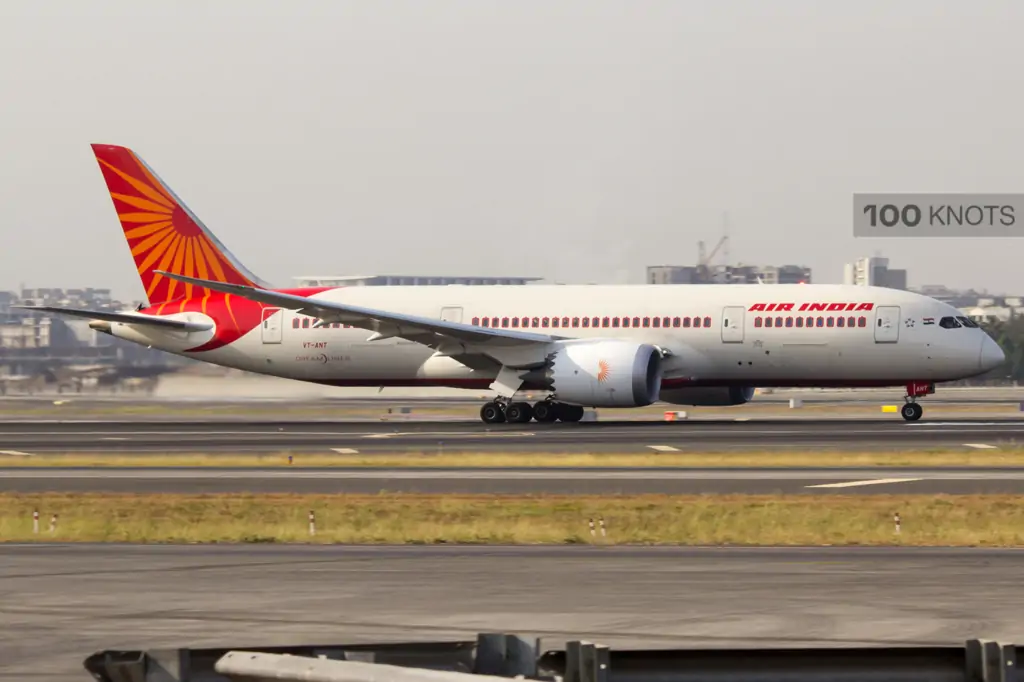
Air India on Monday, August 28 said there is no significant impact on its flights to and from the UK, where a technical issue has impacted air traffic services, and that the airline is actively monitoring the situation. NATS, which provides air traffic control services in the UK, has put in place certain traffic flow restrictions to maintain safety. In an update at 1515 hours GMT, NATS said it has identified and remedied the technical issue affecting its flight planning system.
Air India and Vistara, both part of the Tata Group, are the only Indian carriers operating flights to the UK. While Air India flies to London, Gatwick and Birmingham, Vistara operates services to London. "There is no significant impact on our flights to and from the UK, as of now. We are actively monitoring the situation," an Air India spokesperson said.
Air India operates 98 weekly flights between India and the UK. On August 28, the airline is scheduled to operate 14 flights between India and the UK. Vistara operates two flights between the two countries daily.
"We have identified and remedied the technical issue affecting our flight planning system this morning. We are now working closely with airlines and airports to manage the flights affected as efficiently as possible. Our engineers will be carefully monitoring the system's performance as we return to normal operations. The flight planning issue affected the system's ability to automatically process flight plans, meaning that flight plans had to be processed manually which cannot be done at the same volume, hence the requirement for traffic flow restrictions...," NATS said in its update at 1515 hours GMT.
What Happened with Britain’s Air Traffic Control?
UK's Air Traffic Control's computer systems faced technical glitches which affected airlines, both domestic and international. According to reports, thousands of air travellers faced delays on Monday after Britain's air traffic control system was hit by a breakdown. The National Air Traffic Service (NATS) of Britain had to impose restrictions on aircraft movement on Monday due to an ongoing technical issue that the service is actively addressing.
British Airways said passengers due to travel on Monday or Tuesday could move their flights free of charge, while Heathrow on Monday evening urged passengers to come to the airport only if flights were confirmed as operating. At Gatwick, where about 150 flights were scrapped, easyJet cancelled virtually all departing international flights on Monday afternoon. The airline could not yet confirm what flights would operate on Tuesday but it is understood to expect some continuing impact on its schedules.
After announcing it had fixed the original issue, Nats said: “We are now working closely with airlines and airports to manage the flights affected as efficiently as possible. Our engineers will be carefully monitoring the system’s performance as we return to normal operations.
“Our priority is always to ensure that every flight in the UK remains safe and we are sincerely sorry for the disruption this is causing. Please contact your airline for information on how this may affect your flight.” According to data from the analytics firm Cirium, 232 outbound flights from the UK and 271 inbound flights had been cancelled by 2:30 PM, just under 10% of all services.

Read next
Jet Airways' Bidder Gets Extension to Make Payment of INR 350 Crore by NCLAT
Radhika Bansal
29 Aug 2023
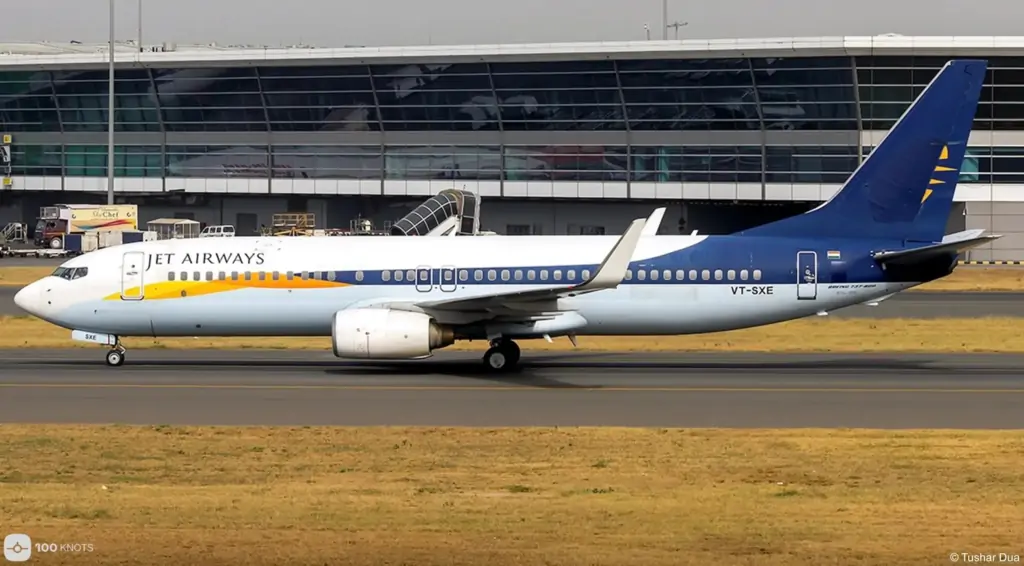
Jalan Kalrock Consortium, the successful resolution applicant of the defunct Jet Airways on Monday, August 28 got an extension from the National Company Law Appellate Tribunal (NCLAT) to make the payment of INR 350 crore to its lenders. The appellate tribunal has granted time till September 30 to make the payment. The appellate tribunal has also permitted an adjustment of INR 150 crore from an existing performance bank guarantee towards the INR 350 crore payment. The case will now come up on October 4 for further consideration.
The consortium, comprised of Jalan and Kalrock Capital, was initially required to make a payment of Rs 350 crore to the Committee of Creditors (COC) by August 31, 2023. The consortium sought an extension of time until September 30 to pay INR 350 crore. They intend to deposit INR 100 crore by August 31 and another INR 100 crore by September 30. They have urged the Committee of Creditors (CoC) to utilize a performance bank guarantee (PBG) of INR 150 crore towards the remaining amount.
The NCLAT will now address pending pleas, including one by workmen seeking to recover around INR 224 crore, after September 30. The CoC objected to encashing the bank guarantee. The consortium argued that they have the authority to modify the terms of the Request for Resolution Plan (RFRP) to adjust the performance bank guarantee towards the INR 350 crore payment.
The consortium, however, emphasised their commitment to restarting Jet Airways. They have urged the CoC to initiate regulatory procedures for transferring ownership. The consortium’s proposed payment schedule was presented on August 18, and the appellate tribunal requested an official application within 24 hours. Jet Airways was grounded in April 2019 due to substantial losses and debts of about INR 8,000 crore. In October 2020, the CoC endorsed the revival plan from the Jalan-Kalrock consortium.
Lenders noted that while they have a claim of nearly INR 8,000 crore against the airline, the consortium is facing difficulty in paying the INR 350 crore. Out of this amount, INR 175 crore is allocated to clear the airline’s dues at the airport, and the remaining sum is intended to settle the airline’s debts to lenders.
Previous Judgements
On 5 July, the Committee of Creditors (CoC) of Jet Airways, led by the State Bank of India, had told the Supreme Court that it might be more prudent to wind up the airline, given they have not been repaid, and no funds infused into the debt-laden airline. Lenders have infused approximately INR 400 crore of public money into the airline, which includes settling airport dues. On July 10, the committee of creditors of Jet Airways told the Supreme Court that the Jalan-Kalrock resolution plan approved by the National Company Law Tribunal (NCLT) was not working and called for the liquidation of the grounded airline. This came after the NCLAT on May 26 granted the JKC a 97-day extension to pay a guarantee of INR 150 core to the State Bank of India (SBI).
On 13 January, the National Company Law Tribunal (NCLT) allowed the transfer of the beleaguered airline to the consortium. However, the lenders to the airline opposed the transfer.
On 22 June 2021, the NCLT approved the resolution plan for Jet Airways submitted by the Jalan-Kalrock consortium, comprising UAE-based non-resident Indian Murari Lal Jalan, who will hold shares in Jet Airways in his capacity, and Florian Fritsch who will hold shares through his investment holding company Kalrock Capital Partners Ltd., Cayman. Jet Airways was grounded in April 2019 after running into financial difficulties and growing losses and a debt of about INR 8,000 crore. However, ownership transfer has been hanging fire amid continuing differences between the lenders and the consortium.
Read next
Unveiling the Sky: ITA Airways Welcomes First Airbus A220 in Striking All-Blue Livery

Abhishek Nayar
29 Aug 2023
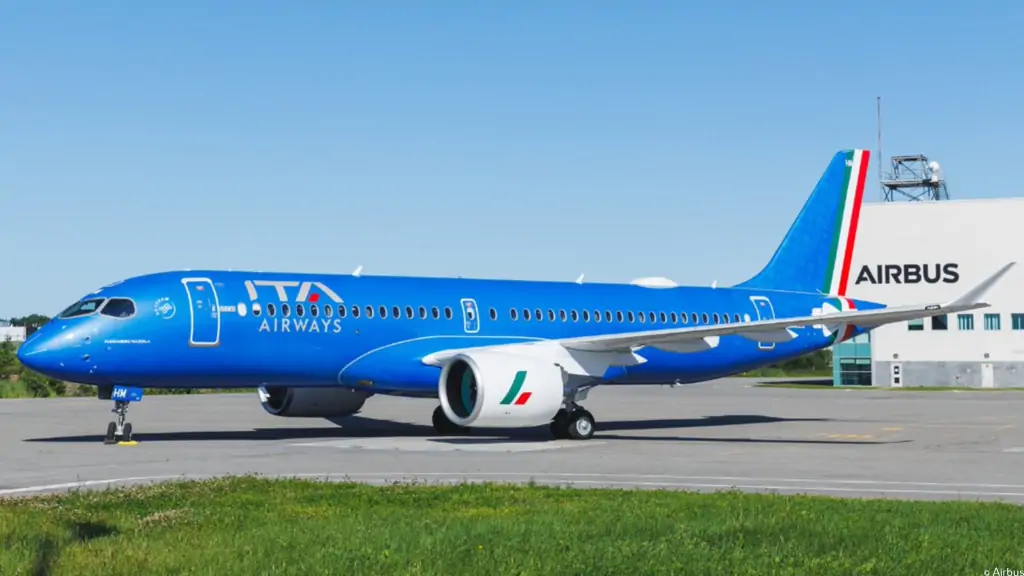
In a momentous occasion for aviation enthusiasts and travelers alike, ITA Airways, Italy's national carrier, proudly unveiled its first Airbus A220 in a captivating all-blue livery on August 28th. This marked the beginning of a new chapter for the airline, as it continues to revitalize its fleet and enhance passenger experiences. Prior to commencing its journey to Rome Fiumicino, a delivery ceremony was held at Airbus' A220 program headquarters located in Mirabel, Canada.
A Grand Delivery Ceremony in Mirabel, Canada
The much-anticipated event took place in Mirabel, Canada, where Airbus houses its A220 program headquarters. The picturesque location set the stage for a splendid delivery ceremony attended by key figures from both ITA Airways and Airbus. It was a day filled with excitement and pride as the Italian airline officially welcomed its latest addition.
A Striking Entry
The Airbus A220, resplendent in ITA Airways' distinctive blue livery, will now embark on a series of meticulous preparatory tests before commencing its operational service. This comprehensive testing process ensures that the aircraft meets all necessary standards and requirements, ultimately guaranteeing passengers a seamless and secure travel experience.
The Airbus A220-300: A Game-Changer for ITA Airways

The introduction of the Airbus A220-300 to ITA Airways' fleet marks a significant milestone in the airline's ongoing efforts to modernize and elevate its services. Here's why this aircraft is a game-changer:
Fuel Efficiency
The Airbus A220-300 is renowned for its exceptional fuel efficiency. With rising environmental concerns and the aviation industry's commitment to sustainability, this aircraft aligns perfectly with ITA Airways' eco-friendly initiatives. It consumes significantly less fuel per passenger, reducing both operational costs and carbon emissions.
Enhanced Passenger Comfort
Passenger comfort is a top priority for ITA Airways. The A220-300's spacious cabin design, larger windows, and reduced noise levels offer an unparalleled in-flight experience. Travelers can look forward to a more relaxing and enjoyable journey on board.
Versatile Route Network
The A220-300's versatility allows ITA Airways to expand its route network, connecting more destinations and catering to a broader range of travelers. This aircraft's adaptability is a strategic advantage for the airline, especially in an ever-evolving industry.
The A220-300 aircraft has a range of about 3,450 nautical miles, making it appropriate for domestic and European travel markets. ITA Airways intends to operate this aircraft on both its domestic and international routes. The aircraft will be operated from Rome Fiumicino (FC) and Milano Linate (LIN) to Genoa (GOA), Turin (TRN), Naples (NAP), Geneva (GVA), Zurich (ZRH), and Munich (MUC).
Cutting-Edge Technology
ITA Airways embraces innovation, and the Airbus A220-300 is a testament to this commitment. Equipped with the latest technology and avionics systems, the A220-300 ensures safe and efficient operations, even in challenging conditions.
ITA Airways' Vision of Modernity

The acquisition of the Airbus A220 is a pivotal moment for ITA Airways, positioning the airline to provide modern and efficient air travel services. With its captivating new livery and advanced features, the A220 stands as a testament to ITA Airways' unwavering commitment to delivering a superior travel experience to its valued customers.
Comments
By 2027, the airline hopes to have 90% of its fleet comprised of new-generation aircraft. Francesco Presicce, ITA Airways' Chief Technology Officer and Accountable Manager, discussed the new aircraft.
As he expressed, "The A220 will enable the company to expand its domestic and international network, and it represents a further step in our strategy of developing a new fuel-efficient and more sustainable fleet with cutting-edge technologies that will optimize efficiency, quality of service, and significantly reduce the airline's carbon footprint."
"With the arrival of the Airbus A321neo by the end of this year, ITA Airways' fleet will include all of Airbus's latest generation aircraft families. I would like to thank all the team involved in the project for their commitment towards this prestigious, coveted, and challenging achievement."
Conclusion
ITA Airways' reception of its first Airbus A220 in a stunning all-blue livery is a momentous occasion. This aircraft symbolizes the airline's dedication to excellence, sustainability, and passenger satisfaction. As it joins the fleet, travelers can anticipate more comfortable journeys and expanded travel options with Italy's national carrier.
With Inputs from ITA Airways
Read next
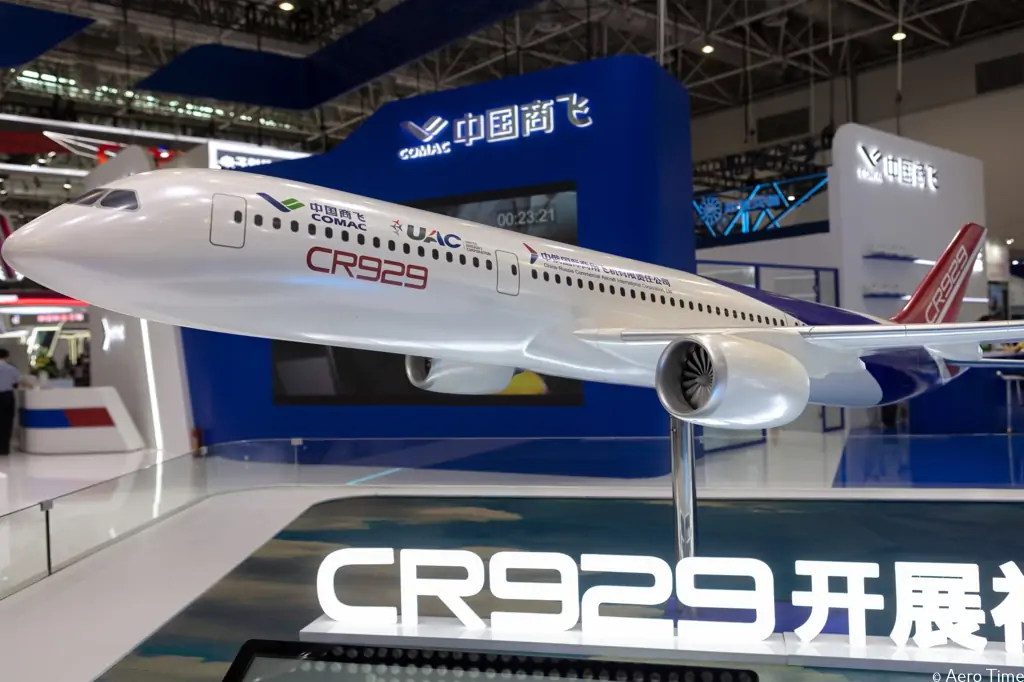
On August 22, Aviation Weekly released an announcement that confirmed Russia has withdrawn from the Comac CR929 widebody aircraft project with China. It is believed this is due to long-term consequences following the Ukraine invasion about 18 months ago. Reported delays to the Irkut (Moscow, Russia) MS-21 single-aisle commercial aircraft, owned by United Aircraft Corp. (UAC, Moscow) are suggesting additional challenges. Both aircraft programs use a healthy amount of composite materials.
While China has not commented on the change of plans for the CR929 for months, reports have indicated that the region had decided to pursue the widebody on its own. According to Aviation Weekly, if these reports hold some truth, they may stem from the fact that keeping Russia on, after Western-posed sanctions, could pose challenges to lifting the program off the ground; the CR929 has already “accumulated years of delays and is not expected to enter service until well after 2030 due to lengthy negotiations about sharing work and intellectual property.” China currently has no sanctions on Russia and the China-Russia Commercial Aircraft International Corp. (CRAIC), formed in 2017, seems to still be intact.
UAC CEO Yury Slyusar notes that Russia still hopes to remain involved in the Comac CR929 program, and plans to continue as a “normal supplier and builder of the composite wing, PD-35 engines and other subsystems for the aircraft.” However, it is still unclear how Western suppliers previously working on the program — Eaton, Honeywell, Liebherr, RTX, Safran, Thales, Zodiac Aerospace and an engine manufacturer — could take part. Aviation Weekly cites that, in addition to the Russian PD-35 engine, China plans to use the Aero Engine Corp. of China (AECC) CJ-2000 currently in development.
The MS-21 (also known as the MC-21) program’s timeline has also slipped, another direct result of the Western supplier’s withdrawal. The Russian-financed program was “expected to hand over the MC-21s in 2024 and roll out 270 of them through 2030.” Russian manufacturers have been given additional time to substitute imported components, including actuators, avionics and air conditioning. Russian PD-14 turbofans and a Russian-made infused composite wing were approved in December 2022.
“We hope that the first six aircraft will be handed over to Aeroflot [a subsidiary of Rossiya Airlines] at the beginning of 2025,” Anatoly Gaidansky, Yakovlev’s first deputy general director, acknowledged in a podcast with the Moscow Aviation Institute on August 13.
An MC-21 prototype is under development, with “70% substituted Western-made equipment,” and is expected to begin in December 2023. The fully import-substituted version, dubbed MC-21-310RUS, is to make its first flight in April 2024 and then receive its supplemental-type certificate by the end of that year. UAC stated that the company is exploring other ways for collaboration. It varies from conceiving and manufacturing a composite wing, drawing from the solutions utilized in the MS-21 to culminating in the provision of engines – specifically, the PD-35, a development spearheaded by colleagues at the United Engine Corporation (UEC).
Russia and China agreed, in general, to jointly develop a wide-body aircraft in 2012. COMAC and UAC signed an MOU in 2016, witnessed by both countries' leaders, Xi and Putin. Initially, Russia wanted the CR929 to be developed based on the Ilyushin IL-96, a Russian quadjet long-haul wide-body airliner designed in the Soviet Union era. The reason is simple. They need a new wide-body type to replace the ageing IL-96. However, China strongly disagrees with the idea. Instead, it proposes a twin-engine, wide-body airliner, much like the Airbus A330 or Boeing 787 Dreamliner, aiming to challenge the Airbus and Boeing duopoly. A widebody similar in size to the Airbus A330, the CR929 is designed to carry between 258 and 320 passengers with a range of up to 12,000 kilometres.
However, at COMAC’s booth at the Paris Air Show in June 2023, a digital mockup of the CR929 was shown without any UAC logos, with the aircraft’s tail, fuselage, and belly including the words “Comac wide-body”. The Chinese planemaker still describes the CR929 as an aircraft that is being “jointly developed by China and Russia” on its website. “It takes China, Russia and the Commonwealth of Independent States as the entry point, and at the same time widely meets the needs of the global international and inter-regional air passenger transport market,” the aircraft description continued.
(With Inputs from Aviation Weekly)
Read next
AirAsia X's Remarkable Turnaround: From Red to Black - How Did They Do It?
Abhishek Nayar
29 Aug 2023
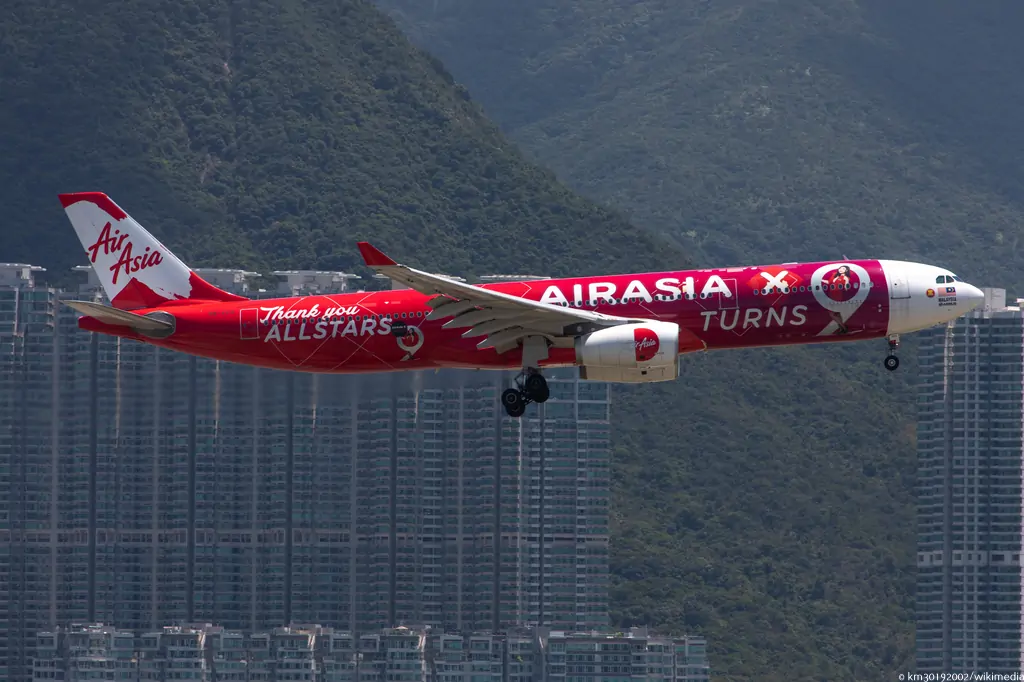
In the world of aviation, where turbulence is often the norm, AirAsia X Berhad has emerged as a phoenix, rising from the ashes of financial turmoil to reclaim its place in the skies. The second quarter of 2023 has brought remarkable news for the Malaysian low-cost widebody specialist, with a net profit of RM5.5 million ($1.16 million), a stark contrast to the net loss of RM652.2 million ($137 million) suffered in the same period last year.
A Resilient Comeback
The Turnaround Story
AirAsia X's resurgence is nothing short of remarkable. Just a year ago, the airline was grappling with significant financial challenges, with losses soaring into the hundreds of millions. Fast forward to August 28, 2023, and the airline's financial announcement reveals a wholly different narrative.
Profitability Factors
Increased Seat Capacity
The most significant contributor to this newfound profitability is an exponential increase in seat capacity. At the close of June 2023, AirAsia X was operating eleven Airbus A330s, compared to just five during the same quarter in the previous year. This impressive fleet expansion has translated into a staggering 26-fold increase in passenger capacity, with 814,422 seats flown in 2Q23.
AirAsia X (AAX) transported 621,984 passengers during 2Q23 at a healthy load factor of 76%, with seat capacity, as measured by available seat kilometers, recovering to 42% against the corresponding period in 2019.
Strategic Service of Widebody Airbus A330s
One key aspect of AirAsia X's revival is the strategic deployment of its widebody Airbus A330s. These aircraft are known for their efficiency and spaciousness, making them a popular choice for long-haul travel. By utilizing these planes effectively, AirAsia X has managed to tap into lucrative international routes, attracting a diverse range of travelers.
Financial Numbers
The financial figures speak volumes about the airline's turnaround. In the second quarter of 2023, AirAsia X generated RM512.9 million ($108 million) in revenue. This astonishing figure is more than four times the revenue the airline earned during the same period in 2022. It's clear that the company is on a strong upward trajectory.

The Path to Recovery
A Brighter Future
With its impressive financial recovery, AirAsia X is charting a path towards a brighter future. This success story isn't just about numbers; it's about resilience, adaptability, and smart strategic decisions. The airline industry is known for its volatility, but AirAsia X has demonstrated that with the right approach, even the most challenging circumstances can be overcome.
Passenger-Centric Approach
AirAsia X's success isn't solely due to expanding its fleet; it's also about understanding the needs of its passengers. By offering affordable yet comfortable long-haul travel options, the airline has tapped into a segment of travelers who seek both cost-effectiveness and quality.
Comments
"In the last 12 months, we have been prudent by reinstating services from two destinations and three times weekly flights," AAX CEO Benyamin Ismail remarked. "In comparison, we currently have 18 destinations and 96 weekly flights, and this exponential growth is expected to continue as additional aircraft are returned to service and connectivity with FlyThru is further amplified."
Conclusion
In conclusion, AirAsia X Berhad's remarkable turnaround in the second quarter of 2023 is a testament to the airline's resilience and strategic acumen. With a significant increase in seat capacity, the strategic deployment of widebody Airbus A330s, and a passenger-centric approach, the airline has not only recovered from its financial setbacks but is also poised for a brighter future in the world of aviation.
With Inputs from AirAsia X
Read next
Standard Chartered's $3.6 Billion Aviation Business Deal with AviLease: What's Behind the Streamlining Move?
Abhishek Nayar
29 Aug 2023

In a strategic move aimed at streamlining its operations, Standard Chartered announced on Monday, August 28, 2023, that it has entered into an agreement to sell its global aviation finance leasing business to Saudi Arabia-based AviLease for approximately $3.6 billion.
The Road to Streamlining
Standard Chartered's Strategic Decision
Standard Chartered's decision to divest its global aviation finance leasing business is a strategic move in line with its ongoing efforts to streamline its operations. By doing so, the bank aims to focus more keenly on its core banking services and strengthen its financial position in business areas where it stands out from competitors as it strives to deliver 2024 targets.
"The sale of our Aviation Finance leasing allows us to continue to focus our efforts on those areas where we are most differentiated," said Simon Cooper, Standard Chartered's CEO of Corporate, Commercial & Institutional Banking and Europe & Americas, on Monday. The company expects to turn over a $300 million profit from the transaction, and its common equity tier 1 capital ratio is expected to increase by around 19 basis points.
AviLease's Entry into the Global Aviation Market
On the other side of the deal, AviLease, also known as Aircraft Leasing Co., a Saudi Arabia-based company specializing in aviation financing, is making a significant entry into the global aviation market. This acquisition will not only expand AviLease's reach but also position it as a key player in the aviation finance sector.
According to AviLease Chairman Fahad Al-Saif, "The acquisition will propel AviLease and, in turn, support Saudi Arabia's aviation ecosystem."
The Financial Details
The Initial Payment
As part of the deal, AviLease will pay an initial consideration of $700 million to Standard Chartered. This payment represents the first step in what promises to be a transformational transaction.
Intra-Group Financing
The lion's share of the transaction, approximately $2.9 billion, will come from AviLease's funding of net intra-group financing from the StanChart group. This intricate financing arrangement demonstrates the complexity of such a large-scale deal.
Total Consideration
The total consideration for this acquisition amounts to approximately $3.6 billion. This substantial sum underscores the significance of the aviation finance leasing business in the global financial landscape.

The Implications
Strengthening Standard Chartered's Balance Sheet
By divesting its aviation finance leasing business, Standard Chartered aims to strengthen its balance sheet and reallocate resources to core banking activities. This strategic move is expected to enhance the bank's overall financial stability.
AviLease's Growth Potential
For AviLease, this acquisition presents a golden opportunity for growth and expansion. The company's entry into the global aviation finance market is expected to be met with enthusiasm and interest from investors and industry stakeholders.
The Future of Aviation Finance
A Changing Landscape
This transaction highlights the evolving landscape of aviation finance. As AviLease takes the reins of Standard Chartered's aviation finance leasing business, we can expect to see new players emerge and existing ones adapt to these changes.
Impact on Industry Competitors
Competitors in the aviation finance sector will likely take note of this significant deal. It may prompt them to reassess their own strategies and consider potential opportunities for growth and consolidation.
Conclusion
Standard Chartered's decision to sell its global aviation finance leasing business to AviLease for approximately $3.6 billion signifies a strategic move to streamline operations and strengthen its core banking services. On the other hand, AviLease's entry into the global aviation market is set to reshape the industry landscape. As we witness this transformative transaction, it's clear that both companies are positioning themselves for success in the dynamic world of aviation finance.
With Inputs from Reuters, Standard Chartered
Comment