

Air India Express, the low-cost subsidiary of Air India, has outlined its strategic plan to cater to a specific segment of travelers while optimizing its network in the Indian aviation market.
In a recent announcement, the airline's Managing Director, Aloke Singh, shared insights into their approach, emphasizing their focus on routes with a high proportion of price-sensitive and leisure travelers. The airline also seeks to capitalize on the synergy between Air India and Air India Express while avoiding duplication of routes.
Segmented Strategy: Price-Sensitive and Leisure Travelers
Aloke Singh highlighted that Air India Express aims to cater to a particular demographic of travelers. The airline will concentrate on routes where a majority of passengers are leisure travelers and those who prioritize cost-effectiveness over premium services. This strategic approach is in contrast to Air India, which will continue to target routes with higher-yield customers and a demand for business class and premium in-flight services.
Network Optimization Over Expansion
Rather than expanding haphazardly, Air India Express has chosen a prudent path. The airline's short-term focus is to strengthen its existing presence on routes where it already operates. This method is designed to achieve a meaningful scale before venturing into new markets. By consolidating their presence in established routes, the airline aims to solidify its position and enhance its competitiveness.
Air India Express's network strategy will be rationalized to ensure it complements Air India's route map. It will primarily serve destinations not currently covered by Air India, allowing for a well-structured and efficient network that avoids redundancy.
Synergy with Air India
One significant advantage that Air India Express possesses is its codeshare agreement with Air India. This partnership allows Air India Express to tap into Air India's extensive international network and share connecting passengers for domestic destinations. This collaboration creates a win-win situation, enabling Air India to provide a seamless travel experience for its customers and bolstering Air India Express's occupancy.
For instance, when a passenger flying in from London with Air India needs to reach Surat, Air India can sell an itinerary that includes an Air India Express-operated flight, which is coded under Air India. This synergy enhances efficiency and unlocks the potential for both airlines to utilize their capacity more effectively.

Competition and Strengths
Acknowledging the presence of the market leader, IndiGo, Aloke Singh asserted that Air India Express has its unique strengths to compete effectively. While competition is inevitable, the airline intends to leverage its strengths strategically.
The key to profitability, Singh explained, depends on multiple factors such as product quality, network optimization, and achieving a meaningful scale, especially in a highly competitive market like India. Profitability is not only about the route network but also the product offerings that resonate with price-sensitive travelers.
Efficiency, Profitability, and Scale
Efficiency and profitability in the aviation industry are closely tied to various elements. Singh emphasized that the scale of operations is critical. Sub-scale operations can make it challenging to achieve profitability, especially in a fiercely competitive market. Short-haul international markets are intrinsically more profitable due to the optimization of aircraft flying over shorter distances, leading to lower unit costs and reduced fuel expenses.
Conclusion
Air India Express's strategic approach to focus on routes that attract price-sensitive and leisure travelers while optimizing its network in collaboration with Air India shows a calculated move in the Indian aviation market.
This strategy aims to solidify its presence on existing routes, leverage synergies, and compete effectively against established players. With a well-thought-out plan, Air India Express aims to carve out its niche while providing cost-effective travel options for its target demographic.

Read next


Akasa Air might be slowly coming out of the turbulence caused by sudden pilots’ exits but the airline’s chief Vinay Dube is “dead set against” the idea of having any kind of no-poaching agreement between airlines, asserting that it will not be right. The airline, which has been flying for more than a year, has more than 450 pilots and the number will go up as it expands the fleet from 20 aircraft now.
"We had about 330 pilots in April. Approximately, 40 went away without (serving) notice period or with one day, two days or less than 24 hours. Today, we have little over 450 pilots… between April and today, we have probably added about a third of additional pilots despite a small number leaving," Akasa Air Founder and CEO Vinay Dube told PTI. Following the sudden exit of pilots, many of whom apparently joined another carrier, Akasa Air had to cancel some flights in July and August.
The carrier’s market share also took a hit due to the cancellations. Following the sudden exit of pilots, many of whom apparently joined another carrier, Akasa Air had to cancel some flights in July and August. Also, the airline has initiated legal action against the pilots concerned. While noting that the exit of some pilots without serving their notice periods was something completely unprecedented, Dube said that he does not think anything is needed at the airline industry level to prevent such instances in the future.
"We got the judicial clarity. So, I don’t think anything is required actually. The matter is behind us and really now, we are squarely in growth mode. The expectation is that our network will grow by 10% in December and then over 33% by March. So, really this is not an issue and nothing is required," he said in an interview.
To a query on whether there is a need for a no-poaching agreement among the airlines for pilots, the Akasa Air chief replied in the negative. "Not at all. Absolutely not. I am dead set against it. I think pilots like any other employees should be completely allowed to work with whatever airline they want and I don’t believe that the airlines should collude on this topic at all. I don’t think there is a need and I don’t think it is right," he asserted. Currently, Akasa Air operates around 700 weekly flights and expects to have a total of 25 planes by the end of this financial year.
Against the backdrop of alleged differences between the airline and the Directorate General of Civil Aviation (DGCA) on the pilots’ issue, Dube said the regulator has always been incredibly helpful and efficient. "From the very beginning, we got our AOC (Air Operator Certificate) and the airline started in less than 24 months. That is as efficient as it gets from the regulatory perspective. It is just that the judicial order that was passed lacked a bit of clarity from their perspective which were able to get subsequently. I would not say they were not helpful because they were incredibly helpful and efficient. We have the clarity now and it says that pilots need to respect the contractual notice period," Dube said.
About competition in the Indian aviation market, especially when it comes to airfares, Dube said that he thinks India and Indian consumers have some of the most attractive fares when compared to other mature aviation economies even though a large chunk of the cost structure of the Indian aviation sits with dollar currency. "Fuel is pegged to the dollar in Brent, a good chunk of maintenance is pegged to the dollar, and our aircraft leasing is pegged to the dollar. Given that, Indian consumers have some of the best fares relative to other large aviation economies. I think there is a good amount of competition and by the way, we are happy to compete," he said.
Akasa Air to Operate Flights to the Middle East
Akasa Air, which is in a "very exciting phase", has received approval from the government to operate flights to Riyadh, Jeddah, Doha and Kuwait, and expects to start international services "soon enough", according to its chief Vinay Dube.
Currently, the airline which completed its first year of operations in August, has a fleet of 20 Boeing 737 MAX aircraft and 2 more planes are expected to be inducted into its fleet by the end of this year. Asserting that Akasa Air is in a "growth mode" with strong financials, Dube said the airline will announce a triple-digit aircraft order in 75 days or by the end of this year.
"We have just been given traffic rights for Riyadh, Jeddah, Doha and Kuwait. The process will take time... we will let the process unfold. We continue to be in a very very exciting phase in our lives now. We are doing well financially. We have a good cash position," he said in an interview.
The carrier has received approval from the civil aviation ministry for rights to operate flights to Riyadh and Jeddah (Saudi Arabia), Doha (Qatar) and Kuwait. Now, the airline will work with the foreign governments concerned for various other approvals to start international operations and that will take some time.
On when the first international flight is likely to commence, the Akasa Air Founder and CEO said it will be a little difficult at this point for the airline to nail down the timeline. "The Indian government is extremely efficient but then we have to work with various foreign governments, (in) three different countries. Timelines for approvals from these countries will vary... It is soon enough," he said.
(With Inputs from PTI)
Read next

Authorities have evacuated multiple airports across France for the third day in a row on October 20 due to bomb threats. Affected facilities include the Beziers Cap d'Agde (BZR), Brest-Bretagne (BES), Paris-Beauvais (BVA), Lille (LIL), Pau-Pyrenees (PUF), Rennes (RNS), and Tarbes–Lourdes–Pyrenees (LDE) airports. Security forces are deployed at multiple sites to conduct investigations.
Authorities have also evacuated the Bordeaux (BOD), Lille (LIL), Montpellier (MPL), and Nantes Atlantique (NTE) airports on October 19 due to bomb threats. Increased security and flight disruptions are likely.
Multiple flights have been diverted, and additional flight disruptions are likely. Some airports, including Nantes Atlantique (NTE), received bomb threats on October 20 but did not evacuate. Airports have been evacuated on several days this week, causing the cancellation of at least 130 flights.
There are significant flight disruptions because of this and they are likely to persist through October 20 as well, with knock-on effects at other airports. International flights may be impacted by airports being unavailable for diversions.
Authorities will likely maintain heightened security throughout October 20. Flight disruptions will likely persist after the security alerts conclude as airports work to clear flight backlogs. The disruptions could have a knock-on effect at other airports in France. Additional airports nationwide could be evacuated in the event further bomb threats are received.
“For the moment, we have no miracle solution,” said Nicolas Paulissen, general delegate for the Union of French Airports which is present at all 150 airports around the country. The bomb risk cannot be ignored, but “we can’t stop airports from functioning.” He noted, however, that airports are capable of adapting to threats and crises.
Strasbourg Airport confirmed it had evacuated on Wednesday, October 18 in response to “a malicious email,” while Beauvais revealed an “anonymous threat” had been received by several airports, and Nice reported an “abandoned baggage item” had triggered the panic. Other airports affected on Wednesday included Toulouse, Biarritz, Pau, and Lyon.
What is Happening in France?
Bomb threats have been issued against multiple airports in France since October 18, when around 17 airports received bomb threats, prompting the evacuation of 15 facilities and significant flight disruptions. Although no viable explosive devices have been discovered, authorities continue to take each report seriously and react out of an abundance of caution.
France is on its highest state of alert after the October 13 murder of a schoolteacher in a suspected Islamist attack. The Palace of Versailles, one of France's main tourist attractions, said it was again evacuating visitors for security reasons. On Saturday, October 14, a day after the fatal stabbing of the teacher, bomb alerts that proved false forced the evacuation of the Louvre museum, the palace and Paris' Gare de Lyon train station.
Read next
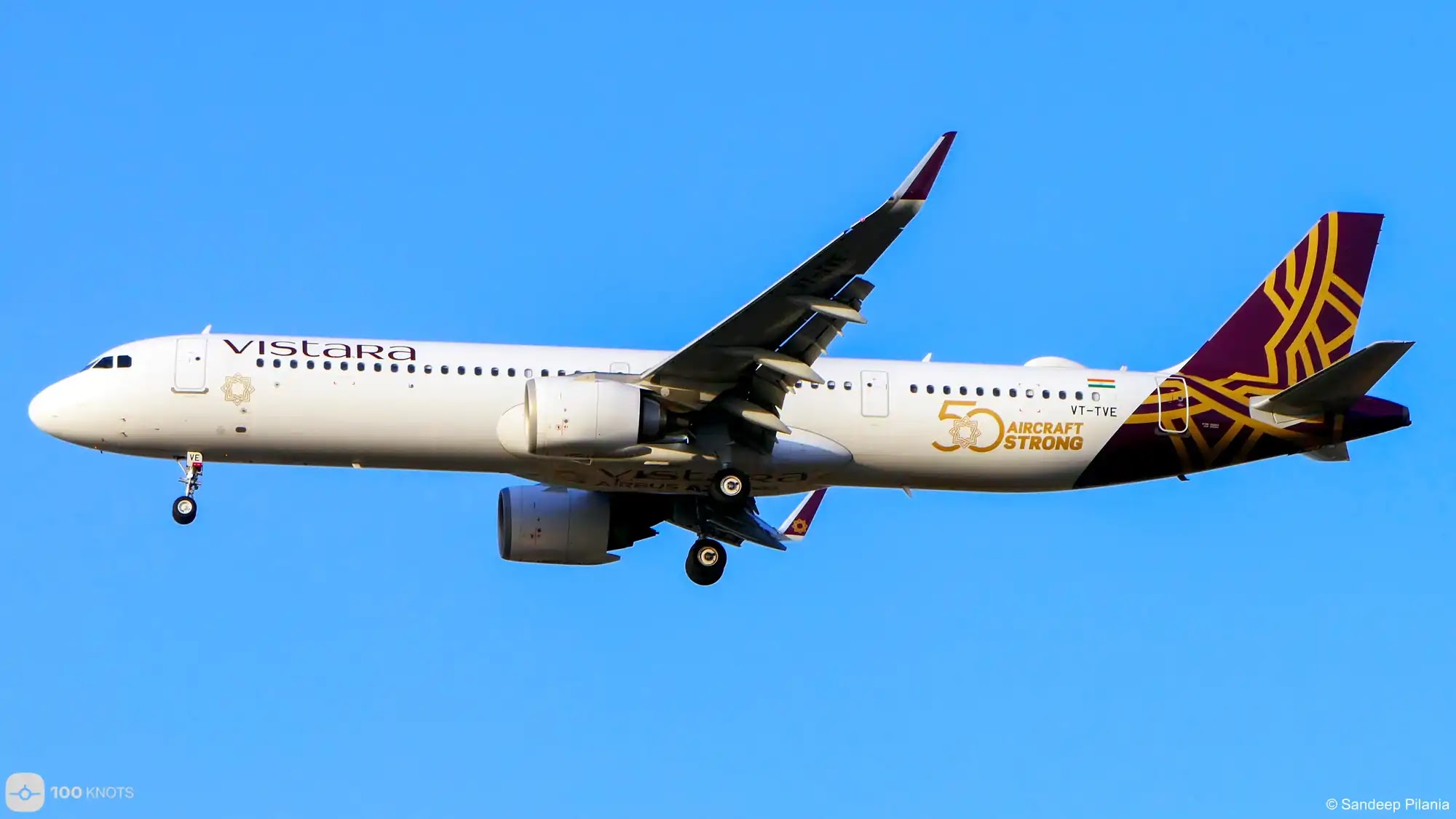
Vistara announced daily non-stop flights between Delhi and Bali, starting December 01, 2023. This makes Vistara the only airline offering direct connectivity between the two cities currently. Vistara will be deploying its A321LR aircraft, with a three-class configuration, giving its customers the option to fly in Business, Premium Economy, or Economy cabins when travelling on the route.
Bali has become an increasingly sought-after holiday destination for Indians due to its accessibility, proximity, and hassle-free visa-on-arrival facility.
Commenting on the introduction of the new destination, Vinod Kannan, Chief Executive Officer, Vistara said, “India is the second-largest source of foreign tourists to Bali, and with hassle-free visa-on-arrival, Bali remains one of the preferred holiday destinations for Indians, besides being popular for MICE traffic. Additionally, as the second largest trading destination for India in the ASEAN region, Indonesia exhibits great potential for business travel as well. We are delighted to be the only airline offering direct connectivity between Delhi and Bali. We are confident that customers will appreciate having the option to travel on India’s finest full-service airline on the route.”
Vistara launching flights to Hong Kong
Vistara also announced recently that it will start the Kathmandu-Delhi-Hong Kong two-way flight service from November 1. Vistara has added Hong Kong to its global flight network from November 1. The airline will deploy A320 narrow-body aircraft for this route.
Vistara has been flying between Kathmandu and Delhi since February 13. "Vistara is scheduled to start Kathmandu-Delhi-Hong Kong two-way flight from November 1," Prasanna Adhikari, executive officer of the airline in Nepal said. "This air service will be beneficial for travellers who want to travel from Kathmandu to Hong Kong via Delhi and Hong Kong to Kathmandu via Delhi," according to Adhikari. "The main objective of Vistara is to provide safe and comfortable air service to the passengers," he added. From November 1 onward, there will be daily flights between Delhi and Hong Kong, according to Adhikari.
Vistara will also compete with Cathay Pacific and Air India, which already fly this route with non-stop flights. IndiGo also announced that it will resume its Delhi-Hong Kong service on October 5th. IndiGo will be the only low-cost carrier on this route and will compete with the full-service products of Air India, Cathay Pacific, and Vistara (which will offer a three-class configuration on its A321neo.)
Market Share of Vistara
Tata bought Air India in January 2022 and is in the process of merging the full-service carrier with Vistara to create a larger entity better equipped to challenge IndiGo and rivals from the Middle East. The Competition Commission of India gave the green light to the merger in early September, paving the way for a combination. Once complete, the Air India brand will be retained, while Vistara’s brand will be retired.
Vistara's performance in August positioned it as the second-largest player in India's domestic aviation market. The airline's market share increased to 9.8%, a notable improvement from the 8.4% it held the previous month. While IndiGo maintained its dominant lead with a commanding share of 63.3%, Vistara shared the second position with another Tata Group-owned airline, Air India, which also secured a 9.8% market share. AirAsia India followed closely behind with a 7.1% share, while SpiceJet and Akasa Air accounted for 4.4% and 4.2% of the market, respectively.
The airline currently has a fleet of 63 aircraft, including 48 Airbus A320neo, 10 Airbus A321, and 5 Boeing 787-9 Dreamliners and has flown more than 50 million customers since starting operations. It has been flying regularly to 30 different destinations in the world.
Read next
Space exploration has always been a testament to human ingenuity, pushing the boundaries of what is technologically possible. Astronauts embarking on missions beyond Earth's orbit face two critical challenges: launching into space and safely returning to our planet. Over the decades, chemical rockets have become the standard for launching astronauts, but the question of the best way to bring them back remains a topic of debate among engineers.
The Age-Old Question: Capsules or Rockets?
For decades, the tried-and-true method of landing astronauts has been through the use of capsules. Boeing and SpaceX, in collaboration with NASA's Commercial Crew Programs, have embraced this approach for sending astronauts to the International Space Station. Their spacecraft, despite boasting advanced technology for many cosmic challenges, still bear a resemblance to the capsules of yesteryears. These capsules rely on their blunt, high-drag shapes and a set of parachutes to decelerate from orbital speeds of 17,000 mph to a safe landing velocity.
Propulsive Landing: A Futuristic Dream
SpaceX, under the visionary leadership of Elon Musk, initially aimed to redefine astronaut landings with a futuristic approach. They advocated for propulsive landings, where rockets would be used to slow the spacecraft down, and extendable legs would help balance it upon touchdown.
Musk's vision was clear: "That is how a 21st-century spaceship should land, anywhere on Earth with the accuracy of a helicopter." While SpaceX has successfully implemented propulsive landings for cargo delivery rockets, adapting it for crewed missions proved to be a time-consuming and costly endeavor, which NASA hesitated to commit to, ultimately leading to a return to traditional parachute-based landings.
Nostalgia and Reality: The Challenges of Sea Landings
Astronaut splashdowns in the sea have a nostalgic aura, with historic missions like Apollo and Mercury adding to their mystique. However, these landings were far from comfortable. For instance, Gus Grissom faced a near-drowning experience, while Scott Carpenter ended up landing 250 miles off course and spent hours in a life raft before rescue. Sea landings, despite their historical significance, come with their set of challenges.

The Soviet/Russian Approach: Landing on Land
While NASA opted for sea landings, the Soviet and Russian space program has consistently chosen to land their spacecraft on solid ground. The Soyuz spacecraft, which first launched in 1967, has been following this practice. However, astronauts who have experienced landings on land describe it as a series of explosions followed by a car crash. It's certainly not a comfortable ride, especially after spending extended periods in space.
The Art of Re-Entry
A successful return to Earth and a safe landing requires precise orchestration. Once a mission is complete and the shuttle is halfway around the world from the landing site, a series of steps are initiated.
- Closing the cargo bay doors.
- Firing the Reaction Control System (RCS) thrusters to turn the orbiter tail-first.
- Slowing down using the Orbital Maneuvering System (OMS) engines.
- Pitching the orbiter over to face the atmosphere.
- Burning off leftover fuel to handle the extreme heat of re-entry.
Surviving the Heat
Re-entry is a critical phase where the orbiter encounters extreme heat due to friction with the Earth's atmosphere. The shuttle is equipped with specialized insulating materials, such as reinforced carbon-carbon, high-temperature black surface insulation tiles, and white Nomex blankets, to protect it from the intense heat. The materials are designed to absorb and dissipate heat efficiently.
At this point, the spacecraft takes on a lifting body design, enabling it to generate lift with relatively small wings. Flight computers take control, and the spacecraft makes a series of banking turns to reduce its descent speed. The commander uses radio beacons to line up with the runway and control the final approach.
The Final Approach
As the orbiter approaches the landing site, it goes through a series of maneuvers, making S-shaped, banking turns to reduce descent speed. The commander uses radio beacons to align the orbiter with the runway and control its descent. The steep descent angle, around minus 20 degrees, is significantly steeper than that of a commercial airliner.
Touchdown and Deceleration

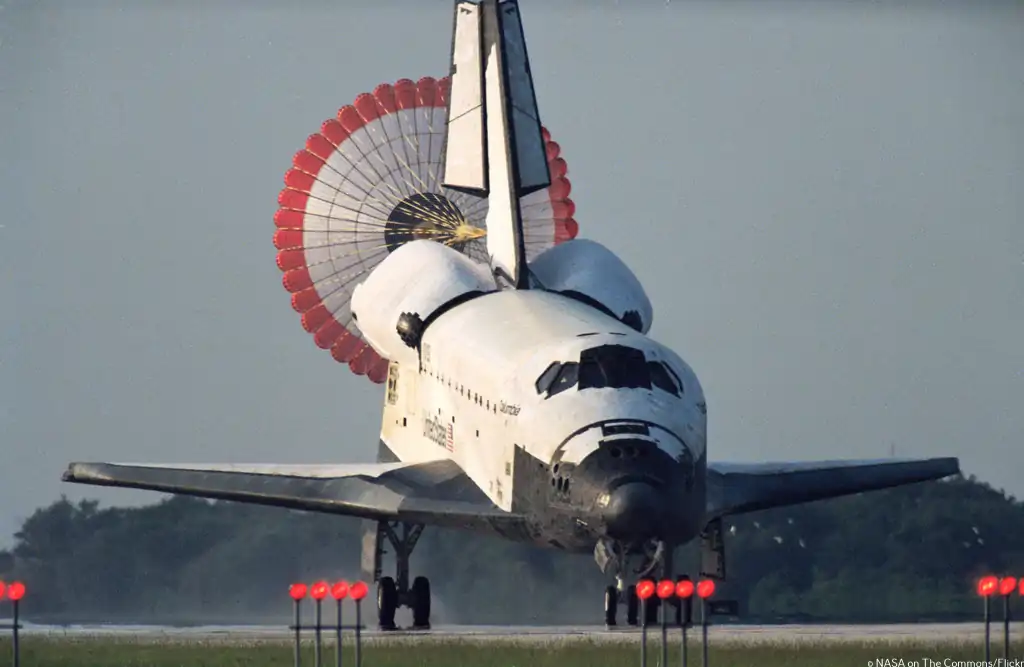
At around 2,000 feet above the ground, the commander initiates the nose-up maneuver to reduce descent rate. The landing gear is deployed, and the orbiter touches down. The commander then deploys the speed brake on the vertical tail, and a parachute is activated to further slowdown the orbiter. This combination of mechanisms ensures a controlled deceleration.
Post-Landing Procedures
After a successful landing, the crew follows a set of post-landing procedures to power down the spacecraft. This includes cooling the orbiter and venting noxious gases generated during re-entry. Ground crews are on hand to provide immediate assistance and servicing to the orbiter.
Conclusion
The art of astronaut landings is a critical aspect of space exploration. While capsules and parachutes have a rich history, space agencies and private companies continue to explore innovative approaches for safer and more comfortable returns to Earth. Whether it's the nostalgia of sea landings or the rough experiences of landings on solid ground, each method has its unique challenges and characteristics.
With Inputs from How Stuff Works, Smithsonian
Read next
Air India Launches Peer Support Program for Pilots and Travel Insurance Partnership
Abhishek Nayar
21 Oct 2023
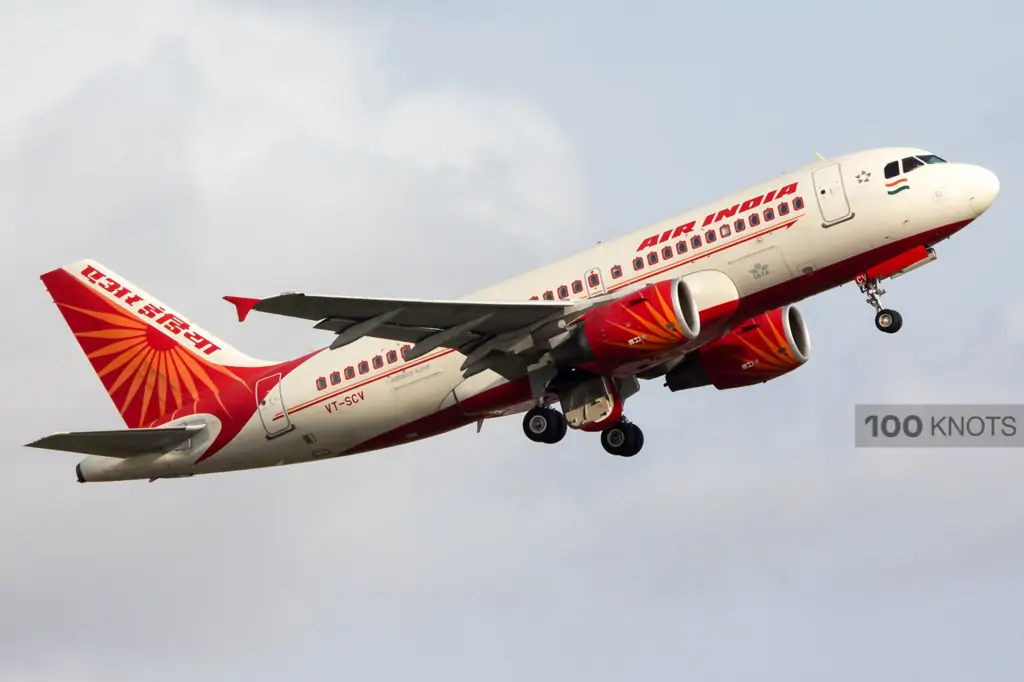
In a move aimed at prioritizing the well-being of its pilots and enhancing customer experience, Air India has launched a Peer Support Program (PSP) for its pilots and entered into a partnership with Tata AIG General Insurance to provide travel insurance.
These strategic initiatives reflect the airline's commitment to promoting mental health among its flight crews while simultaneously offering its passengers comprehensive travel insurance coverage.
Supporting Pilot Well-being
Air India's PSP Initiatives
Air India's Managing Director and CEO, Campbell Wilson, recently announced the launch of a Peer Support Program (PSP) for its pilots. This program is designed to offer mental health support and assistance to the airline's flight crews. The initiative was prompted by the Directorate General of Civil Aviation's (DGCA) recommendation to all airlines to establish such programs in order to enhance the mental well-being of aviation professionals.
Confidential Support
The PSP ensures complete confidentiality for pilots seeking assistance. It connects them with professionals and mental health specialists who are trained to address the unique challenges faced by aviation professionals. This initiative recognizes the demanding nature of the aviation industry and the critical role mental well-being plays in ensuring the safety and efficiency of flight operations.
Buddy.AI
In addition to the professional support, Air India has also introduced Buddy.AI, a program that enables pilots to connect with trained volunteers who share similar professional backgrounds and a deep understanding of the challenges specific to the aviation industry. This peer-to-peer support network allows pilots to lean on each other for assistance and guidance, fostering a sense of community and solidarity.

Embracing the Latest Science and Thinking
Air India's Association with EAAP
In a bid to stay at the forefront of mental health support in aviation, Air India has joined the European Association for Aviation Psychology (EAAP). This strategic partnership ensures that the airline remains fully informed about the latest scientific developments and best practices in aviation psychology. By aligning with EAAP, Air India demonstrates its commitment to promoting the mental health and well-being of its flight crews.
Travel Insurance Partnership with Tata AIG General Insurance
Enhancing Passenger Experience
In addition to its focus on pilot well-being, Air India has taken steps to enhance the overall customer experience. The airline has partnered with Tata AIG General Insurance to offer travel insurance to its passengers. This partnership provides travelers with the opportunity to protect themselves against a range of travel-related financial risks, including medical emergencies, travel disruptions, baggage issues, and passport loss.
Seamless Integration
To make the travel insurance process convenient for customers, Air India has integrated it into its website booking flow and contact centers. This ensures that passengers have easy access to comprehensive travel insurance coverage when booking their flights. The integration also streamlines the process for the airline's staff, making it efficient and hassle-free for all parties involved.
Conclusion
Air India's recent initiatives, the launch of the Peer Support Program for pilots and the partnership with Tata AIG General Insurance, reflect the airline's commitment to prioritizing the well-being of its flight crews and enhancing the customer experience. These strategic moves reinforce the importance of mental health support in the aviation industry and offer passengers greater peace of mind when embarking on their journeys. As Air India continues to adapt and innovate, it sets an example for the industry by ensuring that both its employees and customers are well taken care of.
With Inputs from Times of India
Comment