

Ireland's national carrier airline, Aer Lingus, is looking to expand terminal capacity at Dublin Airport. The airline's ambitions are in reaction to present terminal capacity limits, which are impeding its expansion potential.
Dublin Airport's Current Terminal Capacity
Dublin Airport is Ireland's largest airport and serves as Aer Lingus' hub. Terminal 2 at the airport opened in 2010 and has since become the major terminal for long-haul flights. Despite this, the airport is running at nearly full capacity, with over 100 million passengers passing through its sleek and spacious terminal since its inception. Aer Lingus' development aspirations are being hampered by the present terminal capacity at Dublin Airport, which is a source of concern for the airline.
Present Situation
Aer Lingus, the Irish flag carrier, stated this week that it aims to boost terminal capacity at its main hub, Dublin Airport. The news follows the recent launch of Dublin Airport's new North Runway.
Plans by Aer Lingus to Expand Terminal Capacity at Dublin Airport
Aer Lingus has suggested a new expansion proposal to enhance terminal capacity by up to 30% in response to terminal capacity concerns. A new facility, a new pier, and more aircraft parking stands are all part of the proposed development. The new structure will have more capacity for check-in, security, and luggage processing, and the new dock will have more boarding gates. Aer Lingus will be able to increase the number of flights and passengers, which will raise income and growth potential.
The Effect of Expanded Terminal Capacity
Both passengers and Dublin Airport will benefit greatly from the extension of terminal capacity. Passengers will benefit from speedier and more efficient check-in, security, and boarding operations since there is more room available. This will improve the passenger experience, which is critical for Aer Lingus to be competitive in the business. The extension will also aid Dublin Airport by increasing capacity to handle additional planes and passengers. This will increase airport income and benefit the local economy. The development, however, will have an environmental impact due to increasing carbon emissions from more aircraft and ground transportation.
Aer Lingus' Expansion Plans Face Obstacles
Environmental organisations have objected to Aer Lingus' expansion plans, citing concerns about the environmental impact of rising carbon emissions. There might also be problems with the Dublin Airport Authority, which regulates airport operations. The authorities may have issues with the expansion's cost and viability and may ask Aer Lingus to make changes to its plans. Despite these challenges, Aer Lingus is dedicated to its expansion ambitions and is collaborating with stakeholders to resolve concerns and ensure the project gets forward.
Conclusion
Finally, Aer Lingus' plans to expand terminal capacity at Dublin Airport are a big step forward for both the airline and the airport. The proposed extension will allow Aer Lingus to expand the number of flights and passengers, enhance income, and improve the passenger experience. However, the development would have environmental consequences and likely meet criticism from some organisations. Nonetheless, Aer Lingus is dedicated to meeting its objectives and collaborating with stakeholders to resolve concerns and assure the project's success.
With Inputs from RTE

Read next

Japan Airlines (JAL) has released its fiscal year 2022-2023 financial figures, suggesting a return to profitability after two years of losses. The airline owes its success to major cost reductions and a rise in cargo revenue. JAL's success in handling the COVID-19 epidemic has been attributed to its strategic approach and adaptability.
History of JAL
JAL, Japan's national airline, was created in 1951. The airline has a lengthy track record of success, and it was Asia's largest airline until the 1990s. JAL had considerable hurdles in the early 2000s as a result of a number of issues, including rising fuel prices, more competition, and the aftermath of the 9/11 terrorist attacks. JAL declared bankruptcy in 2010, but was able to reorganize and re-enter the market in 2012.
Present Situation
Japan Airlines (JAL) has indicated that it will return to profitability in its fiscal year 2022-2023, following two years of losses due to the COVID-19 epidemic. For the fiscal year ending March 31, 2023, the national carrier posted a net profit of 34.4 billion yen (about €228 million).
Since the absolute relaxation of health restrictions at Japan's borders last autumn, JAL has experienced a revival in passenger traffic, especially on foreign flights. However, the airline suffered from a spike in oil costs last year as a result of Russia's invasion of Ukraine, which was exacerbated by the yen's decline. Its yearly gasoline expenses have more than quadrupled (+122.3%) in a year. JAL has lessened the effect by lowering its fixed expenses. All Nippon Airways (ANA), JAL's biggest competitor, also reported a net profit of 89.5 billion yen (roughly €600 million) for its fiscal year 2022-2023, which ends in April 2023.
The Pandemic's Impact on Japan Airlines
The COVID-19 pandemic had a huge influence on Japan Airlines, resulting in a considerable decrease in the number of passengers and flights. According to the International Air Transport Association (IATA), the pandemic would cost the Asian airline sector more than $31 billion in 2020. Japan Airlines, which relies largely on overseas travel, suffered the most, with a 95% drop in international passenger numbers in April 2020 compared to the previous year.
Japan Airlines' Implemented Strategies
To mitigate the effects of the epidemic, Japan Airlines employed a number of cost-cutting and revenue-boosting tactics.
Measures to Reduce Costs: The airline implemented a number of cost-cutting steps, such as lowering employee wages and bonuses, eliminating non-essential expenditures, and retiring outdated aircraft. The airline also decreased its employment by 10%, resulting in considerable cost savings.
Initiatives to Increase Income: To increase income, Japan Airlines concentrated on growing cargo operations, which witnessed an increase in demand due to the epidemic. In addition, the airline launched additional domestic flights and boosted frequency on existing routes. In order to maximize income, Japan Airlines also employed dynamic pricing tactics and established a new premium economy class.
Collaborations and Partnerships: Japan Airlines created collaborations and partnerships with other airlines, including an alliance to share flights with All Nippon Airways (ANA) and codeshare agreements with other carriers. The airline also collaborated with Airbnb to provide lodging for its guests.
Concentrate on Domestic Travel: Japan Airlines concentrated on internal flights, which were less affected by the epidemic than international flights. The airline launched additional domestic routes and boosted the frequency of flights to famous Japanese locations. To entice domestic travellers, the airline also developed new packages, such as one that included a flight, hotel, and auto rental.
Japan Airlines' Prospects for the Future
Despite the pandemic's hurdles, Japan Airlines has emerged stronger and more resilient. The airline intends to maintain its focus on local passenger and freight operations while resuming international flights. The airline also intends to extend its ties and cooperation with other airlines in order to provide its customers with more destinations.
Conclusion
Japan Airlines has successfully handled the COVID-19 pandemic hurdles and returned to profitability. The airline's emphasis on cost-cutting measures, revenue-boosting initiatives, collaborations and partnerships, and domestic travel proved successful in turning around its fortunes. Japan Airlines is now well-positioned to face future difficulties and emerge stronger.
With Inputs from AeroTime
Read next
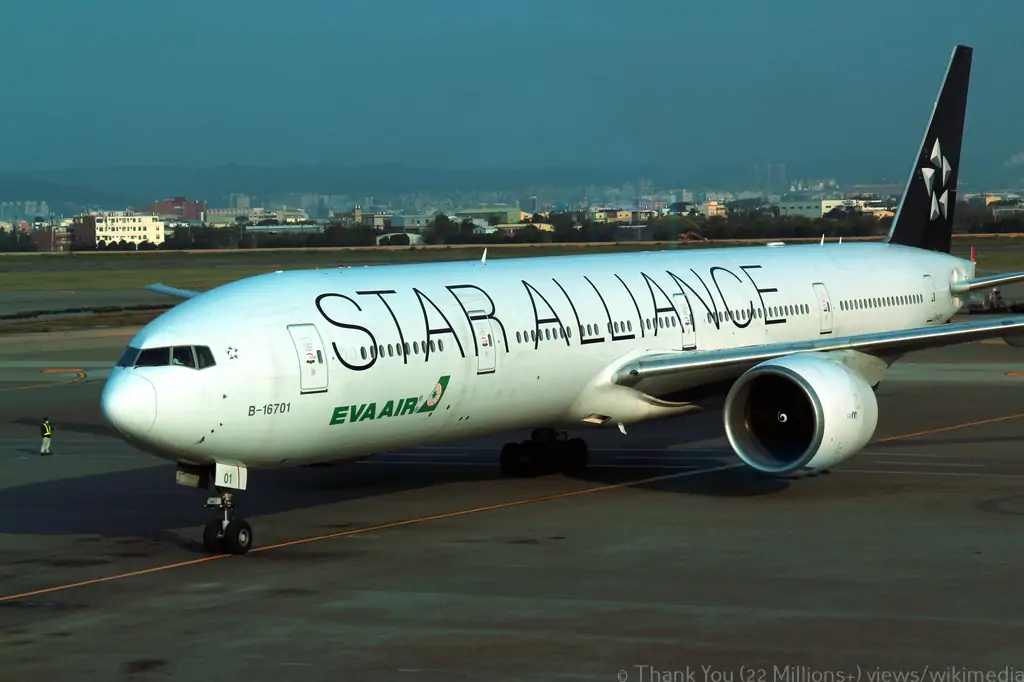
Taiwan's biggest independent airline, EVA Air, recently acquired its first Star Alliance-liveried Boeing 787-10 Dreamliner. This addition is part of EVA Air's continuous growth ambitions and demonstrates the airline's dedication to providing passengers with the greatest travel experience possible.
EVA Air: History
EVA Air was founded in 1989 and has since grown into a key participant in the airline sector. The airline, which serves over 60 destinations in Asia, Europe, North America, and Oceania, is well-known for its excellent levels of service and safety. EVA is also a part of the Star Alliance, a worldwide airline network that provides its passengers with a variety of perks such as access to a larger network of flights, frequent flyer programmes, and lounge access.
Star Alliance: Background
The Star Alliance was established in 1997 as a worldwide airline network that connects some of the world's biggest airlines. The alliance now has 26 members, including EVA Air. The Star Alliance's mission is to give its consumers a seamless travel experiences no matter where they are in the world. It is also the world's largest airline alliance, with 26 member airlines offering more than 19,000 daily flights to over 1,300 destinations in 194 countries.
Boeing 787-10 of EVA
The Boeing 787-10 is a contemporary, fuel-efficient aircraft with a variety of innovations designed to improve passenger comfort. The aircraft has a range of up to 7,400 nautical miles and space for up to 330 passengers, depending on the configuration. One of the Boeing 787-10's standout features is its sophisticated lighting system, which is intended to alleviate jet lag and increase passenger comfort. The aircraft also has bigger windows and higher ceilings, creating a sense of spaciousness and providing passengers with breathtaking views of the sky.
Current Situation
On May 5, 2023, EVA Air received its eighth Boeing 787-10, B-17812, from the Boeing factory in North Charleston, South Carolina. The new plane is EVA's first Boeing 787-10 with a Star Alliance livery, and it flew using Sustainable Aviation Fuel (SAF) to cut carbon emissions even more. The plane took off from Charleston Airport and landed in Taiwan's Taoyuan International Airport (TPE) at 2:00 p.m. (UTC+8) on May 7, 2023, after a 17-hour flight.
EVA has continued its efforts to modernize and improve hardware and software since joining Star Alliance, satisfying many of its passenger demands through joint procurement, cooperative system development, and resource sharing. The benefits of the worldwide network, including its access to more than 1200 airports in 184 countries and Star Alliance's favorable brand image, as well as the passenger trust it inspires, assist EVA's objective of expanding its global business travel market. The synergy with Star Alliance has allowed EVA to increase its revenue from passenger operations by over 5% per year while also multiplying its international corporate contract clients by tenfold.
Expansion of EVA Air
EVA Air's development ambitions include purchasing new aircraft, launching new routes, and improving existing services. The airline's investment in modern planes, such as the Boeing 787-10, is part of its commitment to provide improved comfort and convenience to customers. The Star Alliance-branded Boeing 787-10 will serve various foreign destinations, including North America and Europe. With cutting-edge technology and comforts, this jet will give passengers a one-of-a-kind and remarkable flying experience.
The Star Alliance Partnership of EVA
The Star Alliance relationship is critical to EVA's performance in the airline sector. EVA is able to give its clients a variety of perks as a result of the collaboration, including access to a larger network of flights, frequent flyer programmes, and lounge access. EVA passengers, for example, may earn and redeem miles on all Star Alliance member airlines, helping them to accumulate rewards more swiftly and conveniently. Furthermore, EVA clients have access to over 1,000 airport lounges worldwide, including those run by Star Alliance member airlines. The collaboration also allows EVA to provide codeshare flights with other Star Alliance member airlines, allowing consumers to book trips to more locations than EVA could on its own.
Conclusion
Finally, EVA's first Star Alliance-liveried Boeing 787-10 represents a big milestone for the airline. It demonstrates EVA's dedication to offering a smooth travel experience for its passengers, as well as the significance of the airline's collaboration with the Star Alliance. EVA is able to give its clients a variety of perks as a result of the collaboration, including access to a larger network of flights, frequent flyer programmes, and lounge access. As EVA continues to grow and extend its flying network, the relationship with Star Alliance will surely play an important role in its success.
With Inputs from EVA Air
Read next
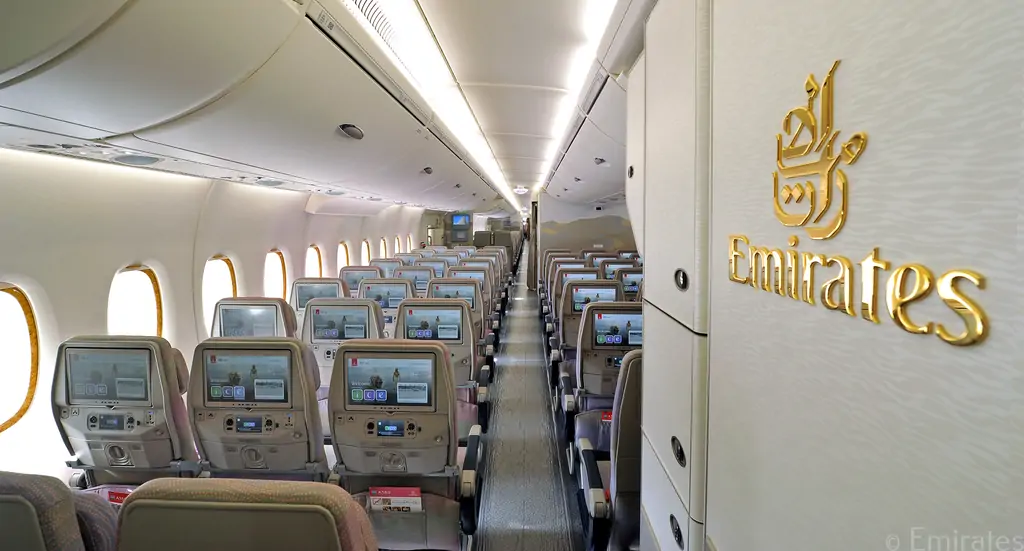
Emirates, located in Dubai, has announced the addition of five additional Airbus A380 aircraft to its summer travel schedule. The decision comes as the airline prepares for a spike in travel demand during the peak summer season. This statement is encouraging for the aviation sector, which has been severely impacted by the COVID-19 epidemic.
Current Scenario
The COVID-19 epidemic has had a significant impact on the aviation sector, forcing several carriers to restrict capacity and discontinue routes. However, with the introduction of vaccinations and the relaxation of travel restrictions in various parts of the world, the sector has gained fresh hope. Emirates' decision to add five additional Airbus A380s to its summer flying schedule is a good indicator that the industry is recovering.
According to him, the airline conducts over 3080 departure flights every week, or more than 440 flights per day, for passengers on its global network. He added that Emirates is now evaluating increasing capacity in the North American market as well as other global markets like China, in combination with the deployment of more aircraft into service and the arrival of the first aircraft from its Airbus A350 order.
Airbus A380s for Emirates
The addition of five additional Airbus A380s to Emirates' summer flying schedule is a big step. Emirates is one of the largest operators of the Airbus A380, the world's largest commercial passenger aeroplane. The purchase of five more aircraft brings the airline's total fleet of A380s to 33.
Preparing for a Travel Surge
Emirates' plan to add more aircraft and boost flight frequency indicates that the airline is preparing for a rise in demand over the summer season. With many individuals already immunised and travel restrictions lifted, the peak summer months are projected to see a major surge in travel demand. Emirates has stated that it is already seeing an increase in reservations, particularly among fully vaccinated passengers. In addition, the airline collaborates closely with governments and health agencies to guarantee that passengers can fly securely and confidently.
The Effect on the Industry
Emirates' plans to add additional planes and improve flying frequency are excellent news for the whole airline sector. It demonstrates that the sector has regained confidence and that airlines are beginning to plan for a post-pandemic world. It is crucial to highlight, however, that the airline sector continues to face substantial hurdles. The COVID-19 pandemic is far from over, and many unknowns remain, such as the introduction of new variations and the efficacy of vaccinations against them.
Conclusion
The inclusion of five additional Airbus A380s to Emirates' summer flying schedule is a good indication for the airline sector. It demonstrates that the sector has regained confidence and that airlines are beginning to plan for a post-pandemic world. However, the industry still confronts enormous obstacles, and airlines must continue to adapt and innovate in order to address these challenges.
Read next
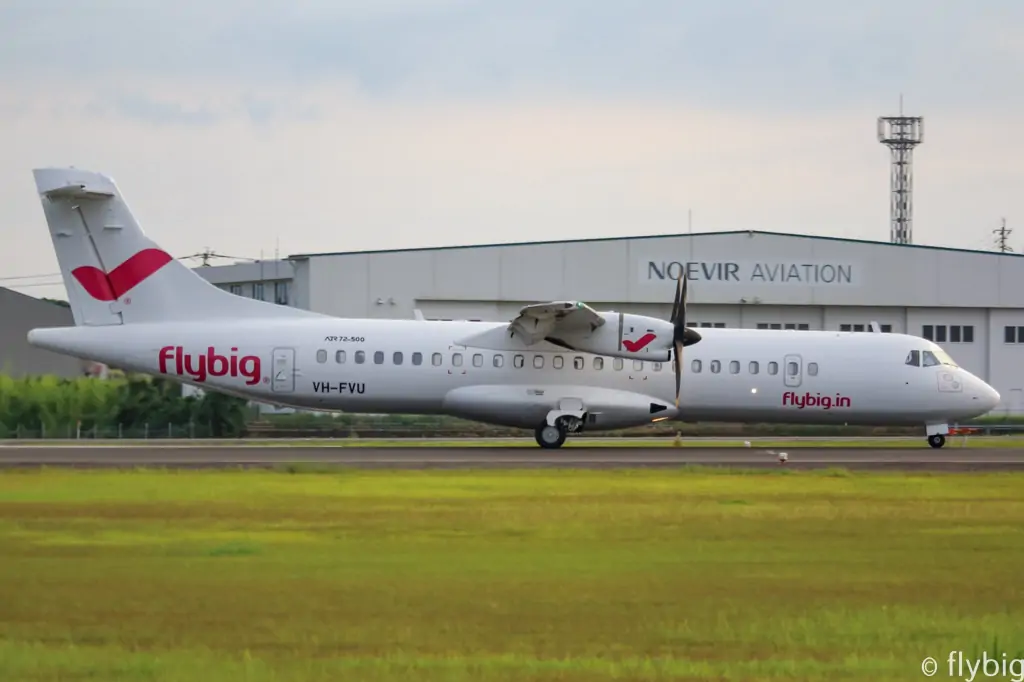
flybig has secured a strategic investment from Royal Bengal Holding Inc, a recently established company using a suburban bungalow in Florida as its registered address. The size and nature of the investment, as well as its terms and conditions, remain undisclosed.
"This strategic investment will be a significant boost to the network expansion of flybig," said the Indian regional carrier's chairman, Sanjay Mandavia, in a statement. "With Royal Bengal Holding Inc's support, we will be able to expand our operations and provide even more connectivity to underserved areas of the country."
According to US company records, Royal Bengal Holding Inc registered as a for-profit entity in December 2022, with a private residence in Coral Springs, Florida, used as the registered address. Its sole director is Sanjay Singh, who is also listed as a director of seven other companies, including Royal Bengal Logistics Inc., and North America Aerospace LLC. "We believe flybig has tremendous potential in the Indian aviation market, especially with its focus on regional operations," said Singh in a statement provided by flybig.
flybig is a regional airline based in Gurugram, a satellite city just southwest of Delhi. According to its website, the flybig business model revolves around India's Ude Desh ka Aam Naagrik (UDAN) scheme, a subsidiary program of the Regional Connectivity Scheme, which seeks to improve regional airport infrastructure and bolster regional aviation.
flybig presently operates across 14 routes within India, linking Agartala, Dibrugarh, Guwahati, Imphal, Donyi Polo, Kolkata, Pasighat, Patna, Rupsi, and Tezu. The airline operates three ATR - Avions de Transport Régional turboprops, including one ATR72-500 and two ATR72-600s all of which are leased from Aviation and DAE Capital.
Flybig operates first flight on non-UDAN route
flybig, in association with the Assam government launched its services on the Guwahati-Dibrugarh-Guwahati route, which is the first flight on a non-UDAN route under the state’s viability gap funding (VGF) scheme.
Assam tourism minister Jayanta Malla Baruah flagged off the inaugural flight between Guwahati and Dibrugarh from the LGBI Airport here with 64 passengers onboard the aircraft. Notably, the flight will depart for Dibrugarh from the LGBI Airport here at 9.35 am every day and arrive here from Dibrugarh at 4.30 pm on the same day.
In a further push to intra-state air connectivity, the Assam government inked a Memorandum of Understanding with Big Charter Private Limited ( or Flybig) in March this year. Under the signed understanding, a decision was made to operate flights between Guwahati-Dibrugarh-Guwahati and Guwahati-Silchar-Guwahati routes daily. Assam has a total of six-to-seven operational airports. While the flight operations will be in line with the centre's UDAN scheme, the state government will provide viability gap funding to the carrier operator.
According to official sources, Flybig will be supported by Assam Tourism Development Corporation Limited (ATDCL) through VGF funding. The weekly operation of flights in both sectors will be mutually decided by both parties.
It may be recalled that ATDCL had, on behalf of the state government, inked MoU with Big Charter Private Limited (Flybig) in March for the launch of air services in the non-UDAN section in the Guwahati-Dibrugarh-Guwahati and Guwahati-Silchar-Guwahati routes daily. Throwing light on the VGF provision, Baruah said the Assam government would, by the scheme, provide Rs 4000 against each passenger if there are less than 40 passengers in a single flight on these two non-UDAN routes.
About UDAN RCS
The Ministry of Civil Aviation's flagship programme, Regional Connectivity Scheme UDAN (Ude Desh ka Aam Nagrik), has already completed five years. The first flight was launched in April 2017. The scheme was initiated in October 2016 to fulfil the aspirations of the common citizen, with an enhanced aviation infrastructure and air connectivity in tier II and tier III cities. The government has approved the 'Revival of unserved and under-served airports' scheme for the revival and development of 100 unserved and under-served airports, helipads and water aerodromes by 2024. It is an ongoing scheme where bidding rounds are conducted occasionally to cover more destinations or stations and routes.
Read next
Jet Airways' Offices & Founder's Residences Raided By CBI In Alleged Bank Fraud Case

Radhika Bansal
06 May 2023
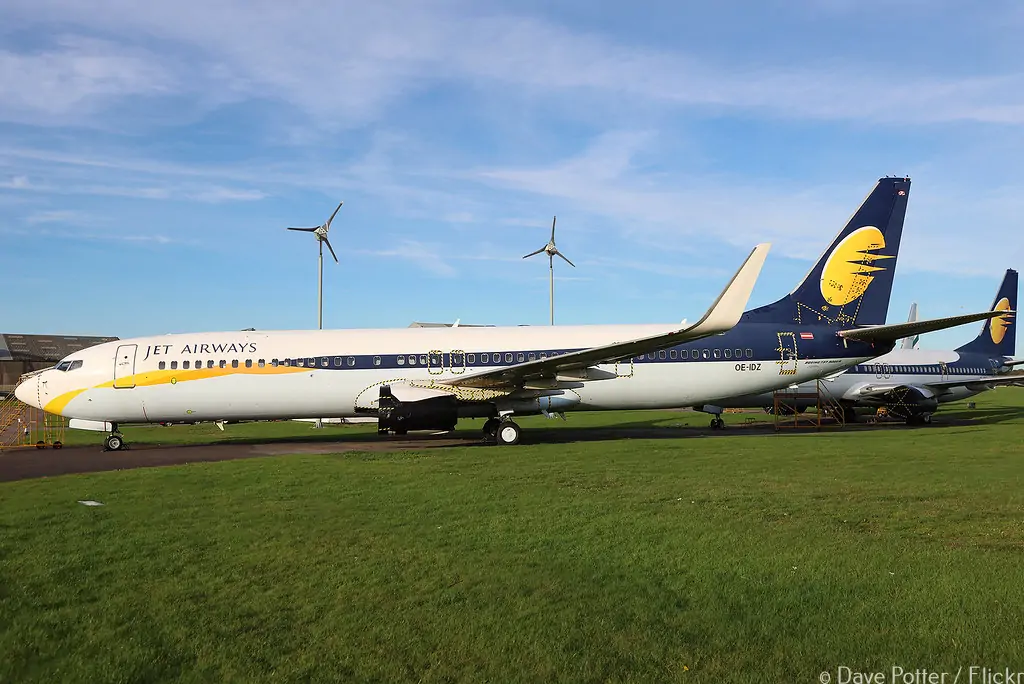
The Central Bureau of Investigation (CBI) on May 5 searched seven locations including offices of Jet Airways, and its founder Naresh Goyal in connection with an alleged INR 538-crore bank fraud case, officials told news agency PTI. Sources indicate that the raids at seven locations were not connected to the new owners of Jet Airways, the Jalan Kalrock Consortium, which maintains an office in Gurgaon and is working to revive the airline that was grounded in April 2019 due to financial difficulties.
The CBI searches were spread across the residences and offices of Goyal, his wife Anita, and former airline director Gaurang Ananda Shetty. The officials added that the agency has registered a new case of alleged bank fraud of INR 538 crore on a Canara Bank complaint.
According to the FIR accessed, a senior official of the bank complained to the CBI in November 2022. The agency initiated the action on the bank's complaint which alleged that it sanctioned credit limits and loans to Jet Airways (India) Ltd (JIL) to the tune of INR 848.86 crore of which INR 538.62 crore is outstanding.
It is observed that during 2011-18, INR 14,552.44 crores was given as a loan to JLL and in return, INR 13529.62 crores was received from JLL. Provision was created for the loans given to JLL for a year every year where the closing balance of loan amount was INR 1282.39 crore in FY 2011-12 and by FY 2019-20 it was INR 2547.83 crores which included the principal amount along with interest charged by JIL to JLL," the complaint alleged.
The complaint said the account was declared fraud on July 29, 2021. Later, the bank alleged that the forensic audit of JIL showed that it paid related companies INR 1,410.41 crore out of total commission expenses, thus siphoning off funds from JIL. Among other allegations, it surfaced during the forensic audit that funds were also siphoned off through Jet Lite (India) Ltd ( JLL) by way of making advance and investing and subsequently writing off of the same by making provisions.

The FIR reads, "As per the sample Agreement of Jet Airways (India) Ltd (JlL), it was noted that the expenses of General Selling Agents (GSA) were to be borne by GSA itself and not by JIL." However, it was observed that JIL has paid various expenses amounting to INR 403.27 crore which is not in tune with the GSA. It said personal expenses such as salaries of staff, phone bills and vehicle expenses among others of the Goyal family were paid by JIL."
The JIL diverted the funds for the subsidiary JLL in the form of loans and advances and investments extended. "The provisions were made by JIL mainly due to continued losses by JLL and JLL's inability to turn around with its business operation," the FIR reads ahead. Jet Airways (India) Ltd has been dealing with Canara Bank since 2005, and all the exposures to the accused company are under State Bank of India (SBI)-led consortium arrangements.
Canara Bank's Allegations
Canara Bank has alleged that this transaction delineated that the JIL was transferring borrowed funds to subsidiary/Group companies by whatever modalities and not utilising funds for the intended purpose and that the company also siphoned off funds through payments made to professional and consultancy expenses. The bank cited these transactions to allege that they were made "towards cheating and misappropriation of funds" by the borrower by "misappropriation and siphoning off funds" borrowed from banks "being utilised for purposes unrelated to the operations of the borrower, to the detriment of the financial health of the entity and/or the lender".
As per the bank’s complaint, when Goyal’s companies started defaulting on repayment of loans availed from the consortium, the bank roped in a forensic auditor that thoroughly scrutinised all the transactions and documentation processed between April 1, 2011, and June 19, 2019. The forensic audit report was submitted on February 10, 2021, pointing out “glaring irregularities”.
The bank alleged that Jet Airways was transferring borrowed funds to subsidiary/group companies through various ways, instead of using them for the intended purpose. During the review period, INR 1,152.62 crore was paid for professional and consultancy services. Of these, alleged suspicious transactions to the tune of INR 197.57 crore were identified in the case of the connected entities. Besides, over INR 420 crore was paid to the entities whose nature of the business was different from the service description in their invoices raised on Jet Airways. The account involving INR 728.66 crore was declared a fraud and reported to the Reserve Bank of India on July 29, 2021. It included INR 538.62 crore concerning Canara Bank.
Jet Airways History
Jet Airways shuttered operations back in April 2019. After flying for over 25 years, the once-storied Jet Airways went into an insolvency resolution process and the Jalan Kalrock Consortium (JKC) emerged as the winning bidder in June 2021. However, the ownership transfer process has been facing headwinds for long.
Goyal had stepped down from the post of Jet Airways Chairman in March last year, paving the way for lenders to bail out the financially troubled airline he had set up 25 years ago. As per the case, the company had been doing business with Jet Airways since 1994. The complainant has said that the accused hid the financial crisis in their company and assured the travel agency that they would not suffer any loss. The travel agency sold Manchester-Mumbai flight tickets at cheaper rates, on the assurances of the accused. However, in January 2019, some Jet flights got cancelled, forcing the complainant to approach the accused.
The complainant alleged that the accused continued to assure them about their financial health. This money, they claimed, would be siphoned off to India to pay back dues, the travel company said, adding that they incurred losses because of the assurances.
The airline's air operator certificate was revalidated by aviation safety regulator DGCA in May 2022, following which it announced its plans to recommence operations in September 2022, but the relaunch was delayed.
Comment