

Jet Airways, once a prominent player in India's aviation industry, has been mired in a complex web of legal battles and financial troubles since its collapse in April 2019. The latest chapter in this saga involves the Jalan Kalrock Consortium (JKC), the prospective new owners, and their attempts to secure the acquisition amidst accusations of delaying tactics.
Background & Supreme Court's Deadline
After Jet Airways filed for insolvency in 2019, the JKC emerged as the chosen entity to acquire the airline's remains. In a resolution agreement negotiated in 2021, the consortium committed to paying out-of-pocket creditors and lenders a total of INR3.5 billion (USD42.2 million). However, the final tranche of INR1.5 billion has become the focal point of disputes and litigation, creating a strained relationship between the consortium, the administrator, and the committee of creditors.
The Supreme Court of India, in a decisive move, ordered the JKC to deposit the INR1.5 billion into an escrow account by January 31, 2024, under the risk of forfeiting their acquisition rights. This directive overruled a previous ruling that allowed the consortium to use a INR1.5 billion bank guarantee for the remaining payment.
JKC's Delaying Tactics or Legitimate Hurdles?
As the deadline approached, the JKC sought court permission to substitute the bank guarantee with a new instrument, claiming that they could deposit the full amount within seven days. However, the creditors' committee vehemently opposed this move, labeling it as another delaying tactic.
Complexities, Accusations & Tit-for-Tat Allegations
The relationship between the JKC, the administrator, and the creditors has become acrimonious, with each party blaming the other for delays in the ownership transfer. The consortium, comprising Murari Lal Jalan and Kalrock Capital, asserts that funds from Dubai are ready for transfer, but due to their non-resident status, they require permission from India's central bank. Bank holidays are cited as an additional reason for the delays.
In a tit-for-tat exchange of accusations, the JKC points fingers at the creditors, claiming that the lenders have not fulfilled the conditions outlined in the resolution process, thereby impeding the ownership transfer.
Conclusion
The future of Jet Airways remains uncertain as the Jalan Kalrock Consortium battles legal challenges and accusations of delaying tactics. The aviation industry and stakeholders eagerly await a resolution to this complex situation, questioning whether Jet Airways will ever take flight again or remain grounded in legal turbulence.
With Inputs from ch-aviation

Read next

In a crucial turn of events, the committee of creditors (CoC) for the insolvent budget carrier Go First has received formal expressions of interest (EOIs) from three entities. As the airline faces an impending decision on its fate, the CoC is considering seeking an extension from India's National Company Law Tribunal (NCLT) to allow for a thorough evaluation of potential buyers.
Background
Go First, which suspended operations in May 2023, has been grappling with outstanding debts exceeding INR 62 billion rupees (USD 748 million). The CoC's approval of a final attempt to secure a buyer reflects the urgency to avoid liquidation, which might yield a lesser return for the creditors.
The Three Potential Buyers
The three entities that have submitted EOIs and the required INR 50 million (USD 603,000) bank guarantee are:
- SpiceJet: The recently recapitalized SpiceJet from Delhi International aims to step in as a potential savior for Go First.
- Sky One (Sharjah-based): Hailing from Sharjah, Sky One enters the fray as another contender vying for the distressed airline.
- Busy Bee (associated with Plan It consortium): Busy Bee, with ties to individuals linked to the Plan It consortium, is the third entity expressing interest.
The Need for an Extension
The CoC's decision to request an extension is driven by the necessity to conduct due diligence on these potential buyers. With India's insolvency laws allowing a maximum of 330 days for administrators to sell a distressed company, the clock is ticking, and as of early February, approximately 60 days remain.
Path Forward
An extension would provide the breathing space required for the preparation of formal bids. However, the administrator and the CoC must agree on a new deadline and subsequently return to the NCLT for approval of the revised date. The ongoing discussions within the CoC are anticipated to determine the specifics of the extension, with the administrator likely to return to the NCLT in the near future.
Conclusion
As the fate of Go First hangs in the balance, the decision to seek an extension underscores the delicate nature of the airline's financial distress. The coming days will reveal whether one of the three potential buyers emerges as the lifeline Go First desperately needs or if the looming threat of liquidation becomes an unavoidable reality.
With Inputs from ch-aviation
Read next
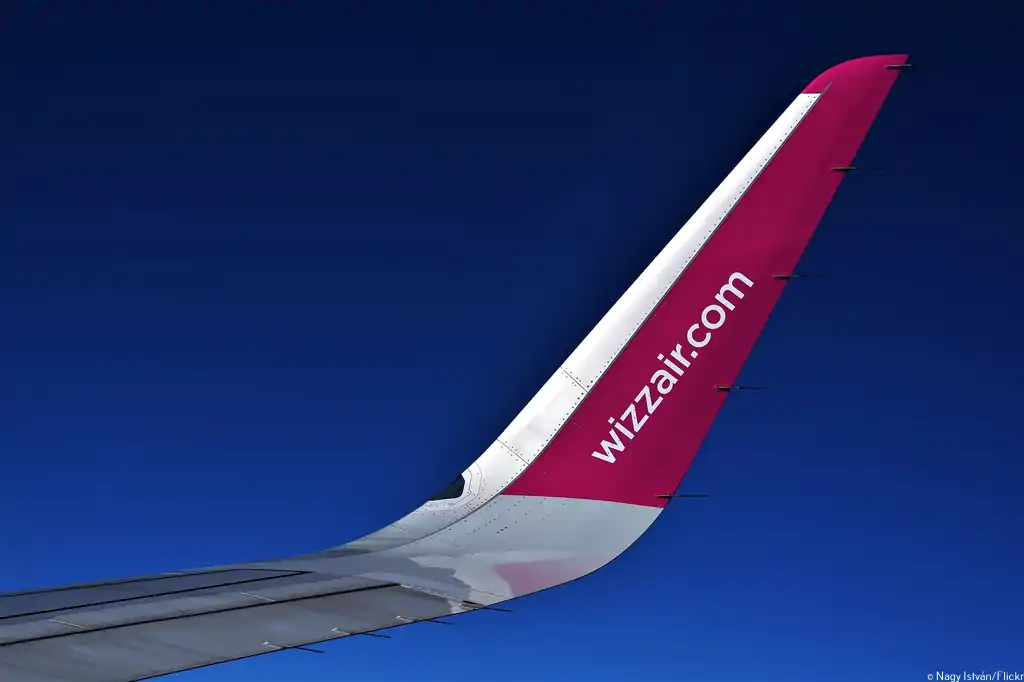
Wizz Air, the European ultra-low-cost carrier (ULCC), has kicked off 2024 with a bang, witnessing a remarkable surge in capacity and passenger numbers. With over 4.7 million passengers carried in January, the airline has demonstrated a robust 14% year-on-year growth. But what factors are driving this success, and can Wizz Air maintain its upward trajectory?
Capacity Surge and Load Factors
In January 2024, Wizz Air flexed its wings, increasing its capacity by 19.9% compared to the same period last year. The airline carried 14.2% more passengers, contributing to an 82.0% load factor. However, this marks a slight dip of 4.1 percentage points compared to January 2023. Wizz Air attributes this to an increase in one-directional VFR (Visiting Friends and Relatives) traffic and strategic reallocation of capacity amid evolving geopolitical events.
| January 2024 | January 2023 | Change |
Capacity (Seats) | 5,783,426 | 4,822,972 | 19.9% |
Booked Passengers | 4,740,815 | 4,149,850 | 14.2% |
Load Factor (Rounded to One Decimal) | 82.0% | 86.0% | -4.1pp |
Strategic Measures for Efficiency
In response to the changing landscape, Wizz Air is actively implementing measures to optimize its network. The airline aims to enhance efficiency, recovering load factors in the coming months. The emphasis on adaptability and optimization reflects Wizz Air's commitment to staying competitive in the dynamic low-cost market.
A 12-Month Overview
Zooming out to a rolling 12-month period, Wizz Air's performance is even more impressive. With a 23.7% increase in capacity and a significant 28.4% rise in booked passengers, the airline achieved an outstanding 90.4% load factor. This sustained success indicates a broader trend of growth and customer satisfaction.
| January 2024 | January 2023 | Change |
Capacity (Seats) | 67,370,107 | 54,483,223 | 23.7% |
Booked Passengers | 60,904,125 | 54,483,223 | 28.4% |
Load Factor (Rounded to One Decimal) | 90.4% | 87.0% | 3.4pp |
Route Expansion and Restarted Flights
Wizz Air's capacity boost in January can be attributed to strategic route additions and the restart of key flights. Routes between Aqaba (Jordan) and Abu Dhabi were reinstated, with the anticipated return of Tel Aviv in March. The airline is set to connect Tel Aviv with major European cities, reinforcing its commitment to providing diverse and accessible travel options.
Regulatory Approval and Customer Assurance
The UK's Civil Aviation Authority has affirmed Wizz Air's full compliance with commitments made to customers, providing a stamp of approval to the carrier's operations. This comes on the heels of Wizz Air setting records in 2023, serving over 60 million passengers, including a staggering 15 million in the third quarter alone.
Financial Performance and Environmental Consciousness
Wizz Air's success isn't confined to passenger numbers; its Q3 revenue soared by almost 17%, reaching over a billion Euros compared to the same period in 2022. Notably, the airline maintains a mindful approach to its environmental impact, boasting the lowest carbon emissions per passenger among its competitors. Wizz Air's fleet, consisting of nearly 200 Airbus A320 and A320neo family aircraft, earned the airline the title of "Global Environmental Sustainability Airline Group of the Year" in 2023.
Conclusion
Wizz Air's stellar performance in January 2024 sets the stage for a potentially lucrative year. While challenges persist, the airline's strategic measures, route expansions, and commitment to efficiency and environmental sustainability position it as a formidable player in the competitive European aviation market. As Wizz Air continues to navigate dynamic conditions, all eyes are on whether it can sustain its soaring success in the months to come.
Read next
Read next
Over a Dozen Airports Not Operational Due to Jet Airways Like Bankruptcies: Govt

Preet Palash
05 Feb 2024

The aviation ministry told the Parliament on Monday that nearly 18 Airports, including 2 water aerodromes are not operational.
"Presently 18 Airports, including 2 Water Aerodromes, are temporarily non-operational due to various reasons such as shut down of some airlines like Jet Airways, Zoom Air, TruJet, Deccan Air, Air Odisha, due to higher maintenance costs, lower availability of trained pilots, lack of MRO facilities in the country, owing to the completion of 3 years VGF tenure, shortage of aircraft, shortage of spare parts & engines & low PLF, etc," Minister of State in the Ministry of Civil Aviation Gen. (Dr) V. K. Singh (Retd) in a written reply to a question in Rajya Sabha today.
However, 519 routes and 76 airports including 2 water aerodromes and 9 heliports have been operationalised under the UDAN scheme.
Another 4 airports are ready for the operation of RCS flights. Development works of the 09 airports/heliports have been completed and licensing is in progress. The development works of 17 airports/Heliports are in progress under the UDAN scheme. The development work of the remaining airports is in the planning stage.
Read next

The government on Monday clarified that it does not store air traveler's Personally Identifiable Information (PII) data through Digi Yatra on central servers.
The personal information of the passenger is stored in the mobile wallet of the traveler. The same is shared with the departure airport in the encrypted format and data is purged from the system after 24 hours of departure of flight.
"This addresses the data protection issues in the implementation of Digi Yatra. Further, the Digi Yatra processes are subjected to audits and certification by CERT-In impanelled agencies to ensure adherence to data privacy and security standards," Minister of State in the Ministry of Civil Aviation Gen. (Dr) V. K. Singh (Retd) in a written reply to a question in Rajya Sabha today.
Digi Yatra Central Ecosystem is managed by Digi Yatra Foundation, a Not-For-Profit company made under Section 8 of the Companies Act, 2013, and hence does not come under the ambit of the Right to Information (RTI) act.
Digi Yatra Guidelines have been issued by DGCA (Directorate General of Civil Aviation) through the Aeronautical Information Circular (AIC) No. 09/2022 dated 18.04.2022. These Digi Yatra guidelines provide for decentralized mobile wallet-based identity management platform, it added.
Comment