
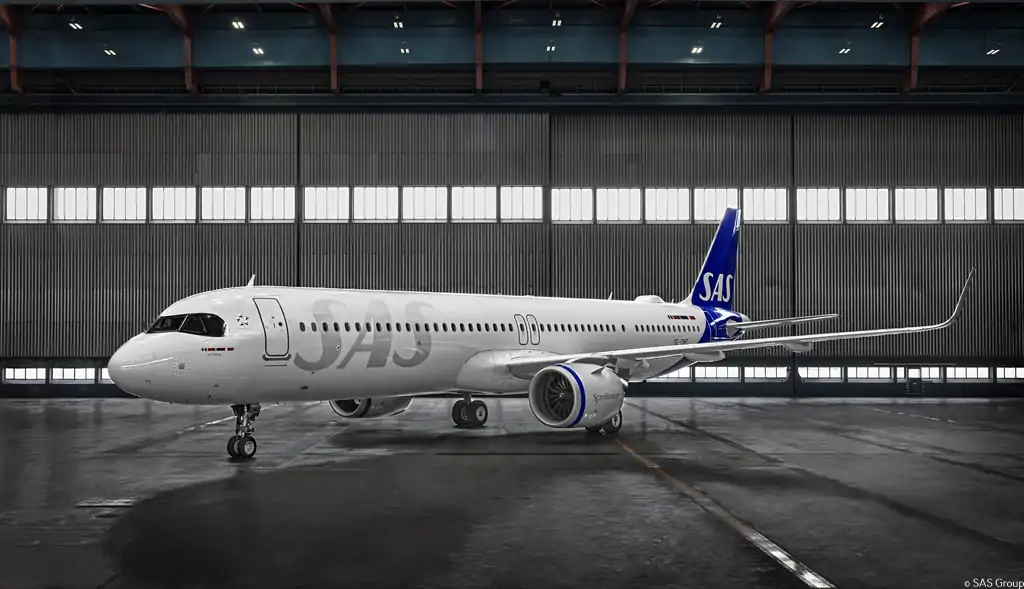
Scandinavian Airlines System (SAS), the largest carrier in Scandinavia, has unveiled a new ownership structure following its successful emergence from bankruptcy proceedings.
On Tuesday, October 3, 2023, SAS announced that US investment firm Castlelake, Air France-KLM, and the Danish state would become key shareholders in the airline. This significant development comes after years of financial struggle, exacerbated by the COVID-19 pandemic, which led to SAS filing for bankruptcy protection in the United States in mid-2022.
New Ownership Distribution
The restructuring of SAS's ownership sees Castlelake taking a substantial 32% stake in the company, making it the largest shareholder. Air France-KLM will control approximately 20% of the airline, and the Danish state will retain a significant ownership stake of around 26%. Additionally, Lind Invest, a Danish investment firm, will continue to hold 8.6% of equity in SAS.
Financial Injection
The total investment injected into the reorganized SAS amounts to 12.9 billion Swedish crowns, which translates to approximately $1.16 billion. This financial infusion is a crucial component of SAS's transformation plan, designed to provide the airline with a solid financial foundation for future growth.
Air France-KLM's Investment
Air France-KLM has committed to investing $144.5 million in SAS. Of this amount, $109.5 million will be allocated to common shares, while $35 million will be directed towards secured convertible bonds. Importantly, Air France-KLM has indicated its intention to potentially expand its shareholding to gain control after a minimum of two years, contingent upon regulatory conditions and the airline's financial performance.

SAS's Long Struggle
SAS has faced significant challenges for over a decade, as it sought to compete with low-cost rivals in Europe's highly competitive aviation market. Despite once being named the world's best airline in the 1980s, the company struggled with high expenses and reduced demand from travelers, particularly during the COVID-19 pandemic.
Future Prospects
The entrance of Castlelake and Air France-KLM as major shareholders is expected to provide SAS with the necessary resources and strategic backing to navigate the complex and ever-changing aviation landscape. This influx of capital will enable SAS to execute its transformation plan and position the airline for a brighter future.
Apollo Global Management's Aspirations
Notably, Apollo Global Management, a US-based private equity firm, has expressed interest in acquiring a controlling share in SAS, according to Reuters. The evolving ownership landscape of SAS may continue to attract attention from potential investors and partners, further shaping the airline's future direction.
Conclusion
The announcement of new key shareholders and a substantial financial infusion marks a turning point for Scandinavian Airlines System. As the airline emerges from bankruptcy proceedings with renewed vigor, the partnership with Castlelake and Air France-KLM, alongside continued support from the Danish state and Lind Invest, sets the stage for SAS to embark on a path of recovery and growth in the competitive aviation industry. The coming years will be instrumental in determining the success of SAS's transformation and its ability to regain its former status as a leading player in the European aviation market.

Read next
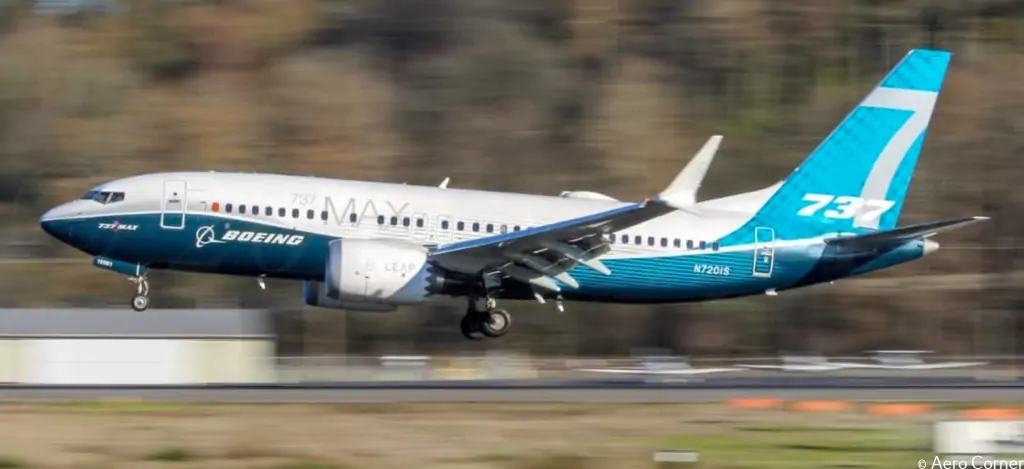
Boeing plans to push production of its bestselling 737 narrowbody jet to a record of at least 57 per month by July 2025, reflecting rising orders and the company's recovery after the 737 MAX crisis, according to two sources quoted by Reuters. The goal would hit the planemaker's unmet target from several years ago, which was scuttled in 2019 when the MAX was grounded globally following two deadly plane crashes.
Both Boeing and its European rival Airbus have laid out ambitious ramp-up goals as air travel and aircraft sales rebound, with Airbus producing in-demand single-aisle planes even faster than the U.S. planemaker.
Boeing laid out the plan in the latest version of its master schedule for suppliers, which was reaffirmed by the planemaker in mid-September, the sources told Reuters on condition of anonymity because the document is not public.
The schedule targets 737 production to reach 42 jets a month by December 2023, affirming statements made by Boeing Commercial Airplanes head Stan Deal to Bloomberg TV in June. From there, monthly 737 production - which includes the 737 MAX as well as earlier models used for military planes - is set to grow to 47.2 jets in June 2024 and 52.5 jets in December 2024 before hitting a steady rate of 57.7 aircraft per month in July 2025.
An earlier version of the plan, which Reuters reported in April, had seen 52 jets per month production a month later, in January 2025. Before the 2019 grounding of the 737 MAX, Boeing was producing 52 737s a month on its way to a target of 57. Boeing's formal 737 production target is 50 per month for the 2025-2026 timeframe, unveiled by the company last November during an investor day.
But Boeing CEO Dave Calhoun telegraphed a rate increase to 60 jets a month could be on the table as the company racks up orders, such as a deal with Air India for almost 200 MAXs booked this year. "I would love to get to 60 deliveries and the market is there for it. There's no doubt about it," Calhoun said in a July earnings call.
The Boeing CEO added the second half of 2024 would be a key moment for the company to prove it could keep its supply chain stable and maintain its ramp-up plan. "If we get through that well and we execute well, then we'll be talking to all of you about 60 deliveries," Calhoun said at the time. "But I don't want to get ahead of myself."
It is not uncommon for supplier schedules to change based on numerous factors, but it is an important signal to the supply chain that allows smaller companies to make necessary investments, the sources said.
Airbus in July reaffirmed a widely watched production goal for its best-selling A320neo family jets of 75 a month in 2026, with executives stating it was "progressing well."
Manufacturing Defect in B737 MAX
Boeing has recently identified a new 737 MAX quality problem involving supplier Spirit AeroSystems that has resulted in improperly drilled holes on the aft pressure bulkhead. Boeing said the defect will delay near-term deliveries and the company is evaluating whether it could cause it to miss its annual delivery target of at least 400 737s this year.
Boeing shares were down 2.7% and Spirit shares fell 6.1% in after-hours trading. It is the second year that Boeing's delivery targets are under review after supply-chain issues forced it to temper its goal last year. The latest quality issue is due to improperly shaped holes in the aft pressure bulkhead of some planes. The bulkhead is a structure that seals off the rear of the pressurized cabin. The parts in question were made by Spirit, whose shares were down 6% in premarket trading. However, not all 737 fuselages will be impacted as Spirit uses multiple suppliers for the aft pressure bulkhead.
The new supply-chain snag is the latest issue to impede deliveries of the cash-generating MAX following Boeing's disclosure of a problem in April that Spirit had improperly installed brackets joining the aft fuselage to the vertical tail.
The manufacturing glitch will cause some near-term 737 delivery delays, including snarling a plane going to the Malaysian Airline System, as Boeing conducts inspections and determines how many models were affected and what work they need, according to the company.
Boeing is evaluating whether it will be able to reach its target of delivering 400 to 450 of the 737-family jets this year. The uncertainty underscores the strain on planemakers Boeing and Airbus, and their global network of suppliers, as they accelerate manufacturing while contending with parts shortages and workforce turnover. The planemaker's ratio of enterprise value to sales for the next 12 months is 2, compared to 1.3 for rival Airbus, as per Refinitiv data. A low ratio implies a more attractive investment opportunity.
(With Inputs from Reuters)
Read next
DGCA Plans to Bar Pilots & Crew From Using Perfumes During the Breathalyzer Test

Radhika Bansal
03 Oct 2023

Civil aviation regulator DGCA has proposed a draft that may bar pilots and crew from using perfumes during the breathalyzer test. The Directorate General of Civil Aviation (DGCA) has come up with the draft since perfumes generally have a high alcohol content and can affect the breathalyzer test.
"No crew member shall consume any medicine/formulation or use any substance such as mouthwash/tooth gel/perfume or any product containing alcohol which may result in a positive breathalyzer test. Any crew member who is undergoing such medication shall consult the company doctor before undertaking a flying assignment," the draft, accessed by news agency ANI, read. "This is only a draft CAR (Civil Aviation Requirements) put in the public domain for stakeholder comments," the DGCA chief said.
Airlines in India and DGCA are very strict about breathalyzer tests before any operation and the tests are always done under camera surveillance.
The Directorate General of Civil Aviation (DGCA) has put forth this draft because perfumes typically contain a significant amount of alcohol, which could potentially impact the accuracy of the breathalyzer test.
Importance of pre-flight Breathalyzer Test
The pre-flight breathalyzer assessment occurs at the departure airport. By DGCA regulations, if a crew member tests positive, they have the option to undergo a second test using either the same equipment or different equipment. The time interval between the first and second tests must not exceed 20 to 25 minutes. During this period, individuals undergoing testing are permitted to wash their faces or rinse their mouths if they choose to do so. No crew member shall take any medication or composition, or use any substance, including mouthwash, tooth gel, perfume, or any alcohol-containing product that could cause a breathalyser test to be positive. Before accepting a flying assignment, any crew member who is taking such medicine must consult the corporate doctor.
The other changes proposed by the DGCA in its draft rule include: “Before each test, the Doctor/Paramedics/EMT shall obtain a reading of 0.000 on the instrument. The Doctor/Paramedics/EMT shall also carry out a control test daily and keep a record of printouts to ensure the serviceability of both the BA equipment and the printer…. If the BA examination result is positive, a repeat test shall be carried out after an interval of maximum 20-25 minutes”.
It is important to note here that over the years, flight crew members and pilots have voiced concerns about failing the breathalyzer test due to the presence of after-shave lotions, mouthwash, or perfumes. Under the existing regulations, if a crew member fails the breathalyzer test once, their license will be suspended for three months. In the event of a second failure, the suspension period may extend to three years. A third instance of failing to pass the test will result in the suspension of the license.
The DGCA also mandates a 12-hour gap between flying an aircraft and ingesting alcohol. Pilots who fail the alcohol test for the first time are prohibited from flying for three months; those who fail it again are prohibited from flying for three years; and those who fail it three times in a row have their licence permanently revoked.
The DGCA claims that a few common products could result in a false-positive test. The rule change may therefore close a legal gap that crew members were using to avoid having their licence suspended. In the aviation sector throughout the world, pilot intoxication has occasionally been a concern. After testing positive for alcohol last year, 116 members of the cabin crew and 41 Indian pilots had their licences temporarily suspended.
The air safety guidelines with specific regard to alcohol consumption first issued in 2015 and amended from time to time say that even when the blood alcohol levels are zero in the body, there could be some effect of hangover, which is mainly due to congeners.
“These congeners may take 15 to 18 hours to get dissipated and may produce ill effects for up to 36 hours depending upon the amount of alcohol consumed. Even 12 hours after a bout of drink, when the blood alcohol level remains zero, there is a decrement in task performance. Alcohol present in the body even in small quantities jeopardises flight safety on several counts and is likely to adversely affect an aviator well into the hangover period,” Section 5 of CAR says.
A new amendment proposed is to advise aircraft operators to make available at least two serviceable fuel-cell technology-based breath analysers capable of giving accurate digital value up to three decimal places with a memory to store at least the last 1,000 records.
Read next
Why are Flight Levels Odd and Even, and How It Differs in Different Parts of the World
Abhishek Nayar
03 Oct 2023

Aviation is a complex and highly regulated field, and one crucial aspect of ensuring safe and efficient air travel is the measurement of altitude. In aviation, altitude is not always what it seems, and flight levels (FL) play a significant role in this regard.
The History of Flight Levels
Flight levels are a standardized way of expressing an aircraft's altitude in the aviation industry. They are based on a reference point of standard air pressure at sea level, which is 1013.25 hPa (hectopascals) or 29.92 inHg (inches of mercury). This standardization helps ensure safe vertical separation between aircraft, regardless of natural variations in atmospheric pressure.
Historically, altitude was measured using a pressure altimeter, which operates as a calibrated barometer. These altimeters measured the ambient air pressure and calculated the corresponding altitude. However, if different aircraft's altimeters were not consistently calibrated, it could lead to two aircraft flying at the same altitude, even though their altimeters indicated different values. Flight levels solve this issue by defining altitudes based on a standard air pressure at sea level, ensuring that all aircraft operating on flight levels calibrate to this standard.
To determine the true altitude above sea level, a pilot would need to calibrate the altimeter according to the local air pressure at sea level, considering natural variations in pressure over time and across different regions.
Transition Altitude and Transition Level

The transition altitude (TA) is a critical concept in aviation. It is the altitude above sea level at which aircraft transition from using local barometric-derived altitudes to flight levels. Below the transition altitude, aircraft altimeters display altitude above sea level. Above the transition altitude, altimeters are adjusted to the standard pressure setting of 1013.25 hPa (29.92 inHg), and aircraft altitude is expressed in flight levels.
The transition level (TL) is the lowest flight level above the transition altitude. When descending below the transition level, pilots switch to referencing the aircraft's altitude by setting the altimeter to the local QNH (barometric pressure adjusted to sea level) for the region or airfield.
The transition layer (TLYR) is the airspace situated between the transition altitude and the transition level. In simple terms, the relationship between these concepts can be summarized as follows: TL = TA + TLYR.
"East is Odd, West is Even Odder"

To ensure vertical separation between aircraft, a mnemonic known as "East is Odd, West is Even Odder" is used in aviation. This rule applies to both visual and instrument flight rules and is based on the magnetic headings of zero to 179 degrees (East) and 180 to 359 degrees (West).
- Eastbound flights (magnetic track 000 to 179°) maintain odd-numbered flight levels, such as FL330 or FL350, in increments of 2,000 feet.
- Westbound flights (magnetic track 180 to 359°) maintain even-numbered flight levels, such as FL320 or FL340, also in increments of 2,000 feet.
This system ensures that aircraft flying in opposite directions are vertically separated. Modern systems allow planes to pass with as little as 1,000 feet of vertical separation.
The Semicircular Rule (Hemispheric Rule)

The semicircular rule, also known as the hemispheric rule, applies to IFR (Instrument Flight Rules) flights in most regions worldwide. It defines altitude separation based on the aircraft's magnetic track.
- Eastbound flights (magnetic track 000 to 179°) at or below FL290 maintain odd thousands (FL250, FL270, etc.).
- Westbound flights (magnetic track 180 to 359°) at or below FL290 maintain even thousands (FL260, FL280, etc.).
However, above FL290, when Reduced Vertical Separation Minima (RVSM) is not in use, the separation interval increases to 4,000 feet, and only odd flight levels are assigned regardless of the direction of flight.
- Eastbound flights (magnetic track 000 to 179°) above FL290 maintain odd flight levels (FL290, FL330, FL370, etc.).
- Westbound flights (magnetic track 180 to 359°) above FL290 also maintain odd flight levels (FL310, FL350, FL390, etc.).
RVSM-equipped aircraft continue to operate with a 2,000-foot separation interval, as outlined in the semicircular rules. Both non-RVSM and RVSM-equipped aircraft maintain a separation of 4,000 feet above FL410.
It's worth noting that some countries with north/south-oriented major airways have their own variations of the semicircular rule, defining altitude assignments based on north/south tracks.
Reduced Vertical Separation Minima (RVSM)
RVSM is a crucial advancement in aviation that has allowed for reduced vertical separation between FL290 and FL410. This change enables aircraft to fly more efficient routes, save fuel, and increase airspace capacity. However, only aircraft that have been certified to meet RVSM standards are permitted to operate in RVSM airspace.
The RVSM altitude assignments are as follows:
- Track 000 to 179°: Odd thousands (FL290, FL310, FL330, etc.)
- Track 180 to 359°: Even thousands (FL300, FL320, FL340, etc.)
Above FL410, a 4,000-foot separation interval resumes, and only odd flight levels are assigned based on the direction of flight.
- Track 000 to 179°: Odd flight levels (FL410, FL450, FL490, etc.)
- Track 180 to 359°: Odd flight levels (FL430, FL470, FL510, etc.)
RVSM has greatly improved airspace efficiency and has been implemented in many parts of the world to enhance the safety and capacity of air travel.
Conclusion
Understanding flight levels, transition altitudes, and the rules governing altitude assignments is essential for safe and efficient air travel. These standardized procedures and regulations help ensure that aircraft remain properly separated both vertically and horizontally, contributing to the overall safety and reliability of the aviation industry. As technology continues to advance, aviation practices and regulations will evolve to meet the demands of a growing and increasingly interconnected global aviation network.
With Inputs from IVAO, The Points Guy
Read next
India's Civil Aviation Market Can Add up to 130-150 More Wide-Body Aircraft
Radhika Bansal
03 Oct 2023
India's fast-growing civil aviation market has the scope to have 130-150 more wide-body planes as airlines expand their operations and there is also the potential for more such aircraft to be deployed in dense domestic routes, GE Aerospace South Asia CEO Vikram Rai said. GE Aerospace, a leading aircraft engine maker, sees a "great potential" in India, which is also the world's third largest aviation market and domestic airlines have nearly 1,500 aircraft on order.
While emphasising that "India is a focus market and a priority market for GE Aerospace", Rai said that in his view, domestic airlines would consider having more wide-body planes in their fleet and also deploy them in dense domestic routes. "I see wide-body aircraft as a growth path for us and the airlines which is a win-win (scenario)," he told PTI in a recent interview.
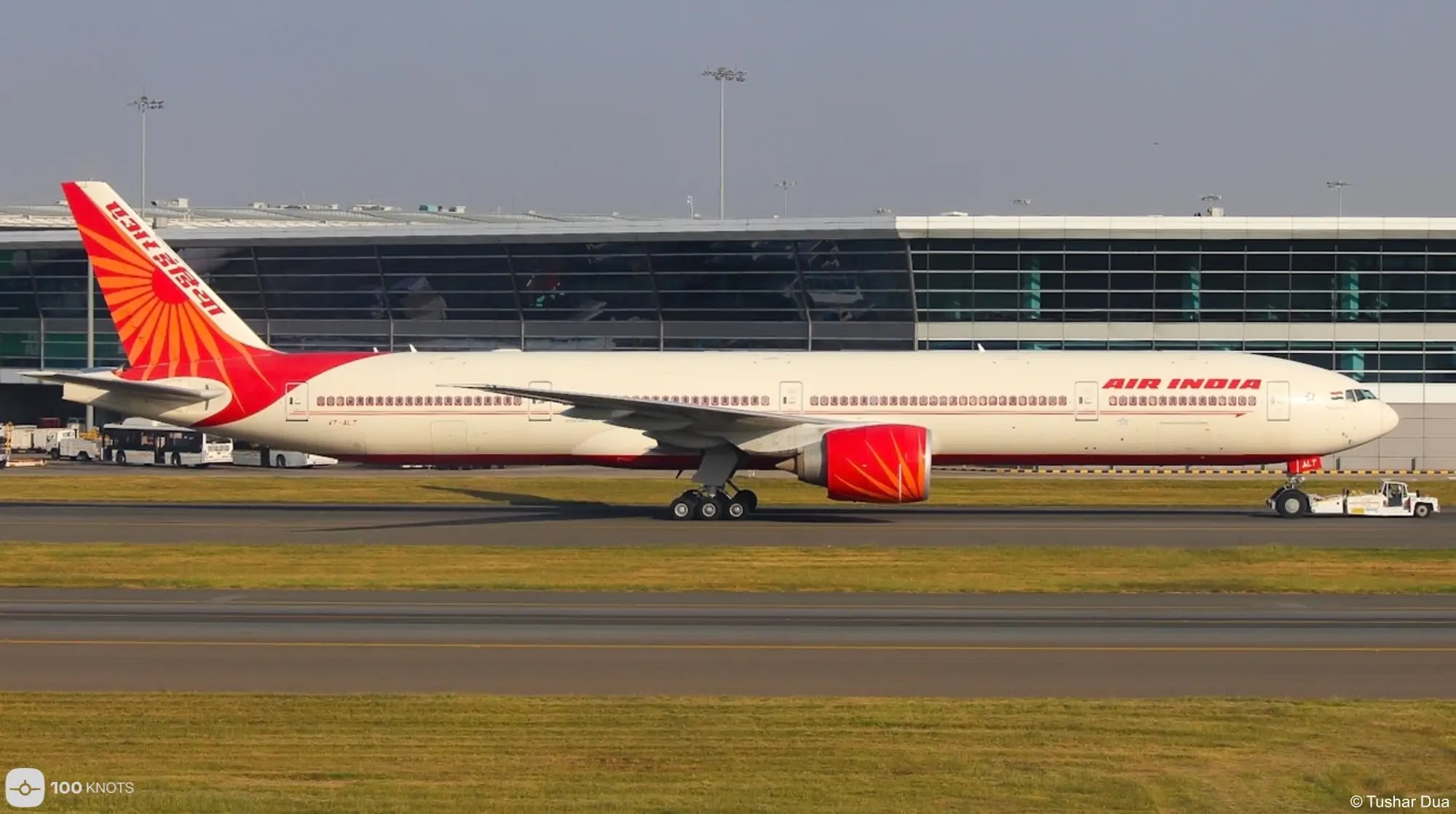
Currently, India has around 700 commercial planes in operation; out of them, there are only about 50 wide-body aircraft. Air India has around 49 wide-body aircraft in its fleet, including 27 Boeing B787-8 Dreamliners and 22 Boeing B777 jets. In addition to Air India's widebody fleet, Vistara operates five Boeing B787-9 Dreamliners. While IndiGo has two wet-leased wide-body planes in operation. In the current wide-body fleet, there would be replacements required. So, there is "scope to add 130-150 wide-body planes in India," Rai said and added that rising international passengers from the country also augur well for the wide-body segment.
Rise in Air Passenger Traffic
With rising air passenger traffic, the government is also working on ways to develop international aviation hubs in India so that domestic carriers can ferry passengers directly to various overseas destinations. Currently, a majority of the people flying from India to international destinations travel by connecting flights operated by foreign carriers. "We have to get to a point where we can get end-to-end carrying our passengers. That is the next step of growth we are talking about," Rai said.
The civil aviation ministry has also been pitching for Indian carriers to have more wide-body planes to capture a higher share in the long-haul segment. Rai said there is potential for deploying wide-body planes in dense domestic routes as that would also help address the slot constraints at airports. Citing the examples of Japanese and Chinese markets where a lot of domestic operations are done with wide-body planes, he said that in a dense route like Delhi-Mumbai, rather than having two narrow-body aircraft and consuming the parking slots in Mumbai, airlines could look at deploying a wide-body plane.
"In dense domestic routes, given the passenger traffic increase and India being the third largest civil aviation market, you probably will have wide-body aircraft in domestic routes also... the future is not only international operations on wide-body but also domestic dense route operations with wide-body aircraft," he said.
Recent Aircraft Orders
Air India's order for Airbus jets, estimated to be worth around USD 34 billion based on market value, will add 210 Airbus A320neo narrowbodies for its short and medium-haul operations, along with 40 Airbus A350 widebodies. Meanwhile, the flag carrier's order for Boeing comprised 190 Boeing 737 MAX, 20 Boeing 787s, and 10 of the new Boeing 777X widebodies.
IndiGo also placed a mammoth order for 500 Airbus A320 family jets. IndiGo has been a significant customer for Airbus over the years. The airline currently has around 970 of these outstanding orders in its queue. Akasa Air has also been expanding its aircraft fleet. This year, the low-cost carrier placed an order for four additional Boeing 737 MAX 8 jets to support its international growth plans. The airline presently operates a fleet of 20 B737 MAX jets and is awaiting the delivery of 56 more.
Around 1,100 aircraft powered by GE Aerospace or CFM engines are expected to be delivered to the Indian market in the next eight to nine years. CFM International is an equal joint venture between GE and Safran Aircraft Engines. GE Aerospace has a firm order for 40 GEnx-1B and 20 GE9X engines for Air India's 20 Boeing 787 and 10 Boeing 777X aircraft that are on order. They have also entered into a multi-year TrueChoice engine services agreement. Besides, Air India has ordered more than 800 LEAP engines from CFM. The engine order is for the airline's entire narrow-body purchase of 210 Airbus A320/A321neo aircraft and 190 Boeing 737 MAX-family aircraft. It also includes a multi-year CFM services agreement.
On concerns about a possible duopoly in the Indian airline market, Rai said that right now, a lot of consolidation is happening and there will always be space for more carriers. "Probably, I wouldn't say duopoly... there will always be space for third or fourth carriers. India is too large a market to say it is a duopoly," he noted.
In August, IndiGo's domestic market share stood at 63.3% while that of Air India group was at 26.7%, as per the latest official data. Air India group includes Air India, Vistara and AirAsia, which has been rebranded as AIX Connect.
(With Inputs from PTI)
Read next

In a dynamic and ever-evolving aviation industry, Emirates President Tim Clark has expressed his unwavering confidence in the airline's ability to face new competitors in the Middle East market. Speaking at the World Aviation Festival 2023 event, Clark not only welcomed fresh entrants but also highlighted the significance of innovation and sustainability in the industry's future.
Emirates: A Pioneer in Aviation Excellence
Emirates Airlines, founded in October 1985, has a rich history of innovation. It was a pioneer in introducing the business model with suites, setting a benchmark for luxurious air travel. Over the years, it has continued to set standards in passenger experience, becoming synonymous with excellence in the aviation sector.
The Changing Landscape: Middle East Aviation Market
Despite being an industry leader, Emirates has always faced the challenge of competition. Tim Clark reflected on past encounters with rivals like Qatar Airways and Etihad Airways, saying, "Is there room for this, is there room for that?" His answer, intriguingly, has always been a resounding "yes."
Clark asserted that before the Global Financial Crisis in 2008/2009, there was ample capacity for three or four additional airlines like Emirates, and the demand was so high that planes were consistently full. While he acknowledged the complexities of the industry, he also noted a significant shift in economic power towards the Middle East, with countries like Saudi Arabia investing trillions in their economies, including the ambitious goal of attracting 100 million tourists by 2030.
Embracing Competition with Riyadh Air

Emirates President Tim Clark welcomed the challenge posed by Riyadh Air and its CEO, Tony Douglas, who aims to bolster Saudi Arabia's tourism industry, and he appears to be "full of confidence" in achieving this ambitious goal. Embracing competition, Tim Clark said, "I told my boss, 'Bring it on.'" Clark believes that the massive investments pouring into Saudi Arabia will benefit the entire region, creating a "gravitational pull" effect that stimulates growth and opportunities for all.
The Hub-and-Spoke Model: A Key to Success
Clark reaffirmed his belief in the hub-and-spoke business model employed by Emirates. He stressed the importance of efficient hubs in connecting passengers from various origins to a wide array of destinations worldwide. Emirates has been a vocal advocate of this model, which has allowed it to effectively serve global demand. Emirates' forward-thinking approach is evident in its early engagement with Airbus back in 1999, when they were planning to expand operations to London Heathrow Airport.
Clark recalled the need for a 1200-seat aircraft in 2008, which Airbus couldn't provide, leading to some dissatisfaction. He firmly believes that had they possessed such an aircraft, it would have been filled to capacity, given their extensive network. "And based on a linear extrapolation, we needed a 1200-seater in 2008," the British CEO noted. "[Airbus] gave us a 500-seater and we moaned like hell."
Clark asserted that if Emirates owned the 1200-seat aircraft, the airline would have filled it. "I promise you that," he said. "We are able to feed 100 flights all over the network into one A380 going to Amsterdam or London."
The Looming Challenge: The Retirement of the A380

One of the pressing challenges facing Emirates is the eventual retirement of the A380, a cornerstone of its fleet. Clark expressed his concerns about the aviation industry's readiness for this transition, especially with regards to airport congestion at major hubs.
He also expressed concerns about Airbus not planning to build a larger and more efficient replacement. He argued that there are compelling environmental and economic reasons to develop a bigger and better aircraft. Despite being seen as unconventional, Clark believes it's a logical step.
"Of course, I am considered as mad as a hatter, bonkers, whatever it maybe," Clark said. "The fact of the matter is, it's simple economics."
Airport Capacity Constraints
Airports like London Heathrow (LHR), New York John F. Kennedy International Airport (JFK), Newark Liberty International Airport (EWR), and even Lisbon, where the event was held, are reaching their limits in terms of capacity. Clark stressed the need for innovation and expansion, especially considering the ever-growing global population and the increasing demand for air travel.
He asked a rhetorical question: "How many new airports will be built in [the United States]?" He pointed out that one A380 occupies the same airport slots as two and a half Boeing 787-9s, which are already in high demand.
"This is the demand as it is today, and now extrapolate that to 2030, 2040, or 2050, and if you have the same situation, […] you are going to flatline what is on offer," Clark said.

The Call for Innovation and Sustainability
In light of an ever-increasing global population and escalating demand for air travel, Clark made a compelling case for the development of larger, more fuel-efficient aircraft. He advocated for advancements in technology, including UltraFan propulsion, which could potentially revolutionize air travel in the mid-2030s. Clark's vision aligns with the industry's current focus on sustainability, emphasizing that innovation and sustainability are not mutually exclusive but rather key components of future success.
Conclusion
Emirates President Tim Clark's bold outlook on the Middle East aviation market demonstrates the airline's commitment to excellence and adaptability. As new competitors emerge, Emirates remains undaunted, confident in its ability to continue setting industry standards.
Clark's call for innovation and sustainability resonates with the broader aviation community, highlighting the imperative to balance growth with environmental responsibility. In an era of transformative change, Emirates is poised to navigate the challenges and opportunities that lie ahead, ensuring a bright future for Middle Eastern aviation.
Comment