
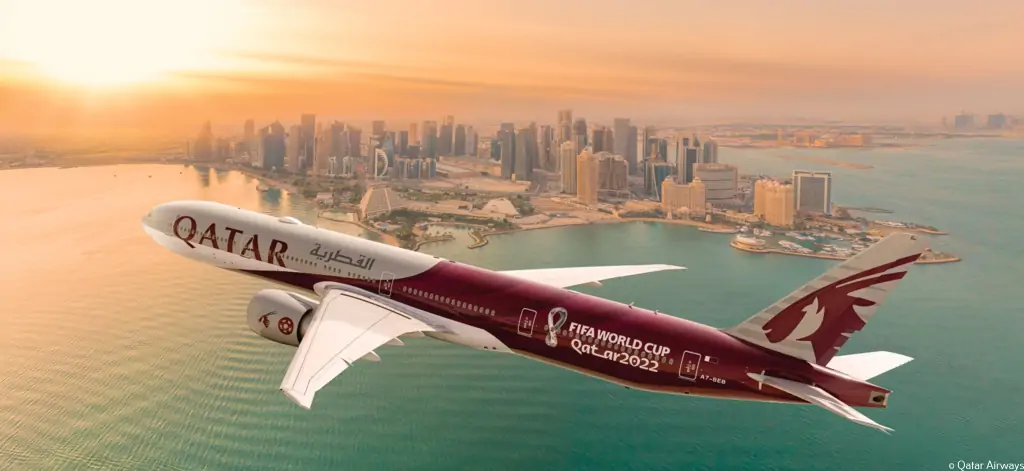
Qatar Airways, one of the leading airlines in the world, has experienced a remarkable fiscal year 2022/2023, marked by outstanding revenues and net profits. With solid financial performance and a significant role as FIFA's Official Partner and Official Airline of the FIFA World Cup Qatar 2022, the airline has set new records and demonstrated its strength in the aviation industry.
Overview of Qatar Airways
Qatar Airways, founded in 1993, has grown to become one of the most prestigious airlines globally. It operates a vast network of flights, connecting passengers to more than 170 destinations worldwide. Renowned for its luxurious services, exceptional hospitality, and state-of-the-art fleet, Qatar Airways has earned numerous accolades, including the prestigious Skytrax Airline of the Year award.
Fiscal Year 2022/2023: Revenues and Net Profits
In the fiscal year 2022/2023, Qatar Airways achieved remarkable financial success. The airline reported revenues of $21.0 billion (QAR 76.3 billion), which rose 45 percent over the previous year, showcasing its strong market presence and continued growth. This revenue figure represents a significant milestone for the company, as it reflects a robust financial performance amidst a challenging global economic environment.
Furthermore, Qatar Airways attained a net profit of QAR 4.4 billion (USD 1.21 billion) during the same fiscal year. This achievement marks a record-breaking profit for the airline, underscoring its ability to navigate the industry's complexities and maintain profitability.
Factors Driving Qatar Airways' Success
Several factors have contributed to Qatar Airways' remarkable success in fiscal year 2022/2023. First and foremost, the airline's commitment to delivering exceptional customer experiences has set it apart from its competitors. Qatar Airways has invested significantly in enhancing its in-flight services, cabin comfort, and entertainment options, ensuring that passengers have a memorable journey.
FIFA World Cup Qatar 2022: A Major Boost
One of the significant highlights of fiscal year 2022/2023 for Qatar Airways was its association with FIFA as the Official Partner and Airline of the FIFA World Cup Qatar 2022. This collaboration not only strengthened the airline's brand visibility on a global scale but also provided a substantial boost to its financial performance.
Qatar Airways' Commitment to Excellence
Qatar Airways' commitment to excellence extends beyond its financial success. The airline has consistently focused on providing unparalleled customer service, investing in the latest technology and innovative solutions to enhance the travel experience. With a fleet of modern aircraft and a team of highly trained professionals, Qatar Airways ensures the utmost safety, comfort, and convenience for its passengers.
The Future of Qatar Airways
Looking ahead, Qatar Airways is poised to continue its upward trajectory in the aviation industry. With a robust financial foundation, a commitment to excellence, and a reputation for delivering exceptional services, the airline is well-positioned to capitalize on emerging opportunities and overcome future challenges.
Comments
"I am delighted to announce that Qatar Airways Group has demonstrated another remarkable annual performance," stated His Excellency Mr. Saad Bin Sharida Al-Kaabi, Minister of State for Energy and Chairman of Qatar Airways Group. Qatar's transport industry exemplifies the country's interconnectivity, connecting individuals from all over the world and expanding commercial relationships throughout the region. Qatar is proud to have welcomed fans from all over the globe to the FIFA World Cup Qatar 2022, which represented one of the best FIFA World Cups in history. Qatar has created an unrivalled standard for tournament security and safety, establishing itself as a family-friendly destination of choice."
"This year's strong financial results are attributed to the strong passenger demand recovery and the team's ability to cater to this demand, aided by our continuing network growth, market leadership, and the operational efficiencies delivered by our world-beating team," commented His Excellency Mr. Akbar Al Baker. Profitability has been boosted by a 100% increase in passenger revenue over the previous year. Load factors have exceeded 80%, and current yield levels are the highest in our history. We have managed to maintain high levels of trust, reliability, and confidence with our clients as the worldwide travel recovery from the COVID-19 epidemic continues. As a result, we retained our position as the airline of choice for millions of customers throughout the world, and our team carried 31.7 million passengers, up 71% over last year."
Conclusion
The fiscal year 2022/2023 has been a momentous period for Qatar Airways, characterized by record-breaking revenues and profits. The airline's solid financial performance, combined with its role as FIFA's Official Partner and Official Airline of the FIFA World Cup Qatar 2022, has demonstrated its resilience, innovation, and commitment to excellence.
With Inputs from Qatar Airways

Read next
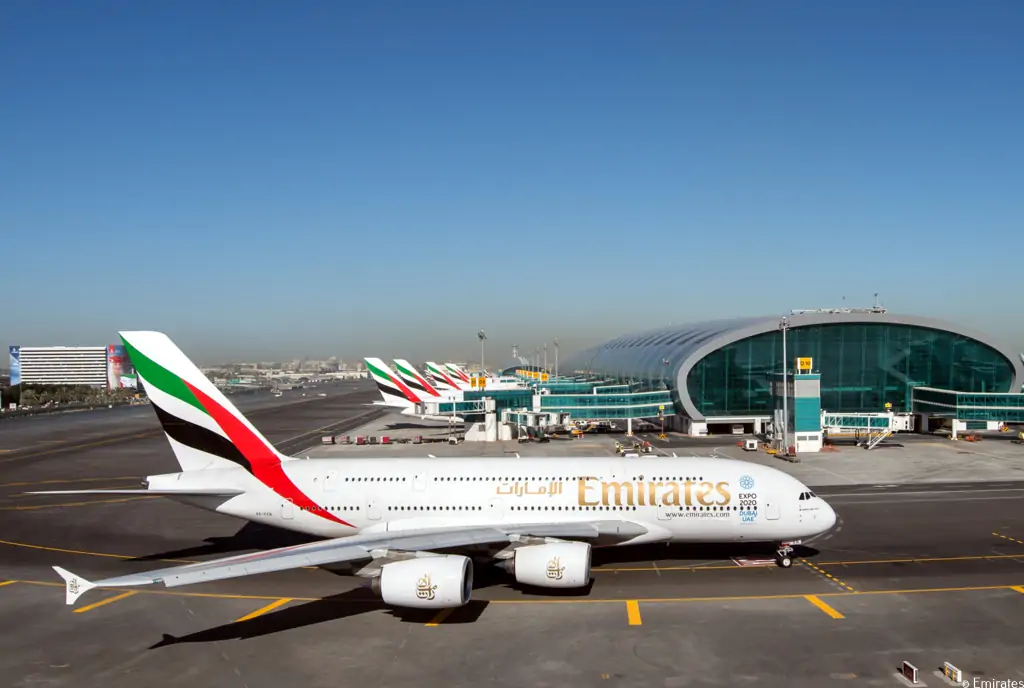
The Middle East Three, commonly known as ME3, have long been prominent players in the global aviation industry. Emirates, Etihad Airways, and Qatar Airways have consistently made headlines with their luxurious offerings and expansive networks. However, in recent times, despite a booming aviation market and an influx of aircraft orders worldwide, the ME3 airlines have maintained a surprising silence.
Overview of the ME3 airlines
Emirates, Etihad Airways, and Qatar Airways have been instrumental in transforming their respective hubs into global aviation hubs. With modern fleets, state-of-the-art facilities, and exceptional service, they have attracted millions of passengers from around the world. The ME3 airlines have been renowned for their extensive connectivity, connecting travelers to destinations across continents seamlessly.
The significance of aircraft orders
Aircraft orders play a pivotal role in the aviation industry. They reflect an airline's growth plans, fleet expansion, and ambitions to capture new markets. Additionally, new aircraft introduce advanced technology, increased fuel efficiency, and enhanced passenger experience. For airlines, placing substantial aircraft orders is a strategic move to position themselves as industry leaders and stay ahead of the competition.
Airbus Orders at the Paris Air Show 2023
Indigo

The historic agreement for 500 A320 aircraft brings IndiGo's total number of Airbus aircraft on order to 1,330, solidifying its status as the largest A320 family model client. The order is emblematic of the firm, known as Interglobe Aviation, which has already significantly surpassed pre-pandemic revenue and added six additional destinations and 174 new weekly flights to its offerings.
Air India

While Air India's agreement for 250 Airbus aircraft was revealed earlier this year, the Indian airline utilized the Paris show to officially announce the purchase, along with a similar-sized arrangement with Boeing. The enormous order, which includes 140 A320neos, 70 A321neos, 34 A350-1000s, and six A350-900s, is part of the company's Vihaan.AI transformation strategy to expand and refresh its fleet.
Flynas

During the exhibition, Saudi Arabia's flynas also announced a significant increase in its fleet, placing an order for 30 A320neo aircraft. The acquisition adds to flynas' current Airbus backlog, with a total order of 120 A320neos, including 10 A321XLRs. Airbus hails the A320neo family as the world's most popular aircraft, with over 8,700 orders from 136 clients, as indicated by the number of orders placed within the family during this year's Paris Air Show.
Qantas

Qantas, already by far the largest airline in Oceania, will extend its fleet even further with an order for nine A220-300s, initially revealed in February but concluded this week. The order adds to the mode's current backlog of 29 aircraft, the first of which is scheduled to be delivered to the airline at the end of this year. Qantas' acquisition of the A220 aircraft is part of the airline's massive fleet replacement project, which was revealed last year and includes orders for A321XLRs and A350-1000s.
Philippine Airlines

Philippine Airlines, yet another Asian airline to place an order for Airbus jets at this year's show, adding to the manufacturer's total with the acquisition of nine A350-1000 aircraft. The long-range jet is part of the company's Ultra Long-Haul Fleet initiative, which aims to expand its services to North America.
Air Mauritius

Despite being the smallest order placed with Airbus in Paris this year, the purchase of three A350 aircraft by Air Mauritius will allow the airline to extend its network across Europe and South Asia. The three long-range aircraft will join the airline's existing fleet of four A350s and four A330s, improving the company's connectivity between its home island and the rest of the globe.
Challenges faced by the ME3 airlines
The ME3 airlines have encountered a range of challenges in recent years. Firstly, the COVID-19 pandemic severely impacted global travel, leading to reduced demand and financial losses for airlines worldwide. Secondly, the rise of low-cost carriers presented formidable competition, particularly in short-haul markets. Finally, geopolitical tensions and airspace restrictions affected the operational efficiency of the ME3 airlines.
Impact of COVID-19 on the aviation industry
The aviation industry faced an unprecedented crisis with the outbreak of the COVID-19 pandemic. Travel restrictions, lockdowns, and health concerns led to a significant decline in passenger numbers and revenue. The ME3 airlines, heavily reliant on international long-haul routes, experienced a drastic reduction in demand, forcing them to ground aircraft and cut costs. This sudden disruption had a profound impact on their operations and financial stability.
Changing dynamics of the aviation market
The aviation market has witnessed dynamic shifts in recent years. Traditional full-service carriers, including the ME3 airlines, faced increasing competition from low-cost carriers that offered affordable fares and simplified travel options. This disruption led to a change in consumer preferences, with travelers seeking value for money and flexibility. The ME3 airlines, traditionally known for their premium offerings, had to adapt to the evolving market landscape.
Possible reasons for the ME3 airlines' silence
The silence from ME3 Airlines amidst the raining aircraft orders can be attributed to several factors. Firstly, the intense competition from low-cost carriers has compelled the ME3 airlines to reevaluate their strategies and focus on profitability rather than expansion. Secondly, geopolitical factors, such as airspace restrictions and political tensions, have affected their operations and limited their ability to expand into new markets. Lastly, internal issues within the ME3 airlines, including financial challenges and management restructuring, could be contributing to their subdued response to the aircraft order surge.
Competition from low-cost carriers
Low-cost carriers have disrupted the aviation industry by offering affordable fares and simplified travel experiences. They have successfully captured market share, especially in short-haul routes, which were traditionally dominated by full-service carriers like the ME3 airlines. To remain competitive, the ME3 airlines must strike a balance between their premium services and cost efficiency, adapting to the changing preferences of travelers.
Geopolitical factors influencing airline strategies
The ME3 airlines operate in a region marked by geopolitical complexities. Geopolitical tensions, airspace restrictions, and diplomatic disputes have influenced their operational efficiency and expansion plans. These factors have forced the ME3 airlines to exercise caution and evaluate the risks associated with entering new markets or placing substantial aircraft orders.
Internal issues within the ME3 airlines
While the ME3 airlines have enjoyed success and recognition globally, they have faced internal challenges as well. Financial struggles, management restructuring, and labor disputes have diverted their attention from aircraft orders. These issues necessitate a focus on stabilizing their operations and ensuring long-term sustainability before committing to significant fleet expansions.
Market Saturation
One possible explanation for the ME3's silence on aircraft orders is the saturation of their current fleets. Over the years, they have amassed impressive numbers of aircraft, creating a highly efficient and extensive network. With a focus on maximizing utilization and maintaining profitability, they may have reached a point where further expansion is not a priority.
Economic Constraints
Another factor that may contribute to the ME3's silence is the economic environment. The aviation industry has faced numerous challenges in recent years, including rising fuel prices, geopolitical tensions, and the impact of the COVID-19 pandemic. These factors have put significant financial strain on airlines worldwide, including ME3. The focus on recovering and stabilizing their operations may have temporarily diverted their attention from ordering new aircraft.
Strategic Decisions
The ME3 airlines have always been known for their strategic thinking and long-term vision. It is possible that they are currently assessing market dynamics and technological advancements before committing to new aircraft orders. By carefully studying emerging trends and evaluating the needs of their passengers, they can make informed decisions that align with their future growth plans.
Competition from Riyadh Air
Fierce Route Competition
As Riyadh Air, an upcoming world-class player in the Middle Eastern market, enters the market, it has set its sights on key routes that were once dominated by Emirates and Qatar Airways. The airlines are now fiercely competing to capture lucrative passenger traffic between major cities in the Middle East, Europe, Asia, and the Americas. This head-to-head competition for market share has led to a reduction in fares and improved services, benefiting passengers, but it also puts immense pressure on the established carriers.
Cutting-Edge Technology
To maintain a competitive edge, Riyadh Air has heavily invested in cutting-edge technology and modern aircraft. By adopting the latest advancements in aviation, such as fuel-efficient planes and state-of-the-art booking systems, the airline has been able to optimize its operations and offer attractive deals to travelers. This technological advantage gives Riyadh Air an upper hand over its more established competitors.
Strategic Alliances
Understanding the importance of global reach and seamless connectivity, Riyadh Air has formed strategic alliances with other international carriers. These partnerships enable Riyadh Air to tap into established networks, expand its destination offerings, and enhance its frequent flyer programs. By teaming up with various airlines, Riyadh Air effectively strengthens its position and broadens its influence in the competitive airline industry.
A Customer-Centric Approach
Riyadh Air has taken a customer-centric approach, focusing on personalized services and exceptional in-flight experiences. By putting the customer first, the airline has managed to attract a loyal customer base, posing a challenge to the customer retention efforts of Emirates and Qatar Airways. Riyadh Air's emphasis on providing a comfortable and enjoyable journey has helped it gain popularity among travelers, leaving its competitors striving to match these high standards.
Implications for Emirates and Qatar Airways
The rise of Riyadh Air has not gone unnoticed by Emirates and Qatar Airways. The long-established carriers now face the challenge of preserving their market shares and reputation while contending with a formidable newcomer. To remain competitive, both airlines have had to reevaluate their strategies, invest in their fleets and technology, and introduce innovations to stay ahead in the race. On June 6th, 2023, Emirates President Tim Clark stated that the airline may acquire more Airbus A350, Boeing 777X, or 787 aircraft as the Dubai-based carrier anticipates demand until the 2030s.
Future prospects for the ME3 airlines
Despite the current silence, the ME3 airlines still possess substantial potential for growth. As the aviation industry gradually recovers from the impact of the pandemic, the ME3 airlines can leverage their strong brand presence, extensive networks, and premium services to regain market share. By strategically aligning their operations, addressing internal challenges, and adapting to market dynamics, they can position themselves for sustained success in the future.
Conclusion
The reticence of the ME3 airlines amidst a flurry of aircraft orders can be attributed to a combination of factors. The impact of the COVID-19 pandemic, intense competition from low-cost carriers, geopolitical complexities, and internal challenges has all contributed to their cautious approach. However, with their inherent strengths and strategic adjustments, the ME3 airlines can navigate these challenges and reclaim their position as prominent players in the global aviation industry.
With Inputs from Airport Technology, Middle East Eye, Zawya
Read next


You push the plane out of the hangar by hand, strap in, run through the entire checklist – remember you have no engine really to crank and start, and once that's done, get your clearance, and all you do is flick a power-on switch, and off you go. You do a brief run-up before taking off; it takes not more than a few minutes to get airborne.
The Pipistrel Velis Electro is the world's very first fully electric airplane to receive a Type Certification (From EASA), enabling flying schools to use the aircraft for flight training and issue of licenses. The first all-electric PPL has reportedly been issued to a Swiss trainee pilot. I first flew the type in the early months of 2022 and ever since have been carrying out different training and instruction on it, a conversion program, so to say, as per EASA. The aircraft itself flies just like its conventional counterpart with power, but upon bringing the ability to idle, it turns into a glider. As a new pilot on this, it's slightly challenging to slow her down and descend on profile due to its high lift-drag ratio, you've got to be patient initially, but after a couple of flights, you'll see it's an enjoyable plane to fly given its high maneuverability.
The aircraft's foundation is two high-voltage liquid-cooled Lithium batteries that power the electric motor through a power controller; which we call the 'engine' collectively on the Velis. The Battery management system (BMS), monitors and controls various parts of the battery. So, you don't have several hundred pieces moving against each other like on a Lycoming or Continental piston engine. What happens, then? You have barely any noise, another big win for the Velis. Even while flying, it's much like how a bee buzzes, and at times, you can't really hear it at all when it's a couple of thousand feet above you, just sight. The Velis can operate in cold, hot, and rain.

Training
So, the difference in training as such is for those who come to get rated on the Velis Electro and begins with a flight to the training area, just basic handling, steep turns, and some stalls. We then move on to circuits to get them to land the aircraft safely within its rather tight flap operating speed restrictions. Once that's done, we move on to emergencies while in the circuit, followed by more intense ones in the training area, and this is where things take a different path, it's not your conventional combustion engine. So, if you did have an electrical fire inside the cockpit and turn off the master as you'd do on a traditional plane, you'd kill the engine here.
The aircraft power setting is read in kW (kilowatt) and has a corresponding RPM. After the power check on take-off, we verify if 50kw is deliverable and then reduce it to 48kW for the climb, which is the max continuous. For the cruise part, you could fly at 20kW or 25kW. The more conservative you are, the slower you go but increase your endurance. A planned descent can be made at idle. In terms of traffic circuits, you can go power idle on late downwind and quickly make it.


The Big Question Endurance
In brief, a local training flight with cruise power between 20 and 25Kw gives you between 45-50 mins of flying time at a cruise speed of 90 knots without 10 min additional reserve. For a cross-country flight with the same power setting, you get anywhere between 27-32 min of flight time with an extra account of 30min. If you plan to do just circuit training, you'll probably get around seven shots at it. Of course, it depends on how large the circuit is for that airport. One factor to consider, however is the battery operating limitation temperature which is 38C OAT and makes it unsuitable for use in most of India during summertime.
The aircraft's endurance is battery limited, it's much like your mobile phone; it's recharged to 100% before the flight through a charging unit (takes approx. 2 hours to charge fully) and drains depending on how much load you put on it. A 1000ft climb at 48Kw can drain nearly 8% (which is quite a lot), so if you climb from the ground to 2500 ft with two people on board, you're already at around 80-81% on the remaining state of charge. As batteries get older, their state of health also goes down and affects the state of charge likewise.


Emergencies
Every time I get in, I have to tell myself that the functioning and emergencies are handled differently, so I'm recharging my situational awareness before every take-off on this aircraft. The two predominant areas where serious problems could occur are from either the batteries or the engine. Something you really don't want is a battery fire, they're lithium and hence cannot be extinguished; you can only delay and slow the burning with an extinguisher, that too only on the ground; if in the air, just ditch immediately. You could also have over currents and voltages across the batteries or a coolant line failure across the batteries. Regarding the engine, you can again have rising temperatures in the electric motor or controller that could cause serious problems. However, the Pipistrel Velis Electro has an ingenious and reliable warning system. There are two, one digital that even tells you the problem so you know how to diagnose it, and another basic annunciator panel with lights illuminating as a backup. To keep the battery temp within limits,, you have a coolant line for each. Onto the last part of the difference training, we actually fly the electric cross country, and now we also explore the range and endurance capabilities.
Where does the aircraft fit in Indian flying Institutions?
India has an abundance of solar energy that could make Electric flying 100% emission-free. Electric flying is still in its infancy,, and these aircraft will get several upgrades over the year. Besides, newer models from different manufacturers are already on the horizon, like the electric Diamonds DA40. Nevertheless, flight schools in India should surely eye the type, given the low operating cost, as you completely eliminate the need for fuel. This is particularly important nowadays, given the sky-high prices make up most of the expense. Of course, we can't' use it for the entire VFR training phase, but for the initial training and traffic circuits, it's undoubtedly a winner regarding operating costs and sustainability. The navigation phase can be complemented with the Pipistrel Virus 121, which is on a related type certificate and has basically the exact same airframe powered by a Rotax 912 engine until the next set of fully electric aircraft can make this a reality too. The plane goes for a little over Euro 200,000, rather pricy for its size and range, but you have to consider that you'll never spend a penny on fuel.
Pros and Cons
The pros are sure to overshadow the cons; first and most important, you're being extremely sustainable - absolutely emission-free, and if you're also producing the electricity in a sustainable way, be it solar, wind, etc., you make the entire chain 100% emission-free - something that's very doable in India given its excess solar.
Second, noise, it's a highly silent aircraft given an electric motor powers it, so you don't have to worry about overflying your neighborhood and annoying them. Another vivacious is electric motors are more straightforward than combustion engines, makingakes maintenance easier.
Cons for the moment are range/endurance. Energy storage in the batteries is still on the lower end, and this limits the flight time significantly, but ccan'treally complain, iit'sthe first step, and so far, so good, iit'llonly get better if yyou'dconsider lithium batteries as a con, then that too.

Specifications Pipistrel Velis Electro

| Engine | Pipistrel E-811 EASA Type-Certified |
| Max Power | 57.6 kW MTOP |
| Wing Span | 10.71 m (35.1 ft) |
| Length | 6.47 m (21.3 ft) |
| Height | 1.90 m (6.23 ft) |
| Wing Area | 9.51 m2 (102.4 sqft) |
| Basic Empty Weight (With Batteries) | 428 kg (941 lb) |
| Max Take Off Weight, MTOW | 600 kg (1,320 lb) |
| Payload | 172 kg (378 lb) |
| Cruising Speed (at 35 kW) | 90 KCAS |
| Takeoff Run (Grass/Asphalt) | 246/241 m takeofftakeofftakeoff1 ft) |
| Service Ceiling | 3,660 m (12,000 ft) |
| Endurance | 50 minutes (Plus VFR reserve) |
Read next

Airbus, a global leader in the aerospace industry, has unveiled its new Wing Technology Development Centre (WTDC) at the Filton facility in the UK. This state-of-the-art facility marks a major milestone in Airbus's commitment to innovation and research, enabling the company to further enhance its wing capabilities.
Airbus' Vision for the Future
Airbus envisions a future where flying is ecologically benign, efficient, and sustainable. To achieve this aim, the company has devoted itself to pushing beyond the boundaries of technological innovations in aircraft design. Airbus aspires to produce aircraft that use less fuel, emit fewer greenhouse gases, and generate less noise pollution by focusing on wing technology.
The Significance of the Wing Technology Development Centre
The establishment of the Wing Technology Development Centre signifies Airbus's dedication to pushing the boundaries of aviation technology. By investing in advanced research and development facilities, Airbus aims to remain at the forefront of the industry, delivering cutting-edge solutions that enhance aircraft performance, fuel efficiency, and overall safety.
Cutting-Edge Technology for Enhanced Performance
The WTDC will leverage cutting-edge technology to drive innovation in wing design, manufacturing, and testing. By utilizing advanced computational tools, simulation techniques, and materials, Airbus engineers and researchers will have access to powerful resources that enable them to explore new concepts and refine existing designs. This state-of-the-art facility will empower them to develop wings that are lighter, stronger, and more aerodynamically efficient, thereby contributing to improved aircraft performance.
Benefits of Longer, Lighter, and More Slender Wings
Longer, lighter, and more slender wings offer numerous benefits for aircraft. Firstly, they reduce drag, resulting in reduced fuel consumption and lower emissions. Secondly, they enhance lift generation, allowing aircraft to take off and land more efficiently. Additionally, these wings contribute to increased range, payload capacity, and passenger comfort. By embracing these advancements, Airbus aims to set new standards for sustainability and performance in the aviation industry.
Accelerating Design, Manufacturing, and Testing
At the WTDC, Airbus will expedite the entire process of wing development. The facility will house advanced manufacturing equipment, allowing for streamlined production and assembly. Additionally, it will feature cutting-edge testing facilities, enabling engineers to thoroughly evaluate the performance and durability of wing prototypes. This accelerated design, manufacturing, and testing cycle will enable Airbus to bring next-generation wings to market faster, ensuring that their aircraft remain at the forefront of technological advancement.
Collaboration and Innovation
The Wing Technology Development Centre will foster collaboration and innovation within the aerospace industry. Airbus recognizes the value of partnerships and knowledge-sharing, and the WTDC will serve as a platform for collaboration with academic institutions, research organizations, and industry experts. By working together, these stakeholders can pool their expertise, share best practices, and collectively drive innovation in wing technology, benefiting the entire aviation industry.
Comments
"The new Wing Technology Development Centre will help us ground our research in practicality," comments Sue Partridge, Airbus Head of Filton Site and Wing of Tomorrow Programme. Wing of Tomorrow (WoT), our largest research and technology initiative led by the team in the UK, is a critical component of how we provide technology for next generation aircraft wings. We reached a major milestone in the plan last week when our second wing demonstration was produced and handed to the WTDC by the team in Broughton, Wales. It will be ready for structural testing at our Aerospace Integrated Research and Technology Centre (AIRTeC) here."
"It all comes down to preparing our people, technology, industrial system, supply chain, and digital and physical capabilities for next-generation aircraft." We are employing industry partners, as well as the most advanced digital technologies and automation to detect possible technical bottlenecks that might hold us down in the future. When the time comes, the foundations we establish today will enable us to build better and quicker."
Conclusion
Airbus's establishment of the Wing Technology Development Centre in the UK is a significant milestone for the company and the aerospace industry as a whole. This state-of-the-art facility will serve as a hub for innovation, research, and collaboration, enabling Airbus to enhance its wing capabilities and remain at the forefront of aviation technology. With cutting-edge technology, streamlined processes, and a collaborative approach, the WTDC will accelerate the design, manufacturing, and testing of next-generation wings, ultimately contributing to improved aircraft performance and efficiency.
With Inputs from Airbus
Read next

As aviation strives to become more sustainable, manufacturers like Airbus are investing in research and development to revolutionize aircraft design. Airbus aims to develop innovative wing technology that not only enhances performance but also minimizes environmental impact. With this objective in mind, the company is intensifying its testing efforts to lay the groundwork for a new generation of aircraft.
The Need for Innovation in Wing Technology
Wings play a crucial role in an aircraft's efficiency and fuel consumption. By optimizing wing design, manufacturers can significantly reduce drag, improve aerodynamics, and enhance overall performance. As the demand for air travel continues to grow, the aviation industry must seek innovative solutions to address the challenges of increasing fuel efficiency and reducing carbon emissions.
Airbus' Vision for the Future
Airbus envisions a future where aviation is sustainable, efficient, and environmentally friendly. To realize this vision, the company is committed to pushing the boundaries of technological advancements in aircraft design. By focusing on wing technology, Airbus aims to create aircraft that consume less fuel, emit fewer greenhouse gases, and minimize noise pollution.
The Wing Technology Facility in Southwest England
In a significant milestone, British Industry Minister Nusrat Ghani inaugurated a state-of-the-art wing technology facility in southwest England. This cutting-edge facility will serve as a hub for the design and manufacture of longer, lighter, and more slender wings. It will also play a vital role in the development of folding wingtips, a revolutionary feature that enhances aerodynamic efficiency and allows for easier manoeuvring in tight spaces.
Advancements in Wing Design
Airbus' relentless pursuit of innovation has led to remarkable advancements in wing design. Through extensive research and engineering, the company has developed novel materials and manufacturing techniques that contribute to lighter and stronger wings. These advancements enable higher fuel efficiency, increased payload capacity, and improved overall performance. "It's our programme to prepare technologies for the next generation of Airbus aircraft, whatever that is," Sue Partridge, the company's Wing of Tomorrow programme manager, told reporters. The opportunity arises when Boeing researches an elongated, ultra-light concept referred to as Transonic Truss-Braced Wings.
Benefits of Longer, Lighter, and More Slender Wings
Longer, lighter, and more slender wings offer numerous benefits for aircraft. Firstly, they reduce drag, resulting in reduced fuel consumption and lower emissions. Secondly, they enhance lift generation, allowing aircraft to take off and land more efficiently. Additionally, these wings contribute to increased range, payload capacity, and passenger comfort. By embracing these advancements, Airbus aims to set new standards for sustainability and performance in the aviation industry.
Folding Wingtips: Revolutionizing Aircraft Efficiency
One of the most exciting developments in Airbus' wing technology is the incorporation of folding wingtips. By implementing this feature, aircraft can adapt to different flight conditions and airport requirements. The ability to fold the wingtips reduces the wingspan, allowing for easier parking at crowded gates. Furthermore, this innovation optimizes fuel efficiency during flight, contributing to cost savings and reduced environmental impact.
Overcoming Cost Challenges
While Airbus is making remarkable progress in developing advanced wing technology, cost reduction remains a significant challenge. As with any revolutionary endeavor, initial research, development, and testing involve substantial investments. However, Airbus is actively exploring strategies to bring down costs without compromising safety, quality, or performance. Collaboration with industry partners, leveraging economies of scale, and adopting innovative manufacturing techniques are among the approaches being pursued to achieve cost-effective solutions.
"We need to develop composite technologies that can eliminate weight out of the wing, but they must be affordable and capable of high production rates." Partridge expressed. The best-selling A320/321 and competitive Boeing 737 are both made of aluminium, but designers believe composites could enable future wings to be tapered in efficient new ways.
Conclusion
Airbus' dedication to advancing wing technology represents a significant milestone in the pursuit of sustainable aviation. By intensifying testing and research efforts, the company is actively working towards the development of an eventual successor to the A320 series. The groundbreaking wing technology, coupled with innovations such as folding wingtips, promises improved efficiency, reduced emissions, and enhanced performance. Airbus' relentless commitment to sustainability is propelling the aviation industry towards a greener future.
With Inputs from Reuters
Read next
Air India-Vistara Merger Will Nave No Adverse Impact on Competition : Tata group

Radhika Bansal
05 Jul 2023

Tata Sons-run domestic airlines Air India and Vistara have conveyed to the antitrust regulator Competition Commission of India (CCI) that a proposed merger of the two will not impact competition adversely as rivals are present on most routes that the combined entity will fly, according to a report. The CCI’s decision to review the Air India and Vistara merger will not have any material business impact, although it could delay the process, sources told The Economic Times.
Earlier, CCI had issued notice to the two airlines seeking reasons on why a probe of the impact of the merger should not be initiated. According to competition law, the antitrust body has the power to do a thorough investigation before giving the green light for a merger or acquisition (M&A) in case there are concerns about possible anti-competitive practices about the deal.
If the deal sees the light of day, it will make Air India the country's largest international carrier and second-largest domestic airline. Air India, which Tata Group took over last year, wants to modernise its fleet, operational systems and revenue management.
As the Tata Group plans to put its airlines in sync with each other and consolidate operations, it has come under the regulator's lens. Thus, the two airlines have not been given the expedited permissions sought by them. Moreover, the regulator has asked the two airlines why an investigation of the impact the merger would have on the industry not be conducted, the report said.
“Anti-trust regulators around the world examine the impact on competition through an origin and destination (O&D) approach to identify relevant market… if we take a look at most busy markets, the combined entity of Air India, Air India Express and Vistara will have enough competition to restrain market power,” ET quoted a source saying.
Impact of the Merger
The combined Air India group will have 49% of the total flights on the Delhi-Mumbai route. IndiGo, India's largest airline by market share, also has a strong presence on the route with 31% of total flights. Likewise, the Air India group will have a 52% share of total flights on the Delhi-Bengaluru, the second busiest route. IndiGo has a 35% share, the report pointed out citing aviation analytics firm Cirium data.
The Air India group has told the CCI that the cost difference between a full-service and low-fare carrier is low as they operate from common airports and bear similar costs such as fuel, landing and parking charges. The source told the publication that detailed scrutiny by the CCI will ensure that the process will not meet any challenges after the deal’s completion.
The Tata Group is merging Vistara with Air India to create a single full-service airline. Singapore Airlines will have a 25.1% share in the new entity. On the other hand, AirAsia India is moving forward with the process of merging with Air India Express to create a single low-cost subsidiary of Air India. Elaborating on the merger, Air India told the CCI that a full-service and a low-cost airline are not different. They operate from the same airports and use fuel that costs the same, paying similar landing and parking charges as well. Post-merger, Air India will be the only full-service airline operating out of India.
The Role of CCI
As per the competition law, the regulator can probe into the matter before giving the green light for a merger or acquisition in case there are concerns about possible anti-competitive practices in the deal. Section 29 of the Competition Act mentions the procedures for the probe of combinations. In CCI parlance, combinations refer to mergers and acquisitions.
"Where the Commission thinks that a combination is likely to cause, or has caused an appreciable adverse effect on competition within the relevant market in India, it shall issue a notice to show cause to the parties to combination calling upon them to respond within thirty days of the receipt of the notice, as to why investigation in respect of such combination should not be conducted," as per the section.
In case, the regulator is not satisfied with the responses, it can go to the second stage wherein the parties will be asked to make the details of the proposed deal public and comments will be sought. Besides, CCI can seek additional information from the parties before taking a final decision on the deal.
There have also been instances where parties to a combination submitted remedial measures to address anti-competitive concerns and after accepting them, CCI has given its conditional approvals. Additionally, the CCI has the authority to request further information from the parties involved before deciding on the merger.
In November 2013, the CCI approved a proposal by Gulf carrier Etihad to purchase 24% of grounded Jet Airways. The CCI then cited the insignificant increase in market share forecast on India-UAE routes as one of the reasons for the approval.
Full Service & Low-Cost Carriers
Full-service airlines tend to focus on their network of routes rather than looking at profitability on individual routes. For example, a full-service airline like British Airways will continue to serve on a route even if it does not have enough passengers because that route serves as a feeder for the larger network of British Airways services. To operate on different types of routes for a varying number of passengers, full-service airlines operate aircraft of different sizes and capacities. This allows them to cater to the flux in the number of passengers while also keeping their operations efficient.
Low-cost carriers tend to suspend services that do not have enough passengers. In their case, the focus is on the profits made on individual flight routes. Low-cost carriers mostly operate flights of the same design and type, which ensures that they do not have to make maintenance arrangements for different types of aircraft. Another benefit of operating aircraft of the same type is that the cabin crew does not need to be trained for different types of aircraft.
(With Inputs from The Economic Times)
Comment