
Jet Airways Spent INR 470 crore Since Implementation of Corporate Insolvency Resolution Process

Radhika Bansal
07 Jul 2023
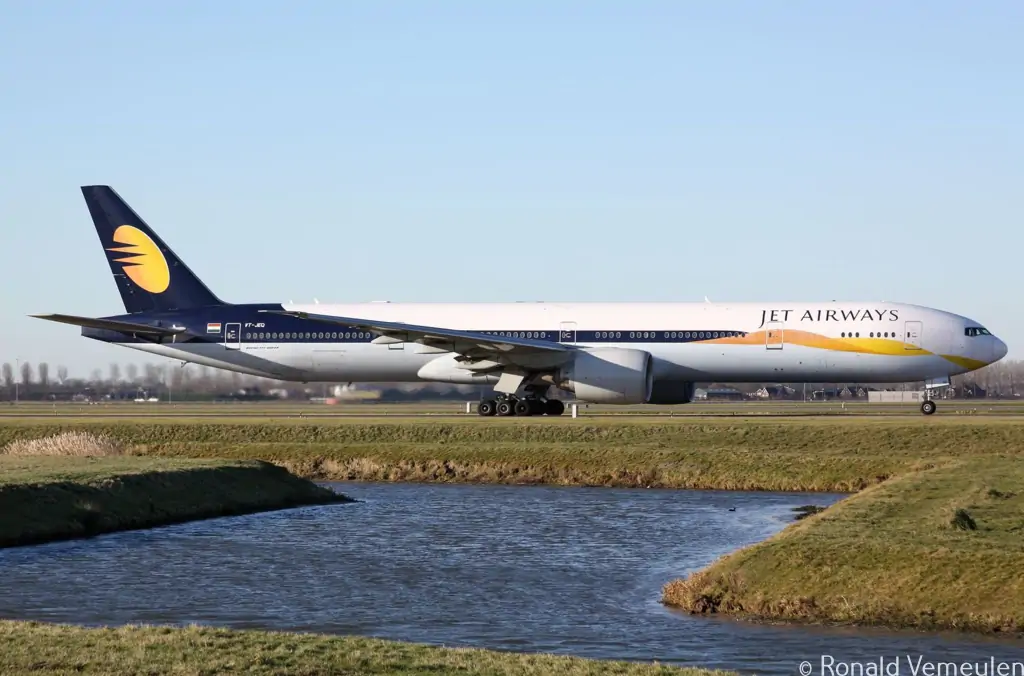
The Committee of Creditors (CoC) of grounded airline Jet Airways told the Supreme Court on July 5 that it has spent INR 470 crore since the implementation of the Corporate Insolvency Resolution Process (CIRP), without getting any return on investment. Represented by Additional Solicitor General Venkatraman, the CoC further told the court that they are incurring expenses to the tune of INR 23 crore per month. Jet Airways workmen association agreed with the CoC and informed the court that they have not been paid their dues as well.
The apex court was hearing a case by the Jet aircraft engineers maintenance welfare association against the company seeking recovery of their dues. The case was adjourned after the bench led by Chief Justice of India DY Chandrachud was informed that other cases about the recovery of dues from Jet Airways are pending before other benches of the apex court. The CJI directed that all the cases about Jet Airways be grouped and listed before his bench for hearing soon.
In May 2023, the National Company Law Appellate Tribunal (NCLAT) granted Jalan Kalrock Consortium, which emerged as a successful bidder to take over Jet Airways, more time to make payments to the State Bank of India (SBI).
The appellate tribunal has noted that despite National Company Law Tribunal (NCLT) having approved the resolution plan in January, the case came to be heard by the NCLAT in March and an order of refusal of stay was passed on March 3, hence the tribunal held that Jalan Kalrock is entitled to an exclusion from November 16, 2022, to March 3, 2023, for complying with payment obligation towards SBI.
Payment to Lenders
On January 13, the National Company Law Tribunal (NCLT) allowed the transfer of the beleaguered airline to the consortium led by London-based Kalrock Capital and UAE-based entrepreneur Murari Lal Jalan. It also asked the consortium to make payments by May 15, 150 days from the initiation of the ownership proceedings, but the NCLAT exemption gives it more time.
The consortium was to make the first tranche of the payment to Jet's lenders before May 15 but it didn't and feared that the SBI would invoke the performance bank guarantee of INR 150 crore instead of INR 175 crore worth of dues. Lenders of the airline had approached the NCLAT as they opposed the ownership transfer to the consortium. They alleged that the consortium had not fulfilled its obligations. Subsequently, the appellate tribunal granted an extra three months to the consortium to pay the dues to SBI.
Jet Airways was grounded in April 2019 over growing losses and a debt of about INR 8,000 crore. In October 2020, the airline's Committee of Creditors (CoC) approved the revival plan submitted by the Jalan-Kalrock consortium.
Revival Plans
Directorate General of Civil Aviation (DGCA) will only re-issue an air operator's certificate (AOC) to Jet Airways once it resolves disputes with lenders and provides proof of its financial capabilities, according to a report by Hindu Business Line. Jet Airways AOC lapsed in May. The report says the DCGA will only re-issue one if the airline can lock in senior management and reconstitute its board, resolve legal disputes, including those with lenders, and secure aircraft lease agreements. Since losing its AOC, Jet Airways has reportedly approached the DGCA seeking a new one.
Jet Airways ceased operations in April 2019 owing around INR 80 billion. In October 2020, a vote by the committee of creditors approved a bid by Murari Jalan and Florian Fritsch to buy the airline. The new owners planned an imminent restart, which was contingent on them paying creditors (including banks) around USD 0.10 on every dollar owed and pumping almost INR 10 billion into recapitalising Jet Airways over five years.
However, the agreement has since collapsed into a mire of recriminations and legal disputes, with the airline no closer to restarting. The saga has generated plenty of headlines in India but has recently been overshadowed by the Go First insolvency. That airline is also attempting to restart. But, as the DGCA points out, Go First's restart currently has the backing of lenders, while the Jet Airways restart does not.
A spokesperson for the Jalan Kalrock consortium says Jet Airways continues to engage with disgruntled lenders, seeking to settle disputes. In May, the consortium went back to the National Company Law Tribunal (NCLT) to prevent its most aggressive lender, the State Bank of India, from encashing an INR 1.5 billion bank guarantee after the consortium defaulted on its payment obligations. The tribunal gave Jet Airways' new owners until August to meet its commitment.
Ahead of that occurring and losing its AOC, a raft of senior Jet Airways' management, including the CEO, left the airline. To date, no new CEO has been appointed. There is also a report of a letter of intent signed with an unidentified United States-based lessor to acquire eight aircraft. However, that letter, which remains unverified, is only valid for three months.
Read next
Lufthansa to Invest in New Real Time Trajectory-Based Transmission Technology

Abhishek Nayar
07 Jul 2023
As the aviation industry continues to grow, so does the need for sustainable practices. The Lufthansa Group recognizes this and has taken a proactive approach to minimize its carbon footprint. One area where they are making significant strides is the optimization of flight paths and the reduction of CO2 emissions.
Understanding ADS-C EPP
ADS-C EPP, or Automatic Dependent Surveillance - Contract Extended Projected Profile, is a cutting-edge technology designed to enhance the efficiency of aircraft routing and reduce unnecessary detours. It works by transmitting detailed flight profile information, allowing for real-time adjustments to flight paths based on weather conditions, traffic congestion, and other factors.
The Benefits of ADS-C EPP
Implementing ADS-C EPP in Lufthansa Group's A320neo/A321neo aircraft offers several key benefits. Firstly, it allows for more direct flight paths, minimizing the distance travelled and reducing fuel consumption. This, in turn, leads to a significant reduction in CO2 emissions, supporting the group's commitment to sustainability.
Lufthansa Group's Implementation Plan
Starting from 2024, the Lufthansa Group plans to equip over 65 of its Airbus A320neo/A321neo aircraft with ADS-C EPP technology. This proactive investment underscores the group's commitment to being at the forefront of sustainable aviation practices. By integrating the technology early, Lufthansa Group aims to set an example for other airlines and encourage widespread adoption throughout Europe.
Promoting Adoption Across Europe
Recognizing the significance of ADS-C EPP in optimizing flight paths and reducing CO2 emissions, Lufthansa Group is actively promoting its adoption across Europe. The automated transmission of flight route information also contributes to the modernization of EU airspace. The Lufthansa Group's new ADS-C EPP-equipped aircraft will first be permitted to utilize the new technology in Maastricht airspace (MUAC), which is Europe's first that complies with all requirements.
Future Requirements for ADS-C EPP
The Lufthansa Group's commitment to sustainability extends beyond its own operations. From 2028, ADS-C EPP technology will become a mandatory standard installation in all newly delivered aircraft and air traffic control (ATC) ground systems within the European Union. This forward-thinking requirement ensures that future aircraft and ATC systems are equipped with the necessary technology to optimize flight paths and reduce CO2 emissions.
A Commitment to Sustainability
Lufthansa Group's implementation of ADS-C EPP is a testament to their dedication to sustainability and their role in shaping a greener future for the airline industry. By embracing innovative technology and proactively investing in its integration, they are leading the way towards more eco-friendly aviation practices.
Conclusion
The Lufthansa Group's decision to optimize flight paths and reduce CO2 emissions through the implementation of ADS-C EPP technology is a significant step towards a greener future. By investing in this advanced solution, they are not only improving operational efficiency but also setting an example for the entire aviation industry. With their commitment to sustainability and the promotion of ADS-C EPP adoption across Europe, Lufthansa Group is driving positive change and contributing to a more environmentally conscious airline sector.
With Inputs from Lufthansa
Read next

The recent successful launch of the Airbus and Thales Alenia Space SYRACUSE 4B communications satellite from the Guiana Space Centre in Kourou, French Guiana, marks a significant milestone in the field of space exploration. This groundbreaking event took place as the final launch of the European heavy launcher Ariane 5, and it signifies a major leap forward in satellite communication technology.
The SYRACUSE 4B Communications Satellite: An Overview
The SYRACUSE 4B communications satellite represents a groundbreaking advancement in the realm of satellite technology. Developed jointly by Airbus and Thales Alenia Space, this state-of-the-art satellite aims to revolutionize global communication networks by providing enhanced connectivity and reliable data transmission capabilities. Equipped with cutting-edge technology and an array of advanced features, the SYRACUSE 4B satellite holds immense potential for various industries and sectors.
The Launch from Guiana Space Centre
The successful launch of the SYRACUSE 4B communications satellite took place at the Guiana Space Centre, Europe's Spaceport, situated in Kourou, French Guiana. This launch site, strategically located near the equator, offers several advantages for launching satellites into space. The proximity to the equator provides an additional boost to the Ariane 5 rocket, allowing it to carry heavier payloads and achieve greater orbits. The Guiana Space Centre's well-established infrastructure and operational expertise make it an ideal location for launching critical space missions.
The Ariane 5 Heavy Launcher: A Reliable Workhorse
The SYRACUSE 4B satellite was launched using the Ariane 5 heavy launcher, a renowned workhorse in the European space industry. With a stellar track record spanning over two decades, the Ariane 5 has consistently demonstrated its reliability and robustness. The final launch of the Ariane 5 with the SYRACUSE 4B satellite signifies the end of an era, paving the way for future launch systems to meet evolving demands and technological advancements.
Key Technological Advancements of SYRACUSE 4B
The SYRACUSE 4B satellite incorporates several groundbreaking technological advancements that set it apart from its predecessors. Its advanced communication payload enables high-speed data transmission and enhanced connectivity, ensuring seamless communication services across vast regions. The satellite's sophisticated onboard systems and components contribute to its superior performance, making it a key player in the global satellite communication landscape.
The Role of Airbus and Thales Alenia Space
Airbus, a renowned aerospace company, and Thales Alenia Space, a leading space technology provider, have collaborated to develop the SYRACUSE 4B communications satellite. Airbus brings its expertise in satellite manufacturing and integration, while Thales Alenia Space contributes its extensive experience in space communication systems. This collaboration between two industry leaders has resulted in the creation of a cutting-edge satellite that pushes the boundaries of communication technology.
Enhancing Global Communication Networks
The SYRACUSE 4B satellite plays a vital role in enhancing global communication networks. It provides increased coverage, allowing for improved connectivity in remote and underserved areas. This advancement opens up new possibilities for businesses, governments, and individuals, enabling them to connect and communicate seamlessly across the globe. With the SYRACUSE 4B satellite, the world becomes more interconnected than ever before.
Benefits of the SYRACUSE 4B Communications Satellite
The SYRACUSE 4B communications satellite brings numerous benefits to various industries and sectors. Its advanced capabilities facilitate faster and more reliable communication, benefiting sectors such as telecommunication, broadcasting, maritime and aviation, disaster management, and defense. The satellite's ability to handle high volumes of data with low latency ensures efficient transmission of critical information, enabling timely decision-making and improved operational efficiency.
Ensuring Reliable and Secure Communication
Reliability and security are paramount in satellite communication systems, and the SYRACUSE 4B satellite excels in both areas. With redundant systems and advanced encryption techniques, it ensures the integrity and confidentiality of transmitted data. This level of reliability and security is crucial for applications that require real-time communication, such as emergency response operations, military communications, and financial transactions.
The Future of Satellite Communication
The successful launch of the SYRACUSE 4B satellite represents a significant step towards the future of satellite communication. As technology continues to advance, we can expect further improvements in satellite capabilities, including higher data transfer rates, reduced latency, and increased coverage. These advancements will unlock new possibilities and reshape the way we communicate and interact on a global scale.
Comments
"Observation, signal intelligence, space situational awareness, and secure communications across key theatres of operation are critical for a nation's autonomy and freedom of action." Airbus is proud to be a trusted partner of the French Armed Forces: through SYRACUSE 4B and other initiatives, we assist our national aspirations and capabilities in all of these areas today and in the future!" remarked Jean-Marc Nasr, Airbus's Head of Space Systems.
Conclusion
The launch of the Airbus and Thales Alenia Space SYRACUSE 4B communications satellite marks a momentous achievement in space exploration and satellite technology. With its advanced features and capabilities, the SYRACUSE 4B satellite propels the field of global communication forward, ensuring reliable and secure connectivity across the world. As we look towards the future, satellite communication systems like SYRACUSE 4B will continue to play a crucial role in connecting people, industries, and nations.
With Inputs from Airbus
Read next
DGCA Signs Pact With EASA to Cooperate on Unmanned Aircraft Systems & Innovative Air Mobility
Radhika Bansal
06 Jul 2023
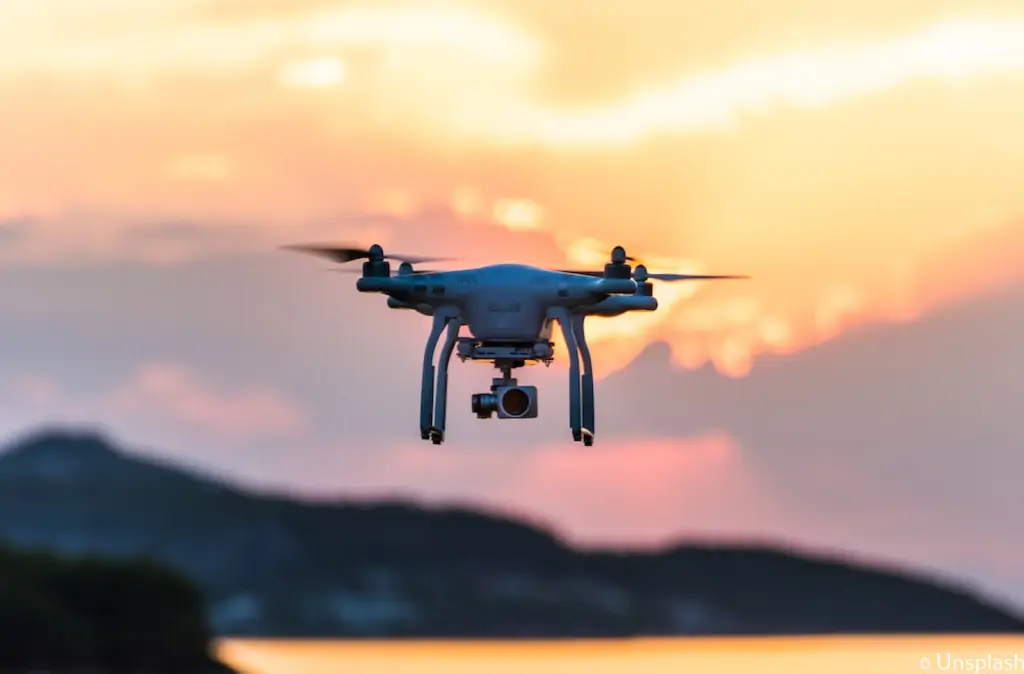
The Directorate General of Civil Aviation (DGCA) has signed a memorandum of understanding (MoU) with European Union Aviation Safety Agency (EASA) to cooperate on unmanned aircraft systems and innovative air mobility. The two watchdogs would cooperate in the areas of development of certification standards, environmental standards and related requirements for the certification and use of unmanned aircraft systems and innovative air mobility operations.
The MoU follows a letter of intent (LoI) that was signed during the EU-India Aviation Summit in New Delhi on April 20, 2023. According to a press release, the MoU will focus on collaboration on unmanned aircraft and innovative air mobility between the two civil aviation authorities. It is to ensure regular information sharing on technological developments and research in this area. According to the Aviation Ministry, the MoU will result in conferences, workshops, and training programmes conducted by DGCA and EASA.
The Ministry of Aviation said, “This collaboration would include cooperation between DGCA and EASA in the areas of development of certification standards and environmental standards and related requirements for the certification and use of unmanned aircraft systems and innovative air mobility operations.”
The statement added, “The MoU will include licensing of personnel, training, air traffic management and infrastructure, including Unmanned Aircraft System Traffic Management (UTM) standards and services.” The MoU should result in harmonized standards and accelerated growth of the Indian unmanned aviation sector, according to the press release.
Govt Relaxes Export Policy for Drones
The government simplified and liberalized the policy for the export of drones and Unmanned Aerial Vehicles (UAV) meant for civilian end uses from India. As per public notices issued by the Directorate General of Foreign Trade (DGFT), drones capable of a range equal to or less than 25 km and delivering a payload of not more than 25 kgs and meant for only civilian end-use, will now be subject to General Authorization for Export of Drones (GAED), a one-time general license valid for three years that would reduce compliance.
All kinds of drones and UAVs were earlier restricted for export under the category 5B of the Special Chemicals Organisms Material Equipments and Technology (SCOMET) list which with the category of items that are subject to specific regulations due to their potential dual-use nature- meaning they can have both civilian and military applications.
“SCOMET license was required for export of such items and the industry was facing challenges to export drones with limited capability which are only meant for civilian use,” DGFT said. The SCOMET policy of drones and UAVs meant for civilian use has been amended after stakeholder consultations.
The export of drones and UAVs not covered under the specified categories in the SCOMET list and capable of a range equal to or less than 25 km and delivering a payload of not more than 25 kgs (excluding the software and technology of these items) and meant for only civilian end-use, will now be subject to General Authorization for Export of Drones (GAED), a onetime general license valid for three years, it added.
Benefits of the Policy Change
This policy change will not require the drone manufacturers and exporters with GAED authorization to apply for SCOMET license for every similar export shipment meant for civilian purposes, within the validity period of three years subject to post reporting and other documentary requirements, reducing the compliance by the industry to apply for SCOMET license every time they have to export any kind of civilian drone according to the DGFT.
“This would further facilitate the UAV industry to export drones with ease, thereby, facilitating ease of doing business and promoting export from India,” it said, adding that it would push start-ups and new drone manufacturers in this field to scale up and look at the global markets, allow Indian drone manufacturers to access larger markets, and encourage innovation in the industry.
This policy change would also promote India as a global manufacturing hub of drones and UAVs and push the start-ups and new drone manufacturers in this field to scale up and look at the global markets. "It will allow Indian drone manufacturers to access larger markets, and encourage innovation in the industry," the ministry added.
Read next
Go First Aircraft Lessors Gets Delhi HC's Nod to Access Aircraft for Inspection, Carry Out Maintenance
Radhika Bansal
06 Jul 2023
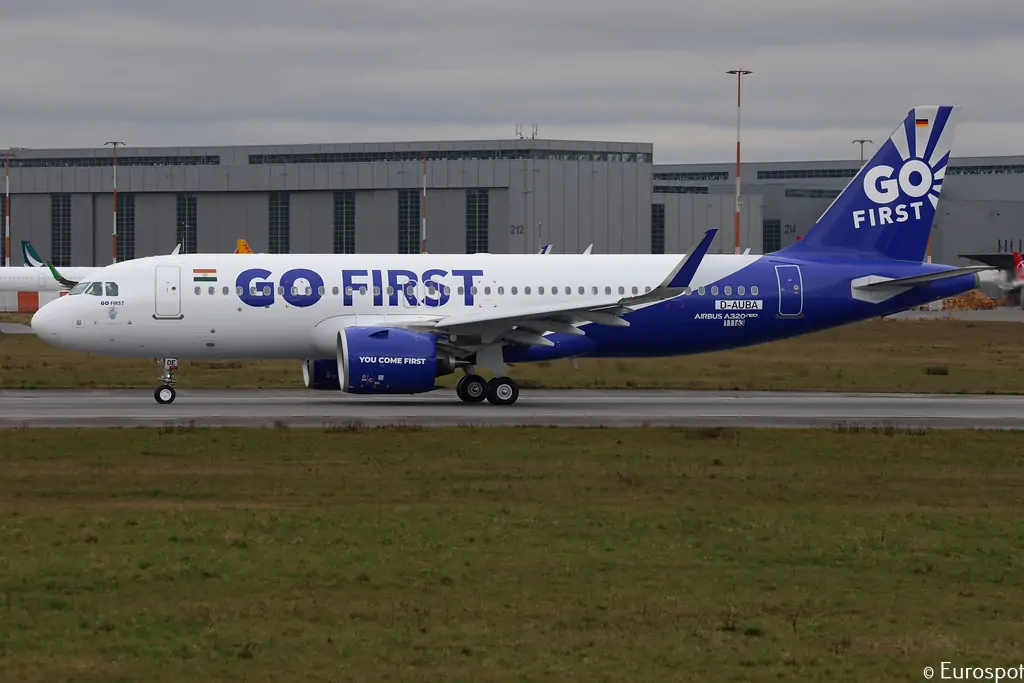
The Delhi High Court on Wednesday, July 5 allowed leasing companies to access aircraft leased to Go First for inspection and maintenance, though they were still unable to repossess them while the airline's operations remain stalled. Work will be done at least twice a month, the court said. The issue of deregistering the aircraft will be decided later.
Go First's lessors have made several attempts to reclaim planes for missed payments, filing over 50 requests with the watchdog to allow repossession. The lessors argue that the airline has no rights over planes as the leases have been terminated, but India’s government and the airline say the bankruptcy law imposes an asset freeze.
On Wednesday, the Delhi High Court judge said that the leasing companies can "access the airport" and inspect aircraft, carrying out all interim maintenance at least twice a month. Earlier, The NCLT-appointed IRP, tasked with managing Go First, had told the high court that returning aircraft to the lessors will render the airline, which has 7,000 employees to look after, "dead".
“Respondent Go Air officers, directors, employees representatives or agents or the resolution professional or its representatives are hereby restrained from moving, replacing, taking out any part, components or spares etc or any other relevant operational documents or manual from the aircraft, except for the prior approval of the lessor of that aircraft,” the court order further said.
The high court said there can be no denial of the fact that the aircraft of the petitioner lessors are highly valuable and sophisticated equipment and require maintenance for their preservation. Justice Tara Vitasta Ganju also restrained Go First and its representatives and the Interim Resolution Professional (IRP) appointed by the NCLT, from removing, replacing or taking out any part or components, or records of the 30 aircraft except with the prior written approval of the lessor of the particular airplane. The high court passed the interim order on multiple applications filed by the lessors to alleviate any further losses.
The interim applications were filed in the main petitions by lessors seeking deregistration of their planes by aviation regulator DGCA so they could take them back from the airline. The high court asked the Directorate General of Civil Aviation (DGCA) to permit the lessors, their employees and agents to access the airport, where their aircraft are currently parked, and to inspect them within three days.
Developments so Far
On May 10, the National Company Law Tribunal (NCLT) admitted the airline's voluntary insolvency resolution petition and appointed Abhilash Lal as the IRP to manage the carrier. With a moratorium in force on financial obligations and transfer of assets of Go First in the wake of the insolvency resolution proceedings, the lessors are unable to deregister and take back the aircraft leased to the carrier.
The lessors had earlier told the high court that the denial of deregistration by the DGCA was “illegitimate”. The lessors who have approached the high court are Accipiter Investments Aircraft 2 Limited, EOS Aviation 12 (Ireland) Limited, Pembroke Aircraft Leasing 11 Limited, SMBC Aviation Capital Limited, SFV Aircraft Holdings IRE 9 DAC Ltd, ACG Aircraft Leasing Ireland Ltd and DAE SY 22 13 Ireland Designated Activity Company.
The NCLT had on May 10 allowed the voluntary insolvency resolution plea of Go First. On May 22, the NCLAT upheld the order of the Delhi-based principal bench of NCLT, which had admitted the plea of Go First to initiate voluntary insolvency resolution proceedings, and appointed the IRP to suspend the company's board. Several lessors approached the aviation regulator for deregistration and repossession of 45 planes they had leased to the carrier.
Beginning of the Crisis
Hit by faulty operations of Pratt & Whitney engines in its flights, Go First filed a petition for voluntary insolvency resolution proceedings on May 2. The airline cited the non-delivery of Pratt & Whitney engines, which affected the company’s flight operations to a large extent. The company stopped its flight operation on May 3. The insolvency plea of the Go First airline was admitted by the NCLT on May 10. Go First operated around 200 flights daily before suspending operations. The airline has 54 aircraft, of which 28 are grounded due to engine woes. The airline has proposed reviving 22 aircraft, and four are on standby per its plan. Lessors have terminated the leases of 45 of the 54 aircraft in the Go First fleet.
In its petition filed with the NCLT, the airline said it initiated emergency arbitration proceedings against P&W which is pending since April 2020, adding that the company has paid INR 19,980 crore to its creditors, out of which INR 5,400 crore was paid to the lessors in the last two years towards lease rent and maintenance reserve despite 40% to 50% of the fleet being unable to fly. The company said it has now exhausted all financial resources (including full utilisation).
It was pointed out that as on 28 April 2023, the company defaulted on payment of INR 1,202 crore to its creditors and INR 2,660 crore to airport lessors. Go First announced that it will be cancelling its operations till July 10, 2023. Amid an ongoing three-day audit of cash-starved Go First by the Directorate General of Civil Aviation (DGCA), the airlines cancelled its operations for the 13th time citing operational reasons on Tuesday. A senior official said that a team of DGCA has begun a three days audit that started on Tuesday. A team audited the grounded airlines in Delhi and Mumbai on day one.
Comment