
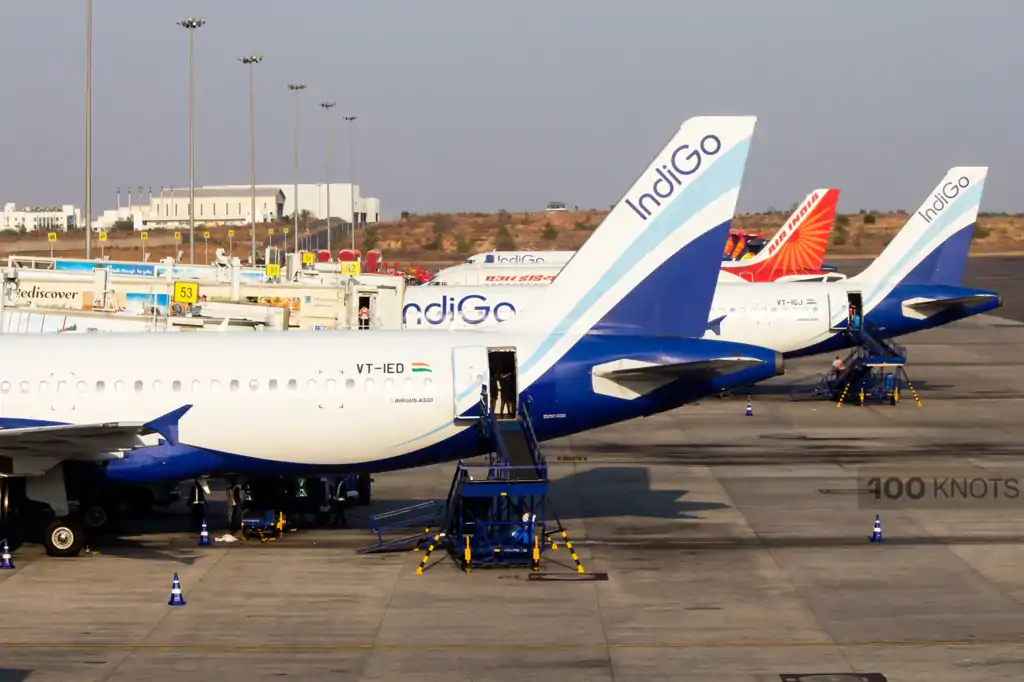
In a recent development, the Bureau of Immigration has imposed a penalty of Rs 1 lakh on IndiGo, India's leading airline, for alleged visa-related violations. Despite the financial sanction, IndiGo's parent company, InterGlobe Aviation, has assured stakeholders that the fine will not impact the airline's financials, operations, or other activities.
The Penalty: A Closer Look and Impact on IndiGo
On June 11, IndiGo received a communication from the Bureau of Immigration, which operates under the Home Ministry, regarding the penalty. The specific details of the alleged violations have not been disclosed. In a regulatory filing, InterGlobe Aviation confirmed the receipt of the notice and the imposition of the penalty.
InterGlobe Aviation has stated that the Rs 1 lakh fine will not have a material impact on IndiGo's financial health or its operations. This assurance is crucial for maintaining investor confidence and ensuring that the airline's day-to-day activities continue without disruption.
Delayed Disclosure Explained, Regulatory Compliance and Future Implications
The airline acknowledged a delay in disclosing this information to the Bombay Stock Exchange (BSE). IndiGo explained that the delay was due to its efforts to explore the possibility of filing an appeal against the order. This indicates that the airline is considering legal options to contest the penalty, which could potentially lead to a reduction or reversal of the fine.
The imposition of the penalty highlights the importance of regulatory compliance in the aviation industry. It serves as a reminder for airlines to ensure strict adherence to visa and immigration laws to avoid similar penalties in the future.
Conclusion
While the Rs 1 lakh penalty for visa-related violations is a setback for IndiGo, the airline's proactive approach in addressing the issue and exploring legal remedies demonstrates its commitment to regulatory compliance and operational integrity. Stakeholders can remain assured that IndiGo continues to maintain its robust financial and operational standing.
What’s Next for IndiGo?
As the situation unfolds, it will be interesting to see how IndiGo navigates this challenge. Will the appeal process lead to a favorable outcome for the airline? Only time will tell. For now, IndiGo remains focused on maintaining its leadership position in the Indian aviation market while ensuring compliance with all regulatory requirements.

Read next
As India's aviation industry anticipates an exponential increase in the demand for trained manpower, major players are taking proactive steps to ensure a steady supply of skilled professionals. With firms like Air India and the GMR group leading the charge, the focus is shifting towards in-house training programs to bridge the gap between industry needs and the quality of available manpower.
Air India's Pilot Training School Initiative
Recognizing the need for high-quality training, Air India is launching its own pilot training school. This initiative comes in response to concerns over the current standards in Indian flying schools, which often leave graduates underprepared for the demands of the industry. A senior executive at Tata Sons-owned Air India highlighted the importance of ensuring top-notch training for the next generation of pilots to maintain safety and operational standards.
GMR Group's Investment in Engineering Training
The GMR group, which owns the largest airframe maintenance, repair, and overhaul (MRO) company in India, GMR Aero Technic, is investing Rs 50 crore in the GMR School of Aviation. This new institution aims to address the looming shortage of aircraft maintenance engineers. Ashok Gopinath, President and Accountable Manager of GMR Aero Technic, stated that the school will launch its first courses by mid-July, targeting students who have completed their 10+2 examinations with a background in physics, chemistry, and mathematics.
Comprehensive Training Programs
The GMR School of Aviation will offer a globally recognized four-year program. This includes two years of academic study followed by two years of on-the-job training at the Hyderabad-based MRO facility. Gopinath emphasized that this approach will ensure graduates are industry-ready, eliminating the need for additional training after hiring.
Industry-Wide Demand for Skilled Manpower
The demand for skilled aviation professionals is poised to surge, driven by massive aircraft orders from airlines like IndiGo, Air India, and Akasa, which collectively have over 1,200 planes on order. Industry projections estimate that India will need approximately 5,000 aircraft maintenance engineers over the next five years.
Collaboration with Airbus
To enhance the quality of training, GMR Aero Technic has partnered with Airbus. The European aerospace giant will provide technical handbooks, an examination database, and access to the Airbus Competence Training (ACT) package. This maintenance training software solution will help students familiarize themselves with the latest Airbus aircraft technology and maintenance procedures in a classroom environment. Airbus will also train GMR instructors and assist in assessing the training center.
Addressing Global Interest and Challenges
India's aviation growth has attracted interest from foreign MROs looking to establish operations in the country. However, these firms face challenges in sourcing skilled human resources. Gopinath noted that top executives from various global aerospace and MRO firms have visited the GMR School of Aviation, eager to collaborate and secure ready-made talent for their future ventures in India.
Conclusion
India's aviation firms are taking significant steps to ensure a robust and skilled workforce for the future. By investing in in-house training programs, companies like Air India and the GMR group are addressing both the quantity and quality of manpower required to support the industry's growth. These initiatives not only promise to meet the rising demand but also set a benchmark for quality training in the aviation sector.
With Inputs from Economic Times
Read next
Engine Maker CFM Caught in the Crossfire: A Tale of Airbus, Boeing, and the Race to Meet Demand
Abhishek Nayar
27 Jun 2024

In the high-stakes world of aerospace manufacturing, engine maker CFM International finds itself in a precarious position. CFM, a transatlantic venture of GE Aerospace and France's Safran, is grappling with the challenge of meeting the demands of its two major customers, Airbus and Boeing, amidst a backdrop of industrial woes and supply chain disruptions.
The Airbus-Boeing Conundrum
Airbus, Europe's largest aerospace group, recently delayed a multi-year hike in narrowbody production, cut profit forecasts, and trimmed its 2024 delivery target. The company blamed shortages of engines and other parts for the decision, which sent its shares tumbling. CFM, which makes LEAP engines that power all Boeing 737 MAX jets and typically just over half of the competing Airbus A320neo family, is at the center of this storm.
The Request that Strained Relations
Airbus had hoped that CFM would increase its share of narrowbody deliveries to compensate for industrial problems at Pratt & Whitney, a rival engine maker. This request, however, put CFM in a delicate strategic position. It threatened to worsen severe headaches at Boeing, CFM's other major customer, and raised questions about CFM's ability to meet the increased demand.
The Triangle of Factors
CFM's market share depends on a triangle of factors: Airbus's production rate, Boeing's production rate, and the contribution of CFM's rival Pratt & Whitney to Airbus output. The current crises in the industry, including an in-flight blowout that slowed Boeing's recovery from earlier safety woes and chronic bottlenecks at Pratt and Whitney, have disrupted this balance.
The CFM Dilemma
CFM is reluctant to harm Boeing unduly, a sentiment that may not be articulated directly with Airbus but weighs heavily in internal discussions. The engine maker is trying to accommodate both sides but ultimately will never do anything that structurally disadvantages Boeing, its first and largest partner.
The Road Ahead
As Airbus races to meet demand and Boeing struggles to recover, CFM finds itself in a challenging position. The company is working to meet LEAP engine demand from all its customers, but the supply chain environment remains challenging. The aerospace industry watches with bated breath as CFM navigates this complex situation, its actions likely to have far-reaching implications for both Airbus and Boeing.
In conclusion, the aerospace industry is witnessing a fascinating yet complex dance between Airbus, Boeing, and CFM. The outcome of this dance will not only shape the future of these companies but also the broader aerospace industry. As CFM celebrates its 50th anniversary, it finds itself at a crossroads, its decisions likely to define its next half-century.
With Inputs from Reuters
Read next

In a bold financial maneuver, Hawaiian Airlines has introduced an attractive offer to exchange its outstanding 5.750% Senior Secured Notes, set to mature in 2026, for new 11.000% Senior Secured Notes maturing in 2029, along with a cash payout. This strategic decision aims to manage debt maturity dates and bolster the airline’s liquidity as it navigates its operational and financial landscape.
Details of the Exchange Offer
Hawaiian Airlines' exchange offer is designed to incentivize bondholders with a compelling combination of new notes and cash. If fully subscribed by the early exchange deadline, the airline plans to exchange USD 1.2 billion worth of existing notes for USD 990 million in new notes and a USD 220 million cash payout.
Early Exchange Terms
- Deadline: 1700 EST (2100Z) on July 9, 2024
- Offer: USD 825 in new notes and USD 175 in cash for every USD 1,000 principal amount of existing notes
Standard Exchange Terms
- Deadline: 1700 EST (2100Z) on July 24, 2024
- Offer: USD 825 in new notes and USD 125 in cash for every USD 1,000 principal amount of existing notes
Strategic Rationale
Enhanced Coupon Rate
The new 11.000% Senior Secured Notes offer a significantly higher coupon rate compared to the existing 5.750% notes, presenting an attractive proposition for current bondholders seeking higher returns on their investments.
Partial Payment at Par
In addition to the higher coupon rate, bondholders will receive a partial payment at par, enhancing the immediate value of their holdings.
Collateral Package
The new notes come with a robust collateral package, backed by Hawaiian Airlines' frequent flyer program and brand intellectual property, adding a layer of security for investors.
Managing Debt Maturity
Hawaiian Airlines’ strategy is a testament to its proactive approach to liquidity management and long-term financial planning. The company is spreading out its debt maturity dates, which is crucial for sustaining operational stability and implementing its business initiatives.
Debt Maturity Profile
- 2024: USD 33 million for EETCs and aircraft financing
- 2025: USD 64 million for EETCs and aircraft financing, plus a USD 235 million revolving credit facility
- 2026: USD 148 million for EETCs and aircraft financing, plus USD 1.2 billion in existing notes
- 2027: USD 22 million for EETCs and aircraft financing
- 2028 and beyond: USD 370 million
Final Settlement Date
The final settlement date for any exchanged bonds is set for July 26, 2024, with the new bonds maturing on April 15, 2029.
Conclusion
Hawaiian Airlines’ latest bond exchange offer is a well-calculated move to manage its debt maturities and strengthen its liquidity position. By offering a higher coupon rate and partial cash payments, the airline provides substantial incentives for bondholders to participate in the exchange, ensuring a win-win scenario for both the company and its investors. This strategic initiative underscores Hawaiian Airlines' commitment to sustaining financial health and operational efficiency in the long term.
With Inputs from ch-aviation
Read next
Will Challenge Group's Indian Market Entry Be Derailed by Jet Airways Deal Delays?
Abhishek Nayar
27 Jun 2024

The Challenge Group, parent entity of Ace Aviation, is at a critical juncture. The group's Chief Investment Officer, Michael Coish, has voiced serious concerns regarding their planned entry into the Indian market, contingent on acquiring three Boeing 777-300ERs from the defunct Jet Airways. Despite a series of legal victories, the aircraft remain undelivered, casting doubt on the feasibility of Challenge Group's Indian ambitions.
The Background: Ace Aviation's Investment in Jet Airways
In 2022, various entities within the ACE Aviation Group—namely Ace Aviation VIII Limited, Ace Aviation IX Limited, and Ace Aviation X Limited—entered into a deal with Jet Airways' monitoring committee to purchase three parked B777-300ERs. This deal was part of the broader process overseen by the committee following Jet Airways' cessation of operations in 2019.
The Ace entities paid a deposit of USD 5.6 million and signed letters of intent. However, complications arose in November 2022 when the monitoring committee paused the sale. The Jalan Kalrock Consortium (JKC), the would-be buyers of Jet Airways, unexpectedly opposed the sale, despite earlier not objecting. This dispute has since been mired in litigation.
Legal Battles: A Glimmer of Hope
In March 2024, the Supreme Court of India decided not to interfere with the National Company Law Tribunal and National Company Law Appellate Tribunal's decisions to permit the sale of the aircraft. This ruling was seen as a significant victory for Ace Aviation, but the actual handover of the aircraft has yet to occur.
Michael Coish's Statements: Growing Frustration
Michael Coish has expressed mounting frustration over the delays. In a statement to the Hindu Business Standard, he emphasized the Challenge Group's trust in the Indian judicial system but also highlighted the need for cooperation from other parties to finalize the deal. He noted that any further delays would be problematic given the group's secured conversion slots for the aircraft in early 2025.
"If this delay in procurement extends beyond our estimated timeline, we will have to immediately look for alternative aircraft," Coish said. "We have already contacted some potential vendors to explore related B777-300ER opportunities in the market."
Potential Impact: Reconsidering Indian Market Entry
This is not the first time Coish has raised alarms. He recently told ch-aviation, "We have now decided enough is enough. If the monitoring committee, including the lenders and JKC who have attempted to block the sale, continue to procrastinate, we would sadly walk away from this deal and take our USD 5.6 million back with full interest."
The Challenge Group's reconsideration of its Indian market entry could have significant ramifications. The group has invested considerable resources and efforts into this venture, and their potential withdrawal underscores the broader challenges of navigating complex legal and regulatory landscapes in emerging markets.
Conclusion
The fate of Challenge Group's entry into the Indian market hangs in the balance. The group's ability to acquire the three Boeing 777-300ERs from Jet Airways remains uncertain, despite favorable legal rulings. As Michael Coish has made clear, further delays could force the group to abandon its plans and seek alternative opportunities. The coming months will be crucial in determining whether Challenge Group can overcome these hurdles or if their Indian ambitions will be thwarted.
With Inputs from ch-aviation
Read next
GST Revision Set to Boost India's Aircraft Maintenance Industry: A Game Changer?
Abhishek Nayar
27 Jun 2024
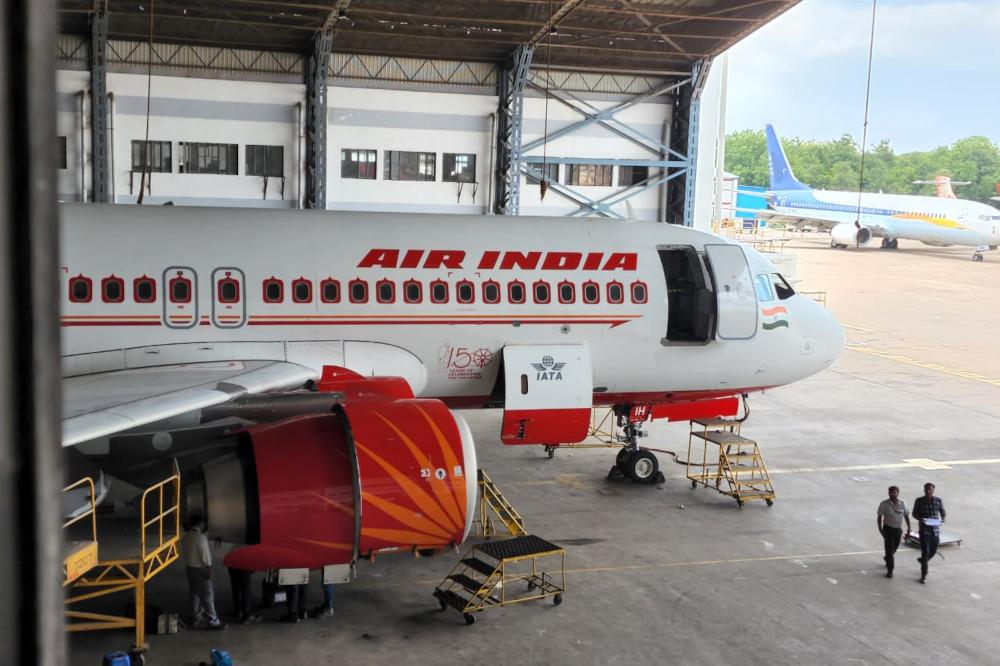
India's aircraft maintenance, repair, and overhaul (MRO) industry is on the brink of a significant transformation. The 53rd GST Council's recommendation of a uniform 5% tax on imports of parts, components, testing equipment, tools, and toolkits of aircraft aims to clear long-standing ambiguities and boost the sector's global competitiveness. This strategic move is set to unlock new opportunities and drive investment, positioning India as a major hub for aircraft maintenance in the international aviation market.
Resolving Classification Confusion
One of the key challenges faced by the Indian MRO industry has been the classification of raw materials. Despite a reduction in GST from 18% to 5% in 2020, customs ambiguities persisted due to the Harmonized System of Nomenclature (HSN) codes. Raw materials like aircraft paints, specialty steel, nickel-based alloys, and aerospace-grade aluminum were often misclassified, leading to higher duties and taxes.
For example, specialized carpets for aircraft galleys were taxed at 12%, similar to regular carpets, and aircraft paint was taxed at 18%, the same as normal paint. This misclassification increased costs and hindered the competitiveness of Indian MROs. The new GST revision seeks to address these issues, ensuring that all aircraft-related imports are uniformly taxed at 5%.
Industry Insights: A New Dawn for Indian MRO
Anand Bhaskar, Managing Director at Air Works, highlighted the significance of this GST revision. "The revision in GST norms by the government enhances the attractiveness and competitiveness of Indian MRO from a global standpoint. It should spur global investments to create an indigenous MRO ecosystem, which will eventually boost self-reliance for the sector," he stated.
As the MRO industry evolves from basic line and base maintenance to more complex tasks like engine and component overhaul, component costs become increasingly significant. Bhaskar emphasized that reducing duties would enable MROs to offer more competitive rates, expanding their market reach.
Strategic Advantage: India's Geographical Position
India's strategic location between major Asian and European countries makes it an ideal candidate to become a global MRO hub. The government has been actively pushing measures to enhance this potential, and the recent GST revision is a significant step in this direction. By making the Indian MRO sector more attractive to global players, the country can leverage its geographical advantage to cater to international airlines and aircraft operators.
Conclusion
The revision of GST rules for the MRO industry marks a pivotal moment for India's aviation sector. By resolving classification ambiguities and reducing duties on aircraft-related imports, the government is fostering an environment conducive to growth and investment. As India positions itself as a global MRO hub, the industry is poised to witness unprecedented expansion and development. This strategic move not only enhances the competitiveness of Indian MROs but also reinforces the country's vision of becoming self-reliant in the aviation sector.
India's aircraft maintenance industry is set for a transformative journey, and the world is watching closely.
With Inputs from Economic Times
Comment