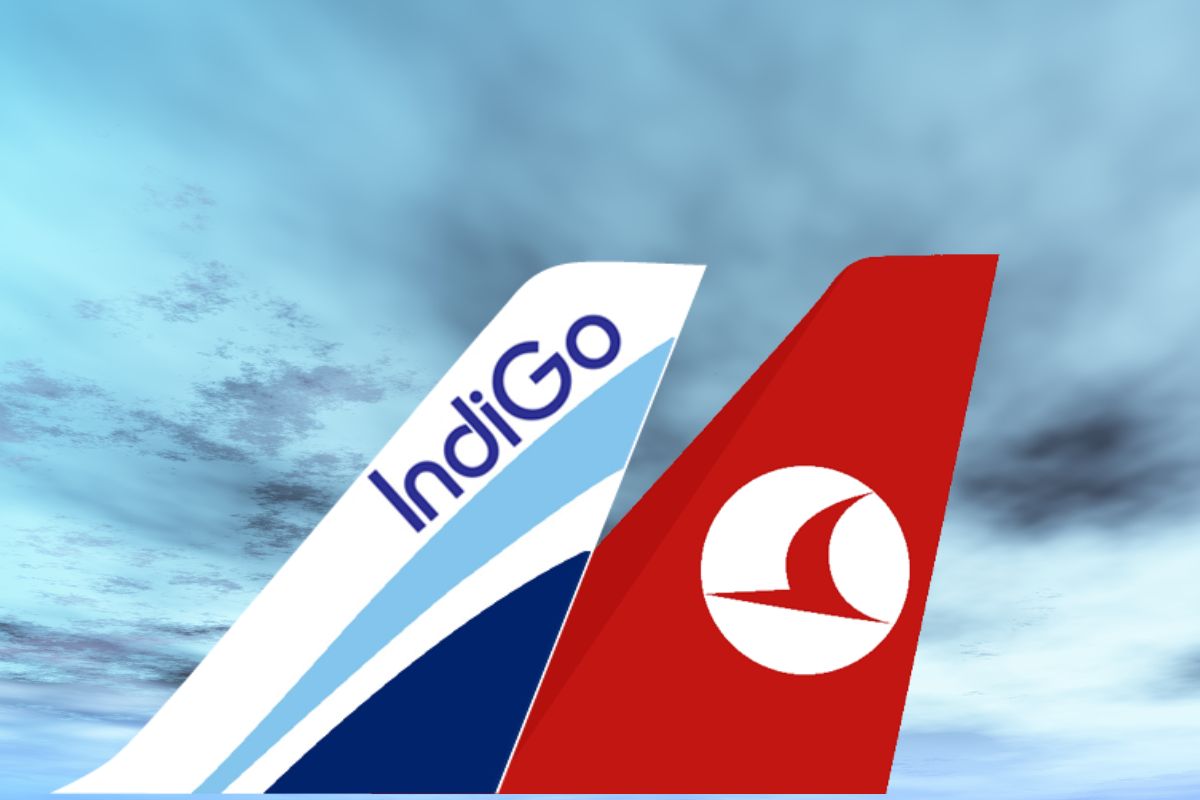
India's budget airline giant IndiGo has secured regulatory approval to continue its aircraft leasing arrangement with Turkish Airlines through February 2026, providing crucial operational flexibility amid evolving market dynamics.
Regulatory Approval Details
The Directorate General of Civil Aviation (DGCA) has approved IndiGo's request for a six-month extension, effective until February 28, 2026, replacing the previous arrangement that was set to expire on August 31. This marks the latest in a series of extensions that have kept the partnership operational despite various challenges.
The extension allows IndiGo to continue operating two Boeing 777 aircraft from Turkish Airlines under the wet lease arrangement starting September 1. The approval comes with specific regulatory conditions that both airlines must adhere to during the extended period.
Background
The partnership between IndiGo and Turkish Airlines involves a wet lease agreement, where Turkish Airlines provides the aircraft, crew, maintenance, and insurance, while IndiGo operates the routes. This arrangement has enabled IndiGo to expand its international operations without significant capital investment in wide-body aircraft.
In May 2025, the DGCA had approved a "one-time" three-month extension until August 31, 2025, citing passenger convenience. However, the recent six-month approval suggests a more substantial commitment to maintaining this operational partnership.

Geopolitical Considerations
Geopolitical tensions between India and Turkey, driven by Turkey's support for Pakistan during recent conflicts, complicated the decision-making process. Despite these diplomatic challenges, aviation regulators prioritised operational continuity and passenger service requirements.
The DGCA's decision reflects a pragmatic approach to aviation policy, balancing geopolitical sensitivities with commercial aviation needs and passenger convenience.
Strategic Implications
The extension provides IndiGo with continued access to wide-body aircraft capabilities essential for its international route network. The Boeing 777-300ER aircraft enables the airline to serve long-haul destinations that would otherwise be beyond its narrow-body fleet's range.
This arrangement allows IndiGo to maintain its international expansion strategy while avoiding the substantial capital expenditure required for purchasing or long-term leasing wide-body aircraft. The flexibility proves particularly valuable during uncertain market conditions.

Impact on Route Planning
The six-month extension through February 2026 gives IndiGo operational certainty for its international routes during the peak winter travel season. Airlines typically finalise their winter schedules well in advance, making this regulatory clarity crucial for route planning and passenger bookings.
The extended timeline also allows IndiGo to explore alternative aircraft sourcing options or negotiate permanent wide-body fleet solutions without operational disruption to existing services.
Future Partnership
While the current extension runs until February 2026, the aviation industry will closely watch whether this arrangement evolves into a longer-term strategic partnership or serves as a bridge to alternative solutions. IndiGo's future international growth strategy may depend significantly on how it addresses its wide-body aircraft requirements beyond this extended timeline.
The partnership's continuation despite geopolitical tensions suggests that commercial aviation relationships can transcend diplomatic complications when mutual benefits and passenger interests align.

Read next
Two Giant 777s, One Political Swoop: Inside IndiGo’s Surprise Lease U-Turn

Abhishek Nayar
29 Aug 2025
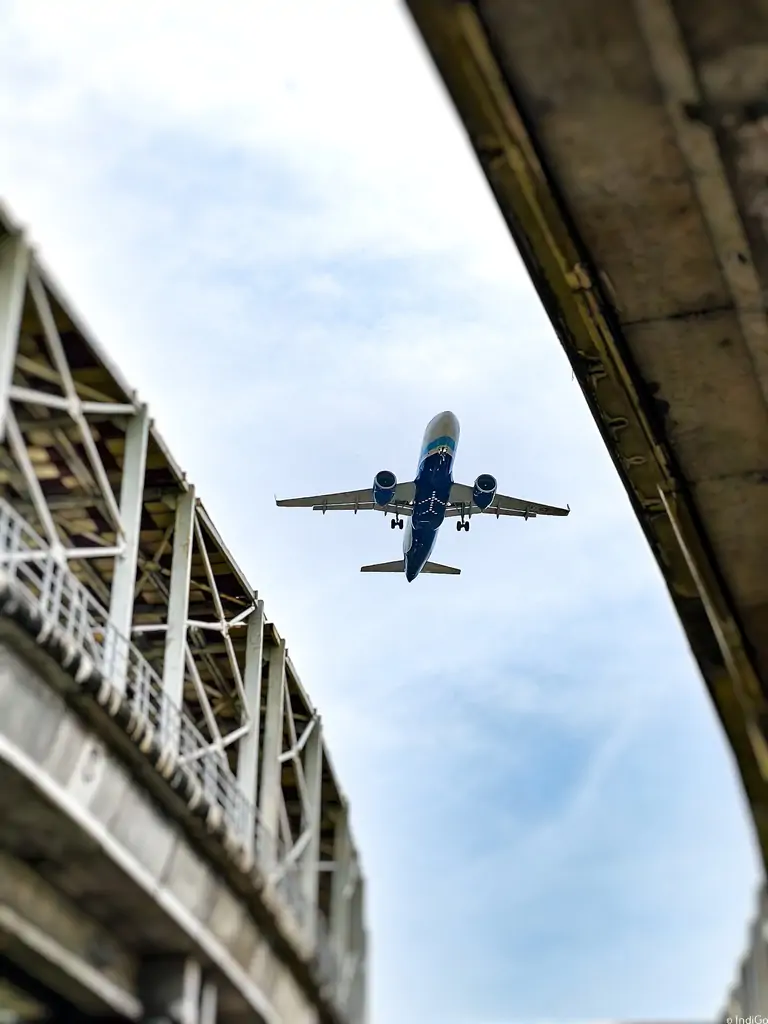
IndiGo just scored a stay of execution — and a headline-grabbing one at that. After New Delhi had ordered the carrier to end its arrangement with Turkish Airlines by the end of August, regulators have reversed course and approved an extension that keeps two Turkish-operated Boeing 777s flying for IndiGo until February 28, 2026.
The short version: what changed overnight
In May the Directorate General of Civil Aviation (DGCA) had resisted a long extension, approving only a three-month continuation of the wet-lease. This week the government approved a six-month extension — a pragmatic pivot that effectively pushes the lease end-date to late February next year.
Why two wet-leased 777s matter more than you’d think

IndiGo’s fleet is overwhelmingly narrow-body (single-aisle) aircraft. The two Boeing 777s provided by Turkish Airlines are wide-body jets with significantly higher seat capacity and were being operated with Turkish pilots and some crew — allowing IndiGo to take on long-haul demand on Delhi–Istanbul and Mumbai–Istanbul routes that its A320 family can’t match. Keeping them in service buys capacity and time.
The invisible price tag: geopolitics in the fuel tank
The extension isn’t just about seats — it’s about route math. Pakistan’s closure of its airspace to Indian carriers forced longer detours on several international sectors, driving up flying time and fuel bills for Indian airlines. That increase in operating cost has put pressure on carriers’ margins; for IndiGo, the extra breathing room from the lease mitigates some of that pain.
Politics taxiing down the runway
This deal has been political from the start. Turkey’s public support for Pakistan during recent tensions in the subcontinent sparked criticism and political scrutiny of the Indo-Turkish tie-up. Rival Air India reportedly lobbied the government to end the lease altogether — arguing national interest and commercial unfairness — a factor that made the DGCA’s May decision (to limit the extension) politically charged. The new six-month approval is therefore as much a policy balancing act as it is an operational nod to IndiGo.
Money matters: a timely relief
IndiGo reported a slowdown in first-quarter revenue growth amid border tensions and industry headwinds, including the fallout from a fatal Air India crash earlier in the year. The extra capacity from the 777s helps preserve international revenue streams while the airline navigates softer demand and higher costs.
What the players are saying (and not saying)

- IndiGo described the extension as providing “continuity and stability in operations,” saying it had formally requested the extra time and that the DGCA’s approval comes with regulatory conditions.
- DGCA: the regulator’s earlier stance (three months only) suggested concerns over passenger convenience and political optics; the latest move signals a recalibration under operational realities.
- Air India & critics: the carrier’s lobbying highlighted how airline policy, competition and geopolitics collide — and that pressure likely remained a factor behind both the initial restriction and the public debate around the extension.
The likely fallout (what to watch)
- Routes & capacity: IndiGo can sustain higher-capacity international services through February 2026, which could stabilize yields on certain corridors.
- Public and political reaction: critics who see the partnership as politically fraught may push for more scrutiny when this six-month window nears its end.
- Market signals: investors may view the move as pragmatic — a short-term operational fix amid regional airspace disruption — and watch InterGlobe’s seat-kilometre performance and international yields closely.
Final take: pragmatic aviation meets geopolitics
Airlines are not just transport businesses; they’re choke points where politics, profits and passenger convenience meet. IndiGo’s six-month extension to keep two Turkish-operated 777s is a clear example: a tactical operational decision shaped by an unpredictable geopolitical environment and competitive jockeying. For IndiGo, it’s temporary oxygen; for regulators, it’s a calibrated compromise; for rivals and critics, it’s a continuing, noisy debate.
TL; DR
- India has approved a six-month extension keeping two Turkish Airlines-operated Boeing 777s with IndiGo until Feb 28, 2026.
- The DGCA had earlier approved only a three-month extension in May, making this a regulatory reversal.
- Extension eases pressure caused by Pakistan’s airspace closure, which raised fuel and routing costs for Indian carriers.
- Air India lobbied the government to end the IndiGo–Turkish arrangement, creating political heat around the lease.
- IndiGo’s recent slower Q1 revenue growth means the extra capacity from the 777s is a timely operational relief.
With Inputs from Reuters
Read next
Can Boeing’s Great Reunification — buying back Spirit — actually fix plane-making chaos, or is it the start of a new soap opera?
Abhishek Nayar
29 Aug 2025

Boeing is trying to do something dramatic: buy back its old baby. The planemaker that spun off Spirit AeroSystems two decades ago is now seeking to re-acquire the Wichita-born aerostructures giant in a $4.7 billion all-stock deal that could redraw supply lines, soothe production headaches — or create fresh regulatory drama. The paperwork is on the European Commission’s desk, the UK has given a thumbs-up, and Washington’s antitrust cops are asking questions. Fasten your seatbelt.
What’s actually on the table?
- The deal: Boeing agreed last year to acquire Spirit AeroSystems in an all-stock transaction valuing Spirit’s equity at roughly $4.7 billion. Spirit was once Boeing’s Wichita division before the 2005 spin-off.
- The carve-up with Airbus: As part of the broader choreography, Airbus is expected to take on certain loss-making European operations and assets tied to its own programs — a move designed to limit concentration of Airbus-tied work under Boeing’s control.
- Timing target: Spirit’s public filings and statements say the companies expect to close the transaction in Q4 2025, subject to divestitures, certainty on supply contracts and regulatory clearances.
Why Boeing wants its old supplier back — and why it’s urgent

Short version: quality, control and speed.
- Bring production closer: Boeing lost face (and schedule) in recent years to parts mishaps and supplier strains. Bringing Spirit in-house promises tighter control over fuselage and aerostructure quality and could simplify bottlenecked supply chains.
- Cost and coordination: In theory, owning a major aerostructures maker can reduce transaction friction, align quality systems (Boeing has explicitly cited aligning Safety & Quality Management Systems), and unlock cost synergies.
- A reputational fix: After high-profile production problems, reintegrating a key supplier sends a strong message that Boeing is trying to take responsibility for upstream fixes. (Whether that actually works is another question, below.)
Regulators: the gatekeepers with veto power
This deal doesn’t clear itself — and regulators around the world are watching closely.
- UK (CMA): The U.K.’s Competition and Markets Authority has already completed a Phase 1 review and cleared the acquisition, deciding not to open a deeper probe. That removed a major hurdle for Boeing.
- European Commission: Boeing has formally filed with the European Commission, which — according to public filings — is expected to reach a decision by September 30, 2025. That deadline is one of the most immediate watchpoints.
- United States (FTC / HSR rules): The transaction remains under U.S. review. Spirit and Boeing have each received a second request (i.e., an FTC “second request” for additional information under the HSR process), which pauses the statutory waiting time until compliance. That’s a normal yet meaningful part of big deals that can delay or reshape outcomes.
What Airbus gets — and why it agreed to the carve-up

Airbus is not standing still. As part of the broader negotiations, Airbus is lined up to acquire certain Spirit activities tied to Airbus programs. That has two effects:
- Protecting its own supply chain — Airbus secures continuity for A220/A320/A350 production lines by taking on factories and programs that largely serve Airbus.
- Easing competition concerns — The carve-out helps address antitrust issues by ensuring that Airbus-centric facilities don’t end up owned by Boeing after the merger. Regulators pay close attention to that kind of structural remedy.
The numbers: loss, debt and the valuation wrinkle
Spirit has not been a cash cow lately. Recent quarters show deep losses (including the sizeable Q2 shortfall Spirit cited), and the company has taken actions to sell or spin certain assets — some of which factor into the deal math and regulatory carve-outs. The headline price tags — $4.7 billion equity value vs. roughly $8.3 billion enterprise-ish valuation when factoring debts (figures vary by source and timing) — are frequently referenced in analyst discussions.
The biggest wildcards (and why this could still go sideways)
- Regulatory remedies vs. full approval: Even with the UK clearance, the EU could demand stricter divestitures or conditions than Boeing and Spirit planned — and the U.S. review could be the slowest and most consequential.
- Integration risk: Mergers fail for people and culture, not spreadsheets. Re-integrating a large supplier that’s been independent for 20 years means wrestling with different systems, contracts, labor agreements and customer relationships (Airbus, defense customers, aftermarket clients).
- Customer reactions: Airlines and defense contractors that rely on Spirit today may worry about single-firm control of critical capacity — that’s partly why Airbus’s carve-out and other divestments exist. If customers object, the political/regulatory pressure intensifies.
- Financial health and timing: Spirit’s cash position, legacy debts and ongoing operational losses make the timing and structure of the close delicate; any material change in Spirit’s cash flow or contract performance could shift deal terms.
So, who wins (and who could lose)?

- Boeing: Gains control, better alignment of production, and potential cost savings — but takes on integration risk and regulatory scrutiny.
- Spirit employees & management: Short-term uncertainty (reorgs and divestitures) but possibly long-term stability if Boeing invests to fix systemic problems.
- Airbus: Gets carved-out assets that stabilize its supply chain — a pragmatic hedge to prevent being dependent on a competitor-owned supplier.
- Airline passengers and taxpayers: Ideally, better production quality and fewer safety surprises — but only if integration actually improves oversight and manufacturing standards.
What to watch next (the timeline)
- By Sept 30, 2025: European Commission decision (per filings). If the EU asks for remedies, watch the shape and scope.
- U.S. FTC action: Ongoing second-request compliance — the FTC could clear, demand remedies, or extend review. The U.S. review is likely the stickiest point.
- Q4 2025: Spirit’s stated target for closing — but that’s conditional, not guaranteed.
Final thought — a hopeful, cautious take
This deal looks less like a simple corporate romance and more like an industrial triage strategy: Boeing wants to fix structural problems by taking direct control; Airbus wants supply certainty; regulators want healthy competition and secure supply for aircraft programs. If the pieces fall into place — timely EU and U.S. approvals, sensible carve-outs to Airbus, and a clean integration plan — Boeing could legitimately improve production reliability. But the path is narrow: regulatory demands, integration headaches and Spirit’s fragile finances mean it’s an only-if game, not a done deal.
TL; DR — quick bullets
- Boeing is seeking EU approval to buy Spirit AeroSystems in a $4.7B all-stock deal; decision due by Sept 30, 2025 (per EU filings).
- The UK’s CMA cleared the acquisition after a Phase 1 review; the U.S. FTC has issued a second request (additional information), and Spirit expects a Q4 2025 close if conditions are met.
- Airbus will take on certain Spirit assets linked to its programs — a carve-out intended to protect Airbus supply lines and reduce competition concerns.
- Upside: better quality control, aligned production, potential cost savings. Downside: regulatory remedies, integration risk, and Spirit’s weak finances.
- Watch EU & FTC outcomes and whether the carve-outs are sufficient — that will decide whether this becomes Boeing’s production fix or another headline about a messy integration.
Read next
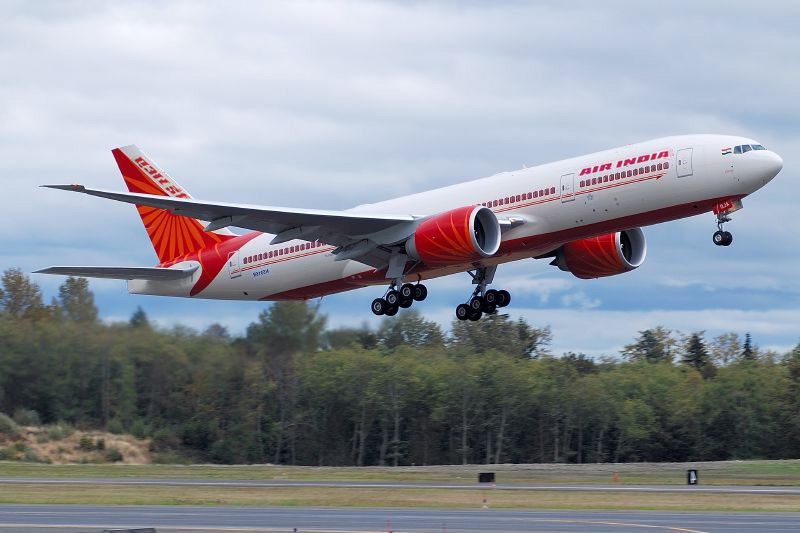
India's domestic aviation industry witnessed a notable monthly contraction in July, with passenger volumes dropping to 12.6 million while the country's flag carrier faced market share erosion amid operational challenges.
Passenger Traffic Registers Seasonal Dip
Domestic air passenger traffic declined 2.94 per cent year-on-year to 1.26 crore in July, marking the first significant monthly contraction in several months. This marked the first contraction in months, driven by seasonal monsoon effects and other operational factors affecting the aviation sector.
The July figures represent a decrease from 12.98 million passengers carried in the same month of 2024, highlighting the cyclical nature of air travel demand during India's monsoon season when weather disruptions typically impact flight operations.
Market Share Dynamics Shift Among Major Carriers
IndiGo maintained its dominant position in the domestic market despite the overall decline. The low-cost carrier continues to command approximately 65% of the domestic market share, demonstrating resilience amid challenging conditions.
Air India, however, faced a more significant challenge with its market share declining by one percentage point. Air India reduced its fleet capacity to ensure safety, affecting its competitive position in the market. This operational decision appears linked to safety protocols implemented following recent industry developments.
Industry Performance Amid Broader Context
Despite the July setback, the aviation sector has maintained positive momentum over the longer term. Airlines carried 9.77 crore passengers between January and July, marking a 5.9% growth over last year, indicating that the monthly decline represents a temporary adjustment rather than a sustained trend.
Most airlines managed to maintain operational stability despite the monthly challenges, suggesting that the industry's fundamental growth trajectory remains intact.
Factors Behind the Monthly Decline
Several factors contributed to July's passenger traffic reduction. The monsoon season traditionally creates operational challenges for airlines through flight delays, cancellations, and reduced consumer demand for discretionary travel. Additionally, safety-related operational adjustments by major carriers impacted overall capacity deployment.
The aviation sector's response to these challenges demonstrates the industry's commitment to maintaining safety standards while managing commercial pressures.
Outlook for Recovery
The monthly decline in July appears to be a temporary phenomenon within India's broader aviation growth story. The sector continues to benefit from rising disposable incomes, expanding route networks, and increasing air connectivity to smaller cities.
Industry analysts expect passenger volumes to recover in subsequent months as monsoon conditions improve and airlines optimize their capacity deployment strategies. The fundamental drivers supporting India's aviation growth remain strong, positioning the sector for continued expansion despite short-term fluctuations.
Read next
Grounded at 65 — Or Cleared to 67? The High-Stakes Push to Keep Older Captains in the Cockpit
Abhishek Nayar
28 Aug 2025
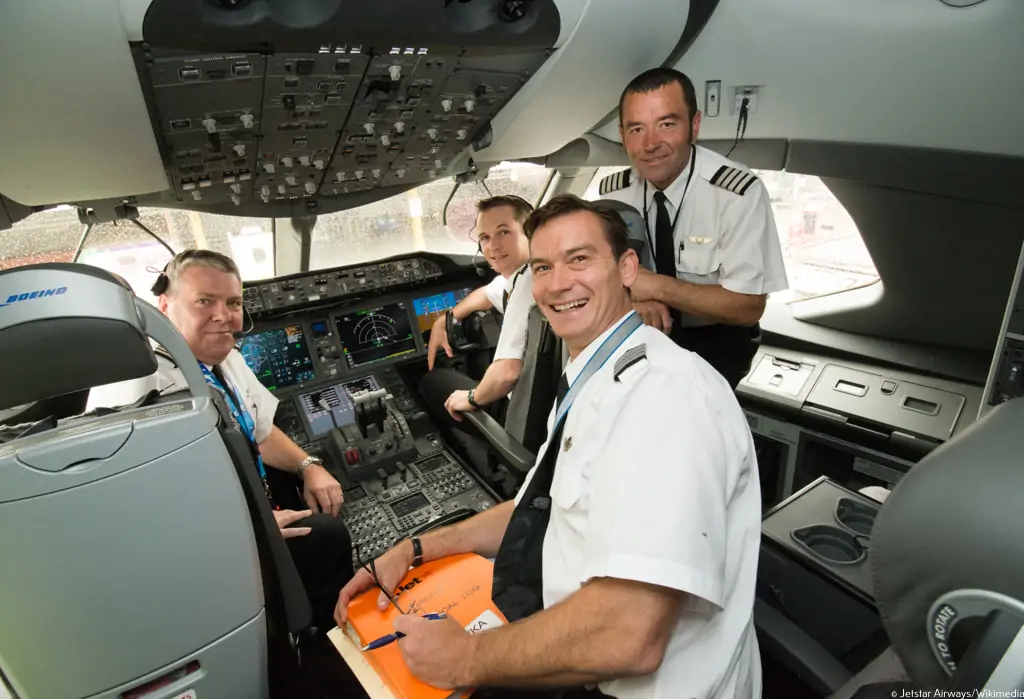
Imagine your favorite captain announcing, “Good morning — I’m 66 and still loving this job.” That could be a real-world line soon, if a proposal from the world’s airlines wins approval at the United Nations’ aviation assembly.
The International Air Transport Association (IATA) has formally asked the U.N.’s International Civil Aviation Organization (ICAO) to raise the international retirement age for multi-pilot commercial flights from 65 to 67, a move the association calls a cautious response to a global pilot shortfall.
What’s on the table (and where it will be decided)
IATA submitted a working paper to ICAO asking the agency to consider changing the multi-pilot commercial air transport age limit to 67. ICAO’s next General Assembly — the body that can adopt or recommend global standards — opens on September 23, 2025, where this proposal is scheduled for debate. The IATA paper itself lays out the rationale and suggested safeguards.
Why airlines want older pilots in the cockpit
Airlines argue the math is simple: global demand for air travel is growing faster than the pipeline of new pilots. Extending the allowable flying age by two years would keep experienced aviators available to airlines while preserving institutional knowledge and easing staffing crunches that ripple into cancellations, route cuts and higher fares. IATA frames the proposal as “a cautious but reasonable step consistent with safety.”
Safety, unions and a roaring objection
Not everyone welcomes the idea. Major U.S. pilot unions — which historically argued against raising the limit when it was floated in Congress — say there isn’t enough data to prove the change won’t raise risks. The Allied Pilots Association (APA), representing thousands of American Airlines pilots, has publicly warned that raising the retirement age could “introduce additional risk,” citing age-related health trends and insufficient study of long-term safety impacts. That opposition has been a central reason similar domestic efforts have stalled in the U.S. in recent years.
Politics and geopolitics: more than a medical debate
This isn’t just a technical or medical discussion — it is political. In the U.S., a bipartisan group of senators recently urged the Trump administration to support international efforts to raise the age limit, arguing that preserving experienced pilots may actually strengthen safety and global leadership. At the same time, nominations and personnel at ICAO — including recent U.S. diplomatic moves — have made the debate part of broader geopolitical positioning in aviation standards. In short: who represents the U.S. at ICAO and what they advocate matters.
How the proposal would work in practice
IATA’s suggested framework keeps a safety buffer: multi-pilot flights would still require at least two pilots, and if one pilot is older than 65 (under the proposed new rule, older than 67 would be allowed), the other must be younger than 65 — maintaining generational redundancy in the cockpit. The paper also points to medical screening and other mitigations to ensure fitness to fly.

The arguments for and against — quick snapshot
For raising to 67
- Eases the immediate pilot shortage and preserves experienced crews.
- Modern medicine and healthier lifestyles mean many pilots remain fit and capable later in life.
Against raising to 67
- Pilot unions argue limited data exists on age-related risk increases in airline operations and warn against changing a safety standard without robust studies.
- Scheduling, training, contractual and insurance complexities could follow a change, potentially disrupting labor agreements and crew rostering.
What to watch for at the ICAO Assembly
- Voting and language: Will ICAO adopt a binding standard, or merely recommend an updated guideline? The wording matters hugely for national adoption.
- Data requests: Expect calls for more empirical studies — unions will press for long-term safety evidence; airlines will stress operational necessity.
- Diplomatic alignment: Countries’ positions (and who’s speaking for them at ICAO) may shift the outcome: legislative pressure within major markets like the U.S. and the presence or absence of a confirmed U.S. ICAO ambassador will be influential.
Why this matter feels personal — and one surprising upside
For passengers it’s a mostly invisible rule with outsized consequences: a two-year change could keep seasoned captains flying longer and reduce last-minute cancellations. For pilots it’s deeply personal — it affects careers, retirement planning and identity. And a surprising upside often overlooked: older pilots can be mentors, smoothing knowledge transfer for younger crews during a period when many senior aviators are expected to retire.
Final call: pragmatic experiment or a safety step too far?
This debate sits at the intersection of workforce management, medical science, labor rights and geopolitics. If ICAO votes to move forward, the next phase should be rigorous: targeted studies, harmonized medical standards, and careful rollout plans — so the industry doesn’t trade short-term bandwidth for long-term risk. If the Assembly punts, airlines will keep pressing national governments and Congresses to act — and the pilot shortage problem will remain front and center.
TL; DR
- IATA has asked ICAO to raise the international retirement age for multi-pilot commercial flights from 65 to 67.
- ICAO will consider the proposal during its General Assembly beginning Sept 23, 2025.
- IATA calls the move cautious and safety-consistent; unions like the APA say there isn’t enough data and oppose the change.
- U.S. senators have urged support for the change, and political/diplomatic plays at ICAO could influence the outcome.
- Operationally, IATA keeps safeguards (multi-pilot flights, at least one pilot under 65) but debates on data, insurance and contracts remain unresolved.
With Inputs from Reuters
Comment